
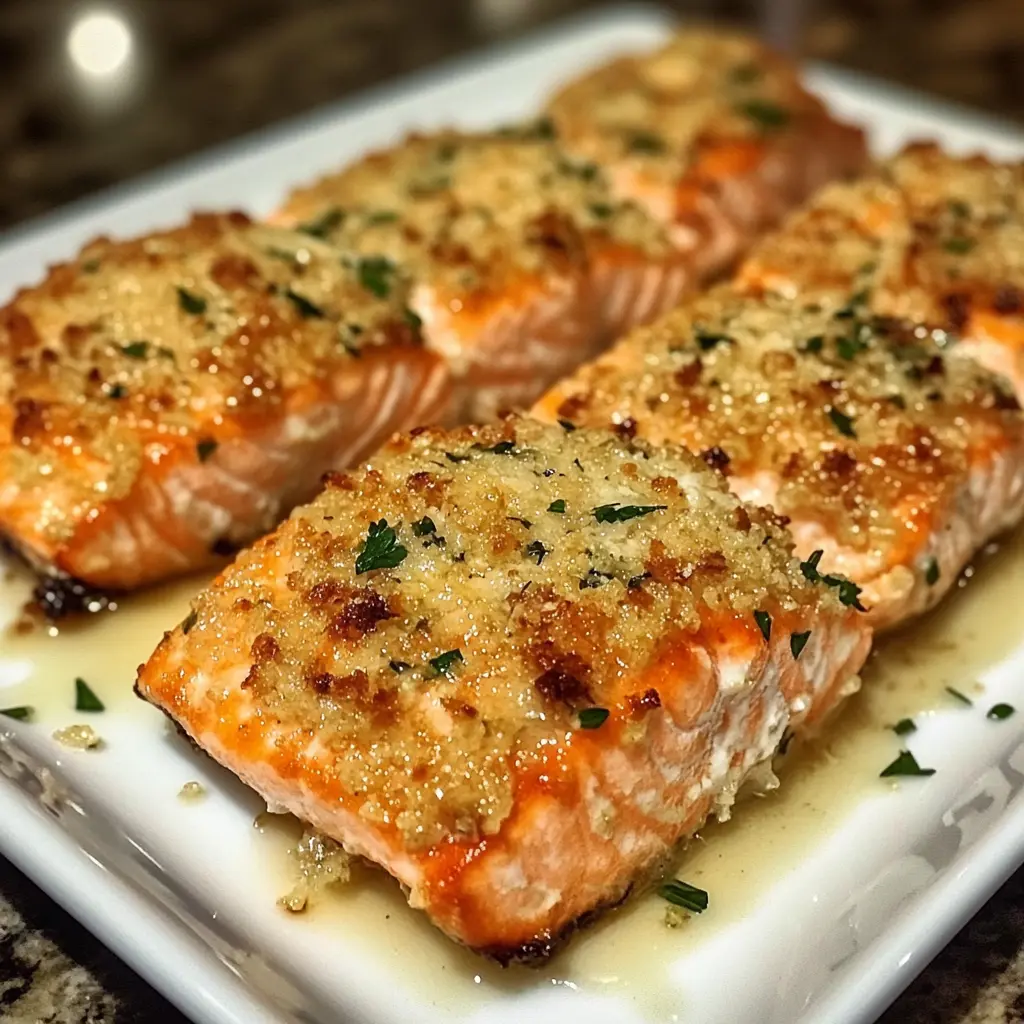
Garlic Parmesan Crusted Salmon Fillets: The Ultimate Guide to Restaurant-Quality Fish at Home
If you’ve been searching for an easy yet impressive dinner that delivers both flavor and nutrition, Garlic Parmesan Crusted Salmon Fillets are your answer. This dish combines tender, flaky salmon with a golden, crispy topping made from garlic, parmesan cheese, and breadcrumbs. With just 30 minutes from start to finish, you can create a restaurant-quality meal that’s high in protein, rich in omega-3 fatty acids, and absolutely delicious.
Why Garlic Parmesan Crusted Salmon Is a Perfect Meal
Garlic Parmesan Crusted Salmon stands out as an ideal weeknight dinner for several compelling reasons. First, it requires minimal active preparation time while delivering maximum flavor impact. The combination of savory garlic, salty parmesan, and buttery breadcrumbs creates a delicious contrast with the rich, tender salmon underneath. Additionally, this dish is incredibly versatile. You can prepare it for a quick family dinner or elevate it for special occasions and entertaining guests.
The beauty of this recipe lies in its simplicity. Even if you’re new to cooking fish, the straightforward technique virtually guarantees success. Moreover, the crispy topping adds textural excitement that transforms ordinary baked salmon into something truly special. The crunchy parmesan crust provides a satisfying bite that contrasts beautifully with the moist, flaky fish.
Furthermore, this dish offers impressive nutritional benefits without sacrificing taste. Therefore, it’s an excellent choice for health-conscious home cooks who refuse to compromise on flavor.
Understanding the Nutritional Powerhouse
Omega-3 Fatty Acids and Heart Health
Salmon is renowned for being an exceptional source of omega-3 fatty acids, specifically EPA and DHA. These essential fats provide remarkable health benefits that extend throughout your entire body. Research has demonstrated that omega-3s from salmon help lower triglyceride levels, which are a risk factor for heart disease and stroke. Additionally, these healthy fats increase HDL (good) cholesterol while helping clear your arteries of harmful LDL cholesterol.
Studies have also shown that omega-3s promote strong and flexible artery walls. This supports healthy heart function and reduces overall disease risk. Moreover, omega-3 fatty acids may improve blood flow by stimulating the production of nitric oxide. This compound relaxes blood vessels, leading to better circulation and reduced blood pressure.
Anti-Inflammatory Properties
The omega-3 fats in salmon possess powerful anti-inflammatory properties. While inflammation is your body’s natural response to stress and infection, chronic inflammation raises your risk of serious diseases. These include cancer, diabetes, and arthritis. Research suggests that omega-3s suppress your body’s inflammatory response by reducing levels of pro-inflammatory chemicals produced by immune cells.
Cognitive and Eye Health Support
Salmon provides one of the best available sources of DHA, an omega-3 that helps repair and maintain brain cells. Studies indicate that adequate DHA intake may reduce your risk of cognitive decline, including Alzheimer’s and Parkinson’s diseases. Furthermore, the omega-3 content in salmon supports eye health by lowering the risk of glaucoma and age-related vision loss.
Protein and Essential Nutrients
A typical serving of Garlic Parmesan Crusted Salmon provides approximately 25 grams of protein. This makes it an excellent choice for meeting your daily protein needs. The dish is also a good source of vitamin D, providing about 35% of your Daily Value. Additionally, it contains fiber from the breadcrumb topping, contributing 14% of your Daily Value.
Essential Ingredients for Perfect Crusted Salmon
The Salmon Selection
Choosing the right salmon is crucial for success. Wild-caught salmon is generally preferred for its superior flavor and nutritional profile. You’ll need approximately two pounds of salmon, which can be one large side or multiple smaller fillets. Interestingly, frozen salmon works exceptionally well for this recipe. The freezing process doesn’t compromise quality, and it’s often more convenient for meal planning.
Make sure your salmon is boneless. Some recipes suggest removing the skin, though leaving it on can help hold the fillet together during cooking. The key is ensuring your fish is properly thawed if starting from frozen.
The Crispy Topping Components
The star of this dish is undoubtedly the flavorful crust. You’ll need panko breadcrumbs, which create a lighter, crispier texture than regular breadcrumbs. Typically, one-quarter cup is sufficient for two pounds of salmon. Freshly grated parmesan cheese is essential, not the pre-grated variety. Hand-grated cheese melts better and provides superior flavor.
Fresh garlic is non-negotiable. Plan on using three to four cloves, finely minced or grated. The garlic should be fresh rather than pre-minced from a jar for the best taste. Additionally, you’ll need melted butter to bind the topping ingredients together and add richness.
Herbs and Seasonings
Fresh herbs elevate the dish significantly. Dill and parsley are traditional choices, with fresh being far superior to dried. Two tablespoons of fresh chopped herbs typically suffice. Some variations include Italian seasoning for an herbaceous note. Basic salt and pepper are essential for seasoning both the fish and the topping.
Optional Additions
Several ingredients can enhance your Garlic Parmesan Crusted Salmon. Sesame seeds add extra crunch and a subtle nutty flavor. Olive oil can partially replace or supplement melted butter. For a tangy kick, consider incorporating a dollop of Dijon mustard into your topping mixture. Greek yogurt or mayonnaise can also be mixed into the crust for added moisture and richness.
Step-by-Step Preparation Guide
Preparing Your Salmon
Begin by rinsing your salmon fillets under cold water. Then, thoroughly pat them dry with paper towels. This step is absolutely critical for achieving a good crust. Any excess moisture will prevent proper browning and crispiness. After drying, place the salmon in the refrigerator while you prepare the topping.
Next, season the salmon with salt and pepper. However, timing matters here. Salt your fish right before cooking rather than 30 minutes ahead. Salting too early draws out moisture, making the fish soggy. Therefore, wait until just before applying the topping to add your seasonings.
Creating the Parmesan Crust
Start by melting your butter and allowing it to cool slightly. Meanwhile, combine all your dry ingredients in a mixing bowl. This includes the panko breadcrumbs, freshly grated parmesan cheese, minced garlic, chopped herbs, and any additional ingredients like sesame seeds. Some recipes suggest using a mini food processor to combine butter, garlic, parmesan, mayonnaise, and herbs for an ultra-smooth mixture.
Pour the melted butter over your dry ingredients. Then, stir everything together until evenly combined and the mixture resembles coarse crumbs. The butter should thoroughly coat all the breadcrumbs and cheese. If using mayonnaise in your version, mix it with the butter before combining with dry ingredients.
Assembling the Dish
Line a baking pan with parchment paper for easy cleanup. Arrange your dried, seasoned salmon in the prepared pan, skin side down if your fillets still have skin. Spread the parmesan mixture evenly over the top of each fillet. Press gently to ensure the topping adheres well to the fish. Make sure to cover the entire surface for maximum flavor and texture.
Interestingly, you can prepare this dish in advance. Simply assemble everything in the morning, cover tightly, and refrigerate until you’re ready to bake for dinner. This makes it perfect for busy weeknights when you want to minimize evening cooking time.
Mastering the Cooking Technique
Oven-Baked Method
Preheat your oven to 350°F. Some recipes call for slightly higher temperatures, but 350°F ensures gentle, even cooking. Transfer your assembled salmon to the preheated oven. Baking time depends on the thickness of your fillets. Frozen salmon typically requires 20-25 minutes, while thawed fillets need approximately 15 minutes.
The salmon is done when it’s just firm in the thickest part. You can check by gently flaking it with a fork. Properly cooked salmon should still look slightly translucent in the very center. Remember, it continues cooking after removal from the oven. Therefore, slightly underdone is better than overcooked.
Alternative Cooking Methods
While oven-baking is most common, you can also prepare this dish in an air fryer. The air fryer produces an exceptionally crispy crust in less time. However, you’ll need to monitor it closely to prevent burning. For those who prefer traditional methods, pan-searing the salmon skin-side down first, then finishing in the oven, creates ultra-crispy skin.
Checking for Doneness
Overcooking is the most common mistake when preparing salmon. Overcooked fish becomes dry, develops an overly fishy taste, and may leak an unpleasant white liquid called albumin. Visual cues are your best guide. The fish should appear opaque on the outside while remaining slightly shiny and translucent in the center.
Internal temperature is another reliable indicator. Salmon is safe to eat at 145°F, though many chefs prefer pulling it at 120-125°F for medium-rare. The residual heat will bring it to the perfect temperature. When you gently press the fish, it should feel firm but still slightly give to pressure.
Common Mistakes and How to Avoid Them
Moisture Management Issues
The most critical error is failing to properly dry your salmon before seasoning. Excess moisture prevents the crust from adhering and becoming crispy. Additionally, avoid salting your fish too far in advance. Salt draws out moisture, which can make the fish soggy before it even reaches the oven. Always pat dry thoroughly and season immediately before cooking.
Temperature and Timing Errors
Cooking salmon too long is another frequent mistake. Overcooked salmon loses its delicate texture and appealing appearance. Set a timer and check your fish several minutes before the recommended cooking time ends. Remember that thicker fillets require more time than thinner ones.
Conversely, undercooking can be problematic if you’re not intentionally preparing a seared or sushi-style dish. Make sure your salmon reaches a safe internal temperature while maintaining its moist texture.
Ingredient Selection Mistakes
Using pre-grated parmesan instead of freshly grated cheese compromises both flavor and texture. Pre-grated varieties contain anti-caking agents that prevent proper melting. Similarly, jarred minced garlic lacks the pungent, fresh flavor that this dish requires. Always opt for fresh ingredients whenever possible.
Another common error is marinating salmon too long. While marinades add flavor, acids and salts break down delicate fish tissue. Over-marinating, especially with citrus, essentially “cooks” the fish before it hits the heat. Keep marinating times short, typically no more than 30 minutes.
Cooking Method Mishaps
Many home cooks remove the skin before cooking. However, leaving the skin on helps hold the fillet together and adds flavor. If you cook fillets with skin, always start skin-side down. This prevents over-browning the meat, which can make it dry.
Using the wrong pan can also cause problems. A good non-stick pan is essential for achieving crispy skin without sticking. Additionally, insufficient oil coverage leads to patchy browning rather than even crisping. Make sure your cooking surface is properly prepared.
Creative Variations and Flavor Twists
Alternative Herb Combinations
While dill and parsley are traditional, numerous herbs work beautifully with Garlic Parmesan Crusted Salmon. Fresh cilantro provides a bright, citrusy note that pairs wonderfully with the rich fish. Dried or fresh basil brings an Italian flair to the dish. Some cooks enjoy adding Italian seasoning to the crust mixture for a more complex herb profile.
Crust Variations
Experiment with different types of breadcrumbs for texture variation. Regular plain breadcrumbs create a denser crust compared to airy panko. Adding sesame seeds contributes a subtle nuttiness and extra crunch. For a gluten-free version, substitute almond flour or crushed pork rinds for the breadcrumbs.
You can also modify the fat component. While melted butter is classic, olive oil offers a lighter option. Mixing mayonnaise into the topping creates an extra-moist, rich crust that browns beautifully. Ghee is an excellent substitute for those avoiding dairy butter.
Sauce Accompaniments
Transform your Garlic Parmesan Crusted Salmon with complementary sauces. A creamy lemon dill sauce adds tangy freshness that cuts through the richness. This typically combines sour cream, fresh dill, lemon juice, Dijon mustard, and minced garlic. Greek yogurt can replace sour cream for a lighter version.
Other delicious sauce options include a simple herb butter, garlic aioli, or a light vinaigrette. These accompaniments add moisture and another flavor dimension without overwhelming the star ingredient.
Flavor Boosters
Consider incorporating additional ingredients into your crust mixture. A splash of soy sauce or coconut aminos adds umami depth. Fresh lime or lemon zest brightens the flavors considerably. A small dollop of Dijon mustard mixed into the topping provides subtle tanginess and helps bind ingredients.
For those who enjoy heat, add a pinch of red pepper flakes or cayenne to the crust mixture. This creates a pleasant warmth that complements the savory garlic and cheese.
Perfect Side Dishes to Complement Your Salmon
Vegetable Pairings
Garlic Parmesan Crusted Salmon pairs beautifully with a wide variety of vegetable side dishes. Roasted vegetables are a classic choice, particularly asparagus, Brussels sprouts, or broccoli. The caramelized edges of roasted veggies complement the crispy salmon crust. Green beans, whether steamed, sautéed, or roasted, provide a crisp, fresh contrast.
Leafy green salads offer refreshing balance to the rich fish. A simple arugula salad with lemon vinaigrette cuts through the buttery parmesan topping. Additionally, roasted tomatoes bring acidity and brightness to the plate.
Starch Companions
Crispy roasted potatoes are a satisfying accompaniment that mirrors the crunchy texture of the salmon crust. Mashed potatoes or cauliflower provide creamy comfort. For a lighter option, consider quinoa or rice pilaf. These grains absorb the delicious juices from the salmon without competing with its flavors.
A creamy lemon and herb risotto creates an elegant presentation suitable for special occasions. The rich, creamy rice complements the salmon’s tender texture. Alternatively, try roasted sweet potatoes for a slightly sweet counterpoint to the savory fish.
Grain and Pasta Options
Pasta dishes work surprisingly well with Garlic Parmesan Crusted Salmon. Consider a light lemon butter pasta or garlic herb noodles. These preparations echo the flavors in the salmon while adding substance to the meal. Couscous or farro provide nutty, textured bases that soak up any pan juices.
Creating a Complete Plate
When plating your meal, aim for color and textural contrast. Combine a green vegetable, a starch, and your beautiful golden-crusted salmon. This creates visual appeal while ensuring nutritional balance. Garnish with fresh herbs and a lemon wedge for brightness.
Storage and Meal Prep Tips
Refrigerator Storage
Properly stored Garlic Parmesan Crusted Salmon remains fresh for two to three days. Allow the cooked fish to cool to room temperature before storing. Then, cover it tightly with plastic wrap or transfer it to an airtight container. This prevents the fish from absorbing other refrigerator odors and maintains moisture.
When you’re ready to enjoy leftovers, reheat the salmon in a 350°F oven until warmed through. This method preserves the crust’s texture better than other reheating options. Avoid using the microwave, as this makes the fish soggy and ruins the crispy topping.
Meal Prep Strategies
Garlic Parmesan Crusted Salmon is excellent for meal preparation. You can prepare individual breaded fillets in advance and store them in Ziploc bags or airtight containers. When ready to cook, simply thaw to room temperature and bake according to the standard recipe instructions.
Alternatively, prepare the parmesan crust mixture ahead of time. Store it separately in the refrigerator for up to two days. This allows you to quickly assemble and bake fresh salmon on busy evenings.
Freezing Considerations
While cooked salmon can be frozen, the texture of the crust may suffer upon reheating. For best results, freeze uncooked assembled salmon fillets. Wrap each portion individually in plastic wrap, then place in a freezer-safe bag. Frozen assembled fillets should be used within two months.
When ready to cook from frozen, you can bake directly without thawing. Simply add five to ten minutes to the standard cooking time. Monitor closely to ensure the fish cooks through without burning the topping.
Frequently Asked Questions
How do I know when my Garlic Parmesan Crusted Salmon is done?
Your salmon is properly cooked when it appears opaque on the outside but remains slightly translucent in the center. The fish should flake easily with a fork while still maintaining its structure. Internal temperature should reach approximately 145°F for fully cooked salmon, though many prefer pulling it at 120-125°F for a more tender result. Remember that the fish continues cooking after removal from heat.
Can I use frozen salmon for this recipe?
Absolutely, frozen salmon works exceptionally well for Garlic Parmesan Crusted Salmon. In fact, frozen fillets are often more convenient for meal planning. Frozen salmon typically requires 20-25 minutes of baking time at 350°F, compared to approximately 15 minutes for thawed fillets. You can also bake directly from frozen by adding five to ten minutes to the standard cooking time.
What’s the best way to get a crispy crust?
The key to achieving a perfectly crispy crust lies in properly drying your salmon before seasoning. Pat the fillets thoroughly with paper towels to remove all surface moisture. Additionally, ensure your parmesan is freshly grated rather than pre-packaged, as fresh cheese melts and browns better. Using panko breadcrumbs instead of regular breadcrumbs also contributes to superior crispiness.
Should I remove the skin before cooking?
Leaving the skin on helps hold the fillet together during cooking and adds flavor. If your salmon has skin, arrange it skin-side down in the baking pan. The skin acts as a barrier between the heat and the delicate flesh, preventing overcooking. You can easily remove it after cooking if you prefer not to eat it.
How can I prevent my salmon from being overcooked?
Monitor your cooking time carefully and check the fish several minutes before the recommended time ends. Remember that salmon continues cooking from residual heat after removal from the oven. Aim for salmon that appears slightly underdone in the center, as it will reach the perfect temperature during resting. Using a meat thermometer helps ensure accuracy.
What are the best side dishes for Garlic Parmesan Crusted Salmon?
Garlic Parmesan Crusted Salmon pairs beautifully with roasted vegetables like asparagus, Brussels sprouts, or broccoli. Crispy roasted potatoes complement the crunchy salmon crust. For lighter options, consider quinoa, rice pilaf, or a fresh arugula salad with lemon vinaigrette. The goal is creating textural and flavor contrast while maintaining nutritional balance.
Can I make this recipe ahead of time?
Yes, Garlic Parmesan Crusted Salmon is perfect for advance preparation. You can assemble the dish completely in the morning, cover it tightly, and refrigerate until ready to bake for dinner. Alternatively, prepare individual breaded fillets and store them in airtight containers or Ziploc bags. When ready to cook, thaw to room temperature and bake according to standard instructions.
How long does leftover salmon keep in the refrigerator?
Properly stored cooked salmon remains fresh for two to three days in the refrigerator. Make sure to cover it tightly or store it in an airtight container. Reheat in a 350°F oven until warmed through rather than using a microwave, which makes the fish soggy. This method preserves the delicious crispy topping.
Bringing Restaurant Quality to Your Home Kitchen
Garlic Parmesan Crusted Salmon Fillets represent the perfect intersection of simplicity, nutrition, and impressive flavor. With just 30 minutes and a handful of quality ingredients, you can create a dish that rivals your favorite restaurant. The combination of tender, omega-3-rich salmon with a golden, crispy parmesan crust delivers both health benefits and culinary satisfaction.
Moreover, this versatile recipe adapts easily to your preferences and dietary needs. Whether you’re cooking for busy weeknights or special occasions, Garlic Parmesan Crusted Salmon never disappoints. By following the techniques and tips outlined in this guide, you’ll consistently achieve perfectly cooked, flavorful salmon with that coveted crispy topping.
Ready to transform your dinner routine with this delicious, nutritious dish? Gather your ingredients, preheat your oven, and prepare to impress yourself and your loved ones with restaurant-quality Garlic Parmesan Crusted Salmon Fillets tonight.
Print
Garlic Parmesan Crusted Salmon Fillets
Description
Garlic Parmesan Crusted Salmon Fillets
Servings: 4
Prep Time: 10 minutes
Cook Time: 15 minutes
Total Time: 25 minutes
Calories: ~430 per serving
Ingredients
-
4 salmon fillets (6 oz each)
-
2 tbsp olive oil
-
1 tsp salt
-
½ tsp black pepper
-
1 tsp garlic powder
-
1 tsp paprika
Garlic Parmesan Crust
-
½ cup grated Parmesan cheese
-
¼ cup panko breadcrumbs
-
3 tbsp melted butter
-
3 cloves garlic, minced
-
1 tbsp fresh lemon juice
-
1 tsp Italian seasoning
-
1 tbsp chopped parsley
-
Zest of 1 lemon (optional but recommended)
Instructions
-
Preheat oven to 400°F (200°C). Line a baking sheet with parchment.
-
Pat salmon dry. Drizzle with olive oil and season with salt, pepper, garlic powder, and paprika.
-
In a bowl, mix Parmesan, panko, melted butter, garlic, lemon juice, Italian seasoning, parsley, and lemon zest.
-
Press the mixture firmly on top of each salmon fillet, creating a thick crust.
-
Bake 12–15 minutes, depending on thickness, until salmon flakes easily and the crust is golden.
-
Broil 1–2 minutes at the end if you want a deeper golden crust.
-
Serve with lemon wedges and fresh parsley.