
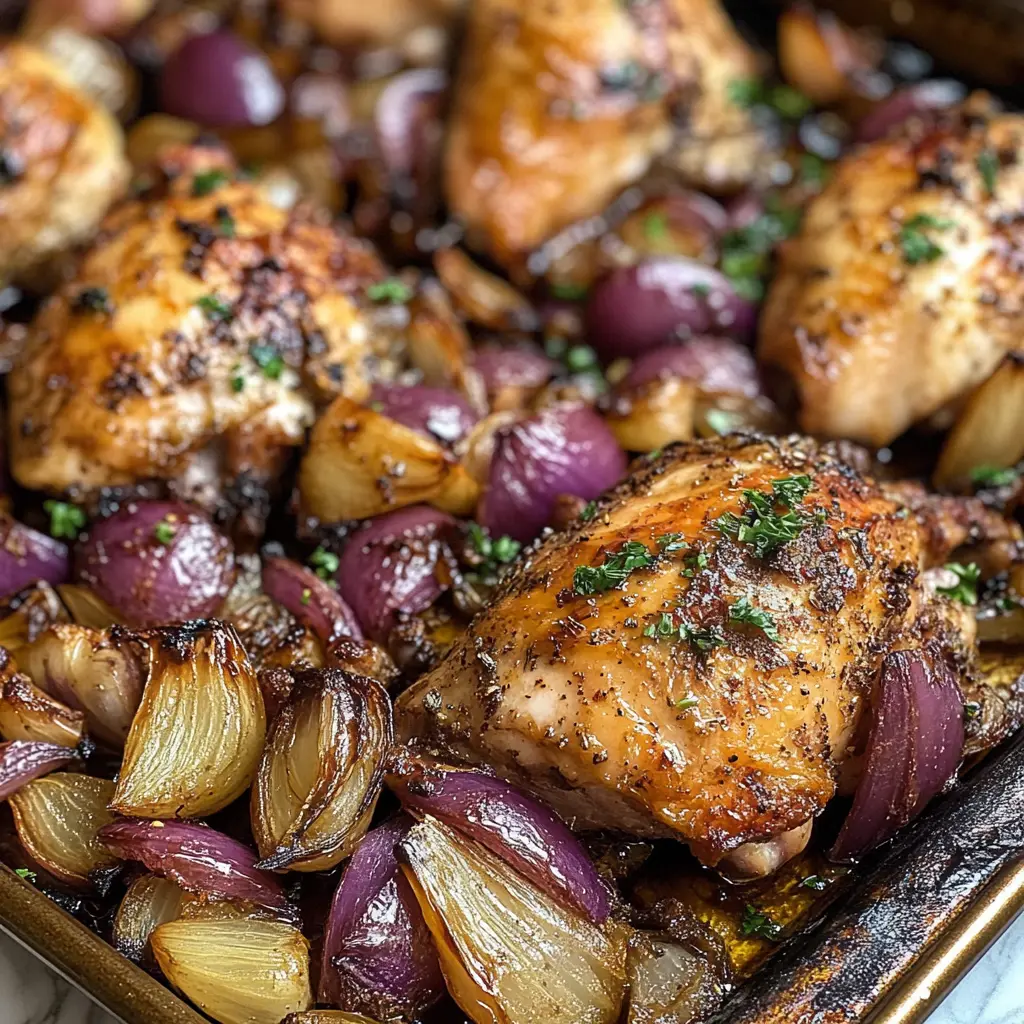
Roasted Red Onion Sheet Pan Chicken
Roasted Red Onion Sheet Pan Chicken transforms simple ingredients into an extraordinary weeknight dinner. This one-pan meal combines juicy chicken pieces with sweet, caramelized red onions that develop rich, savory flavors during roasting. The beauty of this dish lies in its simplicity and the minimal cleanup required afterward.
What Is Roasted Red Onion Sheet Pan Chicken
Roasted Red Onion Sheet Pan Chicken is a complete meal cooked entirely on a single baking sheet. The recipe features chicken pieces nestled on top of sliced red onions, fresh herbs, and aromatic garlic. During roasting, the chicken releases its natural juices, which blend with the onions to create a deliciously savory sauce.
The Magic of Sheet Pan Cooking
Sheet pan cooking offers remarkable convenience for home cooks. Everything cooks together on one pan, which saves significant preparation and monitoring time. The method ensures minimal cleanup, as you only have one pan to wash after dinner. Additionally, sheet pan meals make it easier to create balanced dinners with proteins and vegetables combined.
Why Red Onions Work Best
Red onions provide a slightly sweeter and milder flavor compared to other onion varieties. When roasted at high temperatures, they caramelize beautifully and develop deep umami notes. The natural sugars in red onions transform during cooking, creating tender, jammy textures that complement the chicken perfectly.
Health Benefits of This Recipe
This dish delivers impressive nutritional value beyond its delicious taste. The combination of lean protein and nutrient-rich vegetables creates a wholesome meal option. Understanding the health benefits helps you appreciate why this recipe deserves a regular spot in your meal rotation.
Nutritional Power of Onions
Red onions pack a substantial nutritional punch in every serving. One cup of chopped raw onions contains only 64 calories but provides 3 grams of fiber and 15 grams of carbohydrates. These vegetables are excellent sources of vitamin C, which supports immune function and aids collagen production.
Onions also provide vitamin B6, folate, potassium, manganese, and copper. These minerals play crucial roles in cellular function, fluid balance, and nerve transmission. Research suggests that regular onion consumption may improve bone density and reduce the risk of fractures, particularly in people over 50.
Benefits of Lean Chicken Protein
Chicken serves as an excellent source of lean protein for healthy diets. The protein content helps maintain muscle mass and keeps you feeling satisfied longer after meals. When cooked properly to an internal temperature of 165°F, chicken provides safe, nutritious protein without excessive fat.
Antioxidant Properties
Red onions contain powerful antioxidant compounds, including quercetin. This antioxidant exhibits anti-inflammatory properties that may help alleviate joint pain and stiffness. The sulfur compounds in onions may also reduce cholesterol levels and lower the risk of heart disease.
Essential Ingredients You Need
Main Components
-
4 medium red onions, sliced into thick wedges
-
1 whole chicken (3.5 to 4 pounds) or 8 assorted chicken pieces
-
4 cloves garlic, peeled
-
1 tablespoon extra-virgin olive oil
-
2 teaspoons paprika
-
Kosher salt and freshly ground black pepper
Fresh Herbs and Seasonings
-
1 tablespoon chopped fresh sage
-
1 tablespoon chopped fresh thyme
-
Pinch of crushed red pepper flakes
Optional Sauce Ingredients
-
1 tablespoon unsalted butter, softened
-
1 teaspoon sweet white vinegar
-
2 tablespoons water
Kitchen Tools and Equipment
Gathering the right tools before you start makes the cooking process smoother. You need a large rimmed baking sheet for roasting. A meat thermometer ensures your chicken reaches the safe internal temperature of 165°F.
Additional helpful tools include a large mixing bowl for tossing ingredients and kitchen twine if using a whole chicken. Consider lining your sheet pan with heavy-duty foil or parchment paper for easier cleanup. A blender becomes necessary if you plan to make the optional onion sauce.
Step-by-Step Cooking Instructions
Preparation Phase
Preheat your oven to 450°F with one rack positioned in the center. Place your empty baking sheet on the rack to preheat along with the oven. This step helps achieve better caramelization on the vegetables.
Pat the chicken completely dry with paper towels. Dry chicken skin browns more effectively and develops crispier textures. Season all sides of the chicken generously with paprika, 4 teaspoons salt, and 1 teaspoon black pepper.
Preparing the Onion Base
Combine sliced red onions, peeled garlic cloves, chopped sage, chopped thyme, and olive oil in a large bowl. Season the mixture with salt and black pepper to taste. Toss everything together until the onions are evenly coated, separating some but not all of the onion layers.
Assembling the Sheet Pan
Carefully remove the preheated baking sheet from the oven. Transfer the seasoned onion mixture onto the hot sheet and spread it into an even layer. Place the prepared chicken on top of the onions in the center of the sheet.
If using a whole chicken, tie the legs together with kitchen twine and tuck the wing tips underneath. This helps the chicken cook more evenly. Nestle chicken pieces directly into the onion bed if using parts instead of a whole bird.
Roasting Process
Roast the chicken and onions together, rotating the pan halfway through cooking. A whole chicken typically requires 60 to 70 minutes, while chicken pieces may cook faster. The chicken is done when an instant-read thermometer inserted into the thickest part registers 165°F.
For chicken thighs and dark meat, you can cook to a slightly higher temperature of 170-175°F for more tender, juicy results. The higher temperature helps break down connective tissues in actively worked muscles.
Creating the Optional Sauce
Transfer the cooked chicken to a cutting board to rest. Scoop half of the roasted onions and all the garlic cloves into a blender. Add softened butter, sweet white vinegar, red pepper flakes, salt, and water.
Blend the mixture until completely smooth. This creates a creamy, umami-rich sauce that makes the chicken even more succulent. The sauce captures all the savory flavors developed during roasting.
Tips for Perfect Results Every Time
Achieving Crispy Skin
Ensuring your chicken is thoroughly patted dry before seasoning is critical. Moisture on the skin prevents proper browning. Season the chicken generously, as some seasoning will fall off during cooking.
Start with a preheated baking sheet to encourage immediate searing. The hot surface helps the onions begin caramelizing right away. Consider broiling the chicken for the last 2 minutes to add extra char and crispiness.
Preventing Overcooked Vegetables
Cut your onion wedges into uniform thickness, approximately 3/4 inch. Consistent sizes ensure even cooking. If some onions appear to be browning too quickly, you can remove them early and return them to the pan later.
Temperature Management
Use a reliable instant-read meat thermometer to check doneness. Insert it into the thickest part of the thigh without touching bone for accurate readings. Remember that carryover cooking will increase the temperature by a few degrees after removing from the oven.
Different cuts of chicken have varying ideal temperatures. Breasts are perfectly cooked at 165°F, while thighs benefit from cooking to 170-175°F for optimal texture and juiciness.
Common Mistakes to Avoid
Overcrowding the Pan
Placing too many ingredients on your sheet pan prevents proper air circulation. This causes steaming instead of roasting, resulting in soggy vegetables and pale chicken. Use a large rimmed baking sheet and spread ingredients in a single layer.
Skipping the Preheat
Starting with a cold oven extends cooking time significantly. Preheating ensures the oven reaches the proper temperature before you add food. This helps achieve better browning and more predictable cooking times.
Not Rotating the Pan
Most home ovens have hot spots that cook food unevenly. Rotating your sheet pan halfway through cooking promotes even browning on all sides. This simple step takes just seconds but dramatically improves results.
Forgetting Food Safety
Always verify that chicken reaches the minimum safe internal temperature of 165°F. Undercooked poultry can harbor harmful bacteria that cause foodborne illness. Never rely on visual cues alone to determine doneness.
Serving Suggestions and Pairings
Vegetable Sides
Roasted Brussels sprouts complement the savory chicken and sweet onions beautifully. Chili-oil smashed potatoes provide a spicy, creamy contrast to the dish. Simple steamed green beans or roasted asparagus also work well.
Starch Options
Serve this chicken over fluffy rice to soak up the delicious pan juices. Creamy mashed potatoes create a comforting pairing. Crusty bread is perfect for mopping up every drop of the optional onion sauce.
Fresh Elements
Add a squeeze of fresh lemon juice over the chicken just before serving. The bright acidity cuts through the richness and enhances all the flavors. A simple green salad with vinaigrette provides refreshing contrast.
Storage and Reheating Instructions
Refrigeration Guidelines
Allow leftover chicken and onions to cool to room temperature within two hours. Transfer them to airtight containers and refrigerate promptly. Properly stored leftovers remain safe to eat for 3 to 4 days.
Freezing Options
You can freeze cooked chicken for longer storage periods. Separate the meat from the bones and store in freezer-safe containers for up to 3 months. The onions also freeze well but may lose some textural quality upon thawing.
Reheating Methods
Reheat refrigerated leftovers to an internal temperature of 165°F. Use a microwave, oven, or stovetop method depending on your preference. Add a splash of broth or water to prevent the chicken from drying out during reheating.
Variations and Customizations
Different Protein Options
Substitute bone-in, skin-on chicken thighs for a more economical option. Thighs remain juicy and tender even if slightly overcooked. Boneless, skinless chicken breasts work well but require careful monitoring to prevent drying.
Vegetable Additions
Add bell peppers and cherry tomatoes for extra color and nutrition. Sweet potatoes provide additional substance and complement the onions beautifully. Brussels sprouts, carrots, or zucchini also roast well alongside the chicken.
Seasoning Variations
Experiment with different herb combinations like rosemary and oregano. Mediterranean-inspired seasonings such as za’atar or harissa paste add exciting flavor dimensions. Garlic powder and onion powder work well if fresh herbs are unavailable.
Sauce Alternatives
Create a simpler pan sauce by deglazing the sheet pan with chicken broth. Serve the chicken with store-bought tzatziki or your favorite white sauce. A drizzle of balsamic glaze adds sweet-tart complexity to the finished dish.
Frequently Asked Questions
Can I use yellow or white onions instead of red onions?
Yes, yellow or white onions work perfectly in this recipe. Red onions provide a slightly milder, sweeter flavor when roasted, but other varieties caramelize beautifully too. Choose whichever onion type you prefer or have available in your kitchen.
How do I know when the chicken is fully cooked?
Insert an instant-read meat thermometer into the thickest part of the chicken without touching bone. The internal temperature should reach 165°F for safe consumption. Chicken breasts are done at 165°F, while thighs benefit from cooking to 170-175°F for optimal texture.
Can I make Roasted Red Onion Sheet Pan Chicken ahead of time?
You can prepare the onion mixture and season the chicken several hours before cooking. Store them separately in the refrigerator until ready to roast. The actual roasting should happen close to serving time for the best texture and flavor.
What size sheet pan should I use?
A standard 18×13-inch half-sheet pan works perfectly for this recipe. The rimmed edges contain the juices and prevent spills in your oven. Make sure your pan is large enough to hold all ingredients in a single layer without overcrowding.
Why should I preheat the baking sheet?
Preheating the sheet pan creates immediate contact heat that jumpstarts the caramelization process. This technique produces better browning on the onions and helps achieve crispier chicken skin. The hot surface also reduces overall cooking time.
Can I skip making the onion sauce?
Absolutely, the sauce is completely optional. The roasted chicken and caramelized onions are delicious on their own. If you skip the sauce, simply serve the chicken with the roasted onions scattered around it for a simpler presentation.
How can I make cleanup even easier?
Line your sheet pan with heavy-duty aluminum foil or parchment paper before adding ingredients. This creates a protective barrier that catches drips and prevents baked-on residue. You may still need to rinse the pan lightly, but cleanup becomes significantly faster.
Conclusion
Roasted Red Onion Sheet Pan Chicken delivers exceptional flavor with minimal effort and cleanup. This versatile recipe combines tender, juicy chicken with sweet caramelized onions that develop incredible depth during roasting. The health benefits from nutrient-rich onions and lean protein make this dish both delicious and nutritious.
The simplicity of sheet pan cooking allows you to create restaurant-quality meals at home without complicated techniques or multiple pans. Whether you choose to make the optional creamy onion sauce or serve the chicken as-is, this recipe promises satisfying results every time. The flexible nature of the dish welcomes endless variations based on your preferences and what ingredients you have available.
Print
Roasted Red Onion Sheet Pan Chicken
Description
Roasted Red Onion Sheet Pan Chicken
Ingredients
-
4 bone-in, skin-on chicken thighs (or breasts)
-
2 medium red onions, sliced into wedges
-
1 cup baby carrots or cherry tomatoes (optional)
-
3 tbsp olive oil
-
3 cloves garlic, minced
-
1 tsp dried thyme
-
1 tsp paprika
-
Salt & black pepper, to taste
-
Fresh parsley, chopped (for garnish)
Instructions
-
Preheat oven to 425°F (220°C). Line a baking sheet with parchment paper or foil.
-
In a large bowl, toss chicken thighs with 2 tbsp olive oil, garlic, thyme, paprika, salt, and pepper.
-
Toss red onion wedges and any optional vegetables with 1 tbsp olive oil, salt, and pepper.
-
Arrange chicken and vegetables in a single layer on the sheet pan.
-
Roast for 35–40 minutes, or until chicken reaches an internal temperature of 165°F (74°C) and vegetables are tender.
-
Optional: Broil for 2–3 minutes for a golden, crispy finish.
-
Garnish with fresh parsley and serve hot.