
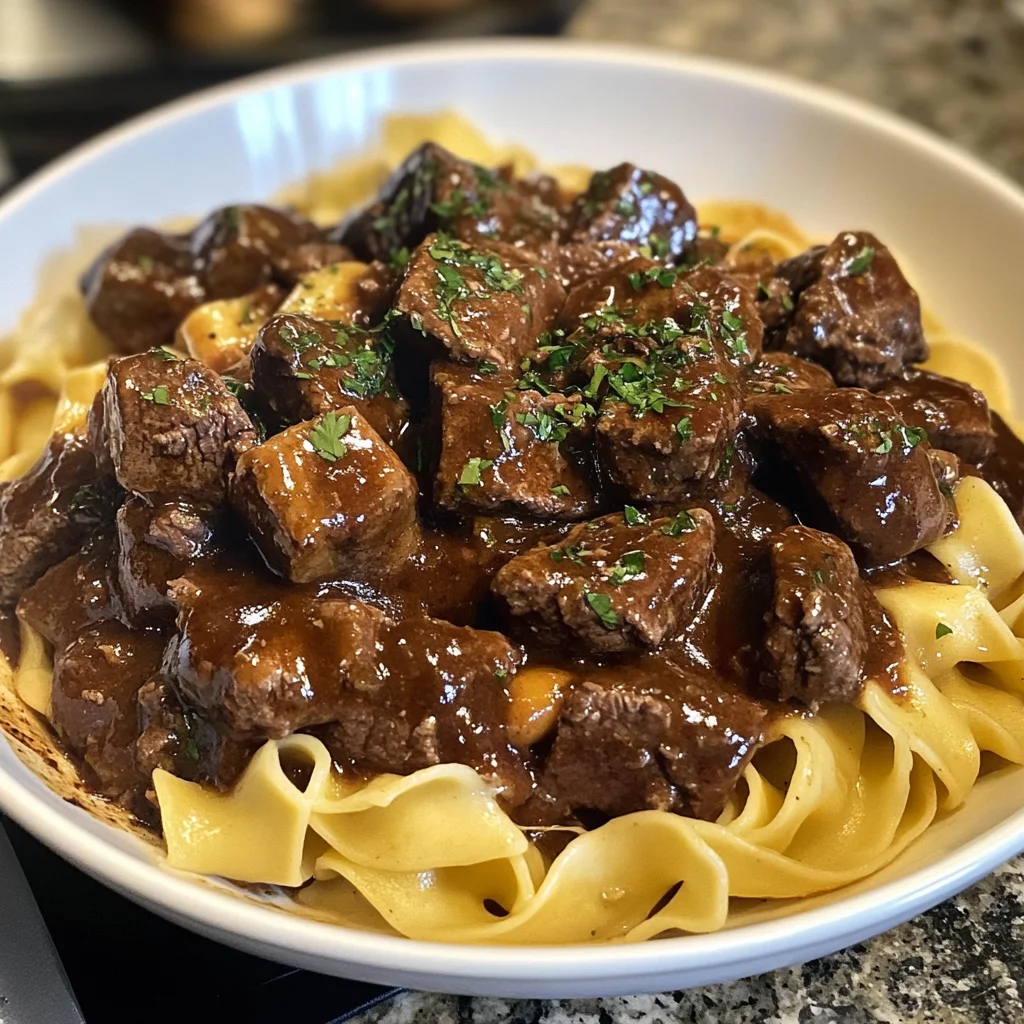
Beef Bourguignon with Buttery Egg Noodles blends French-inspired braised beef with simple, comforting pasta for a dish that tastes restaurant-worthy yet still suits a busy home cook’s schedule. Because the method focuses on slow simmering, the beef becomes incredibly tender and the flavors meld into a luxurious, spoon-coating sauce that clings beautifully to each noodle strand.
What this dish is
Beef Bourguignon with Buttery Egg Noodles is a one‑plate comfort meal made from slow-simmered beef stew spooned over rich, buttered egg noodles. The hearty sauce is built from browned beef, aromatic vegetables, tomato paste, and flavorful stock, then finished with herbs and a touch of acidity for balance.
Origin and family appeal
Traditional bourguignon comes from French country cooking and was designed to transform tougher cuts of beef into melt-in-the-mouth meals through long, gentle braising. Modern family versions, especially those developed without fermented ingredients, rely on stock, vegetable sweetness, and natural juices to create depth in a kid-friendly way.
Why pair with buttery egg noodles
Egg noodles are an ideal base because they cook quickly, soak up sauce, and bring a mild, comforting flavor that never competes with the stew. When tossed with butter, a bit of seasoning, and sometimes Parmesan, they become silky and slightly rich, catching every drop of the braising liquid.
Key ingredients and substitutions
Choosing the right ingredients is essential for flavor and texture in Beef Bourguignon with Buttery Egg Noodles. Below are the main components, plus smart substitutions that keep the dish flexible for different kitchens and diets.
Beef and aromatic base
-
Beef chuck or brisket:
-
Well-marbled cuts like chuck roast or brisket break down into fork-tender pieces during long cooking.
-
Leaner cuts dry out, so they are less suitable for this type of braise.
-
-
Bacon or smoked lardons:
-
Small pieces of cured pork render flavorful fat and add savory depth to the sauce.
-
For a lighter version, you may reduce the quantity or omit, adding a bit more oil and seasoning.
-
-
Aromatics:
-
Onion, garlic, and shallots create the flavor backbone and sweetness.
-
Carrots add color and subtle natural sugar that balances the rich sauce.
-
Liquid, thickener, and flavor boosters
-
Beef stock or broth:
-
A good-quality, low-sodium stock forms the main body of the sauce.
-
Using stock instead of water gives the stew a deeper, more rounded flavor.
-
-
Tomato paste:
-
Tomato paste brings umami and helps the sauce develop a glossy, rich consistency when browned slightly.
-
-
Acidic boosters (no fermented drinks):
-
Apple cider vinegar, pomegranate molasses, or beetroot juice with a splash of vinegar can brighten the sauce and mimic the complexity usually achieved with fermented liquids.
-
These ingredients add tang, gentle sweetness, and color without relying on any alcoholic components.
-
-
Flour or cornstarch:
-
A light dusting of flour over the seared beef or a cornstarch slurry whisked in at the end thickens the sauce.
-
Herbs and aromatics
-
Thyme and bay leaves:
-
Thyme and bay leaves are classic additions, lending an earthy, comforting aroma.
-
A small bouquet of parsley stems and thyme sprigs can also be tied together for easy removal.
-
-
Fresh parsley:
-
Chopped parsley added just before serving brightens the dish and adds a fresh, green finish.
-
For more detail on typical braised beef aromatics and seasonings, see resources on classic French stews and braises.
Egg noodles and finishing fats
-
Egg noodles:
-
Extra-wide egg noodles work best because their surface area holds the sauce nicely.
-
Dried egg noodles cook quickly in boiling salted water, often in less than 10 minutes.
-
-
Butter:
-
Butter is essential for coating the noodles and giving them a rich, silky texture.
-
For dairy-sensitive diners, lactose-free butter or quality plant-based alternatives can substitute with good results.
-
-
Optional cheese:
-
Parmesan or other hard grating cheese adds a savory, nutty note to the noodles.
-
Step‑by‑step cooking instructions
This section lays out a clear roadmap for preparing Beef Bourguignon with Buttery Egg Noodles from start to finish. Working in stages keeps the process manageable and maximizes flavor at every step.
Step 1: Prep ingredients
-
Cut beef into large chunks (about 4–5 cm) so they stay juicy during long cooking.
-
Pat the beef dry with paper towels and season generously with salt and pepper.
-
Dice onion and carrots, slice shallots if using, and mince the garlic.
-
Prepare bacon or lardons by cutting into small strips or cubes.
Preparing everything before starting the stove helps the cooking process flow smoothly and limits overcooking.
Step 2: Brown the bacon
-
Place a heavy Dutch oven or large pot over medium heat.
-
Add the bacon and cook until the fat renders and the pieces turn golden and crisp.
-
Remove the bacon with a slotted spoon, leaving the flavorful fat behind.
This rendered fat becomes the base for browning the beef and vegetables, building layers of flavor in the stew.
Step 3: Sear the beef
-
Increase heat to medium-high.
-
Add the beef in a single layer, working in batches to avoid crowding.
-
Brown the beef on all sides until a deep, caramelized crust forms.
-
Transfer browned pieces to a plate and continue with the remaining beef.
Proper browning encourages Maillard reactions, which create complex savory notes that carry through the entire dish.
Step 4: Cook the aromatics
-
Reduce heat to medium.
-
Add diced onion, carrot, and shallots to the pot, using the remaining fat.
-
Sauté until the vegetables soften and the onion turns translucent, stirring often.
-
Stir in minced garlic and cook for about 30 seconds until fragrant.
During this stage, scrape the bottom of the pot to loosen browned bits, which will later dissolve into the cooking liquid.
Step 5: Add tomato paste and flour
-
Add tomato paste and cook for 1–2 minutes, stirring, until it darkens slightly in color.
-
Sprinkle flour over the vegetables and stir to coat evenly.
-
Cook for another minute to remove the raw flour taste.
Lightly toasting the tomato paste and flour deepens flavor and ensures the sauce thickens smoothly as it simmers.
Step 6: Deglaze and build the sauce
-
Pour in beef stock or broth while stirring, loosening any remaining browned bits.
-
Add beetroot juice, apple cider vinegar, or pomegranate molasses to introduce acidity and gentle sweetness.
-
Return the browned beef and crisp bacon to the pot along with accumulated juices.
-
Add thyme, bay leaves, and a small handful of chopped parsley stems.
This liquid mixture should just cover the meat and vegetables, which helps them cook evenly and produce a glossy, concentrated sauce.
Step 7: Slow simmer or oven braise
You can finish Beef Bourguignon with Buttery Egg Noodles on the stovetop or in the oven.
-
For stovetop cooking:
-
Bring the pot to a gentle simmer.
-
Reduce heat to low, cover, and cook for 2–3 hours, stirring occasionally.
-
-
For oven braising:
-
Preheat the oven to about 160–170°C.
-
Cover the pot and cook for roughly the same time, checking tenderness after 2 hours.
-
The stew is done when the beef is very tender and easily breaks apart with a fork but still holds its shape.
Step 8: Add mushrooms and finish seasoning
-
During the last 30–40 minutes of cooking, sauté mushrooms in a separate pan with a bit of butter or oil until browned.
-
Stir the mushrooms into the stew.
-
Taste the sauce and adjust seasoning with additional salt, pepper, and a touch more vinegar or pomegranate molasses if needed.
Balancing salt, acidity, and sweetness at the end ensures the sauce tastes bright, not heavy, even though it is deeply savory.
Tips for tender beef and glossy sauce
Small technique tweaks make a big difference when preparing Beef Bourguignon with Buttery Egg Noodles. The following tips help achieve a silky sauce and succulent beef every time.
Keeping beef tender
-
Choose well-marbled cuts like chuck roast or brisket, not lean steak.
-
Avoid boiling; maintain a gentle simmer throughout braising.
-
Give the stew enough time; connective tissue needs hours to break down.
If the beef is still tough after the suggested cooking time, simply continue simmering until it softens, adding a splash of stock if the liquid level drops.
Achieving a rich, thick sauce
-
Brown meat and vegetables thoroughly to build deep flavor.
-
Use tomato paste and flour to create body and a glossy texture.
-
Finish with a small knob of butter or a cornstarch slurry if the sauce needs a final thickening push.
Letting the stew rest after cooking allows the flavors to meld and the sauce to thicken slightly, improving both taste and mouthfeel.
How to make perfect buttery egg noodles
The noodles in Beef Bourguignon with Buttery Egg Noodles should be tender, lightly seasoned, and luxuriously coated in butter. Because they are relatively simple, each step contributes to their final texture and flavor.
Cooking the egg noodles
-
Bring a large pot of well-salted water to a rolling boil.
-
Add extra-wide egg noodles and cook according to package directions until just tender.
-
Reserve a small cup of starchy cooking water before draining.
-
Drain the noodles well.
Cooking noodles to a tender, not mushy, texture ensures they hold up once topped with the rich beef and sauce.
Buttering and seasoning
-
Return the drained noodles to the warm pot.
-
Add butter and toss until fully melted and the noodles are evenly coated.
-
Add a splash of reserved cooking water if needed to help the butter cling.
-
Season with salt, pepper, and optional grated Parmesan.
Fresh chopped parsley or chives can be sprinkled over the buttery noodles for extra color and a gentle herbal note.
Make‑ahead, storage, and reheating
Beef Bourguignon with Buttery Egg Noodles works very well for meal prep and entertaining because the flavors improve after resting. Storing the stew and noodles separately preserves their best textures.
Make‑ahead strategy
-
Prepare the beef stew up to 2 days in advance and refrigerate in an airtight container once cooled.
-
Cook and butter the egg noodles just before serving, or make them a few hours ahead and rewarm gently with a splash of water and extra butter.
Chilling the stew also makes it easier to remove excess fat from the surface before reheating, producing a cleaner, more balanced sauce.
Storage and reheating tips
-
Store the stew and noodles separately in the refrigerator for 3–4 days.
-
Reheat the stew slowly on the stovetop over low to medium heat, adding a bit of stock if the sauce seems too thick.
-
Warm noodles with a splash of water and an extra pat of butter in a covered pan.
For longer storage, the beef stew portion freezes well for several months, whereas noodles are best enjoyed fresh or within a couple of days.
Serving ideas and variations
Beef Bourguignon with Buttery Egg Noodles is flexible enough for weeknight dinners, holidays, or entertaining guests. Simple side dishes and thoughtful garnishes turn it into a beautiful, complete meal.
Serving suggestions
-
Spoon the stew over a bed of buttery egg noodles on warm plates.
-
Sprinkle chopped parsley or chives over the top for color and freshness.
-
Add a side of green vegetables, such as steamed green beans, sautéed spinach, or a crisp salad with mustard vinaigrette.
Crusty bread or a simple baguette works well for soaking up any remaining sauce on the plate.
Flavor variations
-
Smoky version:
-
Use smoked bacon and a pinch of smoked paprika for a deeper, smokier profile.
-
-
Root vegetable twist:
-
Add parsnips, turnips, or celeriac cubes along with the carrots for extra earthy notes.
-
-
Mushroom-forward style:
-
Increase the amount of mushrooms and use a mix of button, cremini, and shiitake for layers of umami.
-
Even with variations, keeping the focus on tender beef, aromatic vegetables, and a silky sauce ensures the dish stays true to its comforting roots.
Nutrition and dietary tweaks
Beef Bourguignon with Buttery Egg Noodles is naturally hearty, but several adjustments can tailor it to different dietary needs. Consider portion sizes, ingredient swaps, and side dishes when building a balanced plate.
Lightening the dish
-
Use a bit less bacon and trim excess visible fat from the beef before cooking.
-
Skim the fat layer off the chilled stew before reheating.
-
Serve with a large portion of vegetables instead of increasing the noodles.
These small changes reduce overall richness while keeping the deeply savory character of the dish.
Gluten‑free and dairy‑free options
-
For gluten‑free:
-
Substitute gluten‑free flour or cornstarch for thickening and use gluten‑free noodles or another gluten‑free base like mashed potatoes or rice.
-
-
For dairy‑free:
-
Replace butter in the noodles with a dairy‑free margarine or olive oil and omit any cheese toppings.
-
Reliable resources on gluten‑free cooking and dairy-free swaps, such as health-focused recipe sites and nutrition organizations, offer additional guidance on safe substitutions.
Frequently asked questions
This FAQ section addresses common concerns about making Beef Bourguignon with Buttery Egg Noodles at home. Clear answers help you troubleshoot problems and adapt the recipe confidently.
Can this recipe be made in a slow cooker?
Yes, Beef Bourguignon with Buttery Egg Noodles adapts well to slow cookers. Brown the bacon, beef, and vegetables on the stovetop first, then transfer everything to the slow cooker with stock, aromatics, and flavorings and cook on low for 7–8 hours until the beef is tender.
Which cut of beef works best?
Well-marbled cuts like chuck roast, brisket, or boneless short ribs are ideal for this dish. These cuts contain enough connective tissue and fat to stay moist and become tender during long, gentle cooking, unlike lean steak cuts that can turn dry.
How can the sauce be thickened if it seems too thin?
If the sauce feels thin at the end of cooking, simmer the stew uncovered for a short time to reduce the liquid. Alternatively, stir in a small cornstarch slurry or an extra spoonful of tomato paste and cook until the sauce reaches a glossy, spoon-coating consistency.
Can the buttery egg noodles be made ahead?
Yes, but they taste best when freshly prepared. If needed, cook and butter the noodles earlier in the day, then reheat gently with a splash of water or stock and a bit more butter before serving with the stew.
What can replace egg noodles?
If egg noodles are not available or desired, serve the stew over mashed potatoes, creamy polenta, or plain rice. Each option offers a different texture but still pairs well with the rich, savory sauce and tender beef.
Final thoughts on Beef Bourguignon with Buttery Egg Noodles
Beef Bourguignon with Buttery Egg Noodles delivers everything people look for in a comforting dinner: tender beef, deep savory flavor, soft vegetables, and a bed of buttery noodles to capture every drop of sauce. With the right cut of beef, a slow simmer, and a simple pot of well-seasoned noodles, this dish becomes a reliable centerpiece for family meals, holidays, or any evening when a warm, generous plate of food feels exactly right.
Print
Beef Bourguignon with Buttery Egg Noodles
Description
Ingredients:
For the Beef Bourguignon:
-
1 lb beef stew meat, cut into 1-inch cubes
-
2 tbsp olive oil
-
1 small onion, diced
-
2 cloves garlic, minced
-
1 cup mushrooms, sliced
-
1/2 cup red wine (optional, or use beef broth)
-
1 cup beef broth
-
1 tbsp tomato paste
-
1 tsp dried thyme
-
1 tsp dried rosemary
-
1 bay leaf
-
Salt and black pepper, to taste
For the Buttery Egg Noodles:
-
8 oz egg noodles
-
2 tbsp unsalted butter
-
Salt, to taste
-
Fresh parsley, chopped, for garnish
Instructions:
-
Cook the beef:
-
Heat olive oil in a large skillet or Dutch oven over medium-high heat.
-
Season beef with salt and pepper, then sear in batches until browned on all sides. Remove beef and set aside.
-
-
Sauté vegetables:
-
In the same pan, sauté onion and garlic for 2-3 minutes until softened.
-
Add mushrooms and cook another 3 minutes.
-
-
Deglaze and simmer:
-
Stir in tomato paste and cook 1 minute.
-
Deglaze pan with red wine (or skip and use broth). Scrape up any browned bits.
-
Return beef to pan, add beef broth, thyme, rosemary, and bay leaf.
-
Simmer for 15-20 minutes until beef is tender and sauce is slightly thickened. Remove bay leaf.
-
-
Cook the noodles:
-
While beef simmers, cook egg noodles according to package instructions. Drain and toss with butter and a pinch of salt.
-
-
Serve:
-
Plate noodles and spoon beef bourguignon on top.
-
Garnish with chopped parsley.
-