
Introduction
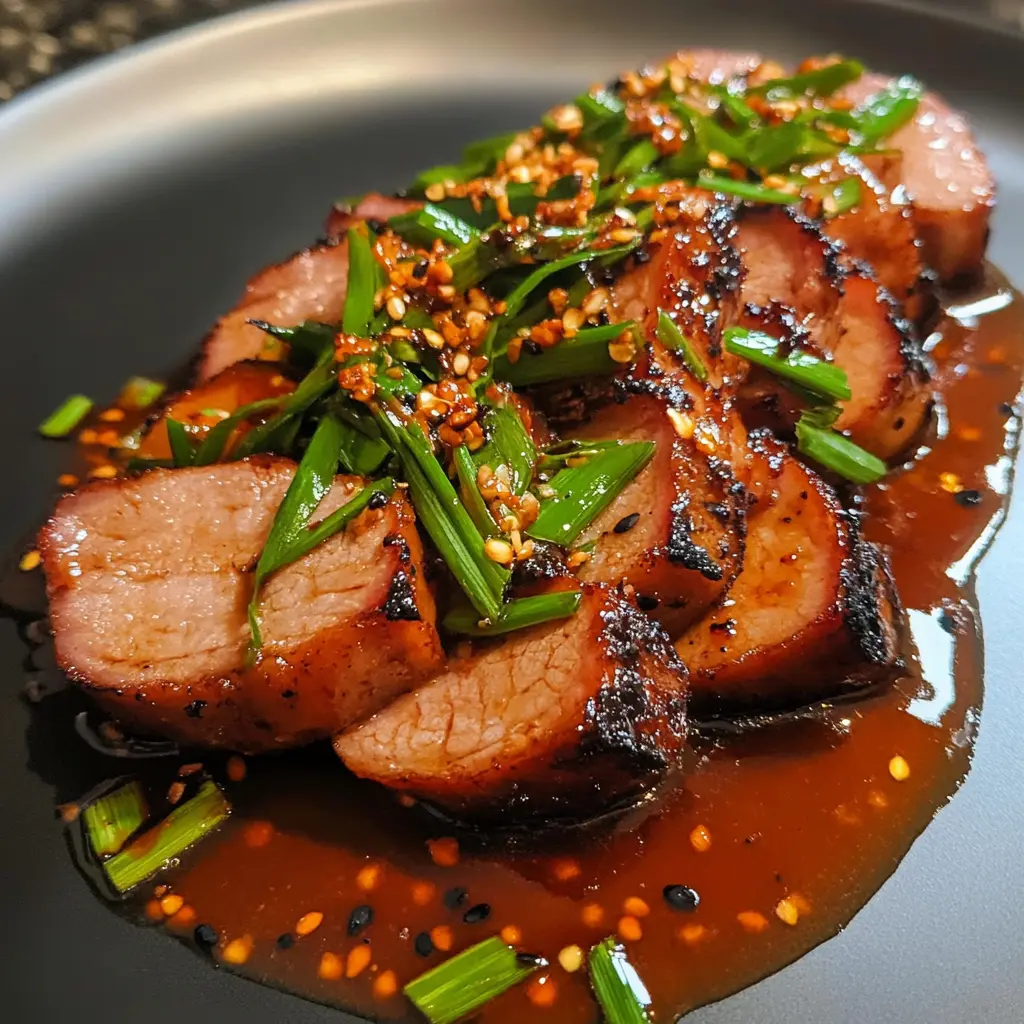
Imagine a dish that combines sweet peach notes with bold Korean spice, tender meat that melts in your mouth, and smoky charred scallions that add an irresistible depth of flavor. Peach Gochujang Pork Tenderloin with Charred Scallions delivers exactly that experience. This fusion recipe transforms simple ingredients into an unforgettable meal that looks restaurant-quality but comes together easily in your home kitchen.
Moreover, this dish perfectly balances multiple flavor profiles. The natural sweetness of peaches complements the fermented heat of gochujang, while the pork provides a tender, protein-rich base. Additionally, the charred scallions introduce a smoky element that ties everything together beautifully.
What Is Peach Gochujang Pork Tenderloin
Peach Gochujang Pork Tenderloin with Charred Scallions is a Korean-inspired fusion dish that marries Western cooking techniques with bold Asian flavors. The recipe centers on pork tenderloin, one of the leanest and most tender cuts of pork available.
The Star Ingredient: Gochujang
Gochujang is a Korean fermented chili paste that forms the flavor foundation of this dish. This versatile condiment combines gochugaru (Korean chili flakes), miso paste, honey, and rice vinegar to create a complex flavor profile. Furthermore, gochujang brings umami depth, gentle heat, and a subtle sweetness that pairs exceptionally well with fruit-based sauces.
The Peach Component
Fresh or frozen peaches add natural sweetness and acidity to the glaze. When cooked down with gochujang, peaches create a sticky, caramelized coating that clings beautifully to the pork. Consequently, each bite delivers a perfect balance of sweet and spicy flavors.
Why This Recipe Works
This Peach Gochujang Pork Tenderloin with Charred Scallions succeeds for several compelling reasons.
Flavor Harmony
The combination of sweet peaches and spicy gochujang creates a balanced sauce that enhances rather than overwhelms the mild pork. Additionally, the charred scallions contribute a smoky, slightly bitter note that prevents the dish from becoming too sweet.
Cooking Technique
Roasting pork tenderloin at the proper temperature ensures juicy, tender meat every time. The recommended internal temperature of 145°F produces pork with a slight pink center and maximum juiciness. Meanwhile, basting with the peach glaze during cooking creates layers of flavor and a beautiful caramelized exterior.
Textural Contrast
The tender pork contrasts beautifully with the slightly charred, smoky scallions. This textural variation keeps each bite interesting and prevents flavor fatigue.
Visual Appeal
The glossy peach-gochujang glaze gives the pork an appetizing sheen, while the vibrant green scallions add color contrast. Therefore, this dish photographs beautifully and makes an impressive presentation for dinner guests.
Essential Ingredients Breakdown
Creating perfect Peach Gochujang Pork Tenderloin with Charred Scallions requires quality ingredients.
For the Pork and Marinade
-
Pork Tenderloin (2 pieces, about 1.25 pounds each): Choose tenderloins with minimal silver skin
-
Gochujang (¼ cup): Korean fermented chili paste available in Asian markets
-
Soy Sauce (¼ cup): Adds saltiness and umami depth
-
Toasted Sesame Oil (2 tablespoons): Provides nutty aroma and authentic Korean flavor
-
Brown Sugar (1 tablespoon): Helps with caramelization and balances heat
-
Mirin (2 tablespoons): Sweet rice cooking liquid that tenderizes meat
For the Peach Glaze
-
Fresh or Frozen Peaches (2 medium, peeled and diced): The fruit base for your sauce
-
Additional Gochujang (1-2 tablespoons): Intensifies the spice level
-
Honey (2 tablespoons): Enhances natural peach sweetness
-
Sesame Oil (2 teaspoons): Reinforces the Korean flavor profile
-
Soy Sauce (2 tablespoons): Adds savory depth to the sweet glaze
For the Charred Scallions
-
Scallions/Green Onions (1-2 bunches): Choose firm, bright green scallions
-
Olive Oil (1 tablespoon): Helps with charring and prevents sticking
-
Salt (pinch): Enhances natural flavors
-
Lemon Juice (optional, 1 teaspoon): Adds brightness
Garnish Options
-
Toasted Sesame Seeds: For textural crunch and visual appeal
-
Extra Minced Scallions: Fresh contrast to charred ones
-
Fresh Cilantro: Herbaceous brightness
Step-by-Step Cooking Instructions
Follow these detailed instructions to create perfect Peach Gochujang Pork Tenderloin with Charred Scallions.
Preparing the Marinade
First, prepare your marinade to infuse the pork with flavor. In a medium bowl, whisk together gochujang, soy sauce, toasted sesame oil, mirin, and brown sugar until the sugar completely dissolves. The mixture should be smooth without any lumps.
Next, trim the silver skin from your pork tenderloins using a sharp knife. This thin membrane doesn’t break down during cooking and can make the meat tough. Place the trimmed tenderloins in a gallon-sized zip-top bag or baking dish.
Pour the marinade over the pork, ensuring complete coverage. Seal the bag, removing as much air as possible, or cover the dish with plastic wrap. Marinate for at least one hour at room temperature or up to 24 hours refrigerated. Turn the pork occasionally for even flavor distribution.
Making the Peach Glaze
While the pork marinates, prepare your peach gochujang glaze. Heat a medium saucepan over medium heat. Add diced peaches and let them soften for 3-4 minutes.
Once the peaches release their juices, add sesame oil and stir for one minute. Then, incorporate gochujang, honey, and a small amount of soy sauce. Stir constantly to prevent sticking.
Allow the mixture to simmer gently for 5-7 minutes until it thickens noticeably. The glaze should coat the back of a spoon when ready. Remove from heat and set aside.
Roasting the Pork
Preheat your oven to 400°F. This temperature creates a beautiful exterior crust while keeping the interior juicy.
Remove the pork from the marinade, allowing excess liquid to drip off. Place the tenderloins on a roasting rack set over a baking sheet. This elevation allows hot air to circulate completely around the meat.
Brush the pork generously with half of the peach glaze. Reserve the remaining glaze for basting and serving.
Insert a meat thermometer into the thickest part of one tenderloin. Roast for 20-25 minutes, basting with additional glaze every 10 minutes. The pork is done when the internal temperature reaches 145°F for medium doneness.
Remove the pork from the oven and let it rest for 10 minutes before slicing. This resting period allows juices to redistribute throughout the meat, ensuring maximum tenderness.
How to Char Scallions Perfectly
Charred scallions elevate Peach Gochujang Pork Tenderloin with Charred Scallions from good to exceptional.
Preparation Steps
Begin by thoroughly washing your scallions, as they often contain sand or grit between layers. Trim the root ends and any wilted green tops.
Pat the scallions completely dry with paper towels. Moisture prevents proper charring and causes steaming instead.
Charring Methods
Grill Method: Heat your grill to medium-high (around 400°F). Toss scallions with olive oil and a pinch of salt. Place them perpendicular to grill grates to prevent falling through. Grill for 2-3 minutes per side until char marks appear.
Stovetop Method: Heat a heavy-bottomed skillet or grill pan over medium-high heat. When the pan is very hot, add oil-coated scallions in a single layer. Allow them to char undisturbed for 2-3 minutes before flipping.
Watch carefully, as scallions can burn quickly. They’re done when softened with visible char marks but not completely blackened.
Finishing Touches
Remove charred scallions from heat immediately. Sprinkle with additional salt and a squeeze of lemon juice if desired. The scallions can be served whole as a dramatic presentation or roughly chopped and scattered over the sliced pork.
Nutritional Benefits of Pork Tenderloin
Peach Gochujang Pork Tenderloin with Charred Scallions offers impressive nutritional value.
Lean Protein Powerhouse
Pork tenderloin ranks among the leanest cuts available, containing just 139 calories and 4 grams of fat per 3-ounce serving. Despite its low fat content, it delivers 25 grams of high-quality protein. This protein supports muscle maintenance, repair, and growth.
Essential Vitamins
Each serving provides substantial amounts of B vitamins. Thiamin (B1) supports carbohydrate metabolism and energy production. Niacin (B3) contributes to normal psychological function. Vitamin B6 helps reduce tiredness and fatigue.
Important Minerals
Pork tenderloin supplies generous concentrations of selenium, which boosts immune function and thyroid health. Zinc facilitates immune response, DNA formation, and growth. Phosphorus assists bone formation alongside calcium. Potassium regulates fluid balance and heart rhythm.
Low Carbohydrate Content
The meat itself contains virtually no carbohydrates, making it suitable for various dietary approaches. The peach glaze adds natural fruit sugars, but you control the amount.
Serving Suggestions and Pairings
Peach Gochujang Pork Tenderloin with Charred Scallions pairs beautifully with numerous side dishes.
Grain-Based Sides
-
Steamed White or Brown Rice: Absorbs the delicious sauce perfectly
-
Coconut Rice: Adds subtle sweetness that complements the peach
-
Quinoa: Provides protein and nutty flavor
-
Rice Noodles: Creates a complete Asian-fusion meal
Vegetable Accompaniments
-
Stir-Fried Bok Choy: Light and slightly bitter contrast
-
Roasted Brussels Sprouts: Caramelized flavor matches the glazed pork
-
Sesame Green Beans: Reinforces the Korean theme
-
Cucumber Salad: Cool, crunchy, and refreshing
Complete Bowl Presentations
Transform this dish into grain bowls for casual serving. Start with a base of rice, add sliced Peach Gochujang Pork Tenderloin with Charred Scallions, then top with pickled vegetables, kimchi, edamame, and a fried egg. Drizzle with extra gochujang sauce for added heat.
Storage and Meal Prep Tips
Properly stored, Peach Gochujang Pork Tenderloin with Charred Scallions remains delicious for several days.
Refrigeration Guidelines
Allow cooked pork to cool completely before storing. Slice the tenderloin and place it in an airtight container with any remaining glaze. Store charred scallions separately to maintain their texture. Properly stored, the pork keeps for 3-4 days refrigerated.
Reheating Methods
Reheat sliced pork gently to prevent drying. The best method uses a skillet over medium-low heat with a splash of water or broth. Cover and heat for 3-4 minutes until warmed through. Alternatively, microwave at 50% power in 30-second intervals.
Freezing Instructions
Peach Gochujang Pork Tenderloin with Charred Scallions freezes reasonably well. Wrap cooled, sliced pork tightly in plastic wrap, then aluminum foil. Freeze for up to 3 months. Thaw overnight in the refrigerator before reheating.
Meal Prep Strategy
This recipe works excellently for meal preparation. Marinate the pork overnight, then roast it on meal prep day. Slice and portion into individual containers with your chosen sides. The flavors actually deepen after a day in the refrigerator.
Common Mistakes to Avoid
Several pitfalls can compromise your Peach Gochujang Pork Tenderloin with Charred Scallions.
Overcooking the Pork
Pork tenderloin becomes dry and tough when overcooked. Always use a meat thermometer and remove the pork at exactly 145°F internal temperature. Remember that carryover cooking will raise the temperature another 5 degrees during resting.
Insufficient Marination Time
While you can marinate for just one hour, longer marination produces deeper flavor. For best results, marinate overnight in the refrigerator.
Burning the Glaze
Sugar-based glazes burn easily at high temperatures. Monitor the pork carefully during the final minutes of roasting. If the glaze darkens too quickly, tent the pork loosely with aluminum foil.
Skipping the Rest Period
Slicing pork immediately after roasting causes all the juices to run out. Always rest the meat for 10 minutes before cutting. This patience results in noticeably juicier pork.
Not Trimming Silver Skin
The silver skin on pork tenderloin is tough and chewy. Always remove it completely before marinating. Slide a sharp knife under the membrane and angle it upward to separate it from the meat.
Recipe Variations and Substitutions
Customize Peach Gochujang Pork Tenderloin with Charred Scallions to suit your preferences.
Fruit Alternatives
Replace peaches with other stone fruits or tropical options. Mango creates a similar sweetness with more tropical notes. Apricots provide concentrated sweetness and bright color. Pineapple adds tanginess and helps tenderize the meat further.
Heat Level Adjustments
Control spiciness by adjusting gochujang quantities. For milder heat, reduce gochujang to 2 tablespoons and increase honey. For more fire, add extra gochujang or a teaspoon of gochugaru (Korean chili flakes).
Protein Substitutions
Though this recipe features pork, the peach gochujang glaze works beautifully on other proteins. Try boneless chicken thighs, which have similar cooking times. Salmon fillets create an elegant seafood version. Firm tofu absorbs the marinade wonderfully for a plant-based option.
Scallion Alternatives
If scallions aren’t available, substitute with other alliums. Leeks provide mild onion flavor and char beautifully. Spring onions offer slightly stronger taste. Regular onion wedges work in a pinch, though they require longer cooking.
Sauce Modifications
Create variations by adding different ingredients to the base glaze. Fresh ginger adds warming spice. Lime juice increases tanginess. A tablespoon of peanut butter creates richness and nutty depth.
Frequently Asked Questions
What temperature should I cook pork tenderloin to?
Cook pork tenderloin to an internal temperature of 145°F for safe, juicy meat with a slight pink center. This USDA-recommended temperature ensures food safety while maintaining maximum tenderness and moisture.
Can I make Peach Gochujang Pork Tenderloin ahead of time?
Yes, you can prepare components in advance. Marinate the pork up to 24 hours early. Make the peach glaze 2-3 days ahead and refrigerate. However, cook the pork and char the scallions shortly before serving for best texture and temperature.
What can I substitute for gochujang?
If gochujang isn’t available, create a substitute using miso paste, honey, cayenne pepper, and rice vinegar. Mix 2 tablespoons miso, 1 tablespoon honey, 1 teaspoon cayenne, and 1 teaspoon rice vinegar. This approximates gochujang’s complex flavor profile.
How do I know when my pork tenderloin is done?
The most reliable method uses a meat thermometer inserted into the thickest part of the tenderloin. When it reads 145°F, remove the pork from heat. Visually, the meat should have a hint of pink in the center but no raw appearance.
Can I grill Peach Gochujang Pork Tenderloin with Charred Scallions instead of roasting?
Absolutely! Grill pork tenderloin over indirect medium heat. Sear all sides over direct heat for 2 minutes each to create grill marks. Then move to indirect heat, close the lid, and cook until the internal temperature reaches 145°F. Baste with peach glaze during the final 10 minutes.
What sides go best with this dish?
This Peach Gochujang Pork Tenderloin pairs excellently with steamed rice, roasted vegetables, cucumber salad, or stir-fried greens. The sweet-spicy sauce complements neutral grains and fresh, crunchy vegetables particularly well.
Conclusion
Peach Gochujang Pork Tenderloin with Charred Scallions represents the perfect fusion of Korean bold flavors and Western cooking techniques. The combination of sweet peaches, spicy fermented chili paste, tender lean pork, and smoky scallions creates a memorable meal that impresses both family and guests.
This recipe succeeds because it balances multiple flavor dimensions while remaining accessible to home cooks. The marinade infuses deep flavor, the glaze creates visual appeal and taste complexity, and the charred scallions add the finishing touch that elevates everything.
Furthermore, the nutritional profile makes this dish a smart choice for health-conscious eaters seeking protein-rich meals. With proper technique and quality ingredients, you’ll achieve restaurant-quality results in your own kitchen.
Ready to create this stunning dish? Gather your ingredients, prepare your marinade, and discover why Peach Gochujang Pork Tenderloin with Charred Scallions deserves a permanent place in your recipe rotation. Your taste buds will thank you!
Print
Peach Gochujang Pork Tenderloin with Charred Scallions
- Total Time: 45 minutes
- Yield: 4 1x
Ingredients
For the Pork Tenderloin:
1 lb (450 g) pork tenderloin
1 tbsp olive oil
Salt & pepper, to taste
For the Peach Gochujang Glaze:
½ cup peach preserves or fresh peach puree
2 tbsp gochujang (Korean chili paste)
1 tbsp soy sauce
1 tsp rice vinegar
1 clove garlic, minced
1 tsp grated fresh ginger
For Charred Scallions:
1 bunch scallions, trimmed
1 tsp olive oil
Salt, to taste
Optional Garnish:
Sesame seeds
Fresh cilantro
Instructions
-
Preheat Oven:
Preheat oven to 400°F (200°C). -
Prepare Glaze:
In a small bowl, whisk together peach preserves, gochujang, soy sauce, rice vinegar, garlic, and ginger. Set aside. -
Sear Pork:
Heat olive oil in an oven-safe skillet over medium-high heat. Season pork with salt and pepper and sear on all sides until browned, about 2–3 minutes per side. -
Glaze & Roast:
Brush pork with half of the peach-gochujang glaze. Transfer skillet to oven and roast 15–20 minutes, or until internal temperature reaches 145°F (63°C). Brush with remaining glaze halfway through for extra flavor. -
Char Scallions:
While pork roasts, toss scallions with olive oil and salt. Heat a grill pan or skillet over high heat and char scallions 2–3 minutes per side until slightly blackened. -
Serve:
Slice pork and serve alongside charred scallions. Drizzle with any remaining glaze and garnish with sesame seeds and cilantro if desired.
Notes
Adjust spice by reducing or increasing gochujang.
Can substitute apricot preserves for peach if unavailable.
For meal prep: cook pork and scallions separately, then slice and store; reheat before serving.
Pairs well with steamed rice, quinoa, or roasted vegetables.
- Prep Time: 15
- Cook Time: 30
Nutrition
- Calories: 450