
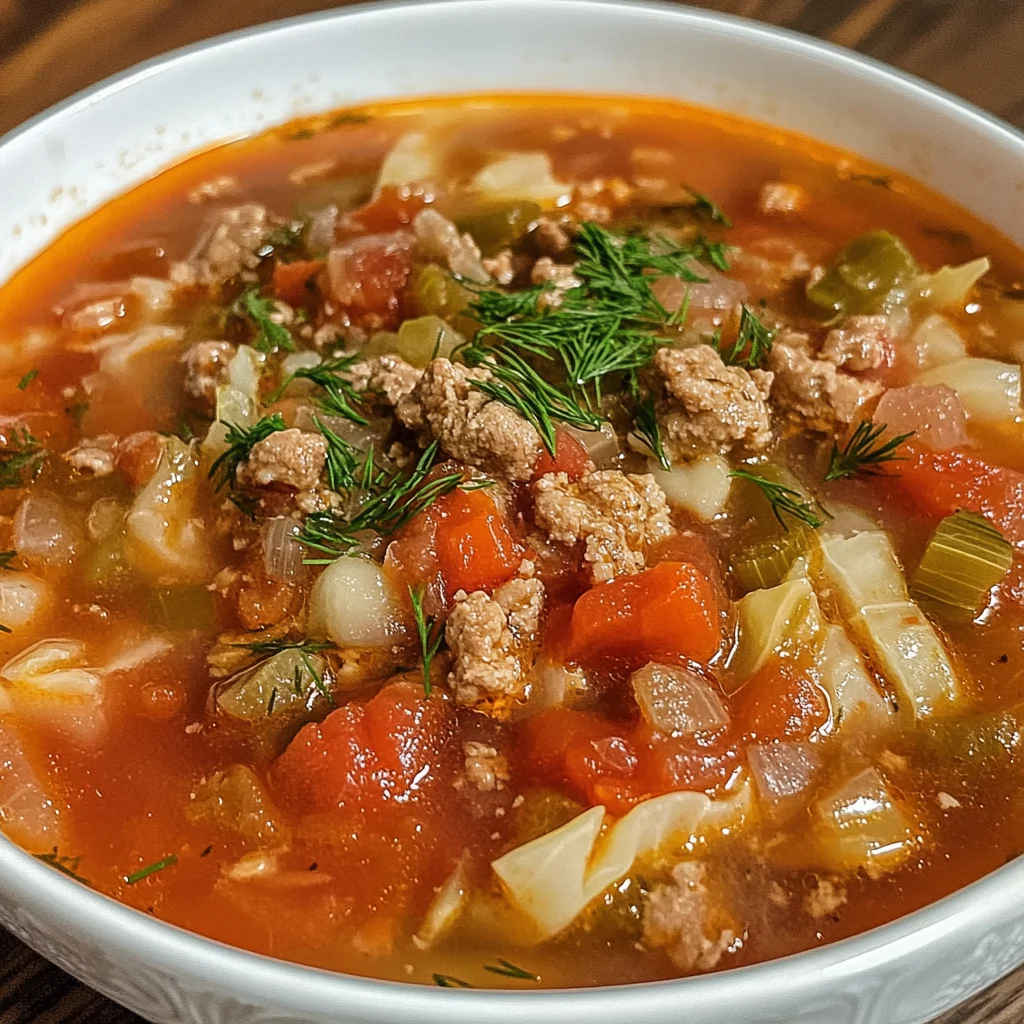
Cabbage Roll Soup with Tomato and Dill: The Ultimate Comfort Food Recipe
Introduction
Imagine all the comforting flavors of traditional stuffed cabbage rolls without the tedious rolling and wrapping. Cabbage Roll Soup with Tomato and Dill delivers exactly that experience in a single bowl. This hearty soup combines tender cabbage, savory ground meat, fluffy rice, and aromatic dill in a rich tomato broth that warms you from the inside out. Moreover, this one-pot wonder simplifies dinner preparation while maintaining all the authentic Eastern European flavors families have cherished for generations.
This recipe transforms a labor-intensive dish into an accessible weeknight meal. Furthermore, the addition of fresh dill elevates the flavor profile, creating a bright, herbaceous note that perfectly complements the tangy tomato base. Whether you’re seeking a nutritious family dinner or meal prep option, this cabbage roll soup checks all the boxes.
What is Cabbage Roll Soup with Tomato and Dill?
Origins and Cultural Background
Cabbage Roll Soup with Tomato and Dill represents a deconstructed version of traditional cabbage rolls found throughout Eastern European cuisine. Polish, Hungarian, Russian, and Ukrainian cultures all feature variations of stuffed cabbage dishes. However, this soup format originated as a practical solution for home cooks wanting the same flavors without the time commitment.
Eastern European communities have long relied on cabbage as a dietary staple due to its affordability and nutritional value. Therefore, cabbage appears in numerous traditional dishes, from simple fried cabbage to elaborate stuffed preparations. This soup captures that culinary heritage in a simplified, accessible format.
The Role of Tomato and Dill
The combination of tomato and dill creates the signature flavor profile of this soup. Tomatoes provide a tangy, slightly sweet base that balances the earthiness of cabbage. Meanwhile, fresh dill adds a bright, aromatic quality that distinguishes this recipe from other cabbage soups. Additionally, dill offers digestive benefits and contains antioxidants that support overall health.
Polish summer soups, known as Kapusniak, frequently feature dill as a key ingredient. This herb grows abundantly in Eastern European gardens. Consequently, it became a natural pairing with cabbage in traditional recipes.
Why You’ll Love This Recipe
Quick and Easy Preparation
Unlike traditional cabbage rolls that require blanching leaves and careful rolling, this soup comes together in approximately 45 minutes. Additionally, most of that time is hands-off simmering. You simply brown the meat, add ingredients, and let the pot work its magic.
Budget-Friendly Ingredients
Cabbage Roll Soup with Tomato and Dill relies on affordable, accessible ingredients. Cabbage costs significantly less than most vegetables while providing substantial volume. Similarly, ground meat, rice, and canned tomatoes represent economical pantry staples. Therefore, this recipe feeds a family without straining your budget.
Nutritious and Filling
This soup delivers a balanced nutritional profile with protein from meat, complex carbohydrates from rice, and abundant vitamins from cabbage. Furthermore, one serving provides significant amounts of vitamin C, vitamin K, and dietary fiber. The combination keeps you satisfied for hours, making it ideal for lunch or dinner.
Perfect for Meal Prep
Cabbage Roll Soup with Tomato and Dill stores exceptionally well in the refrigerator for up to five days. Moreover, it freezes beautifully for up to three months. Consequently, you can prepare a large batch on Sunday and enjoy convenient, homemade meals throughout the week.
Essential Ingredients for Cabbage Roll Soup
Main Components
Ground Meat: Lean ground beef provides traditional flavor and substantial protein. Alternatively, ground turkey or chicken offers a lighter option. You’ll need approximately one pound for a standard recipe.
Green Cabbage: Seven cups of chopped cabbage create the soup’s foundation. Choose a firm, heavy head with tightly packed leaves. Fresh cabbage provides better texture than pre-shredded varieties.
White Rice: Three-quarters cup of uncooked white rice adds heartiness and helps thicken the broth. However, brown rice works well if you prefer whole grains. Keep in mind that brown rice requires longer cooking time.
Tomato Products: This recipe typically uses both diced tomatoes and tomato sauce or paste. The combination creates depth and richness in the broth. Look for low-sodium options to control salt levels.
Beef Broth: Seven cups of quality beef broth form the soup’s liquid base. Additionally, you can use vegetable broth for a lighter flavor. Homemade broth delivers superior taste compared to store-bought varieties.
Aromatic Vegetables
Onion: One large yellow onion adds sweetness and depth. Dice it finely for even distribution throughout the soup.
Garlic: Four cloves of minced garlic provide aromatic complexity. Fresh garlic tastes significantly better than pre-minced alternatives.
Carrots and Celery: These vegetables contribute additional flavor and nutrition. Chop them into small pieces for consistent cooking.
Herbs and Seasonings
Fresh Dill: Three tablespoons of chopped fresh dill distinguish this recipe from standard cabbage soup. Add half during cooking and reserve the remainder for garnishing.
Bay Leaves: Three bay leaves infuse subtle herbal notes throughout the broth. Remember to remove them before serving.
Paprika: This spice adds warmth and a slight smoky quality. Hungarian paprika offers authentic flavor.
Salt and Pepper: Season to taste, keeping in mind that broth contains sodium.
Vinegar: One tablespoon balances the sweetness of tomatoes and cabbage. Apple cider vinegar works particularly well.
Sugar: One tablespoon of sugar counteracts tomato acidity. Honey or maple syrup serve as natural alternatives.
Optional Garnishes
Sour Cream or Greek Yogurt: A dollop adds creamy richness and tangy flavor. This traditional garnish complements the soup beautifully.
Additional Fresh Dill: Reserve extra for sprinkling over individual bowls.
Lemon Wedges: A squeeze of fresh lemon juice brightens the flavors.
Step-by-Step Instructions
Preparation Phase
Gather Ingredients: Measure all ingredients before starting. This practice, called mise en place, streamlines the cooking process. Additionally, it prevents mistakes and ensures you have everything needed.
Chop Vegetables: Dice the onion finely and mince the garlic. Chop carrots and celery into small, uniform pieces. Cut cabbage into roughly one-inch pieces. Uniform sizing ensures even cooking throughout the soup.
Prepare Rice: Rinse rice under cold water until the water runs clear. This step removes excess starch and prevents clumping during cooking.
Cooking Process
Brown the Meat: Heat one tablespoon of olive oil in a large, heavy-bottomed pot over medium-high heat. Add ground meat and break it into small pieces with a wooden spoon. Cook for approximately ten minutes until no pink remains. Season lightly with salt and pepper during this stage.
Sauté Aromatics: Push the cooked meat to the sides of the pot. Add diced onion, carrots, and celery to the center. Sauté for five minutes until softened and fragrant. Then, add minced garlic and cook for an additional minute. Garlic burns easily, so watch it carefully.
Add Tomato Paste: Stir in two tablespoons of tomato paste, coating the meat and vegetables thoroughly. Cook for two minutes to deepen the tomato flavor. This step, called “blooming,” intensifies the paste’s umami qualities.
Incorporate Liquids and Vegetables: Add diced tomatoes with their juices, tomato sauce, and beef broth. Stir in chopped cabbage and rinsed rice. The cabbage will seem voluminous initially but wilts significantly during cooking.
Season the Soup: Add vinegar, sugar, paprika, salt, pepper, and bay leaves. Additionally, stir in half of the chopped fresh dill. These seasonings create the soup’s characteristic flavor profile.
Simmer to Perfection: Bring the mixture to a boil over high heat. Once boiling, reduce heat to low and cover the pot. Simmer for twenty minutes if using white rice or thirty-five to forty minutes for brown rice. Stir occasionally to prevent rice from sticking to the bottom.
Check for Doneness: The soup is ready when rice becomes tender and cabbage softens completely. Taste and adjust seasonings as needed. You may need additional salt, pepper, or a pinch more sugar depending on tomato acidity.
Finish with Fresh Herbs: Remove bay leaves and discard them. Stir in the remaining fresh dill just before serving. Fresh herbs maintain their bright flavor when added at the end.
Serving Instructions
Ladle Cabbage Roll Soup with Tomato and Dill into deep bowls. Top each serving with a dollop of sour cream or Greek yogurt. Sprinkle additional fresh dill over the top. Serve immediately with crusty bread for a complete meal.
Nutritional Benefits of Cabbage Roll Soup
Vitamin and Mineral Content
Cabbage Roll Soup with Tomato and Dill provides exceptional nutritional value in every bowl. Cabbage contains high levels of vitamin C, supporting immune function and collagen production. Furthermore, it offers significant vitamin K, essential for bone health and blood clotting.
This soup also delivers vitamin B6, potassium, magnesium, and calcium. These minerals support various bodily functions, including heart health, muscle function, and bone density. Additionally, tomatoes contribute lycopene, a powerful antioxidant linked to reduced inflammation.
Fiber and Digestive Health
One serving of this soup contains approximately four grams of dietary fiber. Fiber promotes healthy digestion, prevents constipation, and helps maintain stable blood sugar levels. Moreover, the combination of cabbage and rice creates a satisfying meal that keeps you full longer.
Cabbage belongs to the cruciferous vegetable family, which supports digestive health through various mechanisms. The fiber in cabbage feeds beneficial gut bacteria. Consequently, this promotes a healthy microbiome and improved overall wellness.
Protein and Carbohydrates
Ground beef provides approximately twenty grams of protein per serving. Protein supports muscle maintenance, immune function, and satiety. Additionally, the rice adds complex carbohydrates for sustained energy throughout the day.
The balanced macronutrient profile makes Cabbage Roll Soup with Tomato and Dill suitable for various dietary approaches. It provides enough protein and carbohydrates to serve as a complete meal rather than just an appetizer.
Low Calorie Density
Despite its heartiness, this soup remains relatively low in calories. Most recipes contain approximately 287 to 417 calories per generous serving. Therefore, you can enjoy a filling bowl without exceeding your daily calorie goals. This quality makes the soup excellent for weight management.
Anti-Inflammatory Properties
Cabbage contains compounds that help reduce inflammation throughout the body. Additionally, these compounds may support heart health by lowering blood pressure and cholesterol levels. The antioxidants in tomatoes further enhance these anti-inflammatory benefits.
Regular consumption of cabbage-based dishes correlates with improved cardiovascular health markers. Furthermore, the nutrients in this soup support overall wellness beyond basic nutrition.
Tips for Perfect Results Every Time
Selecting Quality Cabbage
Choose a cabbage head that feels heavy for its size with tightly packed, crisp leaves. Avoid heads with brown spots, cracks, or wilted outer leaves. Fresh cabbage tastes sweeter and provides better texture in the finished soup.
Green cabbage works best for this recipe due to its mild flavor and tender texture when cooked. However, savoy cabbage offers a slightly sweeter alternative with attractive crinkled leaves.
Meat Selection and Preparation
Lean ground beef with an 85/15 or 90/10 fat ratio provides optimal flavor without excess grease. Extremely lean meat can taste dry, while higher fat content makes the soup greasy. Drain excess fat after browning if needed.
For best results, break the meat into small, bite-sized pieces while cooking. Large chunks create an unpleasant texture. Additionally, ensure the meat browns properly before adding other ingredients. Browning develops flavor through the Maillard reaction.
Rice Cooking Considerations
White rice cooks faster and creates a traditional texture. However, brown rice offers more fiber and nutrients if you don’t mind the longer cooking time. Alternatively, you can use pre-cooked rice added during the last five minutes of simmering.
Avoid instant rice, which becomes mushy and loses its texture quickly. Similarly, wild rice changes the soup’s character significantly due to its chewy texture and nutty flavor.
Balancing Flavors
The key to exceptional Cabbage Roll Soup with Tomato and Dill lies in balancing sweet, sour, and savory elements. The vinegar and tomatoes provide acidity, while sugar balances that tanginess. Additionally, the broth and meat contribute savory umami depth.
Taste the soup before serving and adjust seasonings as needed. If it tastes too acidic, add a bit more sugar. Conversely, if it seems flat, increase the vinegar slightly. Salt enhances all other flavors, so season gradually and taste frequently.
Fresh vs. Dried Dill
Fresh dill provides superior flavor and aroma compared to dried alternatives. The herb’s delicate, slightly sweet taste elevates the entire soup. Moreover, fresh dill contains more volatile oils that contribute to its characteristic fragrance.
If you must use dried dill, reduce the quantity to one-third of the fresh amount. Add dried dill earlier in the cooking process to allow time for rehydration and flavor development.
Preventing Mushy Vegetables
Avoid overcooking the cabbage, which can become slimy and unappetizing. The cabbage should be tender but still retain some texture. Similarly, monitor the rice carefully to prevent it from becoming too soft.
If meal prepping, slightly undercook the rice and cabbage. They’ll continue softening during storage and reheating. This technique ensures optimal texture when you’re ready to eat.
Storage and Meal Prep Guidelines
Refrigeration Methods
Allow Cabbage Roll Soup with Tomato and Dill to cool to room temperature before storing. Never place hot soup directly in the refrigerator, as this raises the internal temperature and compromises food safety.
Transfer cooled soup to airtight containers, leaving about an inch of headspace for expansion. Properly stored soup keeps fresh in the refrigerator for four to five days. Label containers with the preparation date for easy tracking.
Freezing Instructions
This soup freezes exceptionally well for up to three months. Portion the soup into individual serving sizes for convenient grab-and-go meals. Freezer-safe containers or heavy-duty freezer bags both work well.
Leave adequate headspace when freezing, as liquids expand. Remove as much air as possible from freezer bags before sealing. Flat-packed bags stack efficiently and thaw more quickly than containers.
Reheating Recommendations
Thaw frozen soup overnight in the refrigerator for best results. Then, reheat gently on the stovetop over medium-low heat, stirring occasionally. Alternatively, microwave individual portions in two-minute intervals, stirring between each interval.
Add a splash of broth or water if the soup has thickened during storage. The rice absorbs liquid over time, so rehydrating slightly restores the original consistency. Additionally, taste and adjust seasonings after reheating, as flavors can mute with refrigeration.
Batch Cooking Strategies
Double or triple the recipe to maximize your meal prep efforts. A large pot of Cabbage Roll Soup with Tomato and Dill provides lunches and dinners for several days. Moreover, the soup’s flavor actually improves after a day in the refrigerator as seasonings meld together.
Consider freezing half your batch for future meals. This strategy prevents flavor fatigue while ensuring you always have homemade soup available. Furthermore, frozen portions save you on busy days when cooking seems overwhelming.
Common Mistakes to Avoid
Overcrowding the Pot
Using a pot that’s too small creates several problems. First, the soup won’t come to a proper boil. Second, ingredients cook unevenly. Third, stirring becomes difficult and messy. Therefore, always use a large, heavy-bottomed pot or Dutch oven with adequate capacity.
The pot should be only two-thirds full when all ingredients are added. This allows room for stirring without splashing. Additionally, proper pot size ensures even heat distribution throughout the soup.
Skipping the Browning Step
Thoroughly browning the ground meat develops complex flavors through caramelization. Rushed browning produces gray, steamed meat that tastes bland. Furthermore, proper browning creates fond on the pot bottom, which adds depth to the entire dish.
Resist the temptation to stir constantly while browning meat. Let it sit undisturbed for several minutes to develop color. Additionally, avoid overcrowding the pot, which causes meat to steam rather than brown.
Adding All Dill at Once
Fresh dill loses its delicate flavor and bright color when cooked for extended periods. Therefore, divide the dill into two portions. Add half during cooking for background flavor. Reserve the remainder to stir in at the end, which provides fresh, vibrant taste.
This two-stage addition creates layers of flavor that elevate the entire soup. The cooked dill integrates into the broth, while fresh dill provides aromatic pops of flavor in each spoonful.
Neglecting to Taste and Adjust
Every batch of Cabbage Roll Soup with Tomato and Dill requires individual seasoning adjustments. Tomatoes vary in acidity depending on variety and ripeness. Similarly, broths contain different sodium levels. Therefore, always taste before serving and adjust accordingly.
Season gradually rather than adding large amounts of salt or sugar at once. You can always add more, but you cannot remove excess seasoning. Additionally, remember that flavors intensify during simmering, so season conservatively at the beginning.
Using Pre-Shredded Cabbage
Pre-shredded cabbage seems convenient but creates problems in soup. First, it’s often drier than fresh-cut cabbage. Second, the pieces are typically too small and become mushy quickly. Third, pre-shredded varieties lack the fresh, sweet flavor of whole cabbage.
Cutting your own cabbage takes only a few extra minutes. Moreover, you control the size and can cut larger, more substantial pieces that maintain better texture throughout cooking.
Variations and Substitutions
Protein Alternatives
Ground Turkey or Chicken: These lean proteins create a lighter version of Cabbage Roll Soup with Tomato and Dill. They absorb flavors beautifully while reducing overall fat content. However, they can dry out easily, so avoid overcooking.
Plant-Based Ground Meat: Modern meat alternatives work surprisingly well in this recipe. Brands made from soy, pea protein, or mushrooms provide similar texture and protein content. Brown them following the same method as traditional meat.
Vegetarian Version: Omit meat entirely and add extra vegetables like mushrooms, bell peppers, or zucchini. Increase the rice slightly to maintain heartiness. Additionally, use vegetable broth instead of beef broth for a completely plant-based soup.
Ground Pork: This option creates a richer, slightly sweeter flavor profile. Mix pork with beef for a traditional Eastern European approach. However, pork contains more fat, so drain thoroughly after browning.
Grain Substitutions
Cauliflower Rice: Replace traditional rice with cauliflower rice for a low-carb version. Add it during the last five minutes of cooking to prevent mushiness. This substitution significantly reduces the carbohydrate content.
Quinoa: This protein-rich grain adds nutty flavor and complete protein. Use the same quantity as rice but reduce cooking time slightly. Additionally, quinoa provides all nine essential amino acids.
Barley: Pearl barley creates a heartier, chewier texture. However, it requires longer cooking time than rice. Add extra broth to compensate for absorption. Barley contributes additional fiber and minerals.
Pasta: Small pasta shapes like orzo or ditalini transform this into a pasta soup. Add pasta during the last ten minutes of cooking. This variation appeals particularly to children.
Tomato Options
Fresh Tomatoes: Use approximately six to eight large, ripe tomatoes when they’re in season. Dice them and add with their juices. Fresh tomatoes create brighter, sweeter flavor than canned varieties.
Crushed Tomatoes: Replace diced tomatoes with crushed for a smoother, more integrated sauce. This creates a thicker, more cohesive broth. Additionally, crushed tomatoes blend more seamlessly throughout the soup.
Tomato Passata: This uncooked tomato puree provides pure tomato flavor without added seasonings. It creates an exceptionally smooth base for the soup.
Cabbage Alternatives
Savoy Cabbage: This tender, crinkled variety cooks more quickly than regular green cabbage. It offers slightly sweeter flavor and attractive texture. However, it wilts more readily, so reduce cooking time.
Napa Cabbage: This Asian variety creates a lighter, more delicate soup. It requires less cooking time than traditional cabbage. Additionally, Napa cabbage provides a milder, almost buttery flavor.
Bok Choy: Use baby bok choy for an Asian-inspired variation. Add it during the last ten minutes of cooking to maintain texture and color. The mild flavor complements tomato and dill beautifully.
Herb Variations
Parsley: Italian flat-leaf parsley provides a fresh, slightly peppery note. Use it instead of or in addition to dill. Parsley pairs exceptionally well with tomato-based dishes.
Cilantro: For a completely different flavor profile, substitute cilantro for dill. This creates a more modern, Mexican-inspired version. However, cilantro tastes quite different from traditional Eastern European preparations.
Thyme: Add fresh thyme sprigs during cooking for earthy, slightly floral notes. Remove the woody stems before serving. Thyme complements both cabbage and tomato beautifully.
Serving Suggestions
Bread Accompaniments
Crusty artisan bread provides the perfect vehicle for soaking up the flavorful broth. Slice a rustic baguette or sourdough loaf and serve alongside steaming bowls. Additionally, garlic bread adds extra flavor that complements the soup beautifully.
For a traditional Eastern European approach, serve with dark rye bread. The dense, slightly sour bread contrasts wonderfully with the soup’s bright flavors. Moreover, rye bread contributes additional fiber and nutrients.
Side Salads
A simple green salad with vinaigrette balances the soup’s richness. Toss mixed greens, cucumber, and tomatoes with lemon juice and olive oil. The fresh, crisp textures contrast nicely with the warm, tender soup.
Alternatively, prepare a cucumber and dill salad for thematic consistency. Thinly slice cucumbers and toss with sour cream, fresh dill, and a pinch of salt. This cooling side dish complements the soup perfectly.
Garnishing Ideas
Beyond sour cream and extra dill, consider these garnishing options:
-
Crumbled feta cheese adds tangy, salty flavor
-
A drizzle of extra virgin olive oil enriches each bowl
-
Crushed red pepper flakes provide heat for spice lovers
-
Freshly cracked black pepper enhances the soup’s savory notes
-
Lemon wedges for squeezing over individual servings
Complete Meal Planning
Cabbage Roll Soup with Tomato and Dill serves beautifully as a one-pot meal. However, you might want to round out the menu for special occasions:
Appetizer: Start with pickled vegetables or a cheese platter
Main Course: Serve generous bowls of soup with bread
Dessert: Finish with something light like fruit salad or lemon sorbet
This menu progression creates a satisfying, balanced meal without overwhelming your guests. Additionally, the simple sides allow the soup to remain the star attraction.
Frequently Asked Questions
Can I make Cabbage Roll Soup with Tomato and Dill in a slow cooker?
Yes, this soup adapts beautifully to slow cooker preparation. Brown the meat and sauté the aromatics in a skillet first. Then, transfer everything to the slow cooker with remaining ingredients except fresh dill. Cook on low for six to eight hours or high for four to five hours. Add fresh dill during the last thirty minutes of cooking. This method allows you to prepare dinner while at work or running errands.
How can I make this soup spicier?
Add crushed red pepper flakes when browning the meat for heat throughout the soup. Alternatively, stir in a diced jalapeño with the onions. For even more kick, finish with hot sauce or sriracha according to individual preferences. Remember that heat intensifies during cooking, so start conservatively.
Can I use leftover cooked rice?
Absolutely. Add cooked rice during the last five to ten minutes of simmering. This prevents the rice from becoming mushy while still allowing it to absorb the soup’s flavors. This technique also works well when reheating previously frozen soup.
What’s the best way to cut cabbage for this soup?
Remove the tough outer leaves and cut the cabbage head into quarters through the core. Cut out the hard core from each quarter. Then, slice each quarter into approximately one-inch pieces. The pieces will shrink significantly during cooking, so don’t cut them too small.
Can I make this soup dairy-free?
Yes, the soup itself contains no dairy. Simply omit the sour cream garnish or substitute with coconut yogurt or cashew cream. The soup remains delicious and satisfying without any creamy topping.
How do I prevent the soup from becoming too thick?
The rice absorbs considerable liquid as it cooks and especially during storage. If your soup becomes too thick, simply add extra broth or water while reheating. Start with a half cup and add more as needed until you reach desired consistency. Additionally, slightly undercook the rice if you plan to store the soup.
Can I add other vegetables to Cabbage Roll Soup with Tomato and Dill?
Certainly. Bell peppers, mushrooms, zucchini, and green beans all work well. Add heartier vegetables like carrots with the onions. Meanwhile, delicate vegetables like zucchini should go in during the last ten minutes of cooking. Keep the total vegetable volume balanced so the soup doesn’t become overly crowded.
Is this soup gluten-free?
Yes, when made with standard ingredients, this soup is naturally gluten-free. However, always check broth labels, as some brands contain gluten. Additionally, ensure your tomato products don’t include any gluten-containing additives. Serve with gluten-free bread for a completely safe meal.
Conclusion
Cabbage Roll Soup with Tomato and Dill transforms a beloved traditional dish into an accessible, one-pot meal perfect for busy families. This hearty soup delivers all the comforting flavors you crave without the time-consuming preparation of traditional stuffed cabbage rolls. Moreover, it provides exceptional nutritional value with vitamins, minerals, fiber, and protein in every satisfying bowl.
The combination of tender cabbage, savory meat, fluffy rice, and aromatic dill creates a harmonious blend that warms both body and soul. Additionally, the tangy tomato broth ties everything together with bright, balanced flavor. Whether you’re feeding a crowd, meal prepping for the week, or simply craving comfort food, this recipe delivers consistently delicious results.
The soup’s versatility allows endless customization to suit dietary preferences and ingredient availability. Furthermore, it stores beautifully for convenient weeknight dinners and packed lunches. By following the techniques and tips outlined in this guide, you’ll create restaurant-quality Cabbage Roll Soup with Tomato and Dill in your own kitchen.
Try this recipe today and discover why generations have cherished these flavors. Your family will request this comforting soup again and again throughout every season. Start cooking this nourishing, budget-friendly meal and enjoy the wonderful aromas that fill your home as it simmers to perfection.
Print
Cabbage Roll Soup with Tomato and Dill
- Total Time: 50 minutes
- Yield: 6 1x
Ingredients
1 lb (450 g) ground beef or pork
1 small head green cabbage, shredded
1 medium onion, diced
2 cloves garlic, minced
1 can (14 oz / 400 g) diced tomatoes
4 cups beef or vegetable broth
1 tbsp tomato paste
1 tsp smoked paprika
2 tsp fresh or 1 tsp dried dill
1 tsp salt (adjust to taste)
½ tsp black pepper
1 tbsp olive oil
Optional garnish: fresh dill, sour cream
Instructions
-
Cook Meat:
In a large pot, heat olive oil over medium heat. Add ground meat and cook until browned. Remove excess fat if needed. -
Sauté Aromatics:
Add onion and garlic to the pot. Sauté 3–4 minutes until soft and fragrant. -
Add Cabbage & Tomatoes:
Stir in shredded cabbage, diced tomatoes, and tomato paste. Cook 2–3 minutes. -
Add Broth & Seasoning:
Pour in broth, add paprika, dill, salt, and pepper. Bring to a boil, then reduce heat and simmer 20 minutes until cabbage is tender. -
Serve:
Ladle soup into bowls and garnish with fresh dill or a dollop of sour cream if desired. Serve hot with crusty bread.
Notes
Swap ground beef/pork for turkey or chicken for a lighter version.
Can make vegetarian by using plant-based meat or extra beans/lentils.
Store leftovers in the fridge up to 3 days or freeze for up to 2 months.
For more tang, add 1–2 tbsp lemon juice or vinegar at the end.
Optional: add rice or small pasta for a more filling meal.
- Prep Time: 15
- Cook Time: 35
Nutrition
- Calories: 280