
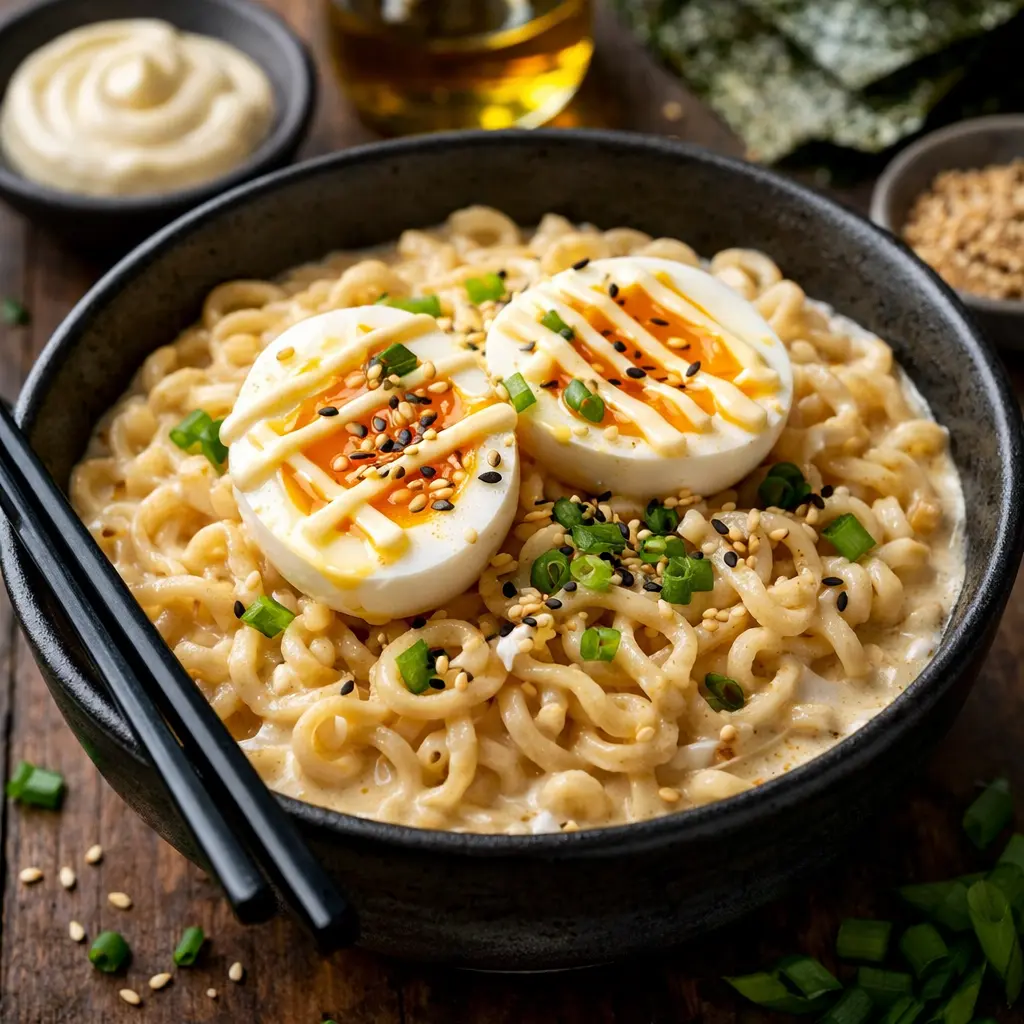
What Makes This Ramen So Creamy
The secret to achieving restaurant-quality creaminess lies in the emulsification technique. When you whisk together Japanese mayo, raw egg yolk, and hot ramen broth, the fats from the mayo combine with the egg proteins to create a thick, velvety texture. This method mimics the traditional tonkotsu broth that takes hours to prepare, delivering similar richness in minutes.
The key difference between regular ramen and this creamy version is the addition of extra fat through mayo. Traditional ramen shops often include an aroma oil packet, but boosting the fat content with Kewpie mayo instantly thickens the broth. The mayo helps the broth cling to the noodles as you lift them, creating that satisfying, restaurant-style experience.
Essential Ingredients You’ll Need
Creating perfect creamy ramen with Japanese mayo, egg, and sesame oil requires just a handful of ingredients. The base recipe serves one person and takes approximately five to ten minutes from start to finish.
Core Ingredients:
-
1 packet instant ramen noodles with seasoning packet
-
1 tablespoon Japanese mayo (Kewpie preferred)
-
1 large egg yolk (or whole egg)
-
1 tablespoon toasted sesame oil
-
1-2 garlic cloves, finely minced or grated
-
2.25 cups water or broth
Optional Garnishes:
-
Toasted sesame seeds for nutty crunch
-
Sliced green onions for freshness
-
Chili oil or chili crunch for heat
-
Soft-boiled egg for extra protein
-
Nori sheets for umami depth
The quality of your Japanese mayo matters significantly. Kewpie mayo uses only egg yolks rather than whole eggs, creating a richer and creamier texture than Western mayonnaise. This extra richness translates directly into your final broth consistency.
Step-by-Step Preparation Guide
Making creamy ramen with Japanese mayo, egg, and sesame oil follows a simple but precise method. The order of operations ensures proper emulsification and prevents the egg from scrambling.
Preparation Steps:
-
Create the base mixture: In a large serving bowl, whisk together 1 tablespoon Kewpie mayo, 1 egg yolk, minced garlic, and the ramen seasoning packet until smooth and creamy
-
Boil the water: Bring 2.25 cups of water to a rolling boil in a small pot
-
Cook the noodles: Add ramen noodles and boil for 2 minutes until al dente
-
Temper the egg mixture: Remove pot from heat and ladle about 1/4 to 1 cup of hot ramen water into the mayo mixture while whisking vigorously
-
Combine everything: Pour remaining noodles and broth into the bowl and stir well
-
Add sesame oil: Drizzle 1 tablespoon of toasted sesame oil over the top
-
Garnish and serve: Top with sesame seeds, green onions, and optional toppings
The tempering step is crucial for achieving the proper creamy texture. Adding hot liquid gradually to the egg mixture raises its temperature slowly, preventing the egg from cooking into scrambled bits. This technique creates a smooth, silky broth instead of clumps.
The Science Behind the Creaminess
Understanding why this recipe works helps you recreate perfect creamy ramen with Japanese mayo, egg, and sesame oil every time. The creaminess results from fat emulsification, a culinary technique that blends oil and water-based liquids.
Japanese mayo contains egg yolks, oil, and vinegar that act as natural emulsifiers. When whisked with the raw egg yolk and hot broth, these ingredients form a stable emulsion that thickens the liquid. The proteins in the egg yolk denature slightly from the heat, creating a custard-like consistency without fully cooking.
Adding extra fat to ramen broth is a classic technique in traditional ramen making. Professional ramen shops often prepare aroma oils by infusing fat with aromatics. This creamy ramen hack achieves similar results by incorporating the fat directly into the broth through mayo, instantly boosting both mouthfeel and flavor complexity.
The vigorous whisking action also plays an important role. Whisking incorporates air into the mixture while breaking down the fat molecules into tiny droplets. These droplets disperse throughout the broth, creating the characteristic creamy appearance and coating the noodles evenly.
Best Ramen Noodle Brands to Use
While this recipe works with any instant ramen, certain brands deliver superior results for creamy ramen with Japanese mayo, egg, and sesame oil. The noodle texture and seasoning packet quality significantly impact your final dish.
Top Recommended Brands:
-
Shin Ramen (Korean spicy variety with excellent chewy noodles)
-
Shin Black (premium version with richer seasoning)
-
Jin Ramen (milder flavor that balances well with creamy additions)
-
Nongshim Black (complex seasoning profile)
-
Maruchan or Top Ramen (budget-friendly options that work well)
Shin Ramen and Jin Ramen are particularly popular choices for this recipe. Their noodles have the perfect springy texture that holds up well in creamy broth. The seasoning packets contain robust flavors that complement rather than compete with the mayo and egg additions.
For those seeking healthier options, gluten-free ramen noodles also work beautifully in this preparation. The key is ensuring the noodles have enough structure to remain al dente after cooking, as mushy noodles won’t provide the satisfying texture contrast that makes this dish special.
Perfecting Your Egg Technique
The egg component makes or breaks your creamy ramen with Japanese mayo, egg, and sesame oil. You have two distinct approaches: using just the yolk in the base mixture or incorporating a whole egg.
Egg Yolk Only Method:
Using just the yolk creates the richest, most luxurious texture. Separate your egg carefully, saving the white for another use. The yolk contains all the fat and emulsifiers needed for ultimate creaminess. This method produces a broth similar to carbonara sauce, with a silky, coating consistency.
Whole Egg Method:
Including the entire egg (white and yolk) in the base mixture creates a slightly lighter but still creamy broth. This approach adds extra protein and reduces waste. The egg white contributes to a fluffier texture when whisked vigorously with the mayo and hot liquid.
Soft-Boiled Egg Topping:
Many recipes recommend adding a separate soft-boiled egg as a garnish. Cook the egg for 6.5 minutes in boiling water for a jammy yolk. When you break it open in your bowl, the runny center adds another layer of creaminess and visual appeal. This combination of cooked and raw egg creates textural complexity throughout the dish.
Sesame Oil’s Role in Flavor
Sesame oil transforms creamy ramen with Japanese mayo, egg, and sesame oil from good to exceptional. This aromatic finishing oil provides the nutty, toasty notes that define authentic Asian noodle dishes.
Toasted sesame oil should always be used as a finishing element rather than a cooking oil. Its low smoke point means it burns easily when heated, destroying the delicate aromatic compounds. Drizzling it over the completed bowl allows the heat from the broth to release its fragrance without damaging the flavor.
The oil serves multiple functions beyond taste. It adds visual appeal with droplets glistening on the broth surface. The fat content enhances mouthfeel and helps carry flavor compounds to your taste receptors. Sesame oil also contains polyunsaturated fatty acids, vitamin E, and antioxidants that contribute nutritional value.
For best results, use one tablespoon of pure toasted sesame oil. A little goes a long way with this intensely flavored ingredient. Too much can overwhelm the other components, while too little won’t provide enough aromatic impact. The goal is achieving balance where the nutty sesame notes complement rather than dominate the creamy, umami-rich broth.
Creative Topping Ideas
Elevating your creamy ramen with Japanese mayo, egg, and sesame oil requires thoughtful topping selections. The right additions provide textural contrast, nutritional balance, and visual appeal.
Protein Additions:
-
Chashu pork slices for traditional ramen authenticity
-
Grilled chicken strips for lean protein
-
Shrimp or crab for seafood lovers
-
Pan-fried tofu cubes for vegetarian options
-
Sliced beef cooked in the hot broth
Vegetable Enhancements:
-
Baby spinach wilted in the broth for iron and color
-
Pak choi for satisfying crunch
-
Shiitake mushrooms for earthy umami depth
-
Corn kernels for natural sweetness
-
Julienned carrots for vibrant color
-
Bean sprouts for fresh crispness
Flavor Boosters:
-
Chili crisp or chili oil for spicy heat
-
Extra toasted sesame seeds for nutty crunch
-
Nori sheets torn into pieces for oceanic flavor
-
Pickled radish for tangy brightness
-
Fresh cilantro or Thai basil for herbal notes
-
Black garlic oil for luxurious depth
Adding vegetables transforms instant ramen into a more nutritionally complete meal. Plain instant noodles lack fiber, vitamins A and C, B12, calcium, magnesium, and potassium. A handful of spinach, mushrooms, or seaweed reintroduces these missing nutrients while enhancing flavor and texture.
Nutrition Information and Health Considerations
Understanding the nutritional profile of creamy ramen with Japanese mayo, egg, and sesame oil helps you enjoy it mindfully as part of a balanced diet. A basic serving provides approximately 450-550 calories depending on toppings.
Nutritional Breakdown (Base Recipe):
-
Calories: 450-550
-
Fat: 20-25 grams (from mayo, egg, sesame oil)
-
Carbohydrates: 55-65 grams (primarily from noodles)
-
Protein: 12-15 grams (from egg and noodles)
-
Sodium: 1,200-1,800 mg (varies by seasoning packet)
-
Fiber: 2-3 grams
The high sodium content represents the primary health concern with instant ramen. A single serving can contain over half your recommended daily sodium intake. The high salt content may increase risk for high blood pressure and heart conditions when consumed frequently.
Instant ramen noodles provide some beneficial nutrients including iron, B vitamins (folate, niacin, riboflavin), and manganese. However, they lack sufficient fiber and protein to keep you satisfied long-term. This explains why you might feel hungry again shortly after eating plain instant ramen.
Making It Healthier:
-
Use only half the seasoning packet to reduce sodium
-
Add protein-rich toppings like eggs, tofu, or chicken
-
Include fiber-rich vegetables such as spinach, cabbage, or mushrooms
-
Choose low-sodium broth instead of water
-
Limit consumption to occasional treats rather than daily meals
The additions in this recipe actually improve the nutritional profile compared to basic instant ramen. The egg provides complete protein for tissue repair. Sesame oil contributes healthy fats and vitamin E. These enhancements make each bowl more satiating and nutritionally balanced.
Common Mistakes to Avoid
Creating perfect creamy ramen with Japanese mayo, egg, and sesame oil requires avoiding several common pitfalls. These mistakes can result in scrambled eggs, bland flavor, or watery broth.
Temperature Control Errors:
The most frequent mistake is adding hot liquid directly to raw egg without tempering. This causes the egg to cook immediately into unappetizing scrambled bits. Always add hot broth gradually while whisking constantly. This slowly raises the egg temperature, creating smooth creaminess instead of clumps.
Insufficient Whisking:
Failing to whisk the mayo-egg mixture thoroughly before adding liquid prevents proper emulsification. Spend 15-20 seconds whisking vigorously until the mixture becomes smooth and slightly pale. This incorporates air and breaks down the fat molecules for better texture.
Using Regular Mayo:
Substituting regular Western mayonnaise for Japanese Kewpie mayo compromises the final result. Kewpie’s egg yolk-only formula creates superior richness and umami depth. While regular mayo works in a pinch, the texture and flavor won’t match the authentic version.
Overcooking the Noodles:
Mushy, overcooked noodles ruin even the best broth. Cook noodles for 30 seconds less than package directions suggest, as they continue cooking in the hot liquid after draining. Aim for al dente texture that provides satisfying chewiness.
Adding Sesame Oil Too Early:
Cooking with sesame oil instead of using it as a finishing element destroys its delicate aromatic compounds. The oil has a low smoke point and loses its characteristic nutty flavor when heated. Always drizzle it over the completed bowl for maximum impact.
Recipe Variations to Try
Once you master the basic creamy ramen with Japanese mayo, egg, and sesame oil, experiment with these variations to keep meals exciting and customize to your preferences.
Spicy Korean Version:
Add 1 teaspoon gochujang (Korean chili paste) to the mayo-egg base mixture for fiery heat with subtle sweetness. Use Shin Ramen or Samyang noodles for authentic Korean flavor. Top with kimchi and extra chili oil for maximum spice.
Miso-Enhanced Richness:
Whisk 1 tablespoon of white or red miso paste into the mayo mixture for deeper umami complexity. The fermented soybean paste adds probiotic benefits and savory depth. This variation pairs beautifully with corn, green onions, and nori.
Sesame Garlic Lovers:
Double the minced garlic to 2-3 cloves and add 1 teaspoon of black garlic oil for intense aromatic flavor. Increase sesame seeds to 2 tablespoons and mix half directly into the broth. This creates a powerfully fragrant version for garlic enthusiasts.
Vegetarian Protein-Packed:
Omit the seasoning packet and use vegetable broth seasoned with soy sauce and mushroom powder. Add cubed firm tofu, edamame, and extra vegetables. Top with crispy fried tofu skin for textural contrast while keeping it plant-based.
Seafood Luxury:
Cook shrimp, scallops, or crab meat separately and arrange on top. Add a splash of fish sauce to the mayo mixture for oceanic depth. Garnish with nori, green onions, and a squeeze of lime for bright, fresh flavor.
Creamy Curry Fusion:
Stir 1 teaspoon curry powder into the mayo-egg base for warm, aromatic spices. Add coconut milk (1/4 cup) to the broth for tropical richness. Top with cilantro, lime wedges, and bean sprouts for Southeast Asian flair.
Storage and Meal Prep Tips
While creamy ramen with Japanese mayo, egg, and sesame oil tastes best freshly prepared, you can streamline the process with smart meal prep strategies. Proper preparation saves time during busy weeknights.
Ingredient Prep:
Mince garlic in advance and store in an airtight container with a thin layer of oil covering the top. This keeps for up to five days in the refrigerator and prevents oxidation. Pre-slice green onions and store in a sealed container lined with paper towels to absorb excess moisture.
Broth Base Storage:
You cannot store the completed creamy broth mixture, as raw egg poses food safety risks. Always prepare the mayo-egg-garlic mixture fresh right before serving. However, you can pre-measure these ingredients into small containers for quick assembly.
Cooked Components:
Prepare toppings like soft-boiled eggs, cooked proteins, and blanched vegetables ahead of time. Store each component separately in airtight containers. Soft-boiled eggs keep for 2-3 days in the shell in the refrigerator. Cooked meats last 3-4 days when properly stored.
Noodle Considerations:
Never store cooked ramen noodles, as they become mushy and lose their appealing texture. The entire cooking process only takes 2-3 minutes, so there’s no time savings in pre-cooking. Keep uncooked noodle packets in your pantry for maximum freshness.
Assembly Strategy:
Set up a ramen station with pre-prepped ingredients in small bowls. This allows you to assemble creamy ramen with Japanese mayo, egg, and sesame oil in under 10 minutes start to finish. Having everything organized makes the process feel effortless even on hectic days.
Frequently Asked Questions
Can I use regular mayonnaise instead of Japanese mayo?
Yes, regular mayonnaise works as a substitute, though the result differs from authentic creamy ramen with Japanese mayo, egg, and sesame oil. Kewpie mayo uses only egg yolks, creating richer umami flavor and creamier texture than Western mayo made with whole eggs. If using regular mayo, choose a high-quality brand like Duke’s for best results.
Is it safe to eat raw egg in this recipe?
The hot ramen broth partially cooks the egg yolk through tempering, reducing but not eliminating risk. Use pasteurized eggs if you’re concerned about salmonella, particularly if serving to pregnant women, young children, elderly individuals, or immunocompromised people. The tempering process raises the egg temperature to approximately 140-160°F, which provides some safety margin.
How can I make this recipe healthier?
Reduce sodium by using only half the seasoning packet and adding low-sodium soy sauce to taste. Increase protein and fiber by adding soft-boiled eggs, tofu, chicken, and vegetables like spinach, mushrooms, and pak choi. Choose whole grain or gluten-free noodles for more nutrients. These additions transform instant ramen into a more balanced, nutritious meal.
What’s the best way to separate egg yolks?
Crack the egg and gently transfer the yolk back and forth between the shell halves, letting the white drip into a bowl below. Alternatively, crack the egg into your clean hand and let the white slip through your fingers while retaining the yolk. You can also use an egg separator tool for mess-free results.
Can I make this recipe vegan?
Yes, substitute vegan mayo and omit the egg. Use nutritional yeast (1 tablespoon) to provide umami richness similar to eggs. Add extra sesame paste or tahini for creaminess. Top with crispy tofu, vegetables, and extra sesame oil to maintain satisfying richness without animal products.
Why did my broth turn out watery instead of creamy?
This happens when you skip the tempering step or don’t whisk vigorously enough. Ensure you add hot liquid gradually to the mayo-egg mixture while whisking constantly to create proper emulsification. Using too much water relative to the mayo and egg also causes thin broth. Stick to the recommended ratios for best consistency.
What type of sesame oil should I use?
Always use toasted sesame oil rather than plain sesame oil for creamy ramen with Japanese mayo, egg, and sesame oil. Toasted sesame oil has a rich, nutty aroma and dark amber color from roasting the seeds before extraction. Plain sesame oil lacks this distinctive flavor and won’t provide the characteristic taste this recipe requires.
How spicy is this recipe?
The base recipe has mild to moderate heat depending on your instant ramen brand choice. Shin Ramen provides noticeable spice while other brands offer milder flavor. Adjust heat level by adding chili oil, sriracha, or chili crisp as toppings. You can also reduce spiciness by using less seasoning packet or choosing non-spicy noodle varieties.
Conclusion
Creamy ramen with Japanese mayo, egg, and sesame oil delivers restaurant-quality comfort food in your own kitchen within 10 minutes. This viral recipe hack transforms ordinary instant noodles through simple emulsification techniques that create luxuriously rich, velvety broth. The combination of Kewpie mayo’s umami depth, silky egg yolk, and aromatic sesame oil produces flavor and texture that rivals traditional tonkotsu ramen requiring hours of preparation.
The beauty of this dish lies in its versatility and accessibility. Whether you prefer spicy Korean variations, miso-enhanced richness, or protein-packed vegetarian versions, the basic technique adapts beautifully to your preferences. Adding thoughtful toppings like soft-boiled eggs, vegetables, and proteins elevates the nutritional profile while creating visual appeal.
Ready to experience this game-changing ramen upgrade? Gather your ingredients and try making creamy ramen with Japanese mayo, egg, and sesame oil tonight. Once you taste the difference, you’ll never return to plain instant noodles again. Share your creations and variations with fellow ramen enthusiasts to spread the joy of this incredibly satisfying comfort food.
Print
Creamy Ramen with Japanese Mayo, Egg, and Sesame Oil
- Total Time: 15 minutes
- Yield: 2 1x
Ingredients
2 packs instant ramen noodles (discard or reduce seasoning packets)
2 cups water or light chicken/vegetable broth
1 large egg
2 tablespoons Japanese mayonnaise (Kewpie-style preferred)
1 teaspoon sesame oil
1 teaspoon soy sauce
½ teaspoon garlic powder or minced garlic
½ teaspoon white pepper or black pepper
Toasted sesame seeds, for garnish
Green onions, sliced (optional)
Chili oil or flakes (optional)
Instructions
-
Cook the noodles:
Bring water or broth to a boil. Add ramen noodles and cook according to package instructions. Do not fully drain—reserve about ½ cup cooking liquid. -
Prepare the creamy base:
In a bowl, whisk together Japanese mayo, egg, sesame oil, soy sauce, garlic, and pepper until smooth. -
Temper the egg:
Slowly whisk a few spoonfuls of hot noodle cooking liquid into the mayo mixture to gently warm it (prevents curdling). -
Combine:
Add cooked noodles and remaining hot broth into the bowl. Stir continuously until broth becomes creamy and silky. -
Finish & serve:
Garnish with sesame seeds, green onions, and chili oil if desired. Serve immediately.
Notes
Why Japanese mayo: It’s richer and tangier than regular mayo, creating a creamy tonkotsu-style texture.
Extra protein: Add soft-boiled eggs, tofu, or leftover chicken.
More umami: A splash of miso or a pinch of MSG takes this to the next level.
Spice level: Chili crisp or rayu works perfectly here.
- Prep Time: 5
- Cook Time: 10
Nutrition
- Calories: 480