
Sushi Bake with Spicy Mayo and Furikake: The Ultimate Comfort Food Guide
Introduction
Imagine all the delicious flavors of your favorite sushi roll transformed into a warm, comforting casserole. Sushi bake with spicy mayo and furikake delivers exactly that experience, combining seasoned sushi rice, creamy seafood, and umami-rich toppings in one easy-to-share dish. This deconstructed sushi creation has taken social media by storm, offering a simple way to enjoy Japanese-inspired flavors without the intricate rolling techniques traditional sushi requires.
Furthermore, this casserole-style dish works perfectly for gatherings, weeknight dinners, or meal prep. The layers of flavor create a satisfying meal that appeals to sushi lovers and comfort food enthusiasts alike. Best of all, you can customize your sushi bake with different proteins, spice levels, and toppings to match your preferences.
What is Sushi Bake?
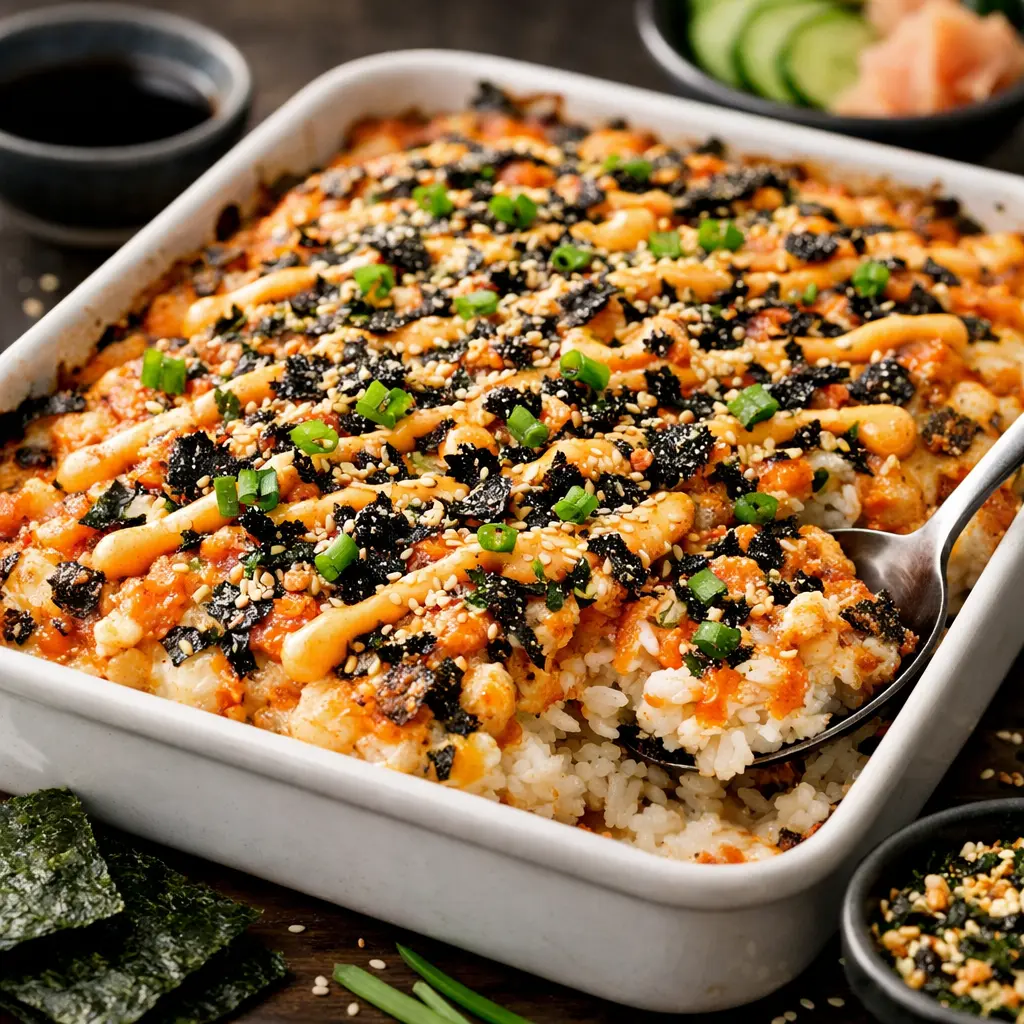
Sushi bake is essentially a deconstructed California roll baked in casserole form. Instead of individually rolling sushi, all the components layer together in a baking dish. The base consists of seasoned sushi rice, followed by a creamy seafood mixture, then finished with spicy mayo and furikake.
The beauty of this dish lies in its simplicity. You press the rice firmly into the pan, spread the protein mixture evenly, then bake until warmed through. After baking, you drizzle spicy mayo across the top and sprinkle furikake for that authentic Japanese flavor. Guests scoop portions onto sheets of crispy nori seaweed, creating bite-sized wraps similar to hand rolls.
Key Components
The dish typically includes three main layers. First, the sushi rice base provides the foundation. Second, the creamy seafood mixture adds richness and protein. Third, the toppings bring color, texture, and flavor contrast.
The Viral History Behind Sushi Bake
Understanding the origins of sushi bake adds appreciation for this innovative dish. According to sources, the creation can be traced back to Filipino artist Mimi Qiu Reyes, who first made the dish in 2015 for a family reunion in California. However, the dish gained massive popularity during the COVID-19 lockdowns in 2020 when sushi bake videos exploded across social media platforms in the Philippines.
Before becoming a viral sensation, sushi bake was known in Hawaii as “pan sushi” or “poke pan sushi” and frequently appeared at potluck gatherings. The dish perfectly suited the circumstances of lockdown—easy to make at home, shareable with family, and satisfying that craving for restaurant-quality sushi. Consequently, home cooks across Southeast Asia and internationally began creating their own versions, each adding unique twists to the basic recipe.
Essential Ingredients for Sushi Bake with Spicy Mayo and Furikake
Creating an authentic sushi bake with spicy mayo and furikake requires specific ingredients that deliver traditional Japanese flavors. Each component plays a crucial role in the final dish.
Rice Layer Ingredients
-
Sushi rice (2 cups uncooked): Short-grain Japanese rice creates the perfect sticky texture
-
Rice vinegar (2 tablespoons): Adds tanginess and authentic sushi flavor
-
Sugar (1 tablespoon): Balances the vinegar’s acidity
-
Salt (½ teaspoon): Enhances overall flavor
-
Furikake seasoning: Sprinkled between layers for umami depth
Seafood Mixture Ingredients
-
Imitation crab (10 ounces): Traditional base protein, shredded
-
Fresh salmon (8 ounces): Adds richness and omega-3s
-
Cream cheese (4 ounces): Creates creamy texture, softened
-
Japanese Kewpie mayo (⅓ cup): Essential for authentic flavor
-
Sriracha sauce: Provides heat for the spicy element
-
Soy sauce (1 tablespoon): Deepens umami flavor
Topping Ingredients
-
Additional spicy mayo: Drizzled decoratively on top
-
Extra furikake: Final seasoning layer
-
Green onions (chopped): Fresh, sharp contrast
-
Sesame seeds: Adds nutty crunch
-
Nori sheets: For scooping and serving
-
Avocado slices: Creamy, fresh topping
Understanding Furikake Seasoning
Furikake serves as one of the star ingredients in sushi bake with spicy mayo and furikake. This Japanese rice seasoning consists of a savory-sweet blend of ingredients that adds complex umami flavor.
Traditional Furikake Components
Classic furikake typically contains roasted sesame seeds, katsuobushi (dried bonito flakes), nori seaweed, salt, and sugar. These ingredients combine to create layers of flavor—nutty, salty, sweet, and deeply savory all at once. The seasoning adds visual appeal through its varied colors and textures.
Different Types of Furikake
Several varieties exist to suit different preferences. Nori kombu furikake features dried seaweed and kelp, providing high iodine content. Gomashio offers a simpler blend of roasted sesame seeds and salt, making it vegan-friendly. Additionally, spicier versions include wasabi or mentaiko (spicy cod roe) for those who enjoy heat.
Choosing the Right Furikake
When selecting furikake for your sushi bake, consider your dietary preferences. Traditional blends often include seafood like bonito or shrimp. However, plant-based options skip fish, egg, and dairy, using only seaweed, sesame, and spices. For this recipe, any furikake variety works well, though classic nori-based furikake delivers the most authentic sushi bake flavor.
How to Make Perfect Spicy Mayo
The spicy mayo component transforms ordinary sushi bake into something extraordinary. This creamy, spicy sauce adds moisture, heat, and visual appeal.
Basic Spicy Mayo Formula
Creating restaurant-quality spicy mayo requires just three core ingredients. Mix one cup of Japanese Kewpie mayonnaise with three tablespoons of sriracha chili sauce. Then add three-quarters teaspoon of ground cayenne pepper for extra heat. Whisk everything together until completely combined and smooth.
Optional Enhancements
For elevated flavor, consider adding finely grated garlic. Start with half a clove, then taste and adjust. Some recipes also incorporate one teaspoon of toasted sesame oil for nutty depth. This addition complements the other Japanese flavors in your sushi bake beautifully.
Adjusting Spice Levels
Not everyone enjoys intense heat. Therefore, adjust the sriracha amount based on your preference. Reduce to one or two tablespoons for mild spicy mayo. Conversely, increase the sriracha or add more cayenne for extra kick. Remember, you can always add more spice, but you cannot remove it once mixed.
Step-by-Step Sushi Bake Recipe
Now that you understand the components, let’s walk through the complete process for making sushi bake with spicy mayo and furikake. This method ensures perfect results every time.
Step 1: Prepare the Sushi Rice
First, cook two cups of sushi rice according to package instructions, typically with two and a half cups of water. Meanwhile, mix together two tablespoons of rice vinegar, one tablespoon of sugar, and half a teaspoon of salt in a small bowl. Once the rice finishes cooking, let it cool slightly. Then gently fold in the vinegar mixture, taking care not to mash the grains. This seasoning gives the rice its characteristic sushi flavor.
Step 2: Cook and Prepare the Proteins
If using fresh salmon, season it with salt, pepper, and half a teaspoon of paprika. Bake at 350°F (175°C) for approximately six minutes—it will not be fully cooked yet. Remove and let it cool slightly before flaking. For imitation crab, simply shred it into small pieces. If adding shrimp, chop cooked shrimp into bite-sized pieces.
Step 3: Make the Seafood Mixture
In a large mixing bowl, combine your proteins with cream cheese, Kewpie mayo, sriracha, and soy sauce. Mix half of your prepared spicy mayo into this mixture. Reserve the other half for drizzling later. Fold everything together gently so the salmon maintains some texture rather than becoming completely shredded. Add half of your chopped green onions to the mixture.
Step 4: Assemble the Layers
Preheat your oven to 350°F (175°C). Take a 9×13-inch baking dish and press the seasoned sushi rice firmly into an even layer across the bottom. Use a spatula to pack it down so the rice holds together. Sprinkle furikake generously over the rice layer. Then spread the seafood mixture evenly across the rice. Sprinkle additional furikake over the seafood layer.
Step 5: Bake and Finish
Place the assembled dish in the preheated oven for 10-15 minutes. You simply want to warm everything through and allow the flavors to meld. Meanwhile, transfer your reserved spicy mayo to a squeeze bottle for easy drizzling. After baking, remove the dish and immediately drizzle the spicy mayo in decorative lines across the top. Sprinkle with the remaining green onions, sesame seeds, and a final dusting of furikake.
Step 6: Serve
Let the sushi bake rest for a few minutes before serving. Toast your nori sheets lightly if desired, then cut them into squares. Arrange fresh avocado slices and cucumber on top. Guests can scoop portions of the warm sushi bake onto nori sheets, add their preferred toppings, and enjoy like a hand roll.
Protein Variations for Your Sushi Bake
While the classic version uses imitation crab and salmon, sushi bake with spicy mayo and furikake adapts easily to different proteins. Experimenting with variations keeps the dish exciting.
Seafood Options
Real crab meat offers a luxurious upgrade from imitation crab, providing sweeter, more delicate flavor. Sushi-grade tuna works beautifully when diced and mixed into the creamy base. Cooked shrimp adds firm texture and subtle sweetness. Scallops bring elegance and a buttery quality when chopped. For richer flavor, lobster transforms your sushi bake into an indulgent special occasion dish.
Single-Protein Versions
You can simplify by using only one type of seafood. An all-salmon version creates a cohesive flavor profile. Similarly, an all-crab sushi bake showcases that specific protein. These focused versions work particularly well when you want to highlight high-quality seafood.
Mixed Seafood Combinations
Alternatively, combine multiple proteins for complexity. Imitation crab mixed with real crab provides the best of both worlds—affordability and luxury. Shrimp and salmon together offer contrasting textures. The possibilities remain nearly endless based on your preferences and what’s available at your local market.
Serving Suggestions and Toppings
The beauty of sushi bake with spicy mayo and furikake lies in customization. Various toppings and serving methods enhance the experience.
Essential Garnishes
Always include toasted nori sheets cut into squares for scooping. Fresh avocado slices add creamy richness that complements the spicy mayo. Thinly sliced cucumbers provide refreshing crunch. Pickled ginger (if you enjoy it) offers palate-cleansing acidity. Extra sesame seeds sprinkled on top contribute visual appeal and subtle nuttiness.
Optional Additions
Tobiko or masago (fish roe) adds pops of briny flavor and beautiful color. Kimchi brings fermented tang and spice for adventurous eaters. Crispy fried onions or tempura flakes introduce satisfying crunch. Additional sriracha or chili oil allows guests to customize heat levels. Microgreens or shiso leaves provide fresh, herbaceous notes.
Serving Styles
For casual gatherings, serve the sushi bake family-style directly from the baking dish. Provide small plates, nori sheets, and all the toppings so everyone can build their own portions. For more formal presentations, portion individual servings onto plates with garnishes already arranged. You might also prepare single-serving portions in small ramekins for a cute, Instagram-worthy presentation.
Storage and Meal Prep Tips
Planning ahead makes sushi bake with spicy mayo and furikake even more convenient. Proper storage ensures the dish maintains quality.
Make-Ahead Instructions
You can prepare components separately in advance. Cook and season the sushi rice up to one day ahead, storing it in an airtight container in the refrigerator. Prepare the seafood mixture the morning of serving. However, avoid assembling the complete dish until shortly before baking, as the rice can absorb too much moisture from the topping.
Refrigerator Storage
Leftover sushi bake keeps well for 2-3 days when stored properly. Transfer to an airtight container once cooled to room temperature. The rice may firm up in the refrigerator, which is normal. When reheating, add a splash of water and cover with foil to prevent drying out. Warm in a 300°F oven for 10-15 minutes until heated through.
Freezing Considerations
While technically possible to freeze sushi bake, the texture changes significantly upon thawing. The rice becomes mushy and the cream cheese separates somewhat. Therefore, this dish tastes best when enjoyed fresh or within a few days of preparation. If you must freeze, portion into individual servings and wrap tightly. Thaw overnight in the refrigerator before reheating gently.
Meal Prep Strategy
For easy weeknight meals, prep all ingredients on Sunday. Store cooked rice, prepared seafood mixture, and spicy mayo in separate containers. During the week, simply assemble and bake when ready to eat. This approach provides homemade convenience without nightly cooking marathons.
Nutritional Information
Understanding the nutritional profile helps you incorporate sushi bake with spicy mayo and furikake into a balanced diet. The exact values vary based on specific ingredients and portion sizes.
Calorie Content
A typical half-cup serving contains approximately 160 calories. However, this varies significantly based on the amount of mayo, cream cheese, and type of seafood used. A full serving (about one cup) would range from 300-400 calories depending on richness of preparation.
Macronutrient Breakdown
Sushi bake provides balanced macronutrients. A standard serving offers roughly 42% carbohydrates from the rice, 47% fat from mayo and cream cheese, and 11% protein from seafood. The moderate protein content makes it suitable as a main dish when served with vegetable sides.
Nutritional Benefits
This dish offers several nutritional advantages. Salmon provides omega-3 fatty acids that support heart and brain health. Nori seaweed contains iodine, which supports thyroid function. Sesame seeds in furikake contribute healthy fats and minerals. The rice provides energy through complex carbohydrates.
Sodium Considerations
One aspect requiring attention is sodium content, with a half-cup serving containing approximately 770mg. The soy sauce, furikake, and imitation crab all contribute significant sodium. To reduce sodium, use low-sodium soy sauce, limit furikake, or choose real crab instead of imitation. Additionally, go lighter on the salt in the rice seasoning.
Common Mistakes to Avoid
Even simple dishes like sushi bake with spicy mayo and furikake can go wrong without proper technique. Avoiding these common pitfalls ensures success.
Rice Issues
The most frequent mistake involves rice texture. Using regular long-grain rice instead of short-grain sushi rice results in a loose, non-sticky base that falls apart. Always use proper sushi rice for authentic results. Additionally, avoid over-stirring when adding the vinegar mixture, which makes rice mushy. Fold gently to maintain grain integrity.
Moisture Problems
Another common issue occurs when the dish becomes watery. This happens when you don’t drain seafood properly before mixing. Pat all proteins dry with paper towels first. Also, avoid adding too much liquid mayo to the seafood mixture. The consistency should be creamy but thick enough to spread without running.
Overbaking
Since all components cook before assembly, you only need to warm the dish through. Overbaking dries out the seafood mixture and makes rice hard. Check after 10 minutes—if the edges are bubbling and the center feels warm, it’s done. Remember that residual heat continues cooking even after removing from the oven.
Topping Timing
Wait until after baking to add delicate toppings like avocado and the final drizzle of spicy mayo. Adding these before baking causes avocado to brown and mayo to separate. The spicy mayo drizzle should go on immediately before serving for best appearance and texture.
Nori Preparation
Serving soggy nori ruins the experience. Keep nori sheets separate from the hot, moist sushi bake until serving time. Toast them lightly to enhance crispness and flavor. Guests should add their sushi bake to nori immediately before eating to maintain that satisfying crunch.
Frequently Asked Questions
Can I make sushi bake vegetarian?
Absolutely! Replace seafood with diced marinated tofu, cooked mushrooms, or additional avocado and cucumber. Use vegan mayo and cream cheese alternatives. The furikake should be a vegetarian variety without bonito flakes. This creates a plant-based version that still delivers umami flavor.
What type of rice works best for sushi bake with spicy mayo and furikake?
Short-grain Japanese sushi rice works best because it becomes sticky when cooked, holding the layers together. Avoid long-grain, jasmine, or basmati rice, which remain too separate and won’t create the proper texture. Look for packages specifically labeled “sushi rice” or “Japanese short-grain rice.”
How spicy is the final dish?
The heat level depends entirely on the amount of sriracha you add. The standard recipe creates moderate spice that most people enjoy. For mild versions, reduce sriracha to one tablespoon or omit cayenne pepper. For extra heat, increase sriracha or add hot sauce to the seafood mixture.
Can I prepare sushi bake ahead for a party?
Yes, with some planning. Assemble the rice and seafood layers up to 4 hours before serving, then refrigerate covered. Add the spicy mayo drizzle and fresh toppings only after baking. This approach allows you to enjoy your gathering rather than spending time in the kitchen. Simply pop the dish in the oven 15 minutes before serving.
Where can I buy furikake seasoning?
Most Asian grocery stores carry multiple varieties of furikake. Additionally, many mainstream supermarkets now stock it in the international foods aisle. Online retailers like Amazon offer extensive selections if local options are limited. Start with a basic nori furikake blend, then experiment with flavored varieties.
Is sushi bake served hot or cold?
Unlike traditional sushi, sushi bake is served warm. The gentle baking melds flavors and creates a comforting temperature contrast with cool toppings like avocado and cucumber. However, some people enjoy leftover sushi bake cold straight from the refrigerator, similar to cold pizza.
Conclusion
Sushi bake with spicy mayo and furikake represents the perfect fusion of traditional Japanese flavors and modern convenience cooking. This deconstructed sushi casserole delivers all the taste you crave from sushi rolls without requiring advanced rolling skills. The combination of seasoned rice, creamy seafood, umami-rich furikake, and spicy mayo creates layers of flavor that satisfy both comfort food lovers and sushi enthusiasts.
Whether you’re preparing dinner for your family, hosting a gathering, or meal-prepping for the week, this versatile dish adapts to your needs. The recipe welcomes customization with different proteins, spice levels, and toppings, ensuring you’ll never tire of making it. Moreover, the straightforward preparation means even beginner cooks can achieve restaurant-quality results.
Ready to transform your dinner routine? Gather your ingredients, preheat your oven, and discover why sushi bake with spicy mayo and furikake has become a viral sensation. Your taste buds will thank you for this delicious Japanese-inspired casserole that brings people together around the table. Start making your first batch today and experience the magic of this incredible dish!
Print
Sushi Bake with Spicy Mayo and Furikake
- Total Time: 35 minutes
- Yield: 6 1x
Ingredients
Sushi Rice Layer
2 cups cooked Japanese short-grain rice
2 tablespoons rice vinegar
1 tablespoon sugar
½ teaspoon salt
Seafood Layer
8 oz (225 g) imitation crab or cooked shrimp, chopped
4 oz (115 g) cream cheese, softened
¼ cup Japanese mayonnaise (Kewpie preferred)
1 tablespoon sriracha (adjust to taste)
1 teaspoon soy sauce
Topping & Finish
2 tablespoons furikake seasoning
1 tablespoon sesame oil (optional)
Sliced green onions
Nori sheets, for serving
Instructions
1. Prepare the Rice
-
Mix warm rice with rice vinegar, sugar, and salt until well combined.
-
Spread evenly into a greased baking dish and gently press down.
2. Make the Seafood Mixture
-
In a bowl, combine crab or shrimp, cream cheese, mayo, sriracha, and soy sauce.
-
Mix until creamy and evenly blended.
3. Assemble
-
Spread the seafood mixture evenly over the rice.
-
Sprinkle furikake across the top and drizzle lightly with sesame oil if using.
4. Bake
-
Bake at 375°F (190°C) for 18–20 minutes, until heated through and lightly bubbly.
-
Optional: Broil for 1–2 minutes for a lightly golden top.
5. Serve
-
Garnish with green onions.
-
Scoop onto nori sheets or enjoy with cucumber slices.
Notes
Protein swap: Use salmon, tuna, or scallops (fully cooked).
Extra spice: Add chili crisp or extra sriracha.
Crispy top: Sprinkle panko before baking for texture.
Make ahead: Assemble up to 1 day ahead; bake before serving.
- Prep Time: 15
- Cook Time: 20
Nutrition
- Calories: 420