
Introduction & The Core Recipe
Introduction: Celebrating a Modern Classic
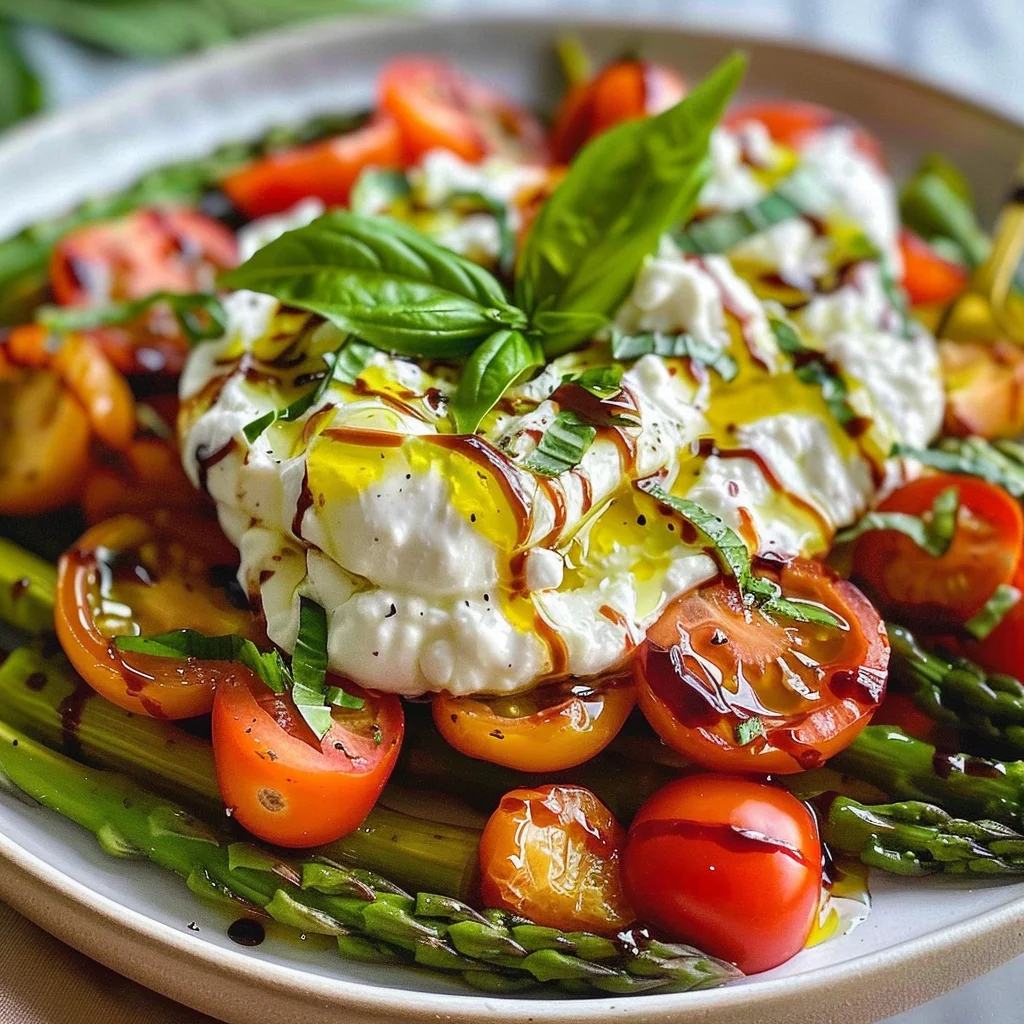
Alright, let’s be honest; another salad recipe isn’t exactly groundbreaking news, is it? However, what if I told you about a dish that’s so effortlessly elegant, so bursting with texture and flavor, that it basically throws a party on your tongue and everyone’s invited? Consequently, we’re not just tossing greens in a bowl here; we’re crafting an experience. Furthermore, this Asparagus Tomato Salad with Burrata Cheese has taken the culinary world by storm, and for good reason. Ultimately, it’s a stunning juxtaposition of the earthy and the sweet, the crisp and the impossibly creamy, all brought together by a zesty vinaigrette. In other words, it’s the kind of show-stopping dish that looks like you fussed for hours but, shhh, is actually a cinch to pull off. Whether you’re after a luxurious weeknight treat or a guaranteed crowd-pleaser for your next gathering, this salad is about to become your new secret weapon.
The Quintessential Asparagus Tomato Burrata Salad Recipe
Gathering Your Ingredients (A Shopping List for Success)
First things first, let’s talk components. Because this recipe is so simple, each ingredient truly gets its moment to shine. Therefore, using the freshest, highest-quality components you can find isn’t just a suggestion—it’s the golden rule. For instance, don’t skimp here; the payoff is absolutely worth it.
For the Salad
-
1 lb fresh asparagus, those tough ends trimmed off
-
1 pint cherry or grape tomatoes, halved to release their juicy goodness
-
1 (8 oz) ball of high-quality burrata cheese, because that creamy center is everything
-
1/4 cup fresh basil leaves, gently torn to avoid bruising
-
2 tbsp pine nuts, toasted to a perfect golden brown (optional, but highly recommended for crunch)
-
Flaky sea salt (like Maldon) and freshly cracked black pepper, for that final flourish
For the Lemon-Herb Vinaigrette
-
1/4 cup extra virgin olive oil, the fruity foundation of our dressing
-
2 tbsp fresh lemon juice, for that essential bright zing
-
1 tsp lemon zest, because it packs a serious aromatic punch
-
1 small shallot, minced ever so finely
-
1 tsp Dijon mustard, the secret emulsifier that brings it all together
-
1 tbsp fresh chopped chives, adding a mild, oniony depth
-
Salt and pepper to taste, obviously
Step-by-Step Instructions: From Prep to Plate
Step 1: Preparing the Asparagus (Blanching vs. Roasting)
Now, here’s your first big decision: to blanch or to roast? Surprisingly, both methods are fantastic; they just lead to slightly different flavor profiles.
-
Blanching (For a Bright, Crisp-Tender Bite): This method is all about locking in that vibrant green color and a satisfying crunch. Firstly, bring a large pot of salted water to a rolling boil. Meanwhile, prepare a large bowl of ice water—this is your “ice bath.” Next, plunge the asparagus spears into the boiling water for just 2-3 minutes, depending on their thickness. Then, immediately transfer them to the ice bath to shock them and stop the cooking process dead in its tracks. Finally, drain and pat them thoroughly dry.
-
Roasting (For a Deeper, Caramelized Flavor): Prefer something with a richer, slightly sweeter edge? Alternatively, roasting is your best bet. To begin, preheat your oven to 400°F (200°C). After that, toss the asparagus spears with a drizzle of olive oil, salt, and pepper on a baking sheet. Subsequently, roast for 10-15 minutes until they are tender-crisp and have those lovely little browned spots. Afterwards, let them cool slightly.
Step 2: Whisking the Perfect Vinaigrette
While the asparagus is cooling, let’s make the magic elixir. Essentially, you have two foolproof options. For example, you can combine all the vinaigrette ingredients—the olive oil, lemon juice, zest, shallot, Dijon, and chives—in a small jar, screw the lid on tight, and shake it like you mean it until it’s beautifully emulsified. On the other hand, you can whisk everything together vigorously in a small bowl. Regardlessof your method, taste it! Does it need more zing? Add a squeeze of lemon. A bit more richness? A drizzle more oil. Remember, you’re the boss of this dressing.
Step 3: Assembling the Masterpiece
Finally, the fun part: bringing it all together. To assemble, arrange your beautifully cooked and cooled asparagus on a large serving platter or shallow bowl. Then, artfully scatter those halved tomatoes over and around the spears. After that, drizzle about two-thirds of your lemony vinaigrette over the vegetables. Now, for the pièce de résistance: carefully place the whole ball of burrata cheese right in the center. Gently tear it open with your fingers or a knife to let that luscious, creamy interior spill out. To finish, top everything with the torn basil, toasted pine nuts, the remaining dressing, and a generous pinch of that flaky sea salt and black pepper. Honestly, serve it immediately and watch the magic happen.
The Art of Selection: Choosing the Best Ingredients
Let’s get down to the nitty-gritty, shall we? After all, a magnificent dish like this lives or dies by the quality of its stars. Therefore, you can’t just grab any old thing from the supermarket shelf and expect a standing ovation. Instead, think of yourself as a talent scout, searching for the very best performers for your culinary stage.
Burrata 101: Understanding the Creamy Heart of the Dish
Okay, let’s talk about the headliner: the burrata cheese. What is it exactly? Well, imagine a delicate pouch of fresh mozzarella, but instead of being solid, it’s lovingly stuffed with soft, stringy curds (stracciatella) and fresh cream. Essentially, it’s a beautiful, decadent surprise package. When you’re selecting one at the store or cheese counter, give it a gentle poke. A fresh burrata should feel soft, supple, and swim happily in its whey-filled container. Avoid any that seem firm, deflated, or have an off smell. Furthermore, here’s a pro tip: always, and I mean always, let it sit on the counter for about 20-30 minutes before serving. Why? Because serving it straight from the fridge is a crime against flavor; room-temperature burrata is luxuriously creamy and far more expressive.
Asparagus: Picking and Prepping the Perfect Spears
Moving on to the verdant crunch. Selecting the best asparagus is surprisingly simple. Look for spears with tight, firm, and deeply colored tips—vibrant green, for the most common variety. The stalks should be smooth, firm, and not look withered or woody. Now, about that infamous tough end: you can line them up and slice off the bottoms, but the real fun is the snap method. Simply hold a spear at each end and bend it; it will naturally break at the precise point where the tough part ends and the tender part begins. It’s oddly satisfying and guarantees no stringy bits. Incidentally, thicker spears are often better for roasting as they won’t overcook as fast, while thinner ones are ideal for quick blanching.
Tomatoes: A Burst of Summer Sweetness
Even in the off-season, you can find great options. For this salad, you want tomatoes that are little flavor bombs. Cherry or grape tomatoes are typically your safest bet; they’re reliably sweet and juicy year-round. However, if you stumble upon a colorful heirloom medley or even some sun-blushed tomatoes, grab them! They’ll add incredible color and a deeper sweetness. When selecting them, choose ones that are plump, firm, and heavy for their size with smooth, unblemished skin. A little tip: if your tomatoes are a bit lackluster, halving them and giving them a tiny pinch of salt about 10 minutes before assembling can help draw out their natural juices and flavor.
Oil and Acid: The Foundation of Your Vinaigrette
Finally, let’s not forget the dressing that ties this whole party together. This is where you can really taste the difference quality makes. For the oil, a good, fruity extra virgin olive oil is non-negotiable. It should smell like olives and grass, not nothing. As for the acid, fresh lemon juice is the classic, bright choice that cuts through the richness of the cheese perfectly. But don’t be afraid to experiment! A premiumwhite balsamic or a delicate champagne vinegar can also create a wonderfully nuanced vinaigrette.
Culinary Techniques: Elevating Your Salad
The Science of Blanching (Why It Works)
So, why go through the hassle of an ice bath? It’s not just for drama. Blanching is a fantastic technique that uses a quick shock of boiling water to deactivate the enzymes that make vegetables lose their color and turn mushy. The immediate plunge into ice water (“shocking”) halts the cooking process entirely. The result? Asparagus that is a breathtaking shade of green and has a perfect crisp-tendertexture—cooked yet still with a satisfying snap. It’s a chef’s trick that makes all the difference. You can learn more about the fantastic health benefits of asparagus that this technique helps preserve.
How to Toast Pine Nuts to Perfection
Those little pale nuts won’t add much if you just toss them on raw. Toasting them is a game-changer, unlocking a deep, buttery, and complex flavor. The easiest way? Use a small, dry skillet over medium-low heat. Add the pine nuts and shake the pan or stir them frequently. Watch them like a hawk! They can go from perfectly golden to burnt and bitter in a matter of seconds. Once they’re fragrant and have a light golden color, immediately pour them onto a cool plate to stop the cooking. Your salad will thank you for the extra step.
The Rule of Seasoning in Layers
Here’s the secret that separates a good cook from a great one: seasoning in layers. Don’t just dump all the salt on at the very end. Instead, think of it like building a flavor skyscraper. Add a little pinch of salt to the asparagus after cooking. Lightly season the tomatoes. Taste and season your vinaigrette. Finally, add that last flourish of flaky salt on top. This method ensures every single component is perfectly seasoned from the inside out, creating a much more harmonious and delicious final dish. It’s a simple habit that will improve everything you cook. Understanding the quality of your core ingredients, like knowing how to choose a high-quality extra virgin olive oil, is fundamental to this process.
Endless Variations: Make This Salad Your Own
Alright, so you’ve mastered the classic. But wait, what if you want to shake things up a bit? Fortunately, this salad is like a blank canvas, eagerly waiting for your artistic touch. Therefore, feel free to get creative and tailor it to your mood, what’s in your fridge, or who you’re feeding. After all, cooking should never feel like a rigid set of rules you can’t break.
Protein Power: Adding Grilled Chicken, Shrimp, or Salmon
Suddenly need to turn this light starter into a hearty main course? No problem! This salad is incredibly welcoming to a variety of proteins. For a fantastic grilled chicken addition, simply season a breast or thighs with olive oil, salt, pepper, and a squeeze of lemon before grilling to juicy perfection. Then, slice it and arrange it on top. Alternatively, some quickly seared shrimp or a flaky piece of pan-roasted salmonwould be absolutely divine nestled next to that creamy burrata. Honestly, it’s a guaranteed way to satisfy even the biggest appetites at the table.
Grain Bowl Transformation: With Farro, Quinoa, or Couscous
Want to add some heft and make it even more nutritious? Look no further than your pantry! Tossing in a cup of cooked, cooled whole grains can transform this salad into a complete, satisfying meal-in-a-bowl. Chewy farro or pearl couscous provides a wonderful textural contrast, while fluffy quinoa is a fantastic gluten-free option that soaks up the dressing beautifully. Simply prepare your grain of choice according to package directions, let it cool completely, and spread it on the platter as a base before adding the asparagus and tomatoes.
Italian Twist: With Prosciutto, Peppercorns, and Balsamic Glaze
Craving those quintessential Italian flavors? Let’s take a quick trip to Rome without leaving your kitchen. For a salty, savory kick, drape a few slices of delicate prosciutto around the platter. Then, instead of (or in addition to) black pepper, crack some bold tellicherry peppercorns over everything for a fragrant, spicy bite. Finally, right before serving, drizzle the entire masterpiece with a swirl of syrupy, sweet balsamic glaze. The combination of salty ham, spicy pepper, sweet glaze, and creamy cheese is nothing short of spectacular.
Citrus Zing: Adding Segments of Orange or Grapefruit
If you’re making this in the dead of winter when tomatoes aren’t at their peak, fear not! Citrus can come to the rescue with a burst of sunny flavor. Segmenting a sweet blood orange or a tangy grapefruit and arranging the pieces throughout the salad adds incredible brightness and a juicy pop. The citrus acidity pairs wonderfully with the rich cheese and the earthy asparagus, creating a completely new but equally delicious flavor profile. It’s a brilliant way to enjoy this salad all year round.
Serving Suggestions: What to Pair with Your Salad
So, you’ve built this beautiful, glorious salad. Now what do you serve with it? Well, it’s versatile enough to play well with others, yet so complete it can easily stand alone.
The Perfect Protein Partner: Grilled Steak or Fish
As a stellar side dish, this salad is the perfect way to cut through the richness of a main course. Imaginea perfectly grilled steak, hot off the coals, resting right next to this cool, creamy, and acidic salad. Eachbite of steak followed by a forkful of asparagus and burrata is pure harmony. Similarly, a simple piece of pan-seared white fish or even some grilled lamb chops would find an exquisite partner in this dish.
Bread is a Must: Crusty Artisan Bread or Garlic Bread
Let’s be real: you’ve got that incredible, creamy burrata and a pool of delicious lemony dressing on that platter. You absolutely cannot let that go to waste. Serving this salad with a loaf of warm, crusty artisan bread or some homemade garlic bread is not just a recommendation—it’s a necessity. It’s the best tool for mopping up every last delicious drop and ensuring not a single bit of flavor is left behind.
The Make-Ahead Question: Storage and Leftovers
We’ve all been there—trying to get ahead for a dinner party or just meal prepping for the week. So, can this salad be made in advance? The answer is a cautious yes, but with a very important strategy.
Can You Prepare This Salad in Advance?
Absolutely! The key is to keep the components separate until the very last moment before serving. You can blanch or roast your asparagus a day ahead, pat it dry, and store it in an airtight container in the fridge. The vinaigrette can be shaken up and stored in its jar for several days. The tomatoes can be halved and stored, and the pine nuts can be toasted. However, and this is a big however, keep the burrata whole and chilled in its liquid until showtime. Also, wait to assemble everything. If you dress the vegetables too early, they’ll wilt and water out, and the basil will turn black and sad. Patience is your friend here.
How to (Best) Store Leftovers
I’ll be straight with you: this salad is best enjoyed immediately. That said, if you find yourself with leftovers, they can be stored in an airtight container in the refrigerator for a day. Be warned that the vegetables will soften and release water, and the basil will wilt. It won’t be pretty, but it will still taste good. A better idea? Repurpose it! Chop everything up, leftover burrata and all, and toss it with hot pasta for a incredibly quick and creamy pasta primavera. Or, fold it into scrambled eggs for the most luxurious breakfast of your life.
Frequently Asked Questions (FAQs)
Naturally, such a spectacular dish comes with a few questions. Therefore, let’s tackle the most common head-scratchers to ensure your salad-making journey is completely smooth sailing.
What is the difference between burrata and fresh mozzarella?
This is a fantastic question and the key to understanding the magic! While they are close cousins, the difference is all about what’s inside. Think of fresh mozzarella as a solid, soft, and milky cheese, often shaped into balls (bocconcini) or a larger knot (nodini). Burrata, on the other hand, is like a delicious surprise package. It starts as a pouch of mozzarella, but it’s then filled with soft, stringy curds called stracciatella and fresh cream. So, when you cut into it, that luscious, creamy interior spills out. In short, mozzarella is uniformly soft, but burrata offers a stunning contrast between its delicate shell and its rich, creamy heart.
Can I substitute another cheese for burrata?
Absolutely, you can, but manage your expectations because the experience will be different. The closest substitute is absolutely fresh bocconcini (small mozzarella balls). You’ll still get that lovely milky flavor and soft texture, but you’ll miss the dramatic, creamy center. For a dairy-free or vegan option, look for a high-quality firm tofu or a vegan mozzarella designed to melt. You can marinate the tofu in lemon juice and olive oil to mimic some tanginess. Just remember that while it will still be a tasty salad, it won’t replicate the unique decadence of true burrata. The history of such Italian cheesemaking is fascinating; you can explore the rich history of Italian cheesemaking to appreciate the craft behind these cheeses.
Do you eat burrata cheese warm or cold?
This is crucial! Please, please do not serve burrata straight from the refrigerator. The cold temperature numbs its delicate flavor and hardens its beautifully creamy texture. Instead, always let it sit out on the counter for about 20 to 30 minutes before serving. Allowing it to come to room temperature is the single best thing you can do to experience its full, luxurious potential. You’ll be amazed at how much more aromatic and decadent it becomes.
How do you know if asparagus has gone bad?
Trust your senses here—they rarely lie. Fresh asparagus should look vibrant and feel firm. If it’s gone south, you’ll notice the spears have become limp, wilted, and maybe even a little slimy, especially at the tips. Another dead giveaway is a noticeably sour or off-putting smell. When in doubt, remember the golden rule: if it looks sad and smells funky, it’s best to toss it and grab a fresh bunch.
Is this asparagus tomato burrata salad healthy?
Yes, it absolutely is! It’s a wonderfully nutrient-dense meal. Let’s break it down: Asparagus is a fantastic source of fiber, folate, and vitamins A, C, and K. Tomatoes provide the powerful antioxidant lycopene, along with vitamin C and potassium. The olive oil in the dressing is packed with heart-healthy monounsaturated fats. Even the rich burrata offers a good dose of protein and calcium. So, while it feels indulgent, you’re feeding your body a whole lot of good stuff, too. It’s a perfect example of how eating well can also be an incredibly delicious experience.
Conclusion: Your New Go-To Showstopper Salad
And there you have it—the complete guide to creating a truly unforgettable Asparagus Tomato Salad with Burrata Cheese. We’ve journeyed from selecting the perfect ingredients to mastering key techniques, exploring fun variations, and answering all those burning questions. This dish truly has it all: stunning visual appeal, a symphony of textures, and a balance of flavors that will delight every single time.
Remember, the soul of this recipe lies in its simplicity and the quality of its components. Don’t be afraid to make it your own; cooking is an adventure, not a test. Now it’s your turn! Grab that gorgeous burrata, find the crispest asparagus, and get ready to create something magical. We’d love to see your culinary masterpiece—share your creations online and tag us. Happy cooking
Asparagus Tomato Salad with Burrata Cheese
Description
🥗 Asparagus Tomato Salad with Burrata Cheese
Ingredients (4 servings)
-
1 bunch fresh asparagus (trimmed)
-
2 cups cherry tomatoes (halved)
-
2 tbsp olive oil
-
1 tbsp balsamic glaze (or balsamic vinegar reduction)
-
1 garlic clove, minced (optional)
-
Salt & black pepper, to taste
-
2 balls fresh burrata cheese
-
Fresh basil leaves, for garnish
-
Flaky sea salt (optional, for finishing)
Instructions
-
Prepare the Asparagus:
-
Bring a pot of salted water to a boil.
-
Blanch asparagus for 2–3 minutes until tender-crisp.
-
Transfer immediately to an ice bath to keep the bright green color. Drain well.
-
-
Assemble the Salad:
-
On a serving platter, arrange asparagus and halved cherry tomatoes.
-
Drizzle with olive oil, balsamic glaze, and season with salt, pepper, and garlic (if using).
-
-
Add the Burrata:
-
Place burrata balls on top of the salad.
-
Gently tear them open so the creamy inside spills over the veggies.
-
-
Garnish & Serve:
-
Add fresh basil leaves and a sprinkle of flaky sea salt.
-
Serve immediately with crusty bread for scooping.
-