
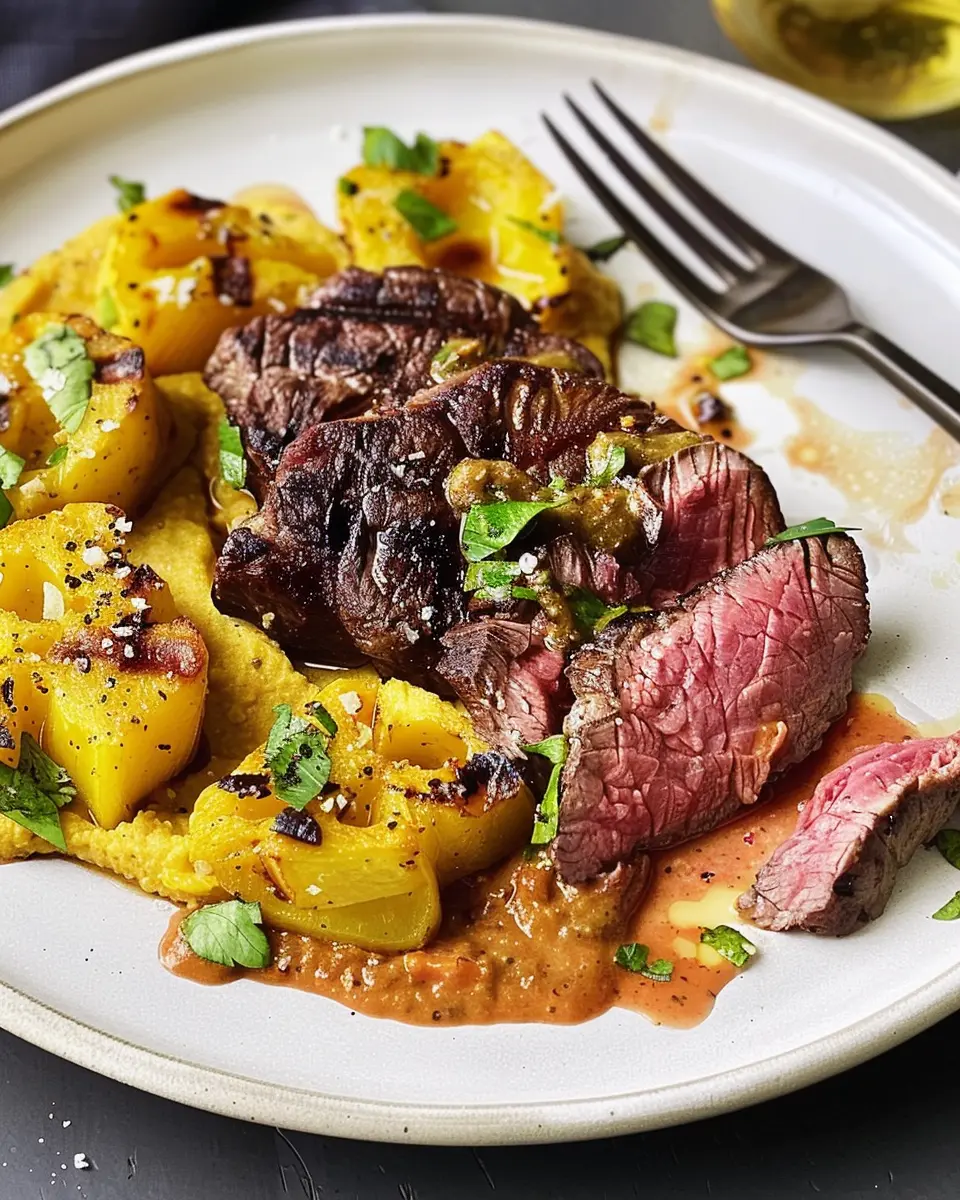
Alright, let’s talk about a dinner that’s about to blow your mind. Imagine this: a deeply savory, incredibly juicy steak, seared to a perfect crisp and resting on a vibrant, smoky, and slightly sweet sauce that’s unlike anything you’ve tried before. Sounds like something from a fancy downtown restaurant’s menu, right? Well, guess what—you’re about to master it in your own kitchen. This isn’t just another hanger steak recipe; this is a culinary adventure featuring an underrated butchers cut and a brilliantly reimagined yellow squash romesco sauce. We’re ditching the expected for the exceptional, creating a meal that’s as impressive for your taste buds as it is for your Instagram feed. So, tie on your apron, and let’s transform these simple ingredients into a spectacular summer feast.
Part 1: Introduction & The Star Ingredient (Hanger Steak)
Hanger Steak with Yellow Squash Romesco: Your New Favorite Summer Feast
Ever find yourself stuck in a dinnertime rut, cycling through the same few proteins and sides? Furthermore, do you crave a meal that feels gourmet but doesn’t demand a gourmet budget or a chef’s expertise? Honestly, we’ve all been there. Consequently, this dish is here to shatter that routine for good. Ultimately, Hanger Steak with Yellow Squash Romesco is more than a meal; it’s a vibrant, flavor-packed experience that balances robust, beefy goodness with the fresh, ingenious twist of a Spanish-inspired sauce.
Why This Dish is a Culinary Game-Changer
Firstly, this recipe is a masterclass in value and flavor. Instead of relying on an expensive cut of meat, it celebrates hanger steak—a flavorful, budget-friendly hero that’s been a secret weapon for butchers and savvy cooks for ages. Meanwhile, the classic romesco sauce, traditionally made with red peppers, gets a stunning and delicious makeover with sweet, summer-ready yellow squash. The result? A stunning plate of food that’s visually beautiful, surprisingly simple to make, and packed with layers of texture and taste. It’s the kind of dish that’ll have everyone at the table asking, “How did you make this?”
Unveiling the Mystery: What Exactly is Hanger Steak?
Okay, let’s get down to the beefy details. If you’ve never cooked with hanger steak before, you’re in for a treat. This cut, often called onglet, has a personality all its own.
The Butcher’s Secret (Onglet)
So, where does this cut come from? Well, the name says it all. The hanger steak quite literally “hangs” from the diaphragm of the cow, right between the rib and the loin. Because of its location, it’s a muscle that does a bit of work, which is the secret to its incredible, intense beefy flavor. In fact, many consider it the most flavorful of all the steak cuts! Texture-wise, it’s loose-grained and tender, yet it has a satisfying, meaty chew that stands up beautifully to bold sauces and seasonings. It’s often compared to skirt steak or flank steak, but it’s generally more tender and richer in taste.
Why Hanger Steak is a Budget-Friendly Gourmet Choice
Here’s the best part: all that incredible flavor won’t wreck your grocery budget. For a long time, hanger steak was a true butchers cut, meaning it was the cut the butchers would take home for themselves because it was both delicious and inexpensive. Thankfully, however, it’s become more widely available, though its price is still a fraction of what you’d pay for a filet mignon or a ribeye. This makes it the perfect choice for creating a restaurant-quality weeknight dinner that feels indulgent without being irresponsible. Pro tip: your best bet for finding a good one is to chat with the butcher at your local grocery store or meat counter.
Selecting and Prepping Your Hanger Steak for Perfection
You’ve found your steak—awesome! Now, let’s make sure you set yourself up for success from the start. A little prep work here makes a world of difference in the final result.
How to Choose the Best Cut at the Store
When you’re on the hunt, keep your eyes peeled for a few key things. Firstly, look for a steak that boasts a deep, rich red color with some visible marbling—those thin veins of fat running through it. This intramuscular fat is your ticket to a juicy, flavorful result. Secondly, aim for a piece that’s consistently about 1 to 1.5 inches thick; this ensures it will cook evenly without the thinner ends overcooking. Finally, give it a gentle press; it should feel firm to the touch.
The Crucial Step: Trimming the Sinew
Now, pay attention because this is the only fussy part of the entire recipe, and it’s non-negotiable. Running right down the center of the hanger steak is a tough, fibrous membrane. If you don’t remove it, you’ll end up with a chewy, inedible strip right through the middle of your beautiful steak. Yuck! But don’t worry, it’s easy. Simply place the steak on your cutting board and identify the long, white sinew. Using a sharp, flexible knife, slide the blade underneath the membrane and carefully cut it away from the meat on both sides. You might lose a few ounces of weight, but the payoff is a perfectly tender dinner
Part 2: Deconstructing the Sauce & Sides
Alright, the steak is prepped and ready for its moment of glory. But let’s be real—what truly takes this dish from great to legendary is that glorious sauce. We’re moving beyond the expected and diving into a creation that’s vibrant, innovative, and bursting with summer flavor.
Beyond Red Peppers: The Genius of Yellow Squash Romesco
Traditional Spanish romesco sauce is a stone-cold classic for a reason. Hailing from Catalonia, it’s a smoky, nutty, and tangy blend typically featuring roasted red peppers, tomatoes, nuts, and olive oil. It’s a powerhouse of flavor that pairs perfectly with grilled meats and vegetables. However, our version takes a delightful detour.
So, why the twist? By introducing yellow squash, we’re not just being different for the sake of it. Firstly, yellow squash brings a subtle, inherent sweetness that beautifully counterbalances the smoky paprika and tangy sherry vinegar. Secondly, it creates a stunning, sunny yellow hue that just screams summer on a plate. Ultimately, this swap results in a sauce that feels lighter and fresher than its traditional counterpart, making it the ideal partner for our rich, savory steak. Plus, it’s a fantastic, delicious way to use up that abundance of summer squash from your garden or farmers’ market.
Gathering Your Ingredients: A Symphony of Flavor
You can’t build a symphony without the right instruments, and you can’t build this dish without gathering your ensemble of fresh, high-quality ingredients. Trust me, using the good stuff here makes all the difference.
For the Yellow Squash Romesco
-
Yellow Squash: The star of our sauce! One medium-sized squash will do the trick.
-
Roasted Red Peppers: You can absolutely roast and peel your own, but for convenience and consistency, a good-quality jarred version works perfectly.
-
Almonds: These provide the essential nutty base and creamy body. Lightly toasting them is a non-negotiable step for unlocking their deepest flavor.
-
Garlic: One or two fresh cloves will add that necessary pungent kick.
-
Sherry Vinegar: This is key for that authentic Spanish tang. If you must substitute, red wine vinegar is okay, but sherry vinegar is worth seeking out.
-
Smoked Paprika: Not to be confused with sweet or hot paprika! Smoked paprika provides the signature smoky depth that defines the sauce.
-
Olive Oil: Use a good-quality extra-virgin olive oil for the best flavor.
-
Kosher Salt & Freshly Ground Black Pepper: For seasoning and bringing all the flavors together.
For the Hanger Steak
-
Hanger Steak: One whole steak, trimmed of its central sinew (about 1 to 1.5 pounds).
-
High-Heat Oil: Choose an oil with a high smoke point like avocado, grapeseed, or refined coconut oil for pan-searing.
-
Kosher Salt & Freshly Ground Black Pepper: You will need more than you think. A generous crust requires generous seasoning.
For the Optional Garnish/Sides
-
Fresh Parsley or Chives: For a pop of color and fresh flavor.
-
Flaky Sea Salt: Like Maldon, for sprinkling on top at the end for texture and a burst of salinity.
-
Extra Yellow Squash or Zucchini: For grilling or sautéing as an extra side.
Essential Equipment for Success
You don’t need a kitchen full of fancy gadgets, but a few key pieces of equipment will ensure your success and make the process a breeze.
-
Cast-Iron Skillet or Heavy-Bottomed Stainless Steel Pan: This is non-negotiable for achieving that perfect, restaurant-quality sear on your steak. Cast-iron retains heat incredibly well, giving you an unbeatable crust.
-
Blender or Food Processor: Essential for creating that beautifully smooth and emulsified romesco sauce.
-
Sharp Chef’s Knife: A sharp knife is crucial for safely trimming the steak and prepping your vegetables.
-
Cutting Board: A sturdy board will be your best friend during prep.
-
Tongs: For safely flipping the steak in the hot pan.
Now that our mise en place is, well, in place, we’re ready to get cooking. The next part is where the magic truly happens!
Part 3: The Cooking Process – A Step-by-Step Guide
Alright, it’s showtime! This is where we transform our beautiful ingredients into an unforgettable meal. Don’t be intimidated; while the results are impressive, the process is straightforward. We’ll tackle the sauce first—its flavors actually improve as it sits, making it the perfect make-ahead component.
Crafting the Yellow Squash Romesco Sauce
Forget everything you think you know about complicated sauces. This yellow squash romesco is a breeze to make, and the flavor payoff is absolutely enormous. We’re building layers of flavor through simple techniques like charring and toasting.
Step 1: Charring for Depth of Flavor
First things first, we need to cook our squash. But we’re not just boiling it; we’re going to char it. Why? Because that beautiful, light browning, technically called the Maillard reaction, unlocks a world of deep, nutty, and complex flavors that raw squash simply doesn’t have. You have a few options here:
-
Grill Pan or Outdoor Grill: For fantastic grill marks and smoky undertones.
-
Broiler: A quick and easy hands-off method. Just slice the squash in half lengthwise, place it on a baking sheet, and broil until the edges are blackened.
-
Stovetop: My personal favorite for control. Simply place whole or halved squash directly on the grates of a gas burner over a medium flame, turning occasionally with tongs until the skin is evenly blistered and blackened.
Once beautifully charred, let the squash cool slightly before roughly chopping it. No need to peel it—the softened skin adds to the flavor and color!
Step 2: The Toasting Step
While the squash cools, grab your almonds. Pour them into a dry skillet over medium heat. Now, stand there and watch them. Seriously, don’t walk away! Toast them, shaking the pan frequently, for just 2-4 minutes until they become fragrant and take on a very light golden color. This crucial step wakes up the oils in the nuts, transforming them from bland and crunchy to richly aromatic and flavorful. Burnt almonds, however, taste bitter, so the moment you smell that nutty perfume, take them off the heat and transfer them to a plate to cool.
Step 3: The Blending Process
Now for the fun part: bringing it all together. In your blender or food processor, combine the charred yellow squash, roasted red peppers, toasted almonds, fresh garlic cloves, a generous tablespoon of sherry vinegar, and a heaping teaspoon of smoked paprika.
Secure the lid and begin to pulse the mixture a few times to break everything down. Then, with the motor running on low, slowly stream in the extra-virgin olive oil. This gradual incorporation is the secret to a perfectly emulsified, luxuriously smooth sauce that won’t separate. Blend until you achieve a beautifully smooth, slightly creamy consistency. Finally, taste it! Season generously with kosher salt and freshly ground black pepper, blending again to combine. Give it one more taste and adjust any seasoning—maybe a pinch more paprika or a few more drops of vinegar—until it makes your taste buds sing.
Mastering the Hanger Steak: Pan-Searing to Perfection
With your sauce happily resting, let’s focus on the main event. Cooking a steak like a pro is less about fancy techniques and more about nailing a few fundamental steps.
Step 1: Bringing the Steak to Temperature
Here’s a mistake everyone makes: cooking a cold steak straight from the fridge. That icy center forces you to cook the outside for too long to get the inside to the right doneness, resulting in a thick, overcooked band around the edges. Instead, about 30-45 minutes before you plan to cook, take the trimmed steak out of the refrigerator. Place it on a plate, pat it completely dry with paper towels (this is critical for a good sear!), and let it sit on the counter. You want it to come to room temperature for the most perfectly even cook from edge to edge.
Step 2: Seasoning Liberally
Now, be bold! Season the steak extremely generously on all sides with kosher salt and freshly ground black pepper. Don’t be shy; a lot of this seasoning will form the incredible crust we’re after. The surface of the steak should look visibly seasoned. This is not the time for a light sprinkle.
Step 3: The Searing Process
Place your cast-iron skillet over medium-high heat and let it get seriously hot. Add a tablespoon of your high-heat oil and swirl it around. The oil should shimmer and look like it’s about to start smoking—that’s the perfect temperature.
Carefully lay the steak in the center of the hot pan. It should immediately sizzle loudly—that’s the sound of success! Now, here’s the hard part: leave it alone. Do not poke it. Do not move it. Do not press down on it (you’re pressing out all the precious juices!). Let it cook undisturbed for about 4-5 minutes to form a deep brown, crispy crust. Using your tongs, flip the steak over. It should release from the pan easily if a proper crust has formed. Cook for another 4-5 minutes on the second side for a perfect medium-rare.
For an extra layer of flavor, you can add a couple of tablespoons of butter, a few sprigs of thyme, and a garlic clove to the pan during the last two minutes. Tilt the pan slightly and use a spoon to continuously baste the top of the steak with the foaming, fragrant butter.
Step 4: The Most Important Step: Resting
I know, I know. You want to slice into that beautiful steak immediately. But you must resist! This is the single most important step for a juicy result. As steak cooks, its muscle fibers tighten and push all the juices to the center. If you cut it open right away, all those precious juices will just run out all over your cutting board.
Instead, the moment the steak is done, transfer it to a clean cutting board or a wire rack. Then, you must let it rest for a full 10 minutes. This allows the tense muscle fibers to relax and reabsorb all those internal juices throughout the entire steak. Trust me, this patience is rewarded with every single juicy, flavorful bite.
Part 4: The Final Act & Pro Tips for a Flawless Dish
The tantalizing aroma filling your kitchen is a sure sign you’re almost there. The steak has rested, and the sauce is ready. Now, it’s time for the grand finale: bringing everything together on the plate. This is where a little attention to detail makes your creation look as incredible as it tastes.
The Final Act: Plating and Presentation
You’ve invested this much care into cooking; don’t just slop it on a plate! A beautiful presentation builds anticipation and makes the entire meal feel more special.
First, grab a warm plate—this helps keep the food at an ideal temperature as it’s served. Using the back of a spoon, smear a generous, artistic swoosh of the vibrant yellow squash romesco across the center of the plate.
Now, for the steak. Locate the direction of the muscle fibers on the rested hanger steak—they should all be running in one long direction. This is crucial: you must slice against the grain. This means cutting perpendicular to those long fibers. Why? Because it literally shortens the tough muscle fibers, making each piece incredibly more tender and easier to chew. If you slice with the grain, you’ll end up with a chewy, stringy mess, undoing all your careful work. Use a sharp knife to slice the steak into ½-inch thick strips.
Arrange the sliced steak elegantly over the swoosh of romesco sauce. Finally, drizzle any of those precious, flavorful juices that collected on the cutting board while the steak was resting right over the top. This is liquid gold! For a final flourish, garnish with a sprinkle of freshly chopped parsley and a delicate pinch of flaky sea salt for a tiny burst of salinity and texture.
Chef’s Notes: Tips for a Flawless Dish Every Time
Even the best recipes can be elevated with a few pro tips. Here’s how to guarantee perfection:
-
Embrace the Thermometer: The finger-poke test for doneness is unreliable. For perfectly cooked steak every single time, use an instant-read meat thermometer. For medium-rare, aim for an internal temperature of 125-130°F (51-54°C). Remember, the temperature will continue to climb a few degrees as it rests.
-
Don’t Crowd the Pan: If you’re cooking multiple steaks or a very large one, make sure not to overcrowd the pan. This causes the temperature to drop, and the steak will steam instead of sear. Cook in batches if necessary.
-
Sauce Ahead is Best: The yellow squash romesco sauce can (and should!) be made ahead of time. In fact, its flavors meld and deepen as it sits. Make it up to 2 days in advance, store it in an airtight container in the refrigerator, and let it come to room temperature before serving.
-
The Power of Patience: I cannot stress this enough: patience with preheating your pan and patience with resting your meat are the two most critical factors for success. A properly hot pan creates the crust, and proper resting ensures juiciness.
Customize Your Feast: Delicious Variations
This recipe is wonderfully adaptable. Feel free to tweak it based on your dietary needs or what you have in the fridge.
Nut-Free Romesco
Have an allergy or simply not a fan of almonds? No problem! You can easily create a nut-free romesco. Simply substitute an equal amount of toasted sunflower seeds or pumpkin seeds (pepitas). They provide the same essential texture and nutty flavor without the allergens.
Spice It Up
If you enjoy a bit of heat, this sauce is a fantastic canvas. Add a pinch of cayenne pepper along with the smoked paprika. For a deeper, smokier heat, blend in one small chipotle pepper in adobo sauce. Start with a little; you can always add more!
Alternative Cooking Methods: Grilling
While pan-searing in a cast-iron skillet is fantastic, you can absolutely take the party outside. For a grilled steak, pat and season the steak as usual. Preheat your grill to high heat. Grill the steak over direct heat for about 4-5 minutes per side, with the lid closed, to get those beautiful grill marks and a smoky flavor. You can even grill the yellow squash for the sauce instead of charring it on the stove for an extra layer of smokiness.
Hanger Steak with Yellow Squash Romesco
Description
🥩 Hanger Steak with Yellow Squash Romesco
Ingredients
For the Steak
-
2 hanger steaks (about 1 lb each)
-
2 tbsp olive oil
-
2 garlic cloves, smashed
-
1 sprig fresh rosemary
-
Salt and freshly ground black pepper
For the Yellow Squash Romesco
-
2 medium yellow squash, sliced lengthwise
-
1 yellow bell pepper, halved and seeded
-
2 garlic cloves, unpeeled
-
¼ cup blanched almonds (or hazelnuts)
-
1 tbsp sherry vinegar (or red wine vinegar)
-
½ tsp smoked paprika
-
½ tsp red pepper flakes (optional for spice)
-
3 tbsp olive oil
-
Salt and pepper, to taste
Garnish
-
Fresh parsley, chopped
-
Lemon wedges
Instructions
1. Prepare the Vegetables for Romesco
-
Preheat the oven to 425°F (220°C).
-
Place yellow squash, bell pepper halves (skin side up), and garlic cloves on a baking sheet. Drizzle with 1 tbsp olive oil, season with salt and pepper, and roast for 20–25 minutes until caramelized.
-
Once roasted, peel the garlic cloves and charred bell pepper skin.
2. Make the Romesco Sauce
-
In a food processor, combine roasted squash, roasted pepper, garlic, almonds, vinegar, smoked paprika, and red pepper flakes.
-
Pulse until smooth, then drizzle in 2 tbsp olive oil until creamy. Taste and adjust seasoning with salt and vinegar.
3. Cook the Hanger Steak
-
Pat steaks dry and season generously with salt and pepper.
-
Heat 2 tbsp olive oil in a cast-iron skillet over medium-high heat. Add smashed garlic and rosemary to infuse the oil.
-
Sear steaks for about 3–4 minutes per side (for medium-rare), basting with garlic-rosemary oil as they cook.
-
Remove from pan, tent with foil, and rest for 5–7 minutes.
4. Serve
-
Slice hanger steak against the grain.
-
Spoon a generous smear of yellow squash romesco on plates, then arrange steak slices over it.
-
Garnish with fresh parsley and a squeeze of lemon juice.