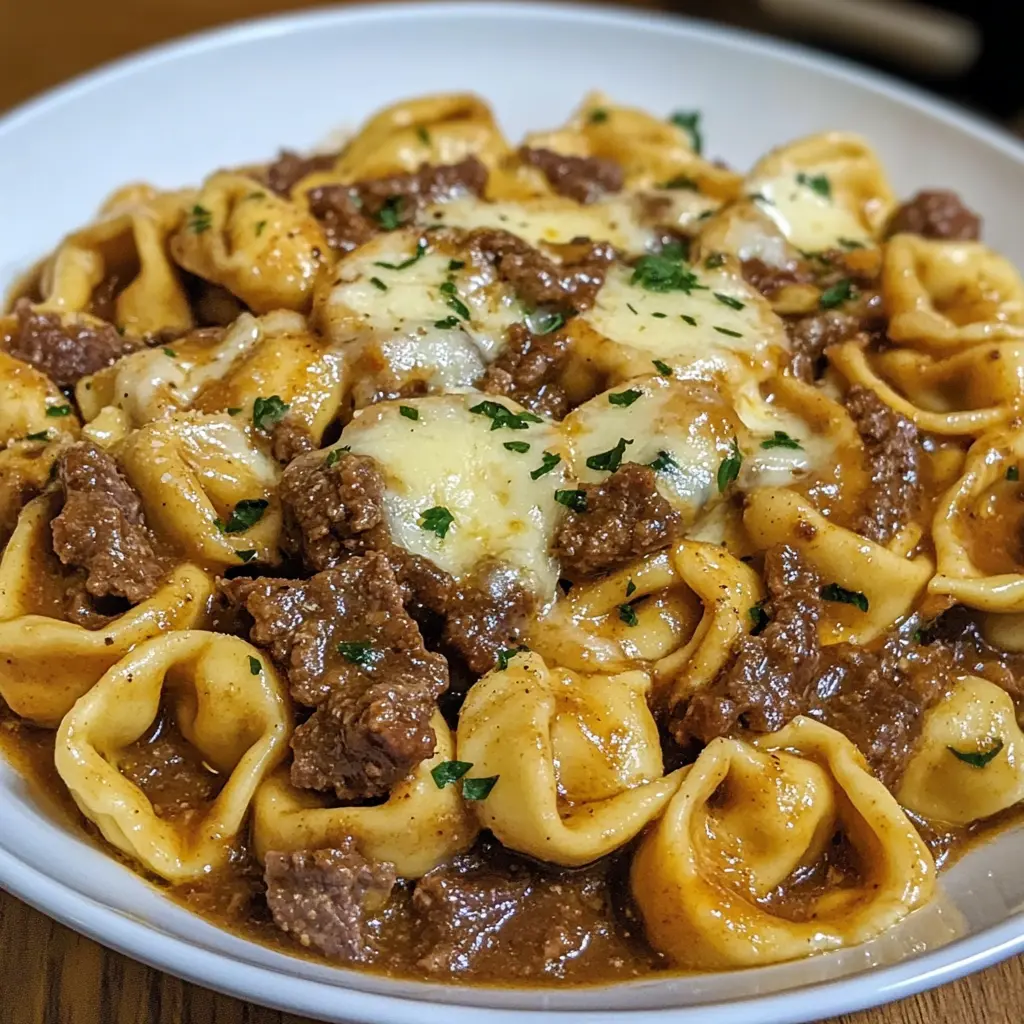
Hold onto your hats, food fans, because we’re about to embark on a culinary adventure that mashes up two of the greatest comfort foods known to humankind. Imagine, if you will, the hearty, savory, and utterly irresistible flavors of a classic Philly cheesesteak. Now, picture those very same flavors tangled up with tender, cheese-filled pasta, all swimming in a luxuriously creamy, decadent sauce. Sounds like a dream, right? Well, wake up your taste buds, because this Cheesesteak Tortellini in Rich Provolone Sauce is not only real but also surprisingly simple to whip up in your own kitchen. This isn’t just another pasta recipe; it’s a full-blown, fork-twirling, family-dinner-winning masterpiece that combines the soul of South Philly with the heart of Italian nonna cooking. So, get ready to ditch the takeout menu and fall in love with cooking all over again.
Cheesesteak Tortellini in Rich Provolone Sauce: The Ultimate Comfort Food Fusion
A Match Made in Culinary Heaven: Philly Meets Pasta
Let’s be honest, who can resist the siren call of a perfect Philly Cheesesteak? The thinly sliced ribeye, the sizzling peppers and onions, and that glorious, gooey cheese—it’s a flavor profile that’s practically legendary. Conversely, on the other side of the culinary spectrum, lies the humble yet glorious cheese-filled tortellini. This little pocket of joy is a comfort food champion in its own right. But what if you didn’t have to choose? Furthermore, what if you could combine these two titans of taste into one spectacular, show-stopping dish? That’s precisely the delicious dilemma we’re solving today. This recipe is a beautiful fusion, a mash-up that somehow feels both exciting and like it’s always belonged on your dinner table. Ultimately, it takes the familiar, beloved elements of a cheesesteak and reimagines them in a form that’s perfect for twirling on a fork.
Why This Recipe Will Become Your New Go-To
Alright, so it sounds delicious, but is it actually doable on a regular weeknight? You bet! In fact, this Cheesesteak Tortellini recipe is designed to be your secret weapon. Firstly, it comes together remarkably fast, especially if you do a little bit of prep beforehand. Secondly, it’s an incredibly impressive dish that looks and tastes like you spent hours in the kitchen, making it perfect for impressing guests or treating your family to something special. Moreover, every single component—the seared steak, the savory veggies, the cheesy pasta, and that incredibly rich Provolone sauce—works in perfect harmony. Consequently, each bite is a burst of familiar yet exciting flavor. Forget scouring restaurants for the best comfort food; the best version is now coming from your own stove. Trust me, this is one of those recipes that everyone will be begging you to make again and again.
The Soul of the Dish: Honoring the Philly Cheesesteak
A Brief History of an American Classic
Before we dive into our pots and pans, it’s worth taking a quick detour to understand the origins of the iconic flavor we’re channeling. Believe it or not, the Philly Cheesesteak wasn’t born in a fancy restaurant; instead, it came from a hot dog stand in the 1930s! Pat Olivieri, the legend goes, simply threw some beef on the grill for his own lunch. Meanwhile, a taxi driver caught a whiff and insisted on buying one. Consequently, a genuine American classic was born. The sandwich quickly evolved, of course, featuring that essential Amoroso roll and sparking the great “Cheez Whiz vs. Provolone” debate that still rages softly today. Understanding the rich history of the Philly Cheesesteak gives you a real appreciation for every single bite of our tortellini creation. It’s more than just meat and cheese; it’s a piece of culinary heritage.
Key Flavor Components We’re Borrowing
So, what exactly makes a cheesesteak taste like a cheesesteak? It’s not just one thing; it’s a magical combination of several key elements that we are expertly borrowing for our pasta dish.
-
The Meat: First and foremost, the star of the show is the beef. Authenticity demands thinly sliced ribeye steak. Why ribeye? Well, because it boasts the perfect amount of marbling—those little streaks of fat that melt away during cooking, basting the meat from the inside out. This results in incredibly tender, flavorful bites that are simply impossible to replicate with a leaner cut.
-
The Veggies: Next up, we have the aromatic foundation. The classic “wit” or “without” question refers to onions, and they are non-negotiable for building that deep, savory-sweet base. Many versions, furthermore, include green bell peppers and mushrooms, which we are wholeheartedly adopting. These veggies sautéed in the steak’s drippings are absolutely essential for building layers of flavor.
-
The Cheese: Finally, the glorious glue that holds it all together. While Cheez Whiz has its passionate defenders, Provolone cheese is our champion for this recipe. Its superb melting quality and its tangy, slightly smoky flavor profile make it the ideal candidate for transforming into a luxuriously rich Provolone sauce. It provides that signature gooeyness without overpowering the other ingredients. Understanding these different types of Provolone cheese (dolce vs. picante) can even help you fine-tune the flavor to your liking!
Building Your Flavor Arsenal: The Ingredient List
The Shopping List: What You’ll Need
Alright, let’s get down to business! Gathering your ingredients is the first step to success. For the best results, I highly recommend using high-quality, fresh components. Here’s your complete shopping list, broken down for clarity.
For the Steak & Veggies:
-
1 pound ribeye steak, thinly sliced
-
1 large yellow onion, thinly sliced
-
1 green bell pepper, thinly sliced
-
8 ounces cremini mushrooms, sliced
-
2 tablespoons olive oil
-
Salt and black pepper to taste
For the Rich Provolone Sauce:
-
3 tablespoons unsalted butter
-
3 tablespoons all-purpose flour
-
2 cups beef broth, warmed
-
1 cup heavy cream, warmed
-
2 cups Provolone cheese, freshly shredded (about 8 ounces)
-
½ teaspoon garlic powder
-
1 tablespoon Worcestershire sauce
The Pasta:
-
20 ounces fresh cheese-filled tortellini
-
(Optional) Fresh parsley, chopped for garnish
Ingredient Deep Dive: The “Why” Behind the “What”
Choosing the Right Cut: Ribeye vs. Alternatives
Now, let’s talk steak. As mentioned, ribeye steak is the gold standard here due to its fantastic fat content. That marbling is your best friend; it essentially bastes the meat as it cooks, guaranteeing a juicy, flavorful result every single time. However, I get it—ribeye can be a bit of a splurge. So, if you need a budget-friendly alternative, a nicely marbled sirloin tip will work in a pinch. You can even use pre-shaved steak for ultimate convenience, but keep a close eye on it as it cooks incredibly fast!
The Cheese Factor: Provolone and Its Partners
Ah, the heart of the operation: the cheese. Choosing Provolone cheese is a strategic move for our creamy sauce. Its excellent melting properties and distinct, tangy flavor are exactly what we need to create that signature rich Provolone sauce. For an even more complex flavor, consider using a blend! A majority of provolone with a handful of freshly grated Parmesan cheese adds a wonderful salty, nutty depth. Alternatively, a touch of mozzarella can enhance the glorious stretchy, gooey factor.
A critical pro-tip: Please, please shred your own cheese from a block. I know it’s tempting to grab a bag of pre-shredded cheese—it’s so convenient! However, those bags are coated with anti-caking agents like potato starch or cellulose. Unfortunately, these additives prevent the cheese from melting smoothly into your sauce, often leading to a grainy, clumpy texture. Taking those two extra minutes to shred your own is the single biggest secret to a perfectly silky, restaurant-quality sauce. Trust me on this one; it makes a world of difference.
Tools of the Trade
Essential Kitchen Tools for Success
Alright, before we fire up the stove, let’s do a quick tool check! You honestly don’t need any fancy, single-use gadgets for this recipe. In fact, you likely have everything already. Gathering your gear beforehand is a simple trick that makes the whole cooking process feel like a breeze, not a frantic scavenger hunt.
First and foremost, you’ll need a large skillet or sauté pan. This is non-negotiable. You need that ample surface area to properly sear the steak in a single layer without steaming it. Crowding the pan is the enemy of a good sear! A Dutch oven also works wonderfully here. Secondly, grab a large pot for boiling your cheese-filled tortellini and a colander to drain it. A good whisk is your MVP for creating a lump-free, velvety smooth sauce. And finally, make sure you have a sharp knife and a sturdy cutting board for all that slicing and dicing. That’s really all there is to it! With these simple tools, you’re more than equipped to create something spectacular.
Crafting Your Masterpiece: The Step-by-Step Method
Step 1: Prepping Your Mise en Place
Listen, I know it’s tempting to just start throwing things in a pan. But trust me on this: taking five minutes for mise en place—which is just a fancy way of saying “get everything in its place”—is the ultimate game-changer. This simple habit separates a chaotic, stressful cook from a calm, collected kitchen maestro.
Here’s your pre-game checklist:
-
Slice the steak against the grain into thin strips. Pat it dry with a paper towel—this is crucial for a good sear!
-
Chop all your vegetables: Get those onions, bell peppers, and mushrooms sliced and ready to go.
-
Shred your cheese from the block of provolone. Remember our talk about anti-caking agents? This is where that pays off!
-
Measure everything else out: Get your broth, cream, butter, and flour measured and within arm’s reach.
Seriously, having your ingredients prepped feels like you’ve unlocked a secret cooking cheat code. Everything just flows seamlessly from here on out.
Step 2: Cooking the Tortellini to Al Dente Perfection
Now, bring a large pot of generously salted water to a rolling boil. Gently add your cheese-filled tortelliniand cook them according to the package directions. However, here’s the key: you want to cook them just until al dente, which means “to the tooth.” They should still have a slight bite to them.
Why? Because these little pasta parcels are going to take a relaxing bath in that luxurious sauce later, where they’ll soak up even more flavor and finish cooking. If you boil them until they’re mushy now, they’ll turn to complete softness later. Before you drain them, be sure to reserve about half a cup of the starchy pasta water. This liquid gold is your magic weapon for adjusting the sauce consistency at the end. Now, drain the tortellini and set it aside.
Step 3: Building the Flavor Base – Searing the Steak & Veggies
Achieving the Perfect Sear on Your Steak
Alright, it’s showtime! Place your large skillet over medium-high heat and let it get properly hot. Add a tablespoon of olive oil. Now, season your dried steak strips generously with salt and pepper. Here’s the trick: don’t crowd the pan! If you add all the meat at once, you’ll steam it instead of searing it. Work in batches if needed.
Lay the strips in the hot oil in a single layer and resist the urge to move them around for a good minute or two. You’re waiting for that beautiful, caramelized crust to form. This is the Maillard reaction at work—that incredible chemical process that creates deep, complex, savory flavors. Once beautifully browned, flip the strips to sear the other side. Then, remove the steak from the skillet and set it aside on a plate. All those gorgeous browned bits left in the pan? That’s pure flavor, and we’re about to use it.
Sautéing the Onions, Peppers, and Mushrooms
Without cleaning the skillet, reduce the heat to medium. You might need to add another tiny splash of oil. Now, toss in all your sliced vegetables. They’re going to sizzle happily in the rendered beef fat and those leftover crispy bits. Use your spoon to scrape up all that goodness from the bottom of the pan as the veggies cook. This process of deglazing is fundamental for building a deep flavor foundation.
Sauté them, stirring occasionally, until the onions become soft and translucent and the peppers and mushrooms develop some gorgeous color and soften up. This should take about 6-8 minutes. If the pan gets too dry, feel free to deglaze with a splash of that beef broth you warmed up. Once they’re perfectly softened and fragrant, push the veggies to the side of the skillet or remove them temporarily to make room for the sauce.
The Pièce de Résistance – Crafting the Rich Provolone Sauce
Building a Flawless Roux (The Foundation)
Okay, here’s where the real magic happens! Let’s make that sauce. First, reduce the heat under your skillet to medium-low. Add the three tablespoons of butter and let it melt completely, swirling the pan to coat the bottom. Now, sprinkle in the three tablespoons of flour all at once. Immediately start whisking! You’re creating a roux, which is the classic base for so many luxurious sauces.
Keep whisking constantly for about one to two minutes. You’re not looking for color here, just to cook out the raw, pasty taste of the flour. It should form a thick paste and smell slightly nutty. Congratulations—you’ve just built the foundation that will thicken our entire sauce into creamy perfection. If you want to master the science of a perfect roux, it’s all about this gentle cooking and constant motion.
Whisking in the Liquids and Melting the Cheese
Now, it’s time to turn that pasty roux into a silky-smooth liquid. Remember those warmed liquids? This is why we warmed them! Gradually pour in the warm beef broth and heavy cream, just a big splash at a time, while whisking like your dinner depends on it (because it does!). Whisk thoroughly after each addition until the mixture is completely smooth before adding more.
Once all the liquid is incorporated, increase the heat just enough to bring the sauce to a very gentle simmer. Let it cook for 2-3 minutes, whisking occasionally, until it noticeably thickens and coats the back of a spoon. Now, reduce the heat to the lowest possible setting. It’s cheese time! Take your freshly shredded provolone and add it a handful at a time, whisking constantly until each addition is fully melted and incorporated before adding the next.
This low-and-slow approach is the absolute secret to a smooth, non-grainy, emulsified sauce. Finally, stir in the garlic powder and Worcestershire sauce for that extra savory umami kick. Taste and adjust seasoning with salt and pepper. Behold—your phenomenally rich Provolone sauce is ready!
The Grand Finale – Bringing It All Together
You’re on the home stretch! Remember that reserved pasta water? Have it handy. Now, gently add the drained, cooked tortellini and the reserved steak (with all its delicious juices) back into the skillet, directly into that glorious sauce. Don’t forget the sautéed veggies too! Using a rubber spatula or tongs, gently fold everything together until every single piece of pasta, steak, and vegetable is lovingly coated in that creamy sauce.
Let it all heat through for just a minute or two over low heat. If the sauce seems a little too thick (it can tighten up quickly), simply add a tablespoon or two of the reserved pasta water and stir. That starchy water will loosen it up perfectly while helping the sauce cling to the pasta. And just like that, your masterpiece is complete!
Serving Your Cheesesteak Tortellini Creation
Plating for Impact and Ideal Pairings
The moment of truth has arrived! You’ve crafted something truly special, so let’s serve it up with a little flair. For the best experience, spoon generous helpings of your Cheesesteak Tortellini into shallow bowls. This presentation allows that gorgeous rich Provolone sauce to pool around the pasta perfectly. Now, for the finishing touches: a sprinkle of freshly chopped parsley adds a pop of color and a hint of freshness, while a crack of black pepper on top just makes everything look and taste more professional.
But what to serve on the side? You’ll want something that can cut through the richness of the main event. Honestly, a simple green salad with a sharp, tangy vinaigrette is the absolute perfect companion. The acidity from the dressing provides a refreshing contrast to the decadent pasta. Alternatively, some garlic bread is never a wrong answer for mopping up every last bit of that incredible sauce. For a vegetable side, roasted asparagus or simple steamed broccoli work wonderfully.
Perfect Pairing Suggestions
Since we’re avoiding alcoholic beverages, let’s talk about drinks that truly complement these robust flavors. To balance the savory, creamy notes of the dish, a drink with some acidity or effervescence is ideal.
-
Sparkling Apple Cider: The slight sweetness and bubbles are a fantastic, celebratory pairing that cleanses the palate between bites.
-
Iced Herbal Tea: A tart lemon or passionfruit herbal tea, served well-chilled, offers a refreshing contrast.
-
Cherry Juice Spritzer: Mix tart cherry juice with club soda for a sophisticated, non-alcoholic drink packed with antioxidants.
Master-Level Tips and Customizations
Pro Tips for the Best Results
Want to take your dish from great to absolutely legendary? Here are a few insider secrets that make a world of difference. First, if you have the time, take your steak out of the fridge about 20-30 minutes before cooking. Letting it come closer to room temperature ensures it sears more evenly and stays tender, rather than shocking it in a hot pan. Secondly, when making your sauce, warm your liquids—the broth and cream—before adding them to the roux. This might seem like a small step, but it’s a giant leap for sauce-kind, preventing lumps and helping everything emulsify smoothly into that velvety texture we’re after. Finally, patience is a virtue with the cheese sauce. Keep the heat low and add the cheese gradually, letting each handful melt completely before adding the next. Rushing this process is the fastest way to a grainy sauce.
Delicious Variations to Try
The beauty of this recipe is its fantastic flexibility. Once you’ve mastered the classic, feel free to get creative and make it your own!
-
Chicken Cheesesteak Version: Not in the mood for beef? No problem! Simply swap the ribeye for seasoned, thinly sliced chicken breast or thighs. The cooking method remains exactly the same.
-
Spicy Kick: If you like a little heat, this is an easy win. Add a pinch of red pepper flakes to the vegetables as they sauté, or toss in some sliced jalapeños or banana peppers.
-
Different Pasta: While cheese-filled tortellini is the star here, other short pastas can work in a pinch. Cheese ravioli, gnocchi, or even a sturdy rigatoni would happily soak up all that delicious sauce.
Addressing Dietary Needs: Gluten-Free & Lighter Options
Good food should be for everyone, so here’s how to adapt this crowd-pleaser for different dietary preferences.
-
Gluten-Free: You can absolutely enjoy this dish gluten-free. First, use your favorite certified gluten-free cheese tortellini or ravioli. Secondly, when making the roux, simply substitute the all-purpose flour with a 1:1 gluten-free all-purpose flour blend. The method remains identical!
-
Lighter Version: To create a lighter version, a few smart swaps do the trick. Use half-and-half or even whole milk instead of heavy cream. You can also use a reduced-fat provolone cheese. Finally, you can bulk up the volume of mushrooms and peppers to add more veggies and make the dish even more hearty without significantly adding to the calorie count.
Making It Last: Leftovers and Freezing
How to Store and Reheat for Best Quality
Let’s be real, this Cheesesteak Tortellini is so good you might not have leftovers—but if you do, you’re in for a fantastic lunch! Proper storage is key to keeping that glorious texture. First, allow any leftovers to cool completely. Then, transfer them to an airtight container and pop it in the refrigerator. Stored properly, your pasta will stay delicious for 3 to 4 days.
Now, reheating is crucial. The microwave is convenient, but it can murder a creamy sauce. For the best results that taste nearly fresh, reheat gently on the stovetop. Place the desired amount in a skillet over low heat. The sauce will have thickened significantly, so add a small splash of beef broth, milk, or even water to help loosen it up. Stir frequently until it’s heated through. If you must use the microwave, do it in short 30-second bursts, stirring well between each interval and adding a teaspoon of liquid each time.
Can You Freeze Cheesesteak Tortellini?
This is a tricky one. Can you? Technically, yes, you can freeze it. Should you? Well, with a major caveat. Cream-based sauces like our rich Provolone sauce have a tendency to separate or become grainywhen thawed and reheated. The dairy can break, and the texture will not be as smooth and luxurious as it was on day one.
If you’re determined to freeze it, here’s how:
-
Cool the pasta completely, just as you would for the fridge.
-
Portion it into freezer-safe, airtight containers or heavy-duty freezer bags. Remove as much air as possible to prevent freezer burn.
-
Label it with the date and freeze for up to 2 months.
To enjoy, thaw it overnight in the refrigerator. Then, reheat it very slowly on the stovetop over low heat, adding a generous splash of broth or cream while stirring constantly. This can help bring the sauce back together. Manage your expectations—it will still be tasty, but the texture will be different. Honestly, this is one dish best enjoyed fresh or from the fridge!
Cheesesteak Tortellini FAQs
Answers to Your Most Common Questions
Q: Can I use a different cheese instead of provolone?
A: Absolutely! While provolone is our top choice for its authentic flavor and superb melt, other cheeses work wonderfully. White American cheese will give you a creamier, more “classic cheesesteak shop” vibe. For a sharper, tangier kick, a good sharp white cheddar is a fantastic alternative. Feel free to experiment with blends, too!
Q: My cheese sauce is grainy. What happened and how can I fix it?
A: Oh no, a grainy sauce is usually a sign the heat was too high when melting the cheese, causing the fats to separate. Don’t panic! To fix it, immediately remove the sauce from the heat. Try whisking in a tablespoon of fresh lemon juice or a splash of cold cream. Sometimes, simply blending it with an immersion blender can bring it right back to a smooth, silky consistency.
Q: Can I make this dish ahead of time?
A: You sure can, with a little strategy. The best way is to prep all the components ahead of time. Cook the steak and veggies, make the sauce, and cook the tortellini. Store each component separately in airtight containers in the fridge. When you’re ready to serve, gently reheat the sauce, add the tortellini and steak mixture, and warm it through. This method preserves the best textures.
Q: Where can I find cheese-filled tortellini?
A: It’s easier than you think! Most major grocery stores carry fresh cheese-filled tortellini in the refrigerated pasta section, usually near the dairy or deli meats. You can also often find frozen tortellini in the freezer aisle. For the best flavor and texture, the refrigerated fresh pasta is your best bet.
Cheesesteak Tortellini in Rich Provolone Sauce
Description
🧀 Cheesesteak Tortellini in Rich Provolone Sauce
Ingredients:
For the Pasta:
-
20 oz cheese tortellini (fresh or refrigerated)
-
2 tbsp olive oil
-
1 lb thinly sliced steak (ribeye, sirloin, or shaved beef)
-
1 medium onion, thinly sliced
-
1 green bell pepper, thinly sliced
-
8 oz mushrooms, sliced
-
Salt & black pepper, to taste
For the Provolone Sauce:
-
3 tbsp butter
-
3 tbsp flour
-
2 cups whole milk (warm)
-
1 cup heavy cream
-
1 ½ cups provolone cheese, shredded
-
½ cup Parmesan cheese, grated
-
½ tsp garlic powder
-
½ tsp onion powder
-
Pinch of red pepper flakes (optional)
-
Salt & pepper, to taste
Garnish:
-
Fresh parsley, chopped
-
Extra provolone or Parmesan for topping
Instructions:
1. Cook the Tortellini
-
Bring a large pot of salted water to a boil.
-
Cook tortellini according to package directions until al dente. Drain and set aside.
2. Cook the Steak & Veggies
-
Heat olive oil in a large skillet over medium-high heat.
-
Add steak slices, season lightly with salt & pepper, and cook until just browned (don’t overcook). Remove and set aside.
-
In the same skillet, add onions, peppers, and mushrooms. Cook until softened and slightly caramelized, 6–8 minutes.
3. Make the Provolone Sauce
-
In a saucepan, melt butter over medium heat. Whisk in flour to make a roux and cook for 1–2 minutes.
-
Slowly whisk in warm milk and cream until smooth.
-
Stir in provolone and Parmesan until melted and creamy.
-
Season with garlic powder, onion powder, red pepper flakes, salt, and pepper.
4. Assemble
-
Add cooked tortellini, steak, and sautéed vegetables into the skillet.
-
Pour in the provolone sauce and toss gently until everything is coated in the creamy sauce.
-
Simmer on low for 2–3 minutes to bring flavors together.
5. Serve
-
Garnish with parsley and extra cheese.
-
Serve hot with garlic bread or a crisp side salad.