
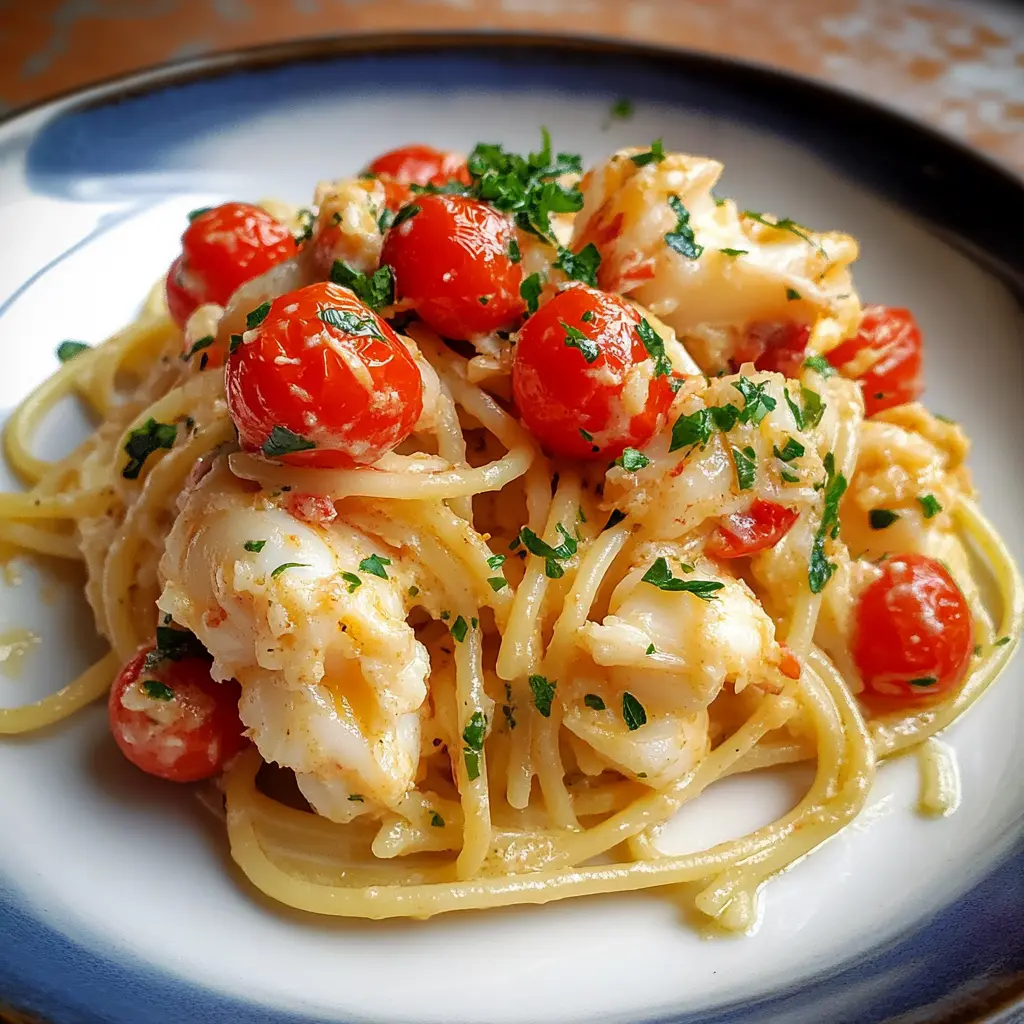
The Ultimate Buttered Lobster Pasta with Cherry Tomatoes: A Restaurant-Quality Recipe
Imagine, if you will, twirling your fork into a nest of perfectly cooked pasta, each strand gleaming with a luxurious, silky butter sauce. Suddenly, you taste a morsel of sweet, succulent lobster meat, followed by a bright, juicy burst from a cherry tomato. This, my friends, is not a dish reserved for a fancy seaside trattoria; oh no, this is a masterpiece you can create in your own kitchen. This article is your ultimate guide to achieving that culinary nirvana. We’ll walk through every single step, from selecting the best lobster to emulsifying that perfect sauce, ensuring your buttered lobster pasta becomes the stuff of legend.
Buttered Lobster Pasta: Where Ocean Luxury Meets Comfort Food
Let’s be honest, nothing quite whispers luxury like lobster. Conversely, pasta is the universal language of comfort. Somehow, this incredible dish manages to speak both languages fluently, creating a symphony of flavor that is both impressively elegant and deeply satisfying. It’s the perfect celebration meal, an undeniable star for a romantic date night, or even a spectacular way to turn a simple Tuesday into something unforgettable.
Furthermore, while it might look like a complex restaurant secret, I’m here to let you in on a little secret: it’s surprisingly approachable. Honestly, the magic lies in a handful of quality ingredients and a few key techniques. By following this guide, you’ll not only learn how to make this specific recipe; consequently, you’ll master skills that will elevate your cooking across the board. We’re talking about how to properly cook lobster for that tender, not-rubbery texture, how to build a deeply flavorful sauce from the pan drippings, and how to marry pasta and sauce into a cohesive, restaurant-worthy dish. So, are you ready to dive in? Let’s get started.
Gathering Your Arsenal: Ingredients for the Perfect Buttered Lobster Pasta
You simply cannot build a magnificent house without quality bricks; similarly, you can’t create an unforgettable gourmet pasta recipe without stellar ingredients. Here’s your shopping list for success.
The Star of the Show: Selecting Your Lobster
First and foremost, let’s talk about the headliner: the lobster. Now, you might be debating between a whole live lobster and frozen tails. For most home cooks, frozen lobster tails are the undisputed champion for this recipe. They’re convenient, readily available, and far less intimidating. However, you must know what to look for! Ideally, seek out cold-water lobster tails, as they tend to have a sweeter, more tender flesh. When you’re at the store, look for tails that are firm to the touch and have a pleasant, ocean-fresh smell—absolutely no strong ammonia odors!
Regarding quantity, a good rule of thumb is one 4 to 6-ounce tail per person. This ensures everyone gets a generous, satisfying portion of that sweet lobster meat without breaking the bank.
The Supporting Cast: Pasta, Tomatoes, and Aromatics
Next up, the foundation. For the pasta, you want a shape that can cradle and hold onto that glorious sauce. Long, ribbon-like varieties like tagliatelle, pappardelle, or linguine are absolutely perfect for this seafood pasta dish. Their broad surfaces act like a canvas for the butter sauce.
Now, for the cherry tomatoes. Their job is to provide little bursts of sweet acidity that cut through the richness of the butter. You can use standard red ones, but if you spot heirloom cherry tomatoes in a mix of yellow and red, grab them! They add a beautiful color and a slightly more complex flavor.
Finally, the aromatics. Shallots are my first choice here—they offer a more delicate, sweet flavor than onions—but a couple of minced garlic cloves are non-negotiable. For herbs, fresh flat-leaf parsley is a must for finishing. Additionally, chives or a tiny bit of tarragon can add a wonderful layer of flavor.
Building the Sauce: Butter, Stock, and More
This is where the magic happens. Do not, I repeat, do not use just any butter for your luxurious butter sauce. Splurge on a high-quality, European-style butter. Why? Because it has a higher butterfat content, which translates to a richer flavor and a creamier emulsion in your sauce.
For the liquid component, you’ll need a good seafood stock or broth. Honestly, making a quick stock with your reserved lobster shells is easier than you think and adds an incredible depth of flavor. If you’re short on time, however, a good store-bought low-sodium seafood stock is a fine alternative. You’ll also need a splash of acidity to balance the fat; a dry non-alcoholic white wine substitute or simply a good squeeze of fresh lemon juice works wonders.
Essential Kitchen Tools & The Culinary Process
You don’t need a kitchen full of fancy gadgets, but a few key tools will make the process seamless and enjoyable.
Firstly, a good pair of kitchen shears is essential for cleanly snipping through the tough lobster shell. Secondly, a heavy-bottomed skillet—stainless steel or cast iron—is crucial. It distributes heat evenly, preventing those precious pan drippings from burning. Of course, you’ll need a large pot for cooking your pasta to al dente perfection, a set of tongs for tossing, and a sharp chef’s knife. Optionally, a meat mallet or even a rolling pin can be useful for gently cracking the shell to remove the meat.
Crafting Your Masterpiece: A Step-by-Step Recipe Guide
Alright, apron on? Let’s transform these ingredients into gold.
Step 1: Preparing the Lobster
Begin by thawing your frozen lobster tails overnight in the refrigerator if necessary. To remove the raw meat, flip the tail over so the underside (with the softer shell) faces up. Using your kitchen shears, carefully cut straight down the middle of this soft shell, from top to tail. Wow, you’re already halfway there! Now, gently pry the shell open with your fingers and pull the meat out in one piece. Sometimes it sticks at the fin; just use the shears to snip it free. For more detailed tips, the University of Maine’s Lobster Institute has a great guide on proper handling and cooking techniques for lobster.
Step 2: Cooking the Pasta to Al Dente Perfection
Fill your large pot with water and bring it to a rolling boil. Here’s a pro tip: salt the water generously once it’s boiling. It should taste like the sea! This is your one and only chance to season the pasta itself from within. Add your pasta and cook it for about one minute less than the package instructions indicate. Why? Because you’re going to finish cooking it in the sauce! This is the secret to a perfect marriage between noodle and sauce. Before draining, carefully reserve about one cup of the starchy pasta water—this is liquid gold for your sauce.
Step 3: Building the Flavor Base
While the pasta cooks, heat your skillet over medium heat. Add a small knob of butter and a drizzle of olive oil. Once it’s shimmering, add your finely chopped shallot and cook until it’s soft and translucent, about 2-3 minutes. Then, add the garlic and cook for just another 30 seconds until fragrant—be careful not to burn it! Now, toss in your halved cherry tomatoes and cook for a few minutes until they just begin to soften and release their juices.
Step 4: Creating the Luxurious Butter Sauce
This is the moment of truth. If you’re using a non-alcoholic wine substitute, pour it in now and let it simmer until it’s reduced by half. Alternatively, a splash of seafood stock and lemon juice works beautifully. Now, reduce the heat to low. Gradually add your cold, cubed butter, a few pieces at a time, swirling the pan continuously until each piece is melted and incorporated before adding the next. This technique, called monter au beurre, creates a beautifully emulsified, glossy sauce. Season with salt and pepper.
Next, gently nestle your lobster meat into the sauce. Let it poach gently for about 3-5 minutes, turning once, until it’s just opaque and firm to the touch. Overcooking is the enemy of tender lobster, so watch it like a hawk!
Step 5: The Grand Finale: Combining Pasta and Sauce
Using your tongs, transfer the al dente pasta directly from the pot into the skillet. Raise the heat to medium and start tossing everything together vigorously. This is where the magic happens! Add a splash of that reserved starchy pasta water—it will help the sauce cling to every inch of the pasta. Keep tossing until the sauce beautifully coats everything and the pasta finishes cooking. Finally, turn off the heat and stir in your fresh herbs.
Chef’s Notes, Variations, and Serving
Chef’s Notes: Tips for Guaranteed Success
A few final pointers: never overcrowd the pan when cooking the lobster, as it will steam instead of sear. Furthermore, always taste and season your food at every single stage of cooking. And for heaven’s sake, never, ever rinse your cooked pasta—you’ll wash away the starch that helps the sauce stick!
Beyond the Basics: Variations and Pro Tips
Feel like customizing? Go for it! A pinch of chili flakes added with the garlic introduces a lovely warmth. For a richer, deeper tomato flavor, stir in a tablespoon of tomato paste after the shallots have softened and cook for a minute before deglazing. Understanding the science of emulsifying pasta sauces can help you master this and countless other recipes.
Plating and Pairing: The Complete Experience
To plate, use your tongs to twist a neat nest of pasta into a bowl. Artfully arrange the lobster pieces on top and spoon over any extra sauce. Scatter a few more fresh herbs over everything for a pop of color and freshness. On the side, a simple arugula salad with a lemon vinaigrette is the perfect crisp, bitter contrast to the rich, luxurious pasta. And don’t forget a basket of crusty bread for sopping up every last drop of that incredible sauce.
Frequently Asked Questions (FAQs)
Can I use frozen lobster meat for this recipe?
Absolutely, you can! However, you must thaw it completely in the refrigerator overnight first. The critical step is to pat it extremely dry with paper towels before adding it to the pan. Otherwise, it will release a lot of water and potentially make your sauce thin and watery. While convenient, remember that pre-packaged frozen lobster meat can sometimes have a less firm texture than meat you remove from the tail yourself.
What can I use instead of white wine?
No problem at all! You can easily substitute the wine with an equal amount of a good, low-sodium chicken or seafood stock. To mimic the acidity that wine provides, simply add a tablespoon of fresh lemon juice or a dash of white wine vinegar to the stock before you add it to the pan.
How do I prevent the butter sauce from breaking?
The key to a smooth, unbroken sauce is gentle heat and constant motion. Always add cold butter to a not-too-hot pan. Then, swirl the pan continuously until the butter melts and forms that creamy emulsion. Adding that splash of starchy pasta water at the end is your insurance policy—the starch helps stabilize the emulsion and prevents separation.
How should I store and reheat leftovers?
While best enjoyed immediately, you can store leftovers in an airtight container in the refrigerator for up to 2 days. To reheat, do so gently! Place the pasta in a skillet over low heat with a small splash of water, stock, or milk. Heat slowly, stirring frequently, until warmed through. Avoid the microwave, as it will likely overcook the lobster and cause the sauce to separate.
Conclusion: Your Gourmet Achievement
And there you have it! You’ve just created a restaurant-quality, breathtakingly delicious buttered lobster pasta with cherry tomatoes entirely from scratch. See? I told you it was within your reach. This dish is more than just a meal; it’s an experience, a confidence booster, and a guaranteed show-stopper. So go on, take a bow. You’ve earned it. Now, who are you going to impress with your newfound culinary skills?
Print
Buttered Lobster Pasta with Cherry Tomatoes
Description
🦞 Buttered Lobster Pasta with Cherry Tomatoes
Ingredients
-
12 oz pasta (linguine, fettuccine, or spaghetti)
-
3 tbsp butter (divided)
-
2 tbsp olive oil
-
3 garlic cloves, minced
-
1 pint cherry tomatoes, halved
-
½ cup dry white wine (or seafood stock)
-
1 lb cooked lobster meat (tail or claw, roughly chopped)
-
½ cup grated Parmesan cheese
-
½ tsp crushed red pepper flakes (optional)
-
Juice of ½ lemon
-
Salt & black pepper, to taste
-
Fresh basil or parsley, chopped (for garnish)
Instructions
1. Cook the Pasta
-
Bring a large pot of salted water to a boil.
-
Cook pasta until al dente, reserving 1 cup of pasta water before draining.
2. Sauté Garlic & Tomatoes
-
In a large skillet, heat 2 tbsp butter and olive oil over medium heat.
-
Add garlic and sauté for 1 minute until fragrant.
-
Add cherry tomatoes, season with salt and pepper, and cook until they blister and release juices (5–6 minutes).
3. Deglaze & Add Lobster
-
Pour in white wine (or stock) and simmer for 2–3 minutes.
-
Add lobster meat, tossing gently to warm through.
4. Toss with Pasta
-
Add cooked pasta to the skillet along with remaining 1 tbsp butter, Parmesan, lemon juice, and red pepper flakes.
-
Toss until glossy, adding a splash of pasta water as needed to create a silky sauce.
5. Serve
-
Plate pasta, top with extra Parmesan and fresh basil/parsley.
-
Serve immediately with crusty bread to soak up the buttery sauce.