
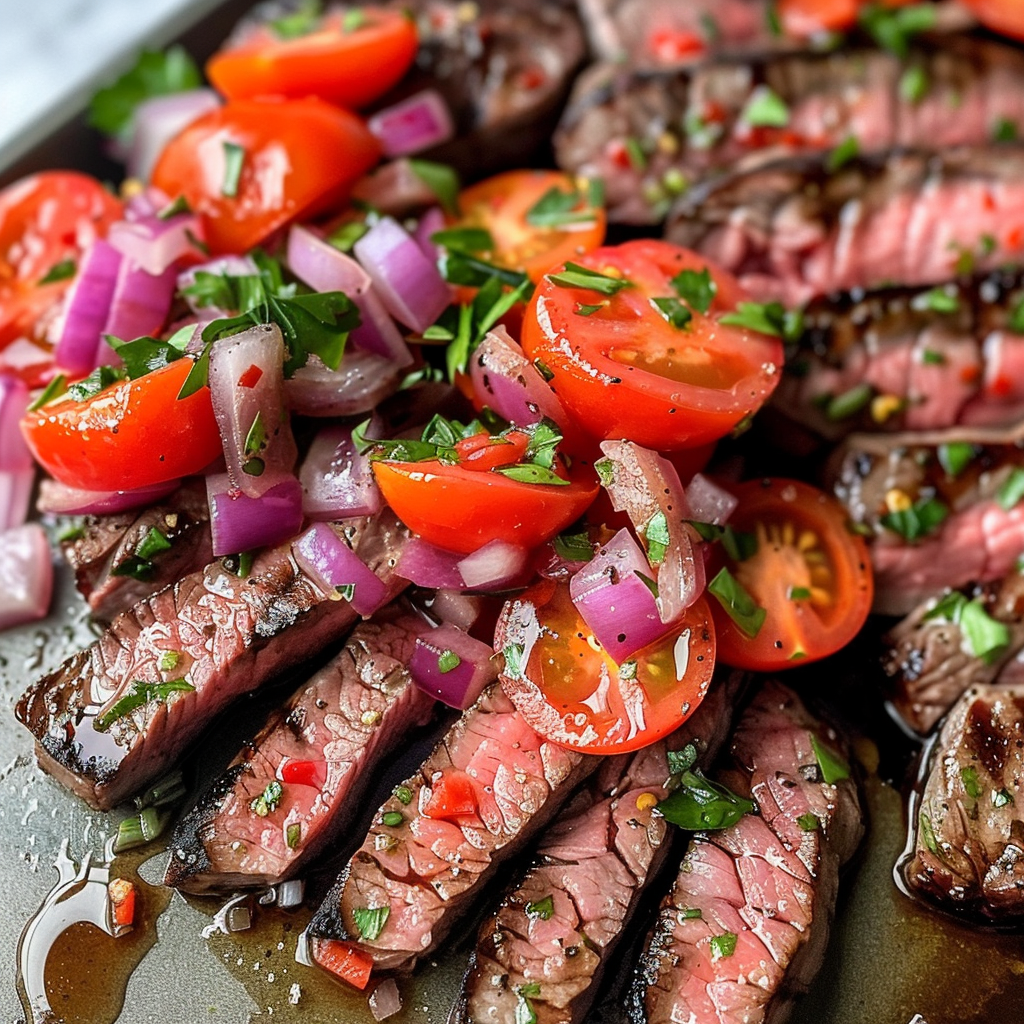
The Ultimate Guide to Grilled Steak With Tomatoes, Red Onion and Balsamic
Ah, the sizzle of grilled steak hitting the hot grates—it’s a sound that screams summer, celebration, and sheer deliciousness. But what if you could elevate that classic experience into something truly extraordinary? Imagine, if you will, perfectly charred beef, its rich umami flavor cut through by the sharp sweetness of grilled red onion and the juicy, acidic burst of a ripe tomato. Now, picture all of that brought together with a luxurious, tangy-sweet balsamic reduction that ties every single component on your plate into a cohesive culinary masterpiece.
This isn’t just another recipe; it’s a complete guide to understanding the why and the how. We’re going to dive deep into the art of selecting your steak, the science behind the flavors, and the grilling techniques that separate the good from the legendary. So, get ready to transform your next cookout because we’re about to create a dish that is, frankly, a total showstopper.
Introduction and Core Concepts
Why This Dish is a Culinary Masterpiece
Let’s be honest, a perfectly grilled steak is a thing of beauty on its own. However, when you introduce the right partners to the party, you create a symphony of flavors that is far greater than the sum of its parts. This particular combination is nothing short of magic. Firstly, the dish boasts a stunning balance that caters to every part of your palate. Secondly, it’s incredibly versatile, effortlessly transitioning from a casual weeknight dinner to the star of your most ambitious backyard gathering. Ultimately, it’s a recipe that feels both indulgent and surprisingly fresh, a combination that is notoriously difficult to pull off.
Deconstructing the Flavors: Why This Combination Works
Ever wonder why some food pairings just work? Well, it’s not luck; it’s science and a little bit of culinary genius. The robust, savory flavor of the steak—what the Japanese call umami—forms the powerful foundation of the dish. Now, that richness needs a counterpoint, which is where the acidity from the tomatoes and the balsamic vinegar comes into play; it literally cuts through the fat and cleanses your palate with every single bite.
Furthermore, the cooking process itself builds layers of complexity. The high heat of the grill caramelizes the natural sugars in the red onions, transforming their sharp bite into a mellow, irresistible sweetness. Similarly, reducing the balsamic vinegar doesn’t just thicken it; it concentrates its flavor, creating a complex glaze that is both sweet and tart. Finally, a handful of fresh basil or arugula added at the end introduces a peppery, aromatic freshness that lifts the entire dish, ensuring that each mouthful is a perfect, harmonious blend of savory, sweet, acidic, and fresh. Now, that’s what I call a well-orchestrated meal!
The Foundation: Selecting Your Ingredients
Choosing the Perfect Steak Cut for Grilling
Alright, let’s get down to the meat of the matter—literally. Your entire dish hinges on this choice. Picking the right cut isn’t just about price; it’s about matching the steak’s personality to the recipe’s vibe. For a dish with bold, accompanying flavors, you need a cut that can stand up to them without getting lost.
Top Tier Choices: Ribeye, New York Strip, and Filet Mignon
If you’re aiming for a special occasion, these are your champions. The Ribeye is the undisputed king of flavor, thanks to its incredible marbling—those beautiful white streaks of fat that melt while grilling, basting the steak from the inside out. Consequently, every bite is unbelievably juicy and intensely beefy. On the other hand, the New York Strip offers a fantastic middle ground. It’s remarkably tender but has a firmer chew and a robust, beefy flavor that pairs wonderfully with the balsamic glaze. For the ultimate in tenderness, however, the Filet Mignon is your bet. This lean, buttery-soft cut is like the luxury sedan of steaks—smooth, elegant, and always impressive.
Excellent Value Cuts: Skirt Steak and Flank Steak
Don’t fret if your budget isn’t screaming for filet mignon! In fact, some of the most flavorful options are also easier on the wallet. Skirt Steak is a long, flat cut with a pronounced grain and a beefy flavor that absolutely shines when marinated. Similarly, Flank Steak is a lean, flavorful muscle that’s a staple in many kitchens. Importantly, both of these cuts require one crucial technique: slicing thinly against the grain after cooking. This simple step transforms them from potentially tough to wonderfully tender.
What to Look For at the Butcher Counter
So, how do you pick a winner? First, look for color. The steak should be a bright, cherry red—not a dull brown. Next, examine the marbling. Those little white flecks are your best friend; they are the guarantee of flavor and moisture. Finally, consider thickness. For optimal grilling control, aim for a steak that is at least 1 to 1.5 inches thick. This allows you to get a gorgeous sear on the outside without immediately overcooking the center.
The Supporting Cast: Produce and Pantry Staples
Tomatoes: Heirloom, Vine-Ripened, or Cherry?
Your tomato choice can change the entire character of the dish! Heirloom tomatoes come in wild colors and shapes, offering a stunning visual presentation and a super fresh, garden-like flavor. Vine-ripened tomatoes are your classic, reliable choice; they slice beautifully and provide that familiar acidic-sweet balance. For an explosion of sweetness, though, cherry or grape tomatoes are impossible to beat. They caramelize beautifully on the grill, becoming little juicy flavor bombs. Honestly, you can’t go wrong with any of them!
Red Onion: The Purple Crunch
The red onion is here for more than just color—though its vibrant purple hue certainly adds to the plate’s appeal! It provides a crucial sharp and crisp contrast to the rich steak and soft tomatoes. A quick pro tip: if you find raw onion too pungent, simply soak the slices in ice water for 10-15 minutes before grilling. This mellows the sharpness significantly while preserving that wonderful crunch.
Balsamic Vinegar: Aged vs. Commercial
This is where many folks get tripped up. All balsamic is not created equal! Aged Traditional Balsamic(Aceto Balsamico Tradizionale) is a thick, syrupy, complex condiment meant for drizzling over finished dishes. It’s a luxury product. For our purposes, a good-quality commercial balsamic vinegar is perfect. We’re going to cook it down into a glorious glaze. Please, whatever you do, avoid bottled “balsamic vinaigrette” dressing—it’s full of added sugars and oils that will throw the entire balance of your dish out of whack.
Preparation and Technique
The Art of Preparation: From Fridge to Grill
Believe it or not, the steps you take before the steak even touches the fire are arguably the most important. This is where you set the stage for a flawless performance.
To Marinate or Not to Marinate?
This is the eternal question, and the answer depends entirely on your chosen cut. For those luxurious, well-marbled steaks like ribeye and strip, less is more. A simple coating of good olive oil, a generous amount of kosher salt, and freshly cracked black pepper is all you need. You want to taste the pure, unadulterated beef. Conversely, the leaner value cuts like skirt and flank steak absolutely benefit from a bath in a marinade. A simple blend of olive oil, balsamic vinegar, crushed garlic, and a few herbs will work wonders, tenderizing the meat and infusing it with flavor.
The Critical Step: Bringing Steak to Room Temperature
Here’s a non-negotiable rule: never grill a cold steak. Taking your steak out of the fridge 30 to 45 minutes before grilling is a complete game-changer. Why? Because a cold steak will seize up on the grill, leading to a burnt exterior and a tragically cold, undercooked center. Allowing it to warm up slightly ensures it cooks evenly from edge to edge, giving you that perfect gradient from seared crust to juicy, pink interior.
Prepping the Vegetables: Slicing and Seasoning
While your steak is coming to temperature, don’t neglect your veggies! Slice your onions into thick rings—about ½ inch thick—so they don’t fall through the grates. For tomatoes, if you’re using large ones, slice them similarly thick. For cherry tomatoes, you can skewer them or use a grill basket. Then, give them the same respect you gave the steak: a light brush of olive oil, a sprinkle of salt, and a crack of pepper. This seasoning will caramelize on the grill, amplifying their natural sweetness.
Mastering the Grill: Heat, Time, and Technique
Charcoal vs. Gas: Choosing Your Fire
Alright, let’s talk heat source. This is a friendly debate among grill masters! Charcoal grilling imbues your food with that classic, smoky flavor that is simply irreplicable. It also gets screaming hot, perfect for that restaurant-quality sear. Gas grilling, on the other hand, is all about convenience and control. You can dial in your temperature with a knob and be ready to cook in minutes. The verdict? Both are fantastic. Use what you have and what you love!
The Two-Zone Fire Setup is Non-Negotiable
This is the single most important technique you will learn today. A two-zone fire is your secret weapon for perfect doneness. Essentially, you create two areas on your grill: a direct heat zone (where the coals or flames are) for searing, and an indirect heat zone (with no heat source directly below) for gentle cooking. To set this up on a charcoal grill, simply pile all the hot coals on one side of the grill. For a gas grill, turn on only one set of burners to high. This method allows you to char your steak over the hot zone and then move it to the cool side to finish cooking without burning. For a fantastic visual guide on how to properly set up a two-zone fire, check out this resource.
Searing and Cooking to Perfect Doneness
Now, for the main event! First, pat your steak dry—this is key for a good sear. Then, place it directly over the high heat. You should hear that satisfying sizzle immediately. Leave it alone! Let it sear for 2-3 minutes to develop a beautiful crust before flipping. Once both sides are nicely charred, move the steak to the indirect heat zone. Now, the most crucial tool comes out: your instant-read meat thermometer. Guesswork is the enemy of perfect steak. For a perfect medium-rare, pull the steak at 125-130°F. Remember, the temperature will continue to climb about 5 degrees while resting (carryover cooking). If you want to dive deeper into the science, this definitive food science guide to grilling steak is an incredible read.
The Recipe and Assembly
Grilled Steak With Tomatoes, Red Onion and Balsamic: Step-by-Step Recipe
Ingredients List
-
1.5 lb steak (ribeye, strip, or flank), about 1-1.5 inches thick
-
2 large ripe tomatoes or 2 cups cherry tomatoes
-
1 large red onion
-
¾ cup balsamic vinegar
-
3 tbsp extra virgin olive oil, divided
-
2 cloves garlic, minced (optional, for marinade)
-
Kosher salt and freshly ground black pepper
-
Fresh basil or arugula, for garnish
Instructions
-
Prepare the Steak: If using a marinade, combine 2 tbsp olive oil, balsamic vinegar, garlic, salt, and pepper in a dish. Add the steak, turn to coat, and marinate for at least 30 minutes at room temperature (or up to 4 hours in the fridge). If not marinating, simply pat the steak dry, rub with 1 tbsp olive oil, and season generously with salt and pepper. Let it sit at room temperature for 30-45 minutes.
-
Make the Glaze: Meanwhile, pour the ¾ cup of balsamic vinegar into a small saucepan. Bring to a simmer over medium-low heat. Reduce heat to low and let it simmer gently for 10-15 minutes, stirring occasionally, until it has reduced by about half and coats the back of a spoon. It will thicken further as it cools. Set aside.
-
Prep the Grill: Preheat your grill to high heat. Establish your two-zone fire setup.
-
Grill the Vegetables: Slice the red onion into ½-inch thick rounds. Slice large tomatoes similarly or skewer cherry tomatoes. Brush with the remaining olive oil and season with salt and pepper. Place on the direct heat side of the grill. Grill for 3-4 minutes per side until they have nice grill marks and are slightly softened. Remove and set aside.
-
Grill the Steak: Place the seasoned steak directly over the high heat. Sear for 2-3 minutes per side, until a deep brown crust forms. Move the steak to the indirect heat side of the grill. Continue cooking with the lid closed, turning occasionally, until it reaches your desired internal temperature (use a thermometer!).
-
Rest: Transfer the steak to a cutting board and let it rest for a full 5-10 minutes. Do not skip this!
-
Slice and Serve: Slice the steak against the grain. Arrange on a platter with the grilled tomatoes and onions. Drizzle everything with the balsamic reduction and garnish with fresh basil or arugula.
The Grand Finale: Plating and Presentation
You’ve done the hard work; now make it look as good as it tastes! Instead of just piling everything on a plate, think like a chef. First, fan the sliced steak across the center of a large platter or individual plates. Then, artfully arrange the grilled onion rings and tomato slices around and over the steak. Next, take that gorgeous, glossy balsamic glaze and drizzle it in zig-zags and loops over the entire creation—don’t be shy! Finally, scatter a handful of fresh, green basil leaves or arugula over the top. This adds a pop of color and a fresh aroma. The result? A restaurant-quality dish that will have everyone reaching for their phones to take a picture.
Pro Tips, Pairings, and Variations
Chef’s Secrets: Elevating Your Dish from Good to Legendary
The Power of Resting
We mentioned it in the recipe, but it’s so vital it deserves its own spotlight. Resting your steak is what separates the amateurs from the pros. When you pull that steak off the grill, all its juices are pushed to the center by the intense heat. Slicing it immediately would cause all those precious, flavorful juices to just run out all over your cutting board. Letting it rest for 5-10 minutes allows the muscle fibers to relax and reabsorb all that liquid. The result? Every single slice is incredibly juicy and tender.
Add a Flavor Bomb: Compound Butter
Want to take your steak to stratospheric levels of flavor? Top it with a pat of compound butter as soon as you take it off the grill. As it rests, the butter will slowly melt, creating an insanely rich and flavorful sauce that mingles with the balsamic glaze. Simply mix softened butter with minced garlic, fresh herbs like rosemary or thyme, and a pinch of salt. Roll it in parchment paper into a log and chill. Then, just slice off a coin and let the magic happen.
What to Serve With Grilled Steak and Balsamic Vegetables
Perfect Side Dishes
This dish is a star, but it loves good company! The rich steak and tangy-sweet veggies pair beautifully with simple, comforting sides. Creamy mashed potatoes are a classic for a reason—they’re the perfect neutral canvas for those incredible juices and glaze. For something with a crisp texture, crispy roasted potatoes or even a simple crusty loaf of bread are fantastic for sopping up every last drop. If you want to keep it light, a simple arugula salad with a lemon vinaigrette or some grilled asparaguscomplements the meal perfectly.
Drink Pairings
Since we are avoiding alcoholic beverages, let’s get creative! The bold flavors of this dish need a drink that can stand up to them. A sparkling cherry juice or a blackberry spritzer (sparkling water muddled with fresh berries) mirrors the fruitiness of the balsamic beautifully. For a more herbal note, a chilled rosemary-lemonade is a refreshing and sophisticated choice. Even a classic iced tea with a twist of lemon works wonderfully.
Creative Variations on the Classic Recipe
Steak Salad Transformation
Have some leftovers? This is arguably the best next-day application. Simply slice any remaining steak thinly and pile it onto a bed of fresh greens. Add the leftover grilled veggies, crumble some goat cheese or feta over the top, and use the balsamic reduction as your salad dressing. It’s a completely new, equally delicious meal that feels fresh and light.
Sandwich Symphony
Turn your culinary masterpiece into the ultimate gourmet sandwich. Thinly slice the steak against the grain. Lightly toast a ciabatta roll or some sourdough bread. Spread a layer of garlic aioli or horseradish sauce on the bread, then pile high with the steak, grilled onions, tomatoes, and a handful of arugula. Drizzle a little balsamic glaze inside the sandwich for a surprise burst of flavor in every bite.
FAQs and Conclusion
Frequently Asked Questions (FAQs)
Can I make this recipe without a grill?
Absolutely! You can achieve fantastic results indoors. Use a heavy cast-iron skillet or a grill pan heated over high heat on your stovetop to sear the steak and get those beautiful marks. For the vegetables, you can roast them on a baking sheet in a 425°F (220°C) oven for 15-20 minutes until they are softened and slightly caramelized.
How long should I let the steak rest?
For a standard 1 to 1.5-inch thick steak, a resting time of 5 to 10 minutes is ideal. This allows for carryover cooking to finish the job and for the juices to fully redistribute. If you rest it for the full 10 minutes, I promise you will be rewarded with a much juicier result.
What’s the best way to store and reheat leftovers?
Store the components separately in airtight containers in the refrigerator for up to 3 days. The best way to reheat the steak is gently. You can place it in a low oven (275°F / 135°C) until just warmed through, or slice it cold and briefly warm the slices in a skillet. This prevents it from overcooking and becoming tough. The grilled vegetables are delicious cold in salads or can be gently reheated.
Can I use a different type of vinegar?
While balsamic is ideal for its unique sweet-tart profile, you can experiment. A mix of red wine vinegar and a teaspoon of honey or maple syrup, reduced in the same way, can create a similar glaze. The flavor will be fruitier and less complex, but still very tasty. To truly appreciate the difference, you can learn about the traditional production of Aceto Balsamico Tradizionale.
Conclusion: Your New Go-To Grilling Recipe
And there you have it—your comprehensive guide to mastering Grilled Steak With Tomatoes, Red Onion and Balsamic. This dish is more than just a meal; it’s an experience. It’s about understanding how flavors interplay, respecting the ingredients, and mastering a few simple but powerful techniques. From selecting the perfect cut to achieving that two-zone fire and mastering the rest, you now have all the knowledge you need to create a truly unforgettable dish. So, go ahead, fire up that grill, and get ready to impress. Your journey to grilling greatness starts now
Print
Grilled Steak With Tomatoes, Red Onion and Balsamic
Description
🥩🍅 Grilled Steak with Tomatoes, Red Onion & Balsamic
Ingredients:
-
2 ribeye, strip, or sirloin steaks (about 1–1½ inches thick)
-
2 tbsp olive oil
-
2 tsp salt
-
1 tsp freshly ground black pepper
-
2 tsp garlic powder
Tomato & Onion Topping:
-
2 cups cherry tomatoes, halved
-
1 small red onion, thinly sliced
-
2 tbsp olive oil
-
2 tbsp balsamic vinegar (aged or glaze works best)
-
1 tsp honey (optional, for sweetness)
-
1 tsp fresh thyme or basil, chopped
-
Salt & black pepper, to taste
Instructions:
-
Prepare steak: Pat steaks dry and season with olive oil, salt, pepper, and garlic powder. Let rest at room temp 20–30 minutes.
-
Make topping: In a bowl, mix tomatoes, red onion, olive oil, balsamic vinegar, honey, herbs, salt, and pepper. Set aside to marinate.
-
Grill steak: Preheat grill (or cast iron pan) to high heat. Grill steaks 4–5 minutes per side for medium-rare (adjust for doneness). Remove and let rest 5–10 minutes.
-
Assemble: Slice steak against the grain. Top with tomato-red onion mixture and a drizzle of balsamic glaze.
-
Serve: Garnish with fresh basil or thyme and extra cracked pepper.