
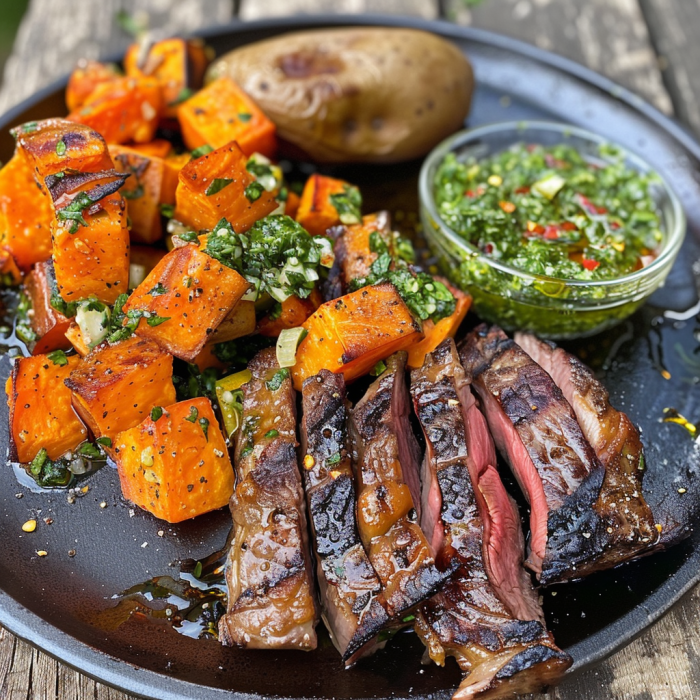
An Introduction to a Brazilian Churrasco Masterpiece
Picture this: the smoky aroma of hard-searing meat over glowing coals, the sound of sizzling fat hitting the fire, and the vibrant green of a freshly made herb sauce waiting on the side. This isn’t just a meal; it’s an experience. Today, we’re embarking on a culinary journey to master a trifecta of flawless flavors: supremely juicy Grilled Picanha, smoky Charred Sweet Potatoes, and a zesty, authentic Chimichurrisauce. This combination isn’t just random; oh no, it’s a harmonious balance of rich, savory, sweet, and acidic that will absolutely transform your grilling game from basic to brilliant. Forget everything you thought you knew about steak night; we’re diving deep into the heart of Brazilian churrasco culture, and trust me, your taste buds will thank you.
Understanding Picanha: Brazil’s Best-Kept Secret
Alright, let’s get straight to the star of the show. If you’ve ever wandered past a Brazilian steakhouse, captivated by the incredible smells, you’ve likely encountered the magic of picanha. Consequently, this cut is a national treasure in Brazil, yet it remains somewhat of a hidden gem elsewhere. So, what’s all the fuss about?
What is Picanha? (The Cut Explained)
In simple terms, picanha is a specific cut of beef known in many English-speaking countries as the sirloin cap or rump cap. Anatomically speaking, it’s a muscle that sits on top of the sirloin, right near the rear of the animal. It’s triangular, incredibly flavorful, and is instantly recognizable by one defining feature: a gorgeous, thick layer of fat on one side. This isn’t just any fat, mind you; this is the key to its legendary status.
Why Picanha is Perfect for Grilling
Now, you might be wondering why this particular cut is so revered by grill masters. Well, it all boils down to two things: that glorious fat cap and its unique muscle structure. Firstly, as the picanha cooks, the fat slowly renders and bastes the meat continuously from the inside out. This natural self-basting mechanism guarantees a succulently juicy result that’s almost impossible to dry out. Secondly, unlike more tender but less flavorful cuts like filet mignon, picanha boasts a robust, intensely beefy flavor. Moreover, its grain makes it ideal for a specific carving technique that maximizes tenderness on the plate. It’s the ultimate combination of flavor and texture.
How to Find and Select the Perfect Picanha Cut
Finding a good piece of picanha might require a little effort, but it’s well worth the hunt. Honestly, your best bet is to skip the big-box supermarket and head straight to a trusted local butcher. Butchers will not only be more likely to carry it, but they can also prepare it for you exactly as you need. When selecting your cut, look for a few key indicators. The meat itself should be a bright, cherry red color with a firm texture. Most importantly, focus on the fat! You want a thick, creamy white fat cap that’s at least a half-inch thick. For a meal that comfortably serves four to six people, aim for a whole picanha roast that weighs between two and three pounds. This size is perfect for creating those iconic steaks for the grill.
Preparing Your Picanha for the Grill
Alright, you’ve secured a beautiful cut of meat—fantastic! Now, let’s talk prep. The Brazilian approach to picanha is beautifully minimalist; in fact, the goal is to enhance the meat’s natural flavor, not mask it.
To Score or Not to Score the Fat Cap
This is a classic debate in the grilling world. However, for a cut like this, scoring is highly recommended. Using a very sharp knife, gently cut a cross-hatch pattern into the fat cap, about halfway through the fat layer. Be incredibly careful not to cut into the actual meat beneath! Why go through the trouble? This simple step helps the fat render more efficiently during cooking, creates more surface area for your salt to adhere to, and results in an unimaginably crispy and delicious crust.
The Art of Seasoning: Why Coarse Salt is King
When it comes to seasoning your picanha, less is unequivocally more. Traditional Brazilian churrascarias often use only one ingredient: generous amounts of coarse kosher salt or flaky sea salt. These larger crystals don’t dissolve immediately; instead, they form a delicious, seasoned crust that complements the rich beef. Ditch the fine table salt for this one! Liberally season the scored fat cap and then apply a more modest amount to the meat sides. You can add a touch of black pepper after cooking if you wish, but truly, letting the pure, salty, beefy goodness shine is the way to go.
Slicing and Skewering: The Traditional C-Shape
Here’s where the magic happens! Instead of throwing the whole roast on the fire, you’ll slice it into steaks. But there’s a trick: cut with the grain into 1.5 to 2-inch thick steaks. Wait, with the grain? Absolutely! This is because you’ll later carve against the grain after cooking, creating perfectly tender bites. Next, take each steak and fold it into a C-shape (like a horseshoe), with the fat cap on the outside. Finally, skewer them through the center, effectively recreating the original roast shape on a stick. This is the authentic churrasco method, and it ensures every single bite has that perfect rim of flavor-packed fat.
Mastering the Grill: The Picanha Cooking Method
This is it—the main event. Fire up the grill and let’s get cooking. For the best results, a little strategy goes a long way.
Fire Management: Direct vs. Indirect Heat
First and foremost, you must master your fire. The absolute best way to cook this is using a two-zone fire setup. Essentially, you pile all your hot coals on one side of the grill for direct, high-heat searing, and leave the other side empty for indirect, lower-heat cooking. This method gives you ultimate control. While lump charcoal is ideal for its high heat and clean flavor, a gas grill works perfectly well too; just turn one set of burners to high and leave the others off.
The Reverse Sear Technique for Perfect Doneness
For a gorgeous crust and an evenly cooked interior, the reverse sear is your best friend. First, place your skewered meat or individual steaks over the indirect heat side, close the lid, and let them cook slowly. This gently brings the internal temperature up. Then, once it’s about 10-15 degrees from your target, move it over to the roaring direct heat. Sear it on all sides, especially the fat cap, until it’s beautifully golden brown and crispy. This method is practically foolproof and prevents a burnt outside and a raw inside.
Resting is Non-Negotiable
You’ve perfectly cooked your picanha! Now, for the hardest part: waiting. Do not, I repeat, do not slice into it immediately. Instead, transfer the whole skewer or steaks to a cutting board and tent them loosely with foil. Let them rest for a full 10 to 15 minutes. This critical pause allows the muscle fibers to relax and reabsorb all those incredible juices. If you skip this, those juices will just run all over your cutting board, leaving you with drier meat. Trust me, it’s worth the wait.
Creating the Perfect Side: Charred Sweet Potatoes
While the meat is resting, let’s turn our attention to the supporting act that absolutely steals the show. These aren’t your average sweet potatoes; they’re smoky, caramelized, and creamy all at once.
Choosing the Right Sweet Potatoes
For the best result, opt for Garnet or Jewel sweet potatoes. Their vibrant orange flesh becomes wonderfully creamy when cooked, and their skin holds up well on the grill. Alternatively, Hannah sweet potatoes (white-fleshed) offer a drier, starchier texture that’s also delicious. Really, you can’t go wrong!
Prepping for the Grill: Cubes vs. Wedges
To ensure your potatoes cook evenly and don’t burn before turning tender, we need to par-cook them. First, chop them into uniform 1-inch cubes or hearty wedges. Then, place them in a microwave-safe bowl with a splash of water, cover it, and microwave for 5-6 minutes until they’re just starting to become tender but are still firm. Alternatively, you can boil them for the same effect. Afterwards, drain them and toss them in a bowl with avocado oil (for its high smoke point), salt, pepper, and a pinch of smoked paprika for an extra layer of flavor.
Grilling for Smoke and Char
Now, dump those par-cooked potatoes directly onto the hot side of the grill (you can use a grill basket to prevent them from falling through). Listen for that satisfying sizzle! Grill them for a few minutes per side, turning occasionally, until they are nicely charred and have deep grill marks. If they aren’t quite fork-tender yet, just slide them over to the indirect side, close the lid, and let them roast for another 5-10 minutes. This double method gives you that fantastic smoky char and a perfectly cooked interior.
The Crown Jewel: Authentic Chimichurri Sauce
No picanha feast is complete without a generous dollop of chimichurri. This vibrant, herby sauce is the zesty yin to the rich, beefy yang.
Chimichurri Verde: Origins and Ingredients
Hailing from Argentina and Uruguay, chimichurri is the quintessential sauce for grilled meats. Unlike a pesto, it’s not blended into a paste. Instead, it’s a loose, vibrant mixture of finely chopped fresh flat-leaf parsley, oregano, garlic, olive oil, and red wine vinegar, with a hint of chili flake for warmth. It’s bright, tangy, and powerfully flavorful.
The Chopping Method: Texture Matters
Here’s a pro tip: put the food processor away! For the best texture and flavor, you should hand-chop all the herbs and garlic. A processor can easily overdo it, bruising the herbs and releasing bitter flavors, and creating a muddy consistency. Grab a sharp chef’s knife and take the few extra minutes to chop everything finely. You’ll be rewarded with a fresher, brighter, and more authentic sauce.
The Marriage of Oil and Vinegar
The dressing for this sauce is simplicity itself: good extra virgin olive oil and tangy red wine vinegar. Whisk them together with the chopped herbs, garlic, and spices. Then, let it sit! Allowing the chimichurri to rest at room temperature for at least 30 minutes before serving is non-negotiable. This waiting period lets the flavors meld and marry together beautifully, transforming it from a bunch of separate ingredients into a cohesive, unforgettable sauce.
Plating and Serving Your Feast
The moment has arrived! You’ve worked your grilling magic, and now it’s time to bring it all together. For a true Brazilian steakhouse experience, bring the entire skewer to the table. Then, using a sharp knife, slide each steak off onto a cutting board. Remember, you originally cut with the grain? Now, slice each steak against the grain into strips. This final step ensures every single piece is melt-in-your-mouth tender.
Arrange the sliced picanha on a large platter alongside that pile of smoky charred sweet potatoes. Don’t forget a generous bowl of that vibrant green chimichurri for drizzling over everything. The result is a stunning, colorful, and incredibly delicious feast that is sure to impress.
Frequently Asked Questions (FAQs)
What is another name for picanha?
In the US, it is most commonly known as the sirloin cap or rump cap. It is also sometimes labeled Coulotte steak.
Can I cook picanha without a skewer?
Absolutely. While the skewer is traditional, you can grill the individual steaks directly on the grates. Cook them fat-side first over direct heat to render, then sear the other sides. Finish over indirect heat.
What can I use instead of sweet potatoes?
Grilled polenta, a simple black bean and corn salad, or fried plantains would all be excellent and authentic side dish choices.
How long does homemade chimichurri last?
Stored in an airtight container in the refrigerator, it will keep for 1-2 weeks. The olive oil may solidify; simply let it sit at room temperature for 30 minutes before using.
What internal temperature should picanha be?
For the best flavor and texture, aim for Medium-Rare (130-135°F). Use an instant-read thermometer to be precise. Always follow official meat safety guidelines for doneness.
Print
Grilled Picanha, Charred Sweet Potatoes, Chimichurri
Description
🥩 Grilled Picanha, Charred Sweet Potatoes & Chimichurri
Ingredients (4–6 servings):
For the picanha:
-
2 ½–3 lbs picanha (top sirloin cap, fat cap on)
-
1–2 tbsp coarse sea salt
-
1 tsp freshly cracked black pepper
For the sweet potatoes:
-
3–4 medium sweet potatoes, scrubbed and sliced into thick rounds or wedges
-
2 tbsp olive oil
-
1 tsp smoked paprika
-
½ tsp chili flakes (optional, for heat)
-
Salt & pepper, to taste
For the chimichurri:
-
1 cup fresh parsley, finely chopped
-
½ cup fresh cilantro, finely chopped (optional but traditional in some versions)
-
3–4 cloves garlic, minced
-
½ cup olive oil
-
2 tbsp red wine vinegar (or lemon juice)
-
1 small red chili or ½ tsp red pepper flakes
-
Salt & pepper, to taste
Instructions:
-
Prepare the picanha:
-
Pat dry and score the fat cap in a crisscross pattern.
-
Cut into 2–3 thick steaks, folding into a “C” shape, and skewer (traditional Brazilian style).
-
Season generously with coarse sea salt and black pepper.
-
-
Grill the picanha:
-
Preheat grill to high heat.
-
Sear steaks fat-side down first, then grill all sides until crusty.
-
Cook to medium-rare (130°F/54°C) or preferred doneness. Rest 10 minutes before slicing thinly against the grain.
-
-
Char the sweet potatoes:
-
Toss slices with olive oil, paprika, chili flakes, salt, and pepper.
-
Grill over medium-high heat until tender with char marks (about 4–5 minutes per side).
-
-
Make the chimichurri:
-
Mix parsley, cilantro, garlic, chili, olive oil, and vinegar. Season with salt & pepper. Let sit at least 15 minutes for flavors to meld.
-
-
Assemble & serve:
-
Plate grilled picanha slices with charred sweet potatoes.
-
Drizzle with chimichurri (serve extra on the side).
-