
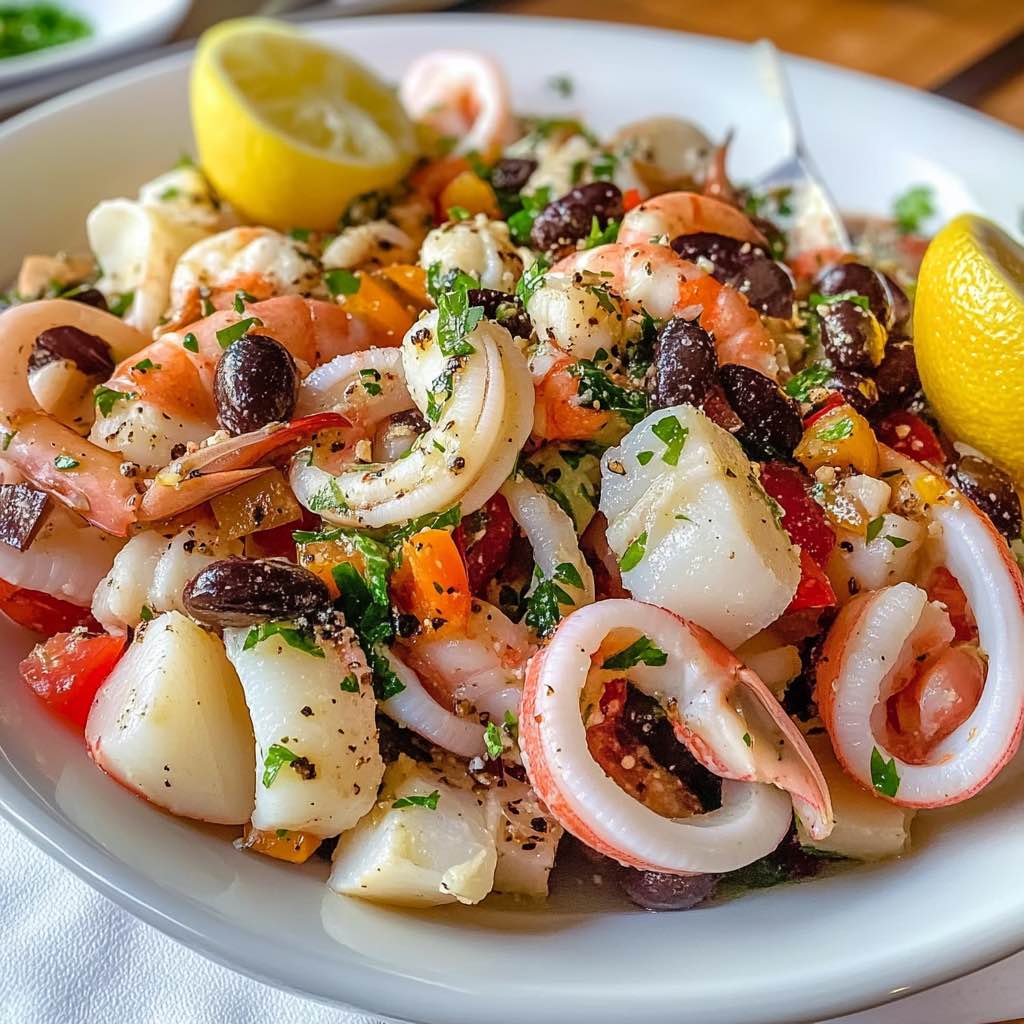
Italian Seafood Salad is a refreshing Mediterranean dish that combines perfectly poached seafood with crisp vegetables and a bright citrus dressing. This traditional antipasto showcases the coastal flavors of Italy while offering a healthy, protein-rich meal that’s perfect for warm weather dining or elegant entertaining.
Origins and Cultural Significance
Italian Seafood Salad, known as Insalata di Mare in Italian, represents centuries of coastal culinary tradition along Italy’s extensive Mediterranean coastline. This beloved dish originated in the fishing villages of southern Italy, where local fishermen would combine their daily catch with simple, fresh ingredients to create a meal that celebrated the bounty of the sea.
The preparation method reflects the Italian philosophy of letting high-quality ingredients shine through minimal manipulation. Unlike heavily sauced seafood dishes, this salad allows each component to maintain its distinct flavor and texture while harmonizing with the ensemble. The technique of gentle poaching followed by an ice bath ensures that delicate seafood retains its tender texture without becoming rubbery or overcooked.
Regional variations exist throughout Italy’s coastal regions. In Sicily, capers and orange zest might be added, while Liguria often incorporates fresh herbs like basil alongside the traditional parsley. The Amalfi Coast version sometimes includes diced tomatoes, and Venetian preparations may feature a touch of white wine in the dressing.
Understanding the Ingredients
The success of Italian Seafood Salad lies in selecting the freshest possible seafood and understanding how each ingredient contributes to the overall flavor profile. The combination of shrimp, squid, and scallops provides a variety of textures and tastes that create complexity in every bite.
Fresh shrimp should have a mild ocean scent without any ammonia odor. Look for firm, translucent flesh with intact shells if purchasing whole shrimp. The natural sweetness of properly cooked shrimp balances the briny elements in the salad while providing substantial protein content.
Squid, or calamari, offers a unique texture that ranges from tender to chewy depending on cooking method and timing. When prepared correctly through brief poaching, squid becomes silky and mild, absorbing the flavors of the marinade beautifully. The rings and tentacles provide visual interest and varying textures within the same ingredient.
Sea scallops contribute a delicate sweetness and buttery texture that elevates the entire dish. Their natural richness complements the lean proteins of shrimp and squid while adding an element of luxury. If substituting with mussels or clams, ensure they’re thoroughly cleaned and properly opened through steaming before adding to the salad.
The vegetable components serve multiple purposes beyond flavor. Celery provides crucial textural contrast with its satisfying crunch and subtle celery flavor that doesn’t overpower the delicate seafood. The optional red bell pepper adds both color and a mild sweetness that enhances the visual appeal of the finished dish.
Olives, whether black or green Castelvetrano varieties, introduce a Mediterranean salinity that ties the dish to its Italian roots. Their rich, fruity oil content helps carry flavors throughout the salad while adding satisfying richness to each bite.
Essential Equipment and Preparation
Creating perfect Italian Seafood Salad requires minimal equipment but proper technique. A large pot for poaching allows adequate space for seafood to cook evenly without overcrowding. Multiple bowls facilitate organization during preparation, while a large mixing bowl accommodates the final assembly.
Prepare an ice bath before beginning the poaching process. This crucial step immediately stops the cooking process, preventing the seafood from becoming overcooked and tough. The ice bath should be generously filled with ice and cold water, creating a temperature differential that rapidly cools the hot seafood.
Sharp knives ensure clean cuts on vegetables and proper preparation of seafood. A fine-mesh strainer or slotted spoon allows for easy removal of seafood from the poaching liquid without breaking delicate pieces.
The Art of Poaching Seafood
Proper poaching technique makes the difference between tender, succulent seafood and tough, rubbery results. The poaching liquid should be brought to a gentle simmer rather than a rolling boil. Aggressive bubbling can cause seafood to become tough and lose moisture.
The aromatic additions to the poaching liquid create a subtle flavor foundation that enhances rather than masks the natural taste of the seafood. Bay leaves contribute an earthy complexity, while peppercorns add mild heat and aromatic depth. The squeezed lemon half provides acidity that helps firm the protein structure, and smashed garlic infuses subtle savory notes throughout the cooking medium.
Timing is critical for each type of seafood. Shrimp cook quickly due to their size and delicate structure. Watch for the color change from translucent gray to opaque pink-white, which typically occurs within two to three minutes depending on size. Larger shrimp may require an additional minute, while smaller varieties might be ready in under two minutes.
Squid requires the shortest cooking time to maintain tenderness. The rings and tentacles should be added to the simmering liquid and removed as soon as they turn from translucent to opaque white. This transformation happens rapidly, often within one to two minutes. Overcooking squid results in a rubbery texture that no amount of marinating can remedy.
Scallops need careful attention to achieve the perfect texture. They should be cooked just until they feel slightly firm to the touch and have lost their translucent appearance throughout. The center should remain tender and slightly yielding, indicating proper doneness without overcooking.
Vegetable Preparation and Assembly
The vegetable components require precise preparation to achieve the proper texture balance in the finished salad. Celery should be diced into small, uniform pieces that provide textural interest without overwhelming individual bites. Remove any tough strings and dice across the grain to minimize fibrous texture.
Red bell pepper, when included, should be diced to match the celery size for visual consistency and balanced distribution throughout the salad. Remove all seeds and white pith to eliminate any bitter flavors that could interfere with the delicate seafood tastes.
Olive preparation varies depending on the variety chosen. Castelvetrano olives should be pitted and halved lengthwise to showcase their beautiful green color and allow their mild, buttery flavor to integrate with other ingredients. Black olives can be treated similarly, though their more intense flavor means they should be used judiciously to avoid overwhelming the seafood.
Fresh parsley should be chopped just before use to maintain maximum flavor and vibrant color. Remove thick stems and chop the leaves finely enough to distribute evenly throughout the salad without creating overly large pieces that dominate individual bites.
Creating the Perfect Dressing
The dressing serves as more than just flavoring; it acts as a medium that carries and blends all the individual tastes into a cohesive whole. Extra-virgin olive oil provides richness and helps distribute fat-soluble flavors throughout the mixture. Choose a high-quality oil with a mild, fruity character rather than an aggressively peppery variety that might overpower the delicate seafood.
Fresh lemon juice brings essential acidity that brightens the entire dish while helping to “cook” the seafood further through its citric acid content. The acidity also helps preserve the seafood and maintain food safety during the marinating period. Use only freshly squeezed lemon juice, as bottled varieties lack the bright, vibrant character necessary for this application.
White wine vinegar adds another layer of acidity with a different flavor profile than lemon juice. While optional, this ingredient contributes complexity and helps create a more sophisticated flavor balance. The acetic acid in vinegar also acts as a preservative, extending the salad’s refrigerated life.
Garlic should be minced extremely fine to distribute evenly throughout the dressing. Large pieces of garlic can create overpowering pockets of flavor that disrupt the delicate balance of the dish. Some cooks prefer to use a microplane grater to achieve an almost paste-like consistency that integrates seamlessly.
Marinating and Flavor Development
The marinating process allows flavors to meld and develop complexity while the seafood absorbs the aromatic elements of the dressing. The minimum one-hour marinating time allows basic flavor absorption, but overnight marination creates deeper, more integrated tastes throughout the salad.
During marination, the acidic components of the dressing continue to gently “cook” the seafood through chemical processes similar to ceviche preparation. This extended exposure to acid helps firm the texture slightly while infusing flavor deep into the protein structure.
Temperature control during marination is crucial for both food safety and texture preservation. The salad must remain refrigerated throughout the marinating process to prevent bacterial growth while maintaining the firm texture achieved through proper poaching and ice bath treatment.
Gentle stirring during the marinating process helps ensure even distribution of flavors without breaking apart delicate seafood pieces. Use a large spoon or spatula to carefully fold ingredients together, maintaining the integrity of each component while promoting flavor integration.
Serving Suggestions and Presentation
Italian Seafood Salad serves beautifully as an elegant antipasto course or as a light main dish during warm weather. The presentation should showcase the variety of colors and textures while maintaining the rustic, coastal character of the dish.
Serve the salad chilled or at cool room temperature on individual plates or as a family-style presentation in a large, shallow bowl. Garnish with additional fresh parsley and lemon wedges to allow diners to adjust brightness according to their preferences.
The salad pairs excellently with crusty Italian bread, focaccia, or grilled bread brushed with olive oil. These accompaniments provide textural contrast and help absorb the flavorful dressing while adding substance to the meal.
Wine pairings should complement the delicate seafood flavors without overwhelming them. Crisp white wines such as Pinot Grigio, Vermentino, or Albariño provide the ideal balance of acidity and minerality. Prosecco offers a festive option that cleanses the palate between bites.
Storage and Food Safety Considerations
Proper storage is essential for maintaining both quality and safety when preparing Italian Seafood Salad. The assembled salad should be consumed within 24 hours of preparation for optimal texture and flavor, though it remains safe for up to two days when properly refrigerated.
Store the salad in a covered container in the refrigerator at temperatures below 40°F. Avoid leaving the salad at room temperature for extended periods, as seafood is particularly susceptible to bacterial growth in the temperature danger zone between 40°F and 140°F.
When preparing the salad in advance, consider storing the seafood and vegetables separately from the dressing until just before serving. This approach prevents the vegetables from becoming overly softened by prolonged exposure to acidic dressing while maintaining optimal texture in all components.
If transporting the salad for outdoor dining or picnics, use insulated containers with ice packs to maintain proper temperatures. Serve the salad promptly upon arrival at the destination and return any leftovers to refrigerated storage as quickly as possible.
Nutritional Benefits and Dietary Considerations
Italian Seafood Salad offers exceptional nutritional value while remaining relatively low in calories. The combination of seafood provides high-quality complete proteins containing all essential amino acids necessary for human health. A typical serving delivers approximately 25-30 grams of protein while maintaining a low carbohydrate content.
The omega-3 fatty acids present in the seafood provide cardiovascular benefits and support brain health. These essential fats help reduce inflammation and contribute to overall wellness when consumed as part of a balanced diet.
The olive oil in the dressing supplies healthy monounsaturated fats that support nutrient absorption and provide sustained energy. The minimal processing of ingredients ensures maximum retention of vitamins and minerals naturally present in both seafood and vegetables.
This salad accommodates various dietary restrictions effectively. It’s naturally gluten-free, dairy-free, and follows ketogenic diet principles due to its high protein and healthy fat content with minimal carbohydrates. The dish also aligns with Mediterranean diet patterns associated with longevity and reduced disease risk.
Recipe Variations and Adaptations
Regional Italian variations of seafood salad provide inspiration for creative adaptations while maintaining the dish’s essential character. Sicilian versions often incorporate capers, which add bursts of briny flavor that complement the seafood beautifully. Orange zest brings a citrus brightness that pairs particularly well with the natural sweetness of scallops and shrimp.
Tuscan preparations sometimes include cannellini beans, which add protein and fiber while creating a more substantial dish suitable as a complete meal. The creamy texture of properly cooked beans provides an interesting contrast to the firm seafood while absorbing and carrying the flavors of the dressing.
Venetian influences might include a splash of white wine in the marinade, which adds complexity and helps tenderize the seafood further. Some modern interpretations incorporate fresh herbs beyond parsley, such as basil, oregano, or even mint for unexpected freshness.
For those preferring different seafood combinations, lobster meat, crab, or cooked octopus can substitute for or supplement the traditional trio. Each alternative brings unique flavors and textures while maintaining the salad’s coastal Italian character.
Seasonal Considerations and Ingredient Sourcing
The best Italian Seafood Salad depends heavily on seasonal availability and regional sourcing of ingredients. Summer preparations benefit from the abundance of fresh herbs and vegetables, while the natural desire for cool, refreshing foods makes this season ideal for serving this dish.
When possible, source seafood from sustainable fisheries to support environmental responsibility while ensuring the highest quality ingredients. Local fish markets often provide the freshest options and can offer guidance on preparation techniques specific to their regional varieties.
Lemon selection impacts the final flavor significantly. Meyer lemons, when available, provide a sweeter, more complex citrus profile that can enhance the overall dish. However, traditional Eureka or Lisbon lemons offer the classic bright acidity that most recipes expect.
Olive selection deserves particular attention, as different varieties contribute distinct flavor profiles. Castelvetrano olives from Sicily provide buttery richness with mild salinity, while Kalamata olives offer more intense, wine-like flavors. Experimenting with different olive varieties allows customization of the salad’s flavor intensity.
Professional Tips for Perfect Results
Achieving restaurant-quality results requires attention to several professional techniques that home cooks often overlook. Temperature control throughout the preparation process ensures optimal texture in the finished dish. Use a thermometer to verify that poaching water maintains a consistent gentle simmer rather than relying on visual cues alone.
Tasting and adjusting seasoning throughout the preparation process allows for better flavor balance in the final dish. The salad should taste bright and balanced, with no single element overpowering the others. Salt enhancement should be gradual, as seafood naturally contains sodium that becomes more concentrated during the marinating process.
Timing the preparation allows flavors to develop properly while maintaining peak freshness. Begin preparation several hours before serving to allow adequate marinating time, but avoid preparing the salad more than 24 hours in advance to prevent texture degradation.
Quality control in ingredient selection makes the difference between good and exceptional results. Smell seafood before purchasing to ensure freshness, and choose vegetables that are crisp and vibrant. Wilted herbs or soft vegetables will compromise the final texture and visual appeal of the dish.
Italian Seafood Salad
Description
Ingredients
-
1 lb shrimp, peeled and deveined
-
1 lb squid (calamari) rings and tentacles, cleaned
-
1 lb sea scallops or a mix with mussels/clams, cleaned
-
1 rib celery, diced small
-
1/2 small red bell pepper, diced small (optional)
-
1/2 cup black or Castelvetrano olives, halved (optional)
-
Small handful fresh parsley, chopped
-
2–3 cloves garlic, finely minced
-
1/2 cup extra-virgin olive oil
-
1/2 cup fresh lemon juice
-
2 tablespoons white wine vinegar (optional)
-
Salt and black pepper, to taste
-
Poaching aromatics: bay leaves, peppercorns, lemon, garlic (optional but recommended)
Instructions
-
Poach seafood
-
Bring a large pot of water to a gentle simmer with bay leaves, peppercorns, squeezed lemon half, and smashed garlic. Poach shrimp 2–3 minutes until opaque, remove to ice water. Poach squid 1–2 minutes until opaque; remove to ice water. Poach scallops 2 minutes until just done; ice water. Drain well.
-
Prep vegetables
-
In a large bowl, combine celery, red bell pepper if using, olives if using, and parsley. Add minced garlic, a pinch of salt, and pepper.
-
Make dressing
-
Whisk olive oil, lemon juice, and vinegar if using until emulsified. Season to taste.
-
Toss and chill
-
Add drained seafood to the bowl, pour over dressing, and toss gently to coat. Cover and chill at least 1 hour (up to overnight) to marinate.
-
Serve
-
Taste and adjust seasoning. Serve cold or cool with extra parsley and lemon wedges.