
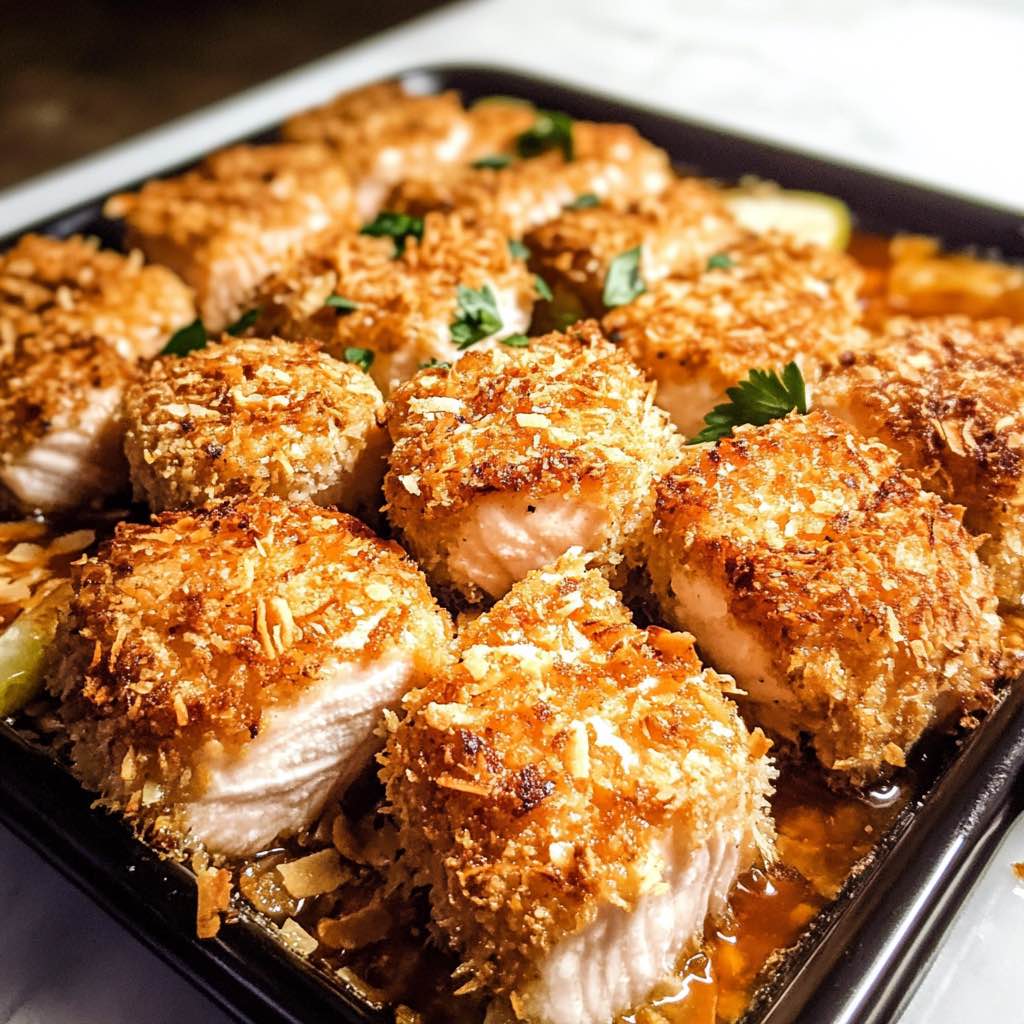
Coconut Crusted Salmon: The Ultimate Guide to Crispy, Flavorful Fish
Introduction
Coconut crusted salmon transforms ordinary fish into an extraordinary culinary masterpiece. This tropical-inspired dish combines the rich, buttery flavor of salmon with a golden, crispy coconut coating that delivers incredible texture and taste. Whether you’re hosting a dinner party or seeking a weeknight meal upgrade, coconut crusted salmon offers restaurant-quality results in your own kitchen.
The beauty of this dish lies in its simplicity and versatility. Furthermore, the natural oils in coconut create an incredibly crispy exterior while keeping the salmon moist and flaky inside. Additionally, this preparation method works beautifully with various seasonings and side dishes, making it a favorite among home cooks and professional chefs alike.
What Makes Coconut Crusted Salmon Special
Coconut crusted salmon stands out among fish preparations for several compelling reasons. The coconut coating creates a protective barrier that locks in moisture while developing a satisfying crunch. Moreover, the natural sweetness of coconut complements salmon’s rich flavor profile perfectly.
The Science Behind the Crunch
The magic happens when coconut flakes meet high heat. Therefore, the sugars in coconut caramelize quickly, creating that golden-brown exterior we all crave. In addition, the fat content in coconut helps create an even more robust crust than traditional breadcrumbs.
Nutritional Advantages
This preparation method offers significant health benefits. For example, coconut provides healthy medium-chain triglycerides (MCTs) that support metabolism. Additionally, salmon delivers omega-3 fatty acids essential for heart and brain health.
Essential Ingredients and Equipment
Creating perfect coconut crusted salmon requires specific ingredients and tools. However, most items are readily available in standard grocery stores.
Primary Ingredients
-
Fresh salmon fillets (6-8 oz portions)
-
Unsweetened shredded coconut (1 cup)
-
Panko breadcrumbs (1/2 cup)
-
All-purpose flour (1/4 cup)
-
Large eggs (2, beaten)
-
Salt and pepper (to taste)
-
Olive oil or coconut oil (2 tablespoons)
Optional Flavor Enhancers
-
Garlic powder (1 teaspoon)
-
Paprika (1/2 teaspoon)
-
Lime zest (from 1 lime)
-
Fresh herbs (cilantro, parsley, or dill)
-
Cayenne pepper (pinch for heat)
Required Equipment
-
Large skillet or baking sheet
-
Three shallow dishes (for breading station)
-
Meat thermometer
-
Tongs or fish spatula
-
Paper towels
Step-by-Step Cooking Instructions
Mastering coconut crusted salmon involves proper preparation and technique. Therefore, following these detailed steps ensures consistent, professional results every time.
Preparation Phase
First, remove salmon from refrigeration 15-20 minutes before cooking. This allows even cooking throughout the fillet. Meanwhile, set up your breading station with three shallow dishes.
Breading Station Setup:
-
Dish 1: All-purpose flour seasoned with salt and pepper
-
Dish 2: Beaten eggs with a splash of water
-
Dish 3: Coconut-panko mixture with seasonings
The Breading Process
Pat salmon fillets completely dry with paper towels. Subsequently, season both sides with salt and pepper. Then, proceed with the three-step breading process:
-
Flour coating: Dredge each fillet in seasoned flour, shaking off excess
-
Egg wash: Dip into beaten eggs, ensuring complete coverage
-
Coconut crust: Press firmly into coconut mixture, coating all surfaces
Pan-Searing Method
Heat oil in a large skillet over medium-high heat. Once shimmering, carefully place salmon fillets crust-side down. Cook without moving for 4-5 minutes until golden brown. Then, flip gently and cook an additional 3-4 minutes.
Oven-Finishing Technique
For thicker fillets, consider oven-finishing. After searing, transfer the skillet to a preheated 400°F oven. Bake for 6-8 minutes until internal temperature reaches 145°F.
Flavor Variations and Seasonings
Coconut crusted salmon adapts beautifully to various flavor profiles. Therefore, experimenting with different seasonings keeps this dish exciting and fresh.
Tropical Variation
Incorporate lime zest and chopped cilantro into the coconut mixture. Additionally, serve with mango salsa or pineapple relish for an island-inspired meal.
Tropical Seasoning Blend:
-
Lime zest (2 teaspoons)
-
Fresh cilantro (2 tablespoons, chopped)
-
Ginger powder (1/2 teaspoon)
-
Coconut flakes (toasted)
Asian-Inspired Version
Add sesame seeds and ginger to create an Asian fusion approach. Furthermore, serve with teriyaki glaze or ponzu sauce for authentic flavors.
Mediterranean Style
Incorporate herbs like oregano and thyme. Moreover, add lemon zest for brightness and serve with olive tapenade or herb butter.
Spicy Cajun Twist
Mix cayenne pepper, paprika, and garlic powder into the coconut coating. Additionally, serve with remoulade sauce or spicy aioli.
Cooking Methods Comparison
Different cooking methods produce varying results with coconut crusted salmon. Therefore, understanding each technique helps you choose the best approach for your situation.
| Method | Cooking Time | Texture | Best For |
|---|---|---|---|
| Pan-searing | 8-10 minutes | Crispy exterior, tender interior | Quick weeknight dinners |
| Oven-baking | 12-15 minutes | Evenly cooked, less crispy | Large batches, meal prep |
| Air frying | 10-12 minutes | Extra crispy, less oil | Health-conscious cooking |
| Grilling | 8-10 minutes | Smoky flavor, moderate crispiness | Summer entertaining |
Pan-Searing Advantages
Pan-searing creates the crispiest crust. However, it requires more attention and works best for smaller portions. Additionally, this method allows for immediate temperature control.
Oven-Baking Benefits
Baking provides consistent results and handles multiple fillets easily. Furthermore, it’s more hands-off, making it ideal for entertaining or meal preparation.
Air Fryer Excellence
Air frying produces exceptional crispiness with minimal oil. Moreover, it cooks quickly and evenly, making it perfect for health-conscious individuals.
Perfect Side Dishes and Pairings
Choosing complementary sides enhances the coconut crusted salmon experience. Therefore, consider flavors, textures, and nutritional balance when planning your meal.
Vegetable Accompaniments
Roasted Vegetables:
-
Brussels sprouts with bacon
-
Honey-glazed carrots
-
Roasted asparagus with lemon
-
Caramelized sweet potatoes
Fresh Salads:
-
Mixed greens with citrus vinaigrette
-
Asian slaw with sesame dressing
-
Cucumber-avocado salad
-
Quinoa tabbouleh
Starch Options
Rice Varieties:
-
Coconut rice (perfect pairing)
-
Wild rice pilaf
-
Jasmine rice with herbs
-
Cauliflower rice (low-carb option)
Potato Preparations:
-
Garlic mashed potatoes
-
Roasted fingerlings
-
Sweet potato fries
-
Hasselback potatoes
Sauce Companions
The right sauce elevates coconut crusted salmon significantly. Furthermore, choose sauces that complement rather than compete with the coconut flavor.
Recommended Sauces:
-
Mango chutney
-
Lime aioli
-
Honey mustard
-
Teriyaki glaze
-
Cilantro-lime crema
Nutritional Benefits
Coconut crusted salmon offers impressive nutritional value. Additionally, this preparation method maintains most of the fish’s natural nutrients while adding beneficial coconut compounds.
Salmon Nutrition Profile
Per 6-ounce serving:
-
Protein: 42 grams
-
Omega-3 fatty acids: 2.3 grams
-
Vitamin D: 685 IU
-
Vitamin B12: 4.8 micrograms
-
Selenium: 59 micrograms
Coconut Health Benefits
Coconut provides medium-chain triglycerides (MCTs) that offer several advantages:
-
Improved metabolism: MCTs are rapidly absorbed and metabolized
-
Brain health: May support cognitive function
-
Antimicrobial properties: Natural lauric acid content
-
Heart health: May help improve cholesterol profiles
Complete Meal Nutrition
When paired with vegetables and whole grains, coconut crusted salmon creates a balanced meal. Therefore, you’re getting protein, healthy fats, fiber, and essential vitamins in one delicious dish.
Common Mistakes to Avoid
Understanding common pitfalls helps ensure success with coconut crusted salmon. Moreover, avoiding these mistakes leads to consistently better results.
Preparation Errors
Mistake 1: Wet Fish
Never skip patting salmon dry. Moisture prevents proper crust formation and causes soggy coating.
Mistake 2: Thick Coating
Too much breading falls off during cooking. Instead, apply thin, even layers for better adherence.
Mistake 3: Cold Fish
Cooking cold salmon leads to uneven results. Therefore, allow fish to reach room temperature before cooking.
Cooking Mistakes
Mistake 4: Wrong Oil Temperature
Oil that’s too hot burns the coating before the fish cooks. Conversely, oil that’s too cool creates greasy results.
Mistake 5: Moving Too Soon
Flipping before the crust sets causes coating loss. Wait until golden brown before turning.
Mistake 6: Overcooking
Salmon continues cooking after removal from heat. Therefore, remove at 140°F for perfect doneness.
Ingredient Issues
Mistake 7: Sweetened Coconut
Sweetened coconut burns easily and creates overly sweet results. Always use unsweetened varieties.
Mistake 8: Fine Coconut
Finely shredded coconut doesn’t create good texture. Choose medium or coarse flakes for better crunch.
Storage and Meal Prep Tips
Proper storage extends the life of coconut crusted salmon. Additionally, smart meal prep strategies save time during busy weekdays.
Short-term Storage
Refrigerator Storage:
-
Store cooked salmon up to 3 days
-
Wrap tightly in plastic wrap or foil
-
Place in airtight containers
-
Reheat gently to maintain texture
Freezing Guidelines
Freezer Storage:
-
Freeze uncooked, breaded fillets up to 3 months
-
Wrap individually in plastic wrap
-
Label with date and cooking instructions
-
Cook directly from frozen, adding 2-3 minutes
Meal Prep Strategies
Make-Ahead Options:
-
Bread fillets up to 24 hours in advance
-
Prepare coconut mixture in bulk
-
Pre-cut vegetables for sides
-
Cook grains ahead of time
Batch Cooking Benefits:
-
Prepare multiple fillets simultaneously
-
Portion for individual meals
-
Create variety with different seasonings
-
Save time during busy weeks
Professional Chef Secrets
Restaurant-quality coconut crusted salmon requires specific techniques. Therefore, these professional tips elevate your home cooking significantly.
Temperature Control
Professional chefs monitor temperatures precisely. Use an instant-read thermometer to ensure perfect doneness every time. Additionally, invest in an infrared thermometer for oil temperature accuracy.
Texture Enhancement
Secret 1: Toast the Coconut
Lightly toast coconut flakes before breading. This intensifies flavor and improves crunchiness.
Secret 2: Panko Addition
Mix panko breadcrumbs with coconut for superior texture. The combination creates more interesting contrast.
Secret 3: Double Coating
For extra-thick crust, repeat the egg-coconut process. However, work quickly to prevent coating from becoming too heavy.
Flavor Development
Secret 4: Marinate Briefly
A 15-minute marinade in coconut milk enhances flavor penetration. Nevertheless, avoid over-marinating, which can make fish mushy.
Secret 5: Seasoning Layers
Season at multiple stages: fish, flour, and coconut mixture. This creates complex, well-developed flavors throughout.
Presentation Tips
Secret 6: Resting Period
Let cooked salmon rest 2-3 minutes before serving. This allows juices to redistribute for better texture.
Secret 7: Garnish Strategy
Fresh herbs, lime wedges, and microgreens add visual appeal. Moreover, they provide complementary flavors and freshness.
Advanced Techniques and Variations
Experienced cooks can explore sophisticated variations of coconut crusted salmon. Furthermore, these techniques add complexity and interest to the basic recipe.
Stuffed Salmon Variation
Create a pocket in thick fillets and stuff with coconut-herb mixture. This technique infuses flavor throughout the fish while maintaining the crispy exterior.
Stuffing Ingredients:
-
Coconut flakes (1/4 cup)
-
Fresh herbs (2 tablespoons)
-
Cream cheese (2 tablespoons)
-
Lemon zest (1 teaspoon)
Coconut Milk Brine
Brining in coconut milk enhances moisture and flavor. Dissolve salt in coconut milk and brine fillets for 30-60 minutes before breading.
Brine Recipe:
-
Coconut milk (1 cup)
-
Salt (2 tablespoons)
-
Sugar (1 tablespoon)
-
Lime juice (2 tablespoons)
Layered Crust Technique
Create multiple texture layers using different coconut preparations:
-
Base layer: Finely ground coconut
-
Middle layer: Standard shredded coconut
-
Top layer: Large coconut flakes
This approach creates exceptional textural interest and visual appeal.
Troubleshooting Common Issues
Even experienced cooks encounter challenges with coconut crusted salmon. Therefore, understanding solutions to common problems ensures consistent success.
Coating Problems
Issue: Coating Falls Off
Solution: Ensure fish is dry, flour coating is complete, and egg wash covers all surfaces. Additionally, press coconut mixture firmly onto fillets.
Issue: Uneven Browning
Solution: Maintain consistent oil temperature and avoid overcrowding the pan. Turn only once for best results.
Issue: Burnt Coating
Solution: Reduce heat and consider oven-finishing for thicker fillets. Monitor closely during cooking.
Texture Issues
Issue: Soggy Crust
Solution: Use unsweetened coconut, ensure proper oil temperature, and avoid covering while cooking.
Issue: Dry Fish
Solution: Don’t overcook. Remove when internal temperature reaches 145°F and let carryover cooking finish the process.
Issue: Raw Center
Solution: Allow fish to reach room temperature before cooking. Consider butterflying thick fillets for even cooking.
Frequently Asked Questions
What type of coconut works best for crusting salmon?
Unsweetened shredded coconut works best for coconut crusted salmon. Medium-shred varieties provide optimal texture and browning. Avoid sweetened coconut, which burns easily and creates overly sweet results.
Can I make coconut crusted salmon ahead of time?
Yes, you can bread salmon fillets up to 24 hours in advance. Store them covered in the refrigerator until ready to cook. However, cook them fresh for best texture and flavor.
How do I know when coconut crusted salmon is done?
Use an instant-read thermometer to check internal temperature. Coconut crusted salmon is done when it reaches 145°F in the thickest part. The fish should flake easily and appear opaque throughout.
What’s the best oil for cooking coconut crusted salmon?
Neutral oils with high smoke points work best. Canola, vegetable, or light olive oil are excellent choices. Alternatively, coconut oil complements the coconut crust beautifully.
Can I bake coconut crusted salmon instead of pan-frying?
Absolutely! Bake at 400°F for 12-15 minutes, depending on thickness. This method works well for multiple fillets and requires less oil than pan-frying.
How do I prevent the coconut coating from burning?
Control your cooking temperature carefully. Use medium heat for pan-searing and watch for golden-brown color. If browning too quickly, reduce heat or finish in the oven.
Can I use frozen salmon for this recipe?
Fresh salmon produces better results, but thawed frozen salmon works too. Ensure complete thawing and pat extra dry before breading, as frozen fish releases more moisture.
What sides pair best with coconut crusted salmon?
Rice dishes, roasted vegetables, and fresh salads complement coconut crusted salmon beautifully. Consider coconut rice, asparagus, or mango salad for tropical pairings.
Conclusion
Coconut crusted salmon represents the perfect marriage of health and flavor. This versatile dish transforms ordinary salmon into an extraordinary meal that impresses guests while remaining simple enough for weeknight dinners. The crispy coconut coating provides delightful texture contrast while keeping the fish moist and flavorful.
Throughout this comprehensive guide, we’ve explored every aspect of creating perfect coconut crusted salmon. From ingredient selection and cooking techniques to professional tips and troubleshooting advice, you now have the knowledge to consistently produce restaurant-quality results at home.
Whether you choose pan-searing for maximum crispiness or oven-baking for convenience, the key lies in proper preparation and attention to detail. Remember to keep your fish dry, maintain appropriate cooking temperatures, and don’t overcook the delicate salmon.
The nutritional benefits of coconut crusted salmon make it an excellent choice for health-conscious diners. With high-quality protein, omega-3 fatty acids, and beneficial MCTs from coconut, this dish supports both taste preferences and wellness goals.
Coconut Crusted Salmon
Description
Ingredients
-
4-6 salmon fillets (1.5 lbs), skinless and de-boned
-
1 cup panko breadcrumbs
-
1 cup shredded unsweetened coconut
-
2 tablespoons melted butter
-
Lime zest from 1 lime
-
Salt and pepper, to taste
-
Olive oil for greasing
-
Optional garnish: fresh cilantro, sliced red chili
Instructions
-
Preheat oven to 375°F (190°C). Line a baking sheet with parchment paper or lightly oil it.
-
Place salmon fillets skin-side down on the tray and season with salt and pepper.
-
In a bowl, mix panko breadcrumbs, shredded coconut, lime zest, and melted butter until evenly combined.
-
Press the coconut mixture evenly onto the top of each salmon fillet to form a crust.
-
Bake for 25-30 minutes until the crust is golden and crispy and the salmon is cooked through (internal temperature 145°F/63°C). Cover loosely with foil halfway if crust browns too quickly.
-
Garnish with fresh cilantro and sliced chili if desired. Serve with coconut rice, salad, or vegetables.