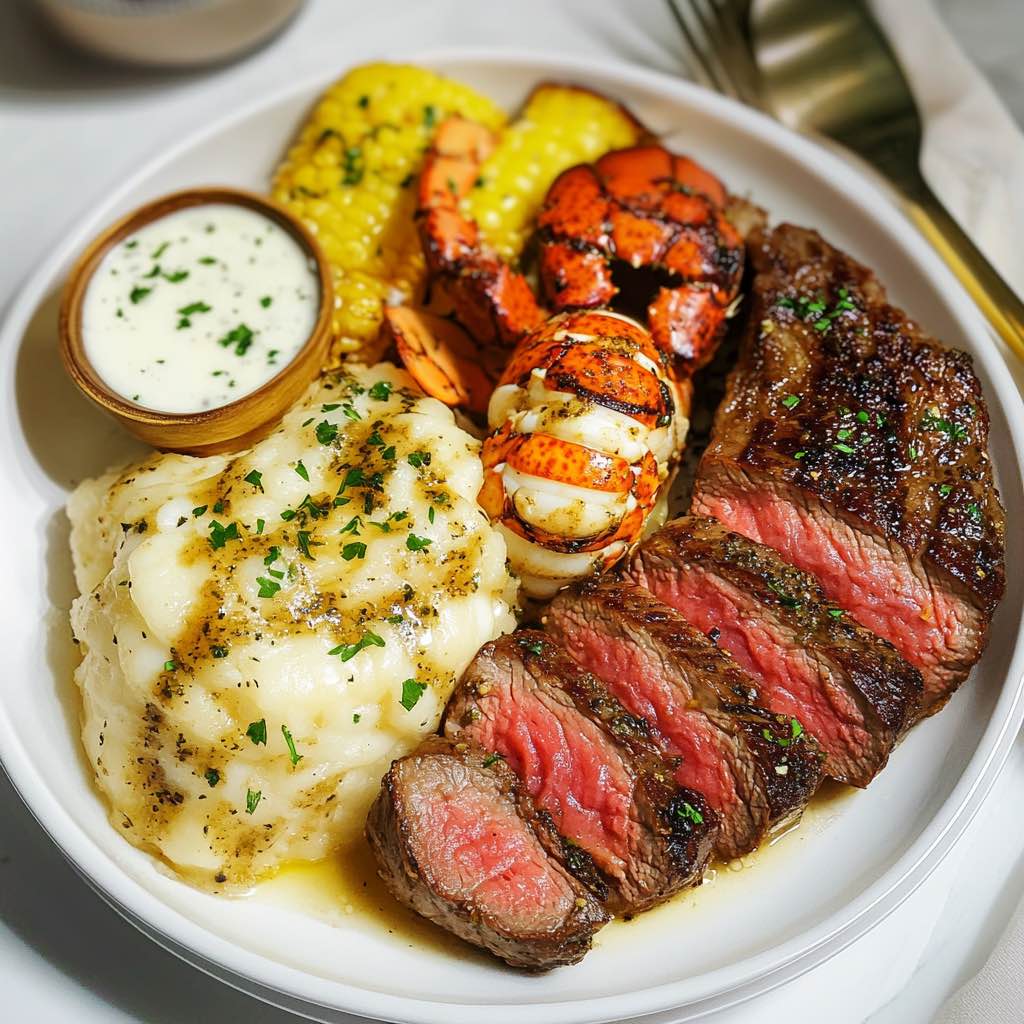
Garlic Herb Butter Steak & Lobster Tails: The Ultimate Surf and Turf Recipe
Garlic herb butter steak and lobster tails represent the pinnacle of surf and turf dining. This luxurious combination brings together the best of land and sea. Moreover, creating this restaurant-quality dish at home is surprisingly achievable. Therefore, you can enjoy premium dining without leaving your kitchen.
The rich, savory flavors of perfectly seared steak complement the delicate sweetness of lobster tails beautifully. In addition, the aromatic garlic herb butter ties both proteins together seamlessly. Furthermore, this impressive meal takes less than 45 minutes from start to finish.
Whether you’re celebrating a special occasion or treating yourself to fine dining, this garlic herb butter steak and lobster tails recipe delivers exceptional results. However, success depends on proper technique and quality ingredients. Consequently, we’ll guide you through every step to ensure perfect results.
Table of Contents
Selecting Premium Ingredients
Choosing the Right Steak Cut
Selecting quality steak is crucial for exceptional garlic herb butter steak and lobster tails. Therefore, opt for well-marbled cuts that deliver both flavor and tenderness. Furthermore, thickness matters significantly for even cooking.
Best Steak Cuts for This Recipe:
-
Ribeye (1.5-2 inches thick)
-
New York strip (1.5 inches thick)
-
Filet mignon (2 inches thick)
-
Porterhouse (1.5-2 inches thick)
Look for steaks with bright red color and minimal brown spots. Additionally, the fat should appear white or cream-colored. Moreover, avoid steaks with excessive liquid in the packaging. However, a small amount of natural juices is normal.
Selecting Fresh Lobster Tails
Quality lobster tails make all the difference in your surf and turf experience. Consequently, choose tails that feel heavy for their size. In addition, the shells should appear bright and intact.
Lobster Tail Selection Tips:
-
Choose 6-8 oz tails for individual portions
-
Look for translucent, firm meat
-
Avoid tails with black spots or strong fishy odors
-
Fresh tails should spring back when pressed
-
Frozen tails are acceptable if properly thawed
Essential Seasonings and Aromatics
The garlic herb butter transforms simple proteins into extraordinary dishes. Therefore, use fresh herbs whenever possible. Furthermore, quality butter makes a noticeable difference in flavor.
Key Ingredients for Garlic Herb Butter:
-
Unsalted European-style butter
-
Fresh minced garlic (4-5 cloves)
-
Fresh thyme, rosemary, and parsley
-
Kosher salt and freshly cracked black pepper
-
Fresh lemon juice and zest
Essential Equipment and Tools
Cookware Requirements
Proper equipment ensures consistent results for your garlic herb butter steak and lobster tails. Moreover, quality cookware distributes heat evenly. Therefore, invest in these essential items for best results.
Must-Have Equipment:
-
Cast iron skillet or heavy-bottomed pan
-
Sharp chef’s knife
-
Kitchen shears for lobster preparation
-
Instant-read thermometer
-
Tongs for safe handling
-
Small saucepan for butter preparation
Preparation Tools
Organization streamlines the cooking process significantly. Furthermore, having the right tools prevents mishaps during preparation. Additionally, proper tools ensure food safety throughout the process.
Additional Helpful Tools:
-
Cutting board (separate for seafood)
-
Small mixing bowls
-
Measuring spoons and cups
-
Paper towels for patting dry
-
Aluminum foil for resting
-
Serving platters
Preparing Your Steak and Lobster
Steak Preparation Techniques
Proper steak preparation sets the foundation for exceptional results. Therefore, remove steaks from refrigeration 30-45 minutes before cooking. Furthermore, this allows for even temperature distribution. However, don’t leave them out longer than one hour for food safety.
Step-by-Step Steak Preparation:
-
Pat steaks completely dry with paper towels
-
Season generously with kosher salt and pepper
-
Allow seasoning to penetrate for 20-30 minutes
-
Brush lightly with neutral oil if desired
-
Check thickness to determine cooking time
Lobster Tail Preparation Methods
Preparing lobster tails properly ensures even cooking and beautiful presentation. Moreover, proper preparation prevents overcooking. Therefore, follow these steps carefully for optimal results.
Lobster Tail Preparation Process:
-
Thaw frozen tails completely in refrigerator overnight
-
Cut shells lengthwise with kitchen shears
-
Gently pull meat up and over shell
-
Remove vein if visible along the back
-
Pat dry and season lightly with salt
Butterfly Technique for Lobster
Butterflying lobster tails creates impressive presentation and ensures even cooking. Additionally, this technique allows garlic herb butter to penetrate the meat. Furthermore, butterflied tails cook more quickly and evenly.
Butterflying Steps:
-
Make shallow cut along meat center
-
Open meat like a book
-
Press gently to flatten slightly
-
Place meat on top of shell
Creating the Perfect Garlic Herb Butter
Compound Butter Basics
Garlic herb butter elevates your steak and lobster tails from good to extraordinary. Therefore, balance flavors carefully for optimal results. Moreover, room temperature butter incorporates ingredients more easily.
Classic Garlic Herb Butter Recipe:
-
8 tablespoons unsalted butter, softened
-
4 garlic cloves, minced finely
-
2 tablespoons fresh parsley, chopped
-
1 tablespoon fresh thyme leaves
-
1 teaspoon fresh rosemary, minced
-
1 teaspoon fresh lemon juice
-
1/2 teaspoon kosher salt
-
1/4 teaspoon black pepper
Mixing and Storage Techniques
Proper mixing ensures even distribution of flavors throughout the butter. Furthermore, correct storage maintains freshness and flavor integrity. Additionally, compound butter can be prepared several days ahead.
Mixing Instructions:
-
Soften butter to room temperature (not melted)
-
Combine all ingredients in mixing bowl
-
Mix thoroughly until evenly distributed
-
Taste and adjust seasoning as needed
-
Transfer to parchment and roll into log
-
Refrigerate until firm before using
Flavor Variations
Experimenting with different herb combinations creates unique flavor profiles. Moreover, seasonal herbs offer fresh alternatives. Therefore, try these variations for different occasions.
Alternative Herb Combinations:
-
Mediterranean: Oregano, basil, and sun-dried tomatoes
-
French: Tarragon, chives, and shallots
-
Asian-inspired: Ginger, cilantro, and lime zest
-
Smoky: Smoked paprika and chipotle powder
Cooking Techniques for Perfect Results
Steak Cooking Methods
Achieving perfectly cooked garlic herb butter steak requires understanding heat control and timing. Furthermore, proper technique ensures consistent results every time. Therefore, master these fundamental cooking principles.
Pan-Searing Technique:
-
Preheat cast iron skillet over medium-high heat
-
Add neutral oil when pan begins smoking
-
Place steaks carefully without overcrowding
-
Sear undisturbed for 3-4 minutes per side
-
Add garlic herb butter during final minutes
-
Baste continuously with melted butter
Lobster Tail Cooking Methods
Lobster tails require gentle cooking to maintain their delicate texture. Moreover, overcooking results in tough, rubbery meat. Therefore, monitor cooking closely and use temperature as your guide.
Broiling Method:
-
Preheat broiler to high setting
-
Place tails on broiler-safe pan
-
Brush with garlic herb butter generously
-
Broil 4-6 inches from heat source
-
Cook 6-8 minutes until meat is opaque
-
Baste halfway through with additional butter
Combined Cooking Approach
Cooking steak and lobster tails simultaneously requires careful timing and coordination. However, with proper planning, both proteins finish perfectly together. Therefore, follow this synchronized cooking method.
Synchronized Cooking Timeline:
-
Minute 0: Start heating cast iron skillet
-
Minute 5: Begin searing steaks
-
Minute 8: Place lobster tails under broiler
-
Minute 12: Flip steaks, add herb butter
-
Minute 15: Remove both proteins, rest steaks
-
Minute 18: Plate and serve immediately
Temperature Guidelines and Timing
Steak Temperature Chart
Internal temperature determines doneness level for your garlic herb butter steak and lobster tails. Therefore, use an instant-read thermometer for accuracy. Furthermore, remember that temperature continues rising during resting.
Steak Doneness Temperatures:
-
Rare: 120-125°F (cool red center)
-
Medium-rare: 130-135°F (warm red center)
-
Medium: 140-145°F (warm pink center)
-
Medium-well: 150-155°F (slightly pink center)
-
Well-done: 160°F+ (no pink remaining)
Lobster Doneness Indicators
Properly cooked lobster meat appears opaque white with no translucent areas. Additionally, the internal temperature should reach 140-145°F. Moreover, overcooked lobster becomes tough and chewy quickly.
Visual Doneness Cues:
-
Meat turns from translucent to opaque white
-
Texture becomes firm but not rubbery
-
Juices run clear when pierced
-
Internal temperature reaches 140°F
Resting and Carryover Cooking
Resting allows juices to redistribute throughout the steak fibers. Furthermore, carryover cooking continues raising internal temperature. Therefore, remove steaks 5°F below target temperature.
Proper Resting Technique:
-
Tent loosely with aluminum foil
-
Rest 5-10 minutes depending on thickness
-
Avoid cutting immediately after cooking
-
Let lobster rest briefly before serving
Plating and Presentation Tips
Professional Plating Techniques
Beautiful presentation elevates your garlic herb butter steak and lobster tails to restaurant quality. Moreover, proper plating maintains food temperature longer. Therefore, warm plates before service for best results.
Plating Fundamentals:
-
Warm plates in low oven briefly
-
Pat proteins dry before plating
-
Position steak at slight angle
-
Place lobster tail prominently beside steak
-
Drizzle garlic herb butter over both proteins
-
Garnish thoughtfully with fresh herbs
Garnishing and Color Contrast
Visual appeal enhances the dining experience significantly. Furthermore, colorful garnishes provide nutritional variety. Additionally, contrasting colors create more appealing presentations.
Effective Garnish Options:
-
Fresh herb sprigs (parsley, thyme, rosemary)
-
Lemon wedges for brightness
-
Cherry tomatoes for color pop
-
Microgreens for elegant touch
-
Edible flowers for special occasions
Temperature Control During Service
Maintaining proper serving temperature ensures optimal enjoyment. Therefore, work quickly during plating and service. Moreover, hot plates help retain heat longer.
Side Dishes and Accompaniments
Classic Steakhouse Sides
Traditional sides complement garlic herb butter steak and lobster tails perfectly. Furthermore, these accompaniments balance the rich flavors of the main proteins. Therefore, choose sides that enhance rather than compete.
Traditional Side Options:
-
Roasted asparagus with lemon
-
Garlic mashed potatoes
-
Grilled vegetables medley
-
Caesar salad with crispy croutons
-
Loaded baked potatoes
-
Sautéed mushrooms
Light and Fresh Alternatives
Lighter sides provide balance to the rich main course. Moreover, fresh vegetables add nutritional value and color contrast. Additionally, acidic elements help cut through richness.
Fresh Side Suggestions:
-
Mixed greens with vinaigrette
-
Roasted Brussels sprouts
-
Grilled zucchini and yellow squash
-
Quinoa pilaf with herbs
-
Steamed broccoli with lemon
-
Arugula salad with cherry tomatoes
Starch Considerations
Starchy sides provide satisfaction and help balance the protein-heavy meal. However, choose preparations that won’t overshadow the main course. Therefore, keep seasonings complementary rather than competing.
Nutritional Benefits and Information
Protein Content and Quality
Garlic herb butter steak and lobster tails provide exceptional protein quality and quantity. Furthermore, both proteins contain all essential amino acids. Moreover, this combination supports muscle maintenance and growth effectively.
Nutritional Highlights per Serving:
-
Protein: 45-55 grams
-
Calories: 400-550 (depending on cuts)
-
Iron: Excellent source from steak
-
Omega-3 fatty acids: From lobster
-
B-vitamins: Abundant in both proteins
Micronutrient Profile
Both steak and lobster provide essential vitamins and minerals. Additionally, the garlic herb butter contributes antioxidants and flavor compounds. Furthermore, this combination supports overall nutritional needs.
Key Micronutrients:
-
Vitamin B12: Crucial for nerve function
-
Zinc: Important for immune system
-
Selenium: Antioxidant properties
-
Phosphorus: Bone and tooth health
-
Potassium: Heart and muscle function
Dietary Considerations
This recipe accommodates various dietary preferences and restrictions. However, modifications may be necessary for specific needs. Therefore, consider these adaptations for different requirements.
Diet-Friendly Adaptations:
-
Keto-friendly: Naturally low in carbohydrates
-
Paleo: Use ghee instead of butter
-
Low-sodium: Reduce salt, increase herbs
-
Dairy-free: Substitute olive oil for butter
Storage and Reheating Guidelines
Proper Storage Techniques
Proper storage maintains quality and prevents foodborne illness. Therefore, refrigerate leftovers within two hours of cooking. Moreover, separate proteins for individual reheating later.
Storage Best Practices:
-
Cool completely before refrigerating
-
Store in airtight containers
-
Use within 3-4 days maximum
-
Label with date for food safety
-
Keep steak and lobster separate
Reheating Methods
Gentle reheating preserves texture and prevents overcooking. Furthermore, different proteins require different approaches. Therefore, use these specific techniques for best results.
Steak Reheating:
-
Low oven (250°F) until warmed through
-
Sear briefly in hot skillet for crust
-
Avoid microwave which causes toughness
Lobster Reheating:
-
Gentle steaming over simmering water
-
Brief sauté in butter
-
Never boil or microwave lobster
Food Safety Guidelines
Food safety prevents illness and ensures quality retention. Moreover, proper handling protects your investment in premium ingredients. Therefore, follow these essential safety practices.
Safety Checklist:
-
Check internal temperatures during cooking
-
Refrigerate promptly after meals
-
Reheat to proper temperatures
-
Discard if in doubt about freshness
-
Use separate cutting boards for proteins
Recipe Variations and Adaptations
Regional Flavor Profiles
Different regional approaches offer exciting variations on garlic herb butter steak and lobster tails. Furthermore, international influences create unique flavor combinations. Therefore, experiment with these global inspirations.
Mediterranean Variation:
-
Add sun-dried tomatoes to herb butter
-
Include fresh oregano and basil
-
Finish with extra virgin olive oil
-
Serve with grilled vegetables
Asian-Inspired Version:
-
Incorporate ginger and garlic
-
Add soy sauce
-
Finish with sesame oil
-
Garnish with scallions and cilantro
Cooking Method Variations
Alternative cooking methods provide different textures and flavors. Moreover, various techniques accommodate different equipment availability. Additionally, some methods work better for entertaining larger groups.
Grilling Method:
-
Preheat grill to medium-high heat
-
Oil grates to prevent sticking
-
Grill steak 4-5 minutes per side
-
Grill lobster tails shell-side down
-
Baste frequently with herb butter
Oven-Finishing Technique:
-
Sear proteins in oven-safe pan
-
Transfer to 400°F oven to finish
-
Monitor internal temperatures carefully
-
Baste with butter throughout cooking
Ingredient Substitutions
Ingredient substitutions accommodate dietary restrictions and personal preferences. However, maintain flavor balance when making changes. Therefore, consider these successful alternatives.
Common Substitutions:
-
Ghee for butter (dairy-free)
-
Coconut oil for neutral oil
-
Shrimp for lobster tails (budget-friendly)
-
Chicken thighs for steak (lower cost)
-
Fresh herbs for dried (use 1/3 amount)
Troubleshooting Common Issues
Overcooked Proteins
Overcooking ruins the texture and flavor of premium proteins. Therefore, monitor temperatures carefully throughout cooking. Furthermore, remember that carryover cooking continues after removal from heat.
Prevention Strategies:
-
Use reliable instant-read thermometer
-
Remove proteins 5°F below target temperature
-
Rest steaks properly before cutting
-
Cook lobster just until opaque
-
Practice timing with less expensive cuts first
Underseasoned Results
Proper seasoning enhances natural flavors without overpowering them. Moreover, seasoning at the right time allows penetration. Therefore, season steaks well in advance of cooking.
Seasoning Solutions:
-
Salt steaks 40 minutes before cooking
-
Taste herb butter before using
-
Season lobster lightly but consistently
-
Adjust final seasoning just before serving
-
Use finishing salt for texture contrast
Butter Separation Issues
Garlic herb butter can separate if overheated or improperly prepared. However, understanding emulsion principles prevents this problem. Therefore, control temperature carefully during preparation and cooking.
Preventing Separation:
-
Keep butter at proper temperature
-
Add butter off direct heat
-
Swirl pan instead of stirring vigorously
-
Use butter at room temperature for mixing
-
Prepare compound butter in advance
Timing Coordination Problems
Coordinating multiple proteins requires careful planning and execution. Furthermore, different cooking times complicate the process. Therefore, practice this timeline for consistent results.
Timing Solutions:
-
Prepare all ingredients before starting
-
Use timers for each component
-
Start slower-cooking items first
-
Keep finished items warm in low oven
-
Plan extra time for first attempts
Frequently Asked Questions
How do I choose between different steak cuts for this recipe?
Ribeye offers the most marbling and flavor, making it ideal for garlic herb butter steak and lobster tails. However, filet mignon provides the most tender texture. Furthermore, New York strip offers good balance between flavor and tenderness. Therefore, choose based on your preference for richness versus tenderness.
Can I prepare the garlic herb butter in advance?
Yes, compound butter can be prepared up to one week in advance. Moreover, proper storage maintains flavor and texture. Therefore, wrap tightly in plastic wrap and refrigerate. Additionally, frozen herb butter keeps for up to three months.
What’s the best way to thaw frozen lobster tails?
Thaw lobster tails slowly in the refrigerator overnight for best results. Furthermore, cold water thawing works for quicker preparation. However, never thaw at room temperature or in warm water. Therefore, plan ahead for optimal food safety and quality.
How can I tell when my steak is properly rested?
Properly rested steak feels warm but not hot to the touch. Moreover, juices should not run excessively when cut. Additionally, the internal temperature should stabilize after 5-10 minutes. Therefore, use both visual and temperature cues for best results.
Can I substitute dried herbs for fresh in the butter?
Fresh herbs provide superior flavor and aroma for garlic herb butter steak and lobster tails. However, dried herbs work in a pinch using one-third the amount. Furthermore, add dried herbs earlier in the mixing process. Therefore, fresh herbs are worth the investment for special occasions.
What should I do if my lobster tails are different sizes?
Adjust cooking times based on tail size and thickness. Moreover, larger tails require longer cooking times. Additionally, check smaller tails for doneness first. Therefore, remove tails individually as they reach proper doneness.
Garlic herb butter steak and lobster tails represent the pinnacle of home cooking luxury. This impressive dish combines premium ingredients with accessible techniques. Moreover, proper preparation and timing ensure restaurant-quality results every time.
The key to success lies in selecting quality ingredients and mastering fundamental cooking techniques. Furthermore, attention to temperature control prevents overcooking these expensive proteins. Therefore, invest in good equipment and practice these methods for consistent excellence.
Whether celebrating special occasions or treating yourself to fine dining, this recipe delivers exceptional satisfaction. Additionally, the techniques learned transfer to other cooking applications. Consequently, mastering this dish elevates your overall culinary skills significantly.
Ready to create your own restaurant-quality surf and turf experience? Start with premium ingredients, follow our detailed techniques, and enjoy the incredible results. Moreover, share your cooking success stories and variations in the comments below. Your culinary journey toward perfection begins with your next visit to the market for these exceptional ingredients.
Garlic Herb Butter Steak & Lobster Tails
Description
Ingredients
For the steaks:
-
4 ribeye or filet mignon steaks (6-8 oz each)
-
2 tbsp olive oil
-
Salt and freshly ground black pepper
For the lobster tails:
-
4 lobster tails (5-6 oz each)
-
1 tbsp fresh parsley, finely chopped
-
2 garlic cloves, pressed
-
1 tsp Dijon mustard
-
¼ tsp fine sea salt
-
⅛ tsp freshly cracked black pepper
-
1½ tbsp olive oil
-
1½ tbsp fresh lemon juice
For the garlic herb butter:
-
8 tbsp unsalted butter, room temperature
-
¼ cup minced fresh herbs (parsley, chives, thyme)
-
2 tbsp minced garlic
-
½ tsp kosher salt
-
1 tsp lemon zest
-
1 tsp lemon juice
-
½ tsp paprika
Instructions
Prepare the garlic herb butter:
-
Combine butter, herbs, garlic, salt, lemon zest, lemon juice, and paprika in a bowl. Mix until well combined.
-
Transfer to parchment paper and roll into a log. Refrigerate until firm, about 30 minutes.
Prepare the lobster tails:
3. Butterfly the lobster tails by cutting through the top shell with kitchen scissors, stopping at the base. Crack the ribs on the underside and lift the meat through the opening, keeping it attached at the base.
4. Make the marinade by combining parsley, pressed garlic, Dijon mustard, salt, pepper, olive oil, and lemon juice.
5. Place butterflied tails in a baking dish, flesh-side up. Divide marinade evenly over the tops and dot with small pieces of garlic herb butter.
Cook the steaks:
6. Bring steaks to room temperature 30 minutes before cooking. Season generously with salt and pepper.
7. Heat olive oil in a large cast-iron skillet over medium-high heat. Sear steaks for 3-4 minutes per side for medium-rare, or until desired doneness is reached.
8. Top with sliced garlic herb butter and let rest under foil.
Cook the lobster tails:
9. Preheat oven to broil on high heat. Position rack so lobster tails will be at least 6 inches from heating element.
10. Broil lobster tails for 10-11 minutes until meat is opaque and white, reaching 145°F internal temperature.
Finish and serve:
11. Plate steaks and lobster tails together on warmed plates.
12. Top with additional garlic herb butter while still warm.
13. Garnish with fresh parsley and serve with lemon wedges.
Pro Tips
-
Use a meat thermometer for both steak and lobster to ensure perfect doneness
-
Don’t overcook the lobster – it should be just opaque and tender
-
Let steaks rest for 5 minutes after cooking to redistribute juices
-
Make compound butter ahead – it can be prepared days in advance and stored in the refrigerator