
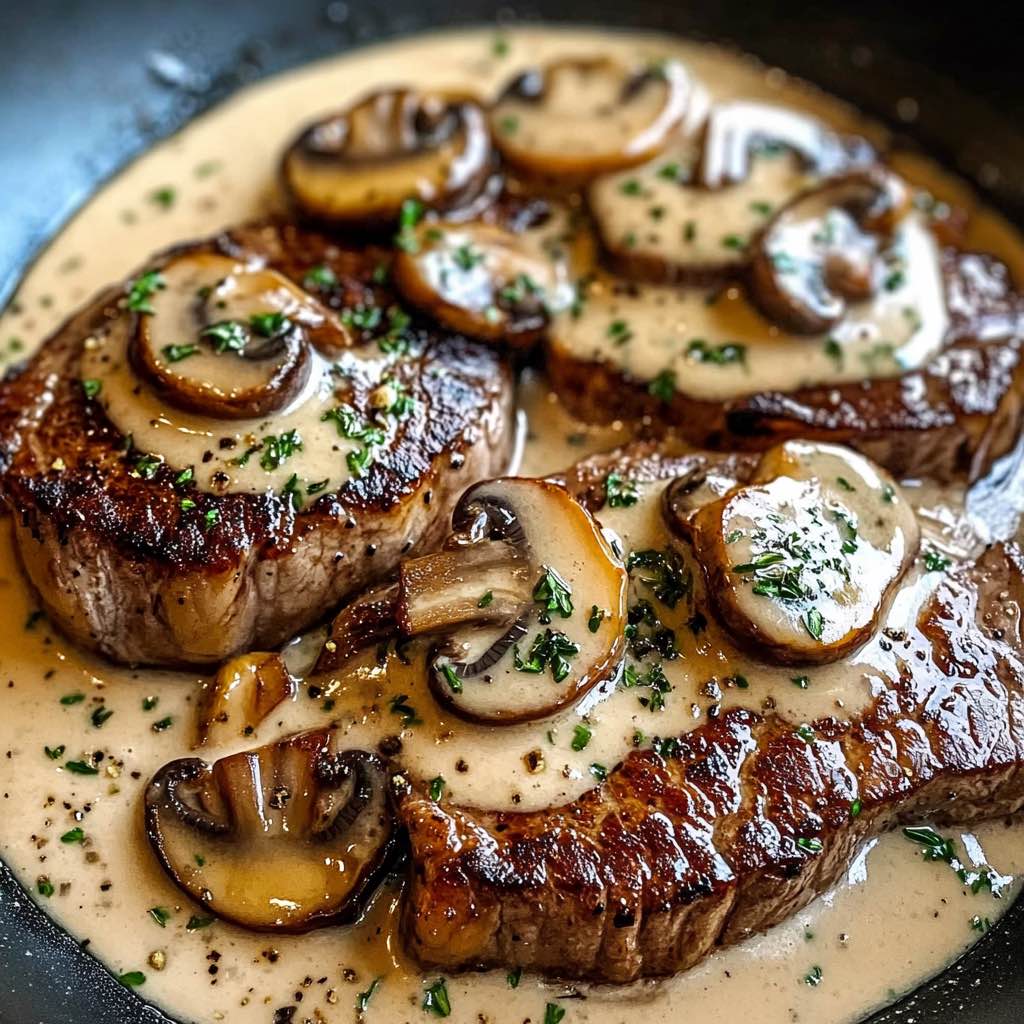
Pan-Seared Garlic Butter Steak with Mushroom Cream Sauce: The Ultimate Restaurant-Quality Recipe
Creating the perfect pan-seared garlic butter steak with mushroom cream sauce transforms an ordinary dinner into an extraordinary culinary experience. This restaurant-quality dish combines tender, juicy steak with rich, creamy sauce that elevates every bite. Furthermore, mastering this technique ensures impressive results for special occasions or weeknight dinners.
The secret to exceptional pan-seared garlic butter steak with mushroom cream sauce lies in proper technique and timing. Additionally, using quality ingredients makes all the difference in achieving that perfect golden crust and velvety sauce consistency.
Table of Contents
-
Understanding Pan-Searing Fundamentals
-
Choosing the Perfect Steak Cut
-
Essential Ingredients and Equipment
-
Step-by-Step Cooking Instructions
-
Creating the Perfect Mushroom Cream Sauce
-
Temperature Guidelines and Doneness Levels
-
Expert Tips for Restaurant-Quality Results
-
Common Mistakes to Avoid
-
Serving Suggestions and Side Dishes
-
Storage and Reheating Instructions
-
Nutritional Information
-
Frequently Asked Questions
Understanding Pan-Searing Fundamentals
The Science Behind Perfect Pan-Searing
Pan-searing creates the coveted Maillard reaction that develops complex flavors and textures. This chemical process occurs when proteins and sugars react under high heat, consequently forming that beautiful golden-brown crust. Moreover, proper pan-searing locks in natural juices while creating textural contrast.
The key to successful pan-seared garlic butter steak with mushroom cream sauce starts with understanding heat control. Initially, high heat sears the exterior quickly. Then, moderate heat allows even cooking throughout the interior.
Equipment Essentials for Success
A heavy-bottomed skillet or cast-iron pan provides even heat distribution. Similarly, these materials retain heat effectively, ensuring consistent searing temperature. Additionally, a reliable meat thermometer guarantees perfect doneness every time.
Quality tongs allow safe steak manipulation without piercing the meat. Furthermore, having all ingredients prepared beforehand ensures smooth cooking flow and prevents overcooking.
Choosing the Perfect Steak Cut
Premium Cuts for Pan-Searing
Ribeye steaks offer exceptional marbling and rich flavor profile. These cuts contain natural fat distribution that keeps meat tender during cooking. Additionally, ribeye responds beautifully to the garlic butter treatment in this recipe.
New York strip steaks provide excellent texture and moderate fat content. They develop gorgeous crusts while maintaining tender interiors. Furthermore, strip steaks pair perfectly with creamy mushroom sauce.
Filet mignon delivers unmatched tenderness and elegant presentation. However, these lean cuts require careful monitoring to prevent overcooking. Therefore, using a thermometer becomes especially important with filet mignon.
Thickness and Sizing Guidelines
Optimal steak thickness ranges from 1 to 1.5 inches for even cooking. Thinner cuts cook too quickly, while thicker cuts may burn outside before cooking inside. Moreover, consistent thickness ensures uniform results across multiple steaks.
Individual portion sizes typically range from 6 to 10 ounces per person. This sizing provides satisfying portions without overwhelming the accompanying sauce. Additionally, properly sized steaks cook more predictably.
Essential Ingredients and Equipment
Core Ingredients List
High-quality steaks form the foundation of exceptional pan-seared garlic butter steak with mushroom cream sauce. Choose well-marbled cuts from reputable sources for best results. Additionally, allowing steaks to reach room temperature before cooking ensures even heat distribution.
Fresh garlic cloves provide aromatic depth that bottled varieties cannot match. Similarly, real butter creates richer flavor than margarine substitutes. Furthermore, using unsalted butter allows better seasoning control.
Heavy cream delivers the luxurious texture essential for perfect sauce consistency. Moreover, full-fat cream prevents curdling under heat better than lighter alternatives.
Mushroom Selection Guide
Button mushrooms offer mild flavor and firm texture that holds well during cooking. These common varieties absorb cream sauce flavors beautifully. Additionally, button mushrooms provide consistent results for beginners.
Cremini mushrooms deliver deeper, earthier flavors than standard button varieties. They add complexity to the overall dish profile. Furthermore, cremini mushrooms maintain texture during sauce preparation.
Shiitake mushrooms contribute umami richness and sophisticated flavor notes. However, remove tough stems before cooking. Therefore, shiitake varieties work best in gourmet applications.
Seasoning and Herb Essentials
Coarse sea salt or kosher salt provides better seasoning control than table salt. These larger crystals distribute more evenly across steak surfaces. Moreover, coarse salts don’t dissolve immediately, maintaining seasoning integrity.
Freshly ground black pepper offers superior flavor compared to pre-ground alternatives. Additionally, grinding pepper just before use preserves volatile oils that create aromatic complexity.
Fresh thyme complements both steak and mushroom flavors perfectly. Similarly, rosemary adds aromatic pine notes that enhance the overall dish. Furthermore, fresh herbs provide brighter flavors than dried alternatives.
Step-by-Step Cooking Instructions
Preparation Phase
Remove steaks from refrigeration 30-45 minutes before cooking. This step ensures even temperature distribution throughout the meat. Additionally, room-temperature steaks develop better crusts during searing.
Pat steaks completely dry using paper towels. Moisture prevents proper browning and creates steam instead of searing. Furthermore, thoroughly dried surfaces accept seasoning better.
Season generously with salt and pepper on both sides. Press seasoning gently into meat surfaces for better adherence. Moreover, seasoning 15-20 minutes before cooking allows flavors to penetrate deeper.
Initial Searing Process
Heat your heavy skillet over medium-high heat until very hot. A properly heated pan ensures immediate searing upon contact. Additionally, the pan should sizzle vigorously when steaks are added.
Add a small amount of high-heat oil to prevent sticking. Vegetable oil or canola oil work best due to their high smoke points. However, avoid olive oil which burns at high temperatures.
Place steaks in the hot pan without moving them for 3-4 minutes. This develops the essential crust that locks in juices. Furthermore, resist the urge to flip too early, as this prevents proper browning.
Garlic Butter Integration
After flipping steaks, add butter to the pan around the edges. The residual heat melts butter gradually without burning it. Additionally, this technique creates aromatic butter that bastes the steaks naturally.
Add minced garlic and fresh herbs to the melted butter. Tilt the pan slightly to pool the aromatic mixture. Moreover, this allows you to baste steaks with the flavored butter using a spoon.
Continuously baste steaks with the garlic butter mixture. This process adds incredible flavor while promoting even cooking. Furthermore, basting creates an additional layer of richness that elevates the final dish.
Creating the Perfect Mushroom Cream Sauce
Mushroom Preparation Techniques
Clean mushrooms gently with damp paper towels rather than washing them. Mushrooms absorb water quickly, which dilutes their natural flavors. Additionally, excess moisture prevents proper browning during cooking.
Slice mushrooms uniformly for even cooking results. Approximately ¼-inch thickness works best for most varieties. Moreover, consistent sizing ensures all pieces finish cooking simultaneously.
Sauce Development Process
After removing steaks from the pan, keep them warm under foil tenting. The same pan retains flavorful browned bits that enhance sauce depth. Additionally, using the same pan incorporates those essential flavors directly into the cream sauce.
Sauté sliced mushrooms in the remaining pan drippings over medium heat. This step develops rich, caramelized flavors in the mushrooms. Furthermore, proper browning creates the foundation for exceptional sauce taste.
Add minced garlic and cook until fragrant, about 30 seconds. Avoid overcooking garlic as it becomes bitter quickly. Therefore, brief cooking preserves the aromatic qualities essential for balanced flavor.
Cream Integration Method
Pour heavy cream slowly into the mushroom mixture while stirring constantly. This gradual addition prevents temperature shock that causes curdling. Moreover, constant stirring ensures smooth sauce consistency.
Bring the mixture to a gentle simmer, then reduce heat to low. High heat can break the cream emulsion and create grainy texture. Additionally, gentle simmering allows flavors to meld properly.
Season the sauce with salt, pepper, and fresh herbs to taste. Taste frequently during this process for optimal flavor balance. Furthermore, final seasoning adjustments ensure perfect harmony with the steak.
Temperature Guidelines and Doneness Levels
Internal Temperature Standards
Rare steaks register 120-125°F internal temperature with cool red centers. These temperatures provide maximum tenderness for high-quality cuts. Additionally, rare doneness preserves natural meat flavors and textures.
Medium-rare achieves 130-135°F with warm red centers throughout. This doneness level offers excellent balance between tenderness and flavor development. Moreover, medium-rare remains the preferred choice for most steak enthusiasts.
Medium steaks reach 135-145°F with light pink centers. This level provides more firmness while maintaining reasonable juiciness. Furthermore, medium doneness suits those preferring less red meat.
Resting Importance
Allow cooked steaks to rest 5-10 minutes before serving. This crucial step redistributes juices throughout the meat fibers. Additionally, resting prevents juice loss when cutting into the steak.
Tent steaks loosely with foil during the resting period. This maintains warmth without creating steam that softens the crust. Moreover, proper resting ensures optimal texture and flavor in every bite.
Expert Tips for Restaurant-Quality Results
Professional Techniques
Restaurant chefs finish steaks in ovens for even heating throughout. This technique works especially well for thicker cuts. Additionally, oven finishing allows better temperature control for perfect doneness.
Let steaks develop proper crusts before flipping them only once. Multiple flips prevent proper browning and can toughen the meat. Furthermore, patience during searing creates superior texture and appearance.
Use compound butter for enhanced flavor complexity. Mix softened butter with herbs, garlic, and seasonings in advance. Therefore, this preparation adds gourmet touches with minimal effort.
Timing Coordination Tips
Start side dishes before beginning steak preparation. Most accompaniments take longer than the actual steak cooking time. Additionally, proper timing ensures everything finishes simultaneously for optimal serving temperature.
Prepare all sauce ingredients before starting the cooking process. Pan-seared garlic butter steak with mushroom cream sauce requires quick execution once started. Moreover, having ingredients ready prevents overcooking any components.
Common Mistakes to Avoid
Temperature Management Errors
Never cook steaks straight from the refrigerator. Cold meat cooks unevenly and requires longer searing times. Additionally, cold centers may remain raw while exteriors become overcooked.
Avoid using too low heat during the initial searing phase. Insufficient heat creates gray, steamed meat instead of proper browning. Furthermore, proper high heat ensures the Maillard reaction occurs effectively.
Seasoning and Preparation Pitfalls
Don’t skip the resting period after seasoning steaks. Salt needs time to penetrate meat fibers for optimal flavor distribution. Moreover, rushed seasoning results in surface-level taste rather than integrated flavors.
Never press down on steaks while cooking them in the pan. This technique forces out natural juices that keep meat tender and flavorful. Additionally, pressing prevents proper crust development.
Sauce Consistency Issues
Avoid adding cream to an overly hot pan, which causes immediate curdling. Always reduce heat before incorporating dairy products into sauces. Therefore, temperature control ensures smooth, creamy sauce consistency.
Don’t rush the sauce reduction process by using high heat. Gentle simmering allows proper thickness development without breaking the emulsion. Furthermore, patience creates professional-quality sauce texture.
Serving Suggestions and Side Dishes
Classic Accompaniments
Roasted asparagus provides elegant color contrast and nutritional balance. The crisp-tender texture complements the rich steak and sauce beautifully. Additionally, asparagus offers bright flavors that cut through the dish’s richness.
Garlic mashed potatoes create a luxurious base for the mushroom cream sauce. These creamy potatoes absorb sauce flavors while providing satisfying substance. Moreover, the combination creates comfort food excellence.
Contemporary Pairings
Grilled vegetables add smoky flavors and appealing char marks. Zucchini, bell peppers, and onions work particularly well with this preparation. Furthermore, grilled vegetables provide healthy balance to the indulgent main course.
Wild rice pilaf offers nutty flavors and interesting texture contrasts. The earthy grain complements mushroom flavors naturally. Additionally, rice pilaf provides adequate base for sauce absorption.
Presentation Excellence
Slice steaks against the grain for optimal tenderness. This technique shortens muscle fibers for easier chewing. Moreover, proper slicing showcases the beautiful interior doneness achieved.
Drizzle mushroom cream sauce artistically around the plate edges. This professional presentation technique enhances visual appeal significantly. Furthermore, strategic sauce placement allows diners to control sauce quantities.
Storage and Reheating Instructions
Proper Storage Methods
Refrigerate leftover pan-seared garlic butter steak with mushroom cream sauce within two hours of cooking. Store components separately for best quality preservation. Additionally, proper storage prevents bacterial growth and maintains food safety.
Wrap steaks tightly in plastic wrap or aluminum foil before refrigerating. This prevents air exposure that causes flavor deterioration. Moreover, proper wrapping maintains moisture content during storage.
Store mushroom cream sauce in airtight containers to prevent skin formation. Sauce quality degrades quickly when exposed to air. Therefore, proper containment preserves texture and flavor integrity.
Reheating Techniques
Reheat steaks gently in low ovens (250°F) to prevent overcooking. High heat continues cooking and toughens previously perfect meat. Additionally, gentle reheating preserves original doneness levels.
Warm mushroom cream sauce slowly over low heat while stirring frequently. This prevents breaking the emulsion and maintains smooth consistency. Furthermore, gradual warming preserves the sauce’s luxurious texture.
Add small amounts of fresh cream if sauce becomes too thick during storage. This adjustment restores original consistency without compromising flavor balance. Moreover, thinning agents help achieve proper serving consistency.
Nutritional Information
Protein Content Benefits
Pan-seared garlic butter steak with mushroom cream sauce provides substantial high-quality protein. A typical serving contains 40-50 grams of complete protein with all essential amino acids. Additionally, protein supports muscle maintenance and satiety.
Beef offers significant amounts of iron, zinc, and B-vitamins. These nutrients support energy metabolism and immune function. Furthermore, heme iron from beef absorbs more readily than plant-based iron sources.
Balancing Indulgence
While rich in flavor, this dish contains considerable calories from butter and cream. Portion control and balanced meal planning help manage caloric intake. Additionally, pairing with vegetables increases nutrient density per serving.
Consider this preparation for special occasions rather than everyday meals. The indulgent nature makes it perfect for celebrations and entertaining. Moreover, occasional indulgence fits well within balanced eating patterns.
Frequently Asked Questions
Can I make pan-seared garlic butter steak with mushroom cream sauce ahead of time?
While steaks taste best when freshly cooked, you can prepare components partially in advance. Season steaks and prepare sauce ingredients several hours beforehand. However, actual cooking should occur just before serving for optimal results.
What’s the best pan for achieving perfect sear marks?
Cast iron skillets provide superior heat retention and even distribution for excellent searing. Stainless steel pans also work well but require proper preheating. Additionally, avoid non-stick pans as they don’t achieve high enough temperatures for proper browning.
How do I prevent the cream sauce from curdling?
Temperature control prevents cream sauce separation issues. Always reduce heat before adding cream, and stir constantly during incorporation. Furthermore, using room-temperature cream reduces temperature shock that causes curdling.
Can I substitute different mushroom varieties in this recipe?
Absolutely! Portobello, oyster, or mixed mushroom varieties create delicious variations. Each type contributes unique flavors and textures to the final dish. Moreover, experimenting with different mushrooms keeps the recipe interesting over time.
What internal temperature should I target for medium-rare steak?
Medium-rare steak should reach 130-135°F internal temperature. Use a reliable meat thermometer inserted into the thickest part for accurate readings. Additionally, remember that temperature continues rising during the resting period.
Pan-seared garlic butter steak with mushroom cream sauce represents culinary excellence achievable in home kitchens. This comprehensive guide provides all necessary techniques for restaurant-quality results. Furthermore, mastering these methods opens doors to countless variations and adaptations.
The combination of perfectly seared beef, aromatic garlic butter, and luxurious mushroom cream sauce creates memorable dining experiences. With practice and attention to detail, this impressive dish becomes an accessible addition to your cooking repertoire.
Ready to elevate your home cooking game? Gather your ingredients and start creating this spectacular pan-seared garlic butter steak with mushroom cream sauce tonight. Your family and guests will be amazed by the professional results you achieve in your own kitchen.
Pan-Seared Garlic Butter Steak with Mushroom Cream Sauce
Description
Ingredients
For the Steaks:
-
4 New York strip steaks (7 oz each, 1-inch thick)
-
Salt and freshly cracked pepper
-
2 tablespoons olive oil, divided
-
4 tablespoons butter, divided
-
6 cloves garlic, lightly crushed with the back of a knife
-
6-8 fresh thyme sprigs (or rosemary or parsley)
For the Mushroom Cream Sauce:
-
2 cloves garlic, crushed
-
1 cup brown mushrooms, sliced
-
2 tablespoons butter
-
1 cup chicken broth
-
1/2 cup heavy cream
-
1-2 teaspoons balsamic vinegar or Worcestershire sauce
-
1/2 teaspoon red pepper flakes
-
1/2 teaspoon dried thyme
-
Salt and pepper to taste
Instructions
Preparing the Steaks:
-
Remove steaks from refrigerator and let them sit at room temperature for 20-30 minutes to ensure even cooking.
-
Pat steaks completely dry with paper towels and season generously with salt and pepper just before cooking.
-
Preheat a cast iron skillet or heavy-bottomed pan over high heat until almost smoking.
Cooking the Steaks:
-
Add 1 tablespoon olive oil to the hot pan and swirl to coat.
-
Place steaks in the pan, pressing gently to ensure full contact with the surface.
-
Sear undisturbed for 3-4 minutes until a deep golden crust forms.
-
Flip steaks and sear the other side for another 3-4 minutes.
-
Reduce heat to medium and add 2 tablespoons butter, crushed garlic, and thyme sprigs.
-
Tilt the pan carefully and baste steaks with the flavored butter using a large spoon.
-
Remove steaks from pan and let rest on a plate for 10-15 minutes, keeping any pan juices in the skillet.
Making the Mushroom Cream Sauce:
-
In the same pan over medium heat, add remaining butter and let it melt.
-
Add sliced mushrooms and crushed garlic, sautéing for 3-4 minutes until mushrooms are golden brown.
-
Add chicken broth, red pepper flakes, and dried thyme, stirring to combine.
-
Let the mixture simmer for 5-7 minutes to reduce slightly and concentrate flavors.
-
Stir in heavy cream and balsamic vinegar, whisking to create a smooth sauce.
-
Season with salt and pepper to taste.
-
Return steaks and any accumulated juices to the pan briefly to warm through.