
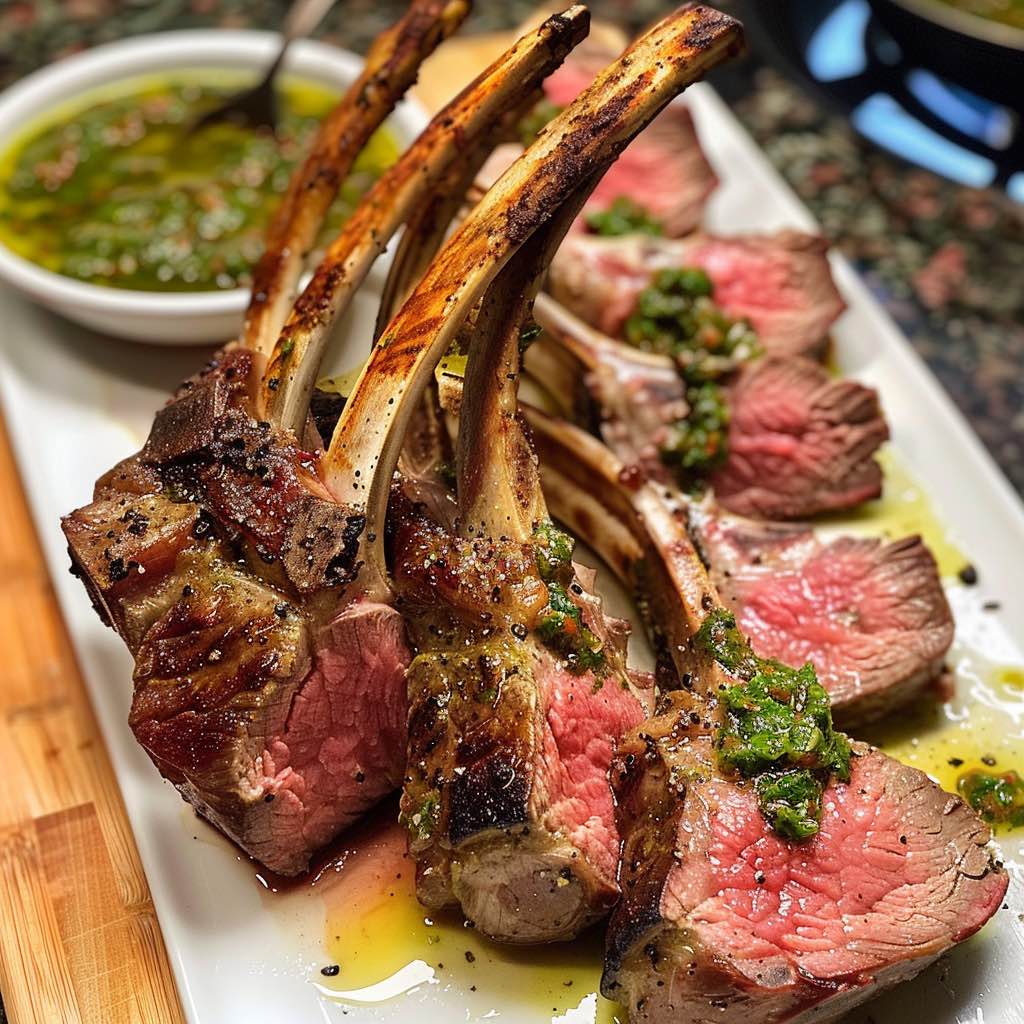
Reverse-Seared Rack of Lamb with Minty Salsa Verde
Introduction
The reverse-seared rack of lamb with minty salsa verde transforms an elegant cut of meat into an unforgettable centerpiece. This cooking method delivers restaurant-quality results in your home kitchen. The gentle low-temperature roasting ensures even cooking throughout, while the final high-heat sear creates a gorgeous golden crust. Therefore, you get tender, juicy lamb with incredible texture contrast.
Moreover, the bright minty salsa verde adds a fresh, herbaceous element that cuts through the richness of the lamb. This dish works perfectly for special occasions, holiday dinners, or when you want to impress dinner guests. Furthermore, the technique is surprisingly straightforward once you understand the basic principles.
What is Reverse Searing?
Reverse searing flips traditional cooking methods on their head. Instead of searing first and finishing in the oven, you start with gentle heat and end with intense heat. Consequently, this approach gives you more control over the final temperature.
The Science Behind Reverse Searing
The low-and-slow initial phase allows the meat’s internal temperature to rise gradually. This prevents the outer layers from overcooking before the center reaches the desired temperature. Additionally, the gentle heat helps break down connective tissues without toughening the muscle fibers.
When you finish with a quick sear, the surface moisture has already evaporated during the slow roasting phase. Thus, you achieve a better crust in less time. The Maillard reaction creates those delicious browned flavors without gray bands of overcooked meat underneath.
Benefits of This Method
First, reverse searing provides exceptional control over doneness. You can monitor the internal temperature precisely and stop cooking at the exact moment you want. Second, the method produces more evenly cooked meat from edge to center. Third, you get superior crust development without sacrificing tenderness.
Why Choose Rack of Lamb?
Rack of lamb represents one of the most luxurious cuts available. This premium cut comes from the rib section and typically contains eight ribs. Each rack serves two to three people, making it ideal for intimate dinners.
Quality and Flavor Profile
The meat offers a delicate, slightly sweet flavor that’s less gamey than other lamb cuts. The natural marbling throughout provides richness and moisture. Meanwhile, the bones add extra flavor during cooking and create an impressive presentation.
Selecting the Best Rack
Look for racks with bright red meat and white, creamy fat. The bones should appear moist and pink rather than dry. Furthermore, ask your butcher to french the bones, which means cleaning the rib bones for a clean appearance. A quality rack typically weighs between 1.5 to 2 pounds.
Check out our guide on [selecting premium cuts of meat] for more detailed information about choosing the best lamb.
Essential Ingredients
For the Rack of Lamb
The ingredients list stays refreshingly simple:
-
2 racks of lamb (8 ribs each), frenched
-
3 tablespoons olive oil
-
4 garlic cloves, minced
-
2 tablespoons fresh rosemary, chopped
-
2 tablespoons fresh thyme leaves
-
2 teaspoons kosher salt
-
1 teaspoon black pepper
-
1 teaspoon Dijon mustard
For the Minty Salsa Verde
This vibrant sauce brings everything together:
-
2 cups fresh parsley leaves
-
1 cup fresh mint leaves
-
3 garlic cloves
-
2 tablespoons capers, drained
-
1 tablespoon Dijon mustard
-
3 tablespoons lemon juice
-
½ cup extra-virgin olive oil
-
½ teaspoon sea salt
-
¼ teaspoon red pepper flakes
Ingredient Substitutions
You can swap parsley for cilantro if you prefer different herb profiles. Similarly, fresh oregano works well in place of some of the mint. However, keep at least half the mint for that signature flavor. For a nuttier taste, replace some olive oil with walnut or hazelnut oil.
Kitchen Tools You’ll Need
Having the right equipment makes the reverse-searing process much smoother. First, you need a reliable meat thermometer. Digital instant-read thermometers provide the most accurate readings. Second, a heavy-duty roasting pan or rimmed baking sheet works perfectly for the initial roasting phase.
Essential Equipment List
-
Instant-read meat thermometer
-
Roasting pan or baking sheet
-
Wire cooling rack
-
Large cast-iron skillet or heavy pan
-
Sharp chef’s knife
-
Cutting board
-
Food processor or blender
-
Kitchen twine (optional)
-
Aluminum foil
The wire rack elevates the lamb during roasting, allowing hot air to circulate evenly. Meanwhile, the cast-iron skillet retains heat exceptionally well for that final sear.
Step-by-Step Cooking Instructions
Preparing the Lamb
Begin by removing the lamb from the refrigerator 45 minutes before cooking. This allows the meat to come to room temperature, promoting even cooking. Pat the racks completely dry with paper towels. Moisture on the surface prevents proper browning later.
Next, score the fat cap in a crosshatch pattern. Cut about ¼-inch deep without cutting into the meat. This helps the fat render and allows seasonings to penetrate. Additionally, the scoring creates an attractive presentation.
Creating the Herb Rub
Combine minced garlic, chopped rosemary, thyme, salt, and pepper in a small bowl. Add olive oil and Dijon mustard to create a paste. Mix thoroughly until all ingredients blend together. The mustard helps the herbs adhere while adding subtle tanginess.
Rub this mixture generously over the entire surface of both racks. Press the herbs into the scored fat cap, working them into the cuts. Let the seasoned racks sit at room temperature while the oven preheats.
The Slow Roasting Phase
Preheat your oven to 275°F (135°C). This low temperature is crucial for the reverse-searing method. Place a wire rack inside your roasting pan. Position the lamb racks on the wire rack, fat side up. Space them apart to allow air circulation.
Insert your meat thermometer into the thickest part of one rack. Make sure it doesn’t touch bone, as this gives false readings. Roast the lamb until the internal temperature reaches 115°F (46°C) for medium-rare. This typically takes 45 to 60 minutes, depending on rack size.
Resting Period
Once the lamb reaches target temperature, remove it from the oven. Transfer the racks to a cutting board and tent loosely with foil. Let them rest for 10 minutes. During this time, the temperature will continue rising by about 5 degrees. Meanwhile, the juices redistribute throughout the meat.
The Final Sear
Heat a large cast-iron skillet over high heat until smoking hot. Add one tablespoon of olive oil and swirl to coat. Carefully place the first rack in the skillet, fat side down. Sear for 60 to 90 seconds until deeply golden brown. The herbs should become fragrant and slightly crispy.
Flip and sear the meat side for another 60 seconds. Use tongs to hold the rack upright and sear the ends briefly. Repeat this process with the second rack. Work quickly to avoid overcooking the interior.
Carving and Serving
Let the seared racks rest for 5 minutes before cutting. Use a sharp knife to slice between each rib bone. This creates individual lamb chops, typically called “lollipops” due to their shape. Arrange the chops on a serving platter and drizzle with minty salsa verde.
Making the Perfect Minty Salsa Verde
The salsa verde provides bright, fresh contrast to rich lamb. This sauce comes together in minutes with a food processor.
Preparing Fresh Herbs
Start by washing and thoroughly drying all herbs. Excess water dilutes the sauce and prevents it from emulsifying properly. Remove thick stems from parsley and mint, keeping only leaves and tender stems. Peel the garlic cloves.
Blending the Sauce
Add parsley, mint, garlic, and capers to your food processor. Pulse several times to roughly chop everything. Scrape down the sides with a spatula. Add Dijon mustard, lemon juice, salt, and red pepper flakes. Pulse again to combine.
With the processor running, slowly drizzle in olive oil through the feed tube. The sauce should emulsify into a thick, pourable consistency. Taste and adjust seasoning as needed. You might want more lemon juice for brightness or additional salt for depth.
Sauce Variations
For a chunkier texture, hand-chop all ingredients and mix in a bowl. This creates a more rustic presentation. Alternatively, add anchovies for umami depth, though this makes the sauce less vegetarian-friendly. Some cooks include chopped shallots for subtle onion flavor.
Temperature Guide for Doneness
Understanding internal temperatures ensures perfect results every time. Use this guide to achieve your preferred doneness level.
Temperature Chart
Rare: 120-125°F (49-52°C)
-
Remove from oven at 110°F
-
Deep red center
-
Very soft texture
Medium-Rare: 130-135°F (54-57°C)
-
Remove from oven at 115-120°F
-
Pink throughout center
-
Tender and juicy
Medium: 135-145°F (57-63°C)
-
Remove from oven at 125-130°F
-
Light pink center
-
Slightly firmer texture
Medium-Well: 145-155°F (63-68°C)
-
Remove from oven at 135-140°F
-
Barely pink center
-
Firmer texture
Well-Done: 160°F+ (71°C+)
-
Remove from oven at 145°F+
-
No pink
-
Firm throughout
Recommended Doneness
Most chefs recommend medium-rare for rack of lamb. This temperature preserves tenderness while developing full flavor. The meat remains juicy and slightly rosy in the center. However, personal preference always matters most. Choose the temperature that makes you happiest.
Side Dish Pairings
The right accompaniments elevate your reverse-seared rack of lamb into a complete meal. Consider these complementary options.
Vegetable Sides
Roasted Root Vegetables: Carrots, parsnips, and turnips develop natural sweetness when roasted. Toss them with olive oil, salt, and herbs. Roast at 400°F until caramelized and tender.
Garlic Green Beans: Blanch fresh green beans, then sauté with minced garlic and olive oil. Add lemon zest for brightness. The crisp texture contrasts beautifully with tender lamb.
Brussels Sprouts with Balsamic: Halve brussels sprouts and roast until crispy. Drizzle with balsamic reduction just before serving. The slight bitterness balances the rich meat.
Starch Options
Creamy Mashed Potatoes: Classic for good reason. Use Yukon gold potatoes for naturally buttery flavor. Add roasted garlic for extra depth.
Herb Roasted Fingerlings: These small potatoes crisp beautifully in the oven. Toss with rosemary and thyme to echo the lamb’s seasonings.
Lemon Orzo: This pasta side dish stays light and refreshing. Cook orzo, then toss with lemon juice, olive oil, and fresh herbs.
Cauliflower Puree: For a lighter alternative to potatoes, puree roasted cauliflower with olive oil and garlic. The silky texture complements the lamb perfectly.
Salads and Lighter Options
A simple arugula salad with lemon vinaigrette cuts through richness. Alternatively, serve a grain salad with farro, dried cranberries, and toasted nuts. These lighter options balance the meal without overwhelming delicate lamb flavors.
Common Mistakes to Avoid
Even experienced cooks sometimes struggle with rack of lamb. Awareness of these pitfalls helps ensure success.
Overcooking
The most frequent error involves cooking lamb past medium. The delicate meat becomes tough and dry when overcooked. Always use a thermometer rather than relying on cooking times alone. Remember that carryover cooking continues after removing from heat.
Skipping the Rest
Cutting into lamb immediately causes juices to run out. This leaves the meat dry and less flavorful. Patient resting allows proteins to relax and reabsorb moisture. Plan for at least 10 minutes of rest time in your cooking schedule.
Inadequate Searing
A weak final sear fails to develop proper crust and flavor. Make sure your skillet reaches smoking hot before adding the lamb. Don’t overcrowd the pan, which drops temperature and causes steaming instead of searing. Work in batches if necessary.
Not Trimming Excess Fat
While some fat adds flavor, too much becomes unpleasantly chewy. Trim the fat cap to about ¼-inch thickness. This allows enough fat to baste the meat while preventing greasiness.
Rushing the Process
Reverse searing requires patience. Don’t try to speed things up by increasing oven temperature. The gentle heat is essential for even cooking. Similarly, resist the urge to flip constantly during searing. Let each side develop color undisturbed.
Storage and Reheating Tips
Properly stored leftover lamb maintains quality for several days. However, the texture changes slightly with reheating.
Refrigerator Storage
Allow cooked lamb to cool to room temperature within two hours. Wrap tightly in aluminum foil or place in an airtight container. Store in the coldest part of your refrigerator. The lamb keeps safely for 3 to 4 days.
Keep the salsa verde in a separate container. Press plastic wrap directly onto the surface to prevent oxidation. The sauce stays fresh for up to one week refrigerated.
Freezing Instructions
For longer storage, freeze cooked lamb up to three months. Wrap individual chops tightly in plastic wrap, then again in aluminum foil. Label with the date for reference. Thaw overnight in the refrigerator before reheating.
Best Reheating Method
Preheat your oven to 250°F (121°C). Place lamb chops on a baking sheet and cover loosely with foil. Heat just until warmed through, about 10 to 15 minutes. This gentle approach prevents further cooking. Alternatively, bring lamb to room temperature and serve cold, sliced thin over salad.
Nutritional Information
Understanding the nutritional profile helps with meal planning. Keep in mind that values vary based on portion size and specific ingredients used.
Per Serving (4 ounces cooked lamb with 2 tablespoons salsa verde)
-
Calories: 380
-
Protein: 28g
-
Fat: 28g
-
Saturated Fat: 8g
-
Carbohydrates: 3g
-
Fiber: 1g
-
Sugar: 1g
-
Sodium: 520mg
-
Cholesterol: 95mg
Health Benefits
Lamb provides high-quality complete protein with all essential amino acids. It’s particularly rich in vitamin B12, which supports nerve function and red blood cell formation. Additionally, lamb contains significant amounts of zinc, selenium, and iron. These minerals support immune function and energy production.
The herbs in salsa verde add antioxidants and anti-inflammatory compounds. Mint aids digestion, while parsley provides vitamin K and vitamin C. Olive oil contributes heart-healthy monounsaturated fats.
FAQs
How do I know when my rack of lamb is perfectly cooked?
Use an instant-read thermometer inserted into the thickest part of the meat. For medium-rare, remove the lamb from the oven at 115-120°F internal temperature. After resting and searing, it will reach the ideal 130-135°F. The reverse-seared rack of lamb method gives you precise control over doneness.
Can I prepare the herb rub ahead of time?
Absolutely. Mix the herb rub up to 24 hours in advance and store it in the refrigerator. Apply it to the lamb about 45 minutes before cooking. This allows the flavors to penetrate while the meat comes to room temperature.
What if I don’t have a cast-iron skillet for searing?
Any heavy-bottomed pan works for the final sear. Stainless steel, carbon steel, or even a thick aluminum pan will suffice. The key is using high heat and ensuring the pan is properly preheated before adding the lamb.
How can I tell if my lamb rack is fresh?
Fresh lamb should have bright red meat with minimal odor. The fat appears white or cream-colored, never yellow or gray. Ask your butcher about the date it was cut. Ideally, purchase lamb within three days of butchering for best quality.
Is rack of lamb difficult to cook?
Not at all. The reverse-seared rack of lamb with minty salsa verde technique is actually quite forgiving. The low-and-slow method gives you plenty of time to monitor temperature. Additionally, the resting period provides a buffer against overcooking. With a thermometer and patience, even novice cooks achieve excellent results.
Can I make salsa verde without a food processor?
Yes. Finely mince all ingredients by hand using a sharp chef’s knife. Mix everything together in a bowl with the olive oil. This creates a chunkier, more rustic texture. Some prefer this traditional approach for its varied texture and visual appeal.
What’s the difference between rack of lamb and lamb chops?
A rack of lamb is the whole section of connected rib bones with meat attached. When you slice between the bones, you create individual lamb chops or rib chops. Buying the whole rack and cutting it yourself often costs less than purchasing pre-cut chops.
How many people does one rack of lamb serve?
One standard 8-rib rack typically serves two to three people. Each person usually eats three to four chops, depending on appetite and other dishes served. For a dinner party, plan on one rack per two guests.
Conclusion
The reverse-seared rack of lamb with minty salsa verde delivers impressive results with straightforward techniques. This method ensures tender, evenly cooked meat with a perfectly browned exterior. Meanwhile, the vibrant salsa verde adds freshness and complexity that complements the rich lamb beautifully.
Start with quality ingredients and give yourself plenty of time for the gentle roasting phase. Use your thermometer religiously to avoid overcooking. The patience you invest pays off with restaurant-quality results that impress every guest.
The bright herb sauce balances the richness perfectly while adding visual appeal. Furthermore, both components work wonderfully with various side dishes, making this recipe adaptable to different occasions and preferences.
Ready to master this impressive dish? Gather your ingredients, preheat that oven, and experience the magic of reverse-seared rack of lamb with minty salsa verde tonight. Your dinner guests will thank you!
Reverse-Seared Rack of Lamb with Minty Salsa Verde
Description
Reverse-Seared Rack of Lamb with Minty Salsa Verde
Ingredients
For the Reverse-Seared Rack of Lamb:
-
1 rack of lamb, 8 to 10 bones
-
2 tablespoons extra-virgin olive oil
-
Kosher salt and freshly-cracked black pepper, to taste
-
1 tablespoon freshly-squeezed lemon juice
-
2 cloves garlic, finely chopped, plus 2 cloves lightly smashed with skin on
-
1 teaspoon fresh rosemary, finely chopped, plus 2 whole sprigs
-
1 teaspoon fresh thyme, finely chopped, plus 2 whole sprigs
-
2 tablespoons butter
For the Minty Salsa Verde:
-
1 small shallot, finely chopped
-
2 tablespoons finely chopped fresh parsley leaves
-
8-10 fresh mint leaves, finely chopped
-
2 cloves garlic, finely chopped or grated
-
1 red finger chili pepper, thinly sliced
-
1/3 cup extra-virgin olive oil
-
Juice of half a lemon, plus more to taste
-
1 teaspoon maple syrup (optional)
-
Kosher salt and freshly cracked black pepper, to taste
Instructions
Prepare the Lamb:
-
Pat the rack of lamb dry with paper towels
-
Drizzle with olive oil and liberally season all sides with salt and pepper
-
Add lemon juice, chopped garlic, chopped rosemary, and chopped thyme
-
Massage everything to coat, cover and refrigerate 4 hours to overnight
Make the Minty Salsa Verde:
-
In a bowl, combine chopped shallot, parsley, mint, garlic, and chili pepper
-
Whisk in olive oil, lemon juice, and maple syrup if using
-
Season with salt and pepper to taste
-
Let stand at room temperature for at least 30 minutes before serving
Reverse-Sear the Lamb:
-
Preheat oven to 225°F
-
Place rack of lamb bone-side down on a wire rack set on a sheet pan
-
Roast until thickest part reaches 125°F internal temperature, about 30-45 minutes
-
Remove from oven and let rest while preparing to sear
Final Searing:
-
Preheat a cast-iron skillet over medium-high heat
-
Add butter, rosemary sprigs, thyme sprigs, and smashed garlic cloves
-
Cook stirring for 1-2 minutes until herbs are fragrant
-
Place lamb in pan fat-side down first, sear until deep crust forms, about 3 minutes
-
Flip and sear bottom side for 2-3 more minutes
-
Baste lamb with melted butter while searing
-
Transfer to cutting board and rest 8-10 minutes before carving
This reverse-sear method ensures perfectly even cooking from edge to edge while creating a beautiful crust. The low-temperature roasting followed by high-heat searing gives maximum control over doneness. Serve the sliced lamb with generous spoonfuls of the bright, herbaceous minty salsa verde.