
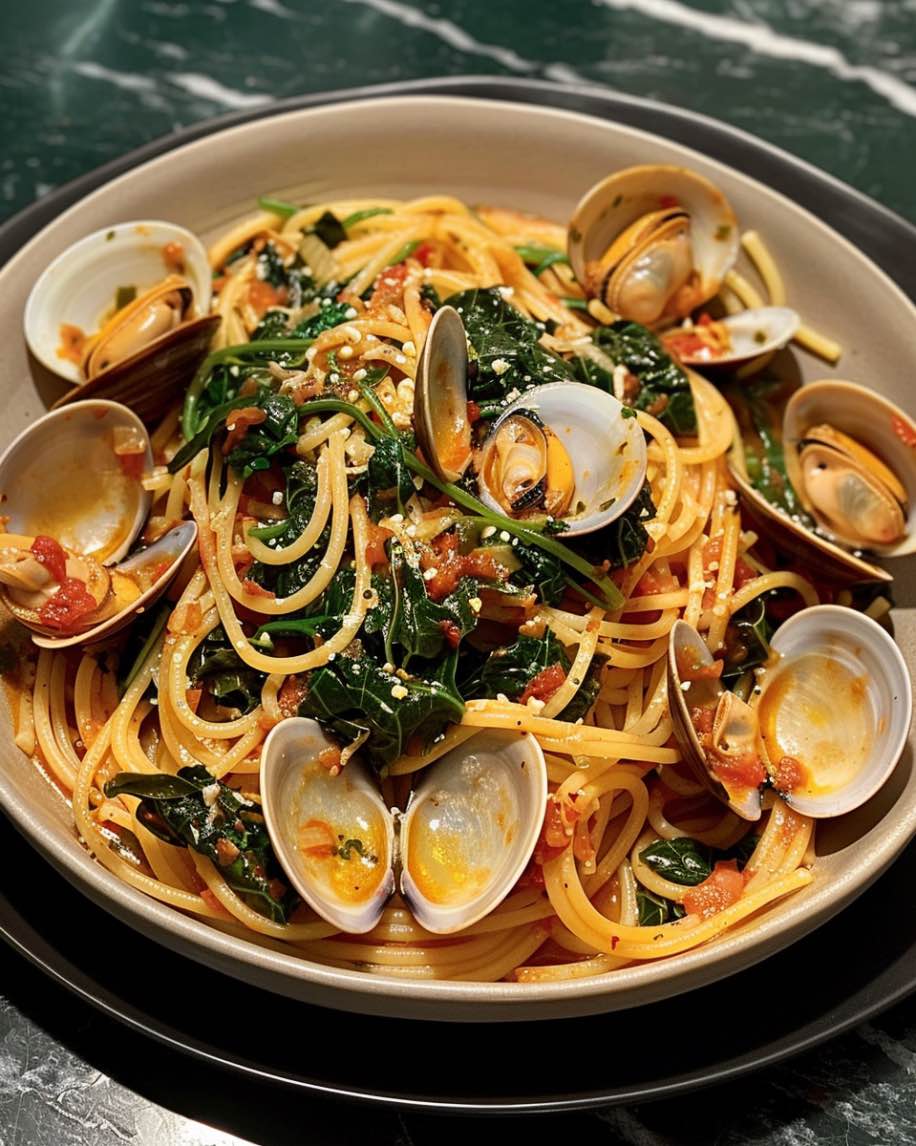
Spaghetti with Clams and Braised Greens: A Delicious Coastal-Inspired Pasta Dish
Spaghetti with clams and braised greens brings together the briny sweetness of fresh seafood with nutrient-rich vegetables in one stunning pasta dish. This restaurant-quality meal combines tender clams, perfectly cooked spaghetti, and wilted greens in a fragrant garlic-infused sauce. Whether you’re seeking an impressive weeknight dinner or an elegant meal for guests, this spaghetti with clams and braised greens delivers authentic Italian coastal flavors without complicated techniques.
What Makes This Dish Special
This coastal-inspired pasta stands out for several compelling reasons. First, it combines protein, vegetables, and carbohydrates in one balanced dish. Additionally, the cooking process is surprisingly straightforward despite the elegant presentation.
The beauty of spaghetti with clams and braised greens lies in its simplicity. Fresh clams release their natural juices during cooking, creating a flavorful broth that coats each strand of pasta. Meanwhile, the braised greens add earthy depth and nutritional value.
This dish also offers remarkable versatility. You can adjust the greens, spice level, and garnishes to match your preferences. Furthermore, it comes together in under 30 minutes, making it perfect for busy weeknights.
The Italian Coastal Tradition
Italian coastal cuisine has long celebrated the combination of seafood and pasta. Regions like Campania and Sicily have perfected these dishes over centuries. This preparation honors that tradition while adding nutritious greens for modern appeal.
The technique of steaming clams in their shells dates back generations. This method preserves the delicate flavor while creating a naturally savory sauce. Moreover, it ensures the clams remain tender and succulent.
Understanding the Key Ingredients
Success with spaghetti with clams and braised greens starts with quality ingredients. Each component plays a vital role in the final dish.
Fresh Clams
Littleneck or Manila clams work best for this recipe. These smaller varieties cook quickly and have sweet, tender meat. Fresh clams should smell like the ocean—clean and briny, never fishy or ammonia-like.
Look for tightly closed shells or shells that close when tapped. This indicates the clams are alive and fresh. Discard any clams with cracked shells or that remain open after tapping.
Pasta Selection
Traditional spaghetti is the classic choice, but linguine or bucatini also work wonderfully. The long strands capture the clam broth beautifully. Choose high-quality pasta made from durum wheat for the best texture and flavor.
Bronze-cut pasta has a rougher surface that helps sauce cling better. However, standard pasta works perfectly fine. The key is cooking it to proper al dente texture.
Hardy Greens
Swiss chard, kale, spinach, or escarole all make excellent choices. These greens stand up to braising while adding vitamins, minerals, and fiber. Additionally, they provide color contrast against the pale clams and pasta.
Remove tough stems from kale or chard before cooking. Spinach cooks down significantly, so use more if choosing this delicate green. Escarole offers pleasant bitterness that balances the sweet clams.
Aromatics and Seasonings
Garlic forms the aromatic foundation of this dish. Use fresh cloves, thinly sliced or minced. Red pepper flakes add gentle heat, while fresh parsley provides brightness and color.
Extra virgin olive oil is essential for authentic flavor. Choose a fruity, high-quality oil that enhances rather than overpowers. Fresh lemon juice adds brightness at the end.
Choosing the Right Clams
Selecting quality clams makes a significant difference in your final dish. Understanding clam varieties helps you make informed choices at the market.
Best Clam Varieties
Littleneck Clams: These are the smallest hard-shell clams, typically 1-2 inches across. They’re tender, sweet, and cook quickly. Littlenecks are widely available and affordable.
Manila Clams: Slightly smaller than littlenecks with striped shells. They have exceptionally sweet meat and thin shells. Manila clams cook very quickly.
Cherrystone Clams: Larger than littlenecks, these require longer cooking. They work well but may be slightly chewier. Use fewer cherrystone clams since they’re bigger.
Cockles: Small European clams with distinctive ridged shells. They’re very sweet and tender but less commonly available in American markets.
How to Buy Fresh Clams
Visit seafood markets or grocery stores with high turnover. Fresh clams should be stored on ice or in refrigerated cases. Ask when they arrived to ensure maximum freshness.
Check that shells are intact and clean. Clams stored in mesh bags often stay fresher than those in plastic. Buy from reputable sources that guarantee quality.
Plan to use clams within 1-2 days of purchase. Store them in the refrigerator in a breathable container covered with a damp towel. Never store clams in airtight containers or submerged in water.
Cleaning and Preparing Clams
Proper preparation ensures your spaghetti with clams and braised greens is free from grit. Rinse clams under cold running water, scrubbing shells with a brush to remove sand and debris.
Soak clams in cold salted water for 20-30 minutes before cooking. This encourages them to expel sand from their shells. Change the water if it becomes cloudy.
Discard any clams with broken shells or that don’t close when tapped. After cooking, discard any clams that didn’t open. These simple checks ensure food safety.
Selecting and Preparing Greens
The greens in this dish provide nutritional balance and textural contrast. Different varieties offer unique flavors and characteristics.
Swiss Chard
Swiss chard features colorful stems and large, tender leaves. It has a mild, slightly earthy flavor that pairs beautifully with seafood. Rainbow chard adds visual appeal with its vibrant red, yellow, and orange stems.
Remove the thick stems by cutting along either side of the center rib. Chop stems separately if you want to use them—they take longer to cook. Tear or roughly chop the leaves.
Kale
Kale offers robust flavor and impressive nutritional benefits. Lacinato (dinosaur) kale works particularly well because it’s more tender than curly varieties. It has a slightly sweet, earthy taste.
Strip leaves from tough stems by holding the stem and pulling downward. Stack leaves and slice into ribbons. Kale requires slightly longer cooking than more delicate greens.
Spinach
Fresh spinach provides mild flavor and tender texture. It wilts down considerably, so use generous amounts. Baby spinach requires no preparation beyond rinsing.
Mature spinach may have thick stems that should be removed. Spinach cooks very quickly, so add it near the end of cooking. It offers delicate sweetness that complements briny clams.
Escarole
Escarole is a variety of endive with broad, slightly bitter leaves. This bitterness provides sophisticated balance to sweet clams. It’s traditional in Italian cooking and adds authentic flavor.
Separate leaves and rinse thoroughly—escarole often harbors dirt between layers. Tear into bite-sized pieces. Escarole maintains structure better than spinach while being more tender than kale.
Washing and Drying Greens
All greens require thorough washing to remove dirt and grit. Fill a large bowl with cold water and submerge the greens. Swish vigorously to dislodge debris.
Lift greens from the water rather than pouring out—this leaves dirt at the bottom. Repeat if the water is particularly dirty. For this recipe, greens don’t need to be completely dry since they’ll be braised.
Essential Equipment and Tools
Having the right equipment makes preparing spaghetti with clams and braised greens much easier. Most home kitchens already have these basics.
Large Pot for Pasta
A 6-8 quart pot allows pasta to move freely while cooking. This prevents sticking and ensures even cooking. Fill it about three-quarters full with water.
Use plenty of water—at least 4-6 quarts for one pound of pasta. More water maintains temperature when pasta is added. It also dilutes starch, preventing gumminess.
Wide, Deep Skillet or Sauté Pan
A 12-14 inch skillet with high sides works best. The wide surface allows clams to open evenly without crowding. Deep sides prevent splashing when clams release their liquid.
A pan with a lid is essential for steaming clams. Heavy-bottomed pans distribute heat evenly and prevent hot spots. Stainless steel or enameled cast iron work beautifully.
Additional Helpful Tools
Keep these items handy:
-
Colander for draining pasta
-
Tongs for tossing pasta with sauce
-
Sharp knife for chopping garlic and greens
-
Cutting board
-
Large spoon or ladle
-
Grater for fresh Parmesan (optional)
-
Kitchen timer
Step-by-Step Cooking Instructions
Follow these detailed instructions to create perfect spaghetti with clams and braised greens. Each step builds on the previous one for optimal results.
Ingredients List
For the Pasta and Clams:
-
1 pound spaghetti or linguine
-
3 pounds fresh clams, cleaned
-
1/3 cup extra virgin olive oil
-
8-10 garlic cloves, thinly sliced
-
1/2 teaspoon red pepper flakes
-
1 cup clam juice or seafood stock
-
1/2 cup fresh parsley, chopped
-
Zest and juice of 1 lemon
-
Salt and black pepper to taste
For the Braised Greens:
-
1 large bunch hardy greens (about 1 pound)
-
2 tablespoons olive oil
-
3 garlic cloves, minced
-
1/4 teaspoon red pepper flakes
-
Salt to taste
Preparation Phase
Begin by organizing all ingredients. Clean and prepare the clams as described earlier. Wash and chop your chosen greens, removing tough stems.
Bring a large pot of salted water to boil for the pasta. Use about 1 tablespoon of salt per 4 quarts of water. The water should taste like the sea. Meanwhile, prepare aromatics by slicing garlic thinly.
Measure out all other ingredients and have them ready. This mise en place approach ensures smooth cooking. Set out serving bowls and have them warming in a low oven if desired.
Cooking the Greens
Heat 2 tablespoons of olive oil in your large skillet over medium heat. Add minced garlic and red pepper flakes. Sauté for 30-60 seconds until fragrant but not browned.
Add the prepared greens in batches if necessary. They’ll wilt down significantly. Season with salt and toss to coat with the garlic oil. Cook for 3-5 minutes until tender.
For kale or chard, you may need to add a splash of water and cover briefly to help them steam. Spinach requires minimal cooking time. Once tender, transfer greens to a bowl and set aside.
Cooking the Pasta
Add spaghetti to the boiling water. Cook according to package directions minus 2 minutes. You want it slightly underdone since it will finish cooking in the clam sauce.
Stir occasionally to prevent sticking. Set a timer so you don’t overcook. Before draining, reserve 1-2 cups of starchy pasta water. This liquid helps create a silky sauce.
Preparing the Clam Sauce
While pasta cooks, wipe out the skillet used for greens. Heat 1/3 cup olive oil over medium heat. Add sliced garlic and red pepper flakes. Cook gently for 1-2 minutes until garlic is fragrant and golden.
Increase heat to medium-high. Add the cleaned clams and clam juice or stock. Cover the pan immediately. The steam will open the clams within 5-8 minutes.
Check after 5 minutes and transfer opened clams to a bowl using tongs. Continue cooking remaining clams, checking every minute. Discard any that don’t open after 10 minutes total.
Combining Everything
Add the slightly undercooked pasta directly to the skillet with the clam liquid. Toss vigorously, adding reserved pasta water a little at a time. The starch helps emulsify the sauce.
Return the opened clams to the pan along with the braised greens. Toss everything together gently. Cook for 1-2 minutes until pasta reaches perfect al dente texture.
Remove from heat and add fresh parsley, lemon zest, and lemon juice. Toss once more. Taste and adjust seasoning with salt and pepper.
Plating and Serving
Divide spaghetti with clams and braised greens among warm serving bowls. Make sure each portion gets plenty of clams and greens. Drizzle with additional olive oil if desired.
Garnish with extra parsley and a lemon wedge. Serve immediately while hot. Provide extra bowls for empty clam shells.
Pro Tips for Perfect Results
These expert techniques elevate your spaghetti with clams and braised greens from good to exceptional. Small details make significant differences.
Don’t Overcook the Clams
Overcooked clams become rubbery and tough. Watch them carefully and remove each one as soon as it opens. The first few minutes are crucial.
Leave clams in their shells for presentation. However, you can remove some from shells if preferred. This makes eating easier but looks less impressive.
Create a Silky Sauce
The key to restaurant-quality pasta sauce is proper emulsification. The starchy pasta water binds with olive oil to create a cohesive coating. Add it gradually while tossing vigorously.
Don’t rinse pasta after draining. The surface starch is essential for sauce adhesion. Toss pasta in the sauce while still hot for best results.
Build Layers of Flavor
Toast garlic gently to release its sweetness without bitterness. Red pepper flakes bloom in hot oil, distributing heat throughout the dish. Fresh lemon at the end adds brightness without cooking away.
Season in stages. Salt the pasta water, season the greens, and adjust at the end. This builds complex, balanced flavor.
Timing Is Everything
Coordinate your cooking so everything finishes simultaneously. Start pasta water first since it takes longest to boil. Cook greens while pasta boils. Steam clams during the last few minutes of pasta cooking.
This synchronization ensures you can combine everything while hot. Cold components won’t blend as well.
Adjust Consistency
Your final sauce should lightly coat the pasta without being soupy or dry. Add more pasta water if too thick. Increase heat briefly if too thin to evaporate excess liquid.
The sauce will thicken slightly as it cools. Err on the side of slightly loose rather than too thick.
Flavor Variations and Customizations
Spaghetti with clams and braised greens adapts easily to different tastes and available ingredients. These variations maintain the dish’s essential character while offering creative twists.
Spicy Version
Double the red pepper flakes for noticeable heat. Add fresh Thai chili or serrano pepper along with the garlic. Finish with a drizzle of chili oil for extra kick.
The heat contrasts beautifully with sweet clams. However, be careful not to overpower delicate seafood flavors. Build heat gradually to find your perfect level.
Tomato-Based Variation
Add 1 cup of halved cherry tomatoes when cooking the clams. Their juices create a light tomato broth. Fresh tomatoes work better than canned for this preparation.
The tomatoes add sweetness and acidity. They also create a more colorful, visually appealing dish. This variation leans toward Southern Italian style.
Herb-Forward Approach
Incorporate fresh herbs beyond parsley. Basil, oregano, or thyme add aromatic complexity. Add hardy herbs like thyme early; add delicate herbs like basil at the end.
Fresh herbs brighten the dish considerably. They also add sophisticated flavor layers. Use herbs generously for maximum impact.
Asian-Inspired Twist
Add fresh ginger along with garlic for aromatic depth. Use bok choy or Chinese broccoli as your greens. Finish with a splash of lime juice and cilantro instead of lemon and parsley.
Substitute a tablespoon of fish sauce for some of the salt. This adds umami depth. The Asian flavors complement clams beautifully.
Extra Vegetables
Include additional vegetables like fennel, leeks, or zucchini. Sauté them before adding clams. They add bulk and nutritional variety.
Fennel pairs especially well with seafood. Its anise flavor creates sophisticated complexity. Slice it thinly for quick cooking.
Nutritional Benefits
Spaghetti with clams and braised greens offers impressive nutritional value. This dish provides a balanced combination of macronutrients and essential micronutrients.
Protein from Clams
Clams are excellent protein sources with about 25 grams per 3-ounce serving. They provide all essential amino acids needed for muscle maintenance and repair. Additionally, clams are very low in fat.
This lean protein supports healthy weight management. It’s also more environmentally sustainable than many meat options. Clams require minimal resources to harvest or farm.
Vitamins and Minerals
Clams rank among the most nutrient-dense foods available. They’re exceptionally high in vitamin B12, iron, and zinc. A single serving provides several times the daily requirement for B12.
The greens add vitamins A, C, and K along with folate. They also provide calcium and potassium. Together, clams and greens create a nutritional powerhouse.
Heart-Healthy Fats
The olive oil in this dish provides monounsaturated fats. These healthy fats support cardiovascular health and reduce inflammation. They also help absorb fat-soluble vitamins from the greens.
Clams contain omega-3 fatty acids, which benefit heart and brain health. These anti-inflammatory fats are associated with numerous health benefits.
Dietary Fiber
The greens and whole grain pasta (if used) provide dietary fiber. Fiber supports digestive health and helps maintain steady blood sugar levels. It also promotes feelings of fullness.
Most adults need 25-35 grams of fiber daily. This dish contributes significantly toward that goal. The combination of pasta and vegetables offers both soluble and insoluble fiber.
Low in Calories
Despite being satisfying, spaghetti with clams and braised greens is relatively low in calories. A typical serving contains 400-500 calories. This makes it suitable for various dietary approaches.
The high protein and fiber content promote satiety. You feel full and satisfied without excessive calories. This balance supports healthy eating patterns.
Serving Suggestions
Presenting spaghetti with clams and braised greens properly enhances the dining experience. These accompaniments and serving ideas create a complete, restaurant-worthy meal.
Bread Options
Crusty bread is essential for soaking up the delicious sauce. Choose a rustic Italian loaf, ciabatta, or sourdough. Toast or grill slices and rub with garlic for extra flavor.
Focaccia offers a softer, more indulgent option. Its olive oil richness complements the dish beautifully. Serve bread warm in a basket lined with a napkin.
Simple Salads
A light salad provides refreshing contrast. Mixed greens with lemon vinaigrette keep things simple. Alternatively, try arugula with shaved Parmesan and balsamic reduction.
The salad can be served before or alongside the pasta. Keep it simple to avoid competing with the main dish. Bitter greens like radicchio complement sweet clams nicely.
Vegetable Sides
Roasted vegetables make excellent accompaniments. Try asparagus, broccoli, or Brussels sprouts. Roast them with olive oil, salt, and pepper until caramelized.
Grilled zucchini or eggplant also work wonderfully. These vegetables add color and nutritional variety. Prepare them while the pasta water heats.
Beverage Pairings
Sparkling water with lemon cleanses the palate beautifully. The effervescence cuts through the richness. Add fresh herbs like mint or basil for extra sophistication.
Unsweetened iced tea offers another refreshing option. Green tea complements seafood particularly well. Herbal teas like chamomile or mint also work nicely.
Presentation Tips
Use wide, shallow bowls for optimal presentation. This showcases the clams and allows easy twirling of pasta. Warm the bowls beforehand for a restaurant touch.
Arrange a few clams on top for visual appeal. Sprinkle with fresh parsley and add a lemon wedge. A drizzle of quality olive oil adds shine and richness.
For family-style service, present the dish in a large, attractive serving bowl. Let diners help themselves. Provide small bowls for discarded shells.
Storage and Reheating Guidelines
While spaghetti with clams and braised greens tastes best fresh, you can store and reheat leftovers successfully. Follow these guidelines for food safety and quality.
Proper Storage
Transfer leftovers to airtight containers within 2 hours of cooking. Refrigerate promptly at 40°F or below. Consume within 1-2 days for best quality and safety.
Remove clams from shells before storing if desired. This saves space and makes reheating easier. Store the pasta, sauce, and clams together.
Don’t freeze this dish—clams become rubbery and pasta becomes mushy when frozen. The delicate textures don’t survive freezing well. Make only what you’ll eat fresh.
Reheating Methods
The stovetop method produces the best results. Place leftovers in a skillet with a splash of water or stock. Heat gently over medium-low, stirring occasionally.
Add liquid as needed to prevent drying. The pasta will have absorbed sauce overnight. Additional moisture helps reconstitute the dish. Heat just until warmed through.
Microwave reheating works in a pinch. Use a microwave-safe container and add a tablespoon of water. Cover and heat on medium power in 1-minute intervals. Stir between intervals.
Avoid overheating, which toughens clams and dries out pasta. Heat just until warm, not steaming hot.
Repurposing Leftovers
Transform leftovers into new dishes. Use them as filling for frittatas or omelets. The flavors work beautifully with eggs. Add some cheese for extra richness.
Toss cold leftovers with extra lemon juice and olive oil for a pasta salad. This works surprisingly well for lunch. Add fresh herbs and vegetables for brightness.
Common Mistakes to Avoid
Understanding potential pitfalls helps you create perfect spaghetti with clams and braised greens every time. Learn from these common errors.
Using Old or Bad Clams
The biggest mistake is using substandard clams. Old clams smell unpleasant and taste bad. They can also cause food poisoning. Always buy from reputable sources.
Check clams carefully before cooking. Discard any with cracked shells or that smell off. Don’t take chances with seafood quality. Fresh clams make or break this dish.
Overcooking Pasta
Mushy pasta ruins the dish. Cook pasta to proper al dente texture—firm but not hard. Remember it continues cooking when combined with hot sauce.
Undercook slightly if you plan to finish cooking in the sauce. This technique ensures perfect texture. Set timers and taste pasta a minute before the package suggests.
Not Using Enough Garlic
Garlic provides essential flavor foundation. Don’t be shy with it. The recipe calls for plenty because it mellows during cooking. Adjust to taste, but don’t skimp.
However, avoid burning garlic, which creates bitterness. Watch it carefully when sautéing. Remove the pan from heat if it browns too quickly.
Skipping Pasta Water
Pasta water is magical for creating silky sauces. The starch helps emulsify oil and creates cohesion. Always reserve at least a cup before draining.
Add pasta water gradually while tossing. Too much makes the sauce watery. Too little leaves it greasy and separated. Find the right balance through practice.
Overcrowding the Pan
Crowded clams steam unevenly. Some open while others remain closed. Use a large pan that accommodates clams in a single layer. Cook in batches if necessary.
Similarly, don’t add too many greens at once. They need space to wilt properly. Add them gradually if using a smaller pan.
Forgetting to Season
Pasta water should be well-salted. Many people undersalt, resulting in bland pasta. The water should taste noticeably salty. This seasons pasta from within.
Season greens while cooking. Taste the final dish before serving and adjust. Clams are naturally salty, so be careful not to oversalt.
Frequently Asked Questions
Can I use canned clams instead of fresh?
Fresh clams provide superior flavor and texture. However, canned clams work in a pinch. Use about 2-3 cans of chopped clams, drained. Add them at the end just to warm through. The dish won’t have the same visual appeal or delicate flavor, but it’s still delicious. If using canned, add extra clam juice for more seafood flavor.
What if my clams don’t open?
Discard any clams that remain closed after 10 minutes of steaming. They were likely dead before cooking and could cause illness. However, occasionally a healthy clam stays closed. To check, try prying it open slightly. If the muscle is firm and attached, it’s likely safe. When in doubt, throw it out.
Can I make spaghetti with clams and braised greens ahead?
This dish is best prepared fresh. The clams and pasta both lose quality when stored. However, you can prep components ahead. Clean clams, prepare greens, slice garlic, and measure ingredients in the morning. Then cook everything just before serving. The actual cooking takes less than 30 minutes.
How do I know when clams are cooked?
Clams are done when their shells open completely. This typically takes 5-8 minutes of steaming. The meat should look opaque and firm, not translucent. Remove clams as they open to prevent overcooking. Some varieties open faster than others, so check frequently.
Can I use different pasta shapes?
Long pasta works best for this preparation. Linguine, bucatini, or angel hair are excellent alternatives to spaghetti. The long strands capture sauce and clam pieces beautifully. Short pasta like penne can work but won’t provide the same eating experience. Stick with long pasta for authentic results.
Is this dish gluten-free?
Regular spaghetti contains gluten. However, you can easily make this gluten-free by using gluten-free pasta. Rice noodles or chickpea pasta work well. Follow the package directions for cooking times, as they vary. The rest of the dish is naturally gluten-free.
Conclusion
Spaghetti with clams and braised greens delivers impressive flavors without complicated techniques. This coastal-inspired dish combines sweet, briny clams with nutritious greens and perfectly cooked pasta in a light, garlicky sauce. The result is a restaurant-quality meal that comes together in under 30 minutes.
The beauty of this recipe lies in its simplicity and versatility. Fresh ingredients shine through without heavy sauces or excessive seasonings. Moreover, you can customize it with different greens, spice levels, and aromatics to suit your preferences.
Whether you’re cooking for a special occasion or seeking an elevated weeknight dinner, spaghetti with clams and braised greens never disappoints. The combination of textures, flavors, and nutrients creates a truly satisfying meal. Follow these guidelines, avoid common mistakes, and you’ll create a dish that rivals your favorite Italian restaurant.
Spaghetti with Clams and Braised Greens
Description
Spaghetti with Clams and Braised Greens
Ingredients
For the Dish:
-
1/2 cup extra-virgin olive oil, divided
-
8 garlic cloves, crushed
-
4 dozen littleneck clams
-
2 jarred roasted red peppers, drained
-
1 teaspoon crushed red pepper
-
1 pound Swiss chard or collard greens, stemmed and chopped (8 cups)
-
Kosher salt and pepper to taste
-
1/2 pound spaghetti
-
2 tablespoons unsalted butter, cubed and chilled
-
1 teaspoon grated lemon zest
-
1 tablespoon fresh lemon juice
-
1/2 cup grated Parmigiano-Reggiano cheese, plus more for garnish
Instructions
Steam the Clams:
-
In a large pot, heat 1/4 cup of the olive oil over moderate heat
-
Add half of the crushed garlic and cook, stirring, for 1 minute
-
Add the clams , bring to a boil
-
Cover and cook over moderately high heat, stirring occasionally, for 5-7 minutes
-
As clams open, transfer them to a baking sheet and discard any that don’t open
-
Strain the cooking liquid through a sieve into a blender
Make the Roasted Pepper Sauce:
-
Add the roasted red peppers to the blender with the strained clam broth
-
Puree until completely smooth to create a briny, rich sauce
Braise the Greens:
-
Wash out the pot and heat the remaining 1/4 cup olive oil
-
Add the remaining garlic and cook over moderate heat, stirring, for 1 minute
-
Stir in the crushed red pepper
-
Add Swiss chard in batches until just wilted, about 3 minutes
-
Stir in the roasted pepper broth and season with salt and pepper
Final Assembly:
-
Cook spaghetti in a large pot of salted boiling water until al dente, then drain
-
Add the pasta to the Swiss chard mixture along with butter, lemon zest, lemon juice, and 1/2 cup grated cheese
-
Add the steamed clams and toss to heat through
-
Transfer to shallow bowls, garnish with additional grated cheese, and serve immediately
This elegant dish from Chef Ashley Christensen combines the briny sweetness of clams with nutrient-rich greens in a unique roasted red pepper sauce. The technique of pureeing the clam cooking liquid with roasted peppers creates an unexpectedly delicious sauce that clings beautifully to the pasta. This one-pot wonder delivers restaurant-quality flavor with the perfect balance of seafood, vegetables, and pasta.