
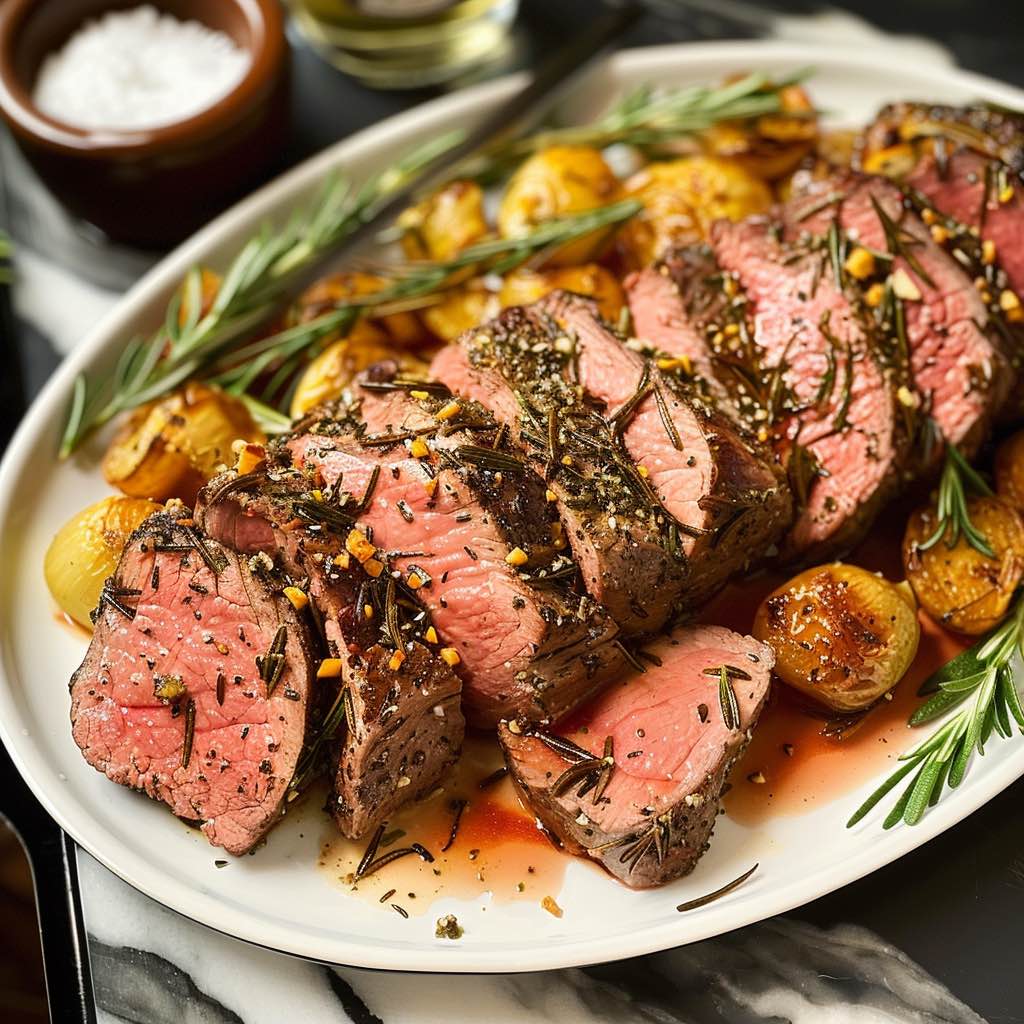
Garlic Rosemary Beef Tenderloin: A Complete Guide to Perfect Results
Introduction
Garlic Rosemary Beef Tenderloin represents the pinnacle of home cooking elegance. This premium cut delivers restaurant-quality results right in your kitchen. The combination of aromatic garlic and fragrant rosemary transforms beef tenderloin into a masterpiece. Moreover, this recipe works perfectly for special occasions and holiday gatherings.
Beef tenderloin offers unmatched tenderness among all beef cuts. Additionally, it provides a neutral canvas for bold flavors. The garlic and rosemary pairing creates an irresistible aroma that fills your home. Furthermore, this preparation method ensures consistent results every single time.
This comprehensive guide covers everything you need to know. Consequently, you’ll master the techniques professional chefs use daily. From selecting the perfect cut to achieving ideal doneness, we’ve got you covered. Best of all, this recipe requires no complicated ingredients or techniques.
Understanding Beef Tenderloin
What Makes Tenderloin Special
Beef tenderloin comes from the loin section of cattle. Specifically, it runs along the spine beneath the ribs. This muscle does minimal work during the animal’s lifetime. Therefore, it develops exceptional tenderness compared to other cuts.
The tenderloin contains very little connective tissue. As a result, it doesn’t require long cooking times to become tender. Moreover, its mild flavor profile makes it incredibly versatile. Consequently, it pairs beautifully with various seasonings and preparations.
Nutritional Benefits
Beef tenderloin provides excellent nutritional value for your diet. First, it delivers high-quality protein essential for muscle maintenance. Additionally, it contains important B vitamins that support energy production. Furthermore, beef tenderloin supplies iron, zinc, and selenium.
A 3-ounce serving typically contains approximately 180 calories. Similarly, it provides about 24 grams of protein per serving. However, it contains less fat than many other beef cuts. Therefore, it fits well into balanced eating patterns.
Cost Considerations
Beef tenderloin ranks among the most expensive beef cuts available. Nevertheless, its quality and tenderness justify the investment. Additionally, there’s virtually no waste with this cut. Furthermore, a little goes a long way due to its richness.
Plan to budget approximately $20-30 per pound for quality beef tenderloin. However, prices vary based on your location and quality grade. Moreover, buying whole tenderloins often costs less per pound. Consequently, consider purchasing larger quantities for special occasions.
Selecting the Perfect Cut
Whole Tenderloin vs. Center Cut
Whole beef tenderloins typically weigh between 4-6 pounds untrimmed. In contrast, center-cut portions weigh around 2-3 pounds. The center cut offers the most consistent thickness throughout. Therefore, it cooks more evenly than whole tenderloins.
Whole tenderloins include the thick butt end and narrow tail. Additionally, they require more trimming before cooking. However, they provide better value per pound. Furthermore, you can cut steaks from the remaining portions.
Quality Grades to Look For
USDA Prime represents the highest quality grade available. Specifically, it contains the most marbling and tenderness. However, it costs significantly more than other grades. Alternatively, USDA Choice offers excellent quality at lower prices.
Look for beef tenderloin with bright red color throughout. Additionally, the meat should feel firm to the touch. Moreover, avoid cuts with excessive moisture or discoloration. Furthermore, check that any remaining fat appears white or cream-colored.
Where to Buy
High-quality butcher shops provide the best beef tenderloin options. Additionally, they can trim and tie the roast for you. Moreover, butchers offer valuable preparation advice and cooking tips. Furthermore, wholesale clubs often stock good-quality tenderloins at competitive prices.
Many supermarkets carry beef tenderloin in their meat departments. However, quality can vary significantly between stores. Therefore, build relationships with reliable meat department managers. Consequently, they can special-order specific cuts for your needs.
Essential Ingredients and Tools
Primary Ingredients
For the Beef:
-
3-4 pound center-cut beef tenderloin
-
6-8 garlic cloves, minced
-
3 tablespoons fresh rosemary, finely chopped
-
2 tablespoons olive oil
-
2 tablespoons kosher salt
-
1 tablespoon black pepper, freshly ground
Optional Enhancements:
-
2 tablespoons Dijon mustard
-
1 teaspoon dried thyme
-
1 teaspoon onion powder
-
Fresh rosemary sprigs for garnish
Required Kitchen Equipment
First, you’ll need a reliable meat thermometer for accurate temperature readings. Additionally, heavy-duty kitchen twine ensures even cooking throughout. Moreover, a large roasting pan with rack promotes proper air circulation. Furthermore, sharp carving knives make slicing much easier.
A cast-iron skillet works perfectly for searing the tenderloin. Similarly, a rimmed baking sheet can substitute for roasting pans. However, ensure whatever you use fits your oven comfortably. Therefore, measure your cookware before beginning preparation.
Ingredient Substitutions
Fresh rosemary provides the best flavor for this recipe. However, dried rosemary works in a pinch at half the amount. Similarly, garlic powder can replace fresh garlic if necessary. Nevertheless, fresh ingredients deliver superior results.
Different oils work well for this preparation method. For instance, avocado oil withstands high heat excellently. Additionally, grapeseed oil offers a neutral flavor profile. Moreover, melted butter adds richness to the exterior crust.
Preparation and Seasoning
Trimming the Tenderloin
Start by removing the beef tenderloin from refrigeration 45 minutes early. Consequently, it reaches room temperature for even cooking. Meanwhile, examine the meat for excess fat and silver skin. Additionally, identify any irregularly shaped areas needing attention.
Use a sharp boning knife to remove the silver skin carefully. Specifically, slide the knife under the membrane at a shallow angle. Then, work gradually to avoid removing too much meat. Furthermore, trim away any large chunks of exterior fat.
Tying for Even Cooking
Fold the narrow tail end underneath the main roast. Subsequently, secure it with kitchen twine every 2 inches. This technique ensures consistent thickness throughout the tenderloin. Moreover, it promotes even cooking from end to end.
Tie the twine snugly but not too tightly around the meat. Additionally, make sure the spacing remains consistent between ties. Furthermore, trim excess twine to prevent burning during cooking. Therefore, your tenderloin will maintain its shape beautifully.
Creating the Garlic Rosemary Coating
Combine minced garlic with chopped rosemary in a small bowl. Next, add olive oil to create a paste-like consistency. Additionally, mix in salt and pepper thoroughly. Moreover, this mixture becomes the flavor foundation for your beef tenderloin.
Pat the beef tenderloin completely dry with paper towels first. Then, rub the garlic rosemary mixture over the entire surface. Additionally, press the mixture firmly to ensure it adheres properly. Furthermore, let the seasoned meat rest for 15-20 minutes before cooking.
Advanced Seasoning Techniques
Consider adding Dijon mustard as a base layer initially. Specifically, spread a thin coating over the entire tenderloin. This helps the garlic rosemary mixture stick better to the meat. Moreover, it adds subtle tangy depth to the final flavor.
Some cooks prefer creating herb crusts using breadcrumbs or crushed nuts. However, simpler preparations often highlight the beef’s natural flavor better. Therefore, stick with the classic garlic rosemary combination for best results. Consequently, you’ll achieve perfectly balanced flavors throughout.
Cooking Methods Explained
Reverse Sear Method
The reverse sear technique produces exceptional results consistently. First, cook the tenderloin at low temperature in the oven. Then, sear it quickly at high heat for a perfect crust. This method ensures even doneness throughout the interior.
Preheat your oven to 250°F for the initial cooking phase. Additionally, place the seasoned tenderloin on a rack in a roasting pan. Moreover, insert a meat thermometer into the thickest part. Furthermore, cook until it reaches 10-15 degrees below your target temperature.
Remove the tenderloin from the oven when it reaches temperature. Meanwhile, heat a cast-iron skillet over high heat until smoking. Then, sear each side for 1-2 minutes to develop crust. Finally, let the meat rest before carving and serving.
Traditional High-Heat Roasting
Traditional roasting starts with a very hot oven initially. Specifically, preheat to 450°F before placing the meat inside. Additionally, this method creates a quick exterior crust. However, you must reduce the temperature partway through cooking.
After searing at high heat for 15 minutes, reduce the oven to 325°F. Subsequently, continue roasting until the internal temperature reaches your target. Moreover, this technique works well for smaller tenderloin portions. Therefore, it’s ideal for weeknight dinners with less time.
Stovetop to Oven Method
Many professional chefs prefer starting on the stovetop first. Initially, sear all sides in a hot skillet with oil. Then, transfer the entire pan directly to a preheated oven. This combination method delivers excellent results reliably.
Heat your oven-safe skillet over high heat until very hot. Next, add oil and carefully place the tenderloin inside. Additionally, sear each side for 2-3 minutes until well-browned. Furthermore, transfer immediately to a 375°F oven to finish cooking.
Temperature and Timing Guidelines
Internal Temperature Chart
Understanding proper internal temperatures ensures perfect doneness every time. Additionally, these guidelines follow USDA recommendations for safety and quality:
Rare: 120-125°F (not recommended for food safety)
Medium-Rare: 130-135°F (most popular choice)
Medium: 135-145°F (balanced texture and flavor)
Medium-Well: 145-155°F (firmer texture)
Well-Done: 155°F+ (fully cooked throughout)
Most people prefer garlic rosemary beef tenderloin cooked to medium-rare. Consequently, aim for an internal temperature of 130-135°F. Moreover, remember the temperature rises during resting. Therefore, remove the meat slightly before reaching your target temperature.
Cooking Time Estimates
Cooking times vary based on size, starting temperature, and method. However, these estimates provide helpful starting points for planning:
2-3 pound tenderloin: 25-35 minutes total
3-4 pound tenderloin: 35-45 minutes total
4-5 pound tenderloin: 45-60 minutes total
5-6 pound tenderloin: 60-75 minutes total
Always rely on internal temperature rather than time alone. Additionally, factors like oven accuracy affect cooking duration significantly. Moreover, starting temperature impacts total cooking time substantially. Therefore, use a reliable meat thermometer for best results.
Using a Meat Thermometer
Insert the thermometer into the thickest part of the tenderloin. Specifically, avoid touching any bones or the roasting pan. Additionally, check temperature in multiple spots for accuracy. Furthermore, digital instant-read thermometers provide the most reliable readings.
Begin checking temperature about halfway through estimated cooking time. Then, check every 5-10 minutes as you approach the target. Moreover, this prevents overcooking your expensive beef tenderloin. Consequently, you’ll achieve perfect results consistently.
Resting and Carving Techniques
Why Resting Matters
Resting allows juices to redistribute throughout the meat evenly. Initially, cooking drives moisture toward the center. However, resting gives the juices time to spread back out. Therefore, your beef tenderloin stays moist when sliced.
Plan to rest your garlic rosemary beef tenderloin for 10-15 minutes. Additionally, tent it loosely with aluminum foil during this time. Moreover, the internal temperature continues rising by 5-10 degrees. Furthermore, this carryover cooking ensures perfect final doneness.
Proper Carving Methods
Remove the kitchen twine before beginning to carve. Then, position the tenderloin with the narrow end facing away. Additionally, use a sharp carving knife for clean cuts. Moreover, slice against the grain in smooth motions.
Cut slices approximately 1/2 to 3/4 inch thick for individual servings. Furthermore, aim for consistent thickness throughout for even presentation. Additionally, arrange slices on a warmed serving platter immediately. Therefore, your garlic rosemary beef tenderloin stays at optimal temperature.
Maximizing Presentation
Consider slicing only what you’ll serve immediately for best results. Additionally, keep remaining portions whole to retain moisture better. Moreover, garnish the platter with fresh rosemary sprigs for visual appeal. Furthermore, drizzle any accumulated resting juices over the sliced meat.
Serving Suggestions
Plating Techniques
Create restaurant-quality presentations at home with simple techniques. First, warm your serving plates in a low oven beforehand. Additionally, arrange 2-3 slices of beef tenderloin slightly overlapping. Moreover, position them off-center for modern plating aesthetics.
Spoon sauce or pan juices beside the meat rather than over it. Consequently, the beautiful crust remains visible and crispy. Furthermore, add a small bundle of roasted vegetables alongside. Therefore, each plate looks professionally composed and inviting.
Sauce Options
While garlic rosemary beef tenderloin shines on its own, sauces elevate it further. Additionally, classic options complement the herb flavors beautifully:
-
Horseradish cream sauce
-
Peppercorn pan sauce
-
Mushroom demi-glace
-
Herb butter compound
-
Balsamic reduction
Prepare sauces ahead of time to reduce last-minute stress. Moreover, keep them warm in a small saucepan until serving. Furthermore, offer sauces on the side for guest preferences. Therefore, everyone can customize their experience.
Garnishing Ideas
Fresh herbs make excellent garnishes for beef tenderloin presentations. Specifically, whole rosemary sprigs complement the recipe’s flavors perfectly. Additionally, they add height and visual interest to platters. Moreover, microgreens provide delicate texture and color contrast.
Consider adding roasted garlic cloves as decorative elements. Furthermore, they reinforce the dish’s primary flavors visually. Additionally, edible flowers create stunning presentations for special occasions. Therefore, your garlic rosemary beef tenderloin becomes a true centerpiece.
Side Dish Pairings
Vegetable Sides
Roasted vegetables pair wonderfully with garlic rosemary beef tenderloin. First, consider classic combinations like roasted Brussels sprouts with balsamic glaze. Additionally, honey-glazed carrots provide sweetness balancing the savory beef. Moreover, asparagus spears with lemon complement the herbs beautifully.
Green beans almondine offer elegant simplicity alongside beef tenderloin. Furthermore, roasted root vegetables add heartiness to the meal. Additionally, sautéed mushrooms enhance the earthy rosemary notes. Therefore, choose vegetables that harmonize with the main course.
Potato Preparations
Creamy mashed potatoes represent the ultimate comfort food pairing. Additionally, they provide a neutral base for the flavorful beef. Moreover, garlic mashed potatoes echo the main dish’s seasoning. Furthermore, they help absorb delicious pan juices.
Roasted fingerling potatoes offer a more sophisticated option. Similarly, scalloped potatoes provide rich, creamy indulgence. Additionally, twice-baked potatoes can be prepared ahead of time. Therefore, they simplify dinner party preparations significantly.
Starch Alternatives
Not everyone prefers potatoes with their beef tenderloin. Instead, consider creamy polenta for Italian-inspired presentations. Additionally, wild rice pilaf adds nutty flavor and interesting texture. Moreover, quinoa pilaf provides a lighter, healthier option.
Crusty bread serves an important purpose at the table. Specifically, it soaks up flavorful pan juices beautifully. Furthermore, warm dinner rolls feel comforting and traditional. Therefore, always include some form of bread for your meal.
Storage and Reheating
Proper Storage Methods
Cool leftover beef tenderloin completely before refrigerating. Additionally, wrap it tightly in plastic wrap or aluminum foil. Moreover, place wrapped meat in airtight containers for extra protection. Furthermore, properly stored tenderloin lasts 3-4 days in the refrigerator.
For longer storage, freeze cooked beef tenderloin successfully. First, wrap individual portions in plastic wrap tightly. Then, add a layer of aluminum foil over the plastic. Additionally, place wrapped portions in freezer bags removing excess air. Therefore, frozen beef tenderloin maintains quality for 2-3 months.
Reheating Without Drying Out
Reheat beef tenderloin gently to prevent toughness and dryness. Initially, bring the meat to room temperature before reheating. Additionally, preheat your oven to 250°F for gentle warming. Moreover, place slices in a baking dish with a bit of beef broth.
Cover the dish tightly with aluminum foil during reheating. Furthermore, warm only until heated through, approximately 10-15 minutes. Additionally, avoid overheating which causes the meat to toughen. Therefore, check temperature frequently during the reheating process.
Creative Leftover Ideas
Transform leftover garlic rosemary beef tenderloin into new meals easily. First, slice it thinly for luxurious roast beef sandwiches. Additionally, cube it for hearty beef and vegetable soup. Moreover, dice it for quick beef fried rice.
Beef tenderloin makes exceptional salad topping as well. Furthermore, it elevates simple Caesar salads into special meals. Additionally, use it in breakfast hash with potatoes and eggs. Therefore, leftovers provide several delicious meal options.
Common Mistakes to Avoid
Overcooking the Meat
The most common mistake involves cooking beef tenderloin too long. Consequently, this expensive cut becomes dry and tough. Moreover, overcooked tenderloin loses its signature tenderness completely. Therefore, always use a meat thermometer for accuracy.
Remember that carryover cooking continues raising internal temperature. Additionally, remove the meat 5 degrees before your target temperature. Furthermore, resist the urge to cut into it immediately. Therefore, patience ensures perfect results every single time.
Inadequate Seasoning
Beef tenderloin needs generous seasoning due to its mild flavor. Additionally, salt penetrates slowly into thick cuts of meat. Moreover, underseasoning results in bland, disappointing results. Therefore, don’t be shy with salt and pepper.
Season the meat at least 30 minutes before cooking. Furthermore, this allows time for flavors to penetrate deeper. Additionally, consider dry-brining overnight for best results. Consequently, every bite delivers maximum flavor impact.
Skipping the Resting Period
Cutting into beef tenderloin immediately causes juice loss. Additionally, all those flavorful liquids run onto the cutting board. Moreover, the meat appears dry despite perfect cooking. Therefore, always rest the meat properly before carving.
Plan your timing to account for the resting period. Furthermore, use this time to finish side dishes and sauces. Additionally, warm your serving plates during the rest. Consequently, everything comes together perfectly for serving.
Using the Wrong Pan
Cheap, thin roasting pans cause uneven cooking results. Additionally, they may warp under high heat conditions. Moreover, inadequate pans don’t support proper air circulation. Therefore, invest in quality heavy-duty roasting pans.
The pan should accommodate the tenderloin with room around it. Furthermore, a rack elevates the meat for even heat distribution. Additionally, the pan must fit comfortably in your oven. Consequently, proper equipment ensures consistent success.
Frequently Asked Questions
What temperature should I cook garlic rosemary beef tenderloin to?
For optimal results, cook garlic rosemary beef tenderloin to 130-135°F for medium-rare doneness. This temperature range delivers the perfect balance of tenderness and flavor. Additionally, remember the internal temperature rises 5-10 degrees during resting. Therefore, remove the meat from heat at 125-130°F initially.
How long does beef tenderloin take to cook?
Cooking time depends on size and method used for preparation. Generally, expect 25-35 minutes for a 2-3 pound center-cut tenderloin. However, always rely on internal temperature rather than time. Moreover, starting temperature and oven accuracy affect cooking duration significantly.
Should I sear beef tenderloin before or after roasting?
Both methods work effectively for beef tenderloin preparation. However, the reverse sear method produces the most consistent results. Specifically, roast at low temperature first, then sear briefly. This technique ensures even doneness throughout with a perfect crust.
Can I prepare beef tenderloin ahead of time?
Yes, you can season beef tenderloin up to 24 hours in advance. Additionally, dry-brining overnight enhances flavor and tenderness. However, cook the meat fresh rather than reheating later. Therefore, time your cooking to serve immediately after resting.
Why is my beef tenderloin tough?
Toughness typically results from overcooking the tenderloin. Additionally, cutting against the grain incorrectly affects texture. Moreover, not allowing proper resting time causes moisture loss. Therefore, use a thermometer and follow proper techniques carefully.
What’s the best way to season beef tenderloin?
Garlic and rosemary create a classic, foolproof seasoning combination. Additionally, generous amounts of salt and pepper are essential. Moreover, olive oil helps the seasonings adhere while promoting browning. Furthermore, fresh herbs deliver superior flavor compared to dried alternatives.
How do I know when beef tenderloin is done?
Use an instant-read meat thermometer inserted into the thickest part. Additionally, check temperature in multiple spots for accuracy. Moreover, aim for 130-135°F for medium-rare doneness. Furthermore, the meat feels slightly firm when pressed gently.
Can I use dried rosemary instead of fresh?
Fresh rosemary provides the best flavor for this recipe. However, dried rosemary works adequately in a pinch. Use half the amount of dried rosemary compared to fresh. Additionally, rehydrate it briefly in olive oil before applying.
Conclusion
Garlic rosemary beef tenderloin represents achievable culinary excellence at home. This comprehensive guide equips you with professional techniques and knowledge. Moreover, you now understand proper selection, preparation, and cooking methods. Furthermore, you can avoid common mistakes that compromise results.
The combination of aromatic garlic and fragrant rosemary elevates beef tenderloin perfectly. Additionally, these classic flavors complement the meat without overpowering it. Moreover, this recipe works beautifully for any special occasion. Therefore, you’re ready to create restaurant-quality results confidently.
Remember that quality ingredients make significant differences in final results. Additionally, proper technique matters as much as expensive cuts. Moreover, patience during resting ensures maximum juiciness and flavor. Consequently, following these guidelines guarantees success every single time.
Garlic Rosemary Beef Tenderloin
Description
Garlic Rosemary Beef Tenderloin
Ingredients
For the Beef:
-
1 (4-pound) beef tenderloin, trimmed and tied into 2-inch sections
-
4 cloves garlic, minced
-
1 tablespoon chopped fresh rosemary
-
1 tablespoon chopped fresh thyme leaves
-
1 tablespoon olive oil
-
1 tablespoon kosher salt
-
Freshly ground black pepper, to taste
Optional Horseradish Cream Sauce:
-
½ cup sour cream
-
¼ cup mayonnaise
-
2 tablespoons prepared horseradish
-
2 tablespoons chopped fresh chives
-
Kosher salt and freshly ground black pepper, to taste
Instructions
-
Make the sauce (optional): Combine sour cream, mayonnaise, prepared horseradish, and chives in a bowl; season with salt and pepper to taste and set aside in the refrigerator until ready to serve
-
Preheat oven: Preheat oven to 375°F and line a baking sheet with foil; coat with nonstick spray
-
Prepare herb mixture: In a small bowl, combine minced garlic, rosemary, thyme, salt, and pepper
-
Prep the beef: Using paper towels, pat tenderloin dry to remove excess moisture
-
Season the beef: Drizzle tenderloin with olive oil, then season with the garlic herb mixture, gently pressing to adhere on all sides
-
Roast: Place tenderloin onto the prepared baking sheet and place into oven
-
Cook to temperature: Bake until it reaches an internal temperature of 125-130°F for medium-rare, about 45 minutes to 1 hour, or until desired doneness is reached
-
Rest: Remove from oven and let rest for 10 minutes before slicing to allow juices to redistribute
-
Serve: Slice and serve immediately with horseradish cream sauce if desired
Yield: 6-8 servings