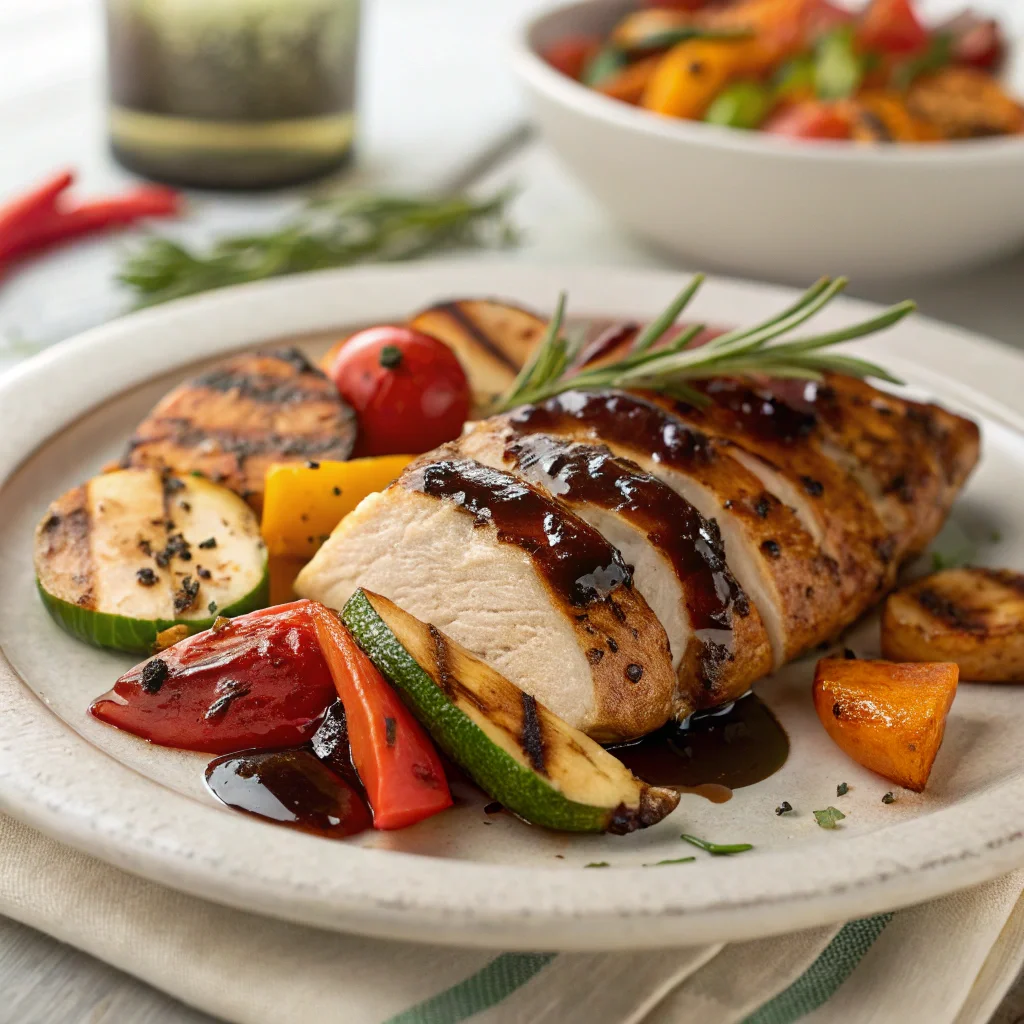
Balsamic Glazed Chicken with Roasted Veggies: A Simple, Flavorful One-Pan Meal
Looking for a weeknight dinner that’s both impressive and effortless? Balsamic glazed chicken with roasted veggies delivers restaurant-quality flavor without the fuss. This one-pan meal combines tender chicken breasts with caramelized vegetables, all coated in a rich, tangy-sweet balsamic reduction. Whether you’re meal prepping for the week or hosting a casual dinner party, this recipe proves that healthy eating doesn’t mean sacrificing taste.
Why Balsamic Glazed Chicken Works
This dish has become a staple in home kitchens for several compelling reasons. First, it simplifies dinner preparation by cooking everything on a single sheet pan. Second, the balsamic glaze creates a complex flavor profile that transforms ordinary chicken into something special.
The magic happens when balsamic vinegar reduces down. Heat concentrates the vinegar’s natural sugars, creating a syrup-like consistency. This glaze coats the chicken and vegetables, adding depth without overwhelming their natural flavors. Moreover, the high roasting temperature caramelizes everything beautifully, developing those crispy edges everyone loves.
Health Meets Convenience
Beyond taste, this recipe offers impressive nutritional value. Chicken provides lean protein while vegetables contribute fiber, vitamins, and minerals. The cooking method requires minimal added fats, making this dish heart-healthy and weight-conscious friendly. Additionally, customizing the vegetable mix means you can adjust based on dietary needs or seasonal availability.
Check out our guide on [healthy chicken meal prep strategies] for more one-pan dinner ideas.
Key Ingredients and Their Benefits
Balsamic Vinegar Selection
Quality balsamic vinegar makes a noticeable difference in this recipe. Traditional balsamic vinegar from Modena, Italy offers the most authentic flavor. However, good commercial balsamic vinegar works perfectly for everyday cooking. Look for varieties without added caramel coloring or thickeners.
The vinegar’s acidity tenderizes chicken while its sweetness balances savory elements. According to the American Heart Association, vinegar-based marinades can help reduce sodium needs while adding flavor complexity.
Chicken Breast Preparation
Boneless, skinless chicken breasts remain the most popular choice for this dish. They cook quickly and absorb flavors readily. For best results:
-
Choose breasts of similar size for even cooking
-
Pound thicker portions to ensure uniform thickness
-
Pat dry before seasoning to promote browning
Some cooks prefer chicken thighs for their higher fat content and moisture retention. Both options work beautifully with balsamic glaze.
Essential Seasonings
Simple seasonings enhance rather than mask flavors. The basic combination includes:
-
Garlic (fresh minced or powder)
-
Dried oregano or Italian seasoning
-
Salt and black pepper
-
Olive oil for roasting
Fresh herbs like rosemary or thyme add aromatic complexity. These Mediterranean flavors complement balsamic’s Italian origins perfectly.
Choosing the Right Vegetables
Best Vegetables for Roasting
Not all vegetables roast equally well. The ideal choices maintain texture while developing caramelized exteriors. Top selections include:
Root Vegetables
-
Baby potatoes or fingerlings
-
Carrots (cut into similar-sized pieces)
-
Red onions (wedged)
-
Parsnips or turnips
Quick-Cooking Options
-
Bell peppers (all colors)
-
Zucchini or yellow squash
-
Cherry tomatoes
-
Asparagus spears
Cruciferous Choices
-
Brussels sprouts (halved)
-
Broccoli florets
-
Cauliflower pieces
Vegetable Cutting Techniques
Uniform sizing ensures even cooking. Cut harder vegetables like potatoes into 1-inch pieces. Softer vegetables like zucchini can be slightly larger since they cook faster. This attention to detail prevents some pieces from burning while others remain undercooked.
Seasonal Variations
Adapt your vegetable selection based on what’s fresh and available:
Spring: Asparagus, baby carrots, radishes, spring onions
Summer: Zucchini, bell peppers, cherry tomatoes, green beans
Fall: Brussels sprouts, butternut squash, sweet potatoes, beets
Winter: Root vegetables, hearty greens, winter squash, turnips
Step-by-Step Cooking Instructions
Preparation Phase
Begin by preheating your oven to 425°F (220°C). This high temperature is crucial for achieving caramelization. While the oven heats, prepare your ingredients.
For the Chicken:
-
Pat chicken breasts completely dry
-
Season both sides generously with salt and pepper
-
Rub with minced garlic and dried oregano
-
Set aside while preparing vegetables
For the Vegetables:
-
Wash and dry all produce thoroughly
-
Cut into uniform pieces as described earlier
-
Place in a large bowl
-
Toss with 2 tablespoons olive oil, salt, and pepper
Creating the Balsamic Glaze
The glaze can be prepared two ways: on the stovetop or in a small pan in the oven.
Stovetop Method:
-
Combine ½ cup balsamic vinegar with 2 tablespoons honey
-
Add 2 minced garlic cloves
-
Bring to a gentle boil, then reduce heat
-
Simmer for 10-12 minutes until syrupy
-
The glaze should coat the back of a spoon
Oven Method:
-
Mix ingredients in a small oven-safe pan
-
Place in the preheating oven for 15 minutes
-
Stir occasionally to prevent burning
Assembly and Roasting
Proper arrangement on the sheet pan ensures everything cooks evenly:
-
Line a large rimmed baking sheet with parchment paper
-
Arrange vegetables in a single layer, leaving space in the center
-
Place seasoned chicken breasts in the cleared center space
-
Brush half the balsamic glaze over chicken and vegetables
-
Roast for 25-30 minutes
Check chicken internal temperature with a meat thermometer. It should reach 165°F (74°C) at the thickest part. Additionally, vegetables should be tender and lightly browned at the edges.
Finishing Touches
Remove the pan from the oven carefully. Brush remaining balsamic glaze over everything while still hot. The residual heat helps the glaze adhere and creates that glossy, restaurant-style appearance. Let rest for 5 minutes before serving, allowing juices to redistribute.
Tips for Perfect Balsamic Glaze
Thickness Considerations
The ideal glaze consistency resembles maple syrup. Too thin, and it won’t coat properly. Too thick, and it becomes sticky and overpowering. Test consistency by dipping a spoon into the glaze. It should leave a clear coating that doesn’t immediately drip off.
If your glaze becomes too thick, thin it with a tablespoon of water or chicken broth. Conversely, if it’s too thin, continue simmering for a few more minutes.
Sweetener Options
While honey remains the traditional choice, other sweeteners work equally well:
-
Brown sugar adds molasses notes
-
Maple syrup brings earthy sweetness
-
Agave nectar offers a neutral option
-
Date syrup provides complex caramel flavors
Adjust quantities based on your preferred sweetness level. Start with less, as you can always add more but can’t remove excess sweetness.
Flavor Enhancements
Transform basic balsamic glaze with simple additions:
-
Fresh thyme or rosemary sprigs during simmering
-
A pinch of red pepper flakes for heat
-
Dijon mustard for tangy complexity
-
Fresh cracked black pepper for bite
Strain out solid additions before brushing onto chicken and vegetables for a smoother finish.
Nutritional Benefits
Protein Content
Each serving of this balsamic glazed chicken provides approximately 35-40 grams of lean protein. Protein supports muscle maintenance, tissue repair, and satiety. The Harvard T.H. Chan School of Public Health emphasizes choosing lean protein sources like chicken breast for heart health.
Vegetable Nutrition
The roasted vegetable medley contributes significant micronutrients:
-
Vitamin A: From carrots and bell peppers, supporting vision and immune function
-
Vitamin C: Abundant in peppers and tomatoes, crucial for collagen production
-
Fiber: Present in all vegetables, promoting digestive health and blood sugar control
-
Potassium: Found in potatoes and squash, helping regulate blood pressure
Healthy Fats
Olive oil used in roasting provides monounsaturated fats linked to reduced inflammation. These heart-healthy fats also help your body absorb fat-soluble vitamins from vegetables.
Calorie Overview
A typical serving contains approximately:
-
350-400 calories
-
35-40g protein
-
30-35g carbohydrates
-
10-12g fat
-
6-8g fiber
These numbers make this dish suitable for various eating plans, including low-carb, high-protein, and balanced macronutrient approaches.
Common Mistakes to Avoid
Overcrowding the Pan
Perhaps the most frequent error is cramming too much food onto one sheet pan. Overcrowding causes steaming instead of roasting. Vegetables won’t caramelize properly, and chicken may cook unevenly. Use two pans if necessary, or reduce portion size.
Wrong Oven Temperature
Cooking at too low a temperature produces bland, soggy results. The high heat of 425°F is essential for developing those delicious browned edges. Conversely, going higher than 450°F risks burning the balsamic glaze before the chicken cooks through.
Skipping the Rest Period
Cutting into chicken immediately after cooking releases all the juices onto the cutting board. This five-minute rest period isn’t optional. It allows proteins to relax and juices to redistribute, resulting in moister, more flavorful meat.
Uneven Vegetable Sizes
Mixed sizes lead to mixed results. Some pieces burn while others remain raw. Take extra time ensuring consistent sizing. This attention to detail separates mediocre roasted vegetables from exceptional ones.
Applying Glaze Too Early
Brushing glaze at the beginning of cooking often leads to burning. Balsamic vinegar contains natural sugars that caramelize quickly. Apply glaze during the final 10 minutes or after cooking for best results.
Meal Prep and Storage Guide
Preparation Strategies
This recipe excels for meal prep. Several approaches work depending on your schedule:
Full Batch Prep:
-
Cook entire recipe as directed
-
Divide into individual containers
-
Store in refrigerator for 4-5 days
-
Reheat in microwave or oven
Partial Prep:
-
Cut and season vegetables, store separately
-
Season chicken, refrigerate up to 24 hours
-
Prepare glaze, store in sealed container
-
Assemble and cook when ready to eat
Freezer Method:
-
Cook and cool completely
-
Portion into freezer-safe containers
-
Freeze up to 3 months
-
Thaw overnight in refrigerator before reheating
Storage Best Practices
Proper storage maintains quality and safety:
-
Store chicken and vegetables in airtight containers
-
Keep glaze separate if possible to prevent sogginess
-
Refrigerate within 2 hours of cooking
-
Label containers with preparation date
Reheating Instructions
Different methods yield different results:
Oven Method (Best Quality):
-
Preheat to 350°F
-
Arrange in oven-safe dish
-
Cover with foil
-
Heat for 15-20 minutes
Microwave Method (Quickest):
-
Place in microwave-safe container
-
Cover loosely
-
Heat in 1-minute intervals, stirring between
-
Check internal temperature reaches 165°F
Stovetop Method:
-
Add a splash of chicken broth to skillet
-
Heat over medium heat
-
Stir occasionally until warmed through
Serving Suggestions and Pairings
Grain-Based Sides
While vegetables accompany the chicken, adding a grain creates a more substantial meal:
Quinoa: Fluffy and protein-rich, quinoa’s mild nuttiness complements balsamic’s tanginess beautifully. Cook in vegetable broth for extra flavor.
Brown Rice: Classic and filling, brown rice provides a neutral base that lets the balsamic glaze shine. Consider adding fresh herbs before serving.
Farro: This ancient grain offers pleasant chewiness and nutty taste. Its hearty texture holds up well against robust flavors.
Couscous: Quick-cooking and light, couscous works perfectly for faster meals. Toast in a dry pan before cooking for enhanced flavor.
Fresh Salad Options
Balance the warm, roasted elements with crisp, refreshing salads:
-
Mixed greens with lemon vinaigrette
-
Arugula with shaved Parmesan and pine nuts
-
Spinach salad with strawberries and pecans
-
Kale Caesar (dairy-free option available)
Bread Selections
Crusty bread helps soak up that delicious balsamic glaze:
-
Artisan sourdough slices
-
Garlic bread (without butter for lighter option)
-
Whole grain rolls
-
Focaccia with rosemary
Beverage Pairings
Complete your meal with complementary beverages:
-
Sparkling water with lemon and fresh herbs
-
Iced green tea with mint
-
Fresh-pressed apple cider (hot or cold)
-
Cranberry spritzer with lime
Recipe Variations and Adaptations
Protein Alternatives
While chicken remains classic, other proteins work wonderfully:
Pork Tenderloin: Cut into medallions, it absorbs balsamic glaze beautifully and cooks in similar time frames.
Salmon Fillets: Rich fish pairs surprisingly well with balsamic. Reduce cooking time to 12-15 minutes.
Turkey Cutlets: Leaner than chicken, turkey benefits from the glaze’s moisture and flavor.
Tofu or Tempeh: Plant-based options work excellently. Press tofu firmly before marinating in glaze.
Low-Carb Modifications
For those following ketogenic or low-carb eating plans:
-
Replace potatoes with cauliflower florets
-
Use more zucchini and bell peppers
-
Add extra olive oil for increased fat content
-
Incorporate avocado slices after cooking
Dairy-Free and Allergy-Friendly
This recipe naturally accommodates many dietary restrictions:
-
Already dairy-free as written
-
Gluten-free when served without bread
-
Nut-free (avoid garnishing with nuts)
-
Egg-free
Mediterranean Twist
Enhance the Italian influences with:
-
Sun-dried tomatoes mixed into vegetables
-
Kalamata olives scattered throughout
-
Fresh basil leaves torn and added after cooking
-
Crumbled feta cheese (omit for dairy-free)
Asian-Inspired Version
Transform the flavor profile completely:
-
Add fresh ginger to the glaze
-
Include sesame seeds in the final presentation
-
Toss vegetables with sesame oil
-
Serve over cauliflower rice
Advanced Cooking Techniques
Marinating for Deeper Flavor
While this recipe works with simple seasoning, marinating intensifies taste:
-
Combine balsamic vinegar, olive oil, garlic, and herbs
-
Place chicken in marinade 2-6 hours before cooking
-
Remove from marinade, pat dry, then proceed with recipe
-
Never reuse marinade that touched raw chicken
Broiling for Extra Caramelization
Finish under the broiler for restaurant-quality presentation:
-
Complete roasting as directed
-
Switch oven to broil setting
-
Move pan to upper rack
-
Broil 2-3 minutes, watching carefully
-
The glaze will bubble and caramelize further
Temperature Control Tips
Invest in a reliable meat thermometer. This simple tool prevents overcooking and ensures food safety. Insert into the thickest part of the chicken, avoiding bone contact. Digital instant-read thermometers provide the most accurate results.
Scaling for Crowds
Doubling the Recipe
When cooking for larger groups:
-
Use two sheet pans to avoid overcrowding
-
Rotate pans halfway through cooking
-
Prepare 1.5x the glaze amount
-
Stagger cooking if oven space is limited
Party Presentation
Transform this weeknight dinner into entertaining fare:
-
Arrange on a large serving platter
-
Garnish with fresh herbs and lemon wedges
-
Serve family-style for interactive dining
-
Provide small bowls of extra glaze on the side
Budget-Friendly Shopping Tips
Making this dish affordable doesn’t mean sacrificing quality:
Buy Chicken in Bulk: Purchase family packs when on sale, then freeze individual portions. This strategy significantly reduces per-serving costs.
Choose Seasonal Vegetables: In-season produce costs less and tastes better. Farmers’ markets often offer better prices than grocery stores.
Make Your Own Glaze: Pre-made balsamic glazes are convenient but expensive. Homemade versions cost a fraction of the price and contain fewer additives.
Store Brands Work: There’s no need for premium-priced chicken for this recipe. Store brand chicken breasts perform identically when properly prepared.
Troubleshooting Common Issues
Dry Chicken Problems
If your chicken consistently turns out dry:
-
Don’t overcook; 165°F is the target, not 180°F
-
Brine chicken beforehand in saltwater solution
-
Use chicken thighs instead, which contain more fat
-
Cover chicken loosely with foil during the first 15 minutes
Burnt Vegetables
Vegetables burning while chicken remains undercooked indicates:
-
Pieces cut too small
-
Oven temperature too high
-
Pan positioned too close to heating element
-
Insufficient oil coating
Watery Glaze
A thin, watery glaze results from:
-
Insufficient reduction time
-
Too much liquid added
-
Not enough sweetener to balance acidity
-
Adding cold ingredients to hot glaze
Uneven Cooking
Some pieces done while others aren’t suggests:
-
Inconsistent sizing
-
Overcrowded pan
-
Oven hot spots (rotate pan during cooking)
-
Opening oven door too frequently
Frequently Asked Questions
Can I make balsamic glazed chicken with frozen vegetables?
Yes, frozen vegetables work in this recipe. However, thaw and drain them thoroughly first. Excess moisture prevents proper caramelization. Pat vegetables dry with paper towels before tossing with oil and seasonings. Frozen vegetables may require slightly longer cooking time.
How do I prevent the balsamic glaze from burning?
Apply glaze during the final 10 minutes of cooking rather than at the beginning. Alternatively, brush it on after removing from the oven. The residual heat helps the glaze adhere without burning. Watch carefully if using the broiler method.
What’s the best way to reheat balsamic glazed chicken?
The oven method preserves texture better than microwaving. Preheat to 350°F, place chicken and vegetables in an oven-safe dish, cover with foil, and heat for 15-20 minutes. Add a splash of chicken broth to prevent drying out.
Can I prepare this recipe ahead of time?
Absolutely. Season chicken and cut vegetables up to 24 hours ahead. Store separately in the refrigerator. Prepare glaze and refrigerate in a sealed container. Assemble and cook when ready to eat for freshest results.
Is balsamic glazed chicken with roasted veggies suitable for meal prep?
This recipe excels for meal prep. Cook a full batch, divide into individual containers, and refrigerate for 4-5 days. The flavors actually improve after a day, making it perfect for weekly meal preparation.
What vegetables roast best with chicken?
Heartier vegetables like potatoes, carrots, Brussels sprouts, and bell peppers work best. They withstand high heat and cook at similar rates to chicken. Avoid delicate greens like spinach, which will wilt and burn.
How thick should the balsamic glaze be?
The ideal consistency resembles maple syrup. It should coat the back of a spoon without immediately dripping off. If too thick, thin with water or broth. If too thin, continue simmering until reduced further.
Can I use chicken thighs instead of breasts?
Chicken thighs work excellently in this recipe. They contain more fat, making them naturally more moist and flavorful. Adjust cooking time as thighs may require 5-10 additional minutes to reach safe internal temperature.
Environmental and Sustainability Considerations
Reducing Food Waste
This recipe naturally uses whole vegetables with minimal waste:
-
Save vegetable scraps for homemade stock
-
Use chicken bones for broth after removing meat
-
Compost any unusable portions
-
Store leftovers properly to extend shelf life
Sourcing Ingredients Responsibly
Make environmentally conscious choices when shopping:
Chicken: Look for organic, free-range, or pasture-raised options when budget allows. These chickens typically have better living conditions and more sustainable farming practices.
Vegetables: Choose local and seasonal produce to reduce transportation emissions. Visit farmers’ markets or join a CSA (Community Supported Agriculture) program.
Balsamic Vinegar: Opt for bottles in glass rather than plastic. Many stores offer bulk options where you can refill containers.
Conclusion
Balsamic glazed chicken with roasted veggies represents the perfect intersection of simplicity, flavor, and nutrition. This one-pan meal delivers restaurant-quality results without requiring advanced culinary skills or expensive ingredients. The tangy-sweet balsamic glaze transforms ordinary chicken and vegetables into something truly special.
Whether you’re meal prepping for busy weeknights, cooking for your family, or impressing dinner guests, this versatile recipe adapts to your needs. The customizable vegetable selections mean you’ll never get bored, while the straightforward cooking method ensures consistent success every time.
Start with the basic recipe, then experiment with different vegetables, seasonings, and serving styles. Soon you’ll develop your own signature version of this beloved dish. The combination of lean protein, fiber-rich vegetables, and bold flavors makes healthy eating feel like an indulgence rather than a chore.
Ready to transform your dinner routine? Gather your ingredients, preheat that oven, and prepare to enjoy one of the most satisfying meals you can make in under an hour. Your taste buds—and your schedule—will thank you.
Print