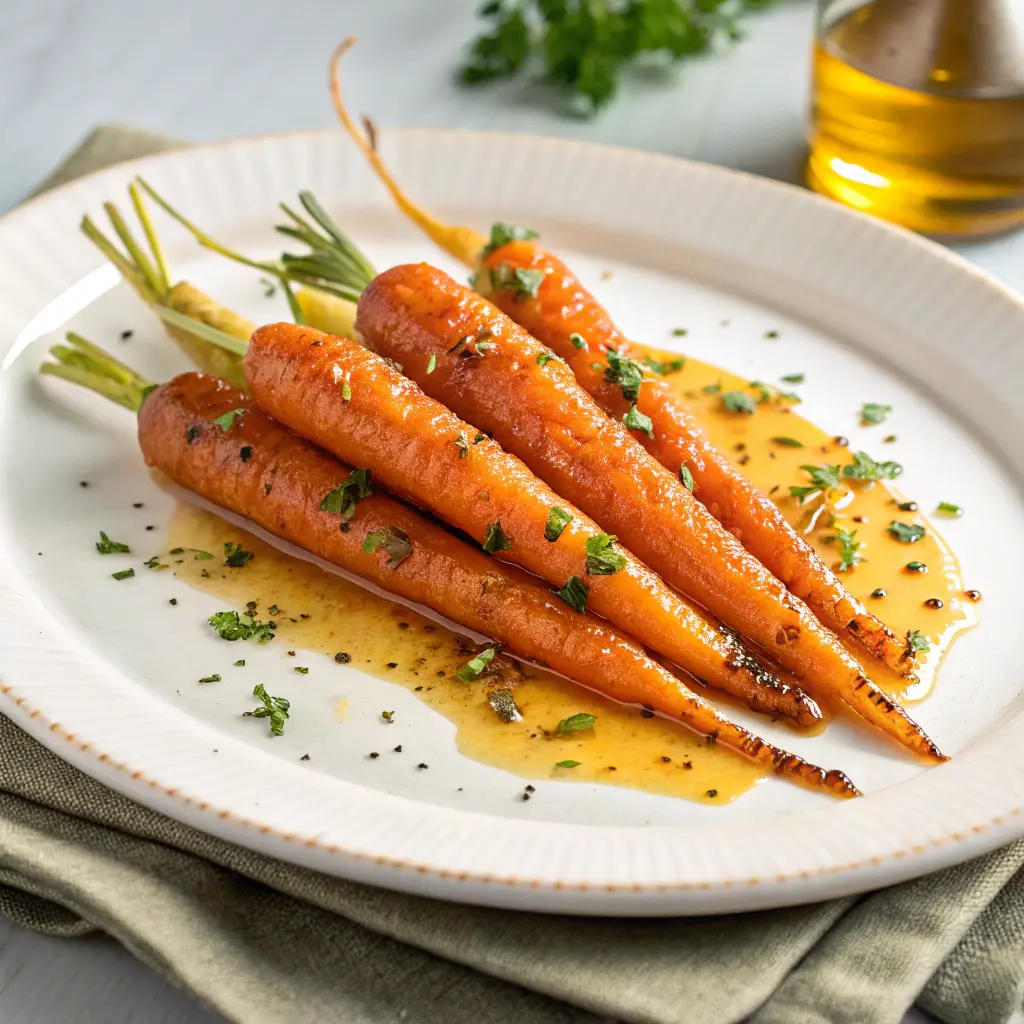
Honey Butter Glazed Baby Carrots
Introduction
Honey Butter Glazed Baby Carrots transform ordinary vegetables into an extraordinary side dish that delights both kids and adults. This classic recipe combines the natural sweetness of carrots with rich butter and golden honey to create a glossy, caramelized coating that’s simply irresistible. Whether you’re preparing a weeknight dinner or a holiday feast, these glazed carrots deliver restaurant-quality results with minimal effort.
The beauty of this dish lies in its simplicity. You need just a handful of ingredients and about 20 minutes to create a side dish that looks and tastes impressive. The sweet glaze caramelizes beautifully, creating a perfect balance between tender vegetables and a luscious coating. Moreover, making it family-friendly and suitable for all occasions.
Baby carrots are ideal for this preparation because they cook quickly and evenly. Their uniform size ensures consistent results every time. Additionally, they require no peeling or chopping, which makes meal preparation effortless. This convenience factor has made honey butter glazed baby carrots a beloved staple in countless kitchens across America.
Why Honey Butter Glazed Baby Carrots Are So Popular
Restaurant-Quality Results at Home
Professional chefs have long known the secret to making vegetables irresistible. A simple honey butter glaze elevates humble carrots into something special. The combination of sweet and savory flavors appeals to diverse palates. Furthermore, the glossy appearance makes the dish visually stunning on any plate.
Many home cooks appreciate how this recipe delivers gourmet results without requiring advanced culinary skills. The technique is straightforward. Even beginners can master it on their first attempt. This accessibility has contributed significantly to the recipe’s widespread popularity.
Kid-Friendly Vegetable Option
Getting children to eat vegetables can be challenging. However, honey butter glazed baby carrots often win over even the pickiest eaters. The natural sweetness of honey complements the carrots’ inherent sugars. This creates a flavor profile that feels more like a treat than a vegetable side dish.
Parents love this recipe because it offers a healthier alternative to heavily processed sides. The ingredients are simple and recognizable. There are no artificial additives or unnecessary ingredients. Just wholesome carrots enhanced with natural sweetness.
Versatile for Any Occasion
These glazed carrots work beautifully for various dining occasions:
-
Weeknight family dinners
-
Holiday celebrations like Thanksgiving and Christmas
-
Sunday roasts and special meals
-
Potluck contributions and gatherings
-
Meal prep and packed lunches
The recipe scales easily. You can make a small batch for two people or multiply the ingredients for a crowd. This flexibility makes it a reliable go-to recipe for any situation.
Nutritional Benefits of Baby Carrots
Rich in Beta-Carotene and Vitamin A
Baby carrots are nutritional powerhouses packed with essential vitamins and minerals. They contain exceptionally high levels of beta-carotene, which your body converts into vitamin A. This nutrient supports healthy vision, immune function, and skin health. A single serving provides more than 200% of your daily vitamin A needs.
According to the USDA FoodData Central, carrots rank among the best vegetable sources of this crucial nutrient. The bright orange color signals the presence of these beneficial compounds. Consuming carrots regularly can contribute to long-term health benefits.
Fiber Content and Digestive Health
Each serving of baby carrots provides approximately 3 grams of dietary fiber. This fiber supports healthy digestion and helps maintain steady blood sugar levels. The soluble fiber in carrots also promotes feelings of fullness, which can assist with weight management goals.
Furthermore, the fiber content supports beneficial gut bacteria. This contributes to overall digestive wellness. Regular consumption of fiber-rich vegetables like carrots is associated with reduced disease risk.
Antioxidant Properties
Carrots contain several important antioxidants beyond beta-carotene:
-
Lutein for eye health
-
Zeaxanthin for retinal protection
-
Polyacetylenes with potential anti-cancer properties
-
Alpha-carotene for cellular health
These compounds work together to protect your cells from oxidative stress.
Low Calorie and Naturally Sweet
Baby carrots are naturally low in calories while delivering satisfying sweetness. A one-cup serving contains only about 50 calories. This makes them an excellent choice for those watching their calorie intake while still enjoying flavorful foods.
The natural sugars in carrots are accompanied by fiber, which slows their absorption. This prevents blood sugar spikes and provides sustained energy. When combined with healthy fats from butter, the dish becomes even more satisfying.
Essential Ingredients for Perfect Glazed Carrots
Baby Carrots Selection
Quality ingredients create superior results. Choose fresh baby carrots that feel firm and have bright orange color. Avoid carrots that appear dried, cracked, or have white spots. Fresh carrots should have a slight snap when bent.
You’ll need approximately 1 to 2 pounds of baby carrots depending on serving size. Most recipes serve 4-6 people with this amount. If purchasing pre-packaged carrots, check the expiration date to ensure maximum freshness.
Real baby carrots differ from “baby-cut” carrots. True baby carrots are harvested early. However, most supermarket “baby carrots” are actually mature carrots cut and shaped into smaller pieces. Both work perfectly well for this recipe.
Butter: The Foundation of Flavor
Unsalted butter works best for honey butter glazed baby carrots. This allows you to control the salt level precisely. Use high-quality butter for the richest flavor. European-style butter with higher fat content creates an especially luxurious glaze.
You’ll need approximately 3-4 tablespoons of butter for 1 pound of carrots. The butter should be fresh and stored properly. Rancid butter will negatively impact your dish’s flavor. Always check that your butter smells sweet and fresh before using it.
Some cooks prefer to use half butter and half olive oil for a lighter version. This modification works well but changes the traditional flavor profile slightly.
Honey: Natural Sweetness
Pure honey is essential for authentic flavor. Different honey varieties offer unique taste profiles:
-
Clover honey provides mild, classic sweetness
-
Orange blossom honey adds subtle citrus notes
-
Wildflower honey offers complex, robust flavor
-
Buckwheat honey brings deep, molasses-like richness
Most recipes call for 2-3 tablespoons of honey per pound of carrots. Adjust this amount based on your sweetness preference. Local, raw honey often provides the most distinctive flavor. However, any pure honey works beautifully.
Avoid honey substitutes or artificial sweeteners for this recipe. They don’t caramelize properly and can create off-flavors. Real honey is key to achieving that signature glossy glaze.
Seasonings and Aromatics
While honey butter forms the base, thoughtful seasonings elevate the dish:
Essential Seasonings:
-
Fine sea salt to balance sweetness
-
Freshly ground black pepper for subtle heat
-
Fresh or dried thyme for herbal notes
-
Garlic powder or fresh garlic for depth
Optional Enhancements:
-
Fresh parsley for color and freshness
-
Cinnamon for warm spice notes
-
Ginger for zingy complexity
-
Orange zest for bright citrus flavor
Start with basic seasonings and gradually add others as you become familiar with the recipe. This approach helps you understand how each ingredient contributes to the final dish.
Step-by-Step Recipe Instructions
Preparation Phase
Begin by rinsing your baby carrots thoroughly under cool running water. Even pre-washed carrots benefit from a quick rinse. Pat them completely dry with paper towels or a clean kitchen cloth. Excess moisture prevents proper caramelization.
Gather all your ingredients and measure them out before cooking. This French culinary technique called “mise en place” ensures smooth cooking. You’ll work more efficiently and achieve better results.
Prepare a large skillet or sauté pan. A 12-inch pan accommodates 1-2 pounds of carrots without crowding. Crowded pans create steam instead of allowing proper glazing. Choose a pan with a light-colored interior so you can monitor the glaze color easily.
Cooking Method: Stovetop Technique
Step 1: Initial Cook
Place your dried baby carrots in the skillet. Add just enough water to reach halfway up the carrots, approximately 1/2 to 3/4 cup. This initial cooking softens the carrots without fully cooking them. Add a pinch of salt to the water.
Bring the water to a boil over medium-high heat. Once boiling, reduce heat to medium. Cover the pan and simmer for 5-7 minutes. The carrots should become tender but still have a slight bite. Test doneness by piercing a carrot with a fork.
Step 2: Drain and Dry
Once the carrots reach desired tenderness, drain them completely. Return them to the dry pan. This step is crucial. Any remaining water will dilute your glaze and prevent proper caramelization.
Let the carrots sit in the hot pan for about 30 seconds. This evaporates any lingering moisture. Shake the pan gently to ensure all surfaces are dry.
Step 3: Create the Honey Butter Glaze
Add your butter to the pan with the carrots. Let it melt completely over medium heat. The butter should bubble gently but not brown. Swirl the pan to coat all the carrots evenly.
Once the butter melts, add your honey. Stir gently to combine the honey and butter into a smooth glaze. The mixture will thin out initially as the honey warms.
Step 4: Caramelize and Glaze
Continue cooking over medium heat, stirring occasionally. The glaze will gradually thicken and become syrupy. This process takes approximately 5-8 minutes. Watch carefully during this stage.
The carrots should develop a glossy, caramelized coating. Shake the pan frequently to ensure even coverage. The glaze will cling to the carrots and create that signature sheen.
Step 5: Season and Finish
Once the glaze reaches the desired consistency, season with salt and pepper. Add any additional seasonings you’ve chosen. Fresh herbs should be added at the very end to preserve their bright flavor.
Taste and adjust seasonings as needed. The flavor should balance sweet, savory, and slightly salty notes. Remove from heat immediately once perfectly glazed. Overcooking can burn the honey and create bitter flavors.
Alternative Cooking Method: Oven-Roasted
For a hands-off approach, try oven-roasting your honey butter glazed baby carrots. This method works particularly well when oven space is available.
Preheat your oven to 400°F (200°C). Toss baby carrots with melted butter, honey, salt, and pepper in a large bowl. Spread them in a single layer on a rimmed baking sheet lined with parchment paper.
Roast for 20-25 minutes, stirring halfway through. The carrots should be tender and caramelized. The edges will develop deeper color and concentrated sweetness. This method creates slightly different texture compared to stovetop cooking.
Slow Cooker Method for Convenience
Busy cooks appreciate the slow cooker method. Place baby carrots in your slow cooker. Add butter, honey, and seasonings. No water is necessary for this method.
Cook on low for 4-6 hours or high for 2-3 hours. The carrots will become very tender and absorb the glaze completely. This method works beautifully for holiday meals when stovetop space is limited.
Check out our guide on [slow cooker vegetable sides] for more easy recipes.
Pro Tips for the Best Honey Butter Glaze
Achieving Perfect Glaze Consistency
The ideal glaze should coat the carrots like a thin syrup. It shouldn’t pool at the bottom of the pan. Several factors affect glaze consistency:
Moisture Control: Ensure carrots are thoroughly dried before adding butter and honey. Even small amounts of water thin the glaze excessively.
Heat Management: Medium heat works best for creating the glaze. Too high, and the honey burns. Too low, and the glaze never thickens properly.
Timing: Allow adequate time for the glaze to reduce. Rushing this step results in watery coating. Patience creates that perfect glossy finish.
If your glaze seems too thin, continue cooking for a few more minutes. The liquid will evaporate and the mixture will thicken. If it becomes too thick, add a tablespoon of water and stir until it reaches the desired consistency.
Preventing Burnt Honey
Honey burns more easily than sugar because of its complex composition. Monitor your heat carefully. If you smell any burning or see dark spots forming, immediately reduce the heat. Transfer the carrots to a serving dish right away.
Stirring frequently prevents hot spots from developing. The movement distributes heat evenly and prevents the honey from sticking to the pan bottom. Use a heat-resistant spatula for best results.
Enhancing Caramelization
True caramelization creates complex flavors that elevate your dish. These techniques promote better caramelization:
-
Ensure carrots are completely dry before adding fat
-
Don’t overcrowd the pan; work in batches if necessary
-
Allow carrots to sit undisturbed for 30-60 seconds between stirs
-
Use a heavy-bottomed pan for even heat distribution
-
Consider adding a tiny pinch of baking soda to encourage browning
The Maillard reaction creates those delicious browned flavors. This chemical process requires dry surfaces and adequate heat. Creating the right conditions ensures maximum flavor development.
Butter Temperature Matters
Cold butter added directly to hot carrots can cause splattering. Let your butter soften slightly at room temperature before adding it to the pan. Alternatively, add cold butter gradually, allowing each piece to melt before adding more.
Some chefs prefer to brown the butter slightly before adding honey. This creates nutty, complex flavors. Heat butter until it develops a light golden color and releases a toasted aroma. Then proceed with adding honey and carrots.
Honey Quality and Selection
Higher quality honey produces superior results. Raw, unfiltered honey contains more complex flavor compounds. However, it may crystallize faster than processed honey. Both types work well for this recipe.
Creamed honey is too thick for easy glazing. Stick with liquid honey varieties. If your honey has crystallized, gently warm it in a hot water bath before using. Never microwave honey as this can destroy beneficial enzymes.
Common Mistakes to Avoid
Overcooking the Carrots
Mushy carrots ruin this dish. The vegetables should maintain some texture even after glazing. Overcooked carrots can’t hold the glaze properly and become unappetizing. Test doneness frequently during the initial cooking phase.
Remember that carrots continue cooking slightly even after removing from heat. Pull them from the stove when they’re just barely tender. This ensures they maintain perfect texture after glazing.
Using Too Much Liquid
Excess liquid prevents proper glaze formation. The water added during initial cooking should mostly evaporate. If you notice pooling liquid after draining, return the pan to heat briefly. Let the moisture cook off completely before adding butter and honey.
Inconsistent Carrot Sizes
Baby carrots generally have uniform size. However, if mixing regular cut carrots or using fresh baby carrots, size consistency matters. Uneven sizes cook at different rates. Some pieces become mushy while others remain undercooked.
If carrot sizes vary significantly, cut larger pieces to match smaller ones. This extra prep step ensures even cooking and consistent results.
Skipping the Drying Step
This crucial step cannot be emphasized enough. Water and oil-based glazes don’t mix. Any moisture remaining on the carrots will dilute your carefully crafted glaze. Take the extra minute to thoroughly pat carrots dry.
Burning the Honey
Once honey burns, there’s no recovering the dish. Burnt honey tastes acrid and bitter. Always use medium or medium-low heat. Never walk away from the stove during the glazing process. Stay present and attentive.
If you’re worried about burning, err on the side of lower heat. The glaze will take longer to develop, but you’ll avoid ruining the dish.
Not Seasoning Properly
Sweet dishes still need salt to achieve proper flavor balance. Salt enhances sweetness and prevents the dish from tasting one-dimensional. Don’t skip the salt, even though this is a sweet preparation.
Add salt gradually and taste as you go. You can always add more but can’t remove it once added. Start with a small pinch and build from there.
Flavor Variations and Customizations
Herb-Enhanced Versions
Fresh or dried herbs complement honey butter glazed baby carrots beautifully:
Thyme: Classic pairing with subtle earthiness. Add 1-2 teaspoons fresh thyme leaves or 1/2 teaspoon dried thyme.
Rosemary: Provides bold, pine-like flavor. Use sparingly as it can overpower. One teaspoon fresh rosemary, finely chopped, is sufficient.
Parsley: Adds fresh, bright notes and visual appeal. Stir in 2 tablespoons fresh chopped parsley just before serving.
Dill: Creates unexpected but delightful flavor. Use 1 tablespoon fresh dill, chopped.
Spice Additions
Warm spices create interesting flavor dimensions:
Cinnamon: Adds autumn warmth. Use just 1/4 teaspoon ground cinnamon to avoid overwhelming the dish.
Ginger: Provides zingy brightness. Try 1/2 teaspoon ground ginger or 1 tablespoon fresh grated ginger.
Cumin: Creates Middle Eastern flair. Add 1/2 teaspoon ground cumin for earthy complexity.
Smoked Paprika: Introduces subtle smokiness. Use 1/4 teaspoon for best results.
Citrus Variations
Citrus brightens the sweet glaze and adds complexity:
Orange: Add 1 tablespoon orange juice and 1 teaspoon orange zest for bright flavor.
Lemon: Squeeze fresh lemon juice over finished carrots for tangy contrast. Use 1-2 teaspoons.
Lime: Creates unexpected tropical notes. Add 1 tablespoon lime juice and 1/2 teaspoon lime zest.
Nutty Additions
Toasted nuts add textural interest and complementary flavors:
-
Pecans provide buttery richness
-
Walnuts offer earthy depth
-
Almonds create subtle sweetness
-
Pistachios add vibrant color and mild flavor
Toast nuts lightly in a dry pan before chopping and sprinkling over finished carrots. Use approximately 1/4 cup chopped nuts per pound of carrots.
Brown Sugar Swap
Replace honey partially or completely with brown sugar for deeper caramel notes. Use 2-3 tablespoons brown sugar per pound of carrots. Dark brown sugar creates more intense molasses flavor than light brown sugar.
Combine brown sugar with a tablespoon of maple syrup for another delicious variation. This creates complex sweetness with subtle maple undertones.
Balsamic Glaze Version
Add 1-2 tablespoons balsamic vinegar to your honey butter glaze. The tangy acidity balances the sweetness beautifully. Use aged balsamic for best results. The vinegar should be thick and syrupy.
This variation creates sophisticated flavor profile suitable for elegant dinners. The dark glaze also adds visual drama to the dish.
Serving Suggestions and Pairings
Holiday Dinner Accompaniment
Honey butter glazed baby carrots shine at holiday celebrations. They complement traditional feast centerpieces perfectly:
Thanksgiving Pairing: Serve alongside roasted turkey, creamy mashed potatoes, and savory stuffing. The carrots’ sweetness balances rich, savory dishes.
Christmas Dinner: Pair with prime rib, Yorkshire pudding, and green beans. The glossy carrots add festive color to the holiday table.
Easter Celebration: Complement honey-glazed ham with these sweet carrots. Add roasted asparagus and scalloped potatoes for a complete springtime feast.
Weeknight Dinner Solutions
These versatile carrots work beautifully with everyday meals:
Roasted Chicken: The sweet glaze complements herb-roasted or plain roasted chicken perfectly.
Pork Chops: Sweet carrots balance savory pork preparations. Try them with grilled, pan-seared, or baked pork.
Salmon: The honey butter echoes popular salmon glazes, creating harmonious flavor pairing.
Meatloaf: Comfort food meets comfort food. These carrots complete classic American dinner plates.
Bowl and Grain Dishes
Incorporate glazed carrots into modern bowl-style meals:
-
Quinoa bowls with roasted vegetables
-
Brown rice bowls with protein
-
Buddha bowls with diverse vegetables
-
Grain salads with seasonal produce
The carrots add sweetness and visual appeal to these contemporary dishes. They work particularly well in fall and winter bowl combinations.
Brunch and Breakfast Integration
Think beyond traditional meal times. These carrots can enhance brunch menus:
-
Serve alongside quiche or frittata
-
Add to breakfast hash brown casseroles
-
Include in brunch buffet spreads
-
Pair with savory breakfast pastries
The sweet profile works surprisingly well in morning meals. They provide vegetable nutrition in an appealing format.
Temperature Considerations
Honey butter glazed baby carrots taste delicious at various temperatures:
Hot and Fresh: Ideal presentation with glaze at peak glossiness. Serve immediately after preparation for best appearance.
Warm: Still delicious after sitting for 15-20 minutes. The glaze thickens slightly but remains appealing.
Room Temperature: Suitable for buffet-style service. The carrots hold well for up to an hour at room temperature.
Chilled: Can be served cold in composed salads. The glaze firms up but flavors remain delicious.
Storage and Reheating Instructions
Refrigerator Storage
Store leftover honey butter glazed baby carrots in an airtight container. Properly stored, they remain fresh for 3-4 days in the refrigerator. The glaze may solidify when chilled, which is completely normal.
Glass containers work best for storage. They don’t absorb odors and make reheating easier. Label containers with the date to track freshness.
Freezer Storage
While possible, freezing glazed carrots changes their texture significantly. The carrots become softer and the glaze separates slightly upon thawing. However, if you must freeze them, follow these guidelines:
Place cooled carrots in freezer-safe containers or bags. Remove as much air as possible to prevent freezer burn. Properly stored, they maintain quality for up to 2 months.
Thaw frozen carrots overnight in the refrigerator before reheating. Don’t try to reheat from frozen as this creates uneven results.
Reheating Methods
Stovetop Method: Place carrots in a skillet over medium-low heat. Add a tablespoon of water or butter to help revive the glaze. Heat gently, stirring occasionally, until warmed through. This method produces the best results.
Microwave Method: Place carrots in a microwave-safe dish. Cover with a damp paper towel. Heat in 30-second intervals, stirring between each, until hot. Add a small pat of butter if the glaze seems dry.
Oven Method: Spread carrots on a baking sheet. Cover with aluminum foil. Heat at 325°F for 10-15 minutes until warmed through. This method works well when reheating large quantities.
Reviving the Glaze
Reheated carrots may need glaze refreshment. The butter and honey can separate during storage. To restore the glossy coating:
Add a teaspoon of butter and honey to the reheating pan. Stir gently until the new glaze coats the carrots evenly. This quick fix makes leftovers taste freshly made.
Make-Ahead Strategy
Prepare honey butter glazed baby carrots up to one day ahead:
Cook and glaze the carrots completely. Let them cool to room temperature. Store in the refrigerator. Reheat using the stovetop method just before serving.
Add fresh herbs only after reheating. This preserves their bright color and fresh flavor. Pre-cooked herbs turn dark and lose appeal.
Frequently Asked Questions
Can I use regular carrots instead of baby carrots for honey butter glazed baby carrots?
Yes, regular carrots work perfectly well. Peel them and cut them into uniform pieces approximately 2-3 inches long. Try cutting them into diagonal slices or thick rounds for variety. The cooking time may vary slightly depending on the size of your cuts. Ensure pieces are similar size for even cooking.
How do I prevent the honey from burning?
Use medium or medium-low heat and stir frequently. Never leave the pan unattended during the glazing process. If you notice the honey darkening too quickly, immediately reduce the heat. Adding butter first, then honey, helps prevent burning. The butter provides a protective layer that moderates the heat.
Can I make honey butter glazed baby carrots dairy-free?
Absolutely. Replace butter with coconut oil, olive oil, or vegan butter alternatives. Coconut oil creates a slightly different flavor profile with subtle tropical notes. Choose refined coconut oil if you want to avoid coconut flavor. The texture will be similar to traditional versions.
What can I substitute for honey?
Maple syrup works beautifully as a honey substitute. Use the same amount as you would honey. Agave nectar is another option, though it’s slightly less viscous. Brown rice syrup provides mild sweetness but doesn’t caramelize as well. For best results, stick with honey or pure maple syrup.
Why are my carrots mushy?
Overcooking causes mushiness. Reduce the initial cooking time and test for doneness frequently. Carrots should be tender-crisp before glazing. Remember they continue cooking during the glazing process. Old carrots also cook faster than fresh ones, so adjust timing accordingly.
Can I add garlic to honey butter glazed baby carrots?
Fresh garlic complements the sweet glaze wonderfully. Add 2-3 minced garlic cloves along with the butter. Cook for 30 seconds until fragrant before adding honey. Don’t let garlic burn as it becomes bitter. Garlic powder also works; use 1/2 to 1 teaspoon.
How do I make the glaze thicker?
Continue cooking over medium heat until more liquid evaporates. The glaze naturally thickens as it reduces. If you need faster results, remove the carrots and continue cooking the glaze alone. Once it reaches desired consistency, return the carrots and toss to coat.
Are honey butter glazed baby carrots healthy?
Carrots provide excellent nutrition including vitamin A, fiber, and antioxidants. The added butter and honey increase calories and sugar content. However, when enjoyed in appropriate portions as part of a balanced meal, this dish fits into healthy eating patterns. The nutrients from carrots outweigh concerns about added sweetness.
Can I use frozen baby carrots?
Fresh carrots produce superior results, but frozen carrots work in a pinch. Thaw and thoroughly dry frozen carrots before using. They may release more water during cooking. Adjust cooking time accordingly as frozen carrots are partially cooked already. The texture will be slightly different from fresh.
What’s the best pan for making glazed carrots?
A large, heavy-bottomed skillet or sauté pan works best. Stainless steel or cast iron provide excellent heat distribution. Non-stick pans work but make achieving caramelization more difficult. Choose a pan wide enough that carrots spread in a single layer without crowding.
Conclusion
Honey butter glazed baby carrots represent the perfect intersection of simplicity and elegance. This timeless recipe transforms everyday vegetables into a show-stopping side dish that pleases all ages. The glossy, caramelized coating delivers irresistible sweet-savory flavor that complements countless main dishes.
The beauty of honey butter glazed baby carrots lies in their versatility. Whether preparing a casual weeknight dinner or an elaborate holiday feast, these carrots fit seamlessly into your menu. The straightforward technique requires no special skills, yet produces restaurant-quality results every time.
Beyond their delicious taste, these carrots provide substantial nutritional benefits. The vitamin A, fiber, and antioxidants support overall health. When balanced with the moderate amounts of butter and honey, this dish contributes positively to well-rounded nutrition.
The recipe welcomes customization and experimentation. Try different herbs, spices, or citrus additions to create your signature version. Each variation offers new flavor discoveries while maintaining the classic appeal of honey butter glazed baby carrots.
Print
Honey Butter Glazed Baby Carrots
Description
Ingredients:
-
1 lb baby carrots
-
2 tbsp butter
-
2 tbsp honey
-
½ tsp salt
-
¼ tsp black pepper
-
½ tsp garlic powder (optional)
-
Fresh parsley, chopped (for garnish)
Instructions:
-
Cook the carrots:
Steam or boil baby carrots until just tender, about 5–7 minutes. Drain well. -
Make the glaze:
In a large skillet, melt butter over medium heat. Stir in honey, salt, pepper, and garlic powder (if using). -
Glaze the carrots:
Add cooked carrots to the skillet. Toss gently to coat evenly in the honey butter glaze. Cook 2–3 minutes, stirring occasionally, until carrots are fully coated and shiny. -
Serve:
Transfer to a serving dish and garnish with chopped parsley. Serve warm.