
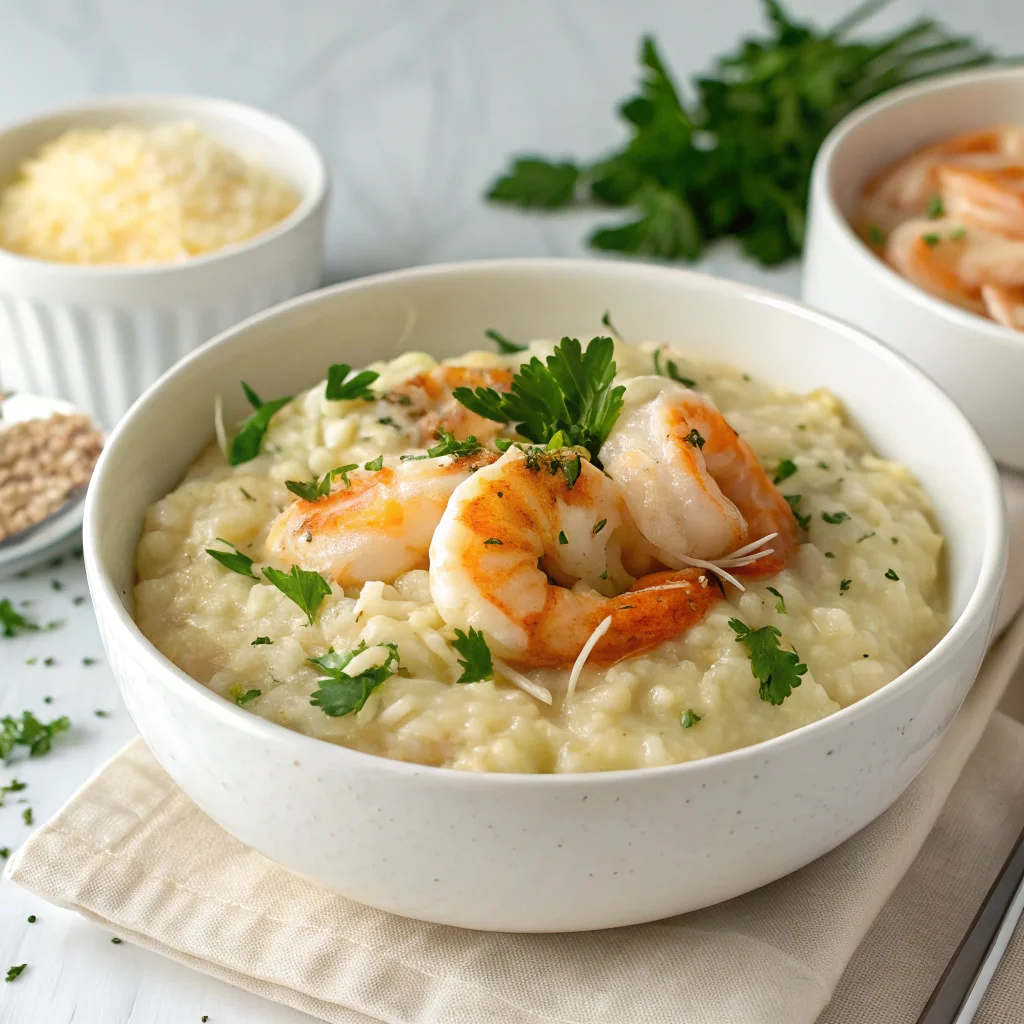
Creamy Garlic Shrimp Risotto
There’s something magical about a perfectly cooked risotto—creamy, luxurious, and utterly comforting. When you combine tender shrimp with aromatic garlic and rich, velvety rice, you create a restaurant-quality dish that’s surprisingly simple to master at home. This Creamy Garlic Shrimp Risotto transforms humble ingredients into an elegant meal that impresses dinner guests and satisfies weeknight cravings alike. Whether you’re new to risotto or a seasoned home cook, this recipe delivers authentic Italian flavor without complicated techniques.
What Makes This Garlic Shrimp Risotto Special
Restaurant-Quality Results at Home
This creamy garlic shrimp risotto rivals anything you’d find in an upscale Italian restaurant. The combination of plump, succulent shrimp and perfectly cooked Arborio rice creates a harmony of textures and flavors. The garlic infuses every grain of rice with aromatic depth, while Parmesan cheese adds that signature richness.
Traditional risotto requires patience and attention, but the results justify every minute of stirring. This version simplifies the process without sacrificing quality. You’ll achieve that signature creamy consistency that makes risotto so beloved worldwide.
The result tastes authentically Italian while remaining accessible to everyone.
Versatility for Any Occasion
This dish works beautifully for multiple occasions. Serve it as an impressive dinner party main course, prepare it for a romantic date night, or enjoy it as a satisfying weeknight meal. The recipe scales easily for intimate dinners or larger gatherings.
Essential Ingredients for Perfect Risotto
The Rice Foundation
Arborio rice forms the backbone of exceptional risotto. This short-grain Italian rice contains high starch content, which creates that signature creaminess during cooking. The grains remain firm in the center while releasing starch that binds everything together.
Don’t substitute with regular long-grain rice. Carnaroli or Vialone Nano work as alternatives, but Arborio remains the most accessible choice in most grocery stores. Look for it in the international aisle or specialty sections.
Shrimp Selection
Choose medium to large shrimp (31-40 count per pound works perfectly). Fresh or frozen both work well, though frozen shrimp often offers better value and quality. Peel and devein them before cooking for the best texture and presentation.
Wild-caught shrimp generally provides superior flavor compared to farm-raised varieties. However, either option works fine for this recipe. Season them generously with salt and pepper before sautéing.
The Flavor Base
Fresh garlic creates the aromatic foundation. Use 6-8 cloves, minced finely to distribute flavor throughout the dish. Fresh garlic tastes significantly better than pre-minced jarred versions.
Yellow onion or shallots add sweetness and depth. Dice them finely so they practically melt into the rice during cooking. Shallots offer a more delicate flavor, while onions provide earthier notes.
Liquid Components
Seafood or chicken broth provides the cooking liquid. Use approximately 5-6 cups, heated and kept warm throughout cooking. Quality broth makes a noticeable difference in the final taste.
Additionally, prepare fresh lemon juice from 1-2 lemons. This brightens the entire dish and provides the acidity that balances richness. Bottled lemon juice lacks the fresh, vibrant quality needed here.
Dairy and Finishing Touches
Heavy cream adds luxurious richness to the final dish. Use about half a cup, stirred in during the last few minutes. For a lighter version, substitute with half-and-half.
Parmesan cheese gets grated fresh from a block. Pre-grated versions contain anti-caking agents that prevent proper melting. Plan for approximately 1 cup of freshly grated Parmesan.
Butter enriches the final texture. Use 2-3 tablespoons of high-quality unsalted butter, added at the very end. This technique, called “mantecatura,” creates exceptional creaminess.
Aromatics and Seasonings
Fresh parsley provides color and freshness. Flat-leaf Italian parsley works best, though curly parsley suffices. Chop it finely and reserve some for garnish.
Quality olive oil starts the cooking process. Use extra virgin for the best flavor, though regular olive oil works for sautéing. Black pepper, sea salt, and red pepper flakes complete the seasoning profile.
Kitchen Tools You’ll Need
Essential Equipment
A wide, heavy-bottomed pan or Dutch oven works best for risotto. The wide surface allows rice to cook evenly, while heavy construction prevents scorching. A 4-5 quart capacity handles this recipe comfortably.
Keep a separate saucepan for warming broth. Maintaining hot liquid ensures even cooking without temperature drops that can interrupt the process.
Helpful Utensils
A sturdy wooden spoon becomes your best friend during risotto making. It won’t scratch your pan and feels comfortable during extended stirring sessions. Silicone spatulas work as alternatives.
A ladle helps add broth in measured increments. This controlled addition maintains proper consistency throughout cooking.
Preparation Tools
Sharp chef’s knife and cutting board facilitate efficient prep work. Garlic press optional but helpful for quickly mincing garlic.
A microplane grater makes quick work of Parmesan cheese. Box graters work fine but require more effort.
Step-by-Step Cooking Instructions
Preparing the Shrimp
Start by patting shrimp completely dry with paper towels. Moisture prevents proper browning and creates steam instead of a flavorful sear. Season both sides generously with salt and black pepper.
Heat 2 tablespoons olive oil in your risotto pan over medium-high heat. When the oil shimmers, add shrimp in a single layer. Cook for 2 minutes per side until pink and just opaque. Transfer to a plate and set aside.
The shrimp will finish cooking later when stirred back into the risotto. Therefore, slightly undercooking them now prevents rubbery texture in the final dish.
Building the Flavor Base
Reduce heat to medium and add 2 tablespoons olive oil to the same pan. Add diced onion and cook for 3-4 minutes until softened and translucent. Stir occasionally to prevent browning.
Add minced garlic and cook for 60 seconds until fragrant. Garlic burns quickly, so watch carefully and stir constantly during this step. The kitchen should smell amazing at this point.
Toasting the Rice
Add Arborio rice to the pan and stir to coat every grain with oil. Cook for 2-3 minutes, stirring constantly, until the edges become slightly translucent. This toasting step develops nutty flavor and helps rice maintain structure during cooking.
You’ll hear a gentle crackling sound as the rice toasts. Avoid letting it brown or stick to the pan bottom. Keep the rice moving continuously.
The Gradual Cooking Process
Add one ladle of warm broth to the rice. Stir gently but consistently until the liquid absorbs almost completely. The rice should move freely in the pan without swimming in excess liquid.
Continue this process for 20-25 minutes. Add broth one ladle at a time, stirring frequently between additions. The constant stirring releases starch from the rice, creating creaminess.
Maintain medium heat throughout this process. Too high causes scorching, while too low results in mushy rice. Adjust as needed to maintain a gentle simmer.
Testing for Doneness
After 20 minutes, start tasting the rice. Properly cooked risotto maintains a slight firmness in the center of each grain (al dente) while feeling creamy overall. The texture should coat a spoon but flow freely when tilted.
If the rice still tastes chalky or hard in the center, continue adding broth and cooking. Some batches require more or less liquid depending on rice age and heat intensity.
Finishing Touches
When the rice reaches perfect texture, reduce heat to low. Stir in heavy cream, butter, and most of the Parmesan cheese. Reserve some cheese for garnish.
Add the cooked shrimp back to the pan along with fresh lemon juice. Stir gently to combine and heat the shrimp through. This takes about 2 minutes.
Taste and adjust seasoning with salt, pepper, and additional lemon juice if needed. The risotto should taste rich but balanced, with bright notes from the lemon cutting through the cream.
Plating and Presentation
Serve immediately while the risotto maintains its creamy texture. Spoon onto warmed plates or shallow bowls. Top with reserved Parmesan, chopped parsley, and a light drizzle of quality olive oil.
Add a few grinds of black pepper and optional red pepper flakes for those who enjoy heat. The dish looks most appealing when shrimp are arranged artfully on top rather than buried in the rice.
Professional Tips for Creamy Texture
Temperature Control Matters
Keep your broth warm throughout the cooking process. Adding cold liquid to hot rice causes temperature fluctuations that result in uneven cooking. A small saucepan on low heat maintains ideal temperature.
Similarly, serve risotto on warmed plates. The residual heat keeps the dish at optimal temperature while eating. Cold plates cause the risotto to firm up quickly.
Stirring Technique
Constant stirring isn’t actually necessary. Frequent stirring (every 30-60 seconds) releases sufficient starch while giving your arm a break. However, don’t walk away for long periods.
Use a gentle folding motion rather than aggressive stirring. This releases starch without breaking rice grains or creating mushiness.
Consistency Secrets
The final risotto should flow like lava when spooned onto a plate. It will continue thickening slightly after removing from heat due to residual starch. Therefore, aim for slightly looser consistency than desired.
If the risotto becomes too thick, thin it with warm broth or even hot water. Add small amounts and stir to incorporate fully before adding more.
Timing Considerations
Risotto waits for no one. This dish demands immediate serving for best results. Plan your meal timing so guests sit down right as you finish cooking.
However, you can prepare components ahead. Cook shrimp earlier and refrigerate. Dice onions and mince garlic in advance. Just don’t start the actual risotto until ready to serve within 30 minutes.
Starch Management
The creamy texture comes from rice starch, not cream alone. Proper technique releases this starch gradually throughout cooking. Rinsing rice before cooking removes surface starch and prevents proper creaminess.
Adding butter and cheese at the end (mantecatura) incorporates them into the starchy liquid, creating an emulsion. This gives risotto its signature glossy appearance and velvety mouthfeel.
Flavor Variations and Customizations
Herb Additions
Fresh basil brings sweet, aromatic notes that complement garlic beautifully. Add torn basil leaves at the very end to preserve their delicate flavor.
Thyme offers earthy undertones that enhance seafood. Add fresh thyme sprigs during cooking, removing them before serving.
Vegetable Enhancements
Cherry tomatoes add pops of acidity and color. Halve them and stir in during the last few minutes of cooking so they warm through without breaking down completely.
Spinach or arugula increases nutritional value while adding color. Stir in fresh leaves right before serving. The residual heat wilts them perfectly.
Asparagus pairs wonderfully with shrimp. Cut into 1-inch pieces and blanch separately, then fold into the finished risotto.
Seafood Variations
Replace half the shrimp with scallops for variety. Cook them the same way as shrimp, developing a golden crust on both sides.
Add crab meat during the final minutes for luxurious sweetness. Lump crab meat works best, stirred in gently to avoid breaking apart.
Mussels or clams create a different seafood experience. Steam them separately in broth, then add both the shellfish and cooking liquid to the risotto.
Spice Adjustments
Red pepper flakes bring pleasant heat without overwhelming delicate flavors. Start with half a teaspoon and adjust to preference.
Saffron adds distinctive flavor and golden color. Steep a pinch in warm broth before beginning, then add this infused liquid during cooking.
Smoked paprika introduces subtle smokiness. Use sparingly (quarter teaspoon) to avoid overpowering the garlic.
Cheese Alternatives
Pecorino Romano offers sharper, saltier flavor than Parmesan. Use less due to its intensity.
Gruyère adds nutty complexity. Combine it with Parmesan for depth.
For dairy-free versions, nutritional yeast provides savory notes. However, the texture will differ from traditional risotto.
Common Mistakes to Avoid
Rice Selection Errors
Using long-grain rice produces completely different results. Jasmine, basmati, or standard white rice lack the starch content necessary for creamy risotto. Always choose Arborio or similar risotto rice varieties.
Rinsing rice removes the surface starch that creates creaminess. Unlike preparing rice pilaf, risotto requires unwashed grains.
Temperature Issues
Adding cold broth drops the cooking temperature too dramatically. This interrupts the gentle simmering that properly cooks rice and releases starch.
Overcrowding the pan prevents even cooking. If doubling the recipe, use a larger pan to maintain the proper rice-to-surface-area ratio.
Timing Problems
Overcooking creates mushy, porridge-like texture. The rice should maintain distinct grains with slight firmness in the center.
Conversely, undercooking leaves chalky, crunchy centers. Taste frequently during the final 5 minutes to catch the perfect moment.
Seasoning Mistakes
Under-seasoning produces bland risotto despite quality ingredients. Taste throughout cooking and adjust salt levels. Remember that Parmesan adds saltiness, so season conservatively until adding cheese.
Adding lemon juice too early can make the dish taste sharp rather than bright. Fresh lemon works best when stirred in right before serving.
Shrimp Overcooking
Leaving shrimp in the risotto too long creates rubbery texture. Always cook them separately first, then add back during the final minutes just to warm through.
Purchasing pre-cooked shrimp might seem convenient but results in overcooked, tough shrimp. Raw shrimp provides better texture and flavor control.
Serving Suggestions and Pairings
Complementary Side Dishes
Simple green salad with lemon vinaigrette cuts through richness. Keep it light with mixed greens, cucumber, and cherry tomatoes.
Roasted asparagus or green beans add color and textural contrast. Season simply with olive oil, salt, and pepper to let the risotto shine.
Garlic bread might seem redundant given the garlic in the risotto, but crusty bread helps scoop up every creamy bite. Check out our guide on [insert link to homemade garlic bread recipe].
Beverage Pairings
Sparkling water with lemon cleanses the palate between rich bites. The carbonation refreshes without competing with flavors.
Iced tea (unsweetened or lightly sweetened) provides a pleasant contrast. Herbal teas like chamomile or mint work particularly well.
Lemonade echoes the citrus notes in the dish while offering sweetness. Choose quality lemonade without artificial flavors.
Presentation Ideas
Serve in shallow, wide bowls to showcase the creamy texture. The risotto should pool slightly, demonstrating its flowing consistency.
Garnish strategically with whole shrimp arranged on top, fresh herbs scattered across the surface, and a final grating of Parmesan. A light drizzle of high-quality olive oil adds sheen and flavor.
For dinner parties, consider individual portions plated in ring molds for elegant presentation. Remove molds before serving to reveal perfectly shaped portions.
Occasion Suggestions
This dish works beautifully for:
-
Romantic dinner dates
-
Special celebrations
-
Dinner parties
-
Sunday family dinners
-
Holiday meals
The impressive presentation and restaurant-quality taste make it perfect for occasions when you want to showcase cooking skills.
Storage and Reheating Guidelines
Proper Storage Methods
Transfer leftover risotto to an airtight container within 2 hours of cooking. Refrigerate promptly and consume within 2-3 days for best quality and safety.
The texture changes upon storage as the rice continues absorbing liquid. Expect firmer consistency compared to freshly made risotto.
Freeze risotto for up to 1 month in freezer-safe containers. Portion into serving sizes for easier reheating. Label with dates to track freshness.
Reheating Techniques
Stovetop method produces the best results. Place refrigerated risotto in a pan with 2-3 tablespoons of broth or water per serving. Heat over medium-low, stirring frequently, until warmed through.
Add extra liquid gradually until the risotto loosens to desired consistency. Stir in a small pat of butter to refresh the creamy texture.
Microwave option works for quick reheating though texture won’t match stovetop results. Add liquid, cover loosely, and heat in 1-minute intervals, stirring between each.
Quality Considerations
Reheated risotto never quite matches freshly made versions. The rice continues softening even during refrigeration. However, it still tastes delicious as leftovers.
Shrimp can become rubbery when reheated. Consider removing some before storage and adding freshly cooked shrimp when reheating for better texture.
Transform leftovers into arancini (fried risotto balls) for a completely different dish. The changed texture actually benefits this preparation.
Nutritional Information
Macronutrient Breakdown
A typical serving (approximately 1.5 cups) contains:
-
Calories: 520-580
-
Protein: 28-32g
-
Carbohydrates: 52-58g
-
Fat: 20-24g
-
Fiber: 2-3g
These values vary based on portion sizes and ingredient brands. Shrimp provides excellent lean protein, while rice contributes complex carbohydrates.
Micronutrients
Shrimp delivers impressive amounts of selenium, vitamin B12, and iodine. These nutrients support thyroid function, energy production, and immune health.
Garlic provides allicin compounds with potential cardiovascular benefits. Fresh parsley contributes vitamins A, C, and K.
Parmesan cheese adds calcium and phosphorus for bone health. However, it also increases sodium content significantly.
Dietary Considerations
This recipe contains dairy (cream, butter, cheese) and shellfish. It’s not suitable for those with these allergies or intolerances.
The dish is naturally gluten-free since rice contains no gluten. However, verify that broth and other packaged ingredients don’t contain hidden gluten.
For lower-calorie versions, reduce cream and butter amounts. The texture will be less rich but still satisfying.
Portion Guidelines
Standard serving size ranges from 1 to 1.5 cups as a main course. As a side dish, reduce portions to 3/4 cup.
The richness makes smaller portions more satisfying than typical rice dishes. Pair with vegetables or salad to create balanced meals.
Frequently Asked Questions
Can I make garlic shrimp risotto ahead of time?
Risotto tastes best served immediately after cooking. However, you can prepare components in advance. Cook and season shrimp up to 4 hours ahead, refrigerating until needed. Dice onions, mince garlic, and grate cheese beforehand. Begin the actual risotto cooking 30 minutes before serving time for optimal texture and temperature.
What’s the best substitute for Arborio rice?
Carnaroli rice works excellently and some chefs prefer it for superior texture. Vialone Nano offers another authentic Italian option. In a pinch, sushi rice contains enough starch to approximate risotto texture, though results won’t match traditional varieties. Never substitute regular long-grain rice, which lacks necessary starch content.
Why did my risotto turn out mushy?
Several factors cause mushiness. Overcooking breaks down rice structure completely. Adding too much liquid at once creates porridge consistency. Using pre-rinsed rice removes starch needed for proper texture. Finally, continuing to cook after rice reaches al dente stage results in overdone, mushy grains. Taste frequently during the final minutes to catch perfect doneness.
Can I use frozen shrimp?
Absolutely! Frozen shrimp often provides better quality and value than “fresh” shrimp that’s been sitting on ice. Thaw completely in the refrigerator overnight or use the quick-thaw method (place in a colander under cold running water for 10-15 minutes). Pat completely dry before cooking to ensure proper browning.
How do I know when risotto is done?
Perfect risotto exhibits three characteristics: rice grains maintain slight firmness (al dente) in the center when bitten, the overall consistency flows smoothly when spooned onto a plate, and the mixture coats the back of a spoon while remaining fluid. Start tasting after 18 minutes of cooking, checking texture every 2 minutes until reaching this balance.
Can I make this dairy-free?
Substitutions significantly change the traditional risotto character. Replace butter with olive oil. Use coconut cream instead of heavy cream (though this adds coconut flavor). Nutritional yeast approximates Parmesan’s savory notes but won’t melt or create the same texture. The result will taste good but differ from classic creamy garlic shrimp risotto.
What if I don’t have seafood broth?
Chicken broth works perfectly fine and many cooks prefer it. Vegetable broth also succeeds, though it produces lighter flavor. For enhanced seafood taste without seafood broth, save shrimp shells and simmer them in chicken broth for 15 minutes, then strain before using.
How can I add more vegetables without changing cooking time?
Choose quick-cooking vegetables that don’t require extended simmering. Stir in fresh spinach, arugula, or chopped tomatoes during the final 2 minutes. For heartier vegetables like asparagus or peas, blanch separately and fold in at the end. This preserves their texture and color while maintaining the risotto’s creamy consistency.
Conclusion
This Creamy Garlic Shrimp Risotto proves that restaurant-quality Italian cuisine is achievable in your home kitchen. The combination of tender shrimp, aromatic garlic, and perfectly cooked Arborio rice creates a dish that impresses guests while providing comfort. Following the detailed techniques outlined above ensures success even for first-time risotto makers.
The recipe approach delivers authentic flavor without compromise. Quality broth, fresh lemon juice, and aromatic vegetables provide all the complexity needed for exceptional taste. Remember that patience during the cooking process and attention to timing make the difference between good risotto and extraordinary risotto.
Whether you prepare this creamy garlic shrimp risotto for a special occasion or weeknight dinner, the luxurious texture and harmonious flavors guarantee satisfaction. The techniques you’ve learned apply to countless risotto variations, opening up a world of Italian cooking possibilities.
Print
Creamy Garlic Shrimp Risotto
Description
Ingredients:
-
1 lb large shrimp, peeled and deveined
-
Salt and black pepper, to taste
-
2 tbsp olive oil
-
3 tbsp butter, divided
-
4 cloves garlic, minced
-
1 cup Arborio rice
-
4 cups chicken broth, warmed
-
½ cup grated Parmesan cheese
-
1 tsp Italian seasoning
-
2 tbsp fresh parsley, chopped (for garnish)
-
Lemon wedges, for serving
Instructions:
-
Cook the shrimp:
Season shrimp with salt and pepper. Heat 1 tbsp olive oil in a skillet over medium-high heat.
Cook shrimp 2–3 minutes per side until pink and opaque. Remove and set aside. -
Start the risotto:
In a large pan, melt 2 tbsp butter with 1 tbsp olive oil over medium heat. Add garlic and sauté 30 seconds until fragrant.
Stir in Arborio rice and cook 1–2 minutes until lightly toasted. -
Finish the risotto:
Stir in Parmesan cheese, Italian seasoning, and remaining butter. Taste and adjust seasoning. -
Combine:
Gently fold in cooked shrimp. Cook 1–2 minutes to heat through. -
Serve:
Garnish with fresh parsley and serve with lemon wedges.