
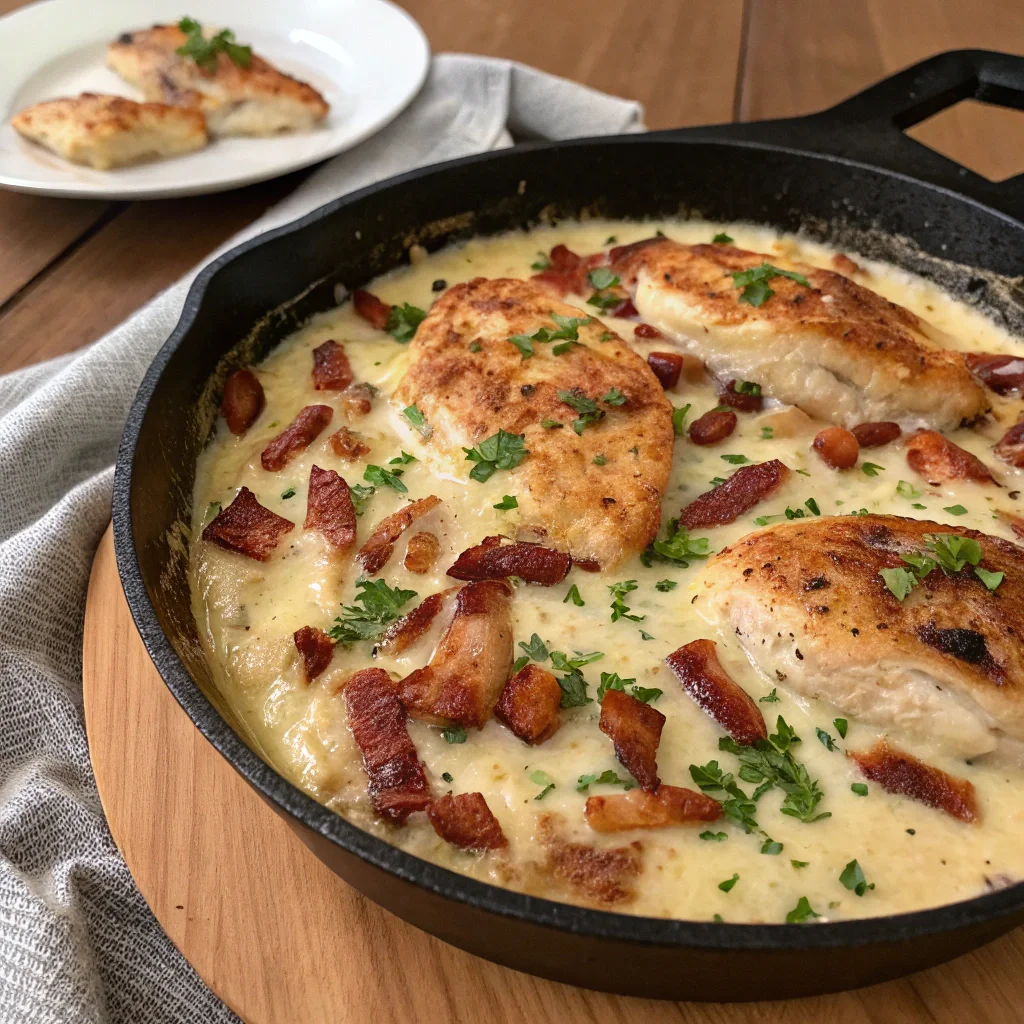
Creamy Parmesan Bacon Chicken Skillet: A One-Pan Wonder for Easy Weeknight Dinners
Imagine tender chicken breasts swimming in a velvety Parmesan sauce, studded with crispy bacon pieces, all made in one skillet with minimal cleanup. This Creamy Parmesan Bacon Chicken Skillet delivers restaurant-quality flavor without the hassle of multiple pots and pans. Whether you’re cooking for your family on a busy Tuesday or preparing an impressive dish for weekend guests, this recipe combines simple ingredients into something truly special. The best part? Everything cooks in about 30 minutes, making it perfect for those evenings when time is tight but you still want something satisfying and delicious.
Why This Recipe Works
This one-pan chicken dish succeeds because it layers flavors strategically. First, bacon renders its fat, creating a flavorful base. Then, chicken sears in that bacon fat, developing a golden crust. Finally, cream and Parmesan meld together, creating a luxurious sauce that coats everything perfectly.
The cooking method ensures moisture retention. By not overcooking the chicken, you maintain tenderness. The sauce thickens naturally from the Parmesan without requiring flour or cornstarch. This creates a lighter texture than traditional cream sauces.
Time efficiency makes this recipe practical. Everything happens in sequence in one skillet. While the bacon cooks, you can prepare other ingredients. When the chicken rests, the sauce finishes. This strategic workflow minimizes active cooking time.
The ingredient combination offers balanced nutrition. Chicken provides lean protein. Bacon adds savory depth without overwhelming the dish. Cream creates richness while Parmesan contributes umami and calcium. Garlic and herbs round out the flavor profile with aromatic complexity.
Essential Ingredients Breakdown
Chicken Breasts
Choose boneless, skinless chicken breasts weighing 6-8 ounces each. Thickness matters significantly. Pound thicker portions to ensure even cooking throughout. Room temperature chicken cooks more evenly than cold chicken straight from the refrigerator.
Look for chicken with a pink color and firm texture. Avoid pieces with gray spots or excessive liquid in the package. Organic or free-range options often have better flavor, though conventional chicken works perfectly fine.
Bacon
Thick-cut bacon provides better texture and flavor than thin slices. You’ll need 6-8 strips for a standard recipe serving four people. The bacon should be fresh, not close to its expiration date, for optimal taste.
Regular bacon works wonderfully, but you can also use center-cut bacon for a leaner option. Turkey bacon serves as an alternative, though it won’t render as much fat. If using turkey bacon, add a tablespoon of olive oil to compensate.
Heavy Cream
Heavy cream creates the signature silky texture in this dish. Full-fat cream works best for both flavor and consistency. Half-and-half can substitute in a pinch, though the sauce will be thinner and less rich.
For a lighter version, you can use half heavy cream and half chicken broth. This reduces calories while maintaining some creaminess. However, the sauce won’t be quite as indulgent as the full-cream version.
Parmesan Cheese
Freshly grated Parmesan is non-negotiable for best results. Pre-grated cheese contains anti-caking agents that prevent smooth melting. Buy a wedge of authentic Parmigiano-Reggiano and grate it yourself using a box grater or microplane.
You’ll need about one cup of grated cheese. The cheese should smell nutty and slightly sweet. Avoid packages with off odors or visible mold. Proper Parmesan is aged at least 12 months, developing complex flavors that elevate the sauce.
Garlic
Fresh garlic cloves add aromatic depth. You’ll need 4-5 cloves, minced finely. Jarred minced garlic works as a time-saver but lacks the punchy flavor of fresh. Garlic powder cannot substitute successfully in this application.
Mince the garlic just before cooking. Pre-minced garlic oxidizes and loses potency. Press the flat side of your knife against whole cloves to make peeling easier. The papery skin slips right off.
Chicken Broth
Low-sodium chicken broth gives you better control over final seasoning. You’ll need about half a cup to help create the sauce base. Homemade broth tastes best, but quality store-bought versions work excellently.
Vegetable broth can substitute if you want to keep things lighter. The flavor profile shifts slightly but remains delicious. Avoid using water alone, as it produces a bland sauce lacking depth.
Seasonings
Salt and black pepper are essential base seasonings. Italian seasoning blend adds herbal notes. Paprika contributes mild sweetness and color. Red pepper flakes provide optional heat for those who enjoy spice.
Fresh herbs like parsley or basil make excellent finishing touches. They add brightness and visual appeal. Dried herbs work during cooking, while fresh herbs shine as garnish.
Kitchen Tools You’ll Need
Large Skillet
A 12-inch skillet with high sides is ideal. Cast iron works beautifully for even heat distribution. Stainless steel also performs well, though food may stick more readily. Ensure your skillet is oven-safe if you plan to finish cooking in the oven.
Non-stick pans simplify cleanup but don’t develop the same fond on the bottom. That fond contributes significant flavor to the sauce. If using non-stick, you’ll miss some depth but still create a delicious dish.
Meat Thermometer
An instant-read thermometer ensures perfectly cooked chicken every time. The internal temperature should reach 165°F for food safety. Insert the thermometer into the thickest part of the breast without touching bone.
Digital thermometers provide fastest readings. Some models offer preset temperature alerts for different proteins. This tool prevents both undercooking and overcooking, guaranteeing ideal texture.
Tongs
Long-handled tongs help flip chicken and bacon safely. Spring-loaded tongs with scalloped edges grip food securely. Silicone-tipped tongs protect non-stick surfaces from scratching.
Keep tongs nearby throughout cooking. You’ll use them multiple times for turning proteins and stirring. A second pair helps if you’re cooking bacon and chicken simultaneously.
Box Grater
A four-sided box grater makes quick work of Parmesan. Use the medium holes for the right texture. The grated cheese melts smoothly into the sauce. Clean the grater immediately after use before cheese hardens.
A microplane zester creates finer shreds if you prefer. This works especially well for finishing garnish. Either tool dramatically outperforms pre-shredded cheese from packages.
Step-by-Step Cooking Instructions
Preparing the Chicken
Start by patting chicken breasts completely dry with paper towels. Moisture prevents proper browning. Place breasts between plastic wrap or parchment paper. Use a meat mallet to pound them to uniform thickness, about 3/4 inch throughout.
Season both sides generously with salt and pepper. The seasoning should be visible on the surface. Let chicken rest at room temperature for 15 minutes before cooking. This ensures even cooking and better browning.

Cooking the Bacon
Place bacon strips in a cold skillet. Turn heat to medium. This gradual heating renders fat evenly without burning. Cook for 8-10 minutes, flipping occasionally, until crispy and golden brown.
Watch carefully during the final minutes. Bacon can go from perfect to burnt quickly. Remove bacon to a paper towel-lined plate. Pour off excess fat, leaving about 2 tablespoons in the skillet for cooking chicken.
Searing the Chicken
Increase heat to medium-high. Wait until the bacon fat shimmers before adding chicken. Place breasts carefully in the skillet without crowding. Cook undisturbed for 5-6 minutes until golden brown underneath.
Flip chicken using tongs. Cook the second side for another 5-6 minutes. The internal temperature should reach 165°F. If chicken browns too quickly before reaching temperature, reduce heat to medium. Transfer cooked chicken to a clean plate and tent with foil.
Building the Sauce
Reduce heat to medium. Add minced garlic to the skillet. Stir constantly for 30 seconds until fragrant but not browned. Burnt garlic tastes bitter and ruins the sauce.
Pour in chicken broth and scrape the bottom of the skillet with a wooden spoon. Those browned bits (fond) contain concentrated flavor. Let broth simmer for 2 minutes, reducing slightly.
Add heavy cream and stir to combine. Bring mixture to a gentle simmer. Don’t let it boil vigorously, as this can cause cream to separate. Simmer for 3-4 minutes until sauce thickens slightly.
Adding Cheese and Finishing
Reduce heat to low. Add grated Parmesan gradually, stirring constantly. The cheese should melt smoothly into the sauce. If you add it too quickly or over high heat, it can clump or become grainy.
Crumble reserved bacon and stir most of it into the sauce. Save some for garnish. Taste the sauce and adjust seasoning with salt, pepper, or Italian seasoning as needed.
Return chicken breasts to the skillet. Spoon sauce over the top. Let everything warm together for 2-3 minutes. The chicken will absorb some sauce flavor while staying moist.
Pro Tips for Perfect Results
Even Chicken Thickness
The single most important factor for perfectly cooked chicken is uniform thickness. Thick portions remain undercooked while thin areas dry out. Spend the extra minute pounding chicken breasts flat. Your effort pays off with consistently tender results.
Place chicken between two sheets of plastic wrap before pounding. This prevents splatter and keeps your work surface clean. Aim for 3/4-inch thickness throughout. Use firm, even strokes radiating from the center outward.
Don’t Overcrowd the Pan
If your skillet can’t fit all chicken breasts with space between them, cook in batches. Overcrowding lowers pan temperature, causing chicken to steam rather than sear. Steamed chicken turns gray and rubbery instead of golden and flavorful.
Maintain at least half an inch between pieces. This allows hot air circulation and proper browning. If cooking multiple batches, keep finished chicken warm in a 200°F oven while preparing sauce.
Low Heat for Cheese
Parmesan contains proteins that can seize and separate if overheated. Always add cheese over low heat with constant stirring. This gentle approach ensures smooth integration into the sauce.
If sauce does become grainy, remove from heat immediately. Whisk vigorously while adding a tablespoon of cold cream. This can sometimes save a separated sauce. Prevention works better than correction, so keep heat low.
Fresh Parmesan Makes the Difference
Pre-shredded Parmesan contains cellulose to prevent clumping. This additive prevents smooth melting and creates a grainy texture. Fresh-grated Parmesan melts seamlessly, creating that signature silky sauce texture.
Invest in a chunk of real Parmigiano-Reggiano. Store it wrapped tightly in the refrigerator. Grate only what you need for each recipe. The superior flavor and texture justify the minimal extra effort.
Rest Your Chicken
After cooking, let chicken rest for 5 minutes before slicing. Resting allows juices to redistribute throughout the meat. Cut immediately and those juices run onto the cutting board instead of staying in the chicken.
Cover chicken loosely with foil during resting. This keeps it warm without trapping steam that would soften the crust. The internal temperature actually rises 5 degrees during resting, ensuring food safety.
Nutritional Information
One serving of Creamy Parmesan Bacon Chicken Skillet contains approximately 520 calories. This assumes a recipe serving four people. The macronutrient breakdown includes about 42 grams of protein, 36 grams of fat, and 4 grams of carbohydrates.
Protein comes primarily from chicken and cheese. This high protein content makes the dish satisfying and supports muscle maintenance. Each serving provides roughly 80% of daily protein needs for an average adult.
Fat content includes both saturated fat from cream and cheese, and monounsaturated fat from bacon. While high in fat, this meal fits well into low-carb or ketogenic eating patterns. The fat provides sustained energy and helps absorb fat-soluble vitamins.
Sodium levels reach approximately 680 milligrams per serving. This comes from bacon, cheese, and chicken broth. Use low-sodium broth and limit added salt if you’re watching sodium intake. The bacon contributes most of the sodium.
The dish provides significant calcium from Parmesan cheese, about 30% of daily needs per serving. It also contains vitamin A from cream, iron from chicken, and various B vitamins. These nutrients support bone health, energy production, and immune function.
For a lighter version, substitute half the cream with chicken broth and use turkey bacon. This modification reduces calories to approximately 380 per serving while cutting fat by nearly 40%. The dish remains creamy and satisfying despite the reduction.
Serving Suggestions and Side Dishes
Pasta Options
Serve this saucy chicken over pasta for a complete meal. Fettuccine, penne, or rigatoni work beautifully. The pasta catches and holds the creamy sauce in every bite. Cook pasta according to package directions, drain well, and toss with a bit of olive oil before topping with chicken.
Angel hair pasta offers a lighter option. Its delicate strands complement rather than compete with the rich sauce. For a low-carb alternative, use zucchini noodles or spaghetti squash. These vegetable substitutes absorb the flavorful sauce while adding nutrients and fiber.
Vegetable Sides
Steamed broccoli provides color contrast and nutritional balance. The mild vegetable flavor complements the rich sauce without overwhelming it. Toss steamed broccoli with a squeeze of lemon juice for brightness.
Roasted asparagus adds elegance to the plate. Season spears with olive oil, salt, and pepper, then roast at 425°F for 12-15 minutes. The slight char on asparagus tips contrasts nicely with the creamy sauce.
A crisp green salad cuts through richness. Use mixed greens, cherry tomatoes, and cucumber. Dress lightly with a simple vinaigrette made from olive oil, lemon juice, and Dijon mustard. The acidity balances the creamy main dish.
Starch Accompaniments
Garlic bread makes a classic pairing. Crusty bread soaks up every drop of delicious sauce. Make your own by spreading butter mixed with minced garlic on sliced baguette, then toasting until golden.
Mashed potatoes create ultimate comfort food. Their creamy texture complements the sauce while adding substance. For variety, try mashed cauliflower as a lower-carb alternative. Both options work equally well.
Rice pilaf offers a neutral base that lets the chicken shine. The light, fluffy texture contrasts with the creamy sauce. Add herbs like parsley or thyme to the pilaf for extra flavor dimension.
Storage and Reheating Guidelines
Refrigerator Storage
Store leftover Creamy Parmesan Bacon Chicken Skillet in an airtight container. Properly stored, it stays fresh for 3-4 days in the refrigerator. Separate chicken from sauce if possible, as they reheat at different rates.
Let food cool to room temperature before refrigerating. However, don’t leave it out longer than 2 hours to prevent bacterial growth. Divide large batches into smaller containers for faster cooling.
Label containers with the date. This helps track freshness and prevents food waste. Use oldest items first when you have multiple stored meals.
Freezing Instructions
This dish freezes reasonably well for up to 2 months. The cream sauce may separate slightly upon thawing but usually reconstitutes with stirring. Freeze in portion-sized containers for convenient single servings.
Leave headspace in containers, as liquids expand when frozen. Use freezer-safe containers or heavy-duty freezer bags. Remove as much air as possible to prevent freezer burn.
Thaw frozen portions overnight in the refrigerator. Never thaw at room temperature, as this promotes bacterial growth. Plan ahead to ensure safe thawing practices.
Reheating Methods
Reheat on the stovetop for best results. Place chicken and sauce in a skillet over medium-low heat. Add a splash of cream or broth if sauce seems too thick. Stir gently and heat until warmed through, about 8-10 minutes.
Microwave reheating works for convenience. Use 50% power to prevent overcooking. Heat in 1-minute intervals, stirring between each. Cover the dish to prevent splattering and maintain moisture.
Avoid oven reheating unless necessary. The high heat can dry out chicken and separate the sauce. If using the oven, cover tightly with foil and heat at 325°F for 15-20 minutes.
Common Mistakes to Avoid
Using Cold Chicken
Cold chicken straight from the refrigerator cooks unevenly. The outside overcooks before the inside reaches safe temperature. Always bring chicken to room temperature 15-20 minutes before cooking.
This simple step ensures even heat penetration. The chicken develops a better crust while staying juicy inside. Set a timer so you don’t forget about chicken sitting on the counter.
Adding Cheese Too Quickly
Dumping all the Parmesan at once creates clumps. The cheese doesn’t have time to melt gradually and smoothly. Add cheese in small handfuls, stirring constantly between additions.
Keep the heat low during this step. High heat causes proteins in cheese to seize and separate. Patience here makes the difference between silky sauce and grainy disaster.
Overcooking the Chicken
Dry, tough chicken ruins an otherwise perfect dish. Use a meat thermometer to ensure accuracy. Remove chicken from heat at 165°F exactly. Carryover cooking will finish the job during resting.
Overcooked chicken cannot be fixed. Prevention is the only solution. Invest in a good thermometer and use it consistently. Your family will notice the improved texture.
Burning the Garlic
Raw garlic needs only 30-60 seconds of cooking time. Any longer and it burns, turning bitter. Watch carefully and stir constantly when garlic hits the hot pan.
If garlic does burn, start over. There’s no way to salvage burned garlic flavor. Wipe out the pan, add fresh oil or butter, and try again with new garlic. This rare setback takes only a minute to correct.
Skipping the Fond
Those browned bits stuck to the pan bottom contain incredible flavor. Don’t skip deglazing the pan with broth. Scrape vigorously with a wooden spoon to incorporate all that concentrated taste into your sauce.
The fond develops from proteins and sugars caramelizing during cooking. These compounds add depth and complexity impossible to achieve otherwise. Make deglazing a habit in all your cooking.
Variations and Customizations
Sun-Dried Tomato Addition
Chop a quarter cup of sun-dried tomatoes and add them to the sauce. They contribute tangy sweetness and vibrant color. Oil-packed tomatoes work best, though you can use dried ones rehydrated in warm water.
Add tomatoes when you pour in the cream. They’ll soften and infuse the sauce with their concentrated flavor. This variation works especially well with Italian seasoning in the sauce.
Spinach for Added Nutrition
Stir in 3-4 cups of fresh spinach during the last few minutes of cooking. The leaves will quickly and add nutrients without altering flavor significantly. Baby spinach requires no chopping and integrates seamlessly.
The spinach adds vitamins A and K plus iron and fiber. It also creates visual appeal with its deep green color against the creamy sauce. This simple addition makes the meal more balanced.
Mushroom Enhancement
Sauté sliced mushrooms after removing cooked bacon. Use about 8 ounces of cremini or button mushrooms. Cook until golden and their liquid evaporates, then proceed with the recipe. The mushrooms add earthiness and meaty texture.
This variation appeals to umami lovers. The mushrooms complement both the bacon and Parmesan, creating layers of savory flavor. It also increases the vegetable content of the meal.
Spicy Kick
Add red pepper flakes or cayenne pepper for heat. Start with a quarter teaspoon and adjust to taste. Hot sauce stirred in at the end also works well. The heat balances the richness of the cream sauce.
For a smokier heat, use chipotle powder instead of regular red pepper flakes. This adds depth along with spice. Smoked paprika provides smokiness without heat if you prefer mild dishes.
Italian Herb Version
Replace Italian seasoning with fresh herbs for brighter flavor. Try a combination of basil, oregano, and thyme. Add heartier herbs like thyme during cooking. Reserve delicate herbs like basil for garnishing at the end.
Fresh herbs transform the dish with aromatic complexity. They also add visual appeal with their bright green color. Grow your own herbs in pots for the freshest possible flavor.
Frequently Asked Questions
Can I use chicken thighs instead of breasts?
Yes, boneless skinless chicken thighs work wonderfully in this recipe. They contain more fat than breasts, making them more forgiving if slightly overcooked. Cook thighs to an internal temperature of 175°F for optimal texture. The cooking time remains similar, though thighs may take 2-3 minutes longer.
Thighs provide richer flavor due to their higher fat content. They also cost less than breasts in most markets. Many home cooks actually prefer thighs for their superior taste and tenderness.
What can I substitute for heavy cream?
Half-and-half creates a lighter sauce, though it won’t be quite as rich. You can also use a mixture of chicken broth and cream cheese for thickness. Blend equal parts broth and softened cream cheese until smooth before adding to the pan.
For dairy-free versions, try full-fat coconut cream. The coconut flavor is mild and often undetectable in savory dishes. Cashew cream is another option, though it requires advance preparation to soak and blend cashews.
How do I prevent the sauce from separating?
Keep heat low when adding cheese and never let the sauce boil vigorously. Boiling causes the proteins in dairy to separate from the fat. Constant stirring while adding cheese helps maintain emulsion.
If separation occurs, remove from heat immediately. Whisk in a tablespoon of cold cream or an ice cube. This shock of cold can sometimes bring the sauce back together. Prevention through low heat works better than trying to fix separation.
Can I make this dish ahead of time?
You can prep ingredients ahead, but cook the dish just before serving for best results. Creamy sauces don’t hold well over extended periods. They thicken and can separate when reheated.
If you must make it ahead, slightly undercook the chicken and make the sauce thinner than desired. Reheat gently, adding liquid as needed. The texture won’t be quite as perfect as freshly made, but it will still taste delicious.
Is this recipe suitable for meal prep?
Yes, with some modifications. Prepare the recipe as directed, then portion into individual containers. Store for up to 4 days. Expect the sauce to thicken in the refrigerator.
When reheating, add a splash of broth or cream to restore the proper consistency. Reheat gently to avoid overcooking the chicken further. While not quite as good as fresh, it makes a satisfying meal prep option.
What’s the best way to cook bacon for this recipe?
Start bacon in a cold pan and heat gradually. This renders fat slowly and prevents burning. Cook over medium heat, flipping occasionally, until crispy. Pour off excess fat, leaving just enough to cook the chicken.
Pre-cooked bacon pieces won’t work as well since you need the rendered fat for cooking. The bacon flavor also develops better when cooked from raw. Fresh bacon is worth the extra few minutes.
Can I use pre-shredded Parmesan cheese?
While possible, fresh-grated Parmesan produces much better results. Pre-shredded cheese contains anti-caking agents that prevent smooth melting. The sauce may turn grainy instead of silky smooth.
Buy a wedge of real Parmigiano-Reggiano and grate it yourself. The flavor and texture improvements justify the minimal extra effort. Store the chunk wrapped tightly in the refrigerator for future use.
How do I know when chicken is done without a thermometer?
Press the thickest part of the breast with your finger. It should feel firm and spring back slightly. Cut into the thickest part to check—juices should run clear, not pink. However, a thermometer remains the most reliable method.
Visual cues alone can mislead. Chicken may look done on the outside while remaining raw inside. Invest in an instant-read thermometer for consistent results and food safety. They cost less than $20 and last for years.
Final Thoughts
This Creamy Parmesan Bacon Chicken Skillet combines simplicity with sophistication. The one-pan cooking method makes cleanup effortless while the flavors taste restaurant-quality. Rich cream sauce, salty bacon, and nutty Parmesan create a combination that satisfies even the pickiest eaters.
The recipe’s versatility allows endless customization. Add vegetables, switch up herbs, or adjust the heat level to suit your preferences. Each variation maintains the core appeal: tender chicken in a luxurious sauce that brings comfort and satisfaction to the dinner table.
Whether you’re cooking for family or entertaining guests, this dish delivers impressive results without complicated techniques or hard-to-find ingredients. The straightforward process works for beginners while offering enough depth to keep experienced cooks interested. Most importantly, it tastes absolutely delicious.
Master this recipe and you’ll have a reliable option for busy weeknights or special occasions. The combination of simple ingredients, quick cooking time, and outstanding flavor makes it a true winner. Try it once and it will likely become a regular rotation in your meal planning.
Print
Creamy Parmesan Bacon Chicken Skillet
Description
Ingredients:
-
4 boneless, skinless chicken breasts
-
Salt and black pepper, to taste
-
1 tsp garlic powder
-
6 slices bacon, chopped
-
2 tbsp butter
-
3 cloves garlic, minced
-
1 cup heavy cream
-
½ cup chicken broth
-
½ cup grated Parmesan cheese
-
1 tsp Italian seasoning
-
Fresh parsley, chopped (for garnish)
Instructions:
-
Season and sear the chicken:
Pat chicken dry and season both sides with salt, pepper, and garlic powder.
In a large skillet over medium-high heat, cook chicken in a little oil until golden brown on both sides (about 4–5 minutes per side). Remove and set aside. -
Cook the bacon:
In the same skillet, cook chopped bacon until crispy. Remove with a slotted spoon and set aside, leaving about 1 tbsp of bacon fat in the pan. -
Make the creamy sauce:
Add butter and minced garlic to the skillet. Sauté 30 seconds until fragrant.
Stir in chicken broth, heavy cream, Parmesan, and Italian seasoning. Simmer 3–5 minutes until thickened. -
Combine:
Return chicken and bacon to the skillet, spooning sauce over the top. Simmer 2–3 minutes to heat through and meld flavors. -
Serve:
Garnish with fresh parsley and extra Parmesan. Serve with mashed potatoes, pasta, or a side of roasted veggies.