
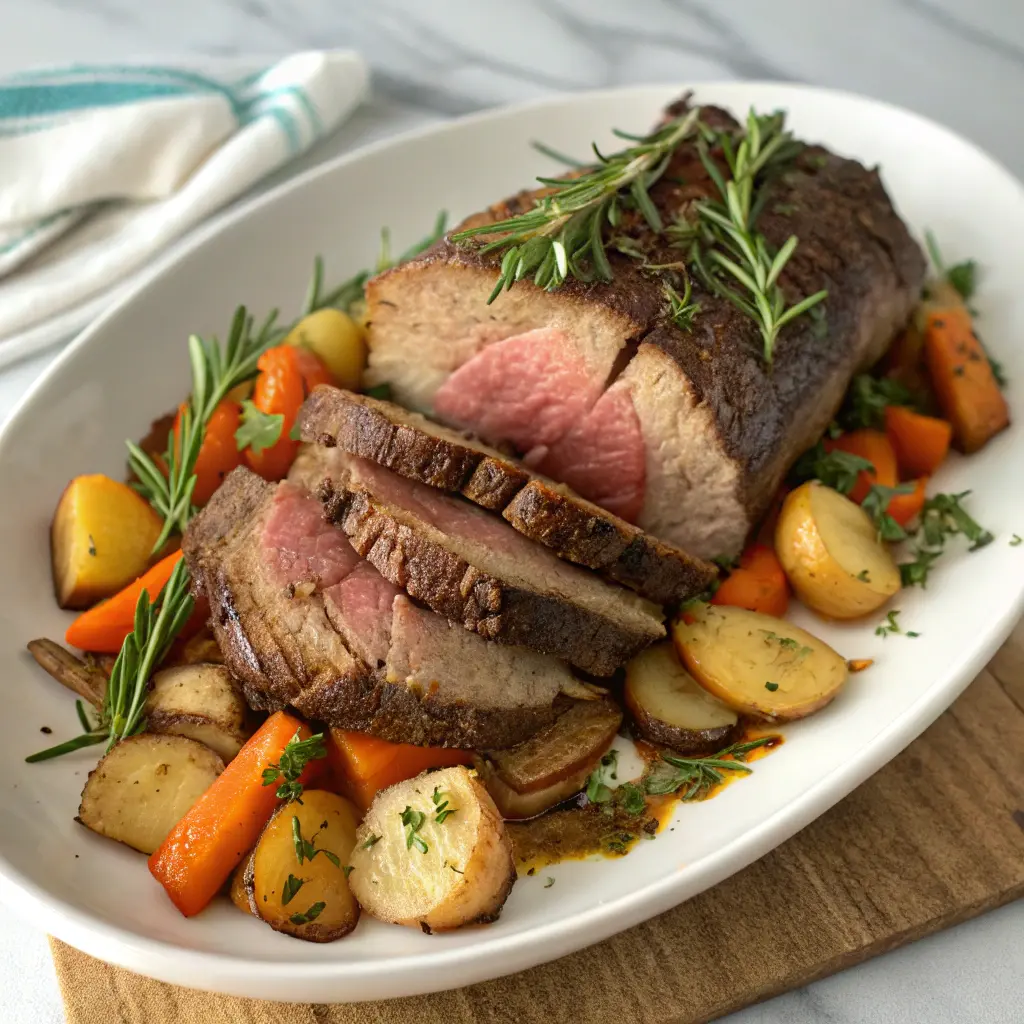
Slow Cooker Herb Butter Beef Roast
There’s something magical about coming home to the aroma of a perfectly cooked Slow Cooker Herb Butter Beef Roast wafting through your kitchen. This hands-off cooking method transforms an affordable cut of beef into a tender, flavorful masterpiece that practically melts in your mouth. Whether you’re preparing a Sunday family dinner or meal prepping for the week ahead, this slow cooker herb butter beef roast delivers restaurant-quality results with minimal effort. The combination of fragrant herbs and rich butter creates a savory crust while the low, slow heat breaks down tough fibers, resulting in incredibly juicy meat every single time.
Why Slow Cooker Beef Roast Works Every Time
Slow cookers revolutionized home cooking for busy families. The gentle, consistent heat transforms tough, inexpensive cuts into tender perfection.
The science behind slow cooking is fascinating. Low temperatures (typically 190-210°F) allow collagen in tougher cuts to break down gradually. This process converts connective tissue into gelatin, which gives the meat its signature fall-apart texture.
Additionally, the sealed environment traps moisture. Steam circulates continuously, basting the roast naturally. This prevents the meat from drying out during the long cooking process.
The herb butter component adds another layer of genius. Butter contains milk solids that caramelize slightly, creating depth of flavor. Fresh herbs infuse directly into the meat as their essential oils release slowly over hours.
Another advantage is convenience. You can prep everything in 15 minutes, then let the slow cooker do the heavy lifting. This makes it perfect for busy weekdays or lazy weekends.
Finally, slow cooker beef roast is incredibly forgiving. Unlike oven roasting, which requires precise timing, the slow cooker gives you a generous window. An extra 30 minutes rarely ruins the dish.
Choosing the Perfect Cut of Beef
Selecting the right cut makes all the difference. Not all beef roasts perform equally in the slow cooker.
Best Cuts for Slow Cooking
Chuck roast stands as the ultimate choice. This shoulder cut contains abundant marbling and connective tissue. Both elements break down beautifully during slow cooking, creating unmatched tenderness.
Round roast offers a leaner alternative. While slightly less forgiving, it still produces excellent results. Just ensure you don’t overcook it, as the lower fat content means less moisture cushion.
Brisket works wonderfully in slow cookers. This chest cut has long muscle fibers that soften perfectly with extended cooking. The flat cut works better than the point for even cooking.
Rump roast provides a middle ground. It’s more affordable than chuck but delivers comparable results. The key is choosing a well-marbled piece.
What to Look For
Marbling matters tremendously. Those white flecks of intramuscular fat melt during cooking, basting the meat from within. Choose roasts with visible marbling throughout.
Thickness ensures even cooking. Aim for roasts between 3-5 pounds. Smaller pieces cook too quickly, while larger ones may cook unevenly.
Color indicates freshness. Look for bright red meat without brown spots. The fat should appear creamy white, not yellow.
Essential Ingredients for Herb Butter Beef Roast
Quality ingredients elevate this dish from good to extraordinary. Here’s what you’ll need:
The Beef
Start with a 3-4 pound chuck roast or your preferred cut. Pat it completely dry with paper towels before seasoning. Moisture prevents proper browning.
Herb Butter Mixture
Unsalted butter (½ cup, softened) forms the base. Unsalted allows you to control sodium levels precisely.
Fresh herbs provide vibrant flavor. Combine 2 tablespoons each of:
-
Chopped rosemary
-
Chopped thyme
-
Chopped parsley
Fresh herbs outperform dried significantly. Their essential oils remain potent, infusing deeply into the meat.
Garlic (6 cloves, minced) adds pungent depth. Fresh garlic crushes and releases allicin compounds that enhance savory notes.
Seasonings
Kosher salt (2 teaspoons) seasons the meat thoroughly. The larger crystals dissolve slowly, penetrating deeper.
Black pepper (1 teaspoon, freshly ground) adds subtle heat. Freshly ground pepper contains more volatile oils than pre-ground.
Onion powder (1 teaspoon) contributes sweet, savory undertones without adding moisture.
Smoked paprika (½ teaspoon) provides gentle smokiness and beautiful color.
Vegetables and Liquid
Yellow onions (2 large, quartered) create a flavorful base. They caramelize slightly, sweetening the cooking liquid.
Carrots (4 large, cut into chunks) add natural sweetness and color.
Celery (3 stalks, cut into pieces) contributes aromatic depth.
Beef broth (2 cups) provides moisture and concentrated beef flavor. Choose low-sodium to control salt levels.
Worcestershire sauce (2 tablespoons) adds umami complexity without overpowering.
Tomato paste (2 tablespoons) enriches the color and adds subtle sweetness.
Step-by-Step Cooking Instructions
Follow these detailed steps for guaranteed success with your herb butter beef roast.
Preparation Phase
First, remove the beef from refrigeration 30 minutes before cooking. Room temperature meat cooks more evenly.
Meanwhile, prepare the herb butter. Combine softened butter with minced garlic and all fresh herbs in a small bowl. Mix thoroughly until well incorporated. This compound butter can be made a day ahead and refrigerated.
Pat the beef roast completely dry. Moisture is the enemy of browning. Season all sides generously with salt, pepper, onion powder, and smoked paprika.
Searing (Optional but Recommended)
While technically optional, searing creates incredible flavor depth. Heat 2 tablespoons vegetable oil in a large skillet over medium-high heat.
When the oil shimmers, carefully place the roast in the pan. Sear each side for 3-4 minutes until a deep brown crust forms. Don’t move the meat during searing.
Transfer the seared roast to a plate. The crust contains hundreds of flavor compounds created through the Maillard reaction.
Slow Cooker Assembly
Arrange onion quarters, carrot chunks, and celery pieces in the bottom of your slow cooker. This vegetable bed prevents direct bottom contact, ensuring even heat distribution.
Place the seared roast on top of the vegetables. Spread the herb butter mixture generously over the entire top surface. The butter will slowly melt, basting the meat continuously.
In a measuring cup, whisk together beef broth, Worcestershire sauce, and tomato paste. Pour this liquid around (not over) the roast. You want the herb butter to stay on top initially.
Cooking Process
Cover the slow cooker and set it to LOW. Cooking times vary by size:
-
3-pound roast: 7-8 hours
-
4-pound roast: 8-9 hours
-
5-pound roast: 9-10 hours
Resist the temptation to lift the lid frequently. Each peek releases heat, extending cooking time by 15-20 minutes.
The roast is done when an instant-read thermometer reads 195-205°F in the thickest part. At this temperature, the collagen has fully converted to gelatin.
Alternatively, test with a fork. The meat should shred easily with minimal pressure.
Resting Period
Transfer the roast to a cutting board. Tent loosely with aluminum foil and rest for 15 minutes. This allows juices to redistribute throughout the meat.
While resting, strain the cooking liquid through a fine-mesh sieve. You can make gravy from this flavorful base or serve it as-is for au jus.
Tips for Maximum Flavor and Tenderness
These professional techniques guarantee exceptional results every time.
Enhance the Sear
For an even better crust, dry-brine the roast overnight. Season with salt and leave uncovered in the refrigerator. The surface dries completely, promoting superior browning.
Layer Your Aromatics
Create depth by layering flavors. Add bay leaves, peppercorns, and a splash of balsamic vinegar to the cooking liquid. These subtle additions create complexity.
Use a Meat Thermometer
Guessing doneness leads to inconsistent results. Invest in a reliable instant-read thermometer. For fall-apart texture, aim for 195-205°F internal temperature.
Don’t Rush the Rest
Resting meat is non-negotiable. Cutting immediately causes all those precious juices to run out onto your cutting board. Patience pays off with every bite.
Make Ahead Strategy
This dish actually improves when made a day ahead. The flavors meld beautifully overnight. Simply reheat gently in the slow cooker on LOW for 2-3 hours.
Upgrade Your Vegetables
Beyond the aromatics, add heartier vegetables during the last 2 hours of cooking. Baby potatoes, parsnips, and turnips absorb the flavorful liquid while maintaining their texture.
Create a Crispy Top
For contrast, transfer the cooked roast to a baking sheet. Brush with the cooking liquid and broil for 2-3 minutes. This creates a caramelized exterior while keeping the interior tender.
Serving Suggestions and Side Dishes
Your slow cooker herb butter beef roast deserves equally impressive accompaniments.
Classic Pairings
Creamy mashed potatoes absorb the rich cooking juices perfectly. Use Yukon Gold potatoes for the creamiest texture.
Roasted root vegetables complement the beef’s richness. Toss carrots, parsnips, and Brussels sprouts with olive oil and roast until caramelized.
Buttered egg noodles provide a simple, satisfying base. The wide noodles catch the flavorful juices beautifully.
Crusty bread is essential for soaking up every drop of the delicious cooking liquid. A rustic sourdough works wonderfully.
Fresh Elements
Green beans almondine add vibrant color and fresh crunch. The bright green contrasts beautifully with the rich, brown roast.
Simple arugula salad with lemon vinaigrette cuts through the richness. The peppery greens refresh the palate between bites.
Roasted asparagus brings elegance to the plate. Season with lemon zest and parmesan for extra sophistication.
Creative Applications
Beef sandwiches transform leftovers into lunch heroes. Pile sliced beef onto crusty rolls with caramelized onions and horseradish cream.
Beef hash makes an incredible breakfast. Dice the leftover beef and crisp it with potatoes, onions, and bell peppers.
Beef potpie showcases the meat in a new form. Combine chunks with vegetables in a creamy sauce, then top with puff pastry.
Storage and Reheating Guidelines
Proper storage maintains quality and safety for your delicious leftovers.
Refrigeration
Cool the beef to room temperature within 2 hours of finishing cooking. Bacteria multiply rapidly in the “danger zone” between 40-140°F.
Slice or shred the meat before storing. Smaller pieces reheat more evenly and cool faster initially.
Place meat in airtight containers with some of the cooking liquid. The moisture prevents drying during storage.
Refrigerated roast beef stays fresh for 3-4 days. Always store at 40°F or below.
Freezing
For longer storage, freeze the beef within 3-4 days of cooking. Frozen cooked beef maintains quality for 2-3 months.
Portion into meal-sized amounts before freezing. This allows you to thaw only what you need.
Remove as much air as possible from freezer bags. Air exposure causes freezer burn, degrading texture and flavor.
Label containers with contents and date. Organization prevents forgotten food waste.
Reheating Methods
Slow cooker method produces the best results. Place meat with some liquid in the slow cooker on LOW for 2-3 hours. This gentle reheating maintains tenderness.
Oven method works for larger portions. Place meat in a covered dish with liquid at 300°F for 20-30 minutes.
Microwave option suits individual portions. Use 50% power and heat in 1-minute intervals, stirring between. Add liquid to prevent drying.
Stovetop technique works for sliced beef. Warm gently in a covered pan with cooking liquid over low heat.
Never reheat beef more than once. Repeated heating degrades texture and increases food safety risks.
Nutritional Information
Understanding the nutritional profile helps you incorporate this dish into your meal planning.
Per Serving (Based on 8 Servings)
Calories: 380-420 (varies by cut and fat content)
Protein: 42-45g
Fat: 20-24g
Saturated Fat: 9-11g
Carbohydrates: 8-10g
Fiber: 2g
Sugar: 4g
Sodium: 480-520mg
Cholesterol: 125-140mg
Nutritional Highlights
Beef provides exceptional protein quality. It contains all nine essential amino acids your body needs for muscle maintenance and repair.
Iron content in beef is highly bioavailable. The heme iron found in red meat absorbs more efficiently than plant-based non-heme iron. This supports healthy red blood cell production.
Vitamin B12 occurs naturally only in animal products. A single serving provides well over 100% of your daily requirement. B12 supports nerve function and DNA synthesis.
Zinc supports immune function and wound healing. Beef offers one of the richest dietary sources of this essential mineral.
Modifications for Dietary Needs
Lower fat: Choose round roast instead of chuck. Trim visible fat before cooking. This reduces overall fat content by 30-40%.
Reduced sodium: Use low-sodium beef broth and reduce added salt. Let diners season to taste at the table.
Increase vegetables: Double the vegetable quantity. This boosts fiber while reducing calorie density per serving.
Frequently Asked Questions
How long does a slow cooker herb butter beef roast take to cook?
Cooking time depends on roast size and slow cooker temperature. On LOW, expect 7-9 hours for a 3-4 pound roast. HIGH setting reduces time to 4-5 hours, though LOW produces more tender results.
Can I cook frozen beef in the slow cooker?
No, never cook frozen meat in slow cookers. The prolonged time in the bacterial danger zone poses serious food safety risks. Always thaw beef completely in the refrigerator before slow cooking.
Why is my roast tough after cooking?
Insufficient cooking time is the most common culprit. Beef needs to reach 195-205°F for collagen breakdown. Continue cooking until the meat shreds easily with a fork.
Do I need to add liquid to the slow cooker?
Yes, always add liquid. The moisture creates steam, which keeps the cooking environment humid. Without liquid, the meat can dry out and burn on the bottom.
Can I use dried herbs instead of fresh?
Yes, but reduce the quantity by half. Dried herbs are more concentrated. Add them at the beginning of cooking since they need time to rehydrate and release flavor.
Should I sear the beef before slow cooking?
Searing is optional but highly recommended. The caramelization creates hundreds of flavor compounds through the Maillard reaction. This adds significant depth to the final dish.
How do I make gravy from the cooking liquid?
Strain the liquid, then return it to a saucepan. Whisk together 2 tablespoons cornstarch with ¼ cup cold water. Bring the liquid to a simmer, then whisk in the cornstarch slurry. Simmer until thickened, about 3-5 minutes.
What if my slow cooker runs hot?
Some models cook hotter than others. Check your roast after 6 hours on LOW. Use a thermometer to monitor internal temperature. Consider reducing cooking time slightly.
Final Thoughts
Mastering the slow cooker herb butter beef roast transforms your home cooking repertoire. This versatile dish delivers impressive results with minimal hands-on time, making it perfect for both weeknight dinners and special occasions. The combination of aromatic herbs, rich butter, and tender beef creates layers of flavor that satisfy even the most discerning palates.
Remember the key principles: choose well-marbled cuts, sear for maximum flavor, cook low and slow until fork-tender, and always rest the meat before slicing. These simple steps guarantee success every time you prepare this classic comfort food.
Whether you’re feeding a hungry family, meal prepping for the week, or entertaining guests, this slow cooker herb butter beef roast never disappoints. The leftovers transform into countless creative meals, making it an economical choice as well.
Print
Slow Cooker Herb Butter Beef Roast
Description
Slow Cooker Herb Butter Beef Roast
Ingredients:
-
3–4 lb beef chuck roast
-
1 ½ teaspoons salt
-
1 teaspoon black pepper
-
2 tablespoons olive oil
-
4 tablespoons unsalted butter, softened
-
4 cloves garlic, minced
-
1 tablespoon fresh rosemary, chopped (or 1 teaspoon dried)
-
1 tablespoon fresh thyme, chopped (or 1 teaspoon dried)
-
1 tablespoon fresh parsley, chopped (plus more for garnish)
-
1 cup beef broth
-
1 tablespoon Worcestershire sauce
-
1 onion, quartered
-
3 carrots, cut into chunks
-
3–4 potatoes, cut into chunks
Instructions:
-
Prepare the roast:
Pat the beef roast dry with paper towels. Season all sides generously with salt and pepper. -
Sear for flavor (optional but recommended):
Heat olive oil in a large skillet over medium-high heat. Sear the roast on all sides until golden brown — about 3–4 minutes per side. Transfer to the slow cooker. -
Make the herb butter:
In a small bowl, mix softened butter, minced garlic, rosemary, thyme, and parsley until well combined. Spread the herb butter evenly over the top of the roast. -
Add the veggies and broth:
Place onions, carrots, and potatoes around the roast. Pour beef broth and Worcestershire sauce into the slow cooker. -
Cook:
Cover and cook on LOW for 8–9 hours or HIGH for 4–5 hours, until the beef is fork-tender and the vegetables are soft. -
Finish and serve:
Remove roast and vegetables carefully. Spoon some of the buttery juices over the top, then garnish with fresh parsley before serving.