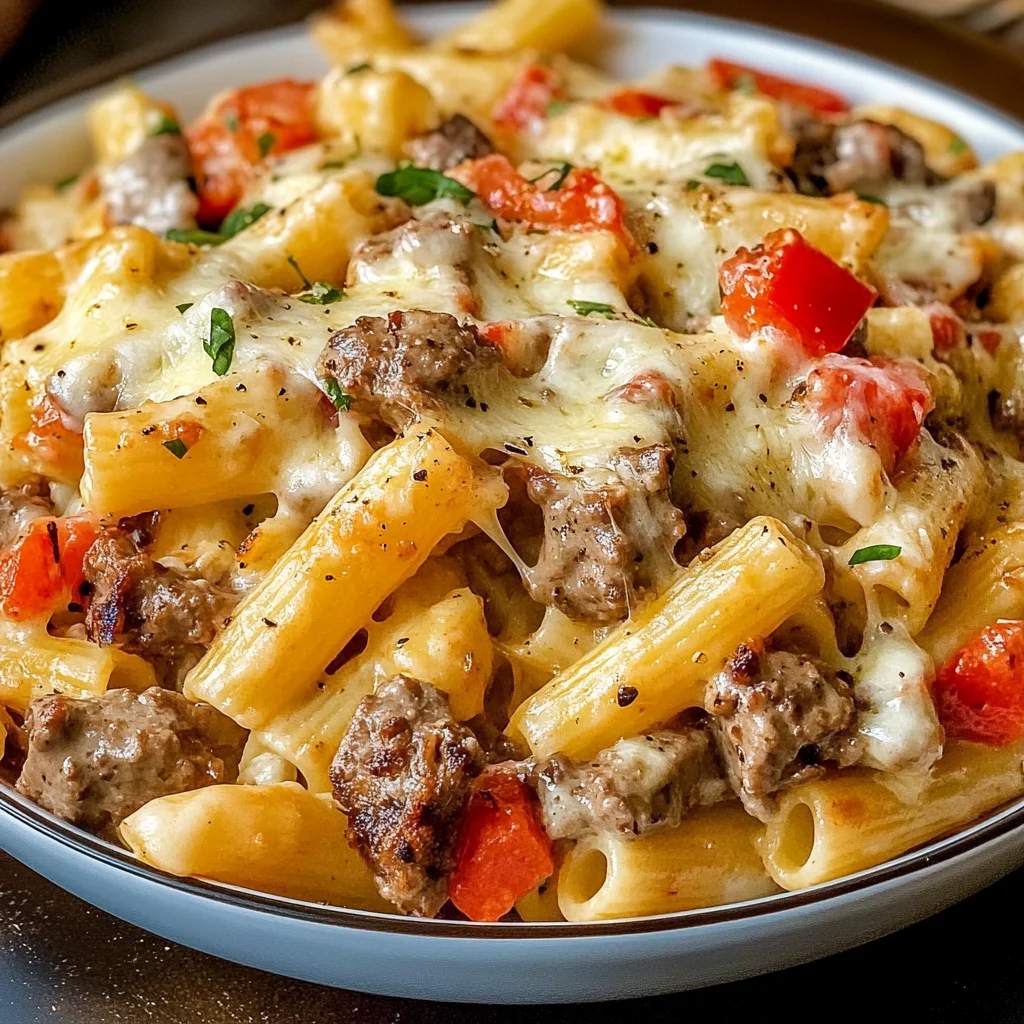
Savory Philly Cheesesteak Pasta with Creamy Provolone Cheese Sauce
If you’re craving the bold flavors of a classic Philly cheesesteak but want something you can twirl on a fork, this Savory Philly Cheesesteak Pasta with Creamy Provolone Cheese Sauce is your answer. This one-pot wonder combines tender strips of beef, sautéed peppers and onions, and perfectly cooked pasta, all smothered in a rich provolone cheese sauce. It’s comfort food at its finest—easy enough for weeknight dinners yet impressive enough for guests.
What Makes This Dish Special
The Philly cheesesteak pasta brings together two beloved comfort foods into one satisfying meal. Traditional cheesesteaks originated in Philadelphia during the 1930s, featuring thinly sliced beef and melted cheese on a hoagie roll. This pasta adaptation captures those same flavors while offering easier serving and more versatility.
Why This Recipe Works
This dish succeeds because it builds layers of flavor. First, you sear the beef to develop a golden crust. Then, you caramelize onions and peppers to create natural sweetness. Finally, the creamy provolone sauce ties everything together. The pasta absorbs the savory juices, making every bite rich and satisfying.
The beauty of this recipe lies in its simplicity. You cook everything in one pot, which means less cleanup and more time enjoying your meal.
Essential Ingredients Breakdown
For the Beef and Vegetables
-
Ribeye or sirloin steak (1.5 pounds): Thinly sliced against the grain for tenderness
-
Bell peppers (2 large): Use green for authentic flavor, or mix colors for visual appeal
-
Yellow onion (1 large): Sliced thin for proper caramelization
-
Mushrooms (8 ounces): Optional but adds earthiness
-
Garlic (4 cloves): Freshly minced for maximum impact
For the Pasta Base
-
Penne or rigatoni (1 pound): Tube shapes hold the sauce best
-
Beef broth (4 cups): Adds depth and helps cook the pasta
-
Heavy cream (2 cups): Creates the luxurious sauce texture
-
Provolone cheese (12 ounces): Freshly shredded for smooth melting
Seasonings and Flavor Enhancers
-
Worcestershire sauce (2 tablespoons): Adds umami depth
-
Dijon mustard (1 tablespoon): Provides subtle tang
-
Smoked paprika (1 teaspoon): Enhances the savory notes
-
Black pepper and salt: Season to taste
-
Olive oil (3 tablespoons): For searing and sautéing
Kitchen Tools You’ll Need
Gather these tools before starting to ensure smooth cooking:
-
Large Dutch oven or deep skillet with lid
-
Sharp chef’s knife for slicing beef
-
Cutting board
-
Cheese grater
-
Wooden spoon or spatula
-
Measuring cups and spoons
-
Tongs for handling beef
Step-by-Step Cooking Instructions
Preparing the Beef
Start by placing your steak in the freezer for 20 minutes. This firms up the meat, making it easier to slice thinly. Remove and slice against the grain into strips about ¼-inch thick. Pat the strips dry with paper towels to ensure proper browning.
Season the beef generously with salt and black pepper. This initial seasoning is crucial for building flavor throughout the dish.
Searing the Meat
Heat two tablespoons of olive oil in your Dutch oven over medium-high heat. Once the oil shimmers, add half the beef strips in a single layer. Avoid overcrowding, which creates steam instead of a sear.
Cook for 2-3 minutes without moving the pieces. Then flip and cook another 2 minutes. The beef should develop a golden-brown crust. Transfer to a plate and repeat with remaining beef.
Building the Vegetable Base
Reduce heat to medium and add the remaining tablespoon of olive oil. Add sliced onions and cook for 5 minutes, stirring occasionally. The onions should soften and turn translucent.
Next, add the bell peppers and mushrooms. Cook for another 7-8 minutes until the vegetables caramelize slightly. Add minced garlic and cook for 1 minute until fragrant. The vegetables should be tender but not mushy.
Cooking the Pasta
Pour the beef broth into the pot with the vegetables. Bring to a boil over high heat. Add the uncooked pasta, stirring to submerge all pieces. Reduce heat to medium-low and cover.
Simmer for 12-14 minutes, stirring every 3-4 minutes to prevent sticking. The pasta should absorb most of the liquid and reach al dente texture. Check the package directions for exact timing, as different pasta shapes vary.
Creating the Cheese Sauce
Once the pasta is tender, reduce heat to low. Pour in the heavy cream and stir well. Add Worcestershire sauce, Dijon mustard, and smoked paprika. Mix thoroughly to combine all flavors.
Gradually add the shredded provolone cheese, stirring constantly. Add one handful at a time, allowing each addition to melt before adding more. This prevents clumping and ensures a smooth sauce. The sauce should coat the back of a spoon when ready.
Final Assembly
Return the cooked beef to the pot along with any accumulated juices. Stir gently to distribute the meat throughout the pasta. Cook for 2-3 minutes to warm the beef through.
Taste and adjust seasoning with additional salt and pepper if needed. The dish should be creamy, savory, and well-balanced.
Pro Tips for Perfect Results
Achieving Restaurant Quality
Choose the right cut of beef. Ribeye offers the most flavor due to its marbling, but sirloin works well for a leaner option. Both cuts provide the tender texture you need for this Philly cheesesteak pasta.
Slice your beef as thin as possible. Partially freezing makes this task much easier. Thin slices cook quickly and absorb more flavor from the sauce.
Cheese Sauce Secrets
Always use freshly shredded cheese rather than pre-shredded varieties. Pre-shredded cheese contains anti-caking agents that prevent smooth melting. Freshly grated provolone creates a silky sauce without graininess.
Control your heat carefully when making the sauce. Too much heat causes the cheese to separate and become oily. Keep the temperature low and stir constantly for the best results.
Pasta Cooking Technique
Don’t rinse your pasta after cooking. The starch on the pasta surface helps the cheese sauce cling better. This creates a more cohesive dish with better flavor distribution.
If the pasta absorbs too much liquid before finishing, add beef broth or cream in ¼-cup increments. The final consistency should be creamy but not soupy.
Nutritional Information
Per serving (based on 6 servings):
-
Calories: 685
-
Protein: 42g
-
Carbohydrates: 58g
-
Fat: 32g
-
Saturated Fat: 16g
-
Fiber: 3g
-
Sodium: 890mg
-
Calcium: 385mg
Recipe Variations and Substitutions
Dietary Modifications
For a lighter version: Substitute half-and-half for heavy cream and reduce cheese to 8 ounces. Use sirloin instead of ribeye to cut additional fat.
Gluten-free option: Use your favorite gluten-free pasta and ensure your Worcestershire sauce is gluten-free certified. Cook the pasta separately according to package directions, then combine with the sauce.
Vegetarian adaptation: Replace beef with thick portobello mushroom slices or plant-based steak strips. Use vegetable broth instead of beef broth for the base.
Cheese Alternatives
While provolone delivers authentic Philly cheesesteak flavor, you can experiment with other varieties. American cheese creates a smoother, milder sauce. White cheddar offers sharpness, while mozzarella provides extra stretch.
For maximum authenticity, try Cheez Whiz as some Philadelphia establishments use. Mix it with the cream for an ultra-smooth sauce that mimics traditional cheesesteaks.
Protein Variations
Chicken breast strips work beautifully in place of beef. Season with Italian herbs for a different flavor profile. Turkey cutlets offer a leaner alternative while maintaining the hearty texture.
For seafood lovers, large shrimp create an interesting twist. Cook them separately and add at the end to prevent overcooking.
Storing and Reheating Guidelines
Proper Storage Methods
Allow the Philly cheesesteak pasta to cool completely before storing. Transfer to airtight containers and refrigerate within 2 hours of cooking. Properly stored, this dish keeps for 3-4 days.
For longer storage, freeze in portion-sized containers for up to 3 months. Leave about an inch of headspace for expansion. Label containers with the date to track freshness.
Reheating Instructions
Stovetop method: Place pasta in a skillet over medium-low heat. Add 2-3 tablespoons of beef broth or cream to loosen the sauce. Stir frequently and heat for 5-7 minutes until warmed through.
Microwave method: Transfer a portion to a microwave-safe bowl. Add a splash of cream or broth and cover loosely. Heat in 1-minute intervals, stirring between each, until hot throughout.
Oven method: Place pasta in an oven-safe dish and add extra cream or broth. Cover with foil and bake at 350°F for 20-25 minutes until heated completely.
Avoid reheating more than once, as this degrades texture and food safety. Only reheat the portion you plan to eat immediately.
Serving Suggestions
Complementary Side Dishes
Serve this rich pasta with lighter sides to balance the meal. A crisp green salad with vinaigrette cuts through the creaminess. Caesar salad offers classic pairing, while arugula with lemon dressing provides peppery contrast.
Roasted vegetables add color and nutrition. Try asparagus, green beans, or Brussels sprouts tossed with olive oil and herbs. The vegetables provide textural contrast to the creamy pasta.
Garlic bread remains a classic choice, though this dish is already quite filling. Consider serving breadsticks or focaccia on the side for sopping up extra sauce.
Presentation Ideas
Serve the pasta in shallow bowls rather than deep ones. This showcases the beautiful ingredients and makes the dish look more appealing. Garnish with fresh parsley or basil for a pop of color.
Add a sprinkle of extra shredded provolone on top before serving. The cheese melts slightly from the pasta’s heat, creating an attractive finish.
For family-style serving, transfer to a large serving bowl and let guests help themselves. Place extra cheese, red pepper flakes, and black pepper on the table for customization.
Common Mistakes to Avoid
Overcooking the Beef
The biggest mistake is cooking the beef too long initially. Remember, the meat returns to the pot at the end and cooks further in the hot sauce. Sear it just until browned, leaving it slightly underdone.
Overcooked beef becomes tough and chewy, ruining the dish’s texture. Aim for medium-rare during the initial sear for the best final result.
Cheese Sauce Issues
Adding cheese to sauce that’s too hot causes separation. Always reduce heat to low before adding cheese. Stir constantly and add gradually for smooth incorporation.
Using pre-shredded cheese creates a grainy sauce. The anti-caking agents prevent proper melting. Always shred your own cheese for this recipe.
Pasta Problems
Adding pasta to cold or lukewarm liquid extends cooking time unnecessarily. Always bring your broth to a rolling boil before adding pasta. This ensures even cooking and proper texture.
Stirring too infrequently causes pasta to stick together and to the pot bottom. Stir every 3-4 minutes during cooking for the best results.
Seasoning Errors
Underseasoning is common because people forget to taste before serving. The beef broth and cheese add salt, but additional seasoning usually helps. Always taste and adjust before serving.
Adding all seasonings at once makes it hard to balance flavors. Build seasoning in layers—season the beef, then the vegetables, and finally adjust the finished dish.
Frequently Asked Questions
Can I make Philly cheesesteak pasta ahead of time?
Yes, you can prepare this dish up to 24 hours in advance. Cook completely, then cool and refrigerate. The sauce thickens when cold, so add extra cream or broth when reheating. This actually allows flavors to meld, often improving the taste.
What’s the best cheese for authentic flavor?
Provolone delivers the most authentic Philly cheesesteak taste. However, American cheese melts smoother and creates a creamier sauce. Many people combine both cheeses—8 ounces provolone for flavor and 4 ounces American for texture.
How do I prevent the sauce from becoming grainy?
Use freshly shredded cheese and keep heat low when adding it. Add cheese gradually while stirring constantly. If the sauce does become grainy, add a tablespoon of cream and whisk vigorously off heat.
Can I use a different type of pasta?
Absolutely! Penne and rigatoni work best because their tubes catch the sauce. However, farfalle, shells, or even egg noodles work well. Avoid delicate pasta like angel hair, which breaks down in the sauce.
Why is my pasta too dry or too soupy?
Different pasta brands absorb liquid differently. If too dry, add broth or cream in small amounts. If too soupy, simmer uncovered for a few minutes to evaporate excess liquid. The consistency should be creamy but not swimming in sauce.
How can I make this dish spicier?
Add red pepper flakes when cooking the vegetables. Sliced jalapeños or banana peppers provide authentic heat. Hot sauce stirred into the finished dish allows each person to control their spice level.
Is this recipe suitable for meal prep?
Yes, this Savory Philly Cheesesteak Pasta with Creamy Provolone Cheese Sauce works excellently for meal prep. Portion into individual containers for easy weekday lunches. The flavors intensify overnight, making leftovers even better.
Final Thoughts
This Savory Philly Cheesesteak Pasta with Creamy Provolone Cheese Sauce transforms a beloved sandwich into an irresistible pasta dish. The combination of tender beef, caramelized vegetables, and rich cheese sauce creates comfort food that satisfies every craving. Whether you’re feeding a family on a busy weeknight or entertaining friends, this recipe delivers impressive results with minimal effort.
The one-pot cooking method saves time and reduces cleanup without sacrificing flavor. Each element builds on the previous one, creating layers of taste that make every bite memorable. The creamy provolone sauce brings everything together, coating each pasta piece with cheesy goodness.
Remember the key techniques: slice your beef thin, shred your own cheese, and control your heat carefully when making the sauce. These simple steps separate good pasta from great pasta. Don’t skip the caramelization of the vegetables—this step develops the sweet, savory notes that make the dish special.
Savory Philly Cheesesteak Pasta with Creamy Provolone Cheese Sauce
Description
Savory Philly Cheesesteak Pasta with Creamy Provolone Cheese Sauce
Ingredients:
-
1 lb pasta (rigatoni or penne are great)
-
1 lb thinly sliced steak (sirloin or shaved beef)
-
2 tbsp olive oil
-
1 small onion, sliced
-
1 green bell pepper, sliced
-
1 cup sliced mushrooms
-
3 cloves garlic, minced
-
1 cup beef broth
-
1 cup heavy cream
-
6 to 8 slices provolone cheese, torn into pieces (or 1 cup shredded)
-
1 tsp Worcestershire sauce
-
Salt and black pepper, to taste
-
Optional garnish: fresh parsley
Instructions:
-
Cook pasta according to package directions. Drain and set aside.
-
Season steak lightly with salt and pepper. Heat 1 tbsp olive oil in a skillet over high heat. Sear beef 2 to 3 minutes until browned. Remove to a plate.
-
Add remaining olive oil and cook onions, peppers, and mushrooms 5 minutes until tender.
-
Stir in garlic and cook 1 minute.
-
Pour in beef broth, heavy cream, and Worcestershire. Simmer 3 to 5 minutes until the sauce thickens slightly.
-
Add provolone and stir until melted into a creamy, dreamy cheese sauce.
-
Return steak and pasta to the pan and toss gently to combine.
-
Let it rest a couple minutes so the sauce hugs every piece of pasta. Garnish with parsley.