
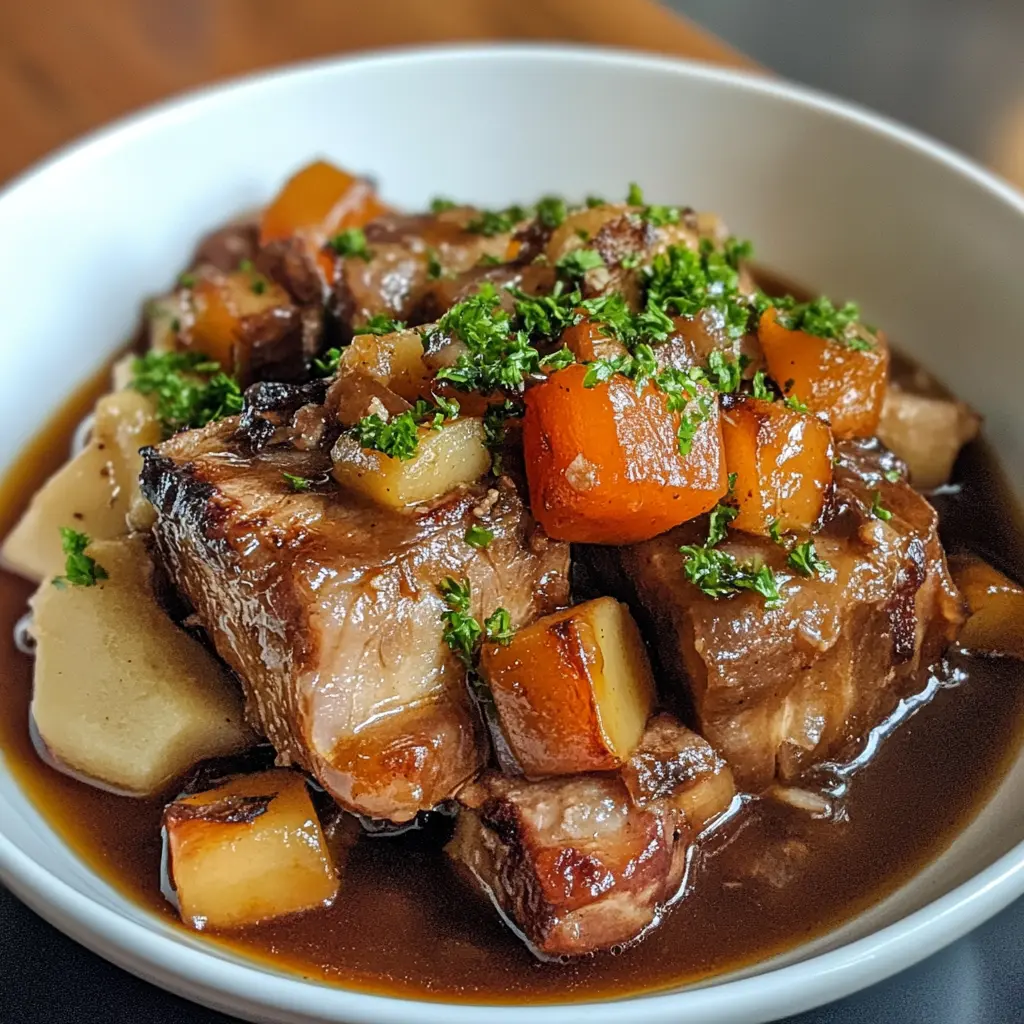
Apple Cider Braised Pork Shoulder: The Ultimate Fall Comfort Meal
Apple Cider Braised Pork Shoulder transforms an economical cut of meat into a tender, flavorful masterpiece that melts in your mouth. This one-pot wonder combines the natural sweetness of apple cider with savory herbs and aromatics, creating a dish perfect for cozy family dinners or impressive holiday gatherings. Moreover, the braising technique ensures foolproof results every time, making it accessible for both novice and experienced home cooks.
Why Choose Pork Shoulder for Braising
Pork shoulder, also called Boston Butt, is the ideal cut for this apple cider braised dish because of its marbling and connective tissue. Additionally, this cut becomes incredibly tender during the slow cooking process. The fat content keeps the meat moist throughout the extended cooking time.
Braising breaks down tough collagen into gelatin, resulting in fork-tender meat. Furthermore, pork shoulder is budget-friendly compared to premium cuts. The long cooking time transforms this economical option into restaurant-quality fare.
Essential Ingredients and Substitutions
Main Components
The foundation of Apple Cider Braised Pork Shoulder includes several key ingredients:
-
Pork shoulder (3-8 pounds boneless)
-
Apple cider (2-4 cups unfiltered)
-
Apple cider vinegar (2-4 tablespoons)
-
Aromatics (onions, shallots, garlic)
-
Fresh herbs (thyme, rosemary, sage)
-
Stock (chicken or vegetable)
Flavor Enhancers
Additional ingredients elevate the dish’s complexity:
-
Fennel seeds or fresh fennel
-
Star anise and cinnamon sticks
-
Bay leaves
-
Soy sauce or Worcestershire sauce
-
Fresh apples (Honeycrisp or Granny Smith)
-
Root vegetables (potatoes, carrots, celery)
Smart Substitutions
Replace apple cider vinegar with balsamic vinegar for deeper flavor. Swap fresh herbs with dried versions using one-third the amount. Use vegetable stock instead of chicken stock for versatility.
Equipment You’ll Need
A Dutch oven is essential for this recipe because it transitions seamlessly from stovetop to oven. Additionally, the heavy lid creates the perfect braising environment. Choose a 6-7 quart capacity to accommodate larger cuts.
Other helpful tools include sharp tongs for turning the meat and a meat thermometer for accuracy. Furthermore, you’ll need paper towels for drying the pork before searing. A large cutting board provides ample space for slicing the finished roast.
Step-by-Step Cooking Instructions
Preparing the Pork
Start by patting the pork shoulder completely dry with paper towels. This step is crucial for achieving proper browning. Season all sides generously with salt and pepper. Allow the seasoned meat to rest at room temperature for 30 minutes before cooking.
Searing for Flavor
Heat 2 tablespoons of neutral oil in your Dutch oven over medium-high heat. Once the oil shimmers, carefully place the pork fat side down. Sear each side for 4-5 minutes until deeply browned. Remove the pork and set aside on a plate.
Building the Braising Liquid
Reduce heat to medium and add sliced onions and shallots to the pot. Cook for 5 minutes until softened, then add minced garlic. Additionally, include celery and fennel if using. Deglaze the pot with apple cider vinegar, scraping up the flavorful brown bits.
Pour in apple cider and chicken stock until liquid reaches halfway up the pork. Furthermore, add soy sauce, herbs, and whole spices. Bring the mixture to a simmer before proceeding.
Oven Braising Process
Preheat your oven to 300-325°F for gentle, even cooking. Return the pork to the pot fat side up, ensuring the top remains exposed. Cover tightly with the lid and transfer to the middle oven rack.
Braise for 3-4 hours, basting occasionally with the cooking liquid. The pork is done when it offers no resistance to a fork. Allow it to rest in the braising liquid for at least 2 hours before slicing.
Temperature and Timing Guidelines
Internal Temperature Targets
Whole muscle pork cuts are safe at 145°F, but braised pork shoulder benefits from higher temperatures. Cook until the internal temperature reaches 175-200°F for maximum tenderness. At this point, collagen fully transforms into gelatin.
Cooking Duration
A 3-4 pound pork shoulder typically requires 2.5-3 hours of braising time. Larger 7-8 pound cuts need 3.5-4 hours for complete tenderness. Check periodically after the minimum time to prevent overcooking.
Different cuts require adjusted timing accordingly. Lamb shoulder takes 2.5-3 hours using the same method. Beef short ribs need similar braising times for optimal results.
Flavor Variations and Customizations
Sweet and Savory Balance
Adjust the sweetness by varying apple cider quantities. Add brown sugar or maple syrup for extra caramelization. Balance sweetness with additional vinegar or mustard for tanginess.
Spice Profile Options
Create an Asian-inspired version with ginger, five-spice powder, and extra star anise. Alternatively, go Mediterranean with oregano, lemon zest, and olives. Southwestern flavors work well with cumin, chipotle, and lime juice.
Vegetable Additions
Add root vegetables like carrots, parsnips, and turnips during the last hour. Baby red potatoes absorb the delicious braising liquid beautifully. Fresh apple slices added in the final 30 minutes provide textural contrast.
Serving Suggestions and Pairings
Ideal Side Dishes
Apple Cider Braised Pork Shoulder pairs wonderfully with creamy mashed potatoes that soak up the sauce. Additionally, serve with buttered egg noodles or polenta for comfort food appeal. Roasted Brussels sprouts or green beans add freshness and color.
Presentation Tips
Slice the pork against the grain for maximum tenderness, removing excess fat. Arrange slices on a platter and spoon the reduced sauce over top. Garnish with fresh herb sprigs and apple slices for visual appeal.
Sauce Preparation
Degrease the braising liquid by refrigerating overnight and removing solidified fat. Alternatively, skim fat after 10 minutes of resting. Thicken the sauce with a butter and flour roux for glossy consistency.
Storage and Reheating Tips
Proper Storage Methods
Cool the pork to room temperature before refrigerating to prevent bacterial growth. Store the meat and sauce together or separately in airtight containers. Properly stored Apple Cider Braised Pork Shoulder keeps for up to 5 days.
Reheating Instructions
Rewarm the pork gently in sauce over medium-low heat on the stovetop. This method preserves moisture and prevents drying. Alternatively, reheat in a 300°F oven covered with foil until warmed through.
Avoid microwaving if possible, as it can toughen the meat. If using a microwave, use 50% power and check frequently. Add a splash of stock or cider to maintain moisture during reheating.
Slow Cooker Adaptation
For a hands-off approach, prepare Apple Cider Braised Pork Shoulder in a slow cooker. Brown the pork in a skillet first for optimal flavor development. Transfer to the slow cooker with sautéed aromatics and braising liquid.
Cook on LOW for 8 hours until the meat is fall-apart tender. Add chopped apples during the last 30 minutes of cooking. This method works perfectly for busy weeknights when oven space is limited.
Nutritional Considerations
Apple cider provides natural sweetness without refined sugars while contributing vitamin C. The apples and vegetables add fiber and essential nutrients to the dish. Additionally, braising requires minimal added fat compared to other cooking methods.
Pork shoulder contains protein, B vitamins, and minerals like selenium and zinc. Remove visible fat before serving to reduce overall fat content. The long cooking process allows much of the fat to render out naturally.
Frequently Asked Questions
What is Apple Cider Braised Pork Shoulder best served with?
This dish pairs perfectly with mashed potatoes, roasted vegetables, or crusty bread to soak up the flavorful sauce. Additionally, creamy polenta or buttered egg noodles complement the rich, tender pork beautifully.
Can I make this recipe ahead of time?
Yes, Apple Cider Braised Pork Shoulder actually improves when made ahead. The flavors deepen overnight, and you can easily remove solidified fat before reheating. Store for up to 5 days in the refrigerator.
What cut of pork works best for braising?
Boneless pork shoulder, also called Boston Butt, is the best choice for this recipe. Its marbling and connective tissue break down during slow cooking, resulting in incredibly tender meat.
How do I know when the pork is fully cooked?
The pork reaches a safe temperature at 145°F, but continue cooking to 175-200°F for braising. At this point, the meat should offer no resistance when pierced with a fork and easily pull apart.
Can I use filtered apple cider instead of unfiltered?
Unfiltered apple cider provides richer flavor and more authentic appearance. However, filtered apple juice works in a pinch. The difference is subtle but noticeable in the final dish.
Do I need to marinate the pork beforehand?
Marinating is optional for Apple Cider Braised Pork Shoulder since the long braising time infuses plenty of flavor. However, apple cider vinegar marinades tenderize meat effectively if you have extra time.
What vegetables can I add to the braise?
Onions, carrots, celery, fennel, and potatoes all work wonderfully. Add heartier vegetables at the beginning and delicate ones like apples during the final 30 minutes of cooking.
How can I thicken the braising sauce?
Create a roux with equal parts butter and flour, then whisk in the hot degreased braising liquid. Cook until the sauce reaches your desired consistency, stirring frequently to prevent lumps.
Apple Cider Braised Pork Shoulder delivers incredible flavor and tenderness with minimal active cooking time. The combination of sweet apple cider, savory aromatics, and slow braising creates a dish that feels special yet remains surprisingly simple. Whether you’re planning a family dinner or hosting guests, this recipe guarantees impressive results that showcase the magic of braising. Try this comforting dish today and discover why it’s become a fall favorite for home cooks everywhere!
Print
Apple Cider Braised Pork Shoulder
Description
Apple Cider Braised Pork Shoulder
Ingredients
-
3–4 lb pork shoulder (bone-in or boneless)
-
2 tbsp olive oil
-
Salt & pepper, to taste
-
1 large onion, sliced
-
3 garlic cloves, smashed
-
2 apples, sliced (Honeycrisp or Gala work best)
-
2 cups apple cider
-
1 cup chicken broth
-
2 tbsp Dijon mustard
-
2 tbsp apple cider vinegar
-
1 tbsp brown sugar (optional, for extra sweetness)
-
1 tsp thyme
-
1 tsp rosemary
-
1 bay leaf
Instructions
1. Brown the Pork
-
Preheat oven to 325°F (165°C).
-
Pat pork shoulder dry and season generously with salt and pepper.
-
Heat olive oil in a Dutch oven over medium-high heat.
-
Sear pork on all sides until browned (about 3–4 minutes per side).
-
Remove and set aside.
2. Build the Braising Liquid
-
Add onions and garlic to the pot; sauté 3–4 minutes.
-
Stir in apple slices.
-
Add apple cider, chicken broth, Dijon mustard, apple cider vinegar, brown sugar, thyme, rosemary, and bay leaf.
-
Bring to a simmer.
3. Braise
-
Return pork shoulder to the pot, nestling it into the liquid.
-
Cover and transfer to oven.
-
Braise for 3–3½ hours, or until the pork is fork-tender.
4. Serve
-
Remove pork and let rest 10 minutes before shredding or slicing.
-
Reduce braising liquid on the stovetop for a thicker sauce, if desired.
-
Pour sauce over pork and serve with apples and onions.