
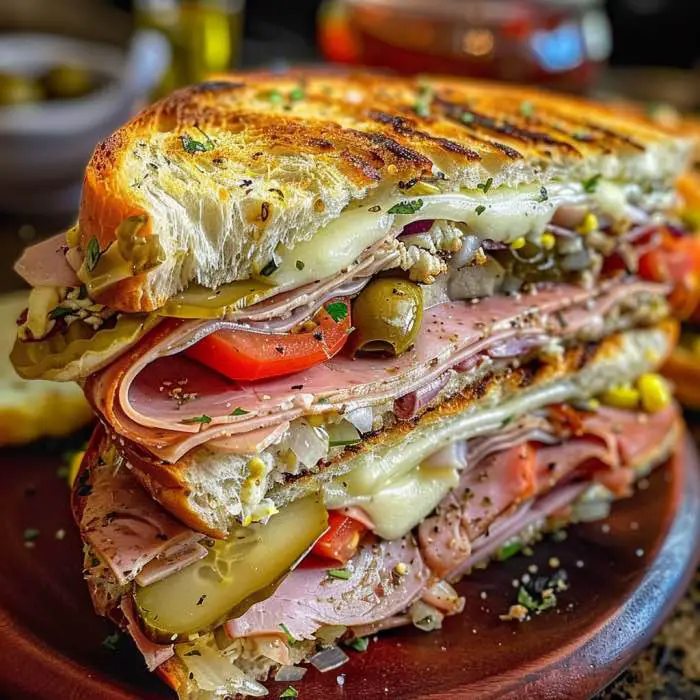
Authentic Muffuletta Sandwich: A Taste of New Orleans History
The authentic Muffuletta sandwich brings bold Italian flavors to life in every satisfying bite. This iconic New Orleans creation combines layers of cured meats, cheese, and tangy olive salad on a round sesame seed loaf. The Muffuletta sandwich has delighted food lovers since 1906, when Salvatore Lupo first assembled this masterpiece at Central Grocery in the French Quarter.
Originating from Sicilian immigrant traditions, this sandwich transforms simple ingredients into an unforgettable culinary experience. The signature olive salad sets it apart from other sandwiches. Fresh ingredients and proper assembly techniques make the difference between good and extraordinary.
What Makes the Muffuletta Sandwich Special
The Muffuletta sandwich stands out among Italian-American sandwiches for its unique construction and flavor profile. Unlike traditional subs, this sandwich features a distinctive round loaf that’s sturdy enough to hold generous fillings without falling apart. The bread acts like a magical sponge, absorbing olive oil without becoming soggy.
Three essential components create the perfect Muffuletta: the special sesame-topped bread, layers of Italian meats and cheese, and the famous olive salad. Each element plays a crucial role. The olive salad provides tangy, briny flavors that complement the rich meats. The round shape allows for even distribution of ingredients throughout every bite.
Traditional Muffulettas are served at room temperature, though many vendors offer toasted versions. The sandwich improves when pressed and allowed to rest, letting flavors meld together beautifully. This makes it perfect for picnics and gatherings.
The Fascinating History Behind This Iconic Sandwich
Salvatore Lupo created the Muffuletta sandwich in 1906 at his store, Central Grocery Company, on Decatur Street in New Orleans. Sicilian farmers shopping at the French Market would purchase separate ingredients—bread, meats, cheese, and olives—and struggle to eat them while balancing large trays on their laps. Lupo recognized their difficulty and decided to combine everything into one convenient sandwich.
The name “Muffuletta” comes from the round Sicilian sesame bread used for the sandwich. Sicilian immigrants had been moving to New Orleans since the 1800s, bringing their culinary traditions with them. Lupo’s innovation took these familiar ingredients and transformed them into something entirely new.
Central Grocery still operates today, serving the original recipe to visitors seeking an authentic taste of New Orleans. Other Italian delis in the area also claim connections to the sandwich’s origin, but Central Grocery holds the most widely recognized claim. The Muffuletta has become a quintessential New Orleans food experience, ranking alongside gumbo and beignets as must-try local specialties.
Essential Ingredients for an Authentic Muffuletta
Creating an authentic Muffuletta sandwich requires quality ingredients in the right proportions. The sandwich typically serves four to eight people, depending on portion sizes. Starting with fresh, high-quality components ensures the best flavor and texture.
For the Olive Salad:
-
Green olives with pimentos (½ cup, chopped)
-
Black or Kalamata olives (¼ cup, chopped)
-
Giardiniera (Italian pickled vegetables, ¼ cup)
-
Pepperoncini peppers (3-4, chopped)
-
Roasted red peppers (¼ cup, chopped)
-
Celery (2 tablespoons, finely chopped)
-
Red onion or shallot (2 tablespoons, minced)
-
Fresh garlic (3 cloves, minced)
-
Capers (1 tablespoon)
-
Fresh parsley (2 tablespoons, minced)
-
Dried oregano (1-2 teaspoons)
-
Extra virgin olive oil (½ cup)
-
Black pepper (to taste)
For the Sandwich:
-
One round Muffuletta loaf (10 inches diameter)
-
Genoa salami (4 ounces, thinly sliced)
-
Ham (4 ounces, thinly sliced)
-
Mortadella (4 ounces, thinly sliced)
-
Provolone cheese (4 ounces, sliced)
-
Mozzarella cheese (4 ounces, sliced)
These ingredients combine to create the signature flavor profile that defines an authentic Muffuletta. Each component contributes specific textures and tastes that work together harmoniously.
How to Make the Perfect Olive Salad
The olive salad, also called olive tapenade or Muffuletta spread, serves as the soul of this sandwich. Making it ahead allows flavors to develop and intensify. The process takes only minutes, but patience during marination yields exceptional results.
Preparation Steps:
Begin by finely chopping all vegetables and olives to create a spreadable consistency. The pieces should be small enough to distribute evenly but large enough to provide textural interest. Using a food processor speeds up the process, but hand-chopping gives better control over texture.
Combine green olives, black olives, giardiniera, pepperoncini, and roasted red peppers in a large mixing bowl. Add minced garlic, chopped celery, diced onion, capers, and fresh parsley. These aromatics add depth and complexity to the salad.
In a separate small bowl and olive oil. Add dried oregano and black pepper to this dressing. Pour the dressing over the chopped olive mixture and stir thoroughly until everything is well combined.
Marination Process:
Cover the bowl tightly and refrigerate for at least 8 hours, preferably overnight. This resting period allows the flavors to meld together beautifully. The vegetables absorb the oil and vinegar, creating a cohesive, flavorful spread. The longer it marinates, the more intense the flavors become.
The olive salad keeps well in the refrigerator for up to two weeks, making it perfect for meal prep. Some recipes suggest marinating for 24 hours for optimal flavor development. The salad can also be used as a dip for chips or crackers, or as a pizza topping.
Choosing and Preparing the Right Bread
The Muffuletta loaf is as important as the fillings. This round, slightly flattened bread resembles a large hamburger bun topped with sesame seeds. Traditional Muffuletta bread has a crispy exterior and light, airy interior that holds up remarkably well to moist fillings.
The bread measures approximately 10 inches in diameter after baking. Sesame seeds on top give it signature appearance and add nutty flavor. The bread’s structure comes from using bread flour, which provides higher protein content for better gluten development.
Making Homemade Muffuletta Bread:
Combine bread flour, active dry yeast, salt, sugar, olive oil, and warm water. The water temperature should be between 105-110°F to properly activate the yeast. Mix ingredients until a sticky dough forms, then knead for 7-12 minutes until smooth and elastic.
Place the dough in an oiled bowl and let it rise in a warm spot until doubled in size, approximately 1-1.5 hours. After the first rise, punch down the dough and shape it into a flat disc about 9 inches in diameter. The loaf will expand during the second rise and baking.
Brush the shaped loaf lightly with water and sprinkle with sesame seeds. Cover and let rise again until doubled, about 45 minutes to 1 hour. Bake at 400°F for 20-40 minutes until golden brown. Allow the bread to cool completely before slicing to let steam release naturally.
Store-Bought Alternatives:
Many bakeries sell Muffuletta bread or suitable substitutes. Look for large, round Italian bread with sesame seeds. Some recipes suggest using focaccia or ciabatta as alternatives, though the texture differs from traditional Muffuletta bread. The bread should be sturdy enough to support heavy, oily fillings without becoming soggy.
Selecting Quality Meats and Cheeses
Traditional Muffuletta sandwiches feature Italian cured meats that provide rich, savory flavors. The combination of different meats creates complexity in every bite. Quality matters significantly—freshly sliced deli meats taste far superior to pre-packaged options.
Traditional Meat Selection:
Genoa salami brings spicy, garlicky notes to the sandwich. This coarse-ground salami comes from the Genoa region of Italy in its curing process, though the finished product contains negligible amounts. Ham adds mild, slightly sweet flavors that balance the bolder meats.
Mortadella contributes smooth texture and delicate pork flavor. This Italian sausage often contains pistachios and black pepper. Some recipes include capicola, a spicy Italian ham that adds another flavor dimension.
Request thin slicing from the deli counter for best results. Thin slices layer more easily and create better texture throughout the sandwich. Using 4 ounces of each meat type provides proper proportions for a 10-inch loaf.
Cheese Choices:
Provolone cheese is the traditional choice for Muffuletta sandwiches. This semi-hard Italian cheese melts beautifully and provides tangy, slightly sharp flavor. Aged provolone offers more intensity, while younger provolone tastes milder.
Many recipes include mozzarella cheese alongside provolone for additional creaminess. Fresh mozzarella adds moisture and mild flavor. Some versions use Swiss cheese as an alternative or addition. The key is choosing mild-flavored cheeses that won’t overpower the olive salad.
Slice cheese thinly for even distribution and easier eating. Using equal amounts of two different cheeses creates nice flavor balance. The cheese layers help hold the sandwich together while adding richness.
Step-by-Step Assembly Instructions
Proper assembly techniques ensure every bite contains all the delicious components. Taking time to layer ingredients carefully makes a significant difference. The goal is creating a balanced sandwich where no single flavor dominates.
Prepare the Bread:
Slice the Muffuletta loaf in half horizontally using a serrated knife. Make the cut as even as possible to create two equal halves. Some recipes suggest scooping out part of the bread’s interior to create more room for fillings. Save the removed bread for making breadcrumbs or croutons.
Lay both halves cut-side up on a clean work surface. This allows easy access for spreading and layering. Having everything prepared beforehand makes assembly smoother and faster.
Apply the Olive Salad:
Spread a generous layer of olive salad over both bread halves. The bottom half should receive slightly more to prevent dryness. Make sure the olive salad reaches all the way to the edges. This ensures flavor in every bite.
The oil from the salad will begin soaking into the bread immediately. This is desirable—it adds moisture and flavor throughout. Don’t worry about using too much olive salad; the bread can handle it.
Layer the Meats and Cheese:
Begin layering on the bottom half of bread. Start with salami, overlapping slices to cover the entire surface. Add a layer of provolone cheese next. Follow with mortadella slices, then another cheese layer.
Add ham as the final meat layer. Top with remaining cheese slices. This alternating pattern of meat and cheese creates structural stability. The cheese acts as “glue” holding everything together.
Fold or overlap slices rather than stacking them flat for better distribution. This technique prevents ingredients from sliding out when cutting. Press down gently as you build layers to compact everything.
Finish and Press:
Place the top bread half over the layered ingredients. Press down firmly with your hands to compress the sandwich. Wrap the entire Muffuletta tightly in plastic wrap.
Place a cast iron pan, cutting board, or other flat weight on top of the wrapped sandwich. This pressing step is crucial—it helps the olive salad juices soak into both bread halves while allowing flavors to meld. Let the sandwich rest for at least 1 hour at room temperature, or refrigerate overnight for even better results.
Pro Tips for the Best Results
Creating an exceptional Muffuletta requires attention to detail beyond basic assembly. These professional techniques elevate the sandwich from good to outstanding. Small adjustments make significant flavor and texture improvements.
Olive Salad Excellence:
Choose firm, high-quality olives for best texture. Avoid mushy or overly soft olives that turn into paste. The olive salad should have distinct pieces rather than a smooth spread. Fresh garlic makes a noticeable difference compared to jarred minced garlic.
Don’t skip the refrigeration period for the olive salad. Overnight marination transforms simple ingredients into a cohesive, flavorful mixture. The salad tastes even better after two or three days in the refrigerator.
Bread Considerations:
Allow homemade bread to cool completely before slicing. Cutting warm bread creates gummy texture and uneven slices. The cooling period lets steam escape and allows the crumb structure to set properly.
Toast the bread lightly if preferring warm sandwiches. Some people enjoy the contrast of warm bread with cold fillings. However, traditional Muffulettas are served at room temperature.
Assembly Wisdom:
Layer ingredients evenly from edge to edge. Gaps in coverage create bites that lack balance. Overlapping slices slightly ensures complete coverage.
Press the sandwich firmly after assembly. This step cannot be skipped—it’s essential for proper flavor development. The weight encourages oil absorption and helps ingredients meld together.
Let the sandwich rest before serving. Even just one hour makes a difference, but overnight resting produces the best flavor. The waiting period allows the bread to absorb olive oil while flavors blend harmoniously.
Storage and Make-Ahead Options
Muffuletta sandwiches are ideal for advance preparation. The flavors improve with time, making them perfect for parties and gatherings. Proper storage maintains freshness and food safety.
Short-Term Storage:
Wrap assembled sandwiches tightly in plastic wrap. This prevents drying and keeps ingredients fresh. Store wrapped sandwiches in the refrigerator for up to three days. The bread continues absorbing olive oil during storage, enhancing flavor.
Bring refrigerated Muffulettas to room temperature before serving. This takes about 30 minutes and allows flavors to open up. Cold sandwiches taste muted compared to room temperature ones.
Longer-Term Options:
The olive salad keeps in the refrigerator for up to two weeks in an airtight container. This makes it convenient for preparing multiple sandwiches. Always store the salad separately from bread until ready to assemble.
Homemade Muffuletta bread stays fresh for up to two days wrapped tightly at room temperature. For longer storage, freeze the bread for up to three months. Thaw frozen bread at room temperature before use.
Make-Ahead Strategy:
Prepare olive salad several days in advance for better flavor development. Assemble sandwiches the night before serving and refrigerate them pressed under weight. This overnight rest produces optimal taste and texture.
For large gatherings, assemble multiple sandwiches and wrap them individually. Label each one with the date and contents. This preparation allows stress-free entertaining.
Variations and Customizations
The classic Muffuletta recipe welcomes creative adaptations while maintaining its essential character. These variations accommodate different preferences and dietary needs. Experimentation can lead to delicious discoveries.
Meat Alternatives:
Turkey and roast beef work well in place of traditional Italian meats. These substitutions create a milder flavor profile. Prosciutto adds an elegant touch with its delicate, buttery texture.
For different flavor dimensions, try spicy capicola or peppered salami. These bolder options suit those who enjoy more intense tastes. Mix and match meats based on personal preferences.
Cheese Variations:
Swiss cheese substitutes nicely for provolone. It provides nutty, slightly sweet notes. Fontina cheese offers creamy texture and mild flavor. Combining different cheeses creates interesting flavor profiles.
Fresh mozzarella adds moisture and creaminess. Smoked provolone brings an extra flavor dimension. The key is choosing cheeses that complement rather than overpower the olive salad.
Olive Salad Modifications:
Adjust the olive salad heat level by adding more or fewer pepperoncini. Red pepper flakes provide additional spiciness if desired. For milder versions, reduce garlic and use sweet peppers instead of hot ones.
Add artichoke hearts for extra texture and tangy flavor. Sun-dried tomatoes contribute sweetness and chewy texture. Cauliflower from the giardiniera adds nice crunch.
Serving Style Options:
Toast or grill the assembled sandwich for a warm, melty experience. This creates a different texture profile while maintaining traditional flavors. Press the sandwich in a panini press for crispy exterior.
Cut the sandwich into smaller portions for appetizers. Triangular slices work well for parties and gatherings. Individual quarter portions make manageable serving sizes.
Serving Suggestions
Muffuletta sandwiches shine as the centerpiece of casual meals. Their bold flavors pair well with simple, complementary sides. The sandwich’s richness benefits from fresh, crisp accompaniments.
Traditional Accompaniments:
Pickled pepperoncini peppers make the perfect garnish. Their tangy, spicy flavor complements the rich sandwich. Serve whole peppers on the side for those who want extra heat.
Simple green salads with vinaigrette dressing provide refreshing contrast. The acidity cuts through the olive oil and rich meats. Arugula or mixed greens work particularly well.
Kettle-cooked potato chips add satisfying crunch. Their sturdy texture stands up to the substantial sandwich. Choose sea salt or black pepper flavors that won’t compete with the Muffuletta.
Beverage Pairings:
Sparkling water with lemon cleanses the palate between bites. The carbonation refreshes without overwhelming delicate flavors. Fresh-squeezed lemonade offers sweet-tart balance.
Iced tea, either sweet or unsweetened, provides classic pairing. Its subtle flavor doesn’t compete with the sandwich’s bold taste. Italian sodas offer festive options for special occasions.
Presentation Ideas:
Cut Muffulettas into eight triangular pieces for appetizer portions. Arrange slices on a large platter with garnishes. This presentation works beautifully for parties and gatherings.
Serve quarter portions with individual side salads for casual meals. Wrap half portions in parchment paper for picnic-friendly servings. The sandwich travels well and holds up to outdoor conditions.
Create a Muffuletta bar with various olive salads, meats, and cheeses. Let guests customize their own sandwiches. This interactive approach works great for casual entertaining.
Common Mistakes to Avoid
Even experienced cooks can make errors that diminish Muffuletta quality. Understanding common pitfalls helps prevent disappointment. These mistakes often involve timing, proportions, or technique.
Olive Salad Errors:
Using pre-made olive salad from jars produces inferior results. Commercial versions lack freshness and proper seasoning balance. Homemade salad takes minimal effort and tastes significantly better.
Chopping ingredients too finely creates mushy texture. The salad should have distinct pieces that provide textural interest. Conversely, chunks that are too large make spreading difficult.
Skipping the marination period results in underdeveloped flavors. The olive salad needs time for components to blend together. Rushing this step produces a disappointing sandwich.
Bread Problems:
Using soft sandwich bread instead of sturdy Italian bread leads to sogginess. The bread must have structure to handle oily fillings. Fresh focaccia or ciabatta work better than regular bread.
Slicing bread unevenly creates awkward sandwiches. Take time to make a straight, horizontal cut. An uneven cut makes layering difficult and creates messy eating.
Forgetting to let homemade bread cool completely before slicing causes gummy texture. Hot bread compresses and tears when cut. Patience during cooling pays off significantly.
Assembly Issues:
Adding too little olive salad produces dry sandwiches. Don’t be shy with the spread—the bread can absorb substantial amounts. Generous application ensures flavor in every bite.
Skipping the pressing step prevents proper flavor development. The weight helps ingredients meld together. Without pressing, the sandwich tastes like separate components rather than a cohesive whole.
Serving the sandwich immediately after assembly doesn’t allow flavors to blend. Even a one-hour rest makes noticeable improvement. Overnight resting produces the best results.
Frequently Asked Questions
What is an authentic Muffuletta sandwich?
An authentic Muffuletta sandwich consists of a round sesame seed bread loaf filled with Italian cured meats (salami, ham, mortadella), provolone cheese, and olive salad. Created in 1906 at Central Grocery in New Orleans, this sandwich combines Sicilian ingredients into one convenient, flavorful meal. The signature olive salad distinguishes it from other Italian sandwiches.
Can I make Muffuletta sandwiches ahead of time?
Yes, Muffuletta sandwiches actually improve when made in advance. Assemble the sandwich and press it under weight, then refrigerate overnight. This resting period allows the bread to absorb olive oil while flavors meld together. The sandwich stays fresh in the refrigerator for up to three days.
Should Muffuletta be served hot or cold?
Traditional Muffuletta sandwiches are served at room temperature. This allows all flavors to shine through properly. However, some people enjoy toasted versions where the cheese melts slightly. Both serving methods have their merits—room temperature is authentic, while warm creates different texture.
What can I substitute for giardiniera?
If giardiniera isn’t available, use a combination of pickled cauliflower, carrots, and celery. Chopped pickled vegetables work as substitutes. The goal is adding tangy, crunchy vegetables to the olive salad. Some recipes use additional pepperoncini and roasted red peppers instead.
How long does olive salad last?
Homemade Muffuletta olive salad keeps for up to two weeks when stored in an airtight container in the refrigerator. The flavors continue developing over time. In fact, the salad tastes even better after several days of marination. Always use clean utensils when scooping out portions to prevent contamination.
Can I freeze Muffuletta bread?
Yes, Muffuletta bread freezes well for up to three months. Wrap the cooled bread tightly in plastic wrap, then place it in a freezer bag. Thaw frozen bread at room temperature for several hours before using. Avoid freezing assembled sandwiches, as the texture suffers upon thawing.
Master the Art of Muffuletta Sandwiches
The authentic Muffuletta sandwich delivers unmatched flavor through its combination of quality ingredients and proper technique. This New Orleans classic transforms simple Italian components into something extraordinary. The signature olive salad, sturdy sesame bread, layers of cured meats, and melty cheese create perfect harmony.
Success comes from using quality ingredients, allowing adequate marination time, and pressing the assembled sandwich. These steps cannot be rushed without sacrificing flavor. The Muffuletta’s beauty lies in its make-ahead nature—it actually improves with time.
Whether serving a crowd or enjoying a special meal, the Muffuletta sandwich impresses every time. Its bold flavors and satisfying textures make it memorable. The recipe welcomes creative variations while maintaining its essential character.
Print
Authentic Muffuletta Sandwich
Description
Authentic Muffuletta Sandwich
Ingredients:
For the Olive Salad:
-
1 cup green olives, chopped
-
½ cup Kalamata olives, chopped
-
¼ cup roasted red peppers, chopped
-
¼ cup pickled cauliflower or giardiniera, chopped
-
2 tablespoons capers, drained
-
2 cloves garlic, minced
-
⅓ cup olive oil
-
½ teaspoon dried oregano
-
¼ teaspoon black pepper
For the Sandwich:
-
1 large round Italian loaf or muffuletta bread (about 10 inches wide)
-
¼ lb genoa salami
-
¼ lb capicola or ham
-
¼ lb mortadella
-
¼ lb provolone cheese
-
¼ lb mozzarella cheese
Instructions:
-
Make the olive salad:
In a bowl, combine green olives, Kalamata olives, red peppers, giardiniera, capers, garlic, olive oil, vinegar, oregano, and black pepper.
Mix well and refrigerate for at least 2 hours (or overnight) to develop flavor. -
Prepare the bread:
Slice the loaf in half horizontally.
Scoop out a bit of the soft interior to make room for the filling. -
Assemble:
Spread half of the olive salad (with its juices) over the bottom half of the bread.
Layer salami, capicola, mortadella, provolone, and mozzarella.
Top with the remaining olive salad, then place the top half of bread on. -
Press and rest:
Wrap the sandwich tightly in plastic wrap or foil.
Let sit for at least 30 minutes (or refrigerate for a few hours). This allows the flavors to soak into the bread. -
Serve:
Slice into wedges and serve cold or slightly warmed (wrapped in foil and heated in a 350°F oven for 10–15 minutes).