
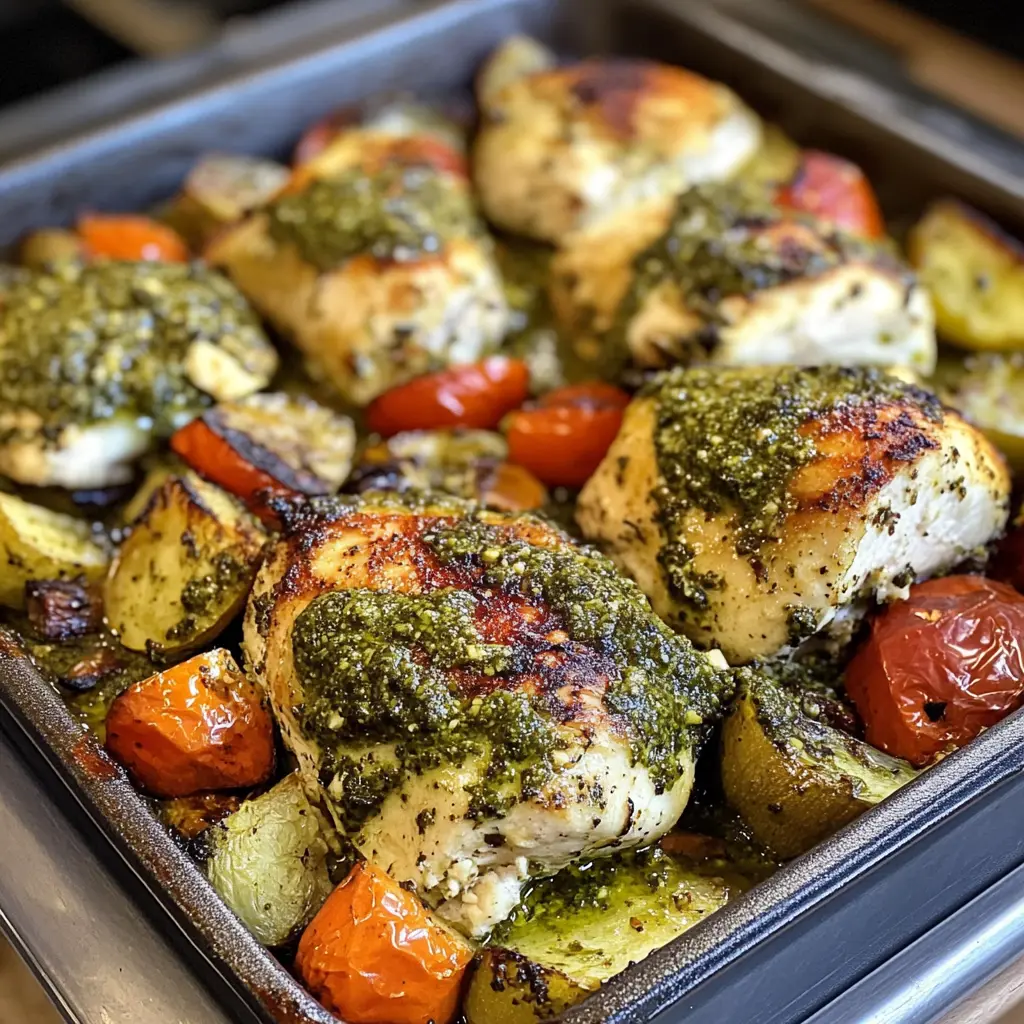
Baked Feta Pesto Chicken and Veggie Traybake: The Ultimate One-Pan Dinner
Imagine coming home after a long day to the aroma of perfectly roasted chicken, creamy feta, and vibrant vegetables wafting through your kitchen. This Baked Feta Pesto Chicken and Veggie Traybake delivers exactly that—a complete, nutritious meal that requires minimal prep and even less cleanup. With tender chicken breasts coated in aromatic pesto, tangy feta cheese melting into every bite, and colorful vegetables roasted to caramelized perfection, this one-pan wonder transforms weeknight cooking into an effortless culinary experience.
One-pan meals have revolutionized home cooking, and this traybake recipe stands out as a crowd-pleaser that works equally well for busy weeknights and casual entertaining. The beauty lies in its simplicity: everything goes onto one baking sheet, yet the flavors develop into something truly extraordinary.
Why This Traybake Recipe Works So Well
The Magic of One-Pan Cooking
Traybake recipes have become kitchen staples for good reason. The Baked Feta Pesto Chicken and Veggie Traybake minimizes dishes while maximizing flavor through a process called the Maillard reaction. As ingredients roast together, their natural sugars caramelize, creating depth and complexity that stovetop cooking simply cannot replicate.
The method saves precious time on busy evenings. Preparation takes approximately 15 minutes, while the oven does the heavy lifting. This hands-off approach frees up time to prepare side dishes, set the table, or simply relax while dinner cooks itself.
Perfect Balance of Protein and Vegetables
This traybake delivers a complete nutritional profile on a single pan. Chicken provides lean protein essential for muscle maintenance and satiety. The vegetables contribute fiber, vitamins, and minerals that support overall health. Feta cheese adds calcium and healthy fats, while pesto brings heart-healthy olive oil and aromatic herbs into the mix.
Each component complements the others beautifully. The pesto’s basil notes enhance the chicken’s mild flavor. Feta’s saltiness contrasts with the vegetables’ natural sweetness. Everything melds together as the ingredients share their juices during roasting, creating a cohesive dish where every element tastes better than it would alone.
Time-Saving Benefits for Busy Schedules
Modern life demands efficient cooking methods. This recipe respects your time by requiring minimal active involvement. Once ingredients hit the baking sheet, the oven handles everything. There’s no stirring, flipping, or constant monitoring required—just set a timer and let heat work its magic.
The cleanup proves equally simple. One pan means one item to wash, compared to multiple pots, pans, and utensils traditional recipes demand. Many home cooks line their baking sheets with parchment paper for even easier cleanup, making this dish ideal for those evenings when energy runs low.
Essential Ingredients Breakdown
Chicken Selection and Preparation
Choose boneless, skinless chicken breasts or thighs for this traybake. Breasts offer leaner protein with mild flavor, while thighs provide richer taste and remain juicier during cooking. For best results, select pieces of similar size to ensure even cooking. Pound thicker portions to uniform thickness using a meat mallet.
Fresh chicken works best, though properly thawed frozen chicken performs well too. Pat the meat dry before seasoning, as moisture prevents proper browning. Room temperature chicken cooks more evenly than cold pieces straight from the refrigerator, so remove it 20 minutes before preparation.
Pesto Types and Homemade Options
Traditional basil pesto forms the flavor foundation of this dish. Store-bought versions offer convenience, but homemade pesto provides superior freshness and customization. A basic recipe combines fresh basil leaves, garlic, pine nuts, Parmesan cheese, and olive oil blended until smooth.
Consider these pesto variations for different flavor profiles:
-
Sun-dried tomato pesto adds tangy sweetness
-
Arugula pesto brings peppery notes
-
Kale pesto offers earthier undertones
-
Spinach pesto provides milder, kid-friendly flavor
Each type works beautifully with chicken and vegetables, so experiment based on personal preferences and seasonal availability.
Feta Cheese Fundamentals
Quality feta makes a noticeable difference in this recipe. Greek feta, made from sheep’s milk or sheep-goat milk blends, offers authentic tangy flavor and creamy texture. Bulgarian feta tends toward sharper, saltier profiles. French feta provides milder, creamier characteristics.
Block feta packed in brine maintains better texture than pre-crumbled varieties. The chunks soften and become creamy during baking without completely melting away. For best results, drain the brine and pat the cheese dry before cubing into bite-sized pieces. This prevents excess moisture from making the dish soggy.
Vegetable Selection Guide
The vegetable component transforms this traybake into a complete meal. Choose vegetables with similar cooking times to ensure everything finishes simultaneously. Root vegetables like potatoes and carrots need longer cooking, while tender options like zucchini and bell peppers cook faster.
Recommended vegetables for this recipe include:
-
Cherry tomatoes burst with sweet-tart juice
-
Bell peppers add color and mild sweetness
-
Red onions caramelize beautifully
-
Zucchini or yellow squash contribute tender texture
-
Baby potatoes provide hearty substance
-
Broccoli florets offer nutritional density
-
Green beans add crisp-tender contrast
Cut vegetables into uniform sizes for even cooking. Smaller pieces roast faster, while larger chunks maintain more texture. Aim for 1 to 2-inch pieces as a general guideline.
Olive Oil and Seasoning Essentials
Extra virgin olive oil serves multiple purposes in this dish. It prevents sticking, promotes browning, and carries flavors throughout the pan. Use enough to lightly coat all ingredients—typically 3 to 4 tablespoons for a standard baking sheet.
Basic seasoning includes salt, black pepper, and garlic powder. Fresh garlic cloves can be scattered whole among the vegetables for mellow, roasted flavor. Dried herbs like oregano, thyme, or Italian seasoning complement the pesto beautifully. Lemon zest brightens the entire dish when sprinkled before serving.
Step-by-Step Preparation Guide
Preheating and Pan Preparation
Set your oven to 400°F (200°C) and allow it to fully preheat for 15 minutes. Consistent temperature ensures even cooking and proper caramelization. Use a large rimmed baking sheet, preferably 18×13 inches, which provides adequate space without crowding.
Line the pan with parchment paper or aluminum foil for easier cleanup. Alternatively, lightly oil the pan directly. Avoid overcrowding, as this creates steam instead of roasting, resulting in soggy vegetables rather than caramelized ones. Use two pans if necessary to maintain proper spacing.
Preparing the Chicken
Pat chicken pieces completely dry using paper towels. Moisture prevents browning and promotes steaming instead. Season both sides generously with salt and pepper. This initial seasoning penetrates the meat and builds foundational flavor.
Coat each piece thoroughly with pesto, using approximately 1 to 2 tablespoons per breast. Massage the pesto into the meat, ensuring complete coverage. The herb mixture creates a flavorful crust while keeping the chicken moist during cooking. Set prepared chicken aside while preparing vegetables.
Vegetable Preparation Techniques
Wash and dry all vegetables thoroughly. Cut them into uniform pieces based on their natural cooking times. Potatoes and carrots should be smaller (1-inch cubes), while softer vegetables like zucchini can be slightly larger (1.5-inch pieces).
Toss vegetables in a large bowl with olive oil, salt, pepper, and any additional seasonings. This ensures even distribution before transferring to the baking sheet. The oil coating helps vegetables caramelize rather than dry out during roasting.
Assembly Instructions
Arrange vegetables in a single layer across the prepared baking sheet, leaving space for the chicken. Place seasoned chicken pieces on top of or among the vegetables. Scatter feta cheese cubes throughout the pan, tucking them between vegetables and chicken.
The arrangement matters for optimal results. Place denser vegetables like potatoes toward the pan edges where heat concentrates. Position chicken in the center where cooking remains more gentle. This strategic placement ensures everything finishes cooking simultaneously.
Baking Time and Temperature
Slide the assembled traybake into the preheated oven. Bake for 25 to 35 minutes, depending on chicken thickness and vegetable density. Check doneness at 25 minutes by inserting an instant-read thermometer into the thickest part of the chicken. Internal temperature should reach 165°F (74°C).
Vegetables should be tender when pierced with a fork and show golden-brown caramelization at the edges. If chicken reaches temperature before vegetables finish cooking, remove chicken pieces and tent with foil while vegetables continue roasting for an additional 5 to 10 minutes.
Finishing Touches
Remove the pan from the oven and let it rest for 5 minutes before serving. This allows juices to redistribute throughout the chicken, ensuring moist, tender meat. Squeeze fresh lemon juice over the entire pan for brightness. Garnish with fresh basil leaves, extra feta crumbles, or a drizzle of additional pesto.
Nutritional Benefits
Protein Content and Muscle Health
Each serving of this Baked Feta Pesto Chicken and Veggie Traybake provides approximately 35 to 40 grams of protein, primarily from chicken and feta cheese. This macronutrient supports muscle maintenance, repair, and growth. Adequate protein intake promotes satiety, helping control appetite and support weight management goals.
Chicken ranks among the leanest protein sources available. Breast meat contains minimal fat while delivering all essential amino acids. These building blocks enable countless bodily functions from immune system support to hormone production.
Vegetable Nutrition Powerhouses
The vegetable component delivers an impressive array of vitamins, minerals, and antioxidants. Tomatoes provide lycopene, a powerful antioxidant linked to heart health. Bell peppers contain high levels of vitamin C, supporting immune function and skin health. Zucchini offers potassium for blood pressure regulation.
Fiber content from vegetables aids digestive health and promotes feelings of fullness. Most adults need 25 to 35 grams of fiber daily, yet many fall short. One serving of this traybake contributes 6 to 8 grams toward that goal, depending on vegetable selection.
Healthy Fats from Mediterranean Ingredients
Olive oil and pesto provide monounsaturated fats associated with numerous health benefits. These healthy fats support heart health by improving cholesterol ratios and reducing inflammation. The Mediterranean diet, rich in these ingredients, consistently ranks among the healthiest eating patterns worldwide.
Feta cheese, while higher in saturated fat than some dairy options, delivers calcium essential for bone health. The strong flavor means a little goes a long way, allowing for satisfying taste without excessive calories. One ounce of feta contains approximately 75 calories and 6 grams of fat.
Calorie Considerations
A typical serving of this traybake contains 400 to 500 calories, making it suitable for most balanced eating plans. The exact count varies based on portion sizes and oil quantities used. For lower-calorie versions, reduce olive oil slightly and increase vegetable proportions relative to chicken.
The meal’s balance of protein, complex carbohydrates from vegetables, and healthy fats creates sustained energy without blood sugar spikes. This nutritional profile supports stable energy levels throughout the afternoon or evening.
Variations and Customization Options
Protein Alternatives
While chicken forms the traditional base, numerous proteins work beautifully in this traybake format. Turkey cutlets offer similar lean protein with slightly different flavor. Pork tenderloin provides tender, mild meat that pairs wonderfully with pesto and feta. For pescatarian preferences, thick white fish fillets like cod or halibut work well, though reduce cooking time to 15 to 20 minutes.
Plant-based proteins adapt surprisingly well to this recipe. Firm tofu, pressed and cubed, develops crispy edges when roasted with vegetables. Tempeh offers nutty flavor and firm texture. Chickpeas, tossed with pesto and roasted alongside vegetables, create a satisfying vegetarian version.
Cheese Substitutions
Feta’s tangy, salty profile defines this dish, but other cheeses create delicious variations. Goat cheese provides similar tanginess with creamier texture. Halloumi, a Mediterranean cheese, maintains its shape during cooking and develops a golden crust. Mozzarella pearls melt into creamy pockets throughout the dish.
For dairy-free versions, nutritional yeast mixed with cashew cream approximates cheese’s umami richness. Dairy-free feta alternatives, made from nuts or tofu, appear increasingly in grocery stores and perform well in this application.
Seasonal Vegetable Swaps
Adapt this traybake to whatever vegetables look freshest at the market. Spring brings asparagus, snap peas, and baby carrots. Summer offers eggplant, corn, and summer squash. Fall introduces butternut squash, Brussels sprouts, and sweet potatoes. Winter features root vegetables like parsnips, turnips, and beets.
Each season’s produce brings unique flavors and textures while maintaining the recipe’s one-pan convenience. Adjust cooking times slightly based on vegetable density—root vegetables need longer than tender spring produce.
Pesto Flavor Variations
Beyond traditional basil pesto, experiment with different herb bases. Cilantro-lime pesto brings bright, fresh notes. Mint pesto offers unexpected coolness. Parsley pesto provides milder flavor suitable for children or pesto-hesitant eaters.
Nut-free versions substitute sunflower seeds or pumpkin seeds for pine nuts, accommodating allergies without sacrificing texture. Each variation creates a distinctly different final dish while maintaining the recipe’s fundamental structure.
Spice Level Adjustments
For those who enjoy heat, incorporate red pepper flakes into the pesto or sprinkle them directly over vegetables before roasting. Fresh jalapeños or serrano peppers, sliced and scattered throughout, add spicy kick. Harissa paste mixed with olive oil creates North African-inspired flavor.
Conversely, for milder versions suitable for children, omit garlic from the pesto or reduce it significantly. Choose sweet bell peppers exclusively and skip any spicy additions. The dish remains flavorful through the interplay of pesto herbs, roasted vegetables, and creamy feta.
Storage and Meal Prep Tips
Proper Storage Methods
Store leftover Baked Feta Pesto Chicken and Veggie Traybake in airtight containers within two hours of cooking. Separate chicken from vegetables if possible, as they reheat best using different methods. Properly stored, leftovers maintain quality for 3 to 4 days in the refrigerator.
Allow components to cool completely before sealing containers. Trapped steam creates condensation, leading to soggy vegetables and diminished texture. Use shallow containers to promote faster, more even cooling and easier reheating.
Freezing Guidelines
This traybake freezes reasonably well, though texture changes slightly upon thawing. Freeze individual portions in freezer-safe containers for convenient future meals. Properly wrapped, frozen portions maintain quality for up to 3 months.
Vegetables with high water content, like zucchini and tomatoes, become softer after freezing. For best results when planning to freeze, choose denser vegetables like potatoes, carrots, and broccoli. These maintain texture better through the freeze-thaw cycle.
Reheating Recommendations
Reheat refrigerated leftovers in a 350°F (175°C) oven for 10 to 15 minutes until heated through. This method preserves texture better than microwaving, which can make chicken rubbery and vegetables mushy. For quicker reheating, microwave individual portions in 1-minute intervals, stirring between each.
Add a splash of water or broth before reheating to prevent drying. Cover containers loosely to trap steam while allowing some moisture to escape. The chicken may dry slightly upon reheating, so consider drizzling additional pesto or olive oil over servings.
Meal Prep Strategies
Prepare components ahead for even faster weeknight cooking. Chop vegetables up to 2 days in advance and store in airtight containers. Coat chicken with pesto the morning of cooking and refrigerate until ready to assemble. This advance preparation reduces active cooking time to under 10 minutes.
For batch cooking, double the recipe using two baking sheets. Enjoy one immediately and store the second for later in the week. This approach maximizes oven usage while providing ready-made meals for busy days ahead.
Serving Suggestions
Complementary Side Dishes
While this traybake provides a complete meal, certain sides enhance the experience. Crusty bread soaks up flavorful juices from the pan. Warm pita wedges offer convenient vehicles for scooping up vegetables and feta. A simple green salad adds freshness and textural contrast.
Grain-based sides create heartier meals. Fluffy couscous absorbs pan juices beautifully. Quinoa adds protein and creates a more substantial plate. Rice pilaf or orzo pasta work wonderfully as beds for the roasted components. For lower-carb options, cauliflower rice provides similar satisfaction with fewer calories.
Sauce and Topping Ideas
Enhance the finished dish with additional garnishes and sauces. Tzatziki sauce, made from Greek yogurt, cucumber, and dill, adds cooling contrast. Tahini drizzle brings nutty richness. Balsamic glaze provides sweet-tart complexity that complements roasted vegetables beautifully.
Fresh herb garnishes elevate presentation and flavor. Chopped parsley, basil, or mint add brightness. Toasted pine nuts or slivered almonds contribute textural crunch. A squeeze of lemon juice just before serving brightens all flavors and cuts through the richness of cheese and oil.
Presentation Tips
Serve this traybake family-style directly from the baking sheet for rustic charm. Transfer to a large platter for more formal presentations. Arrange chicken pieces over a bed of vegetables, garnishing with fresh herbs and extra feta. The colorful vegetables create naturally beautiful presentations requiring minimal styling.
For individual plating, divide vegetables among plates, top each with a chicken breast, and garnish strategically. Drizzle any accumulated pan juices over each serving for maximum flavor. The dish’s inherent visual appeal, with contrasting colors and textures, makes professional-looking presentations easy to achieve.
Beverage Pairings
This Mediterranean-inspired dish pairs wonderfully with various beverages. Sparkling water with lemon or cucumber provides refreshing contrast to the rich flavors. Iced herbal teas, particularly mint or chamomile, complement the pesto’s herbal notes. For cold weather meals, hot tea offers comforting accompaniment.
Fresh-squeezed lemonade balances the dish’s savory richness. Kombucha’s tangy effervescence cuts through the feta’s saltiness. For sophisticated gatherings, consider virgin mojitos or Italian-style sodas flavored with fruit syrups and sparkling water.
Frequently Asked Questions
How do I prevent chicken from drying out?
Avoid overcooking by monitoring internal temperature carefully. Remove chicken when it reaches exactly 165°F (74°C). The pesto coating helps seal in moisture, but don’t skip patting the meat dry beforehand. This paradoxically helps it retain juices by promoting proper searing. Let chicken rest after cooking before slicing to allow juices to redistribute.
Can I prepare this Baked Feta Pesto Chicken and Veggie Traybake ahead of time?
Assemble the entire traybake up to 4 hours before cooking. Cover tightly with plastic wrap and refrigerate. Remove from refrigerator 20 minutes before baking to take the chill off. For longer advance preparation, prep individual components separately and combine just before cooking for best texture.
What if vegetables cook faster than chicken?
Remove faster-cooking vegetables from the pan when they reach desired doneness, typically after 20 minutes. Cover with foil to keep warm while chicken finishes cooking. Alternatively, start chicken baking alone for 10 minutes before adding vegetables. This staggers cooking times effectively.
How can I make this recipe dairy-free?
Omit feta cheese or substitute dairy-free feta alternatives made from nuts or tofu. Ensure pesto contains no Parmesan, or make homemade pesto using nutritional yeast instead of cheese. The dish remains flavorful through pesto, roasted vegetables, and properly seasoned chicken.
What size baking sheet works best?
Use a large rimmed baking sheet, preferably 18×13 inches. Smaller pans crowd ingredients, causing steaming rather than roasting. If using a smaller sheet, reduce quantities proportionally or use two pans. Proper spacing between pieces allows heat circulation necessary for caramelization.
Can I use frozen vegetables?
Fresh vegetables provide superior texture, but frozen work in a pinch. Thaw frozen vegetables completely and pat very dry before using. Frozen vegetables contain more moisture, which can make the dish soggy. Increase cooking time by 5 to 10 minutes to account for extra moisture.
How do I know when everything is done cooking?
Chicken must reach 165°F (74°C) internal temperature measured with an instant-read thermometer. Vegetables should be fork-tender with golden-brown edges. Feta softens and begins to brown slightly. If timing seems off, prioritize chicken safety—vegetables can always cook longer.
What’s the best way to slice chicken for serving?
Allow cooked chicken to rest 5 minutes before slicing. Cut against the grain into ½-inch slices for maximum tenderness. Grain refers to the direction of muscle fibers—cutting perpendicular to these fibers creates shorter fibers in each bite, making meat more tender.
Final Thoughts
The Baked Feta Pesto Chicken and Veggie Traybake represents everything modern home cooking should be: simple, nutritious, and absolutely delicious. This one-pan wonder transforms ordinary ingredients into an extraordinary meal that satisfies both body and soul. The combination of tender pesto-coated chicken, creamy tangy feta, and perfectly caramelized vegetables creates a harmony of flavors and textures that keeps people coming back for seconds.
Beyond its delicious taste, this recipe offers practical solutions to everyday cooking challenges. Minimal cleanup means more time with family and less time scrubbing dishes. Flexible ingredients accommodate dietary preferences, seasonal availability, and whatever happens to be in your refrigerator. The method works equally well for weeknight dinners and casual entertaining, making it a true workhorse recipe.
The Mediterranean-inspired flavors provide proven health benefits while delivering satisfying taste. Lean protein, colorful vegetables, healthy fats, and bold herbs create balanced nutrition without feeling restrictive or boring. Each serving supports wellness goals while tasting indulgent enough for special occasions.
Master this foundational technique and you’ll find yourself creating endless variations. Different proteins, seasonal vegetables, and flavor profiles keep the concept fresh and exciting. The same basic method adapts to ingredient availability and personal preferences, making it a true kitchen staple rather than a one-time novelty.
Ready to transform your weeknight dinners? Gather fresh ingredients, preheat that oven, and experience the magic of this incredible one-pan meal. Your family will thank you, your taste buds will celebrate, and your cleanup routine will become blissfully simple. This Baked Feta Pesto Chicken and Veggie Traybake isn’t just dinner—it’s a lifestyle upgrade that makes healthy, delicious eating accessible every single night.
Print
Baked Feta Pesto Chicken and Veggie Traybake
Description
Ingredients (Serves 4)
Chicken
-
4 boneless skinless chicken breasts (or thighs)
-
1 tsp salt
-
½ tsp black pepper
-
1 tsp garlic powder
-
1 tsp Italian seasoning
-
2–3 tbsp pesto (store-bought or homemade)
Veggies
-
1 pint cherry tomatoes
-
1 red onion, sliced
-
1–2 zucchinis, sliced
-
1 red bell pepper, chopped
-
2 cups baby spinach (added at the end)
-
3 tbsp olive oil
-
½ tsp salt
-
½ tsp pepper
Feta
-
1 block feta cheese (about 200g)
-
Optional: extra crumbled feta for topping
Garnish
-
Fresh basil
-
Extra pesto for drizzling
-
Lemon wedges (optional)
Instructions
1. Prep the Traybake
-
Preheat oven to 400°F (200°C).
-
Place chicken breasts on a large sheet pan.
-
Season both sides with salt, pepper, garlic powder, and Italian seasoning.
-
Spread pesto generously over each chicken breast.
2. Add the Veggies + Feta
-
Scatter tomatoes, onion, zucchini, and bell pepper around the chicken.
-
Drizzle veggies with olive oil, salt, and pepper. Toss lightly.
-
Place the block of feta in the center or beside the chicken.
3. Bake
Bake for 25–30 minutes, or until:
-
Chicken reaches 165°F (74°C)
-
Veggies are tender
-
Feta is soft and golden at the edges
(If you want extra color, broil for 2 minutes.)
4. Finish
-
Add baby spinach directly onto the hot tray—it will wilt perfectly.
-
Crumble or mash the roasted feta and mix lightly into the veggies.
-
Spoon some of the feta-pesto juices over the chicken.
-
Drizzle with extra pesto and garnish with fresh basil.
Serving Ideas
-
Serve over rice, quinoa, or orzo
-
Pair with garlic bread or a light salad
-
Stir the roasted feta + veggies into pasta for a second meal
Approximate Calories
Around 430–520 calories per serving, depending on the amount of pesto and feta used.