
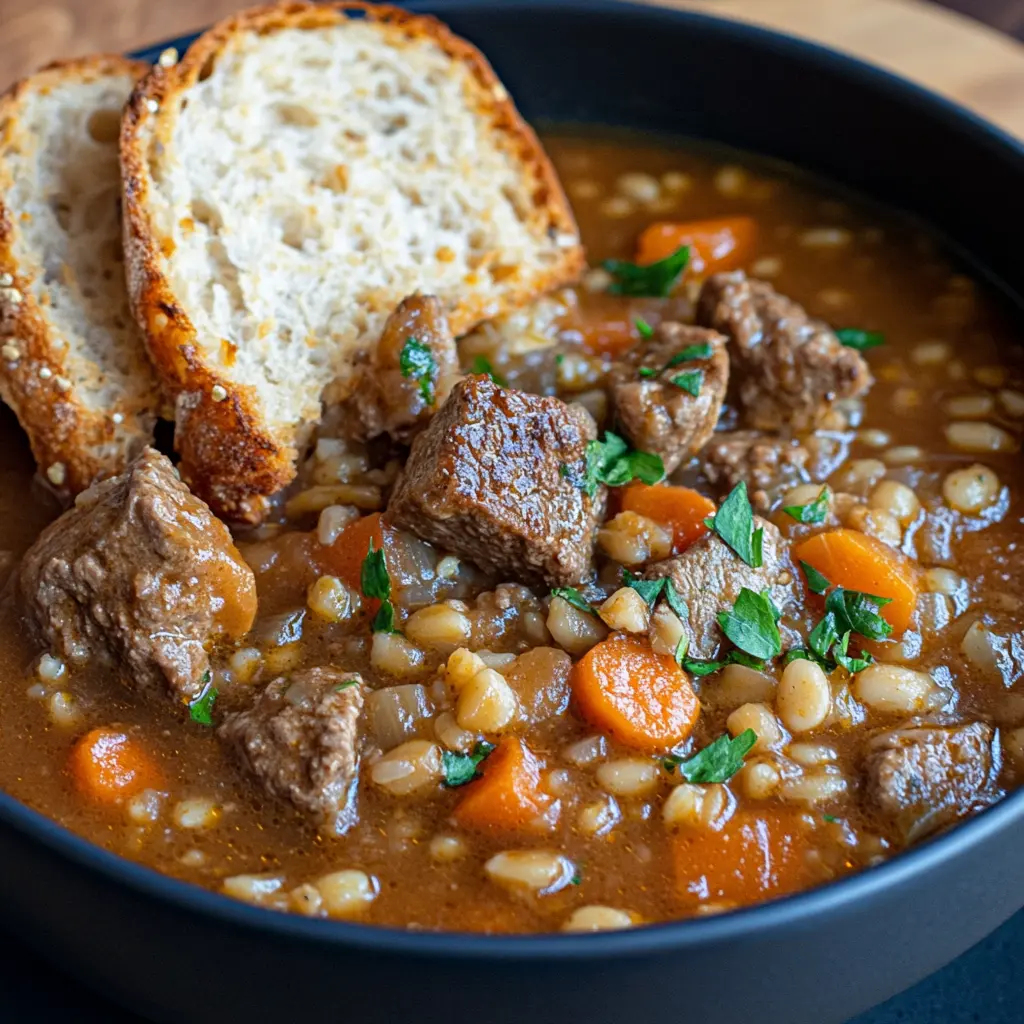
The Ultimate Comfort in a Bowl: Welcoming You to Beef and Barley Soup
Ah, is there anything in the world that quite compares to the soul-soothing magic of a steaming, hearty beef barley soup? Picture this: a chilly evening, the windows are slightly fogged, and the entire house smells absolutely incredible. Why? Because simmering away on the stove is a deep, ceramic pot full of the most comforting classic comfort food known to humankind. Furthermore, this isn’t just any meal; it’s a hug from the inside, a timeless recipe passed down through generations for its sheer simplicity and profound ability to make everything feel right.
Indeed, this iconic dish, with its tender chunks of beef, chewy pearls of barley, and sweet garden vegetables, has been a cornerstone of family dinners across countless cultures. Ultimately, it’s prized for its incredible frugality, its deep nutritional value, and its fantastic knack for feeding a hungry crowd without any fuss. And let’s be completely honest—the entire experience is utterly incomplete without a hunk of warm, crusty bread perched on the side, ready to dive into that rich broth and soak up every single, delicious drop.
Why This Classic Soup Deserves a Spot in Your Repertoire
So, you might be wondering, with countless soup recipes out there, what makes this particular one so special? Well, for starters, this homemade beef and barley stew is far more than the sum of its simple parts. It’s a powerhouse of a meal that truly checks all the boxes for a modern home cook.
First and foremost, it is incredibly nutrient-dense and satisfying. Packed with high-quality protein from the beef and a fantastic amount of dietary fiber from the barley and vegetables, a single bowl provides lasting energy and warmth. Consequently, it’s the perfect make ahead soup for weekly meal prep, tasting arguably even better on the second or third day as the flavors continue to meld together beautifully.
Moreover, this soup is wonderfully economical and forgiving. It expertly transforms tougher, more affordable cuts of beef into something magnificently tender and flavorful through the magic of low, slow cooking. Similarly, barley is a humble, budget-friendly grain that bulks out the soup and adds a wonderful substance. Speaking of bulk, this recipe makes a huge batch, meaning it’s an ideal freezer meal for those nights when you simply need a quick, home-cooked dinner without any effort.
But above all, the experience is everything. That moment you tear into a piece of freshly baked, warm bread and drag it through the deeply savory broth is, without a doubt, pure culinary bliss. This unbeatable pairing is the very heart of cozy winter recipes.
Building Flavor from the Bottom Up: Your Ingredient Glossary
Alright, let’s get down to the nitty-gritty! Creating an unforgettable old fashioned beef barley soup isn’t complicated; however, it does rely on understanding the role each ingredient plays. Think of it as building a house—you need a solid foundation before you can add the beautiful finishes.
The Foundation: Aromatics and Broth
Every great soup starts with a aromatic base, and this one is no exception. Typically, we begin with a classic mirepoix: a harmonious trio of onions, carrots, and celery. Diced and sautéed slowly in a little fat, these vegetables sweeten and create a flavor bedrock that is simply irreplaceable. Following that, we add generous amounts of garlic, whose pungent aroma mellows into something sweet and nutty, adding another layer of complexity.
Now, for the secret weapon: tomato paste. Don’t just stir it in! Instead, you’ll want to cook it for a minute or two until it darkens slightly. This crucial step, often called “toasting,” deepens its flavor, removing any metallic tang and adding a rich umami backbone to the entire pot.
Of course, the liquid component is vital. A good-quality beef broth will provide the most intense, meaty flavor. However, many chefs actually prefer using a low-sodium chicken or vegetable broth. Why? Well, it allows the natural flavor of the beef and vegetables to shine through without being overwhelmed by an overly salty beef broth. Ultimately, the choice is yours, but opting for a low-sodium version always gives you better control over the final seasoning.
The Star Players: Beef and Barley
Choosing the right beef is arguably the most important step for a successful outcome. You absolutely want a cut that is well-marbled with fat and rich in collagen. As it cooks low and slow, that collagen breaks down into gelatin, resulting in meat that is fall-apart tender and a broth that is luxuriously silky. The best choices for this are chuck roast (cut into cubes) or pre-cut stew meat from the same area.
Then, there’s the namesake: barley. This humble grain is a soup superstar, offering a delightful chew and heartiness. But wait—not all barley is created equal! The most common type you’ll find is pearled barley. It has had its outer hull and bran removed, so it cooks faster and is less chewy. On the other hand, hulled barley is the whole-grain version, boasting more fiber and nutrients but requiring a longer cooking time and more liquid. For this recipe, pearled barley is the standard and most reliable choice.
The Supporting Cast: Herbs and Vegetables
While the base is essential, the supporting cast brings the symphony together. Fresh herbs like thyme and a bay leaf or two are the classic profile, lending an earthy, aromatic quality that complements the beef perfectly. Additionally, feel free to get creative with other vegetables. Toss in some sliced mushrooms with the aromatics for a deeper umami punch, or add frozen peas right at the end for a pop of color and sweetness.
Crafting Your Masterpiece: The Step-by-Step Guide to Beef and Barley Soup
Okay, apron on! It’s time to transform these beautiful ingredients into the ultimate one pot meal. This process is a labor of love, but don’t worry—it’s mostly hands-off simmering. Just follow these steps, and you simply cannot fail.
Prep Work: Mise en Place
Before you even think about turning on the stove, do yourself a huge favor: practice your mise en place. This is just a fancy French term for having all your ingredients prepped, measured, and within arm’s reach. Chop those onions, celery, and carrots. Cube the beef and pat it dry—this is crucial! Mince the garlic, measure the barley, and have your broth ready. Trust me, this little bit of organization makes the actual cooking process serene and enjoyable.
Step 1: Searing the Beef to Perfection
Here it is: the single most important step for building massive flavor. Do not skip this! Season your dried beef cubes generously with salt and pepper. Meanwhile, heat a tablespoon of oil in a large Dutch oven or heavy-bottomed pot over medium-high heat until it’s shimmering.
Now, here’s the key: do not crowd the pot! Add the beef in a single layer with plenty of space between the pieces. If you add too much at once, the pan temperature will drop, and the meat will steam instead of sear. We want a deep, brown crust on each piece. So, work in batches, searing each side for a few minutes until beautifully browned. Then, remove them to a plate and repeat. Those browned bits left in the pot? That’s solid gold flavor, known as the “fond.”
Step 2: Building a Flavorful Base (Sweating the Aromatics)
With the beef set aside, it’s time to build the base. Reduce the heat to medium and toss your onions, carrots, and celery into the same pot. You might need a touch more oil. Cook them, stirring occasionally, until they begin to soften and sweeten, about 5-7 minutes. Then, add the garlic and tomato paste, cooking for another full minute until fragrant and the paste has darkened a shade.
Step 3: Deglazing and Simmering
This is where the magic happens! Pour in a quarter cup of water or broth to deglaze the pot. As the liquid hits the hot surface, use your spoon to scrape up all those browned, flavorful bits from the bottom. This process unlocks all that caramelized goodness and integrates it directly into your soup base.
Now, return the seared beef and any accumulated juices to the pot. Then, add the barley, broth, and herbs like thyme and bay leaves. Bring everything to a lively boil. Immediately after it boils, reduce the heat to low until it maintains the gentlest possible simmer—just a few lazy bubbles breaking the surface now and then. Cover the pot with a lid slightly ajar.
Step 4: The Patient Simmer and Final Adjustments
Now, you wait. Let the soup simmer gently for about 1 to 1.5 hours. You’re waiting for the beef to become fork-tender and the barley to be soft yet still chewy. Occasionally, you might see some foam or excess fat rise to the top; just skim it off with a spoon.
Once the time is up, remove the pot from the heat. Fish out the bay leaves and thyme stems. Now, taste it! This is the moment of truth. Season generously with salt and freshly ground black pepper until the flavors truly sing. Stir in some fresh parsley for a burst of color and freshness.
The Essential Companion: How to Make or Choose Crusty Bread
Let’s be real: a soup this good deserves an equally worthy partner. The crusty bread is not just a side; it’s an essential tool for ensuring not a single drop of that glorious broth goes to waste.
The Art of the No-Knead Bread
Believe it or not, baking your own rustic, bakery-quality loaf at home is astonishingly easy. A classic no-knead crusty bread recipe requires just four ingredients: flour, water, yeast, and salt. The magic lies in a long, slow rise (often overnight) that develops incredible flavor and creates those beautiful, irregular air pockets. The result is a loaf with a crackling, crisp exterior and a soft, chewy interior that is pure heaven when slathered with butter.
How to Choose the Best Store-Bought Loaf
If baking isn’t your thing today, fear not! You can still achieve soup-time nirvana. When at the store, skip the pre-sliced, soft sandwich loaves. Instead, head to the bakery section. Look for a round sourdoughboule, a classic baguette, or any rustic artisan loaf that feels substantial and has a hard, crisp crust. To truly elevate it, warm it in a 350°F (175°C) oven for 10 minutes before serving. This revives the crust and makes the interior wonderfully warm and soft.
Pro Tips for a Perfect Soup Every Time
You’ve got the basics down, but these little pro tips will elevate your soup from great to legendary.
-
Sear, Don’t Steam: We said it before, but it’s worth repeating. Pat that beef dry and sear in batches. It’s the biggest flavor booster you have.
-
The Barley Thickening Effect: Be warned! Barley is a thirsty grain and will continue to absorb liquid even after cooking. Therefore, your soup will thicken significantly as it sits and cools. This is totally normal! Simply thin it out with a bit of warm broth or water when you reheat it to your desired consistency.
-
Make It Ahead: Honestly, this soup is best made a day in advance. Not only does it make dinner a breeze, but the flavors have time to get to know each other, creating a deeper, more harmonious taste. It also makes it easy to skim off any solidified fat from the top before reheating.
Creative Twists on a Classic Recipe
The basic recipe is a masterpiece, but who doesn’t love a good remix? Here are some delicious variations to keep things interesting.
-
Slow Cooker/Crockpot Method: Yes, you can make this easy beef barley soup recipe in a crockpot! For the best flavor, still sear the beef and sauté the vegetables on the stove first. Then, transfer everything to your slow cooker, add the barley and broth, and cook on LOW for 7-8 hours or on HIGH for 4-5 hours.
-
Instant Pot/Pressure Cooker Method: Short on time? The Instant Pot is your best friend. Use the Sauté function to sear the beef and cook the vegetables. Then, add everything else, secure the lid, and cook on High Pressure for 25 minutes. Allow the pressure to release naturally for 10 minutes before doing a quick release.
-
Global Variations:
-
Mushroom & Beef Barley: Add a pound of sliced cremini or wild mushrooms to the pot with the onions and celery. Sauté until they release their water and become golden brown.
-
Italian Style: Add a Parmesan cheese rind to the pot while it simmers (remove it before serving). Finish each bowl with a bright sprinkle of gremolata (lemon zest, garlic, and parsley).
-
Serving, Storing, and Reheating Your Soup
The grand finale! Your soup is ready, and your house smells like a five-star restaurant.
The Perfect Presentation
Ladle the deep, hearty soup into large, warm bowls. This is comfort food, so be generous! Garnish with a final sprinkle of fresh parsley for a touch of color. Most importantly, serve it immediately with that warm, crusty bread and good butter on the side. Encourage everyone to break off pieces of bread and dunk them right in.
Storing for Future Feasts
This soup is a gift that keeps on giving. To store it, let it cool completely to room temperature first—this is important for food safety. Then, transfer it to airtight containers.
-
Refrigerator: It will keep beautifully for 4 to 5 days.
-
Freezer: For longer storage, freeze it for up to 3 months. Pro tip: freeze it in portion-sized containers for easy lunches. Note that the barley may become a little softer after thawing, but it will still taste delicious. When ready to eat, thaw overnight in the refrigerator and reheat gently on the stove, adding a splash of broth or water to loosen it up.
Frequently Asked Questions (FAQs)
What is the best cut of beef for beef barley soup?
Without a doubt, chuck roast is the champion. It comes from the shoulder of the cow, an area that gets a lot of exercise. This results in a cut that’s well-marbled with fat and full of collagen. When cooked low and slow, that collagen melts into gelatin, making the meat incredibly tender and the broth richly silky.
Can I make this soup in a slow cooker?
Absolutely! To adapt this for a slow cooker, just follow the recipe through searing the beef and sautéing the vegetables on the stove. Then, transfer everything to your crockpot, add the barley and broth, and give it a good stir. Cook on LOW for 7-8 hours or on HIGH for 4-5 hours, until the beef is tender.
Is beef and barley soup gluten-free?
Traditional barley contains gluten, so the standard recipe is not gluten-free. However, you can easily make a gluten-free version! Simply substitute the barley with an equal amount of rinsed quinoa, brown rice, or even gluten-free whole grains like sorghum. Just be sure to also check that your broth is certified gluten-free.
Why is my soup so thick? Can I fix it?
Don’t worry, this is completely normal! Barley is a starch and acts like a sponge, continuously absorbing liquid as it cooks and as the soup sits. Fortunately, it’s very easy to fix. When you reheat it, just add more beef broth or water, a little at a time, until it reaches your preferred consistency.
How can I make my soup more flavorful?
If your soup tastes a bit bland, it’s usually an easy fix. First, ensure you adequately seared the meat to create a fond. Second, don’t be shy with salt and pepper—season in layers and do a final taste at the end. Using a good quality, low-sodium broth allows you to control the salt level. Finally, for a boost of umami, try adding a splash of Worcestershire sauce or a Parmesan cheese rind to the pot while it simmers.
Print
Beef and Barley Soup with Crusty Bread
Description
🥣 Beef and Barley Soup with Crusty Bread
Ingredients
For the Soup:
-
2 tbsp olive oil
-
1 ½ lbs beef stew meat (chuck roast, cut into cubes)
-
Salt & black pepper, to taste
-
1 medium onion, diced
-
2 carrots, diced
-
2 celery stalks, diced
-
3 garlic cloves, minced
-
8 cups beef broth
-
1 cup pearl barley (rinsed)
-
2 tbsp tomato paste
-
1 bay leaf
-
1 tsp dried thyme (or 2 tsp fresh)
-
1 tsp dried parsley
-
2 cups mushrooms, sliced (optional, but adds depth)
-
1 cup potatoes, diced (optional, for a heartier version)
For Serving:
-
Fresh parsley, chopped
-
Crusty bread (baguette, sourdough, or rustic country loaf)
-
Butter for spreading
Instructions
1. Brown the Beef
-
Heat olive oil in a large soup pot or Dutch oven over medium-high heat.
-
Season beef cubes with salt and pepper.
-
Sear in batches until browned on all sides (don’t overcrowd). Remove and set aside.
2. Build the Base
-
In the same pot, sauté onion, carrots, and celery until softened (5–6 minutes).
-
Add garlic and cook for 1 more minute.
-
Stir in tomato paste and cook for 2 minutes to deepen the flavor.
3. Simmer the Soup
-
Return beef to the pot.
-
Add beef broth, barley, bay leaf, thyme, parsley, mushrooms (if using), and potatoes (if using).
-
Bring to a boil, then reduce heat and simmer gently for 1 ½ to 2 hours, until beef is tender and barley is cooked through.
4. Finish & Serve
-
Remove bay leaf.
-
Taste and adjust seasoning with salt and pepper.
-
Ladle into bowls, sprinkle with fresh parsley, and serve with warm, buttered crusty bread for dipping.