
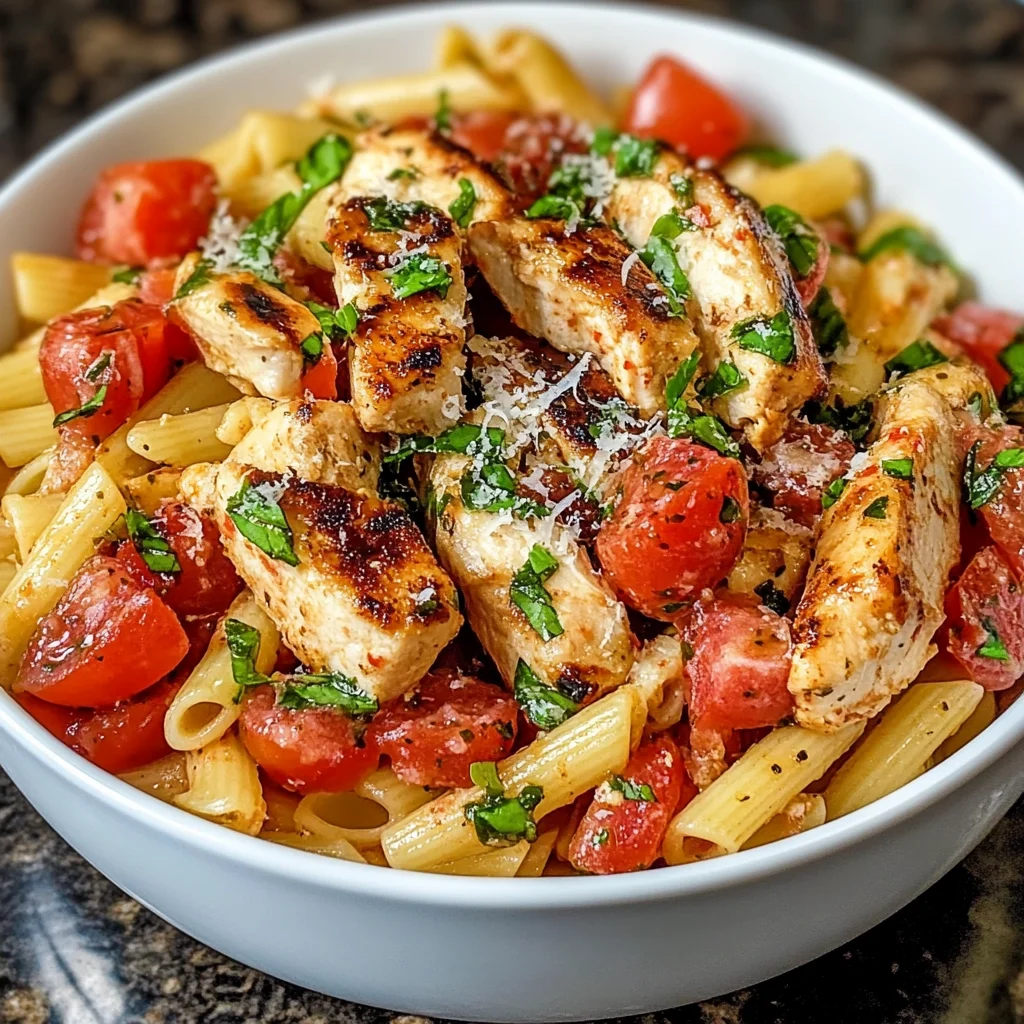
Bruschetta Chicken Pasta: A Fresh Italian-Inspired Dinner Recipe
Imagine tender chicken breast nestled in perfectly cooked pasta, topped with a vibrant mixture of fresh tomatoes, basil, and garlic—this is Bruschetta Chicken Pasta, a dish that brings the beloved flavors of Italian bruschetta to your dinner table. This recipe combines classic Italian ingredients into a complete meal that’s ready in under 30 minutes, making it perfect for busy weeknights or special occasions.
What Is Bruschetta Chicken Pasta?
Bruschetta Chicken Pasta transforms the classic Italian appetizer into a hearty main dish. Traditional bruschetta features toasted bread topped with fresh tomatoes, basil, and garlic. This recipe takes those same fresh ingredients and pairs them with seasoned chicken and pasta.
The dish originated from home cooks looking to expand bruschetta beyond an appetizer. The fresh tomato topping remains uncooked, preserving the bright, summery flavors. This creates a delightful contrast with the warm pasta and chicken.
Key Components
The recipe consists of three main elements:
-
Seasoned chicken breast: Pan-seared until golden and juicy
-
Al dente pasta: Typically penne, farfalle, or bowtie pasta
-
Fresh bruschetta topping: Diced tomatoes, fresh basil, garlic, and olive oil
These components come together to create a balanced meal. The fresh topping adds brightness, while the chicken provides protein and substance.
Why This Recipe Works
Bruschetta Chicken Pasta succeeds because it balances simplicity with impressive flavors. The technique requires minimal cooking skills, yet delivers restaurant-quality results.
Flavor Profile Balance
The fresh tomato mixture contrasts beautifully with the savory chicken. The acidity from tomatoes cuts through the richness of the pasta. Meanwhile, fresh basil adds an aromatic quality that elevates every bite.
Textural Variety
This dish offers multiple textures in each forkful:
-
Tender, juicy chicken pieces
-
Firm yet tender pasta
-
Crisp, fresh tomatoes
-
Soft, aromatic basil leaves
Nutritional Benefits
The recipe provides a complete nutritional profile. Chicken delivers lean protein, pasta offers complex carbohydrates, and tomatoes provide vitamins and antioxidants. Fresh basil adds vitamin K and beneficial compounds.
According to the USDA FoodData Central, fresh tomatoes contain significant amounts of vitamin C and lycopene. These nutrients support immune function and overall health.
Time Efficiency
The entire dish comes together in approximately 25-30 minutes. You can prepare the bruschetta topping while cooking the chicken. The pasta boils simultaneously, streamlining the process.
Essential Ingredients for Perfect Bruschetta Chicken Pasta
Quality ingredients make all the difference in this fresh, simple recipe. Each component plays a crucial role in the final dish.
For the Chicken
-
Boneless, skinless chicken breasts (1.5 pounds): Choose breasts of similar size for even cooking
-
Italian seasoning (2 teaspoons): Combines oregano, basil, and other herbs
-
Garlic powder (1 teaspoon): Adds depth without raw garlic bite
-
Salt and black pepper: Season generously for maximum flavor
-
Olive oil (2 tablespoons): For pan-searing the chicken
For the Bruschetta Topping
-
Fresh Roma tomatoes (4-5 medium): Roma tomatoes have less water content
-
Fresh basil leaves (½ cup, chopped): Use only fresh basil, never dried
-
Garlic cloves (3-4, minced): Fresh garlic provides the best flavor
-
Extra virgin olive oil (¼ cup): High-quality oil enhances the taste
-
Balsamic vinegar (2 tablespoons): Adds subtle sweetness and acidity
-
Salt and pepper: To taste
For the Pasta
-
Penne or bowtie pasta (1 pound): Short pasta shapes work best
-
Salt: For pasta cooking water
-
Reserved pasta water (½ cup): Helps create a light sauce
Optional Additions
-
Fresh mozzarella pearls (1 cup): Adds creamy texture
-
Parmesan cheese (½ cup, grated): For serving
-
Red pepper flakes (¼ teaspoon): Provides gentle heat
Kitchen Equipment You’ll Need
Having the right tools makes preparation easier and more efficient.
Essential Equipment
-
Large pot (6-8 quarts): For boiling pasta
-
Large skillet or sauté pan (12 inches): For cooking chicken
-
Mixing bowl (medium): For preparing bruschetta topping
-
Sharp chef’s knife: For dicing tomatoes and chopping basil
-
Cutting board: Preferably separate boards for chicken and vegetables
-
Meat thermometer: Ensures chicken reaches safe internal temperature
-
Tongs: For flipping chicken and tossing pasta
-
Colander: For draining pasta
Helpful But Not Required
-
Garlic press for mincing garlic quickly
-
Kitchen shears for cutting basil without bruising
-
Pasta fork for easier serving
Step-by-Step Instructions
Follow these detailed instructions for perfect Bruschetta Chicken Pasta every time.
Step 1: Prepare the Bruschetta Topping
Start by making the fresh topping. This allows flavors to meld while you cook other components.
Dice Roma tomatoes into ½-inch pieces. Remove excess seeds if desired, though some seeds add flavor. Place diced tomatoes in a medium mixing bowl.
Chop fresh basil leaves into thin ribbons. Stack leaves, roll them tightly, and slice crosswise. This technique, called chiffonade, prevents bruising.
Mince garlic cloves finely. Fresh garlic provides the best flavor for this uncooked topping.
Combine tomatoes, basil, and garlic in the bowl. Add extra virgin olive oil, balsamic vinegar, salt, and black pepper. Stir gently to combine. Set aside at room temperature.
The topping improves as it sits. The tomatoes release their juices, creating a light, flavorful sauce.
Step 2: Season and Prepare the Chicken
Pat chicken breasts dry with paper towels. Moisture prevents proper browning.
If chicken breasts are very thick, pound them to even thickness. Place chicken between plastic wrap and use a meat mallet. Aim for ¾-inch thickness throughout.
Combine Italian seasoning, garlic powder, salt, and black pepper in a small bowl. Sprinkle seasoning mixture evenly over both sides of each chicken breast. Press gently to help seasonings adhere.
Step 3: Cook the Pasta
Bring a large pot of water to a rolling boil. Add salt generously—the water should taste like the sea. This is your only chance to season the pasta from within.
Add pasta to boiling water. Stir immediately to prevent sticking. Cook according to package directions for al dente texture, usually 8-10 minutes.
Before draining, reserve ½ cup of pasta cooking water. This starchy liquid helps create a cohesive sauce later.
Drain pasta in a colander. Do not rinse—the starch helps the bruschetta topping cling to the pasta.
Step 4: Cook the Chicken
While pasta cooks, heat olive oil in a large skillet over medium-high heat. The oil should shimmer but not smoke.
Carefully place seasoned chicken breasts in the hot skillet. Do not move them for 5-6 minutes. This allows a golden crust to form.
Flip chicken breasts using tongs. Cook the second side for 5-6 minutes more. Check internal temperature with a meat thermometer. Chicken is safe at 165°F.
The CDC recommends cooking chicken to this temperature to prevent foodborne illness.
Once cooked through, transfer chicken to a cutting board. Let rest for 5 minutes before slicing. This resting period allows juices to redistribute.
Step 5: Slice the Chicken
After resting, slice chicken breasts into ½-inch thick strips. Cut against the grain for maximum tenderness. You can also dice the chicken into bite-sized pieces.
Step 6: Combine Everything
Return drained pasta to the empty pot or place in a large serving bowl. Add half of the bruschetta topping to the hot pasta. Toss gently to combine.
The warmth from the pasta slightly softens the tomatoes while keeping them fresh. Add a splash of reserved pasta water if needed to create a light sauce.
Transfer pasta to a serving platter or individual plates. Top with sliced chicken pieces. Spoon remaining bruschetta topping over the chicken and pasta.
Step 7: Final Touches
Garnish with additional fresh basil leaves. Add grated Parmesan cheese if desired. Serve immediately while the pasta remains warm and the topping stays fresh.
Pro Tips for Restaurant-Quality Results
These professional techniques elevate your Bruschetta Chicken Pasta from good to exceptional.
Selecting Perfect Tomatoes
Choose ripe but firm Roma tomatoes. They should give slightly when pressed. Overripe tomatoes create a mushy topping. Underripe tomatoes lack flavor.
Roma tomatoes work best because they contain less water and more flesh. This prevents the topping from becoming watery.
Mastering Chicken Texture
The key to juicy chicken is proper temperature control. Cook over medium-high heat to create a crust. Too low and chicken steams; too high and it burns before cooking through.
Always use a meat thermometer. Visual cues can be misleading. Pull chicken from heat at 165°F exactly.
Pounding chicken to even thickness ensures uniform cooking. Thick portions stay raw while thin parts overcook.
Pasta Perfection
Salt pasta water generously. Unsalted pasta tastes bland no matter what sauce you add.
Cook to al dente texture—pasta should have a slight bite. It will continue cooking slightly from residual heat when combined with other ingredients.
Reserve pasta water before draining. The starchy water acts as a natural sauce thickener.
Bruschetta Topping Techniques
Make the topping 15-30 minutes before serving. This allows flavors to meld. However, do not prepare more than 2 hours ahead. Fresh tomatoes release too much water over time.
Remove tomato seeds only if they’re very watery. Seeds add flavor and texture.
Tear basil instead of cutting if you have time. Torn basil releases more aromatic oils.
Taste and adjust seasoning. Fresh tomatoes vary in sweetness and acidity. Add more balsamic vinegar if tomatoes taste bland.
Temperature Contrast
Serve warm pasta and chicken with room-temperature bruschetta topping. This temperature contrast enhances the fresh quality of the tomatoes and basil.
Nutritional Information
Understanding the nutritional content helps you make informed dietary choices.
Per Serving (Based on 6 Servings)
-
Calories: 420-450
-
Protein: 35-38 grams
-
Carbohydrates: 48-52 grams
-
Fat: 10-12 grams
-
Fiber: 3-4 grams
-
Sodium: 300-400 mg
Health Benefits
This dish provides balanced nutrition from whole food ingredients.
Lean Protein: Chicken breast offers complete protein with minimal saturated fat. Protein supports muscle maintenance and satiety.
Complex Carbohydrates: Pasta provides sustained energy. Choose whole wheat pasta to increase fiber content.
Vitamins and Minerals: Fresh tomatoes contain vitamin C, potassium, and lycopene. According to Harvard T.H. Chan School of Public Health, lycopene may support heart health.
Healthy Fats: Olive oil provides monounsaturated fats. These fats support cardiovascular health and nutrient absorption.
Fresh Herbs: Basil contains vitamin K and beneficial plant compounds. Fresh herbs add flavor without extra calories or sodium.
Dietary Modifications
The recipe adapts easily for various dietary needs:
-
Lower Carb: Reduce pasta by half and increase vegetables
-
Gluten-Free: Use gluten-free pasta varieties
-
Dairy-Free: Skip Parmesan cheese (already naturally dairy-free)
-
Lower Fat: Use less olive oil in bruschetta topping
Recipe Variations and Substitutions
Customize Bruschetta Chicken Pasta to suit your preferences or available ingredients.
Protein Variations
Shrimp: Substitute large shrimp for chicken. Cook shrimp until pink and opaque, about 2-3 minutes per side.
Turkey: Use turkey cutlets as a leaner alternative. Cook similarly to chicken.
White Beans: For vegetarian option, add cannellini beans instead of chicken. This creates a Mediterranean-inspired dish.
Grilled Chicken: Use leftover grilled chicken. Simply slice and add to warm pasta.
Pasta Options
Whole Wheat Pasta: Increases fiber content and adds nutty flavor.
Chickpea Pasta: Provides extra protein and works for gluten-free diets.
Zoodles: Replace half the pasta with zucchini noodles for lower carbs.
Orecchiette: Small cup-shaped pasta catches the bruschetta topping perfectly.
Tomato Alternatives
Cherry Tomatoes: Halve cherry or grape tomatoes. They’re naturally sweeter.
Heirloom Tomatoes: Use when in season for superior flavor and varied colors.
Sun-Dried Tomatoes: Add 2-3 tablespoons of chopped sun-dried tomatoes for concentrated flavor.
Herb Modifications
Arugula: Add peppery arugula with basil for extra dimension.
Oregano: Include fresh oregano for more traditional Italian flavor.
Parsley: Flat-leaf parsley adds freshness without basil’s distinct taste.
Cheese Additions
Mozzarella: Fresh mozzarella pearls create creamy pockets throughout the dish.
Burrata: Top each serving with torn burrata cheese for luxurious texture.
Feta: Crumbled feta adds tangy, salty notes.
Ricotta: Dollops of ricotta create creamy contrast.
Vegetable Enhancements
Spinach: Wilt fresh spinach into hot pasta for added nutrients.
Roasted Red Peppers: Dice and add to bruschetta topping for sweetness.
Zucchini: Dice and sauté with chicken for extra vegetables.
Asparagus: Blanch asparagus pieces and toss with pasta.
Serving Suggestions and Pairings
Complete your meal with complementary sides and accompaniments.
Side Dishes
Garlic Bread: Serve crusty garlic bread for soaking up tomato juices.
Mixed Green Salad: A simple salad with balsamic vinaigrette balances the richness.
Roasted Vegetables: Try roasted broccoli, Brussels sprouts, or bell peppers.
Caprese Salad: Continue the Italian theme with tomatoes, mozzarella, and basil.
Presentation Ideas
Family Style: Serve on a large platter with chicken arranged over pasta.
Individual Plates: Plate pasta first, add sliced chicken, then top with bruschetta mixture.
Bowls: Serve in shallow bowls for a casual, rustic presentation.
Garnish: Add whole basil leaves, shaved Parmesan, and a drizzle of olive oil.
Beverage Pairings
Sparkling Water: Add lemon or lime for a refreshing complement.
Iced Tea: Unsweetened or lightly sweetened iced tea pairs well.
Lemonade: The citrus notes complement the tomato acidity.
Italian Soda: Italian sodas like limonata or aranciata work beautifully.
Storage and Reheating Instructions
Proper storage maintains quality and food safety.
Refrigeration
Store components separately for best results. Place chicken, pasta, and bruschetta topping in separate airtight containers.
Chicken: Keeps for 3-4 days refrigerated.
Pasta: Stores for 3-4 days. Toss with a small amount of olive oil to prevent sticking.
Bruschetta Topping: Best consumed within 24 hours. Fresh tomatoes release water and lose texture over time.
Freezing
Chicken: Freezes well for up to 3 months. Thaw in refrigerator overnight.
Pasta: Plain cooked pasta freezes adequately for 1-2 months.
Bruschetta Topping: Do not freeze. Fresh ingredients lose texture and flavor.
Reheating Methods
Microwave: Place pasta and chicken in a microwave-safe dish. Add a splash of water or chicken broth. Cover and heat in 1-minute intervals, stirring between each.
Stovetop: Warm in a skillet over medium heat. Add reserved pasta water or chicken broth to prevent drying.
Oven: Combine in an oven-safe dish. Cover with foil and heat at 350°F for 15-20 minutes.
Always reheat to an internal temperature of 165°F for food safety.
Making Fresh Topping
Prepare fresh bruschetta topping when ready to serve leftovers. This maintains the bright, fresh quality that makes the dish special.
Common Mistakes to Avoid
Learn from these common errors to ensure perfect results.
Overcooking the Chicken
Dry, tough chicken ruins the dish. Use a meat thermometer and remove chicken from heat at exactly 165°F. Carryover cooking will raise the temperature slightly as it rests.
Undersalting Pasta Water
Bland pasta cannot be fixed later. Salt the cooking water generously—use at least 1-2 tablespoons of salt per pound of pasta.
Making Topping Too Far Ahead
Bruschetta topping tastes best when fresh. Tomatoes release too much water if prepared more than 2 hours ahead. The result becomes soupy rather than fresh and chunky.
Using Dried Basil
Dried basil cannot replace fresh in this recipe. The fresh herb provides essential flavor and aroma. Dried basil tastes dusty in comparison.
Rinsing Pasta
Never rinse cooked pasta unless making a cold pasta salad. Rinsing removes the starch that helps sauces and toppings cling to the noodles.
Skipping the Resting Period
Cutting chicken immediately after cooking causes juices to run out. The five-minute rest allows juices to redistribute, ensuring moist, tender meat.
Overcrowding the Pan
Cook chicken in batches if necessary. Overcrowding lowers pan temperature, causing chicken to steam rather than sear. This prevents the flavorful golden crust from forming.
Using Low-Quality Olive Oil
Since olive oil features prominently in the uncooked topping, quality matters. Use extra virgin olive oil for best flavor.
Frequently Asked Questions
Can I make Bruschetta Chicken Pasta ahead of time?
You can prepare components separately ahead. Cook chicken and pasta up to 2 days in advance. Store refrigerated in separate containers. Make the fresh bruschetta topping just before serving to maintain optimal texture and flavor.
What’s the best pasta shape for this recipe?
Short pasta shapes work best for Bruschetta Chicken Pasta. Penne, bowtie (farfalle), rigatoni, and orecchiette all work well. These shapes catch the chunky bruschetta topping and make eating easier than long noodles.
Can I use canned tomatoes instead of fresh?
Fresh tomatoes are essential for authentic flavor and texture. Canned tomatoes become mushy and lack the bright, fresh quality that defines bruschetta. If fresh tomatoes are unavailable, cherry tomatoes work better than canned.
How do I prevent the chicken from drying out?
Several techniques ensure juicy chicken: pound to even thickness, avoid overcooking by using a thermometer, let rest before slicing, and cook over proper heat to create a crust that seals in moisture.
Is this recipe suitable for meal prep?
Partially. Cook chicken and pasta for meal prep, storing them separately. Make fresh bruschetta topping when ready to eat. This maintains the fresh quality while allowing advance preparation of time-consuming components.
Can I use chicken thighs instead of breasts?
Yes, boneless, skinless chicken thighs work well. They’re naturally more moist and forgiving if slightly overcooked. Cook to 165°F internal temperature. Thighs add about 50-75 more calories per serving.
How do I keep fresh basil from turning black?
Tear or cut basil just before using. Bruising causes oxidation and blackening. If cutting in advance, stack leaves, roll tightly, and slice with a very sharp knife. Store cut basil in an airtight container with a barely damp paper towel.
Conclusion
Bruschetta Chicken Pasta delivers restaurant-quality flavor with simple home cooking techniques. This recipe combines tender, seasoned chicken with perfectly cooked pasta and a vibrant topping of fresh tomatoes, basil, and garlic. The result is a complete meal that’s both nutritious and satisfying.
The recipe’s versatility allows endless customization. Swap proteins, try different pasta shapes, or add your favorite vegetables. Despite these variations, the core concept remains the same: fresh, bright flavors that celebrate quality ingredients.
Whether you’re cooking for family dinner or entertaining guests, Bruschetta Chicken Pasta impresses without requiring advanced skills. The straightforward preparation method makes it accessible to cooks of all levels. Meanwhile, the fresh, vibrant presentation looks impressive on any table.
The key to success lies in three simple principles: properly cooked chicken, perfectly salted pasta, and fresh bruschetta topping. Master these basics, and you’ll create a dish that rivals your favorite Italian restaurant.
Print
Bruschetta Chicken Pasta
Description
Bruschetta Chicken Pasta
Ingredients:
-
1 lb pasta (penne, fusilli, or spaghetti)
-
2 tbsp olive oil
-
1 lb boneless, skinless chicken breasts, diced
-
Salt and black pepper, to taste
-
3 cloves garlic, minced
-
2 cups cherry tomatoes, halved
-
½ cup fresh basil, chopped
-
1 tbsp balsamic vinegar
-
½ cup grated Parmesan cheese
-
½ cup shredded mozzarella cheese (optional)
-
2 tbsp olive oil (for finishing)
-
Optional: red pepper flakes for heat
Instructions:
-
Cook pasta: Bring a large pot of salted water to a boil. Cook pasta according to package instructions until al dente. Drain and set aside.
-
Cook chicken: In a large skillet, heat olive oil over medium-high heat. Season chicken with salt and pepper and cook until golden and cooked through, about 5–6 minutes. Remove and set aside.
-
Sauté garlic and tomatoes: In the same skillet, add garlic and sauté for 30 seconds until fragrant. Add cherry tomatoes and cook for 3–4 minutes until they begin to soften. Stir in balsamic vinegar and cook another minute.
-
Combine pasta and chicken: Add cooked pasta and chicken back to the skillet. Toss gently to combine and coat everything in the tomato mixture.
-
Add cheese and basil: Stir in Parmesan cheese, mozzarella (if using), and fresh basil. Adjust seasoning with salt and pepper, and sprinkle with red pepper flakes if desired.
-
Serve: Drizzle with a little extra olive oil and garnish with more basil or Parmesan before serving.