Introduction & The Allure of the Dish
Cedar Plank Maple Mustard Salmon with Corn Succotash: Your Ultimate Guide to a Gourmet Meal
Why This Dish is a Culinary Masterpiece
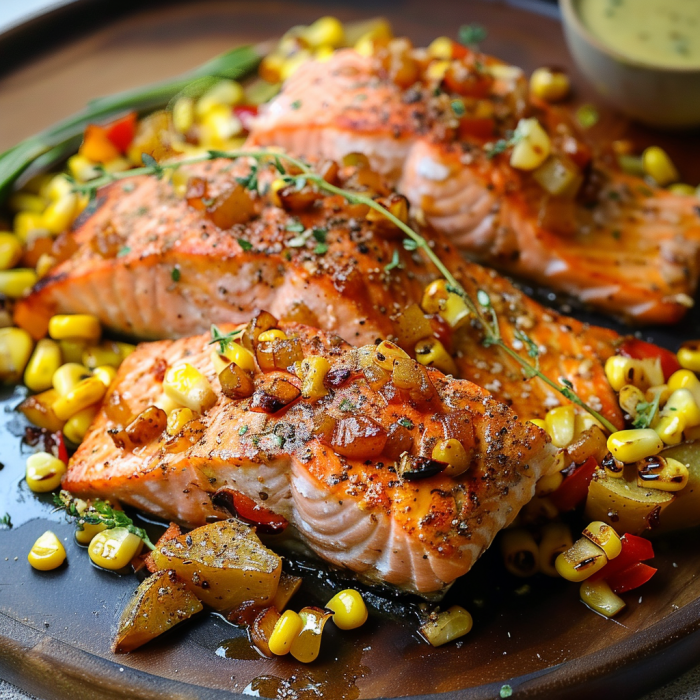
Picture this, will you? The sun is dipping low, and the air is filled with the incredible, smoky scent of cedar wafting from the grill. Meanwhile, a gorgeous fillet of salmon is sizzling away, glazed with a sticky, sweet, and tangy sauce that’s caramelizing into pure perfection. Right beside it, a vibrant, colorful succotash bursts with the fresh flavors of summer corn and crisp veggies. This, my friend, isn’t just dinner; it’s a full-blown experience for the senses.
Welcome to your new favorite recipe: Cedar Plank Maple Mustard Salmon with Corn Succotash. Honestly, this dish is an absolute showstopper that looks like it came from a five-star restaurant but is, believe it or not, totally achievable in your own backyard. Furthermore, it’s a beautiful harmony of flavors and textures—the rich, oily fish infused with smoky wood, the punchy maple-mustard glaze, and the bright, sweet crunch of the succotash all play together in perfect harmony.
Now, this guide is designed to be your ultimate resource. Consequently, we won’t just dump a recipe on you and call it a day. Instead, we’re going to dive deep into the why behind the what. You’ll learn about the history of planking, how to choose the absolute best ingredients, and all the pro tips and tricks to avoid any grilling disasters. Ultimately, whether you’re a seasoned grill master or a nervous newbie, we’re going to equip you to create a healthy, flavorful, and downright unforgettable meal that will have everyone begging for seconds. So, let’s get started!
Understanding the Components & History
The Story on the Plate: Origins and Inspiration
The Native American Roots of Planking
Before gas grills and fancy thermometers, there was a brilliantly simple cooking method born from necessity and respect for nature. For centuries, Indigenous peoples of the Pacific Northwest perfected the art of cedar planking. They would securely fasten freshly caught salmon to large, weathered boards of aromatic cedar and prop them next to the embers of an open fire.
This ingenious technique wasn’t just about convenience; it was about flavor and preservation. The slow, gentle heat cooked the fish evenly without the risk of it falling into the fire or drying out. Meanwhile, the steaming, smoldering wood infused every single bite with its distinct, earthy perfume—a flavor that simply can’t be replicated in a pan. This traditional method is the very soul of the dish we’re making today, connecting us to a rich culinary history with every bite.
Deconstructing the Modern Dish: Salmon, Glaze, and Succotash
So, how did we get from that ancient technique to our maple mustard glazed masterpiece? Well, it’s a story of delicious fusion! Our modern take builds upon that incredible foundation with a trio of components that sing in harmony.
First, you have the star: the salmon. Its rich, fatty flesh is the perfect canvas—it stands up beautifully to the smoke and heat without flaking apart into a disaster. Next, we introduce the glaze. The combination of sweet, robust maple syrup and sharp, tangy mustard is a classic for a reason; it creates a stunning caramelized crust that balances the fish’s natural oils. Finally, the corn succotash provides a fresh, vibrant counterpoint. Originally a Native American dish from the Northeast called “msickquatash,” meaning a simmering pot of corn, our version is a lighter, brighter take that cuts through the richness and completes the plate.
Ingredients Deep Dive
Selecting the Best Ingredients for Maximum Flavor
Listen, a great recipe is only as good as the ingredients you put into it. Using high-quality, fresh components here isn’t just a suggestion—it’s the secret handshake to a truly mind-blowing meal. Let’s break down what to look for.
The Heart of the Dish: Choosing Your Salmon
This is your main event, so let’s get it right. Walking into the seafood department can be confusing, but here’s the lowdown.
-
Wild-Caught vs. Farm-Raised: This is the big question. Wild-caught salmon (like Sockeye or King) is a leaner, firmer fish with a deeper, more complex flavor that comes from its natural diet. It’s often considered a more sustainable seafood choice depending on the fishery. On the other hand, farm-raised salmon is typically more readily available, higher in fat (which makes it very forgiving to cook), and has a milder, buttery taste. For this recipe, you truly can’t go wrong with either; it just depends on your preference and budget.
-
Freshness Check: Use your eyes and nose! A fresh fillet should look bright and vibrant, not dull or discolored. Its flesh should feel firm and spring back when pressed gently. Most importantly, it should smell clean and briny, like the ocean, with no overly “fishy” ammonia notes.
-
Skin-On vs. Skin-Off: Always, always opt for skin-on if you can. That layer of skin is like a built-in suit of armor. It protects the delicate flesh from drying out on the hot plank and acts as a barrier, preventing it from sticking. You can easily leave it on the plate when you eat!
Building the Perfect Maple Mustard Glaze
This glaze is the sticky, shiny crown on our king salmon. The balance is key.
-
Maple Syrup: This is non-negotiable—you must use 100% pure maple syrup. The imitation “pancake syrup” is just corn syrup with flavoring and will burn instantly, leaving you with a bitter, nasty mess. Pure maple syrup has a depth of flavor that caramelizes beautifully. Feel free to explore the different grades of pure maple syrup to find your favorite.
-
Mustard: Dijon mustard is our workhorse here. Its sharp, white-wine tang provides the necessary acidity to cut through the fat and sweetness. For a fantastic textural twist, add a spoonful of whole-grain mustard too!
-
The Flavor Boosters: Don’t sleep on the other ingredients. Minced garlic adds a pungent kick, while a splash of soy sauce (or tamari for gluten-free) introduces an underlying umami savoriness that makes the flavor profile incredibly complex.
Crafting a Vibrant Summer Succotash
This isn’t just a side dish; it’s a fresh, crunchy salad that brings everything together.
-
Corn: Fresh, sweet corn cut right off the cob is absolutely fantastic when in season. However, frozen corn is a brilliant, year-round shortcut that works perfectly—just thaw and drain it well.
-
Beans: While traditional succotash uses lima beans, we’re using edamame (young soybeans) for a modern twist. They’re slightly sweet, packed with protein, and hold their shape and bright green color beautifully.
-
Aromatics & Herbs: A diced red bell pepper and some red onion add color and a gentle crunch. Finally, a generous handful of fresh basil or chives stirred in at the very end lifts the entire dish with a burst of freshness.
Essential Equipment & Preparation
Gearing Up: Tools You’ll Need
You don’t need a ton of fancy gear for this, but a few key items are essential for success.
First and foremost, you need a cedar grilling plank. These are widely available in the grilling section of most hardware stores, supermarkets, or online. Just ensure it’s labeled as untreated and food-grade. You’ll also need a reliable grill—either gas or charcoal works wonderfully. Finally, round up your basic kitchen tools: tongs, a basting brush, mixing bowls, and a sharp knife.
The Crucial Step: Preparing Your Cedar Plank
Alright, this is the most important step you cannot skip: soaking the plank. If you throw a dry cedar plank on a hot grill, you’re basically just adding a new piece of fuel to the fire. You’ll end up with a flaming board and incinerated fish—a total dinner disaster!
Soaking the plank completely saturates the wood, allowing it to smolder and release fragrant smoke instead of bursting into flames. It also creates a steamy environment that gently cooks the salmon from below, keeping it incredibly moist.
How to do it: Submerge the plank completely in a sink, large baking dish, or cooler filled with water. Place a heavy bowl or a few cans on top to weight it down and keep it fully underwater. Let it soak for at least 1-2 hours, though overnight is even better.
The Recipe – Step-by-Step Instructions
Cedar Plank Maple Mustard Salmon with Corn Succotash: The Recipe
Prep Time: 20 minutes (plus plank soaking time)
Cook Time: 20 minutes
Serves: 4
Step 1: Crafting the Maple Mustard Glaze
In a small bowl, whisk together the following ingredients until they form a smooth, emulsified sauce:
-
1/3 cup pure maple syrup
-
2 tablespoons Dijon mustard
-
1 tablespoon whole-grain mustard (optional, for texture)
-
2 cloves garlic, minced
-
1 tablespoon soy sauce (or tamari)
-
1 teaspoon apple cider vinegar
-
1/4 teaspoon black pepper
Set aside half of this glaze in a separate bowl for basting the salmon later. The other half will be used for the initial coating.
Step 2: Prepping the Salmon and the Grill
Pat your salmon fillet (about 1.5 lbs) completely dry with paper towels. Place it skin-side down on the well-soaked cedar plank. Lightly score the skin in a few places (a few shallow diagonal cuts) to prevent it from curling up dramatically during cooking. Generously brush the top and sides of the salmon with the first portion of the maple mustard glaze, reserving the clean portion for later.
Now, fire up your grill! Preheat it to medium-high heat, aiming for a steady temperature of 375-400°F (190-200°C). If you’re using a gas grill, this means setting up for indirect grilling by turning on only one set of burners. For a charcoal grill, push the hot coals to one side. You’ll place the plank over the cool, unlit side.
Step 3: Grilling to Perfection
Carefully place the plank with the salmon onto the cool side of the grill. Close the lid and walk away! Let the magic happen for about 12-20 minutes. The cooking time isn’t set in stone; it depends entirely on the thickness of your fillet and the exact grill temperature.
Resist the urge to constantly open the lid and check! You’ll let all the precious heat and smoke escape. Instead, trust the process. The fish is done when it flakes easily with a fork but is still slightly translucent in the very center, or when an instant-read thermometer inserted into the thickest part reads 125°F (52°C). In the last 5 minutes of cooking, open the lid and brush the reserved, clean glaze onto the salmon for a final glossy, caramelized finish.
Step 4: Preparing the Succotash While the Salmon Cooks
Don’t just stand there watching the grill—multitask! While the salmon is cooking, the vibrant succotashcomes together in a flash on the stovetop.
-
Heat a tablespoon of olive oil in a large skillet over medium heat.
-
Add 1/2 a diced red onion and 1 diced red bell pepper. Sauté for 4-5 minutes until they just begin to soften.
-
Add 2 cups of fresh or thawed corn kernels and 1 cup of shelled edamame. Cook, stirring occasionally, for another 4-5 minutes until everything is heated through.
-
Season with 1/2 teaspoon salt, 1/4 teaspoon black pepper, and a pinch of paprika. Remove the skillet from the heat and stir in 2 tablespoons of chopped fresh basil or chives and a pat of butter for a beautiful sheen.
Expert Tips, Tricks, and Serving
Chef’s Secrets for a Flawless Meal
How to Tell When Your Salmon is Perfectly Cooked
Undercooked salmon can be unappealing, but overcooked salmon is a dry, chalky tragedy. Hitting that sweet spot is easier than you think if you know what to look for.
-
The Look: The flesh will transform from a translucent, deep orange or red to a more solid, opaque pink. You’ll also notice white protein beads (albumen) starting to form on the surface—this is totally normal!
-
The Touch: Poke the thickest part of the fillet with your finger. If it still feels squishy and rare, it needs more time. Perfectly cooked salmon will feel firm but still yield gently, springing back slightly.
-
The Test: This is the most reliable method. Gently press the top of the salmon with a fork or your finger. If it begins to flake apart easily, it’s ready. For absolute precision, use an instant-read thermometer. Remove the salmon from the grill when it hits 125°F (52°C); the residual heat will carry it over to a perfect medium.
Plating and Presentation Ideas
You’ve made a gourmet meal, so present it like one! For a stunning, rustic effect, serve the salmon directly on the charred cedar plank at the table—the sizzle and aroma are part of the experience. Use a large spoon to place a generous mound of the bright, colorful succotash right alongside the fillet. Finally, garnish with an extra sprinkle of fresh herbs and a couple of lemon wedges for a pop of color and a hit of fresh citrus juice.
Perfect Pairings: What to Serve With It
This dish is a complete meal on its own, but a few simple additions can make it even more fantastic. A chilled glass of sparkling water with a twist of lime complements the dish beautifully. For a side, a simple arugula salad with a light lemon vinaigrette or some crusty, warm bread to soak up the delicious juices from the salmon and succotash are always welcome.
Variations, Dietary Notes, and Leftovers
Make It Your Own: Customizations and Dietary Info
The best recipes are templates for your creativity. Here’s how to make this dish perfectly suited to your taste.
Delicious Variations to Try
-
Spicy Kick: Love heat? Add a pinch of cayenne pepper, a dash of smoked paprika, or a teaspoon of sriracha to the maple mustard glaze.
-
Herb Garden: Experiment with different herbs in the succotash. Dill, tarragon, or parsley would all be fantastic alternatives to basil.
-
Different Fish: This planking method isn’t just for salmon! It works wonderfully with other fatty, flavorful fish like Arctic char or steelhead trout.
Dietary Modifications: Gluten-Free and Dairy-Free
The great news is that this cedar plank salmon recipe is naturally dairy-free. For a gluten-free version, the only potential culprit is the soy sauce in the glaze. Simply ensure you swap it for a gluten-free tamari or coconut aminos, and you’re all set for a delicious healthy dinner that accommodates dietary needs.
Storing and Reheating Leftovers
While this meal is best enjoyed fresh, leftovers will keep in an airtight container in the refrigerator for up to 2 days. To reheat, do not use the microwave! It will violently overcook the salmon. Instead, gently warm it in a low oven (around 275°F / 135°C) until just heated through. The succotash can even be enjoyed cold as a salad.
Frequently Asked Questions (FAQs)
Frequently Asked Questions (FAQs)
Can I make this cedar plank salmon in the oven?
Absolutely, you can! While you’ll miss out on the smoky charcoal flavor, you’ll still get the wonderful cedar aroma. Place your soaked plank with the prepared salmon in a cold oven. Then, turn the heat to 375°F (190°C) and bake for about 15-20 minutes, or until the salmon flakes easily.
Where can I buy cedar planks for cooking?
They are incredibly easy to find! Check the grilling section of any hardware store like Home Depot or Lowe’s. Most large supermarkets like Target or Walmart carry them seasonally. Of course, online retailers like Amazon have a huge variety available year-round.
What can I use instead of maple syrup?
The best substitute is an equal amount of honey. Agave nectar is also a good vegan-friendly alternative. Remember, the flavor profile will change slightly, but it will still be delicious. Never use imitation pancake syrup.
Print
Cedar Plank Maple Mustard Salmon with Corn Succotash
Description
Cedar Plank Maple Mustard Salmon with Corn Succotash
Ingredients
For the Salmon:
-
4 salmon fillets (about 6 oz each, skin on)
-
1 cedar plank, soaked in water for at least 1 hour
-
3 tbsp pure maple syrup
-
2 tbsp Dijon mustard
-
1 tbsp whole-grain mustard
-
1 tbsp olive oil
-
1 clove garlic, minced
-
1 tsp soy sauce (optional, for depth)
-
Salt and black pepper, to taste
-
Fresh dill or parsley, for garnish
For the Corn Succotash:
-
2 tbsp olive oil or butter
-
2 cups fresh corn kernels (about 3–4 ears, or frozen/thawed)
-
1 red bell pepper, diced
-
1 small zucchini, diced
-
1 cup cherry tomatoes, halved
-
½ small red onion, finely chopped
-
2 cloves garlic, minced
-
2 tbsp fresh basil or parsley, chopped
-
Salt and pepper, to taste
-
Juice of ½ lemon
Instructions
1. Prepare the salmon glaze:
-
In a small bowl, whisk maple syrup, Dijon, whole-grain mustard, olive oil, garlic, soy sauce, salt, and pepper.
2. Grill the salmon on a cedar plank:
-
Preheat grill to medium (350–375°F / 175–190°C).
-
Place soaked cedar plank on the grill for 3–5 minutes until lightly smoking.
-
Lay salmon fillets on plank, skin-side down, and brush generously with glaze.
-
Cover grill and cook 15–20 minutes, until salmon flakes easily with a fork (internal temp ~125°F for medium). Brush with more glaze halfway through.
3. Make the succotash:
-
While salmon cooks, heat olive oil in a skillet over medium heat.
-
Add onion and garlic, sauté 2–3 minutes until softened.
-
Add corn, bell pepper, and zucchini. Cook 5–7 minutes until tender but crisp.
-
Stir in cherry tomatoes, season with salt and pepper, and cook 2 more minutes.
-
Finish with a squeeze of lemon juice and fresh basil/parsley.
4. Serve:
-
Place a bed of corn succotash on each plate, top with a salmon fillet, and garnish with dill or parsley.