
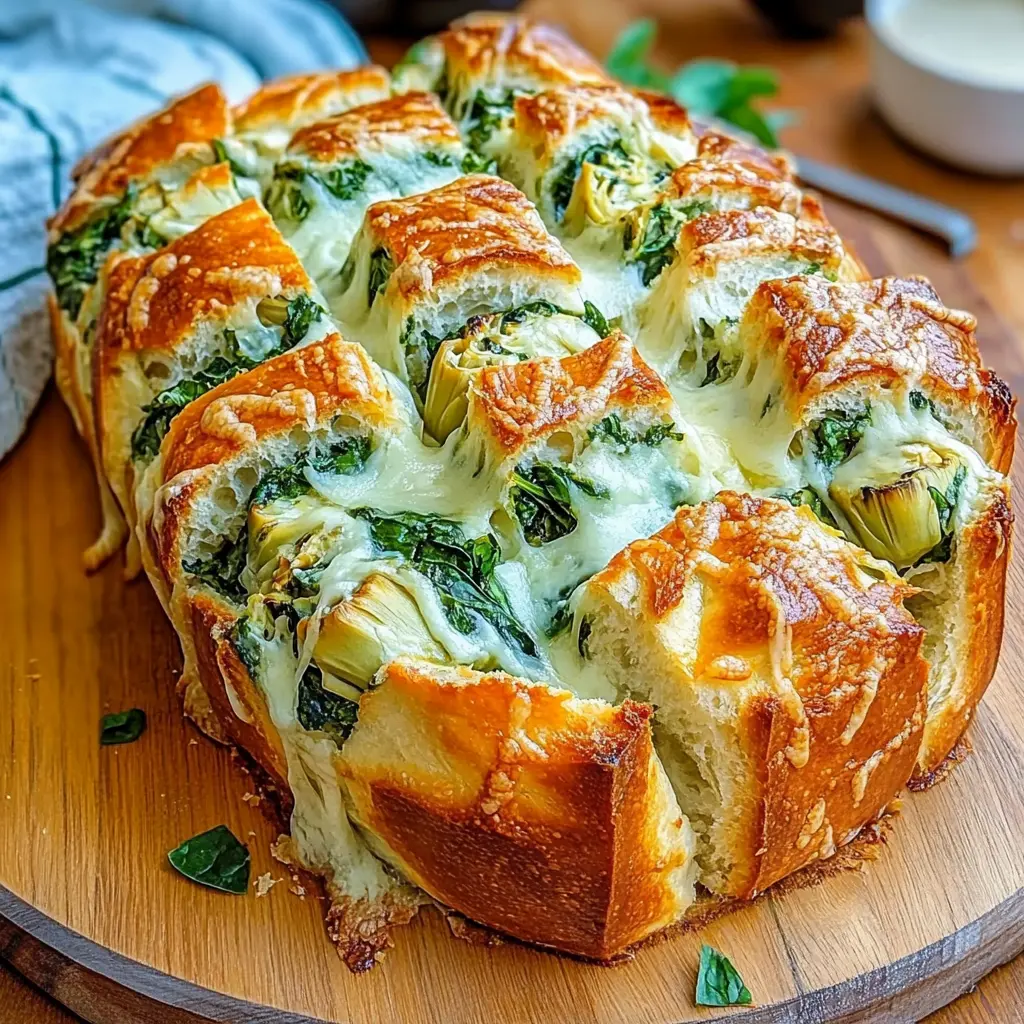
Cheesy Spinach and Artichoke Pull-Apart Sourdough Bread
There’s something magical about warm, crusty bread stuffed with melted cheese and savory vegetables. Cheesy Spinach and Artichoke Pull-Apart Sourdough Bread combines the tangy flavor of artisan sourdough with a rich, creamy filling that makes every bite irresistible. This show-stopping appetizer transforms a simple loaf into an interactive dish that’s perfect for gatherings, game days, or cozy family dinners.
This recipe takes the beloved flavors of spinach and artichoke dip and elevates them into a bread masterpiece. The crusty exterior gives way to pockets of gooey cheese, tender spinach, and tangy artichoke hearts. Each pull releases strings of melted cheese that will have your guests coming back for more.
What Makes Pull-Apart Bread Special
Pull-apart bread has become increasingly popular at gatherings because it combines visual appeal with interactive eating. Unlike traditional sliced bread, this dish encourages sharing and creates a communal dining experience. The sourdough base adds complexity with its signature tang and chewy texture.
The beauty of this preparation method lies in its simplicity. You score the bread in a crosshatch pattern without cutting all the way through. This technique creates individual portions that remain connected at the base. Each section gets stuffed with filling, transforming an ordinary loaf into something extraordinary.
Sourdough specifically works wonderfully for this application. Its sturdy crust holds up well during baking. Additionally, the natural fermentation process creates a flavor profile that complements rich, cheesy fillings perfectly. The slight acidity cuts through the richness, creating balance in every bite.
Ingredient Breakdown and Selection
The Bread Base
Selecting the right sourdough loaf is crucial for success. Look for a round or oval boule that weighs approximately one to two pounds. The crust should be thick and golden brown. Avoid loaves that feel too soft or have a thin crust, as they may become soggy during baking.
Freshly baked sourdough from your local bakery often yields the best results. However, high-quality store-bought options work well too. The bread should be at least a day old. Slightly stale bread actually performs better because it absorbs the filling without becoming mushy.
Cheese Selection
The cheese mixture determines the overall richness and flavor. Cream cheese provides a smooth, spreadable base that binds everything together. Choose full-fat cream cheese for the best texture and flavor. Low-fat versions can separate or become grainy when heated.
Mozzarella contributes the signature cheese pull. Use whole milk mozzarella for optimal melting properties. Shredded mozzarella integrates more easily into the filling. However, you can also dice fresh mozzarella for pockets of creamy goodness.
Parmesan adds a sharp, nutty dimension. Freshly grated Parmesan melts more smoothly than pre-grated varieties. The pre-grated options contain anti-caking agents that can affect texture. Nevertheless, they work in a pinch if fresh isn’t available.
Vegetables and Aromatics
Spinach forms the nutritious green component. Fresh spinach requires wilting and thorough draining to remove excess moisture. Frozen spinach offers convenience but must be completely thawed and squeezed dry. Excess water will make your filling runny and potentially soggy the bread.
Artichoke hearts bring tangy flavor and meaty texture. Canned or jarred artichokes work equally well. Choose hearts packed in water or brine rather than oil. Drain them thoroughly and pat dry with paper towels. Chop them into small pieces for even distribution throughout the filling.
Garlic provides aromatic depth. Fresh garlic cloves offer the most robust flavor. Mince them finely so they distribute evenly. Roasted garlic creates a sweeter, milder taste if you prefer less bite. Use approximately three to four cloves for noticeable but not overwhelming garlic presence.
Seasonings and Herbs
Italian seasoning blends oregano, basil, thyme, and rosemary into one convenient mixture. This combination complements the Mediterranean-inspired filling beautifully. Use approximately one to two teaspoons to season the entire batch.
Red pepper flakes add a subtle kick without overwhelming heat. Start with a quarter teaspoon and adjust according to your preference. Some people prefer omitting them entirely for a milder dish.
Salt and black pepper are essential for bringing out all the other flavors. Season at multiple stages throughout preparation. Taste the filling before stuffing to ensure proper seasoning. Remember that both cheese and artichokes contribute saltiness already.
Step-by-Step Preparation Guide
Preparing the Filling
Start by preparing your vegetables. If using fresh spinach, heat a large skillet over medium heat. Add the spinach leaves and cook until completely wilted, approximately three to four minutes. Transfer to a colander and press out excess liquid using the back of a spoon. Once cool enough to handle, squeeze firmly to remove any remaining moisture. Chop the spinach finely.
For frozen spinach, thaw completely in the refrigerator overnight. Squeeze handfuls firmly over the sink to extract as much liquid as possible. This step is absolutely critical. Excess moisture will compromise the entire dish.
Drain and chop your artichoke hearts into small, uniform pieces. Pat them dry with paper towels to remove surface moisture.
In a large mixing bowl, combine softened cream cheese with sour cream. Beat together until smooth and creamy. This creates the base that holds everything together. Add the shredded mozzarella and grated Parmesan. Stir until evenly distributed.
Fold in the prepared spinach and artichoke hearts. Add minced garlic, Italian seasoning, red pepper flakes, salt, and black pepper. Mix thoroughly until all ingredients are evenly incorporated. Taste and adjust seasonings as needed.
Scoring the Bread
Place your sourdough loaf on a clean cutting board. Using a long, sharp serrated knife, make parallel cuts across the top of the loaf. Space them approximately one inch apart. Cut down to within half an inch of the bottom crust. Do not cut all the way through.
Rotate the loaf ninety degrees. Make another series of parallel cuts perpendicular to the first set. This creates a crosshatch pattern of squares. Again, cut deeply but leave the bottom intact. The base holds everything together while allowing each section to separate easily.
If you’re nervous about cutting too deep, insert a toothpick horizontally through the bottom crust as a depth guide. Stop cutting when you feel resistance from the toothpick.
Stuffing the Bread
Place the scored loaf on a large sheet of aluminum foil. The foil should be large enough to wrap around the entire loaf. This contains any cheese that melts out during baking.
Using a butter knife or small offset spatula, gently pry open each cut section. Spread approximately one to two tablespoons of filling into each opening. Work methodically across the entire loaf. Don’t worry if some filling sits on top. It will melt down into the cracks during baking.
Be generous with the filling. The bread absorbs moisture and flavor as it bakes. Underfilling results in dry pockets. Push the filling down into the cuts as much as possible.
Once all cuts are filled, spread any remaining mixture over the top surface of the loaf. This creates a flavorful crust and ensures even distribution of toppings.
Wrapping and Baking
Pull the aluminum foil up around the sides of the loaf. Leave the top exposed so the bread can crisp. The foil catches any cheese drips and makes cleanup easier.
Preheat your oven to 350°F (175°C). Place the wrapped loaf on a baking sheet for stability and easy transport. Bake for twenty to twenty-five minutes. The cheese should be completely melted and bubbling.
If you prefer extra crispy top sections, increase the oven temperature to 375°F for the final five minutes. Watch carefully to prevent burning. The bread should be golden brown on top with melted cheese visible throughout.
Remove from the oven carefully. The loaf will be extremely hot and the cheese very liquidy. Let it rest for five minutes before serving. This allows the cheese to set slightly, making it easier to pull apart.
Pro Tips for Perfect Results
Moisture Management
The single most important factor in this recipe is controlling moisture. Wet spinach or artichokes will make the filling runny and potentially soggy the bread. Take extra time to thoroughly drain and squeeze all vegetables.
Consider placing paper towels in the bottom of your mixing bowl while preparing ingredients. They absorb excess moisture that continues to release from vegetables even after squeezing.
Cheese Temperature
Work with cream cheese at true room temperature. It should feel soft when pressed. Cold cream cheese won’t mix smoothly and will create lumps in your filling. Take it out of the refrigerator at least one hour before starting.
If you forgot to soften it ahead, cut the cream cheese into small cubes. Microwave in five-second intervals, stirring between each, until just softened. Be careful not to melt it.
Cutting Technique
A sharp serrated knife is essential for clean cuts. A dull knife will compress the bread and create ragged tears. Use a gentle sawing motion rather than pressing down hard.
For perfectly spaced cuts, use a ruler to mark guidelines with a pen before cutting. This ensures uniform portions throughout the loaf.
Flavor Boosters
For extra depth, sauté your fresh garlic in a small amount of butter before adding to the filling. This mellows the raw bite and adds richness.
A squeeze of fresh lemon juice brightens the entire filling. Add approximately one teaspoon to the cheese mixture. It cuts through richness and complements the artichokes beautifully.
Presentation Enhancement
Garnish the finished loaf with fresh herbs for visual appeal. Chopped parsley, basil, or chives add color and freshness. Sprinkle them over the top immediately after removing from the oven.
A light drizzle of herb-infused olive oil over the top adds shine and extra flavor. Infuse olive oil with garlic and herbs by gently heating them together, then strain.
Serving Suggestions and Pairings
Appetizer Presentation
This pull-apart bread shines as a party appetizer. Place the hot loaf on a wooden cutting board or attractive serving platter. Surround it with small plates and napkins for easy serving.
Position it centrally on your appetizer table where guests can gather around. The interactive nature encourages conversation and creates a focal point for your gathering.
Consider serving alongside fresh vegetable crudités for contrast. Cherry tomatoes, bell pepper strips, and cucumber slices provide refreshing bites between rich, cheesy pulls.

Main Course Accompaniment
This bread pairs beautifully with soups and salads. The hearty filling makes it substantial enough to serve as a light main course alongside simple greens. A crisp Caesar salad or mixed greens with vinaigrette balances the richness perfectly.
Tomato-based soups complement the Mediterranean flavors wonderfully. Try it with roasted tomato soup, minestrone, or pasta fagioli. The bread becomes a delicious vessel for dipping into broth.
For heartier meals, serve it alongside grilled proteins. Chicken breast, salmon, or vegetarian options like portobello mushrooms work well. The bread adds substance without competing with the main protein.
Casual Gathering Ideas
Game day spreads benefit enormously from this crowd-pleasing option. It serves approximately six to eight people as an appetizer. Make multiple loaves for larger gatherings.
Movie nights become special with this shareable bread. Place it on the coffee table with plenty of napkins. Everyone can pull off pieces while watching together.
Potluck contributions should travel well. Wrap the baked loaf tightly in foil to maintain heat. Reheat briefly at your destination if needed.
Storage and Reheating Instructions
Short-Term Storage
Leftover pull-apart bread stores well for two to three days. Allow it to cool completely before storing. Wrap tightly in aluminum foil or place in an airtight container.
Refrigerate promptly to prevent bacterial growth from the dairy components. The bread will firm up in the cold. However, proper reheating restores much of the original texture.
Reheating Methods
The oven produces the best reheating results. Preheat to 325°F (165°C). Wrap the bread in aluminum foil to prevent excessive browning. Heat for fifteen to twenty minutes until warmed through. Unwrap for the final five minutes if you want to re-crisp the exterior.
Microwave reheating works for individual portions. Place a piece on a microwave-safe plate. Heat on medium power in thirty-second intervals. Be aware that microwaving makes the bread chewier and prevents crisping.
Air fryers offer a compromise between oven and microwave. Place portions in the basket at 320°F for five to seven minutes. This method re-crisps the exterior while warming the interior.
Freezing Guidelines
You can freeze this bread for up to two months. Wrap tightly in plastic wrap, then aluminum foil. Label with the date for easy tracking. Freeze before or after baking.
To freeze unbaked, prepare completely through the stuffing stage. Wrap well and freeze. Thaw overnight in the refrigerator before baking as directed.
For baked loaves, cool completely before wrapping and freezing. Reheat directly from frozen by adding ten to fifteen minutes to the standard reheating time.
Variations and Customizations
Protein Additions
Cooked bacon pieces add smoky flavor and crispy texture. Crumble approximately six strips and fold into the filling. The saltiness complements the vegetables beautifully.
Diced cooked chicken transforms this into a heartier dish. Use rotisserie chicken for convenience. Shred or dice approximately one cup and mix into the filling.
Italian sausage provides robust flavor. Cook and crumble sweet or hot Italian sausage. Drain excess fat thoroughly before adding to the filling. Use approximately half a pound.
Vegetable Variations
Sun-dried tomatoes contribute intense, concentrated flavor. Chop them finely and add approximately one-third cup to the filling. They pair wonderfully with the Mediterranean profile.
Roasted red peppers bring sweetness and color. Drain jarred peppers thoroughly and dice small. Add approximately half a cup for noticeable flavor without overwhelming other ingredients.
Mushrooms add earthiness and meaty texture. Sauté finely diced mushrooms until golden and all moisture evaporates. Fold approximately one cup into the filling.
Cheese Alternatives
Gruyère substitutes beautifully for mozzarella. Its nutty flavor elevates the entire dish. It melts wonderfully and creates excellent cheese pulls.
Fontina offers mild creaminess with superior melting properties. It’s slightly more sophisticated than mozzarella while remaining crowd-pleasing.
For a sharper profile, increase the Parmesan ratio and decrease mozzarella. Use equal parts Parmesan and mozzarella for bold flavor.
Bread Options
While sourdough is recommended, other sturdy breads work too. Try a round Italian loaf or French bread boule. Choose varieties with thick crusts that hold up during baking.
Whole wheat sourdough adds nuttiness and fiber. The denser texture requires slightly longer baking. Add five minutes to ensure thorough heating.
Focaccia creates an ultra-tender version. Its oil-enriched dough stays softer even after stuffing. Reduce baking time by five minutes to prevent drying.
Nutritional Information
Understanding the nutritional profile helps you make informed decisions. One serving of this pull-apart bread (approximately one-eighth of the loaf) contains approximately 320-380 calories. The exact count varies based on specific ingredients and portion sizes.
The cheese provides significant protein, approximately 15-18 grams per serving. This makes it more substantial than plain bread. The protein helps create satiety and balances blood sugar.
Fat content is moderate to high, around 18-22 grams per serving. Most comes from dairy sources. The filling contains approximately 40-50% of calories from fat. For lighter versions, consider reduced-fat cream cheese and part-skim mozzarella.
Carbohydrates contribute approximately 25-30 grams per serving. The sourdough provides complex carbohydrates with some fiber. Whole grain sourdough increases fiber content significantly.
This dish provides several important nutrients. Calcium from cheese supports bone health. Spinach contributes iron, vitamin K, and folate. Artichokes provide fiber, vitamin C, and antioxidants.
Sodium levels can be significant due to cheese and bread. One serving contains approximately 600-800 milligrams. Those watching sodium intake should use low-sodium cheese and no-salt-added artichokes.
Frequently Asked Questions
Can I make Cheesy Spinach and Artichoke Pull-Apart Sourdough Bread ahead of time?
Yes, absolutely. Prepare the bread completely through the stuffing stage. Cover tightly and refrigerate for up to twenty-four hours before baking. Bring to room temperature for fifteen minutes before baking as directed. This actually allows flavors to meld and develop. Therefore, many people prefer the make-ahead method.
What if my bread gets soggy?
Soggy bread almost always results from excess moisture in the vegetables. Ensure spinach and artichokes are thoroughly drained and patted dry. If it still seems wet after baking, return it to a 375°F oven unwrapped for five to seven minutes. This helps dry out excess moisture and crisp the exterior.
Can I use a different type of bread?
While sourdough works best, other sturdy breads succeed too. Choose round or oval loaves with thick crusts. Avoid soft sandwich breads or brioche, which become mushy. Italian bread, French boules, and whole grain varieties all work well. Adjust baking time based on bread density.
How do I prevent cheese from leaking out?
Some cheese leakage is normal and expected. However, you can minimize it by not overfilling the cuts. Additionally, wrapping the bottom and sides in aluminum foil catches drips. Placing the foil-wrapped loaf on a rimmed baking sheet provides extra protection against oven messes.
Is this recipe suitable for vegetarians?
Yes, this recipe is completely vegetarian. It contains no meat products. However, verify that your Parmesan cheese is vegetarian. Traditional Parmesan uses animal rennet. Look for versions labeled vegetarian or made with vegetable rennet.
Can I make individual portions instead of one large loaf?
Absolutely. Use dinner rolls or individual round rolls. Cut a crosshatch pattern in each roll and stuff with filling. Arrange on a baking sheet and reduce baking time to twelve to fifteen minutes. This creates perfect individual servings.
What’s the best way to reheat leftovers?
The oven produces the best results. Wrap in foil and heat at 325°F for fifteen to twenty minutes. Unwrap for the final few minutes to crisp the top. Individual pieces can go in the microwave for thirty to forty-five seconds, though texture won’t be as good.
Can I freeze the unbaked stuffed bread?
Yes, this freezes beautifully before baking. Prepare completely, wrap tightly in plastic wrap and aluminum foil, then freeze. Thaw overnight in the refrigerator. Bring to room temperature before baking as directed. This makes it perfect for entertaining since you can prepare well in advance.
Conclusion
Cheesy Spinach and Artichoke Pull-Apart Sourdough Bread transforms simple ingredients into an unforgettable experience. The combination of tangy sourdough, creamy cheese filling, and savory vegetables creates layers of flavor in every pull.
The beauty lies in its versatility. Serve it as a party appetizer, casual snack, or alongside your favorite soup or salad. Customize with your preferred vegetables, cheeses, or proteins. Make it ahead for stress-free entertaining or prepare it fresh for maximum impact.

Cheesy Spinach and Artichoke Pull-Apart Sourdough Bread
Description
Cheesy Spinach and Artichoke Pull-Apart Sourdough Bread
Ingredients:
-
1 round sourdough loaf
-
2 cups shredded mozzarella cheese
-
1 cup shredded Parmesan cheese
-
1 cup canned artichoke hearts, drained and chopped
-
1 cup frozen spinach, thawed and squeezed dry
-
4 oz cream cheese, softened
-
1/2 cup sour cream
-
2 cloves garlic, minced
-
2 tbsp butter, melted
-
1 tsp Italian seasoning
-
Salt and black pepper, to taste
-
Optional garnish: chopped parsley, crushed red pepper
Instructions:
-
Preheat oven to 375°F (190°C). Line a baking sheet with foil.
-
Cut the sourdough loaf in a crosshatch pattern, slicing almost to the bottom but not all the way through, creating pull-apart cubes.
-
In a bowl, mix mozzarella, Parmesan, artichokes, spinach, cream cheese, sour cream, garlic, Italian seasoning, salt, and pepper until creamy and well combined.
-
Gently pull apart the bread sections and stuff the cheesy spinach artichoke mixture into all the cuts.
-
Brush the top of the bread with melted butter, making sure it drips into the crevices.
-
Wrap the loaf loosely with foil and bake 20 minutes.
-
Uncover and bake another 10 to 15 minutes until the top is golden and the cheese is bubbling.
-
Sprinkle with parsley or red pepper if you are feeling fancy, then serve hot and watch it magically vanish.