
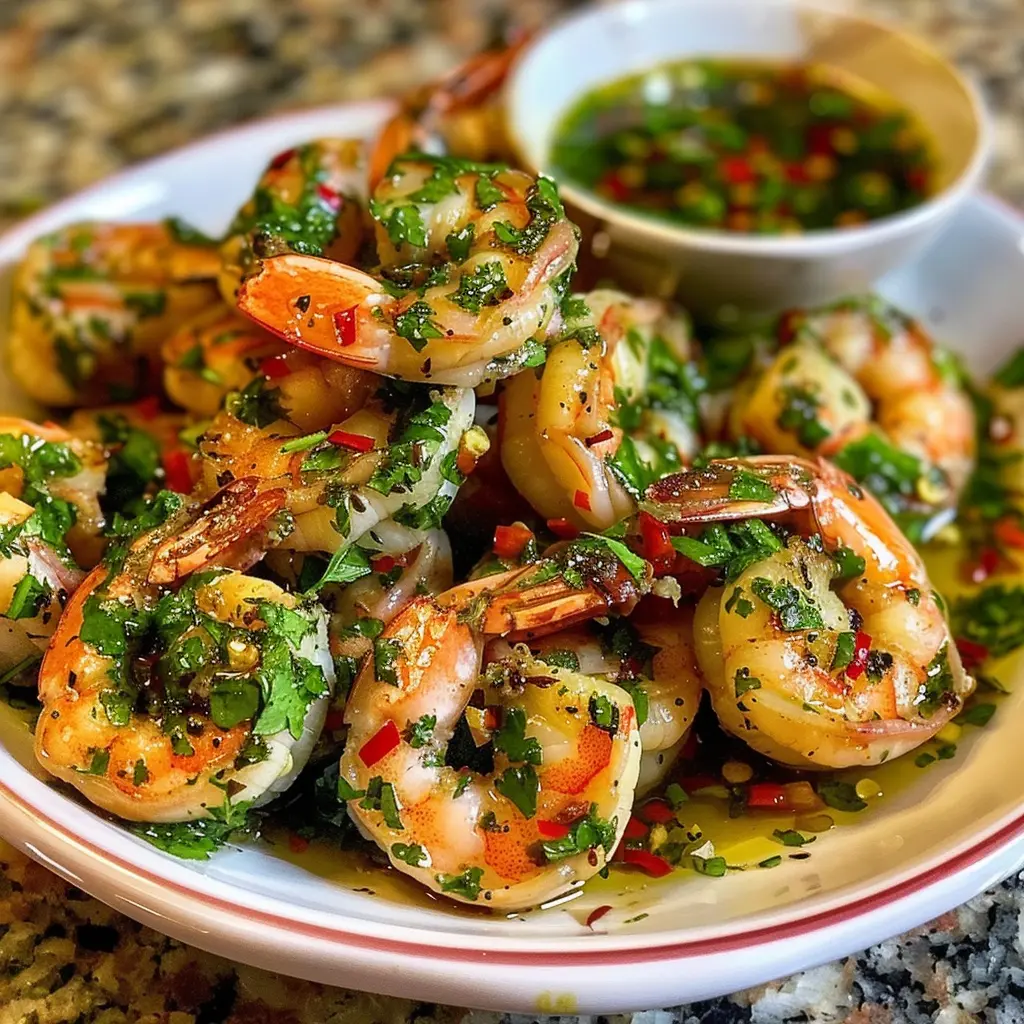
Get ready to embark on a culinary adventure that will utterly transform your relationship with weeknight dinners and summer grilling! This definitive guide is your passport to mastering Chimichurri Shrimp, a dish that’s as explosively flavorful as it is surprisingly simple to make. We’re not just tossing a recipe at you; oh no, we’re diving deep into the soul of the sauce, the secrets of perfect shrimp, and the myriad ways you can make this vibrant, Argentinean-inspired masterpiece your own. From selecting the right herbs to unlocking the best cooking methods, consider this your all-access pass to creating a restaurant-quality meal that will have everyone begging for your secret. So, let’s fire up the grill (or the skillet!) and unlock the zesty, herbaceous magic waiting to happen in your kitchen.
Introduction and The Heart of the Dish – Chimichurri Sauce
Chimichurri Shrimp: The Zesty, Herbaceous Dish Revolutionizing Seafood Nights
Picture this: plump, succulent shrimp, kissed by the grill or seared to perfection in a blazing hot pan, then generously draped in a shockingly vibrant, emerald-green sauce that’s simultaneously tangy, garlicky, and herbaceous. That, right there, is the magic of Chimichurri Shrimp. This isn’t just another shrimp recipe; it’s a full-scale flavor revolution that turns simple ingredients into an extraordinary experience. Honestly, it’s the kind of dish that manages to feel both impressively gourmet and incredibly approachable—a perfect centerpiece for a festive gathering yet a quick enough fix for a busy Tuesday night. Ultimately, it’s a celebration of fresh, bold flavors that come together in a harmonious, and downright delicious, dance on your plate.
What Exactly is Chimichurri? The Soul of Argentinean Grilling
Now, before we get to the shrimp, let’s talk about the real star of the show: the sauce. Chimichurri is, without a doubt, the undisputed champion of Argentinean and Uruguayan grilling. Often mistaken for a simple parsley sauce, this condiment is so much more than that; it’s the vibrant, zesty soul of an asado(a traditional barbecue). Traditionally, it’s served alongside glorious, sizzling cuts of grilled meat, cutting through the richness with its sharp acidity and fresh herb flavor. Interestingly, there are two main varieties: the classic Chimichurri Verde (green) and a less common but equally delicious Chimichurri Rojo (red), which includes tomatoes and red peppers. For our purposes today, we’re focusing entirely on the green version, which is an absolute match made in heaven for seafood.
Deconstructing the Sauce: Key Ingredients for Authentic Flavor
Creating an authentic chimichurri sauce isn’t complicated; however, it absolutely relies on the quality and balance of its core components. Think of it as building a flavor pyramid where every layer is crucial. Skimp on one, and the whole structure might just wobble.
The Fresh Herb Base: Parsley and More
At its heart, chimichurri is a celebration of fresh herbs. Flat-leaf parsley is the undisputed king here, providing a clean, grassy, and slightly peppery foundation that’s far superior to its curly cousin for both flavor and texture. Then, we have fresh oregano, which introduces a subtle, aromatic complexity that is absolutely essential. Some folks, believe it or not, like to add a handful of cilantro for an extra citrusy kick, making it a delightful optional twist.
The Aromatics: Garlic and Chili Peppers
What would a great sauce be without personality? Enter the aromatics. A generous amount of fresh garlic is non-negotiable, delivering that pungent, spicy backbone that defines the sauce. For heat, you have options: a pinch of red pepper flakes works beautifully, or for a fresher kick, finely minced jalapeño or Fresno chili peppers will do the trick wonderfully.
The Liquid Elements: Oil and Acid
This is where the magic of emulsion almost happens. High-quality extra virgin olive oil is the rich, luxurious vehicle that brings everything together, so please don’t use just any bland oil sitting in your cupboard! Conversely, the acid—typically red wine vinegar—provides the necessary tangy brightness that makes the sauce so irresistibly punchy and mouthwatering.
The Seasoning: Salt, Pepper, and Spices
Finally, a good pinch of coarse salt and freshly ground black pepper are all you really need to make the flavors pop. Occasionally, a teaspoon of smoked paprika or a hint of ground cumin can be added for a whisper of warmth and depth, perfectly rounding out this incredible garlic herb sauce.
Crafting the Perfect Chimichurri and Preparing the Shrimp
How to Make Chimichurri Sauce: A Step-by-Step Guide
Alright, enough talk—let’s get our hands dirty! Making chimichurri is a breeze, and you have two fantastic paths to choose from. Whichever you pick, the result is a sauce that will make everything it touches sing.
The Traditional Finely Chopped Method
For the authentic texture and a true connection to the rich history of Argentine cuisine, the hand-chopped method is the way to go. Honestly, it’s almost therapeutic! Start by finely mincing your flat-leaf parsley and oregano together on a large cutting board. Next, add the garlic and chili pepper to the pile and continue chopping until everything is uniformly fine. Transfer this beautiful, fragrant pile to a bowl, then simply whisk in the olive oil, vinegar, and seasonings. The result? A rustic, textured sauce where you can taste every individual component.
The Quick and Easy Food Processor Method
Short on time? No problem! A food processor is your best friend here. However—and this is a big however—you must proceed with caution. Pulse the parsley, oregano, garlic, and chili only until they are finely chopped. Do not, I repeat, do not just turn it on and walk away! Over-processing will puree the herbs, causing them to oxidize and turn brown, and it can also emulsify the oil, creating a bitter, mayonnaise-like consistency. We want a loose, chopped-herb mixture, not a smoothie. After pulsing, simply stir in the liquids and seasoning by hand.
The Golden Rule: Let it Rest!
Here’s the most critical step that most recipes tragically overlook: you must let the sauce rest. Seriously, patience is your secret ingredient. As the chimichurri sits (at least 30 minutes at room temperature, or a few hours in the fridge), the flavors meld, mellow, and marry into something far greater than the sum of its parts. The garlic infuses the oil, the salt dissolves, and the sharp edges soften into a harmonious blend. Trust me, it’s worth the wait.
Selecting and Preparing Your Shrimp for Success
Now, for the other half of our dynamic duo! Preparing your shrimp correctly is just as important as crafting the perfect sauce. A few simple steps here will guarantee a restaurant-quality result every single time.
Shrimp 101: Size, Count, and Types
Walking into the seafood aisle can be confusing. What do those numbers mean? Shrimp size is indicated by a count per pound, such as 16/20 (which means 16 to 20 shrimp make up one pound). For Chimichurri Shrimp, large (21/25 or 26/30 count) or jumbo (16/20 count) shrimp are ideal because they are substantial enough to hold up to grilling or searing without overcooking too quickly. As for the type, wild-caught shrimp often have a better texture and flavor, but well-sourced farmed shrimp are a perfectly fine option for this easy weeknight meal.
The Essential Prep: Deveining and Peeling
First, whether you buy them peeled or not, you’ll need to devein them. That dark line running down the back is the digestive tract, and while it’s not harmful, it can have a gritty texture. Using a small, sharp knife or a deveiner, make a shallow cut along the back and lift out the vein. Rinse under cold water. Now, for peeling: you can leave the tails on or take them off. Leaving them on makes for a beautiful presentation and creates a handy little handle for eating. Taking them off, however, makes the dish easier to eat, especially if you’re serving it over rice or pasta.
To Marinate or Not to Marinate?
This is a classic kitchen dilemma, and the answer might surprise you. While it seems logical to marinate the shrimp in the chimichurri, I strongly advise against it for longer than 20-30 minutes. Why? The acid in the vinegar (or lime juice, if you use it) will actually start to “cook” the protein in the shrimp, similar to ceviche. Consequently, this will result in a tough, rubbery texture once you apply heat. Instead, for the most succulent grilled shrimp chimichurri, simply toss your raw shrimp in a light coat of olive oil, salt, pepper, and perhaps a pinch of dried oregano. Cook them to perfection, and then shower them with that glorious, fresh chimichurri sauce right before serving.
Cooking Methods and Serving Suggestions
Mastering the Cook: Four Ways to Prepare Chimichurri Shrimp
The beauty of this dish is its incredible versatility. Depending on your mood, the weather, or what appliances you have, you can achieve phenomenal results with several different methods. Here’s how to nail each one.
Grilling for Smoky Perfection
Ah, the classic method! Grilling imparts an irreplaceable smoky char that pairs divinely with the fresh sauce. If you’re using wooden skewers, soak them in water for at least 30 minutes to prevent burning. Thread your oiled shrimp onto the skewers, which prevents them from falling through the grates. Then, preheat your grill to medium-high heat. Seriously, a hot grill is non-negotiable for a good sear. Grill the shrimp for just 2-3 minutes per side, until they are opaque and beautifully marked. For more details on this technique, check out this guide on the science behind perfectly grilled shrimp.
Pan-Searing for a Quick Weeknight Meal
No grill? No problem! A screaming hot skillet is your ticket to easy chimichurri shrimp glory. Pat your shrimp completely dry—this is the secret to a killer sear. Heat a tablespoon of oil in a cast-iron or stainless steel skillet over medium-high heat until it shimmers. Carefully add the shrimp in a single layer, making sure not to crowd the pan (cook in batches if needed). You should hear a satisfying sizzle! Cook for about 2 minutes, flip, and cook for another 1-2 minutes until pink and firm.
Baking for Hands-Off Ease
If you’re feeding a crowd or just want a truly hands-off approach, baking is wonderfully simple. Preheat your oven to 400°F (200°C). Toss the prepared shrimp with oil and seasonings on a large, rimmed baking sheet, spreading them out in a single layer. Roast for 6-8 minutes, just until the shrimp are pink, opaque, and slightly curled. It’s that easy!
Air Frying for a Crispy, Healthier Twist
For a fantastic result with little to no oil, the air fryer is a modern marvel. Arrange the shrimp in the air fryer basket in a single layer. Lightly spritz with oil spray. Cook at 375°F (190°C) for 5-7 minutes, shaking the basket halfway through the cooking time. The circulating air gives the shrimp a delightfully light crispness on the outside while keeping the inside tender.
How to Serve Chimichurri Shrimp: From Appetizer to Main Course
Your perfectly cooked chimichurri shrimp is ready, and now it’s time to serve it up! This dish’s flexibility is one of its greatest strengths.
As a Stunning Appetizer
For a party-winning starter, spear a few shrimp on decorative skewers and arrange them on a platter with a small bowl of extra chimichurri sauce for dipping. Alternatively, serve them in a bowl with toothpicks on the side. They will disappear in a flash!
As a Hearty Main Dish
To turn this into a satisfying healthy shrimp dinner, serve it over a bed of something that can soak up all that amazing sauce. Cilantro lime rice is a natural pairing. For a low-carb or keto-friendly option, try cauliflower rice or zucchini noodles. It’s also fantastic tossed with pasta or piled onto a baked potato.
In a Fresh Salad or Bowl
Transform your shrimp into a light yet protein-packed meal by adding it to a salad. Think a base of mixed greens, black beans, corn, avocado, cherry tomatoes, and a generous serving of shrimp drizzled with sauce. It’s a complete, refreshing, and utterly delicious bowl.
The Best Side Dishes to Pair
What goes on the side? Keep it simple! Grilled vegetables like asparagus, zucchini, or bell peppers are fantastic. A simple avocado salad or some fried sweet plantains add a creamy or sweet contrast. And never, ever underestimate the power of a thick slice of crusty bread to mop up every last drop of that incredible green sauce.
Advanced Tips, Variations, and FAQs
Pro Tips and Creative Variations
You’ve mastered the basics; now let’s make it yours! Here are some expert-level tips and fun ideas to customize your chimichurri shrimp.
Expert Tips for the Best Results
-
Herb Quality: Use fresh, dry herbs. If your parsley is wet or wilted, it will water down your sauce. After washing, spin them dry in a salad spinner or pat thoroughly with a towel.
-
Garlic Press: Avoid using a garlic press for the sauce if you’re hand-chopping. Finely mincing it with a knife prevents it from becoming bitter.
-
Shrimp Dryness: This cannot be overstated: pat your shrimp completely dry with paper towels before cooking. This is the single biggest secret to getting a gorgeous sear instead of a steam.
Global Fusion Variations
Feel like experimenting? The basic formula is a perfect canvas for creativity.
-
Spanish Twist: Add a teaspoon of smoked paprika to the chimichurri for a deep, smoky flavor.
-
Asian Influence: Substitute the red wine vinegar with rice vinegar and add a tiny splash of tamari or coconut aminos for a hit of umami.
-
Greek Vibe: Add a handful of fresh mint and use lemon juice instead of vinegar for a brighter, Mediterranean flair.
Storage and Make-Ahead Instructions
-
Leftover Sauce: Store leftover chimichurri sauce in an airtight container in the refrigerator for up to one week. The olive oil will solidify when cold; this is totally normal. Simply let it sit at room temperature for 20 minutes and give it a good stir before using.
-
Leftover Shrimp: Store cooked shrimp separately in the fridge for up to 3 days. Reheat very gently in a skillet over low heat to avoid overcooking.
-
Freezing: I do not recommend freezing the assembled dish, as the herbs in the sauce will lose their texture and the shrimp will become rubbery. However, you can freeze the uncooked sauce (without the fresh herbs) and add the freshly chopped herbs after thawing.
Frequently Asked Questions (FAQs) About Chimichurri Shrimp
Can I make chimichurri sauce ahead of time?
Absolutely! In fact, it’s encouraged. The flavors improve over 24-48 hours. Store it in an airtight container in the refrigerator. Let it come to room temperature and give it a stir before serving.
What’s the difference between chimichurri and pesto?
While both are green herb sauces, pesto is Italian, typically uses basil, pine nuts, and Parmesan cheese, and is often blended into a creamy emulsion. Chimichurri is Latin American, uses parsley and oregano, has no nuts or cheese, and is oil-based with a looser, more rustic texture.
Is chimichurri shrimp healthy?
Yes, it is generally a very healthy dish. Shrimp is a lean source of protein, and chimichurri sauce is made with heart-healthy high-quality extra virgin olive oil and antioxidant-rich fresh herbs. It’s naturally gluten-free and low-carb.
Can I use dried herbs instead of fresh?
It is not recommended for the best flavor. The magic of chimichurri comes from the bright, fresh taste of raw parsley and oregano. Dried herbs will give a very different, much less vibrant result and can make the sauce taste dusty.
Conclusion
Conclusion: Your New Go-To Seafood Feast
And there you have it—your complete, no-stone-unturned guide to creating phenomenal Chimichurri Shrimp right in your own kitchen. From unlocking the secrets of an authentic, zesty sauce to mastering the perfect sear on your shrimp, you’re now equipped with all the knowledge you need. This dish is more than just a recipe; it’s a gateway to vibrant, confident cooking that celebrates big, bold flavors. So, what are you waiting for? Gather those fresh herbs, grab your favorite skillet, and get ready to create a meal that’s guaranteed to become a legendary part of your culinary repertoire. Happy cooking
Print
Chimichurri Shrimp
Description
🦐 Chimichurri Shrimp
Ingredients (Serves 4)
For the chimichurri sauce:
-
1 cup fresh parsley (packed)
-
½ cup fresh cilantro (optional, traditional is parsley-only)
-
4 garlic cloves
-
½ cup olive oil
-
3 tbsp red wine vinegar (or lemon juice)
-
1 small red chili (or ½ tsp red pepper flakes)
-
1 tsp dried oregano
-
½ tsp salt
-
¼ tsp black pepper
For the shrimp:
-
1 ½ lbs large shrimp, peeled & deveined
-
2 tbsp olive oil
-
½ tsp paprika
-
½ tsp salt
-
¼ tsp black pepper
Instructions
1. Make the chimichurri sauce
-
In a food processor, pulse parsley, cilantro, garlic, chili, oregano, vinegar, salt, and pepper until finely chopped.
-
Stream in olive oil until well combined but still slightly chunky. Taste and adjust seasoning.
2. Cook the shrimp
-
Pat shrimp dry. Toss with olive oil, paprika, salt, and pepper.
-
Heat a skillet or grill pan over medium-high heat. Cook shrimp 1–2 minutes per side until pink and opaque.
3. Combine & serve
-
Toss hot shrimp with chimichurri sauce or drizzle on top right before serving.
-
Garnish with lemon wedges.