
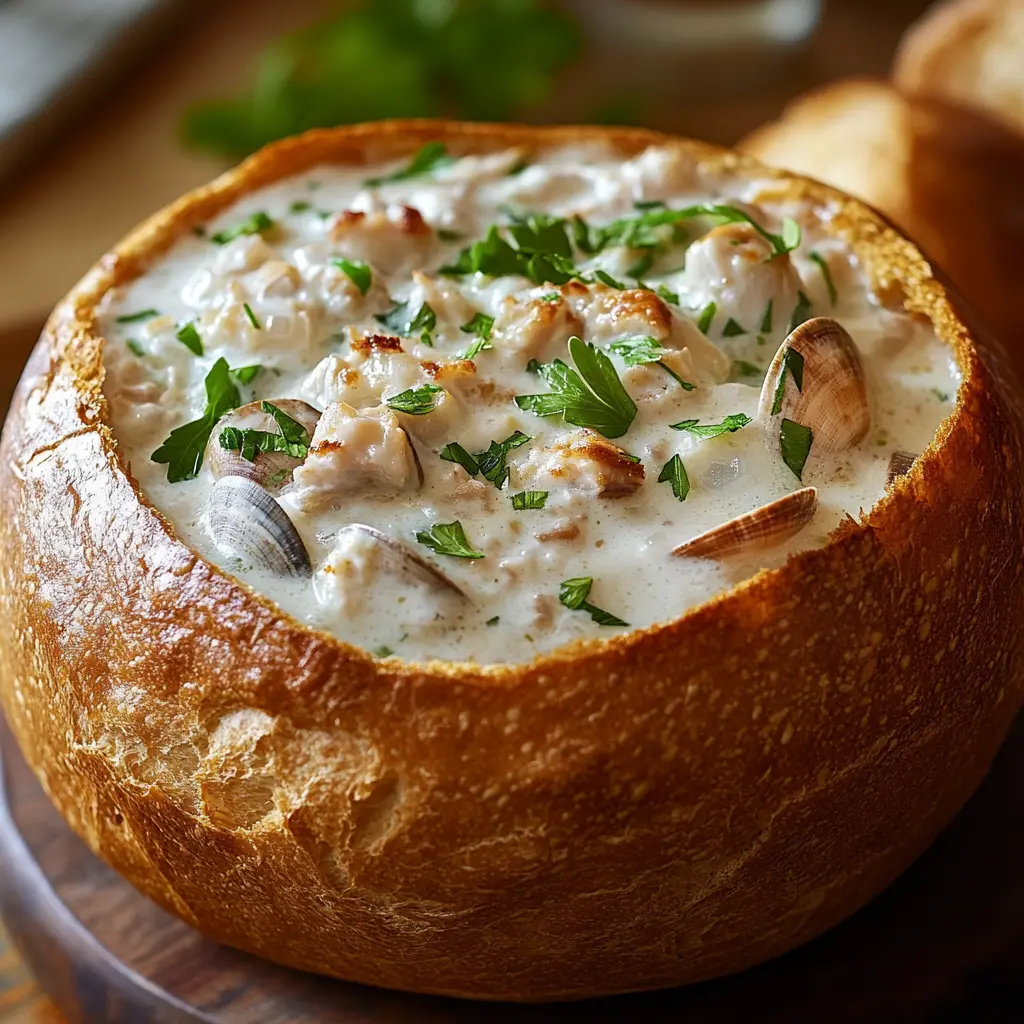
The Ultimate Guide to Clam Chowder in a Bread Bowl
Ah, clam chowder in a bread bowl. Just the phrase itself conjures up a symphony of sensations: the warm, steamy aroma of the sea, the comforting weight of a hollowed-out sourdough bread bowl in your hands, and that first glorious spoonful of rich, creamy chowder. It’s more than a simple soup; it’s an experience, a edible container of joy that’s become an iconic symbol of coastal comfort food from the wharves of San Francisco to the piers of Boston.
This guide is your all-access pass to this culinary masterpiece. We’ll dig into its fascinating, and somewhat debated, history. Furthermore, we’ll deconstruct what makes the perfect bowl, and even equip you with the knowledge to create your own at home. So, pull up a chair, and let’s dive into the wonderfully warm and briny world of clam chowder in a bread bowl.
Introduction and The History
More Than a Meal: An Iconic Comfort Food Experience
Honestly, what’s not to love? This dish is the undisputed champion of convenience and deliciousness. Imagine this: you’re wandering a bustling pier, the ocean breeze nipping at your cheeks. You need something warm, hearty, and utterly satisfying. Then, you see it. Not a mere cup or bowl, but a entire loaf of bread, steaming and filled to the brim with creamy New England clam chowder. It’s a meal and its container, all in one ingenious, edible package.
The magic lies in the interaction. First, you spoon out the chowder. Then, as you delve deeper, the walls of the bread bowl soften, soaking up that incredible creamy, briny goodness. Ultimately, you get to the best part—tearing apart the soaked bread and devouring it. It’s a tactile, messy, and completely joyful eating adventure that transcends age. It’s a tourist’s rite of passage and a local’s guilty pleasure, a true icon of American comfort food.
A Tale of Two Traditions: The Historical Journey
To truly appreciate this dish, we have to rewind the clock. Surprisingly, the stories of the chowder and the bread vessel traveled on parallel paths for centuries before finally meeting in a moment of culinary genius.
The Origins of Clam Chowder
Our story begins not in a restaurant, but in the cramped galleys of fishing boats. The word “chowder” itself likely derives from the French word “chaudière,” referring to the large pots fishermen used to cook their catch. Essentially, these early versions were simple, hearty stews. Fishermen would throw their fresh catch—often clams and fish—into the pot with potatoes, onions, and ship’s biscuits (hardtack) for thickening.
As these communities settled along the North Atlantic coast, particularly in New England, the recipe evolved. Milk and cream, which were plentiful, found their way into the pot, creating the rich, creamy foundation we now know as New England clam chowder. Meanwhile, elsewhere, other regions put their own spin on it, famously leading to the tomato-based Manhattan clam chowder.
The Invention of the Bread Bowl
Now, let’s talk about the bowl. The concept of using bread as an edible plate is far from new. In medieval Europe, particularly, stale, thick-cut bread called “trenchers” were commonly used as plates for meats and stews. After the meal, these gravy-soaked trenchers would be eaten by the diners or given to the less fortunate. This was a practical solution—waste not, want not. Over time, this idea persisted, morphing into the modern, purpose-baked sourdough bread bowl we know today.
The Iconic Marriage: Who Put Chowder in the Bowl?
So, who was the brilliant mind that first decided to pour creamy clam chowder into a hollowed-out loaf of bread? Well, the answer is a bit hazy. While the concept likely occurred to multiple people independently, the credit for popularizing it is almost universally handed to the culinary entrepreneurs of San Francisco’s Fisherman’s Wharf in the 1960s.
Legend points to bakeries and restaurants like Boudin Bakery, famous for its tangy sourdough. They had the bread, they had the chowder, and they had a constant stream of hungry tourists looking for a memorable, portable meal. It was a match made in heaven! By serving the already-famous local chowder in an edible, iconic San Francisco sourdough loaf, they created a portable, unforgettable, and highly marketable dish. Consequently, they cemented its status as a culinary icon and a must-eat experience for anyone visiting the City by the Bay.
The Anatomy of a Perfect Chowder Bowl
Deconstructing the Classic: Key Components
Creating the perfect clam chowder in a bread bowl isn’t rocket science; however, it does require attention to two star players. If either one is lackluster, the whole experience falls flat. Let’s break down this dynamic duo.
The Heart: New England Clam Chowder
At its core, a great chowder is a masterpiece of balance. It shouldn’t be too thin, too thick, too bland, or too overpowering. It’s a harmonious blend of the ocean and the pasture.
The Base: Creamy, Briny, and Rich
The texture is everything. Ideally, your chowder should be luxuriously creamy and thick enough to coat the back of a spoon, but believe it or not, it should still pour easily. You’re not making a potato paste! The flavor profile is a symphony: the sweet, briny clam flavor must be the lead singer, supported by the smoky, salty backup vocals of bacon (or traditional salt pork), the earthy rhythm of potatoes, and the aromatic harmony of sautéed onions and celery. A hint of thyme and a good crack of black pepper round out the performance.
The Clams: Chopped, Fresh, or Canned?
This is the million-dollar question for any home cook. Of course, using fresh, shucked clams provides an unparalleled depth of flavor and a slightly firmer texture. For many folks, though, the convenience of canned clams is a lifesaver. Honestly, a high-quality canned minced clam, with its liquor reserved for the broth, creates a fantastic homemade clam chowder. The real secret? Perhaps use a combination—canned clams for the base and a few fresh chopped clams added at the very end for a textural surprise.
The Vessel: The Sourdough Bread Bowl
Don’t you dare think any old bread will do! The bowl is far more than a container; it’s a crucial ingredient.
Why Sourdough is King
Firstly, sourdough bread boasts an incredibly sturdy crust. This structural integrity is non-negotiable; it’s what allows the bowl to hold a pint of hot liquid for a reasonable amount of time without becoming a soupy disaster on your lap. Secondly, and perhaps more importantly, is the flavor. The distinct, tangy acidity of a good sourdough provides a critical counterpoint to the rich, creamy, and fatty chowder. It cuts through the richness, cleanses the palate, and makes each bite interesting until the very last crumb.
Alternative Bread Bowls
While sourdough reigns supreme, other breads can play the role in a pinch. A dense rye boule offers a wonderful earthy, caraway-spiced flavor that pairs beautifully with the chowder. Some pubs even use a giant soft pretzel bowl for a fun, salty twist. Nevertheless, for that authentic experience, sourdough is the undisputed, go-to choice.
Crafting the Classic at Home
Your Kitchen, Your Chowder House: A Step-by-Step Recipe
Ready to bring the wharf into your kitchen? Making this dish from scratch is a rewarding project. Not only will your house smell amazing, but you’ll also have the bragging rights of creating this icon entirely by hand.
Gathering Your Ingredients: A Shopping List
For the Easy Clam Chowder Recipe:
-
4-6 cups chopped clams (about 3-4 (10-ounce) cans, juice reserved, or 2 pounds fresh littlenecks, shucked)
-
6 slices thick-cut bacon, chopped
-
1 large yellow onion, diced
-
2 celery stalks, diced
-
3 garlic cloves, minced
-
4 cups potatoes (Yukon Gold are perfect), peeled and diced into ½-inch cubes
-
3 cups clam juice (from cans, supplemented with bottled if needed)
-
1 bay leaf
-
1 teaspoon fresh thyme leaves (or ½ tsp dried)
-
⅓ cup all-purpose flour
-
2 cups whole milk
-
1 cup heavy cream
-
Salt and freshly ground black pepper to taste
-
Fresh parsley, chopped (for garnish)
For the Bowls:
-
4 small round sourdough bread bowl loaves (or one large boule to share!)
The Method: Building Flavors Layer by Layer
Step 1: Rendering the Bacon and Sautéing Aromatics
In a large Dutch oven or heavy-bottomed pot, cook the chopped bacon over medium heat until crispy. Remove the bacon with a slotted spoon, leaving the beautiful rendered fat behind. Throw in the diced onion and celery, sautéing them in the bacon fat until they’re soft and translucent, about 5-7 minutes. Add the garlic and cook for just one more minute until fragrant.
Step 2: Creating the Roux and Adding Liquid
Sprinkle the flour over the cooked vegetables. Stir constantly and cook this mixture (your roux) for a good two minutes to cook out the raw flour taste. Gradually pour in the clam juice while whisking constantly. This will prevent any lumps from forming. Congratulations, you’ve just made the base of your chowder! Now, add the diced potatoes, bay leaf, and thyme. Bring it to a simmer, then reduce the heat and cook until the potatoes are just tender, about 10-15 minutes.
Step 3: Simmering the Potatoes and Clams
Once the potatoes are fork-tender, stir in the chopped clams and the reserved crispy bacon. Let it heat through for just about 3-4 minutes. Overcooking the clams will make them tough and rubbery—a true chowder tragedy!
Step 4: The Final Creamy Addition
Reduce the heat to low. Slowly stir in the whole milk and heavy cream. Warm the chowder through gently, but whatever you do, do not let it boil! Boiling will curdle the dairy and ruin your beautiful creamy texture. Season generously with black pepper. Be careful with salt; taste it first, as the bacon and clam juice are already quite salty.
Preparing the Bread Bowls
While the chowder is simmering, preheat your oven to 350°F (175°C). Take your round loaves and carefully slice off the top fourth. Hollow out the inside, leaving a sturdy wall about ¾-inch thick. Don’t throw the innards away! Tear them into chunks, toss with a little olive oil, and toast them in the oven for the most incredible croutons you’ve ever had. Place the hollowed-out bread bowls and their lids on a baking sheet and warm them in the oven for about 10 minutes.
Serving and Presentation: The Grand Finale
Place each warm bread bowl on a plate. Ladle a generous portion of the hot creamy clam chowderdirectly into the bowl. Garnish with a sprinkle of fresh parsley and a few of your homemade sourdough croutons. Serve immediately with the lid propped jauntily on the side. Voilà! You’ve just created restaurant magic at home.
Beyond the Basics, Nutrition, and Best Spots
Variations on a Theme: Regional and Dietary Twists
The classic New England style may be the star of the show, but the concept is endlessly adaptable. For a red-hued alternative, a tomato-based Manhattan clam chowder makes a vibrant and tangy option. Heading up the coast, a Pacific Northwest version might feature smoked salmon or local razor clams. And for those with dietary restrictions, fear not! A lush, vegan “clam” chowder made with king oyster mushrooms, hearts of palm, and coconut milk can be just as satisfying served in a gluten-free bread bowl.
A Nutritious Choice? Understanding the Calories
Let’s be real: this is indulgent comfort food, not a light salad. A typical serving can be quite calorie-dense, thanks to the cream, bacon, and carbohydrate-rich bread. However, it’s not without its merits. Clams are a fantastic source of lean protein, iron, and vitamin B12. Potatoes provide potassium and vitamin C. Think of it as a hearty, satisfying meal that’s perfect for a cool day—something to be enjoyed mindfully and savored completely.
A Culinary Pilgrimage: Where to Find the Best Clam Chowder in a Bread Bowl
While homemade is wonderful, sometimes you need to taste the classics at the source.
-
San Francisco, CA: This is the undisputed Mecca. A walk through San Francisco’s Fisherman’s Wharf is essential, with spots like Boudin Bakery and Chowder’s at Pier 39 serving iconic versions.
-
Boston, MA: The other coast’s heavyweight champion. Institutions like Legal Sea Foods and the historic Union Oyster House serve profoundly good, traditional Boston clam chowder.
-
Seattle, WA: Don’t sleep on the Pacific Northwest! Pike Place Chowder in Seattle’s famous market has won numerous awards and always has a line out the door for a reason.
FAQs and Conclusion
Frequently Asked Questions (FAQs)
Where did clam chowder in a bread bowl originate?
While the exact origin is debated, it was famously popularized by restaurants and bakeries on San Francisco’s Fisherman’s Wharf in the 1960s, transforming it into the iconic tourist food we know today.
Can I make clam chowder ahead of time?
Absolutely! In fact, chowder often tastes better the next day. Always store the soup and the bread bowls separately in the refrigerator. Reheat the soup gently on the stovetop and warm the bread bowl in the oven before assembling. For detailed tips, you can always check FDA guidelines for food safety on handling soups and leftovers.
How do you eat the bread bowl after the chowder is gone?
This is the best part! As you eat the chowder, the inner walls soften. Once the soup is gone, you simply tear apart the deliciously soaked bread and eat it. It’s the built-in dessert!
What’s the difference between New England and Manhattan clam chowder?
The difference is fundamental. New England clam chowder is cream or milk-based, making it white and creamy. Manhattan clam chowder is tomato-based, giving it a red color and a tangier, brothier flavor profile. They are completely different soups.
Can I freeze clam chowder?
You can, but with a caveat. Cream-based soups can sometimes separate or become grainy when thawed. If you freeze it, thaw it overnight in the refrigerator and then reheat it very slowly on the stovetop, whisking constantly to re-emulsify it. The texture might be slightly less perfect, but the flavor will still be good.
Conclusion: The Enduring Appeal of a Simple Masterpiece
From its humble beginnings on fishing boats to its star status on tourist menus, clam chowder in a bread bowl has earned its place as a beloved American classic. It’s a dish that understands us. It satisfies our need for warmth, comfort, and interactive fun. It’s a testament to the fact that the simplest ideas—putting soup in bread—are often the most brilliant. So, whether you’re crafting it from scratch in your kitchen or seeking it out on a windy pier, every steamy, creamy, briny spoonful is a little taste of joy.
Print
Clam Chowder in a Bread Bowl
Description
🥖 Clam Chowder in a Bread Bowl
Ingredients:
For the Chowder:
-
4 slices thick-cut bacon, chopped
-
1 medium onion, diced
-
2 celery stalks, diced
-
2 medium carrots, diced
-
3 garlic cloves, minced
-
3 medium potatoes, peeled and diced
-
3 cups clam juice (from bottles or reserved from canned clams)
-
1 cup heavy cream
-
1 cup whole milk
-
2 (6.5 oz) cans chopped clams, with juice
-
2 tbsp all-purpose flour
-
2 tbsp butter
-
1 tsp fresh thyme (or ½ tsp dried)
-
1 bay leaf
-
Salt & black pepper, to taste
-
Fresh parsley, for garnish
For the Bread Bowls:
-
4 round sourdough boules (small loaves)
-
Olive oil or melted butter (for brushing)
Instructions:
-
Prepare the Bread Bowls:
-
Preheat oven to 350°F (175°C).
-
Slice off the top of each loaf and hollow out the center, leaving about 1-inch walls.
-
Brush the insides lightly with olive oil or melted butter.
-
Place on a baking sheet and bake for 8–10 minutes to crisp up (helps prevent sogginess).
-
-
Cook the Chowder Base:
-
In a large pot, cook bacon until crisp. Remove and set aside, leaving drippings.
-
Sauté onion, celery, and carrots in the bacon fat until softened (about 5 minutes).
-
Add garlic and cook 1 minute.
-
-
Build the Chowder:
-
Stir in flour and butter, cooking for 1–2 minutes to form a roux.
-
Add potatoes, clam juice, thyme, and bay leaf. Bring to a simmer and cook until potatoes are tender (about 15 minutes).
-
-
Finish the Chowder:
-
Stir in clams with their juice, cream, and milk. Simmer gently for 5 minutes (do not boil).
-
Season with salt and pepper. Remove bay leaf.
-
-
Assemble & Serve:
-
Ladle hot clam chowder into the bread bowls.
-
Top with crispy bacon and fresh parsley.
-
Serve immediately with the bread tops for dipping.
-