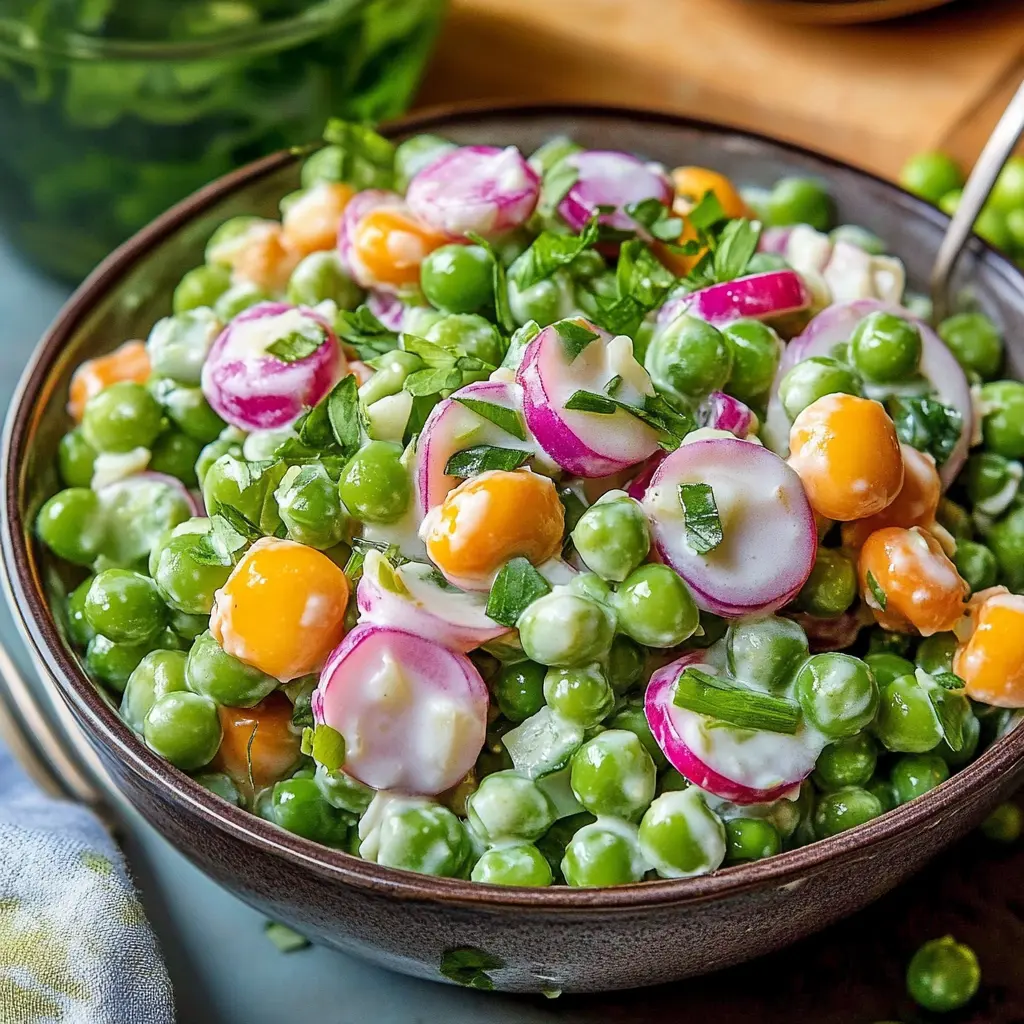
Classic Pea Salad: A Timeless Side Dish for Every Occasion
Classic pea salad is a beloved potluck staple that combines sweet green peas with creamy dressing, crunchy vegetables, and savory bacon for a refreshing side dish. This versatile recipe has graced dinner tables for generations, offering a perfect balance of textures and flavors that complement everything from backyard barbecues to holiday feasts. Whether you’re preparing for a family gathering or meal prepping for the week ahead, this classic delivers crowd-pleasing results every time.
What Is Classic Pea Salad?
Classic pea salad is a cold, creamy side dish featuring tender green peas as the star ingredient. The traditional recipe combines frozen or fresh peas with a tangy mayonnaise-based dressing, crispy bacon, sharp cheddar cheese, and diced red onion. The result is a colorful, textured salad that offers sweetness from the peas, saltiness from the bacon, and a satisfying crunch from fresh vegetables.
This dish falls into the category of American comfort food. It shares similarities with other mayonnaise-based salads like potato salad and coleslaw. However, pea salad stands out with its unique combination of ingredients and its ability to remain fresh-tasting even after hours in the refrigerator.
The beauty of pea salad lies in its simplicity. With minimal cooking required and straightforward preparation, this recipe is accessible to cooks of all skill levels. Moreover, it’s an excellent way to incorporate vegetables into your meal in a format that even picky eaters enjoy.
The History Behind This Beloved Side Dish
The origins of pea salad trace back to mid-20th century American home cooking. During the 1950s and 1960s, convenience foods like frozen vegetables gained popularity among busy homemakers. Frozen peas, in particular, became a pantry staple due to their year-round availability and quick preparation time.
Mayonnaise-based salads dominated potluck culture during this era. Home cooks experimented with various combinations, leading to creations like tuna salad, egg salad, and eventually pea salad. The dish gained traction in church cookbooks and community recipe collections throughout the Midwest and Southern United States.
Pea salad embodied the practical cooking philosophy of the time. It required no cooking beyond crisping bacon, used readily available ingredients, and could feed a crowd affordably. The recipe’s flexibility allowed for regional variations, with some families adding hard-boiled eggs while others incorporated pickles or celery.
Today, this retro recipe experiences periodic revivals. Younger generations discover pea salad through family gatherings or vintage cookbook collections. The dish represents nostalgia for many while offering practical benefits for modern meal planning. Its make-ahead nature and crowd-pleasing qualities ensure pea salad remains relevant in contemporary cuisine.
Essential Ingredients for Perfect Pea Salad
Primary Ingredients
Green Peas: The foundation of any great pea salad starts with quality peas. Frozen peas work exceptionally well because they’re picked and frozen at peak freshness. Thaw them completely and drain excess moisture before using. Fresh peas from the farmers market provide excellent flavor during spring and summer months. Canned peas are too soft and mushy for this application.
Mayonnaise: This creamy base binds all ingredients together. Full-fat mayonnaise delivers the richest flavor and best texture. You can substitute Greek yogurt for half the mayonnaise to lighten the dish while maintaining creaminess.
Bacon: Crispy bacon adds essential saltiness and smoky depth. Cook bacon until very crisp, then crumble into small pieces. Turkey bacon offers a leaner alternative, though traditional pork bacon provides more authentic flavor.
Cheddar Cheese: Sharp cheddar cheese contributes tangy, savory notes that complement the sweet peas perfectly. Cut cheese into small cubes rather than shredding for better texture. Extra-sharp cheddar intensifies the flavor profile.
Supporting Cast
Red Onion: Finely diced red onion provides sharpness and visual appeal. The purple color creates attractive contrast against green peas. Yellow onion works in a pinch, though it lacks the vibrant hue.
Sour Cream: Adding sour cream alongside mayonnaise creates a tangier, more complex dressing. This ingredient also helps lighten the overall consistency.
Seasonings: Salt and black pepper form the seasoning foundation. Garlic powder adds depth without overwhelming the delicate pea flavor. A pinch of sugar balances acidity and enhances natural sweetness.
According to the USDA’s FoodData Central, green peas provide excellent nutritional value, including protein, fiber, and essential vitamins.
Step-by-Step Recipe Instructions
Preparation Phase
Step 1: Prepare Your Peas
Start with 4 cups of frozen peas. Place them in a colander and run cold water over them for 2-3 minutes until completely thawed. Shake the colander vigorously to remove excess water. Pat the peas dry with paper towels. This step prevents watery dressing.
Step 2: Cook the Bacon
Arrange 8 strips of bacon in a single layer in a cold skillet. Turn heat to medium and cook for 8-10 minutes, flipping occasionally. The bacon should be crispy and deeply browned. Transfer to paper towels to drain. Once cooled, crumble into small pieces.
Step 3: Dice Your Vegetables and Cheese
Cut 1 cup of sharp cheddar cheese into 1/4-inch cubes. Finely dice 1/2 cup of red onion. If desired, dice 1/2 cup of celery for additional crunch. Prepare all ingredients before mixing to streamline the process.
Mixing and Dressing
Step 4: Create the Dressing
In a large mixing bowl, combine 3/4 cup mayonnaise with 1/4 cup sour cream. Add 1 teaspoon garlic powder, 1/2 teaspoon salt, 1/4 teaspoon black pepper, and 1 teaspoon sugar. Whisk until completely smooth and uniform.
Step 5: Combine Ingredients
Add the dried peas to the bowl with the dressing. Fold gently with a rubber spatula to coat evenly. Add the bacon, cheddar cheese, and red onion. Continue folding until all ingredients are distributed throughout.
Step 6: Chill and Serve
Transfer the salad to a serving bowl. Cover tightly with plastic wrap and refrigerate for at least 2 hours before serving. This resting period allows flavors to meld and the dressing to thicken slightly.
The Academy of Nutrition and Dietetics recommends proper food safety practices when preparing mayonnaise-based dishes, including keeping them refrigerated until serving time.
Variations and Creative Twists
Regional Variations
Southern Style: Add 1/4 cup of sweet pickle relish and 2 tablespoons of yellow mustard to the dressing. Include diced hard-boiled eggs for protein. This version offers tangier, more complex flavors.
Midwest Classic: Incorporate 1 cup of cubed ham alongside or instead of bacon. Add 1/2 cup of diced dill pickles. This variation creates a heartier, more substantial side dish.
Garden Fresh: Increase vegetables by adding diced bell peppers, shredded carrots, and cherry tomatoes. Use light mayonnaise and increase sour cream for a fresher profile. This option appeals to health-conscious diners.
Dietary Modifications
Lighter Version: Replace half the mayonnaise with non-fat Greek yogurt. Use turkey bacon and reduced-fat cheddar cheese. This modification cuts calories significantly while maintaining satisfying texture.
Vegetarian Adaptation: Omit bacon entirely and add 1/2 cup of roasted sunflower seeds for crunch. Include smoked paprika in the dressing to replicate smoky depth. Nutritional yeast can substitute for cheese in vegan versions.
Low-Carb Option: This recipe naturally fits low-carb eating patterns. Simply ensure your mayonnaise contains no added sugars. The dish provides protein and healthy fats while remaining vegetable-forward.
Gourmet Upgrades
Fresh Herb Addition: Stir in 2 tablespoons each of chopped fresh dill and parsley. These herbs brighten flavors and add sophisticated complexity. Chives work wonderfully as well.
Bacon Variations: Experiment with candied bacon, peppered bacon, or maple bacon. Each type contributes unique flavor notes that transform the traditional recipe.
Cheese Alternatives: Try smoked gouda for depth, pepper jack for heat, or aged white cheddar for sharpness. Different cheeses dramatically alter the final taste profile.
Tips for Making the Best Pea Salad
Texture Optimization
Achieving perfect texture requires attention to moisture control. Always thoroughly drain and dry peas before mixing. Excess water dilutes the dressing and creates a soupy consistency. Similarly, ensure bacon is completely cooled before adding—warm bacon releases grease that affects the dressing.
Cut cheese into uniform cubes rather than shredding. Shredded cheese clumps together and doesn’t distribute evenly. Cubes provide distinct pockets of cheesy flavor in every bite. Aim for 1/4-inch pieces for ideal proportion to other ingredients.
Dice onions very fine to distribute their pungent flavor without overwhelming bites. Large onion pieces create unpleasant raw flavor concentrations. For milder taste, soak diced onions in ice water for 10 minutes before draining and adding.
Flavor Development
Make pea salad at least 2 hours before serving, though overnight chilling produces even better results. This resting period allows seasonings to permeate throughout and the dressing to thicken. The flavors meld together, creating a more cohesive dish.
Taste and adjust seasonings after chilling. Cold temperatures dull flavor perception, so you may need additional salt or pepper. Add seasonings gradually, mixing and tasting between additions.
Consider the contrast between sweet and savory elements. If your peas taste especially sweet, increase salt slightly. Conversely, if bacon seems overly salty, add a pinch more sugar to balance.
Preparation Strategies
Prep components separately up to 24 hours ahead. Store cooked bacon, diced cheese, and chopped vegetables in separate containers. Mix everything together 2-4 hours before serving. This approach streamlines party preparation.
Double the recipe for large gatherings. Pea salad keeps well and rarely leaves leftovers. The ingredient list scales easily, and preparation time doesn’t increase significantly.
Use a large bowl for mixing. Crowding ingredients makes thorough coating difficult. You need space to fold gently without crushing peas.
Serving Suggestions and Pairings
Ideal Serving Contexts
Classic pea salad shines at outdoor gatherings. Pack it in a cooler for picnics, tailgates, or beach outings. The cold temperature requirement makes it perfect for warm-weather events. Unlike hot dishes, pea salad doesn’t require reheating equipment.
Potluck dinners represent the natural habitat for pea salad. This recipe feeds crowds economically and transports easily. Bring it in a large bowl with a tight-fitting lid. The colorful presentation catches attention on buffet tables.
Holiday meals benefit from pea salad’s make-ahead convenience. Prepare it the night before Thanksgiving or Christmas, freeing oven space and reducing day-of stress. The dish provides refreshing contrast to rich, heavy holiday foods.
Perfect Pairings
Grilled Meats: Pea salad complements barbecued chicken, ribs, burgers, and hot dogs beautifully. The creamy, cool salad balances smoky, charred flavors. Serve alongside coleslaw and baked beans for classic cookout spreads.
Sandwiches: Pair pea salad with deli sandwiches, pulled pork, or fried chicken sandwiches. The combination creates satisfying, casual meals. Add potato chips for textural variety.
Comfort Foods: Serve alongside meatloaf, fried chicken, or pot roast. Pea salad provides freshness that cuts through rich, hearty main dishes. The vegetable component rounds out comfort food plates.
Breakfast Foods: Surprisingly, pea salad pairs well with brunch items. Serve it with quiche, breakfast casseroles, or ham and biscuits. The savory profile complements morning flavors.
Presentation Ideas
Serve pea salad in a clear glass bowl to showcase the colorful layers. Garnish with additional bacon crumbles and a sprinkle of paprika. Fresh dill sprigs add elegant finishing touches.
For individual servings, use small mason jars or ramekins. This presentation works well for catered events or buffets. Guests appreciate defined portions and easy serving.
Create a salad bar by offering pea salad alongside other mayonnaise-based options. Include potato salad, macaroni salad, and coleslaw. Let guests sample multiple varieties.
Storage and Make-Ahead Instructions
Refrigeration Guidelines
Store pea salad in an airtight container in the refrigerator. Properly stored, it maintains quality for 3-4 days. The mayonnaise-based dressing acts as a preservative, though freshness naturally declines over time.
Place plastic wrap directly on the salad surface before sealing the container. This technique prevents oxidation and maintains moisture levels. Press the wrap gently to remove air pockets.
Never leave pea salad at room temperature for more than 2 hours. In temperatures above 90°F, limit exposure to 1 hour. Food safety guidelines from the CDC emphasize proper temperature control for mayonnaise-based dishes.
Make-Ahead Strategies
Prepare pea salad up to 24 hours before serving for optimal flavor development. The extended chilling time allows ingredients to meld beautifully. However, add bacon just before serving if you prefer maximum crispness.
For meal prep, divide pea salad into individual containers. Pack portions for lunch throughout the week. The dish maintains texture and flavor for 3-4 days, making it excellent for advance preparation.
Freeze individual components separately if needed. Cooked bacon freezes well for up to 3 months. However, do not freeze assembled pea salad—mayonnaise separates when frozen and thawed, creating unpleasant texture.
Signs of Spoilage
Discard pea salad if you notice any off odors, mold growth, or discoloration. The dressing should remain creamy white; yellowing indicates spoilage. When in doubt, throw it out.
Watery liquid pooling at the bottom suggests the salad has been stored too long. While you can drain and stir, flavor and texture have likely degraded. Fresh batches always taste better than old ones.
Nutritional Information and Health Benefits
Nutritional Breakdown
One serving (approximately 3/4 cup) of classic pea salad contains roughly:
-
Calories: 280-320
-
Protein: 12-14g
-
Fat: 22-25g
-
Carbohydrates: 12-15g
-
Fiber: 3-4g
-
Sugar: 4-5g
These values vary based on specific ingredient brands and proportions. Using light mayonnaise or Greek yogurt substantially reduces calories and fat.
Health Benefits of Key Ingredients
Green Peas: Despite their small size, peas pack impressive nutrition. They provide plant-based protein, essential for tissue repair and muscle maintenance. Peas contain significant fiber, promoting digestive health and satiety. They also offer vitamins A, C, and K, plus minerals like iron and magnesium.
Bacon: While high in sodium and saturated fat, bacon provides protein and B vitamins. Moderation is key. The recipe uses bacon as a flavoring agent rather than a primary ingredient, keeping portions reasonable.
Cheddar Cheese: This dairy product supplies calcium for bone health and protein for sustained energy. Cheese contains conjugated linoleic acid, which may support heart health. Choose high-quality, aged cheddar for maximum nutritional benefit.
Making It Healthier
Replace half the mayonnaise with plain Greek yogurt to increase protein while reducing calories and fat. Greek yogurt adds probiotics that support gut health. The tangy flavor complements peas beautifully.
Use turkey bacon instead of pork bacon to reduce saturated fat. Turkey bacon contains fewer calories while still providing smoky flavor. Alternatively, omit bacon entirely and add roasted nuts for crunch.
Increase the pea-to-dressing ratio for more vegetables per serving. Add additional fresh vegetables like diced bell peppers or shredded carrots. These modifications boost fiber and micronutrient content.
Common Mistakes to Avoid
Moisture Management Errors
The most frequent mistake involves inadequately draining peas. Excess water creates watery dressing that slides off ingredients. Always thaw frozen peas completely and pat them thoroughly dry with paper towels. Take time with this step—it determines final consistency.
Adding warm bacon represents another moisture-related error. Hot bacon releases grease that separates the dressing. Cool bacon completely to room temperature before crumbling and adding. This simple step prevents greasy, unpleasant texture.
Ingredient Preparation Issues
Cutting cheese into pieces that are too large disrupts the proper ingredient ratio. Large cheese chunks create bites that are overwhelmingly cheesy while others contain none. Aim for uniform 1/4-inch cubes that distribute evenly throughout.
Using canned peas instead of frozen produces mushy, unappealing texture. Canned peas lack the firm snap that makes this salad enjoyable. Always choose frozen peas for best results. Fresh peas work wonderfully when in season.
Timing and Temperature Problems
Serving pea salad immediately after mixing prevents proper flavor development. The dressing needs time to season the vegetables. The cheese and onion need time to mellow. Always refrigerate for minimum 2 hours, preferably overnight.
Leaving pea salad at room temperature too long creates food safety concerns. Mayonnaise-based dishes require consistent refrigeration. Return the bowl to the refrigerator promptly during extended events.
Seasoning Missteps
Under-seasoning ranks among the most common errors. Cold foods require more salt than hot dishes. Season adequately initially, then taste after chilling and adjust. Don’t be afraid to add salt—it makes all ingredients shine.
Conversely, over-salting from bacon makes the dish inedible. Taste your bacon before adding salt to the dressing. Extra-salty bacon may require reducing or eliminating additional salt.
Frequently Asked Questions
Can I use fresh peas instead of frozen for pea salad?
Yes, fresh peas work beautifully when available. Blanch them in boiling water for 2-3 minutes until bright green and tender-crisp. Immediately transfer to ice water to stop cooking. Drain thoroughly and pat dry before using. Fresh peas offer superior sweetness during peak season, typically spring and early summer.
How far in advance can I make classic pea salad?
Prepare pea salad up to 24 hours before serving for best results. The extended chilling time actually improves flavor as ingredients meld together. However, if bacon crispness is a priority, add it just before serving. The salad maintains quality in the refrigerator for 3-4 days total.
Can I freeze pea salad?
Freezing assembled pea salad is not recommended. Mayonnaise-based dressings separate when frozen and thawed, creating watery, broken texture. However, you can freeze cooked bacon separately for up to 3 months. Prepare fresh batches as needed for best taste and texture.
What can I substitute for mayonnaise?
Greek yogurt makes an excellent mayonnaise substitute, providing tangy flavor and creamy texture. Use plain, full-fat Greek yogurt for best results. Sour cream can replace mayonnaise entirely, though the salad will taste tangier. For dairy-free versions, try vegan mayonnaise or avocado-based dressings.
Why is my pea salad watery?
Excess water in the peas causes watery consistency. Ensure peas are completely thawed and thoroughly dried before mixing. Pat them with paper towels to remove all surface moisture. Additionally, mixing the salad too far in advance can cause vegetables to release water over time.
Can I make pea salad without bacon?
Absolutely. Vegetarian versions work wonderfully. Add roasted sunflower seeds or chopped pecans for crunch. Include smoked paprika in the dressing to replicate smoky depth. The salad remains delicious and satisfying without meat.
What other vegetables can I add?
Diced celery adds classic crunch. Shredded carrots contribute sweetness and color. Diced bell peppers provide freshness. Chopped hard-boiled eggs increase protein. Experiment with combinations that appeal to your preferences while maintaining the pea-forward focus.
How do I keep pea salad cold at outdoor events?
Pack pea salad in a bowl nestled inside a larger bowl filled with ice. Alternatively, use insulated serving containers designed for cold foods. Keep the salad in a cooler until ready to serve. Return it to the cooler promptly during extended events.
Conclusion
Classic pea salad represents timeless American comfort food at its finest. This creamy, colorful side dish combines sweet green peas with savory bacon, sharp cheddar cheese, and tangy dressing for a crowd-pleasing result. The simple preparation and make-ahead convenience make pea salad perfect for potlucks, picnics, holidays, and weeknight dinners alike.
The versatility of this recipe allows endless variations to suit dietary preferences and taste preferences. Whether you prefer the traditional version or experiment with lighter adaptations, pea salad delivers satisfying texture and balanced flavors. The combination of protein from bacon and cheese with fiber-rich vegetables creates a nutritious side dish that complements virtually any main course.
Master the key techniques—thoroughly drying peas, cooking bacon until crisp, and allowing adequate chilling time—to achieve consistently excellent results. Avoid common mistakes like inadequate seasoning or serving too warm. With proper preparation and storage, your pea salad will become a requested favorite at every gathering.
Print
Classic Pea Salad
Description
Classic Pea Salad
Ingredients:
-
3 cups frozen peas, thawed
-
1/2 cup cheddar cheese, diced or shredded
-
1/3 cup red onion, finely chopped
-
1/2 cup cooked bacon pieces
-
1/2 cup mayonnaise
-
1 tbsp sour cream (optional for extra creaminess)
-
1 tsp vinegar or lemon juice
-
Salt & pepper to taste
Instructions:
-
In a large bowl, combine peas, cheddar, red onion, and bacon.
-
In a small bowl, mix mayo, sour cream (optional), vinegar or lemon juice, salt, and pepper.
-
Pour dressing over the pea mixture and stir until fully coated.
-
Chill in the refrigerator for at least 30 minutes before serving.
-
Serve cold and enjoy!