
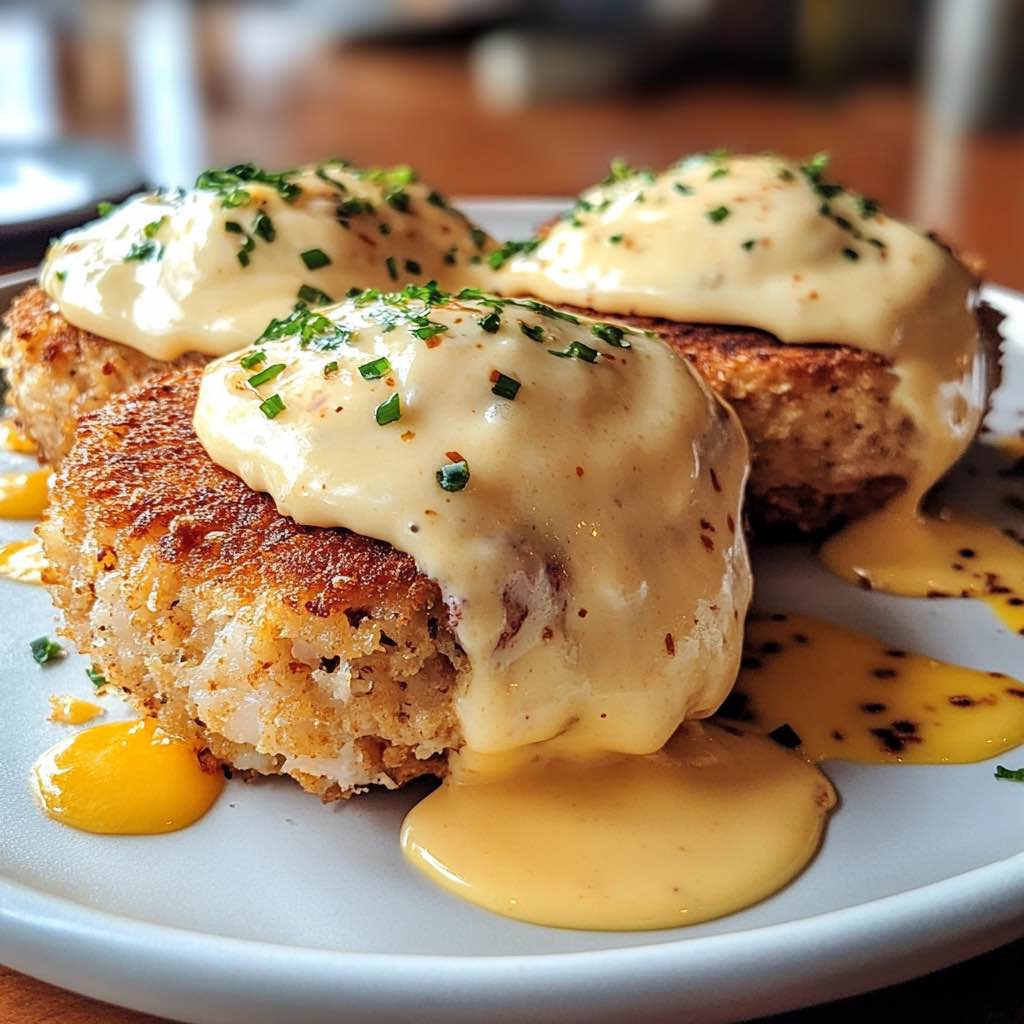
Crab Cake Eggs Benedict with Hollandaise: The Ultimate Seafood Brunch Recipe
Introduction
Imagine transforming your weekend brunch into an extraordinary culinary experience. Crab Cake Eggs Benedict with Hollandaise elevates the classic breakfast dish to gourmet heights. This luxurious seafood brunch combines golden crab cakes, perfectly poached eggs, and velvety hollandaise sauce.
Moreover, this elegant dish impresses guests while remaining surprisingly achievable for home cooks. Furthermore, the combination of sweet crab meat, rich egg yolks, and buttery sauce creates an unforgettable flavor profile. Additionally, this recipe requires no alcoholic ingredients, making it perfect for family gatherings.
The traditional eggs benedict gets a sophisticated seafood twist. Instead of Canadian bacon, tender crab cakes provide the protein foundation. Consequently, each bite delivers ocean-fresh flavors that complement the classic hollandaise perfectly.
What Makes Crab Cake Eggs Benedict Special
The Perfect Fusion of Flavors
This dish represents the ultimate marriage of land and sea. Specifically, the sweet crab meat contrasts beautifully with rich egg yolks. Meanwhile, the buttery hollandaise ties everything together with its luxurious texture.
Traditional eggs benedict often feels heavy. However, crab cakes add lightness while maintaining indulgence. Furthermore, the seafood element introduces subtle brininess that enhances every component.
Elevated Brunch Experience
Crab Cake Eggs Benedict with Hollandaise transforms ordinary mornings into special occasions. Additionally, the visual presentation rivals high-end restaurant dishes. Moreover, the cooking process allows home chefs to showcase their culinary skills.
The dish works perfectly for various occasions:
-
Weekend brunch gatherings
-
Holiday morning celebrations
-
Special anniversary breakfasts
-
Impressive dinner party starters
Nutritional Advantages
Crab meat provides excellent protein while remaining relatively low in calories. Furthermore, eggs contribute essential vitamins and healthy fats. Additionally, this combination offers more nutrients than traditional bacon-based benedict.
Essential Ingredients for Success
Premium Crab Meat Selection
Quality crab meat makes the difference between good and exceptional crab cakes. Therefore, choose fresh lump crabmeat when possible. Additionally, avoid imitation crab products for authentic flavor.
Best crab varieties for this recipe:
-
Dungeness crab (sweet, delicate flavor)
-
Blue crab (traditional choice)
-
King crab (luxurious option)
-
Snow crab (budget-friendly alternative)
Fresh Eggs Matter
Use the freshest eggs available for optimal poaching results. Specifically, fresh eggs hold together better in simmering water. Moreover, farm-fresh eggs produce firmer whites and richer yolks.
Store eggs properly before cooking. Therefore, keep them refrigerated until ready to use. Additionally, bring eggs to room temperature thirty minutes before poaching.
Essential Pantry Ingredients
For the crab cakes:
-
1 pound fresh lump crabmeat
-
1/2 cup panko breadcrumbs
-
1 large egg (binding)
-
2 tablespoons mayonnaise
-
1 teaspoon Dijon mustard
-
1 tablespoon fresh lemon juice
-
1/4 cup fresh chives, chopped
-
1/2 teaspoon Old Bay seasoning
-
Salt and pepper to taste
-
2 tablespoons olive oil (for cooking)
For the hollandaise sauce:
-
4 large egg yolks
-
1/2 cup unsalted butter
-
2 tablespoons fresh lemon juice
-
1/4 teaspoon cayenne pepper
-
Salt to taste
Additional components:
-
8 fresh eggs (for poaching)
-
4 English muffins, halved
-
Fresh chives for garnish
-
Paprika for color
-
Lemon wedges for serving
Step-by-Step Recipe Guide
Preparation Timeline
Success with Crab Cake Eggs Benedict with Hollandaise requires proper timing. Therefore, plan each component carefully. Additionally, some elements can be prepared in advance.
Recommended cooking schedule:
-
Prepare crab cake mixture (can be done day before)
-
Make hollandaise sauce (20 minutes before serving)
-
Form and cook crab cakes (15 minutes)
-
Toast English muffins (2 minutes)
-
Poach eggs (4 minutes per batch)
-
Assemble immediately and serve
Kitchen Equipment Needed
Proper equipment ensures smooth execution. Therefore, gather these tools before starting:
-
Large mixing bowl
-
Whisk (for hollandaise)
-
Double boiler or heat-proof bowl
-
Non-stick skillet
-
Large saucepan (for poaching)
-
Slotted spoon
-
Small bowls for prep
-
Sharp knife
-
Measuring cups and spoons
Mastering the Perfect Hollandaise Sauce
Understanding the Science
Hollandaise sauce requires creating a stable emulsion between butter and egg yolks. Therefore, temperature control is crucial for success. Additionally, constant whisking prevents the sauce from breaking.
The key lies in gradual butter incorporation. Specifically, add melted butter drop by drop initially. Moreover, maintain gentle heat throughout the process.
Classic Hollandaise Method
First, create a double boiler setup. Fill a saucepan with two inches of water. Then, bring the water to a gentle simmer.
Next, place egg yolks in a heat-proof bowl. Add lemon juice and whisk vigorously. Meanwhile, melt butter in a separate pan until foamy.
Step-by-step hollandaise preparation:
-
Prepare the base: Whisk egg yolks and lemon juice in the double boiler bowl
-
Create the emulsion: Slowly drizzle warm butter while whisking constantly
-
Season perfectly: Add cayenne pepper and salt to taste
-
Maintain temperature: Keep sauce warm but not hot until serving
-
Check consistency: The sauce should coat the back of a spoon
Troubleshooting Hollandaise Issues
If the sauce breaks (separates):
-
Remove from heat immediately
-
Whisk in one tablespoon of cold water
-
Gradually re-incorporate broken sauce
-
Start fresh if completely broken
If the sauce is too thick:
-
Whisk in warm water, one teaspoon at a time
-
Add additional lemon juice for flavor balance
If the sauce is too thin:
-
Return to gentle heat while whisking
-
Cook until slightly thickened
-
Avoid overheating to prevent curdling
Creating Restaurant-Quality Crab Cakes
Selecting and Preparing Crab Meat
Quality crab meat forms the foundation of exceptional crab cakes. Therefore, carefully pick through the meat to remove shell pieces. Additionally, avoid over-mixing to maintain lump texture.
Crab meat preparation tips:
-
Drain excess moisture with paper towels
-
Remove all shell fragments carefully
-
Keep pieces as large as possible
-
Chill meat before mixing
-
Handle gently to preserve texture
Binding Ingredients Balance
The perfect crab cake requires minimal binding ingredients. Consequently, the crab flavor remains prominent. Furthermore, too much binding creates heavy, dense cakes.
Optimal binding ratio:
-
1 pound crab meat
-
1/2 cup breadcrumbs maximum
-
1 egg for binding
-
2 tablespoons mayonnaise
-
Minimal seasonings to enhance, not mask
Formation and Cooking Techniques
Shape crab cakes gently to maintain delicate texture. Therefore, use light pressure when forming patties. Additionally, refrigerate formed cakes for thirty minutes before cooking.
Professional shaping method:
-
Portion evenly: Divide mixture into eight equal portions
-
Form gently: Shape into patties without compressing
-
Chill before cooking: Refrigerate for better structure
-
Cook at proper temperature: Medium heat prevents burning
-
Flip carefully: Use a thin spatula for intact cakes
Cooking for Perfect Results
Heat olive oil in a non-stick skillet over medium heat. Then, carefully place crab cakes in the pan without overcrowding. Cook for three to four minutes per side until golden brown.
Signs of perfectly cooked crab cakes:
-
Golden brown exterior crust
-
Heated through completely
-
Maintains shape when flipped
-
Internal temperature reaches 165°F
-
Crispy outside, tender inside
Poaching Eggs Like a Pro
Water Preparation Secrets
Perfect poached eggs start with properly prepared water. Therefore, use deep, gently simmering water. Additionally, add a splash of white vinegar to help proteins set quickly.
Optimal poaching conditions:
-
Water depth: at least 4 inches
-
Temperature: gentle simmer (not rolling boil)
-
Vinegar: 1 tablespoon per quart of water
-
Salt: pinch for flavor enhancement
Professional Poaching Technique
Crack each egg into a small bowl first. Then, create a gentle whirlpool in the simmering water. Next, slowly pour the egg into the center of the whirlpool.
Step-by-step poaching method:
-
Prepare the water: Bring to gentle simmer with vinegar
-
Crack eggs individually: Use small bowls for control
-
Create whirlpool: Stir water with spoon before adding egg
-
Pour slowly: Lower bowl to water surface and tip gently
-
Time perfectly: Cook for 3-4 minutes for runny yolks
-
Remove carefully: Use slotted spoon to drain excess water
Multiple Egg Management
When preparing Crab Cake Eggs Benedict with Hollandaise for several people, timing becomes crucial. Therefore, poach eggs in batches of two or three. Additionally, keep finished eggs warm in a bowl of warm water.
Batch poaching strategy:
-
Poach eggs in order of serving
-
Keep warm in 140°F water bath
-
Pat dry before plating
-
Reheat briefly if needed
-
Serve immediately for best texture
Assembly and Presentation Tips
Plating Like a Professional
Presentation elevates Crab Cake Eggs Benedict with Hollandaise from home cooking to restaurant quality. Therefore, warm plates before assembly. Additionally, work quickly to serve at optimal temperature.
Professional assembly sequence:
-
Warm the plates: Heat plates in low oven
-
Toast English muffins: Golden brown, crispy edges
-
Place crab cakes: Center on muffin halves
-
Top with eggs: Gently place poached eggs
-
Drizzle hollandaise: Generous coating over eggs
-
Garnish beautifully: Fresh chives and paprika
-
Serve immediately: Optimal temperature and texture
Visual Enhancement Techniques
Color contrast makes the dish more appealing. Therefore, use vibrant garnishes strategically. Additionally, the golden hollandaise provides beautiful richness against other components.
Garnishing suggestions:
-
Finely chopped fresh chives
-
Light dusting of paprika
-
Lemon wedges for color and function
-
Microgreens for elegance
-
Edible flowers for special occasions
Temperature Management
Serve Crab Cake Eggs Benedict with Hollandaise immediately after assembly. Furthermore, all components should be hot when plated. Additionally, cold plates will quickly cool the dish.
Temperature control tips:
-
Warm plates in 200°F oven
-
Keep hollandaise in double boiler
-
Maintain warm water bath for eggs
-
Reheat crab cakes if necessary
-
Work efficiently during assembly

Nutritional Benefits and Health Considerations
Crab Meat Nutritional Profile
Crab meat provides exceptional nutritional value for Crab Cake Eggs Benedict with Hollandaise. Specifically, it offers high-quality protein with relatively few calories. Moreover, crab contains essential minerals like zinc and selenium.
Nutritional benefits per 3-ounce serving of crab:
-
Protein: 20 grams
-
Calories: 85
-
Fat: 1.5 grams
-
Omega-3 fatty acids: 200mg
-
Vitamin B12: 7.4 micrograms
-
Zinc: 3.8 milligrams
-
Selenium: 37 micrograms
Egg Nutrition Advantages
Eggs contribute complete protein and essential nutrients to this dish. Therefore, they provide sustained energy and satiety. Additionally, egg yolks contain choline, important for brain function.
Health benefits of eggs:
-
Complete amino acid profile
-
Vitamin D for bone health
-
Lutein and zeaxanthin for eye health
-
Choline for cognitive function
-
Healthy fats for hormone production
Balancing Indulgence with Health
While Crab Cake Eggs Benedict with Hollandaise is indulgent, it offers nutritional benefits. Therefore, enjoy it as part of a balanced diet. Additionally, the protein content provides lasting satisfaction.
Healthier preparation modifications:
-
Use whole grain English muffins
-
Reduce hollandaise portion slightly
-
Add fresh herbs for antioxidants
-
Serve with fresh fruit
-
Include leafy greens as garnish
Recipe Variations and Substitutions
Regional Crab Cake Styles
Different regions offer unique approaches to crab cakes. Therefore, adapt the recipe based on local preferences. Additionally, regional variations can inspire creative modifications.
Popular regional styles:
-
Maryland style: Minimal binding, Old Bay seasoning
-
Pacific Northwest: Dungeness crab with herbs
-
Gulf Coast: Spicier seasoning blend
-
New England: Slightly sweeter preparation
Dietary Accommodation Options
Crab Cake Eggs Benedict with Hollandaise can accommodate various dietary needs. Therefore, consider these substitutions for inclusivity. Additionally, alternative ingredients can create new flavor profiles.
Gluten-free modifications:
-
Use gluten-free breadcrumbs
-
Choose gluten-free English muffins
-
Verify seasoning blend ingredients
-
Consider almond flour as binder
Lower-cholesterol adaptations:
-
Reduce egg yolks in hollandaise
-
Use light mayonnaise in crab cakes
-
Serve with egg whites only
-
Substitute Greek yogurt in hollandaise
Creative Flavor Variations
Experiment with different flavors while maintaining the dish’s elegant character. Therefore, try these sophisticated variations. Additionally, seasonal ingredients can inspire unique interpretations.
Flavor enhancement ideas:
-
Add fresh dill to crab cakes
-
Include lemon zest in hollandaise
-
Try sriracha hollandaise for heat
-
Incorporate fresh herbs like tarragon
-
Use lime juice instead of lemon
Troubleshooting Common Issues
Crab Cake Problems and Solutions
Even experienced cooks encounter challenges with crab cakes. Therefore, understanding common issues helps ensure success. Additionally, prevention is easier than correction.
Crab cakes falling apart:
-
Solution: Add more binding ingredients gradually
-
Prevention: Chill formed cakes before cooking
-
Alternative: Use panko for better binding
Crab cakes too dense:
-
Solution: Use less breadcrumb next time
-
Prevention: Handle mixture gently
-
Alternative: Add more crab meat to balance
Lack of flavor:
-
Solution: Increase seasoning gradually
-
Prevention: Taste mixture before forming
-
Alternative: Serve with flavored butter
Hollandaise Sauce Challenges
Hollandaise sauce can be temperamental for beginners. Therefore, practice makes perfect with this classic sauce. Additionally, understanding the science helps prevent problems.
Common hollandaise issues:
-
Sauce breaks: Temperature too hot or butter added too quickly
-
Too thick: Needs more liquid (water or lemon juice)
-
Too thin: Requires more heat and whisking
-
Grainy texture: Overheated or eggs cooked too much
Poached Egg Difficulties
Perfect poached eggs require practice and patience. Therefore, don’t be discouraged by initial attempts. Additionally, fresh eggs make the process much easier.
Poaching problems and fixes:
-
Eggs spread in water: Water too hot or eggs too old
-
Overcooked whites: Reduce cooking time slightly
-
Broken yolks: Handle more gently during transfer
-
Uneven cooking: Maintain consistent water temperature
Frequently Asked Questions
Can I make Crab Cake Eggs Benedict with Hollandaise ahead of time?
Partially, yes. You can prepare the crab cake mixture up to 24 hours in advance. Additionally, form the cakes and refrigerate until cooking time. However, hollandaise sauce and poached eggs must be prepared fresh for optimal results.
Furthermore, you can make hollandaise sauce up to one hour before serving if kept warm in a double boiler. Therefore, plan your timing carefully for the best experience.
What’s the best way to reheat leftover components?
Crab cakes reheat well in a low oven at 300°F for about 10 minutes. However, hollandaise sauce doesn’t reheat successfully and should be made fresh. Additionally, poached eggs can be reheated briefly in warm water.
Therefore, this dish is best enjoyed immediately after preparation. Moreover, the combination of warm components creates the intended dining experience.
How do I know when my hollandaise is the right consistency?
Perfect hollandaise should coat the back of a spoon but still flow smoothly. Additionally, it should hold its shape when drizzled but not be thick like mayonnaise. Furthermore, the sauce should have a glossy appearance and pale yellow color.
If you can draw a line through the sauce on a spoon with your finger, and it holds for a few seconds, the consistency is correct.
Can I substitute imitation crab for real crab meat?
While possible, imitation crab significantly changes the dish’s character. Real crab meat provides superior flavor, texture, and nutritional value. Therefore, use genuine crab meat when possible for authentic Crab Cake Eggs Benedict with Hollandaise.
However, if budget constraints require substitution, choose high-quality imitation crab and enhance seasoning accordingly.
What sides pair well with this dish?
This rich dish pairs beautifully with lighter accompaniments. Therefore, consider fresh fruit salad, mixed greens, or roasted asparagus. Additionally, hash browns or breakfast potatoes complement the seafood flavors nicely.
Moreover, a light citrus salad helps balance the richness of the hollandaise sauce.
How can I tell if my crab meat is fresh?
Fresh crab meat should smell like the ocean, not “fishy.” Additionally, it should appear moist but not slimy. Furthermore, the color should be white to off-white with some pink tones.
Avoid crab meat with any ammonia smell or slimy texture. Therefore, purchase from reputable suppliers and use within one to two days of purchase.
Conclusion
Crab Cake Eggs Benedict with Hollandaise represents the pinnacle of sophisticated brunch cuisine. This elegant dish combines the best elements of surf and turf in perfect harmony. Furthermore, the marriage of sweet crab meat, rich poached eggs, and velvety hollandaise creates an unforgettable culinary experience.
The key to success lies in quality ingredients and proper technique. Therefore, invest in fresh crab meat and practice your hollandaise skills. Additionally, timing and temperature management ensure optimal results every time.
This recipe transforms ordinary weekends into special occasions. Moreover, it provides an opportunity to showcase your culinary skills to family and friends. The impressive presentation belies the achievable cooking techniques required.
Most importantly, Crab Cake Eggs Benedict with Hollandaise offers flexibility for various skill levels. Beginners can master individual components separately before attempting the complete dish. Meanwhile, experienced cooks can experiment with creative variations and personal touches.
Whether celebrating special occasions or elevating everyday brunch, this dish delivers restaurant-quality results at home. The combination of premium ingredients and classic techniques creates lasting memories around the dining table.

Crab Cake Eggs Benedict with Hollandaise
Description
Ingredients
For the Crab Cakes
-
1 pound lump crabmeat, picked over for shells
-
¼ cup panko breadcrumbs (plus extra for coating)
-
¼ cup mayonnaise
-
1 large egg, beaten
-
2 tablespoons green onions, chopped
-
2 tablespoons fresh parsley, chopped
-
1 tablespoon Old Bay seasoning
-
2 teaspoons Dijon mustard
-
½ teaspoon black pepper
-
2 tablespoons butter for frying
For the Hollandaise Sauce
-
3 egg yolks
-
2 tablespoons water
-
½ cup clarified butter, kept warm
-
1 tablespoon fresh lemon juice
-
¼ teaspoon salt
-
¼ teaspoon white pepper
-
Pinch of cayenne pepper
For Assembly
-
4 English muffin halves, toasted
-
4 large eggs for poaching
-
1 tablespoon white vinegar
-
2 tablespoons fresh chives, chopped
-
½ teaspoon paprika for garnish
Instructions
Make the Crab Cakes
Gently combine crabmeat, panko breadcrumbs, mayonnaise, beaten egg, green onions, parsley, Old Bay, Dijon mustard, and black pepper in a large bowl. Be careful not to break up the crab meat too much. Form mixture into 4 equal patties about 2½ inches wide and ¾ inch thick. Coat each cake lightly with additional panko breadcrumbs and refrigerate for at least 30 minutes to help them hold together during cooking.
Prepare the Hollandaise
In a blender, combine egg yolks, water, lemon juice, salt, white pepper, and cayenne. Blend briefly, then slowly drizzle in warm clarified butter while blending until sauce is smooth and creamy. Add warm water if needed to reach desired consistency. Keep warm by placing blender container in a warm water bath.
Cook the Crab Cakes
Heat butter in a large skillet over medium-high heat. Cook crab cakes for 3-4 minutes per side until golden brown and heated through. Transfer to a warm plate and cover to keep warm.
Poach the Eggs
Bring a pot of water to a gentle simmer and add white vinegar. Crack each egg into individual small bowls. Create a vortex in the simmering water with a spoon, then carefully slide eggs one at a time into the center of the vortex. Cook for 3-4 minutes for runny yolks, then remove with a slotted spoon and briefly drain on paper towels.
Assembly and Serving
Place toasted English muffin halves on plates. Top each with a warm crab cake, then carefully place a poached egg on top. Generously drizzle with hollandaise sauce and garnish with chopped chives and a light dusting of paprika. Serve immediately while everything is warm for the best experience.