
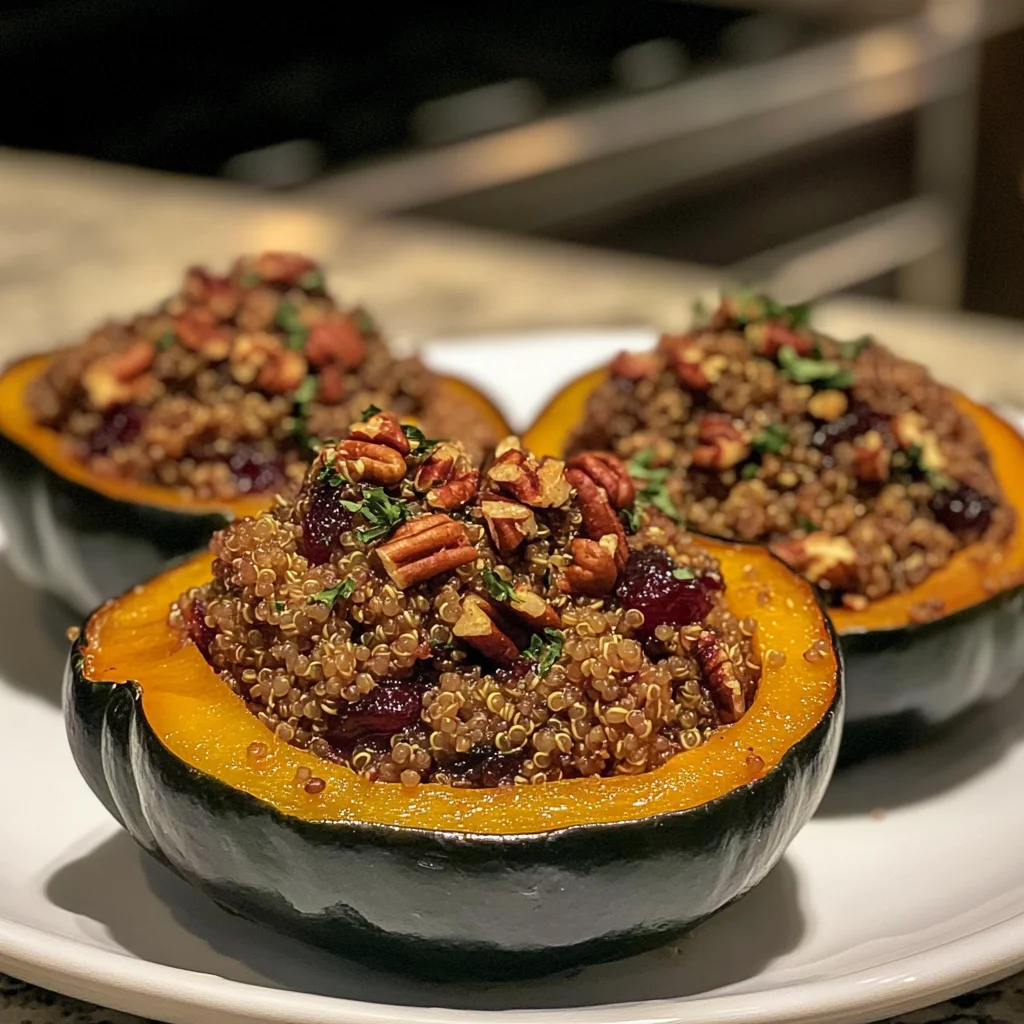
Cranberry Pecan Quinoa Stuffed Acorn Squash
Introduction
Nothing captures the essence of fall quite like Cranberry Pecan Quinoa Stuffed Acorn Squash. This vibrant, nutrient-dense dish combines roasted acorn squash with a savory-sweet quinoa filling that delights every palate. Whether you’re hosting Thanksgiving dinner or simply craving a wholesome meal, this recipe delivers stunning presentation and exceptional flavor. The combination of tender roasted squash, protein-rich quinoa, tart cranberries, and crunchy pecans creates a symphony of textures and tastes that satisfy both vegetarians and omnivores alike.
This dish is naturally gluten-free and can easily be adapted for vegan diets. The preparation process is straightforward, making it accessible for home cooks of all skill levels. Best of all, each component contributes essential nutrients that support overall health and wellness.
What Makes This Dish Special
Cranberry Pecan Quinoa Stuffed Acorn Squash stands out as a complete meal in one beautiful package. The acorn squash serves as both vessel and ingredient, providing natural sweetness and a tender texture that complements the hearty filling. The quinoa base offers complete protein with all nine essential amino acids, making this dish particularly valuable for plant-based eaters.
The dried cranberries add bursts of tartness and concentrated antioxidants, while pecans contribute heart-healthy omega-3 fatty acids and satisfying crunch. This combination creates a balanced meal that delivers complex carbohydrates, healthy fats, plant protein, and abundant vitamins and minerals. The visual appeal is equally impressive, with vibrant orange squash contrasting against jewel-toned cranberries and earthy quinoa.
Seasonal Appeal
This recipe celebrates autumn’s finest produce. Acorn squash reaches peak season from October through December, offering maximum flavor and nutritional value during these months. The warming spices and hearty ingredients make this dish particularly comforting as temperatures drop. It’s equally appropriate as an elegant side dish or satisfying main course.
Key Ingredients and Their Benefits
Acorn Squash
Acorn squash delivers exceptional nutritional value with its bright orange flesh. One cup of cooked acorn squash contains approximately 115 calories, 30 grams of carbohydrates, and 9 grams of fiber. This winter squash is particularly rich in vitamin C, providing 22.1 milligrams per cup, along with significant amounts of potassium, magnesium, and B vitamins.
The vegetable is loaded with carotenoid antioxidants, including zeaxanthin and beta-carotene, which protect against cellular damage and may reduce the risk of type 2 diabetes, cardiovascular disease, and certain cancers. These antioxidants give acorn squash its distinctive golden-orange color. The high fiber content supports digestive health and promotes feelings of fullness, making it beneficial for weight management.
Quinoa
Quinoa is technically a seed but classified as a whole grain, offering superior nutritional benefits compared to many traditional grains. One cup of cooked quinoa provides approximately 8 grams of complete protein and 5 grams of fiber. Unlike most plant proteins, quinoa contains all nine essential amino acids that the body cannot produce independently.
The high fiber content supports digestive health, promotes beneficial gut bacteria, and helps maintain healthy cholesterol and blood sugar levels. Quinoa is naturally gluten-free, making it safe for people with celiac disease or gluten intolerance. Its rich antioxidant profile may help reduce the risk of heart disease. The grain also provides important minerals like manganese, magnesium, phosphorus, and iron.
Dried Cranberries
Dried cranberries concentrate the nutritional benefits of fresh cranberries into convenient, shelf-stable form. These ruby-red gems are exceptionally rich in antioxidants, particularly polyphenols called proanthocyanidins that support urinary tract health by preventing harmful bacteria from adhering to bladder walls.
Cranberries provide vitamin C, vitamin E, vitamin K1, manganese, and copper. The antioxidant compounds quercetin and myricetin offer anti-inflammatory benefits and may protect against chronic diseases. The flavonoids in cranberries enhance immune cell function and promote healthy aging. Their natural tartness adds bright flavor contrast to sweet roasted squash and earthy quinoa.
Pecans
Pecans contribute essential healthy fats, particularly monounsaturated fats and omega-3 fatty acids like alpha-linolenic acid. These heart-healthy fats help lower bad cholesterol (LDL) levels while raising good cholesterol (HDL), reducing cardiovascular disease risk. Regular pecan consumption has been linked to improved blood vessel function, reduced inflammation, and lower blood pressure.
Pecans also provide vitamin E, a powerful antioxidant that protects cells from oxidative damage and supports skin health. The nuts contain plant sterols that block cholesterol absorption in the intestines. Their magnesium content helps relax blood vessels and supports healthy blood pressure. The satisfying crunch and buttery flavor make pecans an irresistible topping for this stuffed squash.
Nutritional Profile
Cranberry Pecan Quinoa Stuffed Acorn Squash delivers impressive nutritional density in every serving. One stuffed squash half provides substantial amounts of complex carbohydrates for sustained energy, complete protein for tissue repair and maintenance, and healthy fats for hormone production and nutrient absorption.
The dish offers exceptional fiber content, with contributions from acorn squash, quinoa, and pecans working together to support digestive health and blood sugar regulation. The combination provides approximately 18-20 grams of fiber per serving, representing a significant portion of the daily recommended intake. This high fiber content promotes satiety and supports weight management goals.
Vitamin and Mineral Content
Each serving delivers abundant micronutrients. The acorn squash contributes vitamin C for immune function, vitamin A for vision and skin health, and B vitamins for energy metabolism. Quinoa adds iron for oxygen transport, magnesium for muscle and nerve function, and manganese for antioxidant activity. Cranberries boost the vitamin C and vitamin K content.
The mineral profile is equally impressive. Potassium from acorn squash supports healthy blood pressure and heart rhythm. Magnesium from quinoa and pecans aids in hundreds of enzymatic reactions throughout the body. Iron from quinoa is particularly valuable for vegetarians who may struggle to meet their needs from plant sources alone.
Antioxidant Power
This dish is extraordinarily rich in antioxidant compounds. The carotenoids in acorn squash, polyphenols in cranberries, and vitamin E in pecans work synergistically to neutralize free radicals and reduce oxidative stress. These protective compounds may help prevent chronic diseases including heart disease, diabetes, and certain cancers.
Step-by-Step Preparation Guide
Preparing the Acorn Squash
Begin by preheating your oven to 350 degrees Fahrenheit. Line a large baking sheet with parchment paper for easy cleanup. Select two medium acorn squashes with deep green color and firm skin. Carefully cut each squash in half lengthwise using a sharp, heavy knife. Remove the seeds and stringy pulp with a spoon, creating a clean cavity for the filling.
Brush or rub the flesh of each squash half with melted coconut oil or butter. Sprinkle each half with brown sugar or coconut sugar, kosher salt, and a generous dash of cinnamon. These seasonings enhance the natural sweetness of the squash and create beautiful caramelization during roasting. Place the squash halves flesh-side down on the prepared baking sheet. Roast for 45 minutes to one hour until the flesh is tender when pierced with a fork.
Cooking the Quinoa
While the squash roasts, prepare the quinoa filling. Rinse one cup of quinoa thoroughly under cold water to remove any bitter coating. Combine the rinsed quinoa with water in a large pot according to package directions, typically using a 2:1 water-to-quinoa ratio. Bring the mixture to a boil over medium-high heat.
Once boiling, reduce the heat to low, cover the pot, and simmer for exactly 15 minutes without lifting the lid. After 15 minutes, remove the pot from heat and let it stand, covered, for an additional 5 minutes. Fluff the cooked quinoa with a fork to separate the grains and create a light texture. Stir in melted coconut oil, fresh orange juice, ground turmeric for color and anti-inflammatory benefits, and salt to taste.
Assembling the Filling
Fold the dried cranberries into the seasoned quinoa while it’s still warm, allowing them to plump slightly and soften. The residual heat will help rehydrate the cranberries and release their natural sweetness. Taste the quinoa mixture and adjust seasonings as needed, adding more salt, pepper, or orange juice to achieve balanced flavor.
Some recipes incorporate additional ingredients like chickpeas for extra protein, fresh herbs for aromatic complexity, or orange zest for citrus brightness. You can customize the filling based on personal preferences and dietary needs.
Stuffing and Final Baking
Once the acorn squash is tender and golden, carefully flip each half flesh-side up. The squash should be fork-tender but still hold its shape. Divide the quinoa-cranberry mixture evenly among the four squash halves, packing it gently with a spoon and mounding it generously.
Top each stuffed squash with chopped pecans, distributing them evenly across the surface. Return the stuffed squash to the oven and bake for an additional 10-15 minutes until the pecans are toasted and fragrant and the filling is heated through. This final baking step allows the flavors to meld together beautifully.
Optional Toppings and Garnishes
Many variations include a creamy sauce or drizzle to add richness and moisture. For a tangy finish, blend goat cheese or feta with orange juice and orange zest until smooth and pourable. Drizzle this sauce over the hot stuffed squash just before serving. Fresh thyme leaves add herbal notes that complement the sweet and savory elements. A light drizzle of honey provides extra sweetness, though this is optional.
Tips for Perfect Stuffed Acorn Squash
Selecting Quality Squash
Choose acorn squash that feels heavy for its size, indicating good moisture content and flesh density. The skin should be firm, deeply colored, and free from soft spots or blemishes. A small patch of orange or yellow on the squash is acceptable and indicates where it rested on the ground during growing. Avoid squash with shiny skin, which suggests it was harvested too early and may lack sweetness.
Store whole acorn squash in a cool, dry place away from direct sunlight. Under proper storage conditions, acorn squash can last for several months. Once cut, wrap unused portions tightly in plastic wrap and refrigerate for up to five days.
Ensuring Even Cooking
Cut the squash as evenly as possible to promote uniform cooking. If one half is significantly thicker than the other, it will require additional roasting time. Placing the squash flesh-side down during the initial roasting helps steam the flesh while simultaneously caramelizing it, creating tender texture and deep flavor.
Check the squash for doneness by inserting a fork into the thickest part of the flesh. It should pierce easily without resistance, but the squash should still hold its shape and not collapse. Overcooking will result in mushy squash that breaks apart when stuffed.
Perfecting the Quinoa
The key to fluffy quinoa is proper rinsing and precise timing. Rinsing removes saponins, naturally occurring compounds that can impart a bitter flavor. Never skip this step, even if your package claims the quinoa is pre-rinsed. Use a fine-mesh strainer and rinse under cold running water for at least 30 seconds.
Resist the temptation to lift the pot lid during cooking, as this releases steam and can result in undercooked, crunchy quinoa. The resting period after cooking is equally important, allowing the grains to finish absorbing moisture and develop their characteristic fluffy texture. Fluffing with a fork prevents clumping and creates distinct, separated grains.
Balancing Flavors
The success of this dish depends on balancing sweet, savory, tart, and nutty elements. The natural sweetness of roasted acorn squash pairs beautifully with tart dried cranberries. The earthiness of quinoa grounds the dish, while pecans add richness. Orange juice brightens everything and ties the flavors together.
Taste as you go and adjust seasonings generously. Don’t be afraid to add extra salt, as it enhances all the other flavors. A pinch of additional cinnamon in the filling can echo the spice on the squash. Fresh herbs like thyme, sage, or parsley add aromatic complexity.
Serving Suggestions and Pairings
As a Main Course
Cranberry Pecan Quinoa Stuffed Acorn Squash works beautifully as a satisfying vegetarian entrée. The combination of complete protein from quinoa, complex carbohydrates from squash, and healthy fats from pecans provides balanced nutrition that keeps diners satisfied. Serve one full stuffed squash half per person as a main course.
For heartier appetites, pair the stuffed squash with a simple green salad dressed with vinaigrette or a cup of warming soup. The dish is naturally gluten-free and can easily accommodate vegan diets by omitting the cheese sauce or using plant-based alternatives. It’s an excellent choice for Thanksgiving dinner or holiday gatherings where guests have varied dietary requirements.
As a Side Dish
When serving as a side, cut each squash half into smaller portions or serve half portions alongside roasted chicken, turkey, or other proteins. The vibrant colors and unique presentation elevate any meal from ordinary to special. The sweet and savory flavor profile complements roasted meats particularly well.
This dish pairs wonderfully with other autumn vegetables like roasted Brussels sprouts, sautéed green beans, or mashed sweet potatoes. The quinoa stuffing can also be prepared separately and served as a standalone side dish if you prefer not to stuff the squash.
Complementary Dishes
Consider serving the stuffed squash alongside dishes that offer contrasting textures and complementary flavors. Crisp, acidic elements like a kale salad with lemon vinaigrette cut through the richness of the pecans. Roasted root vegetables add earthiness and additional fiber. A warm grain salad with farro or wild rice provides textural variety while maintaining the wholesome, harvest theme.
For beverages, consider pairing with sparkling cider, herbal tea, or fresh-pressed apple juice. These drinks complement the autumn flavors without overwhelming the delicate balance of the dish.
Storage and Reheating Instructions
Proper Storage Methods
Allow leftover stuffed squash to cool to room temperature before storing. Transfer the squash to airtight containers and refrigerate within two hours of cooking to prevent bacterial growth. Properly stored, the stuffed squash will maintain quality for up to four days in the refrigerator.
You can store the components separately if preferred. Keep the roasted squash and quinoa filling in separate containers, then assemble and reheat when ready to serve. This method can help prevent the squash from becoming soggy from the filling’s moisture. The quinoa filling alone stores well for up to five days and can be used in other applications like wraps, salads, or grain bowls.
Reheating for Best Results
Reheat stuffed squash in a 350-degree Fahrenheit oven for 15-20 minutes until warmed through. Cover loosely with foil to prevent excessive browning while ensuring even heating. For faster reheating, microwave individual portions on medium power in 90-second intervals, checking frequently to avoid overheating.
The squash may release some moisture during storage, which is normal. Simply drain any excess liquid before reheating. If the stuffing seems dry after refrigeration, add a tablespoon of vegetable broth or water before reheating to restore moisture. Top with fresh pecans after reheating to maintain their crunch.
Freezing Considerations
While this dish can be frozen, the texture of the squash may become slightly mushy upon thawing. If you choose to freeze, do so before the final baking step. Prepare the recipe through stuffing the par-baked squash, then wrap tightly in plastic wrap and aluminum foil. Freeze for up to three months.
To serve, thaw overnight in the refrigerator, then bake as directed, adding an extra 10-15 minutes to the cooking time to ensure everything is heated through. The quinoa filling freezes better than the assembled dish, so consider freezing just the filling for future quick meals.
Common Mistakes to Avoid
Undercooking the Squash
One of the most common errors is removing the squash from the oven before it’s properly tender. Undercooked squash will be tough and difficult to eat, detracting from the overall dish. Always test doneness with a fork before proceeding to stuff. The fork should pierce easily through the thickest part with minimal resistance.
If your squash isn’t tender after the recommended cooking time, continue roasting in 10-minute increments until done. Size variations in squash can affect cooking time significantly. Larger squash will naturally require longer roasting.
Skipping the Quinoa Rinse
Failing to rinse quinoa properly is a critical mistake that results in bitter, unpleasant-tasting grain. The natural saponin coating protects the seed during growth but creates an off-flavor if not removed. Even pre-rinsed quinoa benefits from a quick rinse at home. This simple step takes less than a minute and dramatically improves the final flavor.
Over-Seasoning or Under-Seasoning
Finding the right balance of seasonings is crucial for this dish. Too much cinnamon can overwhelm the other flavors, while too little leaves the squash flat and one-dimensional. Similarly, the quinoa filling needs adequate salt to brighten the flavors and complement the sweet elements. Always taste and adjust before assembling.
Remember that flavors can mellow slightly during the final baking, so season assertively. The dried cranberries add tartness, so adjust the sweetness in the squash accordingly. If your cranberries are particularly sweet, you might reduce the brown sugar on the squash.
Overcrowding the Pan
Place the squash halves with adequate space between them on the baking sheet. Crowding prevents proper air circulation and can result in uneven cooking and steaming rather than roasting. Use two baking sheets if necessary to give each squash half plenty of room. This ensures the beautiful caramelization and concentrated flavor that makes roasted squash so special.
Variations and Customizations
Protein Additions
While the quinoa provides complete protein, some diners prefer additional protein sources. Chickpeas make an excellent addition, contributing texture and extra protein without overwhelming the dish. Add one cup of cooked, drained chickpeas to the quinoa filling before stuffing. They complement the other flavors beautifully and increase the protein content by approximately 7 grams per serving.
For non-vegetarian versions, consider adding cooked, crumbled sausage or diced rotisserie chicken to the filling. These additions transform the dish into an even heartier main course. Use about one cup of cooked protein per recipe. Season the protein well to ensure it integrates seamlessly with the other ingredients.
Cheese Options
Adding cheese creates richness and enhances the savory elements. Crumbled goat cheese or feta can be mixed directly into the filling or used to make a creamy drizzle. The tangy flavor of these cheeses complements the sweet squash and tart cranberries perfectly. For a milder option, try shredded Gruyère or white cheddar.
Vegan diets can substitute nutritional yeast for a cheesy flavor without dairy. Plant-based cream cheese or cashew cream also work well for creating a drizzle sauce. These alternatives provide similar richness and help bind the ingredients together.
Fruit and Nut Substitutions
The beauty of this recipe lies in its adaptability. While cranberries and pecans are classic, other dried fruits work equally well. Try dried cherries, chopped apricots, or golden raisins for different flavor profiles. Pomegranate seeds add fresh bursts of tartness and beautiful color.
For nut variations, walnuts offer similar texture with slightly different flavor. Slivered almonds provide crunch without as much richness. Pumpkin seeds or sunflower seeds work for nut-free versions. Each substitution creates a unique dish while maintaining the core concept.
Grain Alternatives
Though quinoa is ideal for its complete protein and texture, other grains can substitute. Brown rice provides a nutty flavor and chewy texture. Wild rice adds earthiness and visual interest with its dark color. Farro or wheat berries work for those without gluten concerns.
For grain-free versions, try riced cauliflower or a combination of roasted vegetables. These lighter options create a different dish but maintain the stuffed squash concept. Adjust seasonings accordingly, as different grains and vegetables absorb flavors differently.
Spice Modifications
The warming spices in this dish can be adjusted to suit personal preferences. Add a pinch of nutmeg or cardamom to the squash for more complex spice notes. Curry powder or cumin can transform the filling into something with Middle Eastern or Indian influences. Fresh ginger adds warmth and complements the orange juice beautifully.
For those who enjoy heat, add a pinch of red pepper flakes or drizzle with hot honey before serving. These small modifications dramatically change the flavor profile while maintaining the dish’s fundamental structure.
Frequently Asked Questions (FAQs)
Can I make Cranberry Pecan Quinoa Stuffed Acorn Squash ahead of time?
Yes, this dish is excellent for meal prep and advance preparation. You can roast the squash up to two days ahead, storing the cooled halves in airtight containers in the refrigerator. Prepare the quinoa filling up to three days in advance and refrigerate separately. When ready to serve, stuff the cold squash with cold filling, add the pecans, and bake at 350 degrees Fahrenheit until heated through, approximately 25-30 minutes. This approach saves time on busy entertaining days.
Is this recipe suitable for meal prep?
Absolutely, stuffed acorn squash works beautifully for meal prep. Prepare a double batch and store individual portions in containers for quick, nutritious meals throughout the week. The dish reheats well and maintains its flavor and texture when stored properly. The quinoa filling alone also makes an excellent base for other meals like grain bowls, wraps, or salads.
How do I prevent the squash from tipping over while baking?
If your squash halves won’t sit flat on the baking sheet, carefully trim a thin slice from the rounded bottom to create a stable base. Be careful not to cut through to the cavity. Alternatively, nestle the squash into crumpled aluminum foil or use a muffin tin to hold them steady during roasting. Some cooks place the squash in a baking dish with a small amount of water, which also helps steam them tender.
Can I use fresh cranberries instead of dried?
Fresh cranberries can work but require different preparation. They’re much more tart and contain significantly more moisture than dried cranberries. If using fresh, chop them roughly and reduce the quantity to about one-third cup. You may want to add a touch more sweetener to the filling to balance the tartness. Cook the fresh cranberries briefly with a little water and sweetener before adding to the quinoa for best results.
What’s the best way to cut acorn squash safely?
Acorn squash can be challenging to cut due to its hard exterior. Start by washing and thoroughly drying the squash. Use a large, sharp chef’s knife and cut carefully through the stem end first, which is slightly softer than the sides. Apply steady, even pressure rather than sawing motions. Some cooks find it helpful to microwave the whole squash for 2-3 minutes to slightly soften the exterior before cutting. Always use a stable cutting board and keep your fingers clear of the knife blade.
Is Cranberry Pecan Quinoa Stuffed Acorn Squash gluten-free?
Yes, this dish is naturally gluten-free when prepared as directed. Quinoa, acorn squash, cranberries, and pecans contain no gluten. This makes the recipe suitable for people with celiac disease or gluten sensitivity. Always verify that your specific ingredients haven’t been cross-contaminated during processing if serving to someone with severe gluten intolerance.
Can I make this recipe vegan?
Definitely, this recipe adapts easily for vegan diets. Use coconut oil instead of butter for preparing the squash. Omit any cheese drizzle or substitute with cashew cream or vegan cheese. All other components are naturally plant-based. The result is a completely vegan dish that’s still rich, satisfying, and full of flavor.
What other winter squash varieties work for this recipe?
While acorn squash is traditional, other winter squash varieties work well. Delicata squash is thinner-skinned and sweeter, cooking faster than acorn. Butternut squash halves create larger portions suitable for sharing. Carnival or sweet dumpling squash offer similar size and shape to acorn squash. Each variety brings slightly different flavor and texture, but the basic preparation method remains the same.
Conclusion
Cranberry Pecan Quinoa Stuffed Acorn Squash delivers everything you could want in a fall dish—stunning presentation, exceptional nutrition, and flavors that celebrate the season. This recipe combines the natural sweetness of roasted acorn squash with protein-rich quinoa, antioxidant-packed cranberries, and heart-healthy pecans to create a complete meal that satisfies both body and soul. Whether you’re serving it for Thanksgiving dinner, meal prepping for the week, or simply seeking a wholesome vegetarian option, this dish exceeds expectations every time.
The recipe’s flexibility allows for countless variations while maintaining its essential character. You can customize the ingredients to suit dietary preferences, add your favorite proteins, or experiment with different spices and toppings. The straightforward preparation process makes it accessible for cooks of all skill levels, while the impressive presentation makes you look like a professional chef.
Try preparing Cranberry Pecan Quinoa Stuffed Acorn Squash this week and discover why it has become a fall favorite for so many home cooks. Your family and guests will be delighted by this nutritious, flavorful dish that brings the best of autumn to the table.
Print
Cranberry Pecan Quinoa Stuffed Acorn Squash
Description
Cranberry Pecan Quinoa Stuffed Acorn Squash
Prep Time: 15 minutes
Cook Time: 45 minutes
Total Time: 1 hour
Servings: 4
Calories: ~380 per serving
Ingredients
-
2 medium acorn squashes, halved and seeded
-
1 tbsp olive oil
-
Salt & pepper, to taste
-
1 cup quinoa, rinsed
-
2 cups vegetable broth
-
1 small onion, diced
-
2 garlic cloves, minced
-
1 cup fresh or dried cranberries
-
½ cup chopped pecans, toasted
-
½ tsp cinnamon
-
¼ tsp nutmeg
-
2 tbsp maple syrup
-
2 tbsp fresh parsley, chopped (optional, for garnish)
Instructions
1. Roast the Squash
-
Preheat oven to 400°F (200°C).
-
Brush acorn squash halves with olive oil, season with salt and pepper, and place cut-side down on a baking sheet.
-
Roast 25–30 minutes until tender.
2. Cook the Quinoa
-
In a medium pot, bring vegetable broth to a boil.
-
Add quinoa, reduce heat to low, cover, and simmer 15 minutes until liquid is absorbed. Fluff with a fork.
3. Make the Filling
-
In a skillet, sauté onion and garlic with a little olive oil until softened (3–4 minutes).
-
Stir in cooked quinoa, cranberries, toasted pecans, cinnamon, nutmeg, and maple syrup. Mix until well combined.
-
Adjust seasoning with salt and pepper.
4. Assemble and Bake
-
Flip roasted squash cut-side up.
-
Spoon quinoa mixture into each squash half generously.
-
Bake 10–15 more minutes until heated through and slightly golden on top.
5. Serve
-
Garnish with fresh parsley.
-
Serve as a festive side or a vegetarian main dish.