
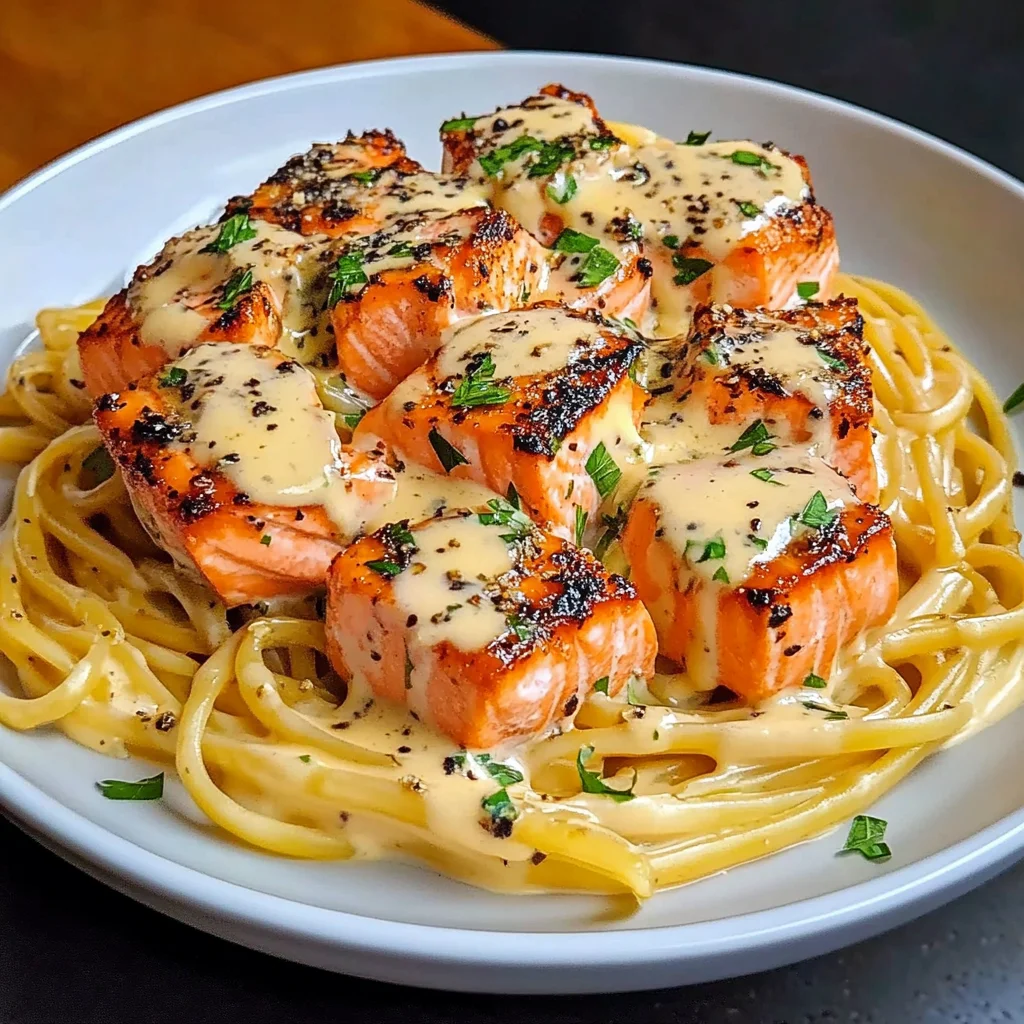
Creamy Garlic Butter Salmon Pasta
There’s something magical about twirling a fork through perfectly cooked pasta coated in a luscious, creamy garlic butter sauce with tender chunks of salmon. This Creamy Garlic Butter Salmon Pasta transforms simple ingredients into an elegant restaurant-quality meal that’s ready in under 30 minutes. Whether you’re planning a romantic dinner, hosting friends, or simply craving comfort food with a gourmet twist, this recipe delivers incredible flavor without any complicated techniques.
Why You’ll Love This Recipe
This garlic butter salmon pasta combines rich, savory flavors with satisfying textures that appeal to everyone at your table. The dish offers numerous advantages that make it a standout choice for any occasion.
Quick and Easy Preparation
Busy weeknights demand recipes that deliver maximum flavor with minimal effort. This salmon pasta comes together in just 25-30 minutes from start to finish. You’ll use one pot for the pasta and one pan for the salmon and sauce, meaning less cleanup time and more enjoyment.
Restaurant-Quality at Home
Skip the expensive restaurant bill and create an impressive meal in your own kitchen. The combination of butter, garlic, cream, and perfectly seared salmon creates a dish that rivals anything you’d find at a high-end establishment. Your family and guests will think you’ve spent hours preparing this elegant entrée.
Nutritious and Balanced
Salmon provides omega-3 fatty acids, high-quality protein, and essential vitamins. Combined with pasta for energy and vegetables for fiber, this dish offers a well-rounded nutritional profile. You’re not just eating something delicious—you’re nourishing your body with every bite.
Customizable for Different Tastes
The base recipe accommodates various dietary preferences and ingredient availability. Swap regular pasta for whole wheat or gluten-free options. Add your favorite vegetables like spinach, cherry tomatoes, or asparagus. Adjust the garlic and seasoning levels to match your personal preferences.
Ingredients You’ll Need
Gathering quality ingredients ensures the best possible outcome for your creamy garlic butter salmon pasta. Each component plays a specific role in building layers of flavor and texture.
Main Ingredients
-
Salmon fillets (1 pound): Choose fresh, wild-caught salmon when possible for superior flavor and texture
-
Pasta (12 ounces): Fettuccine, linguine, or penne work beautifully
-
Heavy cream (1 cup): Creates the luxurious, velvety sauce base
-
Unsalted butter (4 tablespoons): Provides rich flavor and helps create a silky sauce
-
Garlic cloves (6-8): Freshly minced for maximum aromatic impact
-
Parmesan cheese (1 cup, freshly grated): Adds nutty, salty depth to the sauce
Seasonings and Aromatics
-
Salt and black pepper: Essential for seasoning at every stage
-
Italian seasoning (1 teaspoon): Adds herbal complexity
-
Red pepper flakes (1/4 teaspoon): Optional, for subtle heat
-
Fresh parsley (1/4 cup, chopped): Brightens the finished dish
-
Lemon juice (2 tablespoons): Cuts through richness and enhances salmon flavor
-
Chicken or vegetable broth (1/2 cup): Thins the sauce to perfect consistency
Optional Add-Ins
-
Baby spinach or kale for added nutrition
-
Sun-dried tomatoes for tangy sweetness
-
Capers for briny complexity
-
Fresh dill or basil for herbaceous notes
Step-by-Step Instructions
Follow these detailed steps to create perfect creamy garlic butter salmon pasta every time. Taking care at each stage ensures optimal results.
Prepare Your Ingredients
Start by gathering and prepping all ingredients before you begin cooking. This mise en place approach makes the cooking process smooth and stress-free.
Pat the salmon fillets dry with paper towels. Season both sides generously with salt and black pepper. Cut the salmon into bite-sized chunks, about 1.5 inches each. This size ensures even cooking and makes the finished dish easier to eat.
Mince the garlic cloves finely. Grate fresh Parmesan cheese rather than using pre-grated varieties, which contain anti-caking agents that prevent smooth melting. Chop fresh parsley. Measure out your liquids and have them ready near the stove.
Cook the Pasta
Bring a large pot of salted water to a rolling boil. Use about 1 tablespoon of salt per 4 quarts of water. This seasons the pasta from within.
Add the pasta and cook according to package directions until al dente. Al dente means the pasta is cooked through but retains a slight firmness when bitten. This texture holds up better when combined with the sauce.
Before draining, reserve 1 cup of pasta cooking water. This starchy liquid helps adjust sauce consistency and helps the sauce cling to the pasta. Drain the pasta and set it aside.
Sear the Salmon
Heat 2 tablespoons of butter in a large skillet over medium-high heat. Once the butter melts and begins to foam, add the salmon pieces in a single layer. Avoid overcrowding the pan, which causes steaming instead of searing.
Cook without moving for 3-4 minutes until a golden crust forms on the bottom. Flip each piece and cook for another 2-3 minutes until the salmon is cooked through but still moist. The internal temperature should reach 145°F.
Transfer the cooked salmon to a plate. Don’t worry if it’s not completely cooked through—it will finish cooking in the sauce. This prevents overcooking and keeps the salmon tender.
Create the Garlic Butter Sauce
In the same skillet, reduce heat to medium. Add the remaining 2 tablespoons of butter. Once melted, add the minced garlic and red pepper flakes if using.
Sauté for 60-90 seconds until fragrant but not browned. Garlic burns quickly, turning bitter, so watch carefully. The goal is to release the aromatic oils without color development.
Pour in the broth and use a wooden spoon to scrape up any browned bits from the pan bottom. These fond bits add incredible flavor to the sauce. Let the liquid simmer for 2 minutes to reduce slightly.
Add Cream and Cheese
Pour the heavy cream into the skillet and stir to combine with the garlic butter mixture. Bring to a gentle simmer, then reduce heat to low.
Add the Italian seasoning and season with salt and black pepper. Remember that Parmesan is salty, so season conservatively at this stage.
Gradually add the grated Parmesan cheese, stirring constantly. Add it in three or four additions, allowing each batch to melt completely before adding more. This prevents clumping and creates a smooth, creamy sauce.
If the sauce seems too thick, add reserved pasta water one tablespoon at a time until you reach desired consistency. The sauce should coat the back of a spoon but flow easily.
Combine Everything
Add the cooked pasta to the sauce and toss thoroughly to coat every strand. Use tongs or two forks to lift and turn the pasta, ensuring even coverage.
Gently fold in the cooked salmon pieces. Be careful not to break them apart too much. You want recognizable chunks of salmon throughout the dish.
Drizzle the lemon juice over the pasta and give it one final toss. The acidity brightens the rich sauce and complements the salmon beautifully.
Final Touches
Taste and adjust seasoning with additional salt, pepper, or lemon juice as needed. Remove from heat and garnish generously with fresh chopped parsley. The herb adds color and fresh flavor that balances the richness.
Serve immediately while hot. The sauce thickens as it cools, so enjoy this dish right away for the best texture and temperature.
Pro Tips for Perfect Results
These expert techniques elevate your garlic butter salmon pasta from good to exceptional. Small details make significant differences in the final dish.
Choose Quality Salmon
Wild-caught salmon offers superior flavor and firmer texture compared to farm-raised varieties. Look for bright, vibrant color and avoid any fish with a strong fishy odor. Fresh salmon should smell clean and oceanic.
If using frozen salmon, thaw it overnight in the refrigerator. Never thaw at room temperature, which encourages bacterial growth. Pat thawed salmon very dry before cooking to ensure proper searing.
Don’t Overcook the Salmon
Salmon continues cooking from residual heat after you remove it from the pan. Slightly undercook it during the initial searing, knowing it will finish cooking when combined with the hot sauce. This prevents dry, tough fish.
The center should be slightly translucent when you remove it from the heat. By the time you finish the sauce and combine everything, it will be perfectly cooked through.
Use Fresh Garlic
Pre-minced garlic from jars lacks the pungent, aromatic quality of freshly minced cloves. Fresh garlic provides the intense flavor that defines this dish. Invest two minutes in mincing fresh garlic for dramatically better results.
If you’re sensitive to strong garlic flavor, reduce the amount to 4-5 cloves. For garlic lovers, increase to 8-10 cloves for maximum impact.
Control Your Heat
Medium heat works best for creating the sauce. Too high, and the garlic burns or the cream breaks. Too low, and the sauce never thickens properly. Find that sweet spot where the sauce bubbles gently but doesn’t splatter.
When adding cream, never let it come to a full rolling boil. High heat can cause cream to separate or curdle. Maintain a gentle simmer throughout the sauce-making process.
Add Vegetables for Balance
Incorporating vegetables adds nutrition, color, and textural contrast. Spinach wilts quickly in the hot sauce, requiring no additional cooking. Cherry tomatoes add sweet-tart bursts. Broccoli or asparagus provide pleasant crunch.
Add heartier vegetables like broccoli to the pasta cooking water during the last 3 minutes. This cooks them perfectly while using only one pot. Drain them with the pasta.
Finish with Fresh Herbs
Fresh herbs make a noticeable difference in the final flavor profile. Parsley adds fresh, slightly peppery notes. Basil brings sweetness. Dill complements salmon beautifully with its delicate anise-like flavor.
Add half the herbs to the hot pasta and reserve the rest for garnish. This creates layers of fresh flavor throughout the dish.
Nutritional Benefits
This creamy garlic butter salmon pasta offers more than just incredible taste. Understanding the nutritional advantages helps you appreciate this dish as part of a balanced diet.
Omega-3 Fatty Acids from Salmon
Salmon ranks among the best sources of omega-3 fatty acids, particularly EPA and DHA. These essential fats support heart health, reduce inflammation, and promote brain function. A single serving of this pasta provides a significant portion of your weekly omega-3 needs.
Research from the American Heart Association shows that consuming fish twice weekly reduces risk of heart disease and stroke. This delicious pasta makes meeting that recommendation effortless.
High-Quality Protein
Each serving delivers approximately 35-40 grams of protein from the salmon and cheese. Protein supports muscle maintenance, keeps you feeling full longer, and provides essential amino acids your body cannot produce.
Unlike some protein sources, salmon contains all nine essential amino acids in optimal ratios. This makes it a complete protein that efficiently supports bodily functions.
Important Vitamins and Minerals
Salmon provides vitamin D, vitamin B12, selenium, and potassium. Vitamin D supports bone health and immune function. B12 maintains healthy nerve cells and aids in red blood cell formation. Selenium acts as a powerful antioxidant.
The Parmesan cheese contributes calcium for bone health and additional protein. Garlic contains allicin, a compound with potential immune-boosting and anti-inflammatory properties.
Balanced Macronutrients
One serving contains approximately:
-
650-750 calories
-
35-40g protein
-
55-65g carbohydrates
-
30-35g fat
This balance provides sustained energy without overwhelming any single macronutrient. The combination of carbohydrates, protein, and healthy fats keeps blood sugar stable and energy consistent.
Portion Control Considerations
While nutritious, this dish is calorie-dense due to the cream and butter. Enjoy a reasonable portion size—about 1.5 to 2 cups per serving. Pair it with a light side salad to add volume and vegetables without significant calories.
For a lighter version, substitute half-and-half for heavy cream and reduce butter to 2 tablespoons. You’ll sacrifice some richness but maintain the essential flavors while cutting calories significantly.
Serving Suggestions
Present your creamy garlic butter salmon pasta in ways that enhance both its visual appeal and overall dining experience. The right accompaniments complete the meal.
Side Dishes
Fresh Garden Salad: A crisp salad with mixed greens, cucumber, and tomatoes dressed in light vinaigrette cuts through the pasta’s richness. The fresh, acidic flavors provide palate-cleansing contrast.
Garlic Bread: While the pasta already contains garlic, a side of warm, crusty garlic bread allows guests to soak up every bit of the delicious sauce. Make it extra special with herbs and Parmesan.
Roasted Vegetables: Roasted Brussels sprouts, carrots, or green beans add nutritional value and earthy flavors that complement the seafood beautifully. Season simply with olive oil, salt, and pepper.
Steamed Asparagus: This elegant vegetable pairs naturally with salmon. A squeeze of lemon over the asparagus echoes the citrus notes in the pasta sauce.
Presentation Ideas
Serve the pasta in wide, shallow bowls that showcase the beautiful sauce and salmon pieces. Twirl individual portions using tongs to create height and visual interest on the plate.
Garnish each serving with a lemon wedge, fresh parsley sprig, and a sprinkle of extra Parmesan. A light dusting of black pepper and red pepper flakes adds color and signals the flavor profile.
For special occasions, serve in individual gratin dishes and broil briefly to create a golden, bubbly top. This restaurant-style presentation impresses guests while adding textural contrast.
Beverage Pairings
Sparkling water with lemon complements the dish perfectly without competing with the flavors. The effervescence cleanses the palate between bites.
Iced tea, whether sweetened or unsweetened, provides refreshing contrast to the rich, creamy sauce.
Fresh lemonade or limeade echoes the citrus notes in the dish while cutting through the butter and cream. For adults, craft mocktails with muddled herbs and citrus create an elevated dining experience.
Seasonal Variations
Spring: Add fresh peas, asparagus, and lemon zest for bright, seasonal flavors that celebrate warmer weather.
Summer: Incorporate cherry tomatoes and fresh basil for a lighter, garden-fresh interpretation perfect for outdoor dining.
Fall: Stir in roasted butternut squash and sage for earthy, comforting autumn flavors that complement the rich sauce.
Winter: Add sautéed mushrooms and kale for hearty, warming ingredients that suit cold-weather cravings.
Storage and Reheating
Proper storage techniques preserve the quality of your creamy garlic butter salmon pasta. These methods ensure food safety and maintain the best possible taste and texture.
Refrigerator Storage
Allow the pasta to cool to room temperature before storing, but don’t leave it out for more than 2 hours. Transfer to an airtight container and refrigerate promptly.
Properly stored, the pasta keeps for 3-4 days in the refrigerator. The sauce may thicken considerably as it chills, which is normal and easily remedied during reheating.
Label the container with the date to track freshness. While safe to eat within the timeframe, quality gradually declines after the first day.
Freezing Guidelines
Cream-based sauces can separate when frozen and thawed, resulting in grainy texture. However, if you need to freeze, do so within 24 hours of cooking.
Portion the pasta into individual servings in freezer-safe containers. Leave about an inch of headspace to allow for expansion. Freeze for up to 2 months maximum.
Thaw overnight in the refrigerator before reheating. Never thaw at room temperature, which allows bacterial growth in the temperature danger zone.
Reheating Methods
Stovetop Method (Best): Place the pasta in a skillet over medium-low heat. Add 2-3 tablespoons of milk, cream, or broth to loosen the sauce. Stir gently and frequently until heated through, about 5-7 minutes. This method preserves texture better than microwaving.
Microwave Method: Transfer to a microwave-safe bowl. Add a splash of milk or broth. Cover loosely with a damp paper towel to prevent drying. Heat in 1-minute intervals at 50% power, stirring between each interval, until hot throughout.
Oven Method: Preheat oven to 350°F. Place pasta in an oven-safe dish. Add a few tablespoons of liquid and cover tightly with foil. Bake for 15-20 minutes until heated through, stirring halfway.
Quality Considerations
The salmon may dry out slightly upon reheating. Adding extra liquid helps combat this issue. The pasta absorbs sauce as it sits, so expect a slightly different consistency than fresh.
For best quality, only reheat the portion you plan to eat. Repeatedly heating and cooling degrades both safety and quality.
Common Mistakes to Avoid
Learning what not to do proves just as valuable as following correct techniques. Avoid these pitfalls for consistently excellent results.
Overcooking the Salmon
This mistake tops the list of common errors. Overcooked salmon turns dry, chalky, and loses its delicate flavor. Remember that salmon continues cooking after you remove it from heat.
Pull the salmon from the pan when it’s slightly underdone. The residual heat and time in the sauce will finish the cooking process perfectly. Aim for an internal temperature of 145°F when fully cooked.
Using Pre-Grated Cheese
The convenience of pre-grated Parmesan comes at a cost. These products contain cellulose and other anti-caking agents that prevent smooth melting. They create a grainy, separated sauce instead of creamy perfection.
Invest three minutes in grating fresh Parmesan from a block. The improved texture and flavor make this small effort worthwhile. Fresh cheese melts smoothly and delivers superior taste.
Skipping the Pasta Water
That starchy, salted pasta cooking water serves important purposes. It adjusts sauce consistency and helps the sauce adhere to the pasta through the starch content.
Always reserve at least a cup before draining. Add it gradually to achieve the perfect sauce consistency. The salt content also seasons the dish, so you may need less added salt.
Boiling the Cream
High heat causes cream-based sauces to separate or break, resulting in a grainy, curdled appearance. Once you add cream, maintain gentle heat that produces small bubbles but never a rolling boil.
If your sauce does break, remove it from heat immediately. Whisk vigorously while adding a tablespoon of cold cream. This sometimes salvages the situation by re-emulsifying the fats.
Using the Wrong Pan Size
A pan that’s too small causes ingredients to steam rather than sear. This prevents proper browning and flavor development on the salmon.
Use a large skillet—at least 12 inches—with plenty of surface area. This allows proper spacing between salmon pieces and adequate room to toss the pasta with sauce later.
Neglecting to Season Properly
Under-seasoning makes even quality ingredients taste flat. Season the salmon before cooking. Taste and adjust the sauce before combining with pasta. Check one final time before serving.
Build flavors in layers by seasoning at each step rather than trying to fix bland food at the end. Salt enhances other flavors and brings out the best in every ingredient.
Adding Garlic Too Early
Garlic burns quickly, turning bitter and acrid. Add it only after reducing heat and watch it carefully. You want it fragrant and softened, not brown.
If your garlic starts browning, remove the pan from heat immediately. Once garlic burns, you cannot fix the bitter taste. Starting over with fresh garlic saves the dish.
Frequently Asked Questions
Can I use a different type of fish?
Yes, several fish varieties work beautifully in this creamy garlic butter pasta. Halibut, cod, mahi-mahi, or sea bass all substitute well for salmon. Choose firm, mild white fish that holds up to cooking without falling apart. Adjust cooking time based on thickness—thinner fillets require less time than thick salmon portions. Shrimp also makes an excellent alternative, cooking in just 2-3 minutes per side until pink and opaque.
How do I make this recipe gluten-free?
Simply swap regular pasta for your favorite gluten-free variety. Brown rice pasta, chickpea pasta, or corn-based pasta all work well. Cook according to package directions, as gluten-free pastas often require different timing than wheat pasta. Ensure your broth and any seasonings are certified gluten-free, as some contain hidden gluten. The rest of the ingredients are naturally gluten-free, making this an easy adaptation.
Can I make this dish dairy-free?
Creating a dairy-free version requires several substitutions but remains completely achievable. Replace butter with olive oil or dairy-free butter alternatives. Use coconut cream or cashew cream instead of heavy cream—full-fat coconut milk works particularly well. Substitute nutritional yeast for Parmesan cheese to maintain that savory, umami-rich quality. The flavor profile changes slightly, but the dish remains delicious and creamy.
What’s the best pasta shape for creamy garlic butter salmon pasta?
Long, flat pasta shapes like fettuccine or linguine work beautifully because they coat well with sauce and twirl elegantly on a fork. Penne or rigatoni tubes catch sauce inside their hollows, creating flavor pockets in every bite. Farfalle (bow-ties) offers visual appeal and holds sauce in its folds. Choose based on personal preference—all these shapes deliver excellent results.
Can I prep this recipe ahead of time?
While best served immediately, you can complete some prep work ahead. Season and cut the salmon up to 4 hours before cooking, storing it covered in the refrigerator. Mince garlic, grate cheese, and chop herbs in advance. However, don’t cook the pasta or make the sauce until ready to serve. The sauce thickens considerably as it sits, and pasta continues absorbing liquid, resulting in a gummy texture. For best results, prep ingredients ahead but cook everything just before serving.
Why is my sauce too thick or too thin?
Sauce consistency depends on several factors including cream fat content, cooking time, and cheese amount. If too thick, thin it with reserved pasta water, broth, or additional cream one tablespoon at a time. If too thin, let it simmer a few minutes longer to reduce, or add a bit more Parmesan cheese which helps thicken the sauce naturally. Remember that sauce thickens as it cools, so aim for slightly thinner than desired while hot.
How can I add more vegetables to this dish?
This flexible recipe welcomes various vegetable additions. Spinach wilts directly in the hot sauce—add 2-3 cups and stir until just wilted. Cherry tomatoes can be halved and added with the garlic, cooking until softened. Broccoli, asparagus, or green beans should be blanched in the pasta water during the last 3 minutes of cooking, then drained with the pasta. Mushrooms benefit from sautéing separately before adding to the sauce. Aim for 1-2 cups of cooked vegetables per pound of pasta.
Is this recipe suitable for meal prep?
While cream-based pasta dishes don’t rank among the best meal prep options, you can make it work with proper technique. Slightly undercook the pasta so it doesn’t become mushy when reheated. Store in individual portions for easier reheating. Add extra liquid when reheating to compensate for absorption. Quality declines after day two, so plan to consume within 48 hours for best results. Consider this more of a plan-ahead dinner than a traditional Sunday meal prep recipe.
Can I reduce the calories in this recipe?
Several modifications reduce calories without completely sacrificing flavor. Use half-and-half instead of heavy cream, saving about 60 calories per serving. Reduce butter to 2 tablespoons instead of 4, cutting another 100 calories per batch. Choose a lighter pasta like angel hair which feels more generous in smaller portions. Increase the vegetable content to add volume without significant calories. These changes create a lighter version while maintaining the essential character of creamy garlic butter salmon pasta.
Conclusion
This Creamy Garlic Butter Salmon Pasta delivers everything you want in a comfort food dinner—rich, satisfying flavors, restaurant-quality presentation, and surprising simplicity. The combination of tender salmon, al dente pasta, and luxurious garlic-infused cream sauce creates a meal that feels indulgent while providing excellent nutritional value. In just 30 minutes, you’ll serve a dish that impresses family and guests alike.
The beauty of this recipe lies in its versatility. Adapt it to your preferences, dietary needs, or whatever ingredients you have available. Add your favorite vegetables, try different pasta shapes, or adjust the garlic intensity to suit your taste. Each variation maintains the core appeal—comforting, creamy pasta with perfectly cooked salmon.
Whether you’re cooking for a special occasion or elevating an ordinary weeknight, this garlic butter salmon pasta rises to meet the moment. The balance of flavors, textures, and nutritional benefits makes it a recipe you’ll return to repeatedly.
Creamy Garlic Butter Salmon Pasta
Description
Creamy Garlic Butter Salmon Pasta
Ingredients:
-
1 lb pasta (fettuccine, linguine, or penne)
-
1 lb salmon fillets, skin removed
-
Salt and black pepper, to taste
-
3 tbsp olive oil
-
4 tbsp butter, divided
-
4 cloves garlic, minced
-
1 cup heavy cream
-
1/2 cup grated Parmesan cheese
-
1 tsp lemon zest
-
2 tsp lemon juice
-
2 tbsp chopped parsley, for garnish
Instructions:
-
Cook pasta according to package instructions. Drain and set aside.
-
Season salmon with salt and pepper. Heat olive oil in a skillet over medium-high heat. Sear salmon 3–4 minutes per side until cooked through. Remove and flake into large chunks.
-
In the same skillet, melt butter. Add garlic and sauté 1 minute until fragrant.
-
Pour in heavy cream and simmer 2–3 minutes until slightly thickened.
-
Stir in Parmesan, lemon zest, and lemon juice until smooth. Season to taste with salt and pepper.
-
Add cooked pasta and gently toss to coat. Fold in salmon chunks carefully.
-
Garnish with parsley and serve immediately while creamy and dreamy.