
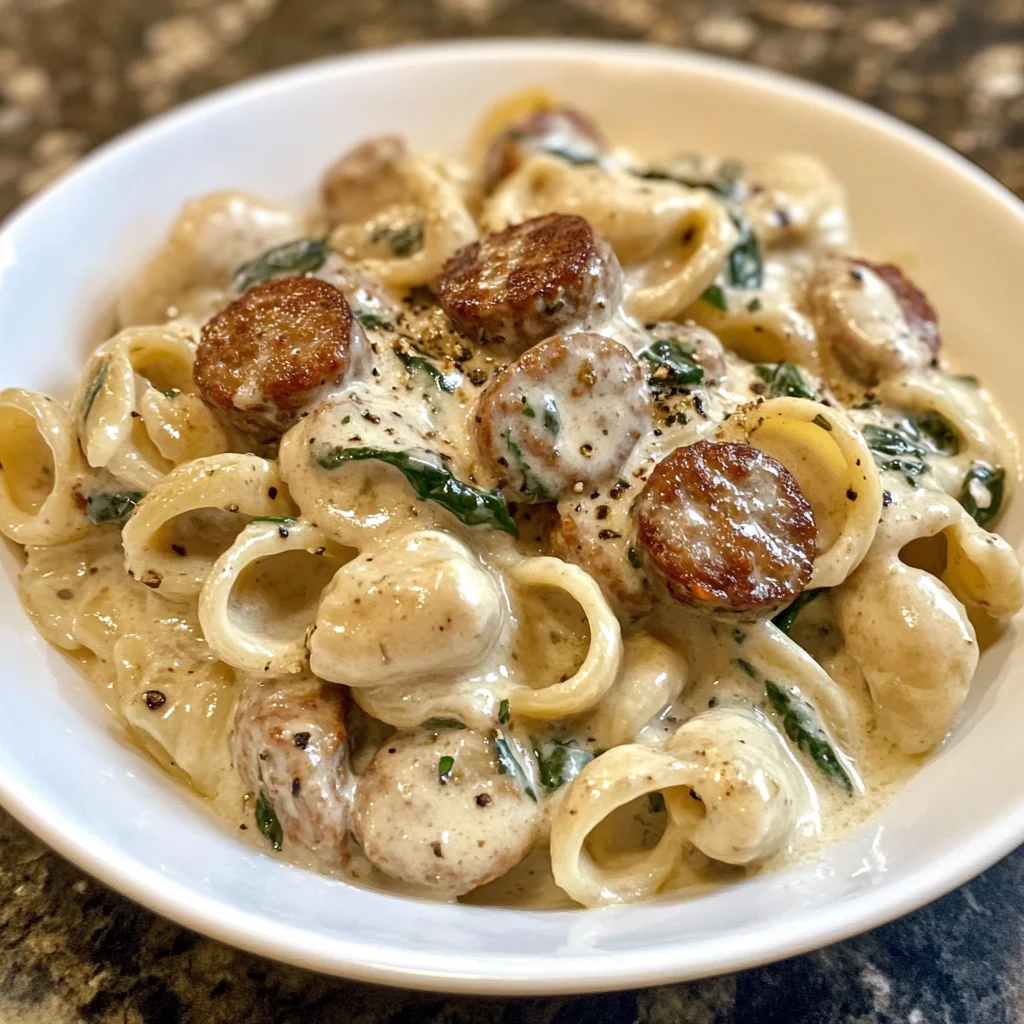
Creamy Garlic Sausage and Spinach Pasta
Creamy garlic sausage and spinach pasta is the ultimate comfort food that combines savory Italian sausage, tender spinach, and a rich garlic-infused cream sauce tossed with perfectly cooked pasta. This hearty one-pan dish delivers restaurant-quality flavors in under 30 minutes, making it an ideal weeknight dinner solution for busy families. The combination of protein-packed sausage, nutrient-dense spinach, and satisfying pasta creates a well-rounded meal that pleases both adults and children alike.
What Makes Creamy Garlic Sausage and Spinach Pasta Special
This pasta dish stands out as a weeknight dinner hero because it combines simplicity with extraordinary flavor. The Italian sausage provides a savory foundation seasoned with fennel and herbs. Fresh spinach wilts into the creamy sauce, adding vibrant color and nutritional value. The garlic-infused cream creates a luscious coating that clings to every piece of pasta.
The beauty of this recipe lies in its one-pan preparation method. Everything cooks in a single skillet, which means minimal cleanup after dinner. The pasta absorbs the flavors of the sausage and sauce as it cooks, creating a cohesive dish where every element complements the others. This efficient cooking approach saves time without sacrificing taste or quality.
Restaurant-quality results come from browning the sausage properly to develop deep, caramelized flavors. The fond left in the pan after cooking the meat becomes the flavorful base for the cream sauce. Fresh garlic sautéed until fragrant releases aromatic compounds that permeate the entire dish.
Essential Ingredients and Substitutions
The foundation of creamy garlic sausage and spinach pasta requires just a handful of quality ingredients. One pound of Italian sausage serves as the protein base, available in mild, sweet, or hot varieties depending on your heat preference. Ground sausage works best for even distribution throughout the pasta, though sliced sausage links can also be used.
Fresh baby spinach adds nutritional value and color to the dish. Five to six ounces of spinach wilts down significantly during cooking, incorporating seamlessly into the sauce. Heavy cream creates the luxurious texture that defines this recipe, typically requiring 1.5 to 2 cups. Parmesan cheese adds salty, umami depth while helping to thicken the sauce naturally.
Minced garlic is essential for the signature flavor profile. One tablespoon or four cloves provides robust garlic taste without overwhelming other ingredients. Butter enriches the sauce and adds silky smoothness, with one-quarter cup being standard. One pound of pasta creates the perfect ratio of noodles to sauce.
Substitutions offer flexibility for dietary needs and preferences. Turkey or chicken sausage reduces fat content while maintaining protein levels. Frozen spinach can replace fresh when necessary, though it should be thawed and squeezed dry before use. For a lighter version, substitute half-and-half for heavy cream, though the sauce will be slightly less rich. Pecorino Romano cheese can replace Parmesan for a sharper, saltier flavor.
Nutritional Benefits of Key Ingredients
Understanding the nutritional profile of creamy garlic sausage and spinach pasta helps you appreciate this dish beyond its delicious taste. Spinach ranks among the most nutrient-dense vegetables available, packed with vitamins A, C, K, iron, calcium, and folate. A 100-gram serving provides 34% of your daily recommended vitamin C and 121% to 161% of the vitamin K men and women need respectively.
The iron content in spinach supports healthy blood by helping your body produce hemoglobin, which transports oxygen from your lungs throughout your body. This leafy green also contains lutein, an antioxidant that protects against age-related eye diseases like macular degeneration and cataracts. Spinach provides significant amounts of potassium and magnesium, minerals essential for maintaining healthy blood pressure and bone density.
Garlic brings impressive health benefits beyond its aromatic appeal. Research indicates garlic can boost immunity, with studies showing those who regularly consume garlic have a 35% lower colon cancer risk. Garlic functions as a natural anti-inflammatory agent, potentially helping with joint pain and arthritis prevention. The selenium, phosphorus, calcium, vitamin B6, and vitamin C found in garlic support thyroid health, bone strength, and immune system function.
A typical serving of sausage pasta contains approximately 360 to 551 calories depending on portion size and ingredients. Each serving provides 12 to 22 grams of protein, 40 to 50 grams of carbohydrates, and 16 to 38 grams of fat. The dish offers good sources of calcium, iron, potassium, and various B vitamins.
Step-by-Step Cooking Instructions
Creating perfect creamy garlic sausage and spinach pasta requires following a systematic approach that builds flavors layer by layer. Start by bringing a large pot of salted water to a rolling boil for your pasta. The salt in the pasta water seasons the noodles from within and helps prevent them from sticking together.
Once your water boils, add one pound of your chosen pasta shape and cook according to package directions until al dente. Al dente pasta has a slight firmness when bitten and will continue cooking slightly when combined with the hot sauce. Reserve one cup of starchy pasta water before draining, as this liquid can help adjust sauce consistency later.
While the pasta cooks, heat a large skillet over medium-high heat and add the Italian sausage. Break up the ground sausage with a wooden spoon or spatula, stirring occasionally to ensure even browning. Cook for approximately 8 to 10 minutes until the sausage is cooked through and develops golden-brown caramelization.
Add minced garlic to the pan when the sausage is nearly done, cooking for one to two minutes until fragrant. Be careful not to burn the garlic, which happens quickly and creates bitter flavors. If excess grease has accumulated in the pan, carefully blot it with paper towels to prevent an overly greasy sauce.
Reduce heat to low and add butter to the skillet, allowing it to melt completely. Pour in the heavy cream and stir gently, simmering for three to four minutes until the mixture begins to thicken. The sauce should coat the back of a spoon when ready.
Add fresh spinach to the creamy sauce, stirring until the leaves wilt and reduce in volume. This process takes about three minutes. The spinach will dramatically shrink as it cooks, so do not worry if it seems like too much at first.
Stir in grated Parmesan cheese until fully melted and incorporated into the sauce. The cheese adds flavor while naturally thickening the sauce through its protein and fat content. Add the drained pasta to the skillet, tossing everything together until the noodles are evenly coated.
Pasta Selection Guide
Choosing the right pasta shape significantly impacts the success of your creamy garlic sausage and spinach pasta. Short pasta shapes work exceptionally well because they capture the creamy sauce in their crevices and hold onto bits of sausage and spinach. Penne, rigatoni, and fusilli rank among the best choices for this dish.
Penne pasta features a tubular shape with angled ends that perfectly trap the garlic cream sauce inside each piece. The smooth or ridged surface provides texture contrast while ensuring sauce adherence. Rigatoni offers larger tubes with ridged exteriors, creating substantial bites that showcase all the ingredients together. These wider tubes work particularly well when using chunkier pieces of sausage.
Long pasta varieties like spaghetti, linguine, or fettuccine can also work, though they require more careful tossing to ensure even coating. The creamy sauce clings well to these strands, creating elegant presentations. However, bites may contain less sausage and spinach compared to short pasta shapes.
Fresh pasta cooks faster than dried pasta and offers a tender, delicate texture that complements the rich sauce. Dried pasta provides more bite and structure, standing up better to reheating. Whole wheat pasta increases fiber content and nutritional value while adding a subtle nutty flavor. Gluten-free pasta varieties made from rice, corn, or legumes accommodate dietary restrictions without sacrificing enjoyment.
Sauce Preparation Tips
Mastering the cream sauce elevates your creamy garlic sausage and spinach pasta from good to exceptional. Temperature control plays a crucial role in preventing the cream from breaking or curdling. Always reduce heat to low before adding dairy products, and never allow the sauce to reach a vigorous boil once cream is incorporated.
The quality of your heavy cream matters significantly. Choose cream with at least 36% fat content for the richest, most stable sauce. Lower-fat alternatives may separate or appear thin and watery. Room temperature cream incorporates more smoothly than cold cream straight from the refrigerator.
Building the sauce base with the rendered fat and browned bits left after cooking the sausage creates depth of flavor impossible to achieve otherwise. These fond particles contain concentrated savory notes that dissolve into the cream, enriching the entire dish. Scrape the bottom of the pan with a wooden spoon to release these flavorful deposits.
Adding butter before the cream creates an emulsified base that helps stabilize the sauce. The butter fat coats the pan and provides a smooth foundation for the cream to meld with. Allow the butter to fully melt and begin bubbling before adding liquid ingredients.
Timing the cheese addition correctly prevents graininess and clumping. Add Parmesan only after removing the pan from direct heat or while maintaining very low heat. Stir constantly as the cheese melts to encourage smooth incorporation. Freshly grated Parmesan melts far more smoothly than pre-shredded varieties, which contain anti-caking agents that interfere with sauce texture.
Season the sauce gradually throughout the cooking process rather than all at once at the end. The Parmesan cheese adds significant saltiness, so taste before adding additional salt. Black pepper, crushed red pepper flakes, and nutmeg enhance the sauce with subtle complexity.
Common Mistakes to Avoid
Several common pitfalls can diminish the quality of your creamy garlic sausage and spinach pasta. Overcooking the pasta is the most frequent error, resulting in mushy noodles that cannot hold up to the sauce. Always cook pasta one to two minutes less than package directions suggest when you plan to combine it with a hot sauce, as it will continue cooking.
Burning the garlic ruins the entire dish with bitter, acrid flavors. Garlic cooks very quickly and transitions from perfectly aromatic to burnt in seconds. Add garlic only when the sausage is nearly cooked, and stir constantly during its brief cooking time. If the pan seems too hot, remove it from heat briefly while stirring the garlic.
Using too high heat when making the cream sauce causes the dairy to separate or curdle, resulting in an unappealing, grainy texture. Medium-low to low heat provides sufficient warmth for the cream to thicken gently without breaking. Patience during this step ensures smooth, velvety results.
Failing to drain excess sausage grease creates an overly oily, heavy sauce that coats your mouth unpleasantly. While some fat adds flavor, too much makes the dish feel greasy rather than luxurious. Blot the cooked sausage with paper towels or carefully pour off excess fat, leaving just enough to coat the bottom of the pan.
Not tossing the pasta thoroughly with the sauce leads to uneven distribution and bland bites. Every piece of pasta should be coated with cream sauce and dotted with sausage and spinach. Transfer the drained pasta to the sauce pan rather than pouring sauce over plated pasta for optimal mixing.
Adding spinach too early causes it to overcook and become slimy rather than tender. Spinach needs only three to four minutes to wilt perfectly. The leaves should be bright green and silky, not olive-colored and mushy.
Storage and Reheating Guidelines
Proper storage techniques preserve the quality of leftover creamy garlic sausage and spinach pasta for future meals. Allow the pasta to cool to room temperature before storing, which typically takes 30 to 45 minutes. Transfer cooled pasta to airtight containers, portioning into individual servings for convenient reheating.
Refrigerated pasta stays fresh for three to four days when stored properly. The cream sauce may appear slightly separated when cold, but gentle reheating will restore its smooth consistency. Label containers with the preparation date to track freshness accurately.
Reheating on the stovetop produces the best results for maintaining sauce texture. Place the pasta in a skillet over medium-low heat, adding two to three tablespoons of milk, cream, or chicken broth to rehydrate the sauce. Stir frequently as the pasta heats through, approximately five to seven minutes. The added liquid helps recreate the original creamy consistency.
Microwave reheating offers convenience for single servings. Transfer pasta to a microwave-safe dish and add one to two tablespoons of liquid to prevent drying. Cover the dish with a damp paper towel to trap steam, heating in 60-second intervals while stirring between each. Continue until the pasta reaches your desired temperature throughout.
Freezing cream-based pasta dishes presents challenges because dairy sauces tend to separate and become grainy when frozen and thawed. If you must freeze this pasta, use it within one month for best quality. Thaw overnight in the refrigerator rather than at room temperature, then reheat gently with additional cream to restore texture.
Serving Suggestions and Pairings
Presenting your creamy garlic sausage and spinach pasta beautifully enhances the dining experience. Garnish with additional freshly grated Parmesan cheese and a sprinkle of red pepper flakes for those who enjoy extra heat. Fresh basil leaves torn and scattered over the top add aromatic appeal and visual interest.
Side dishes should complement rather than compete with this rich, flavorful pasta. A crisp green salad with a light vinaigrette provides refreshing contrast to the creamy main course. Mixed greens, arugula, or romaine lettuce with cucumber, tomatoes, and a lemon-based dressing cut through the richness effectively.
Crusty Italian or French bread serves dual purposes by soaking up extra sauce and offering textural variety. Garlic bread, while delicious, may provide too much garlic when combined with this already garlic-forward pasta. Plain bread or bread with herbs allows the pasta flavors to remain prominent.
Roasted or steamed vegetables add nutritional balance to your meal. Roasted broccoli, green beans, or asparagus complement the pasta without overwhelming it. The vegetables should be simply prepared with olive oil, salt, and pepper to maintain focus on the main dish.
For larger gatherings, serve this pasta family-style in a large, shallow serving bowl that showcases the colorful ingredients. Individual portions can be plated with a sprinkle of fresh parsley and a light dusting of Parmesan for restaurant-quality presentation.
Variations and Customizations
Adapting creamy garlic sausage and spinach pasta allows you to create new versions while maintaining the core concept. Spicy Italian sausage replaces mild versions for those who prefer bolder heat. The spices in hot sausage permeate the cream sauce, creating warmth throughout the dish.
Adding sun-dried tomatoes introduces tangy sweetness that balances the rich cream beautifully. Chop one-half cup of oil-packed sun-dried tomatoes and add them when you incorporate the spinach. The tomatoes provide bright acidity and chewy texture contrast.
Mushrooms contribute earthy depth and meaty texture to the pasta. Sauté eight ounces of sliced mushrooms with the sausage until golden brown. Cremini, shiitake, or baby bella mushrooms work particularly well. The mushrooms absorb flavors from the sausage while releasing their own umami-rich juices.
Chicken broth added to the sauce creates a lighter, more fluid consistency while adding savory depth. Use one cup of broth along with the cream for a thinner sauce that still coats the pasta. The broth stretches the sauce further, feeding more people from the same ingredients.
Different cheese varieties transform the flavor profile significantly. Pecorino Romano offers sharper, saltier notes than Parmesan. Monterey Jack or mozzarella creates a milder, stretchier sauce perfect for children who prefer less intense flavors. Asiago provides nutty complexity similar to Parmesan with slight variations.
Kale substitutes for spinach when you want a heartier, more substantial green. Kale requires longer cooking time, so add it earlier in the process. Remove thick stems and chop leaves into bite-sized pieces before adding.
Budget-Friendly Tips
Creating delicious creamy garlic sausage and spinach pasta on a budget requires strategic shopping and smart ingredient choices. Purchase sausage when on sale and freeze it for up to three months. Buying family packs costs less per pound than smaller packages. Ground sausage typically costs less than link sausages while working equally well in this recipe.
Store-brand pasta, cream, and cheese deliver similar results to name brands at significantly lower prices. Pasta quality differences become less noticeable in sauced dishes compared to simple preparations. The sauce and other ingredients mask minor textural variations between premium and budget pasta.
Frozen spinach costs considerably less than fresh while providing similar nutritional benefits. One 10-ounce package of frozen spinach equals approximately five to six ounces of fresh spinach after cooking. Thaw and squeeze dry before adding to prevent excess water from thinning your sauce.
Buy Parmesan cheese in blocks and grate it yourself rather than purchasing pre-grated options. Block cheese costs less per ounce and tastes fresher without anti-caking additives. Wrap unused portions tightly and store in the refrigerator for several weeks.
Stretch the recipe further by adding extra pasta while keeping other ingredients constant. One and one-quarter to one and one-half pounds of pasta feeds six to eight people instead of four. The sauce-to-pasta ratio becomes lighter, but the dish remains satisfying and flavorful.
Generic heavy cream performs identically to brand-name versions in cooking applications. The fat percentage matters more than the brand name. Check labels to ensure 36% or higher fat content regardless of brand.
Frequently Asked Questions
Can I make creamy garlic sausage and spinach pasta ahead of time?
You can prepare components in advance but should combine them just before serving for best results. Cook and brown the sausage up to two days ahead, storing it refrigerated. Prepare the sauce base and refrigerate separately. Cook pasta al dente the day of serving, then combine all elements while reheating the sauce gently.
What type of sausage works best for this pasta dish?
Italian sausage in mild, sweet, or hot varieties works best due to its seasoning profile featuring fennel, garlic, and herbs. Ground sausage distributes evenly throughout the pasta, while sliced links create heartier, chunkier bites. Turkey or chicken sausage offers leaner alternatives.
How can I prevent the cream sauce from curdling?
Maintain low to medium-low heat once cream is added and never allow the sauce to boil vigorously. Use heavy cream with at least 36% fat content rather than lower-fat alternatives. Bring cream to room temperature before adding to reduce temperature shock. Remove the pan from direct heat when adding cheese.
Can I use a different type of pasta?
Any pasta shape works, though short varieties like penne, rigatoni, or fusilli capture the sauce better than long noodles. Whole wheat, gluten-free, or legume-based pasta can substitute successfully. Adjust cooking times according to the specific pasta variety chosen.
How do I make this recipe lighter without sacrificing flavor?
Use turkey or chicken sausage instead of pork sausage to reduce fat. Substitute half-and-half for heavy cream, though the sauce will be thinner. Increase spinach quantity and reduce pasta amount for better vegetable-to-carbohydrate ratios. Add chicken broth to stretch the sauce while maintaining creaminess.
What can I substitute for fresh spinach?
Frozen spinach works well when thawed and squeezed completely dry. One 10-ounce package of frozen spinach equals five to six ounces fresh. Kale, Swiss chard, or arugula provide alternative greens with different flavor profiles. Remove tough stems and chop larger leaves before cooking.
How long does leftover pasta stay fresh in the refrigerator?
Properly stored creamy garlic sausage and spinach pasta keeps for three to four days refrigerated in airtight containers. Reheat gently with added liquid to restore sauce consistency. The pasta quality gradually declines after day three as noodles absorb more sauce.
Conclusion
Creamy garlic sausage and spinach pasta delivers restaurant-quality comfort food in your own kitchen with minimal effort and maximum flavor. This versatile one-pan meal combines protein-rich Italian sausage, nutrient-dense spinach, and a luxurious garlic cream sauce that coats every bite perfectly. The simple ingredient list, quick 20 to 30-minute preparation time, and minimal cleanup make this recipe ideal for busy weeknights when you crave something satisfying and delicious.
Print
Creamy Garlic Sausage and Spinach Pasta
Description
Creamy Garlic Sausage and Spinach Pasta
Servings: 4
Calories: ~640 per serving
Prep Time: 10 minutes
Cook Time: 20 minutes
Total Time: 30 minutes
Ingredients
-
12 oz (340 g) penne or rigatoni pasta
-
1 lb (450 g) Italian sausage (mild or spicy), casings removed
-
1 tbsp olive oil (if needed)
-
1 small onion, finely chopped
-
4 cloves garlic, minced
-
1 cup heavy cream
-
1/2 cup chicken broth
-
1/2 cup grated Parmesan cheese
-
2 cups baby spinach
-
1 tsp Italian seasoning
-
1/4 tsp crushed red pepper flakes (optional)
-
Salt and black pepper, to taste
Instructions
-
Cook the pasta:
Bring a large pot of salted water to a boil. Cook the pasta according to package directions until al dente. Drain and set aside, reserving 1/2 cup of pasta water. -
Cook the sausage:
In a large skillet over medium heat, cook the sausage until browned and cooked through. Break it up into crumbles as it cooks. Remove excess grease if needed. -
Sauté aromatics:
Add the chopped onion to the skillet and cook until softened, about 3 minutes. Add minced garlic and cook for another 30 seconds until fragrant. -
Make the sauce:
Pour in the heavy cream and chicken broth. Stir in Parmesan, Italian seasoning, crushed red pepper, salt, and pepper. Bring to a gentle simmer and cook 3–4 minutes until slightly thickened. -
Add spinach:
Stir in the spinach and cook until wilted. -
Combine:
Add the cooked pasta to the sauce and toss well to coat. If the sauce is too thick, add a splash of the reserved pasta water until it reaches your desired consistency. -
Serve:
Garnish with extra Parmesan and a sprinkle of black pepper. Serve hot!