
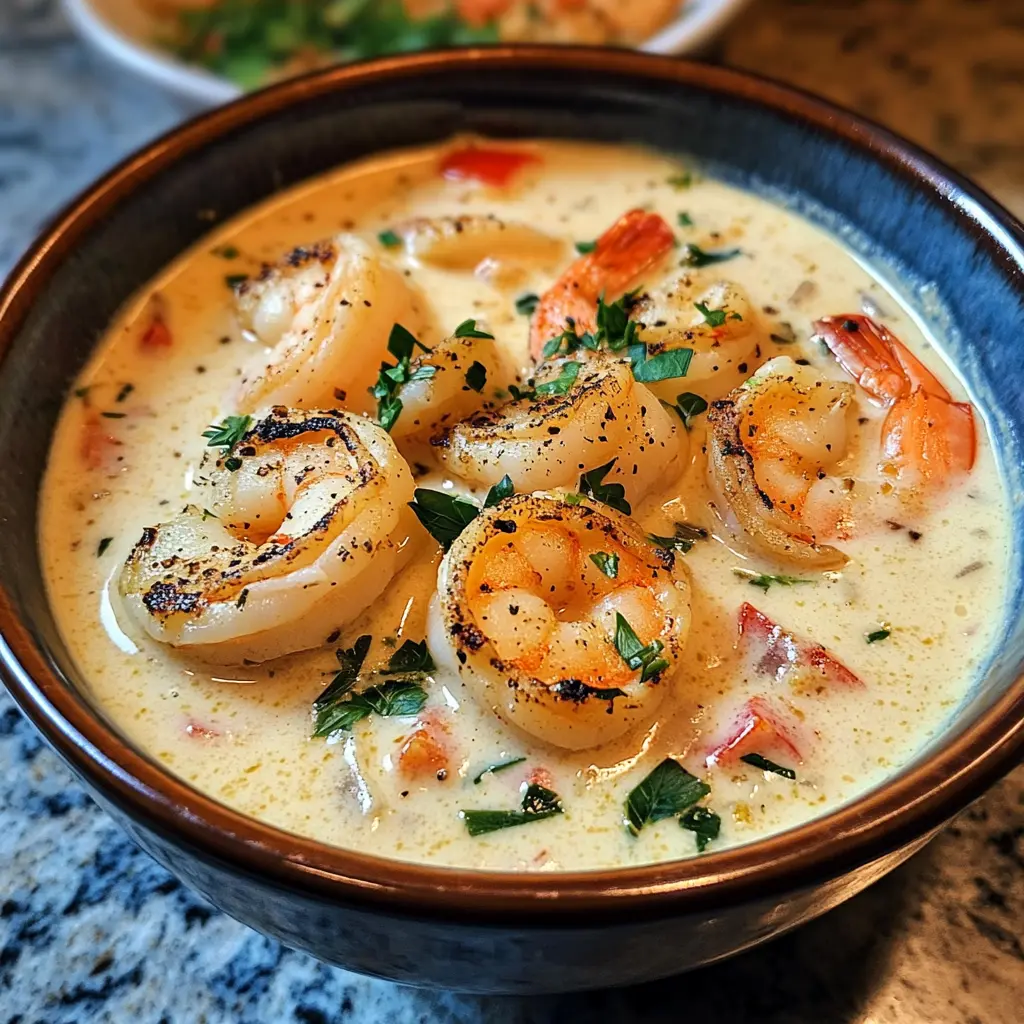
Creamy Garlic Shrimp Chowder: A Rich and Comforting Bowl of Deliciousness
Introduction
There’s something magical about a steaming bowl of Creamy Garlic Shrimp Chowder on a chilly evening. This comforting seafood soup combines plump, succulent shrimp with tender vegetables in a velvety garlic-infused base that warms you from the inside out. Moreover, this dish brings together the best elements of traditional chowder while elevating the flavor profile with aromatic garlic and sweet shrimp. Whether you’re looking for a satisfying weeknight dinner or an impressive dish for guests, this recipe delivers restaurant-quality results in your own kitchen.
Additionally, the beauty of this chowder lies in its simplicity and versatility. You can have this delicious meal ready in under an hour, making it perfect for busy schedules. Furthermore, it’s packed with nutritious ingredients that provide both comfort and nourishment.
What Makes Creamy Garlic Shrimp Chowder Special
Creamy Garlic Shrimp Chowder stands out from other seafood soups thanks to its unique combination of flavors and textures. The star ingredient—fresh shrimp—provides a sweet, delicate flavor that pairs beautifully with the bold, aromatic presence of garlic. Meanwhile, the creamy base creates a luxurious mouthfeel that makes every spoonful satisfying.
Unlike traditional clam chowder, this variation features shrimp as the primary protein, offering a more accessible option for those who prefer milder seafood flavors. The garlic element transforms this classic comfort food into something extraordinary, adding depth and complexity to every bite. Consequently, you get a soup that’s both familiar and exciting at the same time.
The chowder’s rich history dates back to the late 17th century when seafarers first created this hearty soup using simple ingredients. Over time, chowder evolved along the coastal regions of New England, becoming a symbol of hearth, home, and community. Today, variations like this garlic shrimp version continue that tradition while incorporating modern flavor preferences.
Health Benefits of Key Ingredients
Shrimp: A Nutritional Powerhouse
Shrimp brings impressive nutritional benefits to this chowder. First and foremost, shrimp is incredibly high in protein while remaining low in calories—just 3 ounces provide 12 grams of protein and only 60 calories. Additionally, shrimp contains omega-3 fatty acids, which promote heart and brain health while reducing inflammation.
Furthermore, shrimp offers an abundance of essential vitamins and minerals. In just 4 ounces, you’ll get 100% of your daily selenium needs and 50% of your phosphorus requirements. Plus, shrimp provides significant amounts of vitamin B12, choline, copper, and iodine. These nutrients support various bodily functions, from immune system health to thyroid regulation.
The antioxidant astaxanthin found in shrimp also contributes to overall wellness. Despite concerns about cholesterol, research shows that shrimp doesn’t negatively impact heart health.
Garlic: Nature’s Flavor Enhancer and Health Booster
Garlic has been treasured for thousands of years for both its culinary and medicinal properties. Rich in sulfur compounds, garlic exhibits powerful antioxidant properties that fight oxidative stress and help prevent chronic diseases. Moreover, studies support garlic’s role in cardiovascular health, showing it can help lower cholesterol levels and blood pressure.
The immune-boosting properties of garlic make it especially valuable during cold and flu season. Its antimicrobial potential helps fight infections and strengthens the body’s natural defenses. Additionally, garlic’s anti-inflammatory properties may benefit conditions such as arthritis.
Vegetables: Adding Nutrition and Texture
The vegetables in this chowder—carrots, celery, onions, and potatoes—contribute various vitamins, minerals, and fiber. Carrots provide vitamin A, celery offers antioxidants, and potatoes supply fiber and potassium. Together, these ingredients create a well-rounded, nutritious meal that satisfies both your taste buds and your body’s needs.
Essential Ingredients for the Perfect Chowder
Creating the perfect Creamy Garlic Shrimp Chowder requires quality ingredients and the right proportions. Here’s what you’ll need:
Primary Ingredients
-
Fresh shrimp (1 pound): Peeled, deveined, and cut into bite-sized pieces if large
-
Garlic (4-6 cloves): Minced for maximum flavor distribution
-
Butter (2-3 tablespoons): Creates a rich base and helps sauté the vegetables
-
Cream cheese (8 ounces): Adds thickness and tangy richness
-
Heavy cream (1-1½ cups): Provides the signature creamy texture
-
Milk (1 cup): Balances the richness and creates the right consistency
Vegetables and Aromatics
-
Potatoes (2 medium): Diced into bite-sized cubes for heartiness
-
Celery (½ cup): Sliced for texture and subtle flavor
-
Onion (⅓-1 cup): Finely diced to build the flavor foundation
-
Carrots (1 medium): Diced for sweetness and color
Broth and Seasonings
-
Chicken or vegetable broth (3-3½ cups): Forms the soup’s base
-
Bay leaves (2): Add aromatic depth
-
Dried thyme (¾ teaspoon): Provides earthy notes
-
Old Bay seasoning (optional): Enhances seafood flavor
-
Salt and pepper: To taste
-
Fresh parsley (¼ cup): Chopped for garnish and freshness
-
Lemon juice (1-2 tablespoons): Brightens the overall flavor
Optional Ingredients
-
Corn (1 cup): Adds sweetness and texture
-
Red bell peppers: For color and mild sweetness
-
Bacon (½ cup): Crumbled for a smoky element
-
All-purpose flour (2 tablespoons): For additional thickening
Step-by-Step Cooking Instructions
Follow these detailed instructions to create your perfect Creamy Garlic Shrimp Chowder from start to finish.
Preparation Phase
Start by gathering and preparing all your ingredients. Peel and devein the shrimp, then pat them dry with paper towels. If the shrimp are large, cut them into bite-sized pieces for easier eating. Next, dice your potatoes, carrots, celery, and onion into uniform pieces so they cook evenly. Mince your garlic cloves finely to distribute the flavor throughout the chowder.
Building the Base
Heat a large, heavy-bottomed pot or Dutch oven over medium heat. Add the butter and let it melt completely. Once the butter is melted, add the diced onion and sliced celery. Sauté these vegetables for 3-4 minutes until the onion becomes tender and translucent. This step builds the aromatic foundation for your chowder.
Next, add the minced garlic to the pot and cook for about one minute until fragrant. Be careful not to burn the garlic, as this can create a bitter taste. If you’re using flour to thicken the chowder, add it now and cook for 2-3 minutes, stirring constantly. The flour will help create a thicker, more substantial consistency.
Adding Vegetables and Broth
Now it’s time to add the heartier vegetables. Add the diced carrots and potatoes to the pot, stirring to combine with the aromatic base. Pour in the chicken or vegetable broth, ensuring all the vegetables are covered. Add your bay leaves, dried thyme, and a pinch of salt and pepper.
Bring the mixture to a boil over medium-high heat. Once boiling, reduce the heat to medium-low and let the chowder simmer for 10-15 minutes. The potatoes should be tender but not falling apart when pierced with a fork. This simmering stage allows the vegetables to cook through while the flavors meld together beautifully.
Incorporating the Cream
Once your vegetables are tender, it’s time to add the creamy elements. If using cream cheese, add the diced pieces now and stir until they melt completely into the soup. Then, pour in the heavy cream and milk, stirring gently to incorporate. Bring the chowder back to a gentle simmer, but avoid boiling, as high heat can cause the cream to separate.
Let the cream mixture cook for about 5 minutes to thicken slightly and allow the flavors to blend. At this stage, your chowder should have a rich, velvety appearance and a beautiful creamy color.
Adding the Shrimp
This is the crucial final cooking step. Add your prepared shrimp to the pot, gently stirring them into the hot chowder. Cook the shrimp for 4-6 minutes, stirring occasionally, until they turn pink and opaque throughout. Be careful not to overcook the shrimp, as they can become tough and rubbery.
The shrimp cook quickly, so watch them carefully during this stage. They’re done when they’ve changed color completely and have a firm but tender texture.
Final Touches
Remove the bay leaves from the chowder and discard them. Stir in the fresh chopped parsley and lemon juice for brightness. Taste the chowder and adjust the seasoning with additional salt and pepper if needed. The lemon juice adds a subtle tang that balances the richness of the cream and highlights the sweetness of the shrimp.
Ladle the hot chowder into bowls immediately, ensuring each serving gets a generous portion of shrimp and vegetables. Garnish with extra fresh parsley if desired for a restaurant-quality presentation.
Tips for Making the Best Garlic Shrimp Chowder
Selecting the Right Shrimp
Choose fresh or high-quality frozen shrimp for the best results. Wild-caught shrimp typically offer better flavor than farm-raised varieties. If using frozen shrimp, thaw them completely in the refrigerator overnight before cooking. Always pat shrimp dry before adding them to the chowder to prevent excess moisture from diluting the soup.
Achieving the Perfect Consistency
The consistency of your chowder should be thick but still soup-like, not stew-like. If your chowder is too thin, you can thicken it in several ways. First, try simmering it uncovered for a few extra minutes to reduce the liquid. Alternatively, mix flour with a small amount of milk until smooth, then slowly stir this mixture into the simmering chowder.
Conversely, if your chowder becomes too thick, simply thin it with additional broth or milk until you reach your desired consistency. Add these liquids gradually, stirring well after each addition.
Flavor Enhancement Techniques
For deeper flavor, sauté your vegetables until they develop a light golden color before adding the liquids. This caramelization process adds complexity to the overall taste. Additionally, using seafood stock instead of chicken or vegetable broth can intensify the oceanic flavor profile.
Don’t skimp on the garlic—it’s a star ingredient in this recipe. However, balance is key; too much can overpower the delicate shrimp flavor. Start with 4 cloves and adjust according to your taste preferences.
Preventing Common Pitfalls
Never boil the chowder once you’ve added the cream, as high heat can cause the dairy to curdle and separate. Keep the heat at a gentle simmer throughout. Furthermore, add the shrimp at the very end and cook them just until done to maintain their tender texture.
Cut all vegetables to roughly the same size so they cook evenly. This attention to detail ensures every spoonful has perfectly cooked ingredients.
Variations and Customization Ideas
Seafood Combinations
Transform your Creamy Garlic Shrimp Chowder into a seafood medley by adding other types of seafood. Consider incorporating scallops, which add a sweet, buttery flavor and interesting texture. Chunks of white fish like haddock or cod also work wonderfully. If you’re feeling adventurous, add clams or mussels for a more traditional chowder experience.
When using multiple seafood types, add them according to their cooking times. Firmer fish can go in with the shrimp, while more delicate seafood should be added last.
Vegetable Additions
Boost the nutritional content and visual appeal by adding corn, which provides natural sweetness and pleasant texture. Red bell peppers offer vibrant color and mild, slightly sweet notes. For a heartier chowder, consider adding diced tomatoes or tomato concentrate for depth.
Roasted corn takes the flavor to another level by adding a smoky sweetness that complements the garlic beautifully. Simply roast corn kernels in a hot pan until lightly charred before stirring them into the finished chowder.
Lighter Versions
Create a lighter version by substituting half-and-half for heavy cream or using a combination of milk and Greek yogurt. These swaps reduce the calorie content while maintaining creaminess. You can also reduce the amount of butter or use olive oil instead for a heart-healthy alternative.
For an even lighter option, increase the proportion of vegetables and reduce the cream. The potatoes naturally thicken the soup when partially mashed, which means you need less dairy.
Bold Flavor Twists
Spice things up by adding a pinch of red pepper flakes or a dash of hot sauce for heat. Smoked paprika provides a subtle smoky dimension that pairs exceptionally well with seafood. For an Italian-inspired version, add Italian seasoning and finish with grated Parmesan cheese.
A splash of coconut milk instead of regular cream creates an exotic, slightly sweet variation that’s particularly good with added curry powder or ginger.
Serving Suggestions and Pairings
Bread and Crackers
Serve your Creamy Garlic Shrimp Chowder with crusty bread for dipping into the rich broth. Freshly baked sourdough, French baguette, or garlic bread all make excellent accompaniments. Oyster crackers provide a traditional New England touch and add a satisfying crunch.
For a more substantial meal, consider serving the chowder in bread bowls. Hollow out round sourdough loaves and ladle the hot chowder directly inside for an impressive presentation that’s also delicious.
Salad Pairings
Balance the richness of the chowder with a light, crisp salad. A simple mixed green salad with a tangy vinaigrette cuts through the creaminess beautifully. Alternatively, a Caesar salad with its garlicky dressing complements the garlic flavors in the chowder.
Coleslaw offers a refreshing contrast with its crunchy texture and acidic dressing. The cool, crisp cabbage provides textural variety that makes the meal more interesting.
Complete Meal Ideas
Turn your chowder into a complete dinner by serving it alongside grilled vegetables or a roasted vegetable platter. The charred, caramelized flavors of roasted asparagus, Brussels sprouts, or green beans provide a nice counterpoint to the creamy soup.
For special occasions, serve smaller portions of the chowder as an elegant starter course before a lighter main dish. The rich flavors make it an ideal first course that sets the tone for a memorable meal.
Garnishing for Presentation
Elevate your presentation with thoughtful garnishes. A sprinkle of fresh parsley adds color and freshness. A drizzle of high-quality olive oil on top creates an attractive sheen and adds subtle flavor. Fresh chives, thinly sliced, provide a mild onion flavor and vibrant green color.
For extra texture, top each bowl with crispy bacon bits or crumbled crackers just before serving. A light dusting of smoked paprika or Old Bay seasoning adds both visual appeal and a flavor boost.
Storage and Reheating Instructions
Proper Storage Methods
Allow your Creamy Garlic Shrimp Chowder to cool to room temperature before storing, but don’t leave it out for more than two hours for food safety. Transfer the cooled chowder to airtight containers and refrigerate promptly. Properly stored, the chowder will keep in the refrigerator for 3-4 days.
For best results, store the chowder in shallow containers so it cools quickly and evenly. This practice reduces the risk of bacterial growth and maintains better texture.
Freezing Guidelines
While cream-based soups can be frozen, the texture may change upon thawing as dairy products sometimes separate. If you plan to freeze the chowder, consider making it without the cream and adding it fresh when reheating. Freeze the base in freezer-safe containers or heavy-duty freezer bags for up to 2 months.
Label containers with the date and contents so you can keep track of how long items have been frozen. When ready to use, thaw the chowder overnight in the refrigerator rather than at room temperature.
Reheating Techniques
Reheat the chowder gently over medium-low heat on the stovetop, stirring occasionally. Add a splash of broth or milk if the chowder has thickened too much during storage. Never bring the chowder to a rolling boil, as this can cause the cream to separate and the shrimp to become tough.
Microwave reheating works in a pinch, but use 50% power and stir every minute to ensure even heating. This gentler approach helps maintain the creamy texture. Heat only the portion you plan to eat rather than reheating the entire batch multiple times, which can compromise quality and safety.
Quality Considerations
The texture of shrimp may change slightly after refrigeration and reheating, becoming a bit firmer. For this reason, some cooks prefer to make the chowder base ahead and add fresh shrimp just before serving. This technique ensures the shrimp are always perfectly cooked.
If you notice any off odors, discoloration, or changes in texture when retrieving leftovers, discard the chowder. Fresh seafood soups have a shorter shelf life than many other leftovers, so prioritize food safety.
Common Mistakes to Avoid
Overcooking the Shrimp
The most common mistake when making Creamy Garlic Shrimp Chowder is overcooking the shrimp. Shrimp cook very quickly—usually in just 4-6 minutes—and overcooked shrimp become rubbery and unpleasant. Always add shrimp during the last few minutes of cooking and remove the pot from heat as soon as they turn pink and opaque throughout.
Watch the shrimp carefully and test one piece before declaring them done. A perfectly cooked shrimp should be firm but tender, with a slight bounce when you bite into it.
Using High Heat with Cream
Boiling cream-based soups can cause the dairy to curdle, creating an unappetizing appearance and grainy texture. Once you’ve added the cream and milk, keep the heat at a gentle simmer—you should see small bubbles around the edges but not a vigorous boil.
If you accidentally let the chowder get too hot and notice separation, remove it from heat immediately. Sometimes whisking vigorously can bring the soup back together, though prevention is always better than trying to fix the problem.
Inconsistent Vegetable Sizes
Cutting vegetables to different sizes results in uneven cooking, with some pieces becoming mushy while others remain crunchy. Take the time to dice your potatoes, carrots, celery, and onions into uniform pieces. This attention to detail ensures everything cooks at the same rate and creates a more professional final product.
Use a sharp knife and a cutting board with good stability. Aim for pieces about ½-inch in size for most vegetables, though you can adjust based on personal preference.
Insufficient Seasoning
Many home cooks under-season their chowder, resulting in a bland soup that doesn’t showcase the quality ingredients. Remember to season in layers throughout the cooking process—season when sautéing the vegetables, when adding the broth, and again at the end. Always taste before serving and adjust seasoning as needed.
Salt enhances the natural flavors of all the ingredients, while pepper adds subtle heat. The lemon juice at the end brightens everything and balances the richness of the cream.
Skipping the Garlic Sauté
Adding raw garlic directly to the soup means missing out on the deep, mellow flavor that develops when garlic is properly sautéed. Take the time to cook the minced garlic in butter for about a minute before adding other ingredients. This step transforms harsh, pungent raw garlic into something aromatic and sweet that permeates the entire chowder.
However, be careful not to burn the garlic, as burned garlic tastes bitter. Stir constantly during this brief cooking period and add the next ingredients promptly.
Frequently Asked Questions
What is Creamy Garlic Shrimp Chowder made of?
Creamy Garlic Shrimp Chowder is made of tender shrimp, aromatic garlic, diced potatoes, carrots, celery, onions, and a rich base of cream, milk, and broth. The soup is seasoned with herbs like thyme and bay leaves, then finished with fresh parsley and lemon juice for brightness. Some variations include cream cheese for extra thickness and tang.
Can I use frozen shrimp for this recipe?
Yes, frozen shrimp work perfectly well for this chowder. Thaw the shrimp completely in the refrigerator overnight before using them. Pat them dry with paper towels to remove excess moisture before adding them to the soup. Frozen shrimp are often flash-frozen shortly after being caught, which can make them fresher than some “fresh” options at the store.
How do I prevent the cream from curdling?
Prevent curdling by keeping the heat at a gentle simmer after adding dairy products—never bring the chowder to a full boil. Additionally, let the cream come to room temperature before adding it to the hot soup, which reduces temperature shock. If you’re concerned about curdling, you can temper the cream by slowly whisking in some of the hot soup before adding it to the pot.
Can I make this chowder ahead of time?
You can make Creamy Garlic Shrimp Chowder ahead, but for best results, prepare the base without adding the shrimp. Store the base in the refrigerator and add fresh shrimp when reheating and serving. This technique ensures the shrimp don’t overcook and maintains their tender texture. The base can be made 1-2 days in advance.
What can I substitute for heavy cream?
You can substitute half-and-half, whole milk thickened with a flour slurry, or coconut cream for heavy cream. Each substitution will slightly change the richness and flavor profile, but all create delicious results. For a lighter version, use Greek yogurt stirred in at the end, though this requires careful temperature management to prevent separation.
How long does leftover chowder last?
Properly stored in airtight containers in the refrigerator, Creamy Garlic Shrimp Chowder lasts 3-4 days. Always cool the chowder to room temperature within two hours of cooking before refrigerating. Reheat gently over low heat, adding a bit of broth or milk if needed to restore the proper consistency. Seafood soups have a shorter shelf life than many other leftovers, so consume them promptly.
Can I add other types of seafood?
Absolutely! This chowder welcomes various seafood additions like scallops, white fish (cod or haddock), clams, or mussels. Add firmer seafood at the same time as the shrimp, while more delicate items should go in during the last few minutes of cooking. Mixing seafood types creates a more complex flavor profile and interesting texture variations.
Is shrimp chowder healthy?
Shrimp chowder offers several nutritional benefits despite being cream-based. Shrimp provides high-quality protein, omega-3 fatty acids, and essential vitamins and minerals. The vegetables contribute fiber, vitamins, and antioxidants. While the cream adds richness and calories, you can make lighter versions using less cream or substituting with lower-fat dairy products.
What should I serve with shrimp chowder?
Serve shrimp chowder with crusty bread, oyster crackers, a light salad, or roasted vegetables. Garlic bread, sourdough, or French baguette all pair beautifully with the creamy soup. For a complete meal, add a crisp green salad with vinaigrette dressing to balance the richness. Bread bowls make for an impressive presentation that guests always enjoy.
Can I make this chowder dairy-free?
Yes, you can create a dairy-free version using coconut cream or cashew cream instead of heavy cream, and coconut oil or olive oil instead of butter. Use vegetable broth for the base. While the flavor will differ from the traditional version, these substitutions create a delicious soup that accommodates dietary restrictions. Nutritional yeast can add a subtle cheesy flavor if desired.
Conclusion
Creamy Garlic Shrimp Chowder represents the perfect marriage of comfort and sophistication. This hearty soup delivers restaurant-quality flavor while remaining accessible enough for everyday cooking. The combination of tender shrimp, aromatic garlic, and a velvety cream base creates a bowl of pure comfort that satisfies on every level.
Whether you’re preparing this dish for a cozy family dinner or serving it to guests, the recipe’s flexibility allows for endless customization. From adding extra vegetables to experimenting with different seafood combinations, you can make this chowder uniquely yours while maintaining its essential character.
The nutritional benefits of the key ingredients—protein-rich shrimp, health-boosting garlic, and vitamin-packed vegetables—mean you’re nourishing your body while treating your taste buds. Furthermore, the relatively quick preparation time makes this impressive dish achievable even on busy weeknights.
Print
Creamy Garlic Shrimp Chowder
Description
Creamy Garlic Shrimp Chowder
Servings: 6 people
Calories: ~480 per serving
Prep Time: 10 minutes
Cook Time: 30 minutes
Total Time: 40 minutes
Ingredients:
-
1 lb (450g) large shrimp, peeled and deveined
-
2 tablespoons butter
-
1 tablespoon olive oil
-
1 small onion, finely chopped
-
3 cloves garlic, minced
-
2 medium potatoes, peeled and diced
-
2 cups corn kernels (fresh, canned, or frozen)
-
3 cups seafood or chicken broth
-
1 cup heavy cream
-
1 cup whole milk
-
2 tablespoons all-purpose flour
-
½ teaspoon paprika
-
½ teaspoon dried thyme
-
Salt and black pepper, to taste
-
2 tablespoons fresh parsley, chopped
-
Crumbled bacon (optional, for garnish)
Instructions:
-
Cook the Shrimp:
In a large pot, heat olive oil and 1 tablespoon butter over medium heat. Add shrimp and cook for 2–3 minutes per side, until pink and cooked through. Remove shrimp and set aside. -
Sauté the Aromatics:
In the same pot, add remaining butter and onion. Sauté until soft, about 3 minutes. Add garlic and cook for another 30 seconds until fragrant. -
Build the Base:
Stir in flour and cook for 1 minute to form a roux. Slowly whisk in broth, ensuring there are no lumps. -
Add Vegetables and Seasoning:
Add potatoes, corn, paprika, thyme, salt, and pepper. Bring to a boil, then reduce heat and simmer for 10–12 minutes, until potatoes are tender. -
Finish the Chowder:
Stir in milk and cream, then return shrimp to the pot. Simmer for another 3–4 minutes until everything is heated through and thickened. -
Garnish and Serve:
Ladle chowder into bowls, garnish with chopped parsley and crumbled bacon if desired, and serve warm.