
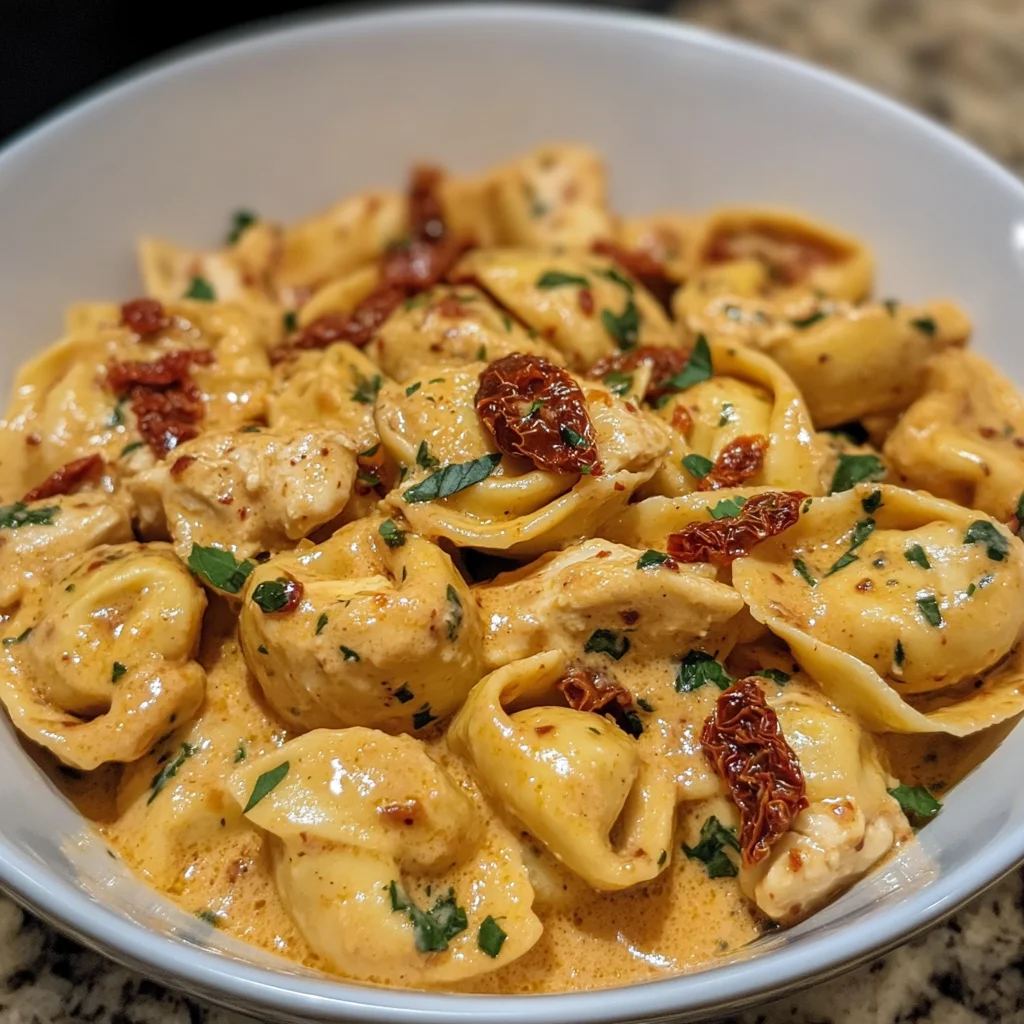
Creamy Sun-Dried Tomato and Chicken Tortellini
Introduction
Imagine a dish that combines tender chicken, pillowy cheese-filled tortellini, and a luxuriously creamy sauce infused with tangy sun-dried tomatoes—all prepared in one pan. Creamy Sun-Dried Tomato and Chicken Tortellini delivers exactly that kind of comfort, making it perfect for busy weeknights when you crave something satisfying yet simple. This Italian-inspired recipe has become a favorite in kitchens everywhere because it balances rich flavors with straightforward preparation, requiring minimal cleanup while maximizing taste. Whether you’re cooking for family or entertaining guests, this dish promises to impress with its restaurant-quality results achieved right at home.
The beauty of Creamy Sun-Dried Tomato and Chicken Tortellini lies in its versatility and foolproof nature. You’ll discover how the concentrated sweetness of sun-dried tomatoes pairs perfectly with savory chicken and creamy cheese tortellini, creating layers of flavor that develop quickly in your skillet. The best part is that this recipe comes together in under 30 minutes, making it an ideal choice for those evenings when time is precious but you refuse to compromise on taste.
What Makes This Dish Special
One-Pan Convenience
This recipe celebrates the magic of one-pan cooking, where everything cooks together harmoniously. The tortellini simmers directly in the sauce, absorbing every bit of the creamy, tomato-infused flavor while simultaneously releasing starch that naturally thickens the sauce. This technique eliminates the need for separate pots and additional thickeners, streamlining both cooking and cleanup. Additionally, cooking everything in one vessel allows the ingredients to meld beautifully, creating depth that separate cooking methods simply cannot achieve.
Balanced Flavor Profile
The dish achieves a perfect balance between richness and brightness. The creamy base provides indulgent comfort, while the sun-dried tomatoes cut through that richness with their concentrated tanginess and subtle sweetness. Fresh spinach often joins the mix, adding color, nutrients, and a gentle earthiness that complements the other components. This interplay of flavors ensures that each bite feels satisfying without becoming overwhelming, making it a crowd-pleaser for varied palates.
Quick Preparation Time
Most versions of Creamy Sun-Dried Tomato and Chicken Tortellini can be ready in 15 to 30 minutes from start to finish. The recipe requires minimal prep work—just cubing chicken, measuring ingredients, and perhaps mincing some garlic. Because refrigerated tortellini cooks quickly and the chicken pieces are small, everything comes together rapidly. This efficiency makes the dish ideal for weeknight dinners when hunger strikes but time is limited.
Understanding the Key Ingredients
Sun-Dried Tomatoes
Sun-dried tomatoes are the star ingredient that gives this dish its distinctive character. These ruby-red gems are ripe tomatoes that have been dehydrated to remove most of their water content, resulting in an intensely concentrated flavor that’s both sweet and tangy. The drying process amplifies their natural umami qualities while creating a pleasantly chewy texture that adds interest to the creamy sauce. Most recipes call for sun-dried tomatoes packed in oil with herbs, which not only preserves them but also provides flavored oil that can be used for sautéing. When selecting sun-dried tomatoes, look for plump pieces with deep color and avoid overly dry or brittle ones.
Cheese Tortellini
Tortellini are small, ring-shaped pasta parcels traditionally stuffed with cheese, though variations exist with meat or vegetable fillings. For this recipe, cheese tortellini works best because the creamy ricotta or cheese blend inside complements the sauce perfectly. Refrigerated tortellini is preferred over dried because it cooks much faster—typically in just 4 to 5 minutes—and has a more tender, delicate texture. The pasta’s ability to absorb sauce while releasing starch makes it ideal for one-pan preparations where you want a naturally thickened, cohesive dish.
Chicken Breast
Boneless, skinless chicken breast provides lean protein that makes this pasta dish more substantial and satisfying. Cutting the chicken into small, bite-sized cubes ensures quick, even cooking and makes the finished dish easier to eat. Many recipes recommend lightly coating the chicken pieces in seasoned flour before browning, which helps create a golden exterior and adds subtle thickness to the final sauce. The chicken should be browned but doesn’t need to be fully cooked through during the initial sear, as it will finish cooking when simmered in the sauce.
Heavy Cream and Cheese
The sauce’s luxurious texture comes from heavy cream, which provides richness and a silky mouthfeel. Parmesan cheese is almost always included, adding nutty, salty depth while helping to thicken and bind the sauce as it melts. Some variations incorporate soft spreadable cheeses like Boursin or Alouette at the beginning of sauce preparation, which melt quickly and contribute additional creaminess and herb flavors. Greek yogurt occasionally appears as a lighter alternative or supplement to cream, offering tanginess and protein while reducing overall fat content.
Aromatics and Seasonings
Garlic is essential for building the sauce’s aromatic foundation, typically sautéed with shallots or onions until fragrant. Italian seasoning—a blend of basil, oregano, thyme, and other Mediterranean herbs—ties the dish together with classic flavors that complement both the tomatoes and chicken. Red pepper flakes add a gentle kick of heat that balances the cream’s richness, though this ingredient is optional and adjustable to taste. Fresh basil often appears as a finishing touch, providing bright, herbaceous notes that lift the entire dish.
Nutritional Benefits
Lycopene from Sun-Dried Tomatoes
Sun-dried tomatoes are an exceptional source of lycopene, a powerful antioxidant that gives tomatoes their red color. Research suggests that lycopene may help reduce the risk of certain health conditions, including some cancers and age-related macular degeneration. The drying process actually concentrates lycopene levels, making sun-dried tomatoes even more potent than their fresh counterparts. Additionally, lycopene absorption is enhanced when consumed with fats, making the cream and oil in this dish ideal companions for maximizing this nutrient’s benefits.
Vitamin and Mineral Content
Sun-dried tomatoes pack impressive amounts of vitamins C and K, along with various B vitamins that support energy metabolism and nervous system health. They also contain essential minerals including potassium, which supports heart function and blood pressure regulation, magnesium for bone health, and iron for oxygen transport. One cup of sun-dried tomatoes provides approximately 8 grams of protein and 7 grams of fiber, though it’s important to note that they’re calorie-dense at 139 calories per cup due to the concentration effect of drying.
Protein and Energy
The chicken in this dish delivers high-quality lean protein essential for muscle maintenance, immune function, and satiety. Each serving typically provides substantial protein, especially when generous amounts of chicken are used. The cheese tortellini contributes additional protein from its ricotta or cheese filling, along with carbohydrates that provide energy. This combination of protein and complex carbs makes the dish satisfying and helps maintain stable blood sugar levels throughout the day.
Considerations for Balanced Eating
While Creamy Sun-Dried Tomato and Chicken Tortellini offers numerous nutritional benefits, it’s also rich in calories, saturated fat from cream and cheese, and sodium. Sun-dried tomatoes often contain added salt as a preservative, and cheeses naturally contribute sodium as well. To make the dish more balanced, consider adding generous amounts of spinach or other greens, which provide vitamins A, C, and K plus iron and calcium. Limiting portion sizes to reasonable amounts and pairing the dish with a light side salad can help balance the meal’s richness.
Essential Equipment
Large Skillet or Sauté Pan
A large, deep skillet with at least 12-inch diameter and high sides works best for this recipe. The pan needs sufficient surface area to brown chicken pieces without overcrowding, which ensures proper caramelization rather than steaming. High sides are important because they contain the sauce and tortellini while preventing splatters during simmering. Cast iron, stainless steel, or carbon steel skillets all work well, though nonstick pans make cleanup easier. Make sure your chosen pan has a lid, as covering the tortellini while it cooks helps trap steam and ensures even cooking.
Quality Cutting Board and Knife
A sturdy cutting board provides a stable surface for cubing chicken breast into uniform pieces, which promotes even cooking. A sharp chef’s knife makes quick work of cutting chicken, mincing garlic, and chopping sun-dried tomatoes if they need slicing. Keeping your knife sharp is actually safer than using a dull blade, which requires more pressure and can slip more easily.
Measuring Tools
Accurate measurements ensure consistent results, especially when balancing liquids like cream and broth. Standard measuring cups and spoons help you proportion seasonings properly so the dish has balanced flavors. A liquid measuring cup with a spout makes pouring cream and broth cleaner and more precise.
Wooden Spoon or Heat-Resistant Spatula
A wooden spoon or heat-resistant silicone spatula is essential for stirring the sauce and scraping up flavorful browned bits from the pan bottom after cooking chicken. These tools won’t scratch your cookware and can withstand the heat of continuous stovetop cooking. The spoon also helps you test tortellini doneness by fishing out a piece to taste.
Step-by-Step Recipe
Ingredients
For the Chicken:
-
1 pound boneless, skinless chicken breasts, cut into ½-inch cubes
-
½ teaspoon salt
-
½ teaspoon black pepper
-
1 teaspoon Italian seasoning
-
½ teaspoon smoked paprika
-
2 tablespoons all-purpose flour
-
1 tablespoon butter
-
2 tablespoons olive oil, divided
For the Sauce:
-
3 cloves garlic, minced
-
1 shallot, finely chopped
-
1 cup sun-dried tomatoes in oil (drained, oil reserved), julienned
-
2 tablespoons tomato paste
-
¼ teaspoon red pepper flakes (optional)
-
1½ cups chicken broth
-
1 cup heavy cream
-
½ cup grated Parmesan cheese
For the Pasta:
-
20 ounces refrigerated cheese tortellini
-
2 cups fresh spinach, roughly chopped
-
Fresh basil for garnish
-
Additional Parmesan for serving
-
Lemon zest (optional)
Preparation Instructions
Step 1: Season and Prepare Chicken
Place the cubed chicken in a medium bowl and season with salt, pepper, Italian seasoning, and smoked paprika. Toss the pieces thoroughly to coat them evenly with seasonings. Sprinkle the flour over the chicken and gently toss again until each piece has a light coating. This flour coating will help create a golden crust and contribute to sauce thickness later.
Step 2: Brown the Chicken
Heat a large skillet over medium-high heat and add butter along with one tablespoon of olive oil. When the butter melts and the oil shimmers, indicating the pan is properly hot, add the seasoned chicken in a single even layer. Let the chicken cook undisturbed for about 30 seconds to develop a good sear. Continue cooking, tossing the pieces every 30 seconds or so, for 3 to 4 minutes total until the chicken is lightly browned. The chicken doesn’t need to be fully cooked through at this stage. Transfer the browned chicken to a plate and set aside.
Step 3: Sauté Aromatics
Add the remaining tablespoon of olive oil to the same skillet. Add the minced garlic, chopped shallot, and julienned sun-dried tomatoes to the hot oil. Sauté these aromatics for about 3 minutes, stirring frequently, until they become softened and wonderfully fragrant. Season with red pepper flakes if using, plus another pinch of salt and pepper. Stir in the tomato paste and cook for another minute, allowing it to caramelize slightly and deepen in flavor.
Step 4: Deglaze and Build Sauce
Pour in about half a cup of the chicken broth and use your wooden spoon or spatula to scrape up all the flavorful browned bits stuck to the pan bottom. This process, called deglazing, incorporates those caramelized flavors into your sauce. Add the remaining chicken broth and stir everything together until well combined.
Step 5: Cook the Tortellini
Add the uncooked tortellini directly to the sauce in the skillet. Push the tortellini down gently with your spoon so they’re mostly submerged, though it’s fine if some pieces peek above the liquid. Bring the mixture to a simmer, then reduce the heat to maintain a gentle, steady simmer. Cover the skillet with a lid and let the tortellini cook for 3 to 5 minutes. Stir halfway through at the 2-minute mark to ensure even cooking and prevent sticking. The tortellini is done when it’s tender but still has a slight bite (al dente).
Step 6: Finish the Dish
Remove the lid and return the browned chicken to the skillet along with any accumulated juices. Stir in the heavy cream, grated Parmesan cheese, and chopped spinach. Mix everything together until the spinach wilts, the cheese melts into the sauce, and all components are well combined. The sauce may appear somewhat thin at first, but it will thicken as it sits and as the tortellini continues absorbing liquid. Let the mixture sit for a minute or two, allowing flavors to meld.
Step 7: Garnish and Serve
Turn off the heat and taste the dish, adjusting seasoning with additional salt and pepper if needed. Garnish with torn fresh basil leaves, extra grated Parmesan, freshly cracked black pepper, and lemon zest if desired. Serve immediately while hot, with crusty bread on the side for soaking up the delicious sauce.
Cooking Techniques and Tips
Proper Chicken Searing
Achieving a good sear on your chicken creates both flavor and visual appeal. Make sure your pan is properly heated before adding the chicken—the oil should shimmer and butter should foam. Don’t overcrowd the pan; cook in batches if necessary to maintain proper spacing between pieces. Let the chicken sit undisturbed for the first 30 seconds or so to develop a golden crust before stirring. This caramelization (called the Maillard reaction) creates complex, savory flavors that enhance the entire dish.
Cooking Tortellini in Sauce
Cooking tortellini directly in the sauce rather than boiling it separately is the secret to this dish’s incredible cohesiveness. As the tortellini cooks, it absorbs the sauce’s flavors while simultaneously releasing starch into the liquid, which naturally thickens the cream base without requiring flour or cornstarch. This technique is more efficient and results in better-integrated flavors than combining separately cooked components. Make sure to stir the tortellini halfway through cooking to prevent sticking and ensure even doneness.
Achieving Perfect Sauce Consistency
The sauce’s consistency depends on the balance of liquids and the starch released by the pasta. If your sauce seems too thick, add chicken broth or cream a quarter cup at a time until it reaches your desired consistency. Conversely, if the sauce is too thin, let it simmer uncovered for a few extra minutes to reduce and concentrate. Remember that the sauce will continue thickening as it cools and as the pasta absorbs more liquid, so it’s better to err slightly on the thinner side when first combining ingredients.
Temperature Management
Managing heat throughout cooking is crucial for success. Start with medium-high heat for browning chicken, which requires higher temperature for proper caramelization. Reduce to medium when sautéing aromatics to prevent burning garlic, which turns bitter. Maintain a gentle simmer—not a rolling boil—when cooking tortellini to prevent the cream from breaking or the pasta from becoming mushy. Finishing the dish off the heat allows residual warmth to melt cheese and wilt spinach gently without overcooking.
Layering Flavors
Building flavor in layers rather than adding everything at once creates depth and complexity. Start with browning chicken for caramelized notes, then sauté aromatics to release their essential oils, followed by deglazing to incorporate pan fond. Adding Parmesan and spinach at the end preserves their fresh qualities rather than cooking them into oblivion. Each step contributes distinct flavors that work together harmoniously in the finished dish.
Variations and Substitutions
Protein Alternatives
While chicken breast is traditional, boneless chicken thighs offer a more flavorful, juicier alternative that’s harder to overcook. Shrimp makes an elegant substitution that cooks even faster than chicken—add it during the last 3 to 4 minutes of cooking until pink and opaque. For a vegetarian version, omit the meat entirely and add extra vegetables like mushrooms, zucchini, or roasted red peppers. Plant-based chicken alternatives also work well for those seeking a fully plant-based version.
Pasta Options
If cheese tortellini isn’t available, try meat-filled tortellini, ravioli, or even regular pasta shapes like penne, rigatoni, or orecchiette. Keep in mind that regular dried pasta will need to be cooked according to package directions, potentially separately, as it requires more time than refrigerated tortellini. Fresh tortellini cooks fastest, while frozen tortellini works perfectly but may need an extra minute or two of simmering time.
Lighter Versions
To reduce calories and fat, substitute half-and-half or whole milk for some of the heavy cream, though the sauce will be less rich and may require a cornstarch slurry for thickening. Greek yogurt can replace part of the cream, adding tanginess and protein while cutting fat. Using less cheese or opting for reduced-fat versions also lightens the dish, though flavor intensity will decrease somewhat. Adding more vegetables like spinach, kale, cherry tomatoes, or bell peppers increases nutritional value while adding volume without significant calories.
Flavor Variations
Transform the dish’s character by changing herbs and seasonings. Fresh rosemary or thyme instead of Italian seasoning creates a more rustic profile. Adding a splash of lemon juice brightens the cream’s richness. Incorporating roasted red peppers alongside sun-dried tomatoes adds sweetness and depth. A sprinkle of crushed red pepper or a dash of hot sauce increases heat for spice lovers. Pesto stirred in at the end introduces basil’s freshness and pine nuts’ richness for yet another flavor dimension.
Dietary Adaptations
For gluten-free diets, use gluten-free tortellini (increasingly available) and substitute cornstarch for flour when coating chicken. Dairy-free versions can use coconut cream or cashew cream instead of heavy cream, and nutritional yeast in place of Parmesan cheese. Those watching sodium should use low-sodium broth, rinse canned or jarred ingredients, and add salt sparingly. The dish is easily customizable to accommodate various dietary needs without sacrificing its essential character.
Serving Suggestions
Complementary Side Dishes
A crisp green salad with vinaigrette provides refreshing contrast to the rich, creamy pasta. Simple greens like arugula, romaine, or mixed baby lettuces dressed with lemon juice and olive oil cleanse the palate between bites. Roasted vegetables such as asparagus, green beans, or Brussels sprouts add nutritious bulk and textural variety. Garlic bread or crusty Italian bread is practically mandatory for mopping up every drop of that irresistible sauce.
Presentation Tips
Serve the tortellini in shallow bowls or on wide pasta plates to showcase the colorful ingredients. Garnish each serving with fresh basil leaves, a sprinkle of Parmesan, and a grind of black pepper for visual appeal. A light drizzle of high-quality olive oil or the reserved oil from sun-dried tomatoes adds glossy sheen. Lemon zest over the top provides bright color and aromatic freshness. Serve family-style from the cooking pan for casual gatherings, letting guests help themselves.
Meal Planning Ideas
This dish works beautifully for various occasions. It’s quick enough for weeknight dinners yet impressive enough for casual entertaining. Make it the centerpiece of an Italian-themed dinner party alongside antipasto and tiramisu. Pack leftovers for lunch the next day—the flavors often improve overnight as they meld. For meal prep, make a double batch and freeze portions in individual containers for future quick dinners.
Storage and Reheating
Proper Storage Methods
Allow the dish to cool to room temperature before transferring to airtight containers, though don’t leave it out longer than two hours for food safety. Store refrigerated for up to 3 to 4 days. The sauce may thicken considerably in the refrigerator as the pasta continues absorbing liquid, which is completely normal. For longer storage, freeze portions in freezer-safe containers for up to 2 months, though cream-based sauces sometimes separate slightly upon thawing.
Reheating Techniques
Reheat gently to prevent the cream from breaking or the pasta from becoming mushy. On the stovetop, place leftovers in a skillet over medium-low heat with a splash of chicken broth, cream, or milk to restore moisture. Stir frequently until heated through, about 5 to 7 minutes. In the microwave, use 50% power and heat in 1-minute intervals, stirring between each, adding a tablespoon or two of liquid if needed. Oven reheating works well for larger quantities—place in an oven-safe dish, cover with foil, and heat at 350°F for 15 to 20 minutes.
Reviving Leftovers
If reheated tortellini has absorbed too much sauce and seems dry, thin the sauce by stirring in additional cream, milk, or broth until it returns to a pleasing consistency. Freshen the flavors with a squeeze of lemon juice, some torn fresh basil, and a sprinkle of Parmesan cheese. Adding a handful of fresh spinach during reheating introduces new color and nutrients. These simple additions can make leftovers taste freshly prepared rather than reheated.
Common Mistakes to Avoid
Overcrowding the Pan
Adding too much chicken at once prevents proper browning and causes steaming instead, resulting in gray, unappetizing meat without flavorful caramelization. If your pan isn’t large enough to accommodate all the chicken in a single layer with space between pieces, brown it in two batches. The extra few minutes are worth the improved flavor and appearance.
Overcooking the Tortellini
Tortellini can quickly go from perfectly tender to mushy if overcooked, especially since it continues cooking in the hot sauce even after you turn off the heat. Start checking for doneness at the minimum recommended time—usually around 3 to 4 minutes for refrigerated tortellini. The pasta should be tender with a slight firmness (al dente), never mushy or falling apart. Remember that it will soften further as it sits in the warm sauce.
Using Too High Heat
While you want high heat for browning chicken, excessive heat during other cooking stages can burn garlic, break the cream, or cause uneven cooking. Garlic burns quickly and becomes acrid and bitter, ruining the entire dish’s flavor foundation. Cream that’s boiled vigorously can separate, creating an unappealing grainy texture. Maintain medium heat for sautéing aromatics and a gentle simmer for cooking tortellini.
Skipping the Deglazing Step
Those browned bits stuck to the pan bottom after cooking chicken are packed with concentrated flavor that shouldn’t be wasted. Deglazing with broth dissolves and incorporates this fond into your sauce, adding depth that’s otherwise lost. Don’t skip this simple but impactful step—it takes only seconds and dramatically improves the final result.
Neglecting to Season Properly
Underseasoning is a common mistake that leaves dishes tasting flat despite good technique. Season the chicken before cooking, adjust during cooking, and taste before serving to ensure balanced flavors. Salt enhances all ingredients’ natural flavors rather than making food taste salty when used appropriately. Black pepper, Italian herbs, and red pepper flakes all contribute important flavor notes that shouldn’t be omitted.
Frequently Asked Questions
Can I use dried tortellini instead of refrigerated?
Yes, dried tortellini works, but it requires longer cooking time and may need to be cooked separately according to package directions. Dried pasta typically takes 10 to 15 minutes to cook versus 3 to 5 minutes for fresh refrigerated varieties. If cooking directly in the sauce, you’ll need to add significantly more liquid and extend the simmering time, checking frequently to prevent burning or sticking.
How do I prevent the cream from curdling?
Keep the heat at a gentle simmer rather than a rolling boil, which can cause cream to break and separate. Add cream toward the end of cooking rather than boiling it for extended periods. Using heavy cream rather than lighter options like half-and-half reduces curdling risk since higher fat content provides more stability. If the sauce does separate, remove from heat and whisk vigorously—sometimes it will come back together.
Can I make Creamy Sun-Dried Tomato and Chicken Tortellini ahead of time?
While this dish is best served fresh, you can prep components in advance to streamline cooking. Cube and season the chicken, chop aromatics, and measure ingredients the night before, storing everything covered in the refrigerator. However, cooking the complete dish ahead isn’t ideal because the tortellini continues absorbing sauce and can become overly soft. If you must prepare it entirely in advance, slightly undercook the pasta and thin the sauce more than usual, then gently reheat before serving.
What can I substitute for sun-dried tomatoes?
Roasted red peppers provide similar sweetness and visual appeal though with different flavor. Cherry or grape tomatoes sautéed until blistered offer fresh tomato flavor with some concentrated sweetness. Tomato paste adds concentrated tomato essence though without the textural element. For the closest match in intensity and texture, try rehydrated dried tomatoes if you have them, which are simply sun-dried tomatoes without the oil.
Is this dish suitable for meal prep?
Creamy Sun-Dried Tomato and Chicken Tortellini can work for meal prep with some considerations. The pasta continues absorbing sauce over time, so add extra liquid when initially preparing and expect to add more when reheating. The dish maintains good quality for 3 to 4 days refrigerated. Freeze individual portions for longer storage, though be aware that cream sauces sometimes separate slightly when thawed—gentle reheating with added liquid usually remedies this.
How can I make this dish spicier?
Increase the red pepper flakes beyond the suggested amount, or add cayenne pepper when seasoning the chicken. Fresh jalapeños or serrano peppers diced and sautéed with the aromatics provide fresh heat. A few dashes of hot sauce stirred into the finished dish allows heat level customization. Finishing with a drizzle of chili oil adds both heat and flavor complexity.
Conclusion
Creamy Sun-Dried Tomato and Chicken Tortellini represents the perfect intersection of convenience, comfort, and sophisticated flavor. This one-pan wonder delivers restaurant-quality results with minimal effort, making it ideal for both busy weeknights and special occasions when you want to impress without stress. The combination of tender chicken, pillowy cheese tortellini, and a luxuriously creamy sauce infused with tangy sun-dried tomatoes creates a dish that’s both deeply satisfying and surprisingly quick to prepare. Whether you follow the recipe exactly or customize it with your favorite variations, this dish is sure to become a regular rotation in your meal planning.
The beauty of Creamy Sun-Dried Tomato and Chicken Tortellini lies not just in its delicious flavors but in its adaptability to your needs and preferences. From protein swaps to dietary modifications, the recipe accommodates numerous variations while maintaining its essential character. With the techniques and tips shared in this guide, you’re equipped to create a perfectly balanced dish that showcases creamy richness, bright tomato tang, and comforting pasta satisfaction in every bite. Try this recipe tonight and discover why it has become a beloved favorite in kitchens everywhere—then make it your own with creative adaptations that suit your unique tastes.
Ready to experience this incredible dish for yourself? Gather your ingredients, heat up your skillet, and prepare to enjoy one of the most satisfying one-pan meals you’ll ever make.
Print
Creamy Sun-Dried Tomato and Chicken Tortellini
Description
Creamy Sun-Dried Tomato and Chicken Tortellini
Ingredients:
-
2 cups cooked chicken breast, shredded or cubed
-
1 (9 oz) package cheese tortellini (fresh or refrigerated)
-
2 tbsp olive oil (from the sun-dried tomato jar if possible)
-
3 cloves garlic, minced
-
½ cup sun-dried tomatoes, chopped
-
1 cup heavy cream
-
½ cup chicken broth
-
½ cup grated Parmesan cheese
-
1 tsp Italian seasoning
-
½ tsp crushed red pepper flakes (optional)
-
Salt and black pepper, to taste
-
2 cups fresh spinach
-
Fresh basil or parsley, for garnish
Instructions:
-
Cook tortellini according to package directions. Drain and set aside.
-
In a large skillet, heat olive oil over medium heat.
-
Add garlic and sun-dried tomatoes; sauté for 1–2 minutes until fragrant.
-
Stir in chicken broth, heavy cream, Parmesan, Italian seasoning, red pepper flakes, salt, and pepper.
-
Simmer for 3–4 minutes until the sauce thickens slightly.
-
Add cooked chicken and tortellini to the skillet, tossing to coat evenly.
-
Stir in spinach and cook until wilted.
-
Garnish with fresh basil or parsley and extra Parmesan before serving.