
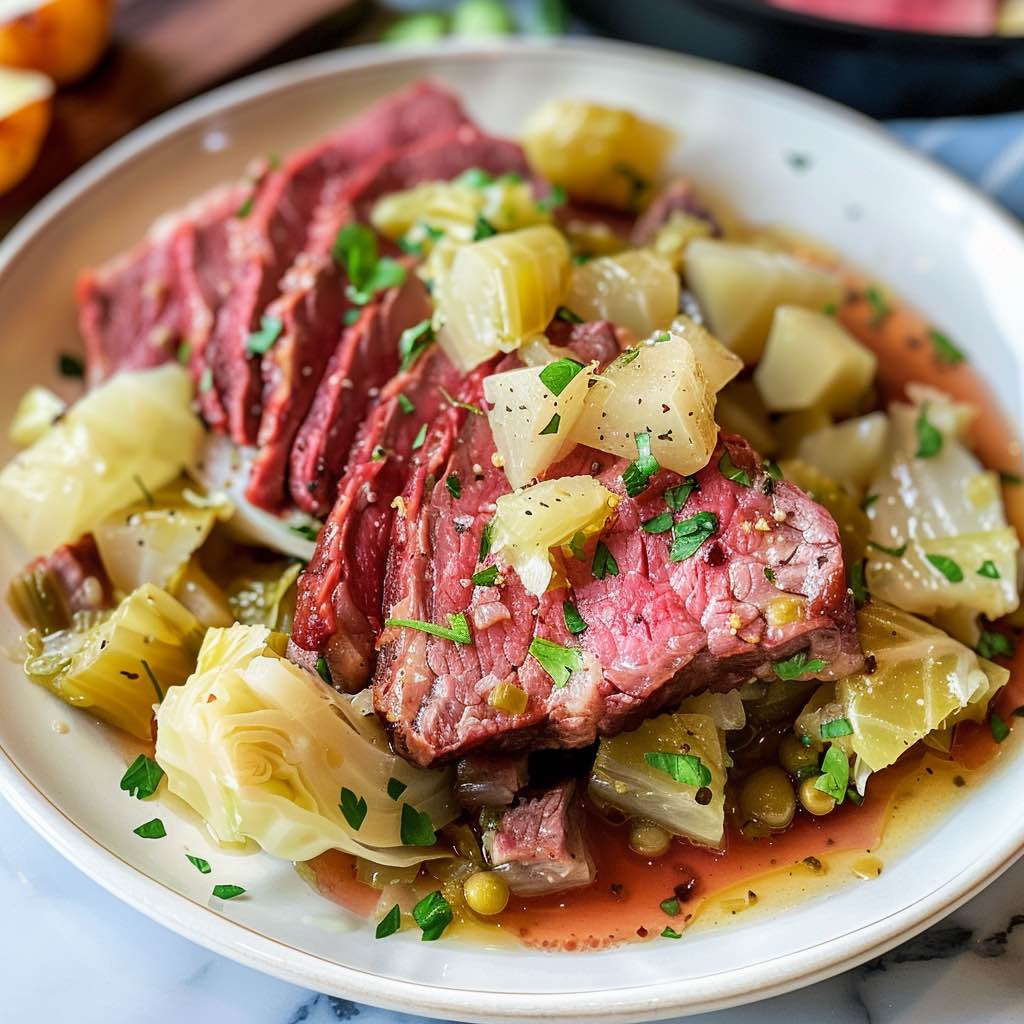
Crock Pot Corned Beef and Cabbage
Introduction
Crock Pot Corned Beef and Cabbage transforms a traditional Irish-American favorite into an effortless weeknight meal. This slow cooker method delivers fork-tender meat and perfectly cooked vegetables with minimal hands-on time. Whether you’re preparing dinner for St. Patrick’s Day or craving comfort food any day of the year, this recipe simplifies the cooking process while maintaining authentic flavors. The beauty of using a crock pot lies in its ability to break down tough meat fibers through low, steady heat, resulting in melt-in-your-mouth texture that’s impossible to achieve with faster cooking methods.
Many home cooks feel intimidated by corned beef, but the slow cooker eliminates guesswork. Furthermore, this one-pot meal requires basic ingredients you likely already have in your kitchen. Additionally, the hands-off cooking approach means you can prep everything in the morning and return home to a complete dinner ready to serve.
What Is Corned Beef and Cabbage
Corned beef refers to beef brisket that has been cured in a seasoned brine. The term “corned” comes from large grains of salt called “corns” historically used in the curing process. This preservation method dates back centuries when refrigeration didn’t exist. Today, most corned beef comes pre-brined from grocery stores, making preparation incredibly convenient.
The traditional pairing with cabbage became popular among Irish immigrants in America. Interestingly, this combination wasn’t common in Ireland itself. Irish immigrants adapted their cooking to available ingredients in their new country. Consequently, corned beef and cabbage became associated with Irish-American cuisine rather than authentic Irish cooking.
The dish typically includes potatoes and carrots alongside cabbage. These hearty vegetables complement the savory, slightly salty meat perfectly. Moreover, they absorb the delicious cooking liquid, creating a complete meal in one pot.
Why Use a Crock Pot
The slow cooker offers numerous advantages for preparing corned beef. First, the low, consistent temperature ensures even cooking throughout the meat. Unlike stovetop methods that require constant monitoring, the crock pot does all the work independently. This hands-off approach prevents overcooking or burning.
Second, the enclosed environment traps moisture and steam. This creates perfect conditions for breaking down tough connective tissue in brisket. As a result, you get incredibly tender meat that practically falls apart. Traditional methods can produce similar results but demand much more attention.
Third, the crock pot keeps your kitchen cool. Especially during warmer months, avoiding hours of stovetop or oven cooking makes a significant difference. Additionally, the slow cooker uses less energy than conventional cooking methods, making it economical.
Finally, timing flexibility gives you control over your schedule. Most crock pot corned beef recipes work on both high and low settings. Therefore, you can adjust cooking time based on your availability. Set it before work and return to a ready meal.
Essential Ingredients
The Corned Beef
Choose a 3-4 pound corned beef brisket with the spice packet included. Most packages contain a seasoning blend of mustard seeds, coriander, peppercorns, and bay leaves. Quality matters here – select meat with even marbling throughout. Look for flat cut brisket for more uniform slices, or point cut for extra fattiness and flavor.
Rinse the corned beef before cooking. This removes excess surface salt from the brining process. Pat it dry with paper towels afterward. Keep the spice packet separate until you’re ready to add it to the slow cooker.
Vegetables
Cabbage: One medium head provides enough for 4-6 servings. Green cabbage works best, though savoy cabbage offers a slightly milder flavor. Cut into wedges rather than shredding to maintain structure during long cooking times.
Potatoes: Baby potatoes, red potatoes, or Yukon golds hold their shape well. Plan for 1.5-2 pounds total. Larger potatoes should be halved or quartered for even cooking. Leave baby potatoes whole if they’re small enough.
Carrots: Use 4-5 large carrots, peeled and cut into 3-inch pieces. Alternatively, baby carrots work perfectly without any prep. Carrots add natural sweetness that balances the savory meat.
Onions: One large yellow onion, quartered, provides aromatic depth. The onion softens completely during cooking and adds subtle sweetness to the broth.
Liquids and Seasonings
Broth or Water: Use 3-4 cups of low-sodium beef broth or chicken broth. Water works too, though broth adds extra flavor. The corned beef spice packet provides plenty of seasoning, so additional broth enhances rather than overpowers.
Spice Packet: The included packet typically contains pickling spices. If your corned beef didn’t come with one, create your own using 2 tablespoons mustard seeds, 1 tablespoon black peppercorns, 1 tablespoon coriander seeds, 2-3 bay leaves, and 1 teaspoon red pepper flakes.
Garlic: 4-5 cloves, smashed, contribute aromatic complexity. Garlic becomes mellow and sweet after hours of slow cooking.
Kitchen Tools You’ll Need
Preparing crock pot corned beef requires minimal equipment. A 6-quart slow cooker accommodates a 3-4 pound brisket plus vegetables comfortably. Smaller crock pots work for reduced quantities, while larger ones handle bigger portions easily.
Sharp knives prove essential for cutting vegetables and slicing finished meat. A large cutting board provides adequate workspace. Measuring cups help portion broth accurately. Tongs or a large fork assist with removing meat from the hot cooking liquid.
A meat thermometer, while optional, ensures perfect doneness. Internal temperature should reach 145°F minimum, though corned beef benefits from cooking to 190-205°F for maximum tenderness. At this temperature range, connective tissue breaks down completely.
Finally, have serving platters ready. You’ll need one for the sliced meat and another for vegetables. Paper towels help pat meat dry before cooking.
Step-by-Step Instructions
Preparation Phase
Begin by removing the corned beef from its packaging. Rinse thoroughly under cold running water to remove excess brine. This step prevents the final dish from tasting overly salty. Pat the meat completely dry using paper towels. Set aside while preparing vegetables.
Peel and quarter the onion. Peel carrots and cut into 3-inch pieces. If using large potatoes, cut them into halves or quarters. Remove the outer leaves from the cabbage and cut into 6-8 wedges through the core. Leave the core attached to each wedge – this helps maintain structure during cooking.
Smash garlic cloves with the flat side of a knife. This releases oils and intensifies flavor. Set all prepared vegetables aside within easy reach.
Layering in the Crock Pot
Proper layering ensures even cooking throughout. Place the onion quarters on the bottom of the slow cooker. Add the smashed garlic cloves next. These aromatics create a flavorful base for the meat.
Place the corned beef on top of the onions, fatty side up. The fat cap bastes the meat naturally as it melts during cooking. Sprinkle the spice packet contents over and around the meat. Pour broth or water around the sides until liquid reaches halfway up the brisket. Too much liquid dilutes flavor, while too little risks drying out the meat.
Adding Vegetables
Timing matters when adding vegetables. Potatoes and carrots go in first because they take longer to soften. Arrange them around the meat in the liquid. These root vegetables benefit from extended cooking time in the seasoned broth.
Cabbage wedges require less time than other vegetables. Add them during the final 2-3 hours of cooking. Therefore, if cooking on low for 8 hours total, add cabbage after 5-6 hours. This prevents mushy, overcooked cabbage while ensuring it’s still tender.
Cooking Process
Cover the crock pot with its lid. Set the temperature according to your schedule. Low setting requires 8-10 hours, while high setting needs 4-6 hours. Most recipes recommend low for best texture and flavor development.
Resist the temptation to lift the lid frequently. Each time you open the crock pot, heat escapes and extends cooking time by 15-20 minutes. Check only when adding cabbage or testing doneness near the end.
The corned beef is ready when it reaches 190-205°F internally and shreds easily with a fork. Vegetables should be fork-tender but not falling apart. Potatoes and carrots should pierce easily with a knife.
Final Steps
Once everything is cooked through, carefully remove the corned beef using tongs or a large fork. Place it on a cutting board and let rest for 10-15 minutes. Resting allows juices to redistribute throughout the meat, ensuring moist slices.
Use a slotted spoon to transfer vegetables to a serving platter. Arrange them attractively, keeping colors separated for visual appeal. Reserve some cooking liquid for serving alongside the meal.
Slice the corned beef against the grain into 1/4-inch thick pieces. Cutting against the grain shortens tough muscle fibers, making each bite more tender. Arrange sliced meat on a separate platter or serve directly on plates with vegetables.
Cooking Times and Temperature Settings
Understanding your slow cooker’s settings optimizes results. Most models offer low, high, and sometimes warm settings. Low typically maintains 190-200°F internal temperature, while high reaches 280-300°F.
Low Setting: 8-10 hours total. Add vegetables after 5-6 hours. This method produces the most tender, flavorful results. Additionally, low cooking better preserves moisture and prevents tough, dry meat.
High Setting: 4-6 hours total. Add vegetables after 2-3 hours. Choose this option when time is limited. However, results may be slightly less tender compared to low cooking.
Size affects timing significantly. A 2-3 pound brisket cooks faster than a 4-5 pound one. Conversely, larger cuts need extra time. Always use a meat thermometer to verify doneness rather than relying solely on time.
Altitude impacts cooking time too. Higher elevations require longer cooking periods because water boils at lower temperatures. Add 30 minutes to 1 hour for locations above 5,000 feet.
Different slow cooker models vary in heating efficiency. Older models may cook more slowly than newer ones. Test your specific appliance with the first attempt and adjust accordingly for future batches.
Tips for Perfect Results
Selecting Quality Meat
Look for well-marbled brisket with even fat distribution. Avoid packages with excessive liquid in the vacuum seal – this indicates potential freezer burn or poor handling. Check the expiration date carefully. Fresh corned beef produces better flavor than meat approaching its limit.
Flat cut brisket slices more uniformly and contains less fat. Point cut has more marbling, resulting in richer flavor but less aesthetic presentation. Neither is inherently better; choose based on your preferences.
Preventing Dry Meat
Never let the slow cooker run dry. Check liquid levels when adding cabbage. If needed, add warm broth to maintain moisture. Cold liquid temporarily drops cooking temperature.
Avoid cooking on high for extended periods. While faster, high heat can toughen outer layers before the center becomes tender. Low and slow always wins for brisket.
Enhancing Flavor
Add whole grain mustard to the cooking liquid for extra tanginess. One tablespoon stirred into the broth complements the pickling spices beautifully. Brown sugar (1-2 tablespoons) balances saltiness with subtle sweetness.
Fresh herbs elevate the dish beyond basic preparation. Add fresh thyme sprigs or parsley stems during the last hour of cooking. Remove them before serving.
Achieving Tender Vegetables
Cut vegetables into uniform sizes for even cooking. Smaller pieces cook faster, while larger chunks need more time. Consistency ensures everything finishes simultaneously.
Place denser vegetables like potatoes and carrots closer to the heat source. In most crock pots, this means near the bottom and sides. Delicate items like cabbage go on top where they receive gentler heat.
Making Ahead
Prep all vegetables the night before and store them in the refrigerator. In the morning, quickly assemble everything in the crock pot. This streamlines the process when time is tight.
Alternatively, fully cook the meal a day ahead. Store meat and vegetables separately in the refrigerator. Reheat gently the next day, adding a splash of broth to prevent drying.
Recipe Variations
Different Meat Options
While traditional recipes use brisket, other cuts work well in the slow cooker. Bottom round roast provides a leaner alternative with slightly less tenderness. Beef chuck roast offers similar richness to brisket at a lower price point. For these alternatives, use the same spice blend and cooking method.
Pre-seasoned corned beef is standard, but you can corn your own brisket. Submerge raw brisket in brine for 5-7 days before cooking. This advanced technique gives complete control over seasoning levels.
Vegetable Additions
Brussels sprouts make an excellent addition during the final 2 hours. Turnips and parsnips contribute earthy sweetness alongside traditional vegetables. Pearl onions add elegant presentation for special occasions.
Red potatoes work beautifully, but sweet potatoes create an interesting twist. Their natural sweetness balances the salty meat perfectly. Add them during the final 4 hours to prevent excessive softening.
Spice Modifications
For extra heat, include red pepper flakes or whole dried chilies. Start conservatively with 1/2 teaspoon and adjust to taste. Fresh ginger slices (4-5 coins) add warm, spicy notes that complement the traditional spices.
Create a honey-mustard glaze for the finished meat. Combine 3 tablespoons honey with 2 tablespoons whole grain mustard and 1 tablespoon apple cider vinegar. Brush over sliced meat before serving.
International Twists
Transform the recipe with Asian-inspired seasonings. Replace pickling spices with star anise, ginger, and five-spice powder. Use low-sodium soy sauce instead of broth for deeper umami flavor.
Alternatively, add Mediterranean flair with fennel seeds, orange zest, and fresh rosemary. These unexpected flavors create a unique interpretation while maintaining the slow-cooked comfort food essence.
Serving Suggestions
Classic Presentation
Arrange sliced corned beef down the center of a large platter. Surround it with cabbage wedges on one side and potatoes with carrots on the other. Drizzle everything with a few spoonfuls of cooking liquid. Garnish with fresh parsley for color contrast.
Serve horseradish sauce alongside for authentic Irish-American style. Mix prepared horseradish with sour cream or Greek yogurt for a tangy, creamy condiment. Whole grain mustard offers another traditional accompaniment.
Side Dishes
While the crock pot meal is complete on its own, additional sides enhance the experience. Irish soda bread provides perfect texture for soaking up cooking liquid. Alternatively, serve with crusty sourdough or rye bread.
[Check out our guide on homemade bread recipes for perfect pairings]
A simple green salad with vinaigrette cuts through the richness. Mixed greens, cucumber, and cherry tomatoes dressed with olive oil and lemon juice refresh the palate between bites.
Leftover Transformations
Transform extra corned beef into sandwiches. Layer sliced meat with Swiss cheese, sauerkraut, and thousand island dressing on rye bread for a Reuben-inspired creation. Toast until cheese melts and bread crisps.
Hash makes excellent use of leftover meat and vegetables. Dice everything into bite-sized pieces and pan-fry with additional potatoes until crispy. Top with fried eggs for a hearty breakfast.
Create corned beef omelets or frittatas. Mix diced meat with beaten eggs, cheese, and vegetables. Cook until set for a protein-packed meal.
Plating for Special Occasions
For elegant dinners, plate individually rather than family-style. Fan sliced meat across each plate, slightly overlapping slices. Add a cabbage wedge and a few potato and carrot pieces alongside. Drizzle with reduced cooking liquid that’s been strained and slightly thickened.
Garnish with microgreens or fresh herbs. A small ramekin of horseradish sauce on each plate adds restaurant-quality presentation.
Storage and Reheating
Proper Storage Techniques
Cool leftover meat and vegetables separately before refrigerating. Divide into shallow containers to speed cooling and prevent bacterial growth. Store in the refrigerator within 2 hours of cooking.
Properly stored corned beef lasts 3-4 days refrigerated. Vegetables maintain quality for 3-5 days. Store cooking liquid separately in an airtight container for up to 5 days. Freeze extras for convenient future meals.
Freezing Instructions
Freeze corned beef for up to 3 months. Slice before freezing for easier portioning. Layer slices between parchment paper, then wrap tightly in plastic wrap and aluminum foil. Label with the date and contents.
Alternatively, freeze unsliced brisket whole. Wrap tightly to prevent freezer burn. Thaw overnight in the refrigerator before reheating.
Most vegetables freeze poorly due to high water content. However, you can freeze them if texture changes don’t concern you. They work perfectly for soups or hash after thawing.
Reheating Methods
For best results, reheat corned beef gently in reserved cooking liquid. Place slices in a covered pan with liquid over low heat. Warm slowly until heated through, about 10-15 minutes. This method prevents drying and maintains tenderness.
Microwave reheating works for quick meals. Place meat in a microwave-safe dish with a few tablespoons of liquid. Cover loosely and heat in 30-second intervals until warm. Stir between intervals for even heating.
Oven reheating produces excellent results for larger quantities. Arrange meat in a baking dish, add cooking liquid, and cover tightly with foil. Heat at 300°F for 20-25 minutes until warmed through.
Vegetables reheat well in the microwave or on the stovetop. Add a splash of broth or water to prevent drying. Heat until just warmed – overcooking makes them mushy.
Nutritional Information
A typical serving of crock pot corned beef and cabbage (4-5 ounces meat plus vegetables) contains approximately 400-500 calories. The exact amount varies based on portion sizes and fat content of the brisket.
Macronutrient Breakdown
Protein comprises a significant portion, with each serving providing 25-30 grams. This makes the dish excellent for muscle maintenance and satiety. The high protein content also supports stable blood sugar levels throughout the afternoon.
Fat content ranges from 20-30 grams per serving, primarily from the beef. Choosing flat cut over point cut reduces fat by roughly 5-8 grams. Trimming visible fat before serving further decreases fat content.
Carbohydrates come mainly from vegetables, totaling 20-30 grams per serving. Potatoes contribute most carbs, while cabbage and carrots provide smaller amounts along with valuable fiber.
Vitamins and Minerals
Cabbage delivers impressive vitamin C and K levels. One serving provides nearly 50% of daily vitamin C needs and over 100% of vitamin K requirements. These nutrients support immune function and bone health.
Potatoes offer potassium, vitamin B6, and additional vitamin C. Carrots supply beta-carotene, which the body converts to vitamin A for eye health and immune support.
The corned beef itself provides iron, zinc, and B vitamins, particularly B12. These nutrients support energy production and red blood cell formation.
Sodium Considerations
Corned beef is naturally high in sodium due to the brining process. One serving can contain 800-1200mg of sodium, representing 35-50% of the daily recommended intake. For low-sodium diets, look for reduced-sodium versions or rinse the meat thoroughly before cooking.
To further reduce sodium, use water instead of broth and omit additional salt. The spice packet provides enough flavor without extra sodium. Don’t add salt until tasting the finished dish.
Common Mistakes to Avoid
Overcooking the Cabbage
Adding cabbage too early results in mushy, unappetizing vegetables. Cabbage needs only 2-3 hours in the slow cooker. Mark your calendar or set a reminder to add it at the proper time.
Overcooked cabbage also develops an unpleasant sulfurous smell. This happens when glucosinolates break down excessively. Properly timed cabbage retains fresh flavor and slight crunch.
Insufficient Liquid
The slow cooker requires adequate liquid to generate steam and prevent burning. However, too much liquid dilutes flavors and can overflow. Aim for liquid reaching halfway up the meat, not covering it completely.
If liquid evaporates during cooking, add warm broth rather than cold. Cold liquid temporarily halts cooking and extends total time needed.
Not Rinsing the Meat
Skipping the rinse step produces overly salty results. The surface brine concentration far exceeds necessary seasoning levels. A quick rinse under cold water solves this problem without removing internal flavor.
Cutting Vegetables Too Small
Tiny vegetable pieces disintegrate during long cooking times. Aim for 2-3 inch chunks that maintain structure. Remember that vegetables shrink somewhat as they cook.
Opening the Lid Frequently
Every lid lift releases heat and moisture. This extends cooking time and can result in undercooked food. Trust the process and resist checking until adding cabbage or testing for doneness.
Slicing Meat With the Grain
Cutting with the grain creates tough, stringy bites regardless of cooking time. Always identify the grain direction (parallel muscle fibers) and cut perpendicular to it. This simple technique dramatically improves texture.
Neglecting to Rest the Meat
Slicing meat immediately after removing it from the crock pot causes juice loss. Resting for 10-15 minutes allows muscle fibers to relax and reabsorb liquid. The result is noticeably moister, more flavorful meat.
Frequently Asked Questions
How do I know when crock pot corned beef is done?
The internal temperature should reach 190-205°F for optimal tenderness. At this range, connective tissue breaks down completely. Additionally, the meat should shred easily when tested with a fork. If it resists, continue cooking for another 30-60 minutes and test again.
Can I cook frozen corned beef in the crock pot?
While possible, it’s not recommended for food safety reasons. Frozen meat takes too long to reach safe temperatures in the slow cooker. This creates conditions where bacteria can multiply. Always thaw corned beef completely in the refrigerator before cooking. Plan for 24 hours of thawing time per 4-5 pounds of meat.
Why is my corned beef tough after cooking?
Tough meat usually indicates insufficient cooking time or temperature. Corned beef requires long, slow cooking to break down collagen. If using the high setting, the outer layers may cook too quickly before the center becomes tender. Switch to low for better results. Additionally, ensure you’re slicing against the grain – cutting with the grain makes even tender meat seem tough.
What can I do with leftover cooking liquid?
The flavorful broth makes excellent soup base. Strain out any solids, then use it for vegetable soup, potato soup, or as cooking liquid for rice or grains. The liquid freezes well for up to 3 months. Alternatively, reduce it on the stovetop to create a concentrated sauce for serving over sliced meat.
Can I add other seasonings to the spice packet?
Absolutely! Common additions include whole cloves, allspice berries, or crushed red pepper. Fresh herbs like thyme or rosemary complement traditional spices nicely. However, start conservatively – you can always add more seasoning, but you can’t remove it once added.
How do I reduce the saltiness?
Rinsing the corned beef thoroughly before cooking is crucial. Use water instead of broth, or choose low-sodium broth. Don’t add additional salt until tasting the finished dish. If the final result is too salty, serve with extra unsalted vegetables or potatoes to balance flavors.
Can I make this recipe ahead of time?
Yes, crock pot corned beef reheats beautifully. Cook it completely, then cool and refrigerate. Reheat gently in cooking liquid the next day. Some people prefer the flavor after a day in the refrigerator as seasonings meld further. Just be aware that vegetables may soften slightly upon reheating.
What’s the difference between flat cut and point cut?
Flat cut brisket is leaner and slices more uniformly. It presents beautifully and contains less fat. Point cut has more marbling throughout, creating richer flavor and juicier results. However, it’s harder to slice neatly. Both work excellently in the crock pot – choose based on whether you prioritize presentation or flavor.
Conclusion
Crock Pot Corned Beef and Cabbage delivers comfort food satisfaction with minimal effort. This slow cooker method produces tender, flavorful meat alongside perfectly cooked vegetables every single time. The hands-off cooking approach makes it ideal for busy weeknights or special occasion dinners. By following the steps and tips outlined above, you’ll create a meal that tastes like you spent hours in the kitchen.
The beauty of this recipe lies in its simplicity and flexibility. Whether you’re preparing a traditional St. Patrick’s Day feast or simply craving hearty comfort food, the crock pot does all the heavy lifting. Furthermore, leftovers transform into countless delicious meals throughout the week. From sandwiches to hash to omelets, the possibilities extend far beyond the initial dinner.
Don’t let intimidation prevent you from trying this classic dish. The slow cooker eliminates complexity and virtually guarantees success. With quality ingredients, proper timing, and attention to a few key techniques, you’ll master crock pot corned beef and cabbage after just one attempt.
Ready to start cooking? Grab your slow cooker and experience the joy of effortless, delicious home cooking. Your family will thank you when they sit down to this satisfying, crowd-pleasing meal
Crock Pot Corned Beef and Cabbage
Description
Crock Pot Corned Beef and Cabbage
Ingredients
For the Main Dish:
-
1 (3-4 pound) corned beef brisket with spice packet
-
1 large onion, quartered
-
4-6 small red potatoes, halved if larger than 2 inches
-
2 cups baby carrots or 2 large carrots, chopped
-
2-3 ribs celery, cut into 3-inch pieces
-
3 cloves garlic, peeled
-
2 bay leaves
-
2½-3 cups beef broth or water
-
1 medium head green cabbage, cut into 1-inch wedges
-
2 tablespoons pickling spice (optional, if no spice packet included)
Instructions
-
Rinse the beef: Remove corned beef from packaging and rinse well under cold water; pat dry with paper towels
-
Layer vegetables: Place onion chunks, potatoes, carrots, celery, and garlic cloves in the bottom of a 6-quart slow cooker
-
Add the beef: Place corned beef brisket on top of vegetables with fat side up
-
Season: Sprinkle the seasoning packet that comes with the corned beef over the meat; add bay leaves
-
Add liquid: Pour beef broth or water into the slow cooker until it just barely reaches the top of the corned beef
-
Cook: Cover and cook on low for 8-10 hours or on high for 4-5 hours
-
Add cabbage: About 1-2 hours before serving, add cabbage wedges around the brisket in the cooking liquid
-
Continue cooking: Cover and cook for another 1-2 hours until cabbage reaches desired tenderness
-
Rest: Remove corned beef from slow cooker and let rest for 5-15 minutes on a cutting board
-
Slice and serve: Slice beef against the grain and arrange on a platter with vegetables; serve with spicy mustard or horseradish sauce if desired
Yield: 6-8 servings