
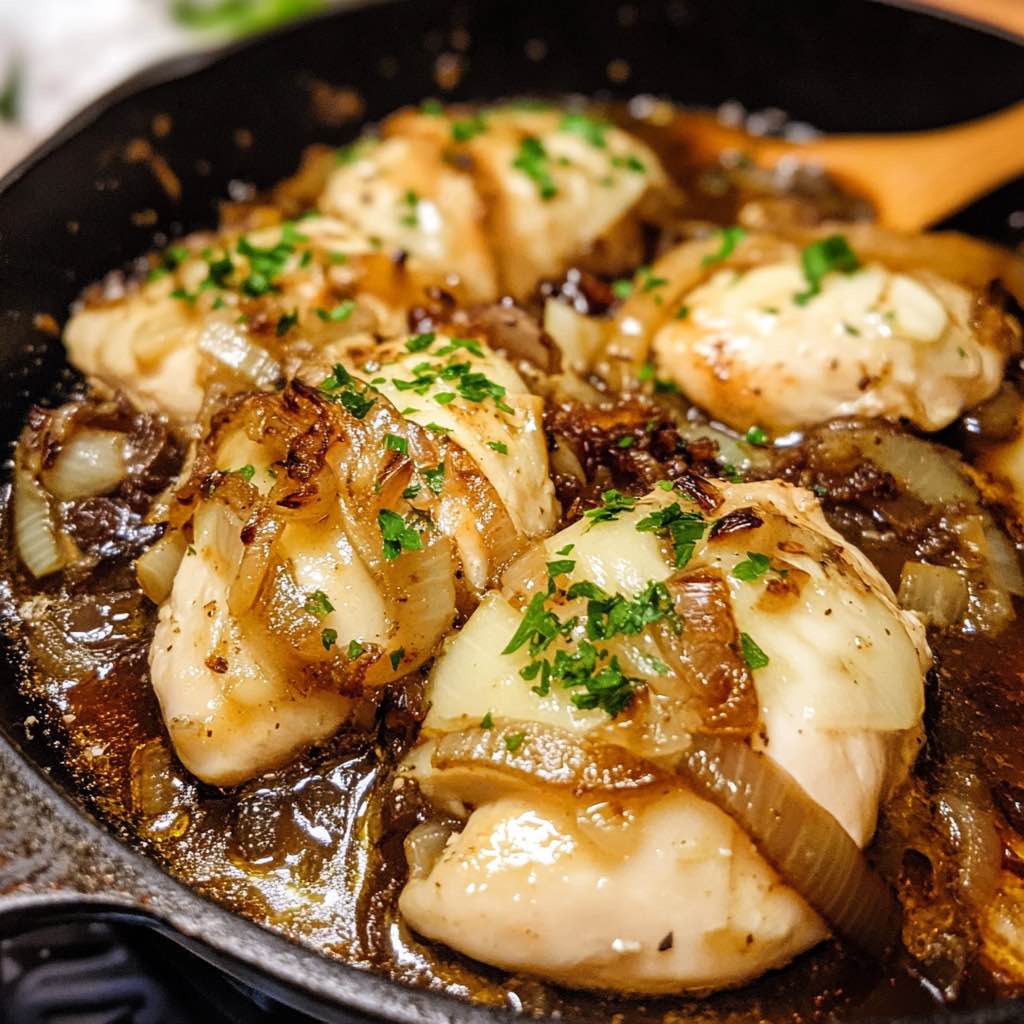
French Onion Chicken: The Ultimate Comfort Food Recipe Guide
Introduction
French Onion Chicken transforms the beloved flavors of classic French onion soup into a hearty, satisfying main dish. This innovative recipe combines tender chicken breasts with deeply caramelized onions and melted cheese. Therefore, you get all the comfort of traditional French onion soup in a protein-packed dinner.
Moreover, this dish offers the perfect balance of savory onions, rich broth, and gooey cheese. Additionally, it’s surprisingly easy to prepare despite its sophisticated flavors. Whether you’re cooking for family dinner or entertaining guests, French Onion Chicken delivers restaurant-quality results at home.
Table of Contents
-
What is French Onion Chicken?
-
Essential Ingredients for Perfect French Onion Chicken
-
Step-by-Step Cooking Instructions
-
Pro Tips for Caramelizing Onions
-
Cheese Selection and Melting Techniques
-
Recipe Variations and Substitutions
-
Serving Suggestions and Side Dishes
-
Storage and Reheating Guidelines
-
Nutritional Benefits and Health Information
-
Common Mistakes to Avoid
-
Frequently Asked Questions
-
Conclusion
What is French Onion Chicken?
French Onion Chicken represents a creative fusion of classic French onion soup elements with tender chicken. Essentially, this dish features chicken breasts topped with caramelized onions, rich broth, and melted cheese. The result combines the deep, savory flavors of traditional French cuisine with protein-rich chicken.
Origins and Inspiration
Traditional French onion soup dates back to Roman times. However, the modern version emerged in 18th-century France. Therefore, French Onion Chicken draws inspiration from this centuries-old recipe. Additionally, it adapts the soup’s signature elements into a complete meal.
The dish gained popularity in American kitchens during the 1990s. Furthermore, home cooks appreciated its ability to transform simple ingredients into an elegant dinner. Consequently, French Onion Chicken became a staple in comfort food repertoires.
Flavor Profile
The flavor profile of French Onion Chicken centers on sweet, caramelized onions. Moreover, the onions develop complex, nutty notes through slow cooking. Additionally, the cheese adds richness and depth. Meanwhile, the chicken provides a neutral protein base that absorbs surrounding flavors.
Herbs like thyme and bay leaves contribute earthy undertones. Furthermore, a splash of cooking liquid enhances the overall taste. Therefore, every bite delivers a harmonious blend of sweet, savory, and umami flavors.
Essential Ingredients for Perfect French Onion Chicken
Creating exceptional French Onion Chicken requires selecting quality ingredients. Each component plays a crucial role in the final dish’s success. Therefore, understanding ingredient functions helps you make better choices.
Chicken Selection
Chicken Breasts: Choose boneless, skinless chicken breasts for even cooking. Additionally, look for breasts that are uniform in thickness. Moreover, organic or free-range options often provide better flavor.
Thickness Considerations: Pound chicken breasts to even thickness if necessary. This ensures uniform cooking throughout. Furthermore, consistent thickness prevents overcooking thinner areas.
Alternative Cuts: Chicken thighs work excellently as substitutes. However, they require longer cooking times. Additionally, thighs offer more flavor due to higher fat content.
Onion Varieties and Preparation
Best Onion Types:
-
Yellow onions provide the classic sweet flavor when caramelized
-
Sweet onions like Vidalia offer natural sweetness
-
Red onions add color but have stronger flavor
-
Shallots create more delicate, refined taste
Preparation Techniques: Slice onions uniformly for even caramelization. Additionally, aim for 1/4-inch thick slices. Moreover, consistent slicing ensures uniform cooking times.
Cheese Options
Gruyère Cheese: Traditional choice with nutty, complex flavor. Furthermore, it melts beautifully without becoming greasy. Additionally, Gruyère provides authentic French onion soup taste.
Swiss Cheese: More affordable alternative with similar melting properties. However, the flavor is milder than Gruyère. Therefore, consider combining with other cheeses for depth.
Provolone: Adds sharpness and melts well. Moreover, it’s widely available in most grocery stores. Additionally, smoked provolone creates interesting flavor variations.
Mozzarella: Creates excellent stretch and mild flavor. However, use in combination with stronger cheeses. Furthermore, part-skim mozzarella reduces overall fat content.
Supporting Ingredients
Cooking Fat: Butter provides rich flavor and browning. Additionally, olive oil prevents burning at high temperatures. Therefore, combining both creates optimal results.
Liquid Components: Beef broth adds depth and richness. However, chicken broth works for lighter flavor. Additionally, dry cooking liquid can enhance complexity.
Seasonings: Fresh thyme offers earthy, aromatic notes. Moreover, salt and pepper are essential for proper seasoning. Furthermore, garlic powder complements onion flavors.
Step-by-Step Cooking Instructions
Mastering French Onion Chicken requires following proper techniques. Additionally, timing plays a crucial role in achieving perfect results. Therefore, prepare all ingredients before starting the cooking process.
Preparation Phase
Step 1: Prepare Ingredients
-
Slice 3-4 large onions into uniform pieces
-
Season chicken breasts with salt and pepper
-
Grate or slice cheese as needed
-
Measure all seasonings and liquids
-
Preheat oven to 375°F (190°C)
Step 2: Equipment Setup
Additionally, gather necessary equipment before cooking. Therefore, you’ll need a large skillet, baking dish, and measuring tools. Moreover, having everything ready streamlines the cooking process.
Caramelizing the Onions
Step 3: Start Onion Caramelization
Heat 2 tablespoons butter and 1 tablespoon olive oil in a large skillet. Furthermore, add sliced onions and a pinch of salt. Additionally, cook over medium heat, stirring occasionally.
Step 4: Continue Caramelization Process
Cook onions for 25-30 minutes until golden brown. However, patience is essential for proper caramelization. Moreover, resist the urge to increase heat, which can cause burning.
Step 5: Deglaze if Necessary
If onions stick to the pan, add a splash of broth. Therefore, this helps loosen browned bits and adds flavor. Additionally, scrape up any caramelized pieces from the bottom.
Preparing the Chicken
Step 6: Season and Sear Chicken
Meanwhile, season chicken breasts thoroughly. Additionally, heat a separate pan for searing. Moreover, sear chicken for 2-3 minutes per side until golden.
Step 7: Create Assembly
Transfer seared chicken to a baking dish. Furthermore, top each breast with caramelized onions. Additionally, pour any accumulated juices over the chicken.
Final Assembly and Baking
Step 8: Add Liquid and Cheese
Pour 1/2 cup broth around the chicken in the dish. However, avoid pouring directly over the onions. Additionally, top with generous amounts of cheese.
Step 9: Bake to Perfection
Bake for 20-25 minutes until chicken reaches 165°F internal temperature. Furthermore, cheese should be melted and lightly browned. Therefore, use a meat thermometer for accuracy.
Step 10: Rest and Serve
Allow chicken to rest for 5 minutes before serving. Additionally, this helps juices redistribute throughout the meat. Moreover, resting ensures optimal texture and flavor.
Pro Tips for Caramelizing Onions
Properly caramelized onions make the difference between good and exceptional French Onion Chicken. Therefore, mastering this technique is essential for success. Additionally, understanding the science behind caramelization improves your results.
Time and Temperature Control
Low and Slow Approach: Caramelization requires patience and proper heat control. Furthermore, medium to medium-low heat prevents burning while allowing natural sugars to develop. Additionally, rushing this process results in bitter, burnt flavors instead of sweet, complex ones.
Timing Guidelines:
-
10-15 minutes: Onions soften and become translucent
-
15-20 minutes: Light golden color begins developing
-
20-30 minutes: Deep golden brown color emerges
-
30+ minutes: Rich, dark caramelization completes
Stirring Techniques
Frequency Matters: Stir onions every 5-7 minutes initially. However, increase stirring frequency as browning progresses. Moreover, gentle stirring prevents breaking down onion structure.
Scraping Benefits: Use a wooden spoon to scrape browned bits from pan bottom. Therefore, these caramelized pieces add incredible flavor to the dish. Additionally, incorporating these bits prevents burning.
Troubleshooting Common Issues
Onions Cooking Too Quickly: Reduce heat immediately if onions brown too fast. Furthermore, add a splash of liquid to slow the process. Additionally, cover the pan briefly to create steam.
Uneven Browning: Ensure onion slices are uniform thickness. Moreover, distribute onions evenly across the pan surface. Therefore, consistent sizing promotes even caramelization.
Sticking Problems: Add small amounts of fat if onions stick excessively. However, avoid adding too much, which can make onions greasy. Additionally, deglaze with broth when necessary.
Cheese Selection and Melting Techniques
Cheese selection significantly impacts French Onion Chicken’s final flavor and texture. Therefore, understanding different cheese properties helps you make informed choices. Additionally, proper melting techniques ensure perfect results every time.
Traditional Cheese Options
Gruyère Excellence: Gruyère remains the gold standard for French onion applications. Furthermore, its nutty flavor complements caramelized onions perfectly. Additionally, Gruyère melts smoothly without separating or becoming stringy.
Gruyère Characteristics:
-
Nutty, slightly sweet flavor profile
-
Excellent melting properties
-
Develops beautiful golden-brown color when broiled
-
Pairs exceptionally well with caramelized onions
Alternative Cheese Selections
Swiss Cheese Benefits: Swiss cheese offers similar melting properties at lower cost. However, the flavor is milder than Gruyère. Therefore, consider enhancing with additional seasonings when using Swiss.
Provolone Variations: Provolone adds sharpness and complexity. Moreover, aged provolone provides more intense flavor. Additionally, smoked provolone creates interesting taste variations.
Combination Approaches: Mixing multiple cheeses creates depth and complexity. For example, combine Gruyère with mozzarella for optimal melting. Furthermore, add sharp cheddar for additional flavor punch.
Melting Techniques
Grating for Even Melting: Freshly grated cheese melts more evenly than pre-shredded varieties. Additionally, avoid pre-shredded cheese when possible, as anti-caking agents affect melting. Moreover, room temperature cheese melts faster and more uniformly.
Layering Strategies: Layer cheese directly over onions and chicken. Furthermore, this creates an insulating layer that prevents overcooking. Additionally, some cheese can be reserved for final broiling.
Broiling for Finish: Brief broiling creates appealing golden-brown cheese topping. However, watch carefully to prevent burning. Moreover, broil for 1-2 minutes maximum for best results.
Recipe Variations and Substitutions
French Onion Chicken adapts easily to different dietary needs and preferences. Therefore, exploring variations keeps this dish interesting and accessible. Additionally, substitutions allow you to work with available ingredients.
Protein Alternatives
Chicken Thighs: Bone-in, skin-on thighs provide richer flavor. However, they require longer cooking times than breasts. Additionally, remove skin if desired for reduced fat content.
Pork Chops: Thick pork chops work excellently with onion preparation. Furthermore, pork’s natural sweetness complements caramelized onions beautifully. Moreover, adjust cooking times for proper doneness.
Turkey Cutlets: Thin turkey cutlets cook quickly and absorb flavors well. However, they require careful monitoring to prevent overcooking. Additionally, pound to even thickness for consistent results.
Vegetarian Adaptations
Portobello Mushrooms: Large portobello caps substitute effectively for chicken. Furthermore, their meaty texture satisfies hearty appetites. Additionally, marinate mushrooms briefly for enhanced flavor.
Eggplant Preparation: Thick eggplant slices work well when properly prepared. However, salt and drain eggplant first to remove bitterness. Moreover, brush with oil to prevent drying during cooking.
Cauliflower Steaks: Thick cauliflower slices create satisfying vegetarian option. Additionally, roast partially before adding onions and cheese. Therefore, this ensures proper texture throughout.
Dietary Modifications
Low-Carb Adaptations: The basic recipe is naturally low in carbohydrates. However, be mindful of onion quantity if following strict ketogenic guidelines. Additionally, serve over cauliflower rice instead of traditional starches.
Dairy-Free Options: Use dairy-free cheese alternatives for lactose intolerance. Furthermore, nutritional yeast adds cheesy flavor without dairy. Moreover, coconut milk can replace dairy in accompanying sauces.
Gluten-Free Considerations: The basic recipe is naturally gluten-free. However, check all seasonings and broths for hidden gluten. Additionally, serve with gluten-free sides when necessary.
Serving Suggestions and Side Dishes
French Onion Chicken pairs beautifully with various side dishes. Therefore, selecting complementary accompaniments enhances the overall dining experience. Additionally, consider texture and flavor contrasts when planning your menu.
Starch Accompaniments
Rice Options: Fluffy white rice provides neutral base for rich chicken flavors. Furthermore, wild rice adds nutty complexity and interesting texture. Additionally, rice pilaf with herbs complements the dish beautifully.
Potato Preparations:
-
Roasted baby potatoes with herbs
-
Creamy mashed potatoes for comfort appeal
-
Hasselback potatoes for elegant presentation
-
Garlic roasted fingerlings for rustic charm
Pasta Possibilities: Simple buttered noodles let chicken flavors shine. However, herb-tossed pasta adds aromatic elements. Moreover, avoid heavy cream sauces that compete with cheese topping.
Vegetable Sides
Green Vegetables: Steam fresh green beans for color and crunch contrast. Additionally, roasted asparagus provides elegant accompaniment. Furthermore, sautéed spinach adds nutritional value without overwhelming flavors.
Root Vegetable Options: Roasted carrots develop natural sweetness that complements onions. Moreover, parsnips offer unique flavor and creamy texture. Additionally, beets provide striking color contrast.
Bread and Rolls
Crusty Bread: French bread or baguette slices are traditional accompaniments. Furthermore, they’re perfect for soaking up delicious pan juices. Additionally, garlic bread enhances the overall French theme.
Dinner Rolls: Soft dinner rolls provide comfort food appeal. However, avoid overly sweet varieties that clash with savory flavors. Moreover, herb-infused rolls complement the dish beautifully.
Salad Combinations
Simple Green Salads: Light vinaigrette-dressed greens balance rich chicken. Furthermore, mixed greens with basic dressing won’t compete for attention. Additionally, avoid creamy dressings that add unnecessary richness.
Specific Salad Ideas:
-
Arugula with lemon vinaigrette
-
Mixed greens with balsamic dressing
-
Spinach salad with warm bacon dressing
-
Caesar salad for classic appeal
Storage and Reheating Guidelines
Proper storage ensures French Onion Chicken remains delicious for future meals. Therefore, following food safety guidelines is essential. Additionally, correct reheating techniques maintain optimal texture and flavor.
Refrigerator Storage
Initial Cooling: Allow chicken to cool completely before refrigerating. However, don’t leave at room temperature longer than two hours. Furthermore, rapid cooling prevents bacterial growth and maintains food safety.
Container Selection: Use airtight containers to prevent odor absorption. Additionally, glass containers are ideal for reheating portions. Moreover, separate components if planning different uses.
Duration Guidelines: Properly stored French Onion Chicken lasts 3-4 days refrigerated. However, consume within this timeframe for optimal quality. Furthermore, check for any off odors before consuming leftovers.
Freezer Storage Options
Preparation for Freezing: Cool completely before freezing to maintain texture. Additionally, wrap portions individually for convenient serving sizes. Moreover, remove as much air as possible from containers.
Duration Limits: Frozen French Onion Chicken maintains quality for 2-3 months. However, longer storage may affect texture and flavor. Therefore, label containers with dates for proper rotation.
Thawing Procedures: Thaw frozen portions in refrigerator overnight. Furthermore, never thaw at room temperature due to safety concerns. Additionally, plan ahead for proper thawing time.
Reheating Techniques
Oven Method: Reheat at 350°F (175°C) for best results. Additionally, cover with foil to prevent drying. Moreover, heat until internal temperature reaches 165°F (74°C).
Microwave Approach: Use medium power for even heating. Furthermore, cover containers to retain moisture. Additionally, stir or rearrange halfway through heating process.
Stovetop Option: Reheat in covered skillet over medium-low heat. However, add small amounts of broth if mixture seems dry. Moreover, stir gently to prevent breaking apart.
Nutritional Benefits and Health Information
French Onion Chicken provides substantial nutritional value while delivering exceptional flavor. Therefore, understanding its health benefits helps you appreciate this dish beyond taste. Additionally, knowing nutritional content assists with meal planning.
Protein Content and Benefits
High-Quality Protein: Chicken breast provides complete protein with all essential amino acids. Furthermore, a typical serving contains 25-30 grams of protein. Additionally, protein supports muscle maintenance and growth.
Protein Benefits Include:
-
Muscle development and repair
-
Satiety and appetite control
-
Metabolic support and energy
-
Immune system strengthening
Onion Nutritional Value
Antioxidant Properties: Onions contain powerful antioxidants like quercetin. Moreover, these compounds may help reduce inflammation. Additionally, antioxidants support overall health and wellbeing.
Vitamin and Mineral Content: Onions provide vitamin C, folate, and potassium. Furthermore, they’re low in calories but high in flavor. Therefore, they add nutrition without excessive calories.
Cheese Contributions
Calcium and Protein: Cheese provides essential calcium for bone health. Additionally, it contributes additional protein to the meal. Moreover, cheese contains vitamin B12 and riboflavin.
Moderation Considerations: While nutritious, cheese is calorie-dense. Therefore, portion control remains important for balanced nutrition. However, the satisfaction factor helps prevent overeating.
Overall Nutritional Profile
Calorie Estimates: A typical serving contains approximately 350-450 calories. However, actual counts vary based on preparation methods and portions. Additionally, side dishes significantly affect total meal calories.
Macronutrient Balance:
-
Protein: 30-35 grams
-
Carbohydrates: 15-20 grams (mainly from onions)
-
Fat: 15-25 grams (from cheese and cooking oil)
Common Mistakes to Avoid
Understanding common French Onion Chicken mistakes helps ensure consistent success. Therefore, learning from others’ experiences saves time and frustration. Additionally, avoiding these pitfalls produces better results every time.
Onion Caramelization Errors
Rushing the Process: Many cooks attempt to speed caramelization with high heat. However, this creates burnt, bitter flavors instead of sweet complexity. Moreover, proper caramelization requires patience and time.
Insufficient Stirring: Neglecting to stir onions leads to uneven browning. Furthermore, some pieces may burn while others remain raw. Therefore, regular stirring ensures uniform caramelization throughout.
Adding Sugar: Some recipes suggest adding sugar to speed caramelization. However, this creates artificial sweetness rather than natural development. Additionally, onions contain sufficient natural sugars when properly cooked.
Chicken Preparation Issues
Uneven Thickness: Failing to pound chicken to uniform thickness causes uneven cooking. Therefore, thin areas overcook while thick sections remain undercooked. Moreover, consistent thickness ensures food safety.
Inadequate Seasoning: Under-seasoned chicken tastes bland despite flavorful toppings. Furthermore, season chicken generously before cooking. Additionally, salt helps proteins retain moisture during cooking.
Overcooking Problems: Cooking chicken beyond 165°F internal temperature creates dry, tough texture. However, using a meat thermometer prevents overcooking. Moreover, carry-over cooking continues after removal from heat.
Assembly and Baking Mistakes
Cheese Application Timing: Adding cheese too early can cause burning or separation. Therefore, add cheese during final cooking stages. Additionally, watch carefully during broiling phase.
Excessive Liquid: Too much broth makes the dish watery and dilutes flavors. However, some liquid is necessary for steaming and flavor. Moreover, aim for just enough to cover dish bottom.
Temperature Control: Baking at incorrect temperatures affects texture and cooking times. Furthermore, too high heat burns cheese before chicken cooks through. Therefore, maintain proper oven temperature throughout.
Frequently Asked Questions
Can I make French Onion Chicken ahead of time?
Yes, you can prepare French Onion Chicken components ahead of time. However, assemble and bake just before serving for best results. Additionally, caramelized onions can be made up to three days in advance. Moreover, store components separately in refrigerator until ready to assemble.
What’s the best way to prevent the cheese from burning?
Cover the dish with foil during most of the baking time. Furthermore, remove foil during final 5-10 minutes for browning. Additionally, position the oven rack in the center to avoid direct heat. Moreover, use lower oven temperatures and longer cooking times if necessary.
Can I use different types of chicken cuts for this French Onion Chicken recipe?
Absolutely! Chicken thighs work excellently and provide richer flavor. However, adjust cooking times accordingly since thighs take longer to cook. Additionally, bone-in cuts require extended cooking but offer superior taste. Moreover, dark meat chicken remains juicier throughout the cooking process.
How do I know when the onions are properly caramelized?
Properly caramelized onions develop deep golden-brown color and sweet aroma. Furthermore, they should be soft and jammy in texture. Additionally, the process takes 25-35 minutes of patient cooking. Moreover, taste testing helps determine optimal caramelization level.
Can I freeze French Onion Chicken for meal prep?
Yes, French Onion Chicken freezes well for up to three months. However, freeze components separately for best quality. Additionally, thaw completely in refrigerator before reheating. Moreover, add fresh cheese after reheating for optimal flavor and texture.
What sides pair best with this dish?
Simple sides that don’t compete with the rich flavors work best. Therefore, consider rice, roasted vegetables, or light salads. Additionally, crusty bread helps soak up delicious pan juices. Moreover, avoid heavy cream-based sides that add unnecessary richness.
How can I make this recipe healthier?
Use skinless chicken breasts and reduce cheese quantity for lower calories. Furthermore, increase onion ratio for more vegetables and fiber. Additionally, serve over cauliflower rice instead of regular starches. Moreover, choose low-fat cheese options when available.
Why did my chicken turn out dry?
Dry chicken usually results from overcooking or insufficient moisture. Therefore, use a meat thermometer to monitor internal temperature. Additionally, don’t cook beyond 165°F for food safety. Moreover, covering during baking helps retain moisture throughout cooking.
Conclusion
French Onion Chicken transforms classic soup flavors into a satisfying, protein-rich main dish. This recipe combines the sweet complexity of caramelized onions with tender chicken and melted cheese. Therefore, you get all the comfort of traditional French onion soup in a complete meal.
Furthermore, this dish offers versatility through various protein substitutions and dietary modifications. Additionally, proper techniques for onion caramelization and cheese melting ensure consistent success. Moreover, understanding common mistakes helps you avoid pitfalls and achieve perfect results.
The combination of simple ingredients and sophisticated flavors makes French Onion Chicken ideal for both weeknight dinners and special occasions. However, patience during the caramelization process is essential for optimal results. Therefore, allow sufficient time for proper flavor development.
Whether you’re looking to expand your comfort food repertoire or impress dinner guests, French Onion Chicken delivers exceptional taste and satisfaction. Try this recipe with your preferred variations and discover why it’s become a modern classic.
French Onion Chicken
Description
Ingredients
For the chicken:
-
4 boneless, skinless chicken breasts (6-8 oz each)
-
2 tbsp olive oil
-
Salt and freshly ground black pepper
-
1 tsp dried thyme
-
½ tsp garlic powder
For the French onion topping:
-
3 large yellow onions, thinly sliced
-
3 tbsp butter
-
2 cloves garlic, minced
-
1 tbsp brown sugar
-
¼ cup dry white wine (optional)
-
1 cup beef broth
-
1 tbsp Worcestershire sauce
-
1 tsp fresh thyme (or ½ tsp dried)
-
1 bay leaf
-
1½ cups Gruyere cheese, shredded (or Swiss cheese)
-
¼ cup fresh parsley, chopped
Instructions
Prepare the chicken:
-
Preheat oven to 375°F and lightly grease a 9×13 inch baking dish.
-
Season chicken breasts on both sides with salt, pepper, thyme, and garlic powder.
-
Heat olive oil in a large oven-safe skillet over medium-high heat. Sear chicken breasts for 3-4 minutes per side until golden brown. Remove and set aside.
Caramelize the onions:
4. Reduce heat to medium and add butter to the same skillet. Add sliced onions with a pinch of salt.
5. Cook onions slowly for 20-25 minutes, stirring occasionally, until deeply golden and caramelized. Add brown sugar in the last 5 minutes to help with browning.
6. Add garlic and cook for 1 minute until fragrant.
Build the dish:
7. Deglaze with white wine if using, scraping up browned bits. Add beef broth, Worcestershire sauce, thyme, and bay leaf. Simmer for 5 minutes to reduce slightly.
8. Return chicken to the skillet, nestling it into the onion mixture. Spoon some onions over each piece.
9. Top with cheese and transfer to the oven.
Bake:
10. Bake for 20-25 minutes until chicken reaches 165°F internal temperature and cheese is bubbly and golden.
11. Rest for 5 minutes, then garnish with fresh parsley before serving.