
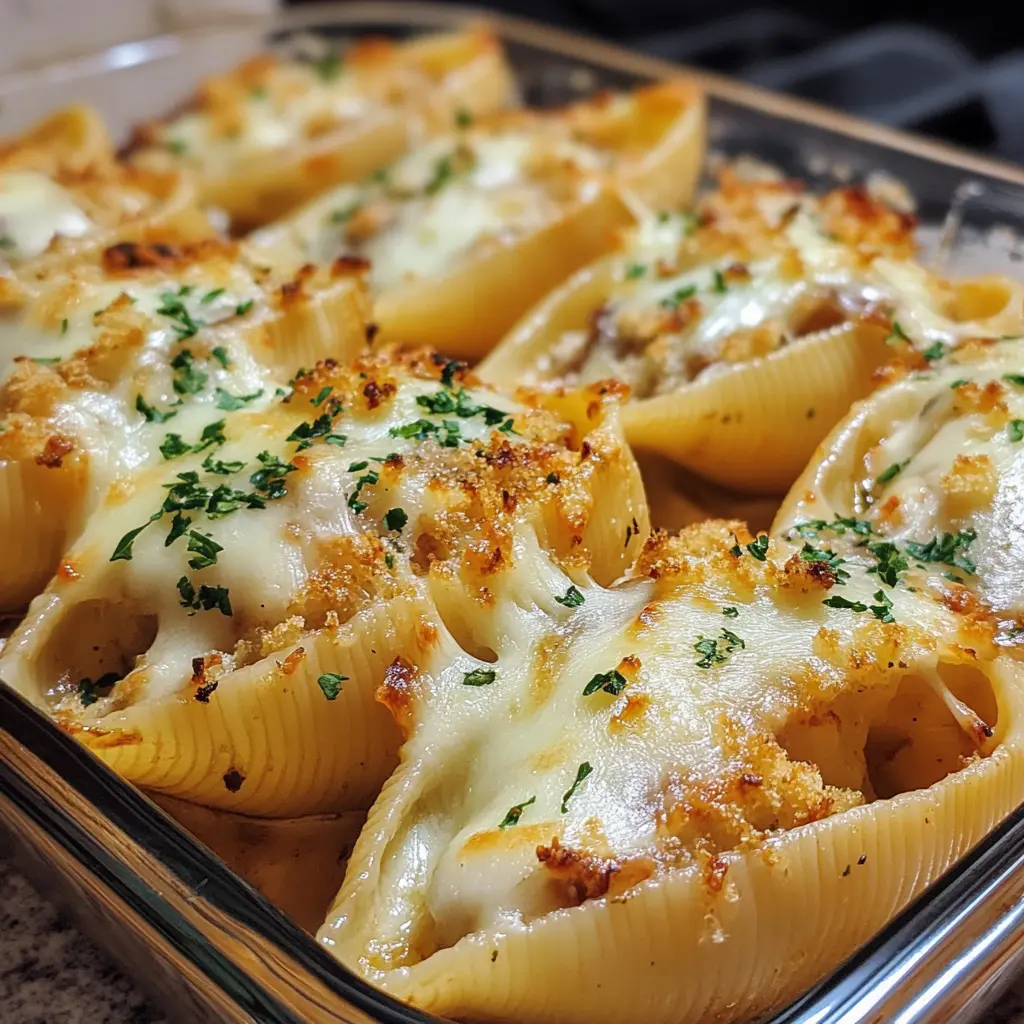
French onion stuffed shells are the ultimate cozy mash‑up of classic French onion flavors and cheesy baked pasta comfort, all in one bubbling pan perfect for weeknights or entertaining. This French Onion Stuffed Shells recipe layers sweet caramelized onions, creamy ricotta, and stretchy Gruyère and mozzarella inside jumbo shells, then bakes them in a rich, savory sauce for a crowd‑pleasing dish that tastes like soup-meets-lasagna in every bite.
What are French Onion Stuffed Shells?
French Onion Stuffed Shells take everything people love about French onion soup—silky onions, deep savory flavor, and a gooey cheese crust—and tuck it inside jumbo pasta shells for a fork‑friendly bake. Instead of serving broth in a bowl, you get a creamy onion-and-cheese filling nestled in shells, covered with a rich pan sauce and a blanket of melted Gruyère or Swiss.
The result is a casserole-style dinner that feels restaurant‑worthy yet works beautifully for home cooks. This style of pasta bake has become popular in modern comfort‑food blogs because it blends nostalgic soup flavors with sheet-pan practicality.
Why you will love this recipe
French Onion Stuffed Shells hit that perfect balance of cozy and impressive. The long-cooked onions build umami depth, while the ricotta filling keeps everything creamy and mild enough for family‑friendly tastes.
This dish also reheats well, which makes it ideal for meal prep, potlucks, or Sunday cooking for the week. Because the shells hold their shape, leftovers stay satisfying instead of turning into mushy pasta.
Key ingredients and substitutions
Pasta and filling ingredients
The heart of French Onion Stuffed Shells is a simple combination of pasta, creamy cheese, and sweet-savory onions.
Core pasta and filling components:
-
Jumbo pasta shells: These large shells are designed to hold generous spoonfuls of filling and bake evenly in a casserole dish.
-
Ricotta cheese: Provides a mild, creamy base that balances the deeper onion flavor.
-
Egg: Helps bind the ricotta filling so it stays inside the shells while baking.
-
Gruyère or Swiss cheese: Melts beautifully and delivers the signature nutty, French onion profile.
-
Parmesan: Adds salty, savory depth and helps the topping brown.
Smart substitutions:
-
Shells: Use manicotti or large cannelloni tubes if jumbo shells are unavailable; adjust stuffing technique but keep the same filling.
-
Ricotta: Swap half or all with cottage cheese blended until smooth if you prefer a lighter texture.
-
Gruyère/Swiss: Provolone, fontina, or a low‑moisture mozzarella blend will also melt well while still keeping a mild taste.
Onion and sauce base
Slowly cooked onions are non‑negotiable for real French onion flavor. The key is patience, letting the natural sugars develop into a deep golden brown.
You will typically use:
-
Yellow or sweet onions: These caramelize well and give that classic mellow sweetness.
-
Butter and a splash of oil: The mix raises the smoke point and prevents scorching while still giving rich flavor.
-
Garlic: Added near the end so it softens without burning.
-
Beef or vegetable stock: Creates the savory base for the sauce that bathes the shells.
-
Herbs: Thyme and sometimes bay leaf or Italian seasoning reinforce the earthy, soup‑like character.
A little flour can be whisked into the fat to form a light roux, which helps the sauce cling to the shells and filling. For a creamier style, a splash of cream or crème fraîche can be stirred in after the stock simmers.
Cheese choices for topping
Many French Onion Stuffed Shells recipes pair a ricotta‑based filling with a melted cheese crown. Gruyère is the classic choice, prized for its nutty flavor and excellent melting qualities.
Common cheese options:
-
Gruyère: Best for authentic French‑style flavor and beautifully blistered tops.
-
Swiss: A budget‑friendly stand‑in that still offers nuttiness and stretch.
-
Mozzarella: Great for extra stretch and a more neutral taste, often combined with sharper cheeses.
-
Parmesan: Ideal for sprinkling over the top to add umami and crisp browned edges.
Combining at least two cheeses gives you both flavor and texture contrast, which makes each bite feel indulgent.
Step‑by‑step French Onion Stuffed Shells recipe
This French Onion Stuffed Shells recipe follows the same structure as many popular versions online but stays flexible for your pantry. The process breaks down into four simple stages.
How to caramelize onions (foundation step)
Deep, jammy onions are essential for French Onion Stuffed Shells.
-
Slice the onions
-
Peel and cut onions in half from root to tip, then slice into thin half‑moons.
-
Aim for even slices so they cook at the same rate.
-
-
Start low and slow
-
Warm butter (and a little oil if you like) in a wide pan over medium heat.
-
Add onions with a pinch of salt to help draw out moisture.
-
-
Cook until deeply golden
-
Stir frequently for 30 to 40 minutes, lowering the heat if they start to char.
-
Onions will first soften, then turn translucent, then slowly deepen to a rich bronze color.
-
-
Finish with aromatics
-
Add minced garlic and fresh thyme for the last couple of minutes, just until fragrant.
-
If bits stick, deglaze the pan with a small splash of stock and scrape up the browned residue.
-
Properly cooked caramelized onions can be made ahead and stored for several days in an airtight container in the fridge, or frozen for even longer.
Prepare the creamy cheese filling
The filling should be thick enough to scoop and hold inside each shell.
In a mixing bowl, combine:
-
Ricotta
-
An egg
-
Grated Parmesan
-
A portion of the caramelized onions, chopped if desired
-
A handful of shredded Gruyère or mozzarella
-
Salt, pepper, and maybe a little dried thyme or Italian seasoning
Stir until the mixture is smooth and cohesive but still studded with onion and cheese shreds. You want a spoonable consistency that is not runny, since the shells will release a little starch and moisture as they bake.
Build the French onion sauce
The sauce turns this from simple stuffed shells into a true French onion–inspired bake.
-
Make a light roux
-
In the same pan used for onions, melt a bit more butter and whisk in flour.
-
Cook for about a minute, stirring, to remove any raw flour taste.
-
-
Add stock gradually
-
Slowly pour in beef or vegetable stock while whisking to prevent lumps.
-
Bring to a gentle simmer until slightly thickened and glossy.
-
-
Enrich the sauce
-
Stir in a small amount of cream or crème fraîche for silkiness if you prefer a creamier shell bake.
-
Season with salt, pepper, thyme, and a touch of mustard or Worcestershire-style seasoning if desired.
-
-
Fold in remaining onions
-
Stir in the rest of the caramelized onions so every ladle of sauce contains sweet onion ribbons.
-
The finished sauce should lightly coat the back of a spoon and taste well‑seasoned before it hits the baking dish.
Cook the shells, stuff, and bake
-
Par‑cook the pasta shells
-
Boil jumbo shells in salted water until just shy of al dente, usually one or two minutes less than the package suggests.
-
Drain and spread them on a lightly oiled tray so they do not stick together.
-
-
Prepare the baking dish
-
Spoon some French onion sauce into the bottom of a large baking dish to create a cushion for the shells.
-
This prevents sticking and helps the pasta finish cooking gently in the oven.
-
-
Stuff the shells
-
Use a spoon or piping bag to fill each shell with the ricotta‑onion mixture.
-
Nestle shells, open side up, into the sauced dish in tight rows.
-
-
Cover with sauce and cheese
-
Pour remaining French onion sauce over the shells, letting some tops peek through.
-
Sprinkle generously with shredded Gruyère or Swiss plus a little mozzarella and Parmesan.
-
-
Bake until bubbly
-
Bake uncovered at a moderate‑high temperature until the sauce bubbles and the cheese turns golden and slightly crisp around the edges.
-
For extra browning, a brief broil at the end can add that signature gratin top.
-
Let the French Onion Stuffed Shells rest a few minutes before serving so the filling sets slightly and slices cleanly.
Tips for the best French Onion Stuffed Shells
Small details make a big difference with caramelized onion dishes. For the best texture and flavor, give yourself enough time for the onions and avoid rushing the bake.
Helpful tips:
-
Use a wide, heavy pan for onions so they cook evenly instead of steaming in a deep pile.
-
Keep heat moderate and stir regularly; if onions char in spots, lower the flame and add a splash of stock to loosen.
-
Season the ricotta filling well since pasta and onions can be mild; taste and adjust before stuffing.
-
Do not overcook the shells during boiling; they should still have a little bite when they go into the oven.
-
Bake until the edges are visibly bubbling and the cheese is fully melted and browned in spots for maximum flavor.
Variations and add‑ins
Many home cooks adapt French Onion Stuffed Shells with extra protein, vegetables, or different cheese blends. These tweaks can help you match the dish to your preferences without losing that core onion‑forward comfort.
Popular variations:
-
French onion chicken shells: Stir shredded cooked chicken into the ricotta and onion mix before stuffing.
-
Ground beef or sausage shells: Brown beef or mild sausage with onions or separately, then fold into the filling or sauce.
-
Extra‑veggie version: Add sautéed spinach, kale, or finely chopped mushrooms to the filling for more texture and color.
-
Lighter blend: Replace part of the ricotta with cottage cheese or Greek yogurt for more protein and a slightly tangier filling.
-
Crunchy topping: Sprinkle seasoned breadcrumbs or crushed croutons over the cheese before baking for added crunch.
These flexible add‑ins keep the core French Onion Stuffed Shells concept while letting you customize based on season, budget, or pantry.
What to serve with French Onion Stuffed Shells
French Onion Stuffed Shells make a rich main course, so simple sides work best. Light textures and fresh flavors balance the creamy, cheesy bake.
Great side ideas:
-
Crisp green salad with a lemony vinaigrette
-
Roasted or steamed green beans, broccoli, or asparagus
-
Garlic bread, baguette slices, or focaccia for scooping up extra sauce
-
A basic mixed vegetable medley for color and crunch
For general guidance on balanced meal planning and veggie pairings, resources like the USDA’s MyPlate can be helpful.
Make‑ahead, storage, and reheating
French Onion Stuffed Shells lend themselves well to prep‑ahead cooking for busy weeks or hosting. You can prepare components in stages or build the full dish before baking.
Make‑ahead strategies:
-
Caramelized onions: Cook and refrigerate them in airtight containers for three to five days, or freeze in portions for months.
-
Stuffed shells, unbaked: Assemble the dish, cover tightly, and refrigerate up to a day before baking; add a few extra minutes to the oven time.
-
Fully baked casserole: Cool completely, then store covered in the fridge and reheat portions as needed.
Storage and food safety:
-
Refrigerate leftovers in shallow airtight containers within two hours of cooking.
-
Reheat thoroughly until the center of the shells is steaming hot; an oven or covered skillet helps maintain texture better than a microwave.
-
Use your senses to check caramelized onions or leftovers; any off smell, sliminess, or unusual color means it is safer to discard.
Nutrition notes and portion guidance
Exact nutrition will vary depending on cheese choices, cream levels, and added proteins. However, most French Onion Stuffed Shells recipes land in the hearty comfort‑food category, with a good dose of carbohydrates, fat, and protein.
Simple ways to balance the meal:
-
Serve with a large portion of non‑starchy vegetables or salad.
-
Use part‑skim ricotta and moderate amounts of cream for a lighter profile.
-
Mix in lean proteins such as chicken or turkey if you want more staying power per serving.
For evidence‑based guidance on building balanced plates, you can consult MyPlate’s official recommendations.
Kitchen tools you will need
Having the right tools keeps this French Onion Stuffed Shells recipe efficient and enjoyable. Most are standard home‑kitchen items.
Useful equipment:
-
Large, wide skillet or sauté pan for caramelizing onions
-
Big pot for boiling jumbo pasta shells
-
Large mixing bowls for filling and assembly
-
9×13‑inch (or similar) baking dish
-
Sharp chef’s knife and cutting board
-
Whisk and wooden spoon or heat‑safe spatula
Optional tools like a piping bag or large spoon with a pointed tip can make stuffing shells neater and quicker.
Common mistakes to avoid
Avoiding a few frequent errors helps your French Onion Stuffed Shells come out restaurant‑quality every time.
Watch out for:
-
Rushing the onions: Turning up the heat too high can burn them before they fully caramelize, leading to bitterness.
-
Under‑seasoning: Mild cheese and pasta need enough salt, herbs, and pepper in both filling and sauce.
-
Overcooking pasta: Shells that are too soft can tear while stuffing and turn mushy in the oven.
-
Dry bake: Skimping on sauce can leave exposed pasta dry; ensure there is a generous layer on the bottom and a coating over the top.
Paying attention to these points keeps both flavor and texture in the ideal range.
FAQs about French Onion Stuffed Shells
1. Can I make French Onion Stuffed Shells without meat?
Yes, this dish works beautifully as a vegetarian main when you rely entirely on onions, cheese, and stock made from vegetables. For a heartier feel, you can add mushrooms or lentils to the filling or sauce.
2. What cheese is best for French Onion Stuffed Shells?
Gruyère is the top choice because it melts smoothly and gives a signature nutty flavor associated with French onion flavors. Many recipes blend Gruyère with mozzarella and Parmesan for extra stretch and salty depth.
3. Can I freeze French Onion Stuffed Shells?
Yes, you can freeze the assembled unbaked casserole tightly wrapped, then bake from frozen, adding extra time. You can also freeze portions of baked shells, though the texture may be slightly softer after reheating.
4. How long do caramelized onions last in the fridge?
Well‑cooked caramelized onions usually keep in the refrigerator for about three to five days when stored in an airtight container. For longer storage, freeze them flat on a tray, then transfer to a freezer bag and use within a few months.
5. How do I keep stuffed shells from falling apart?
Do not overcook the shells during boiling, and let them cool a bit before stuffing. A well‑bound filling with egg and cheese plus snug placement in the baking dish also helps them hold their shape.
Final thoughts
French Onion Stuffed Shells turn a beloved soup flavor profile into a bubbling, family‑friendly pasta bake that feels both comforting and special. With properly caramelized onions, a creamy ricotta filling, and a golden cheese crust, this dish delivers satisfying depth in every shell while staying surprisingly flexible for variations and make‑ahead prep.
Print
French Onion Stuffed Shells
Description
French Onion Stuffed Shells
Ingredients
For the Filling
-
20–24 jumbo pasta shells
-
2 large onions, thinly sliced
-
3 tbsp unsalted butter
-
1 tsp olive oil
-
1 tsp sugar
-
1 tsp thyme (fresh or dried)
-
1 cup ricotta cheese
-
½ cup grated Gruyère or Swiss cheese
-
½ cup grated Parmesan
-
Salt & pepper, to taste
For the Sauce
-
2 cups beef or vegetable broth
-
½ cup heavy cream
-
1 tsp Dijon mustard
-
1 tsp Worcestershire sauce (optional)
-
Salt & pepper, to taste
Topping
-
½–1 cup shredded Gruyère or Swiss cheese
-
Fresh thyme, for garnish
Instructions
1. Cook the Pasta
-
Preheat oven to 375°F (190°C).
-
Boil jumbo pasta shells according to package instructions until al dente. Drain and set aside.
2. Caramelize the Onions
-
In a large skillet, melt butter with olive oil over medium heat.
-
Add onions and sugar, and cook 15–20 minutes, stirring frequently, until golden and caramelized.
-
Stir in thyme, salt, and pepper; let cool slightly.
3. Prepare the Filling
-
In a bowl, mix ricotta, Gruyère, Parmesan, and caramelized onions.
-
Taste and adjust seasoning.
4. Make the Sauce
-
In a saucepan, combine broth, cream, Dijon mustard, and Worcestershire sauce.
-
Heat until warmed through and slightly thickened; season with salt and pepper.
5. Stuff the Shells
-
Spoon the French onion filling into each cooked pasta shell.
-
Spread a thin layer of sauce on the bottom of a baking dish.
-
Arrange stuffed shells in the dish and pour remaining sauce over them.
6. Bake
-
Top with shredded Gruyère or Swiss cheese.
-
Cover with foil and bake 20 minutes, then uncover and bake 10 minutes more until cheese is melted and bubbly.
7. Serve
-
Garnish with fresh thyme.
-
Serve hot with a side salad or garlic bread.