
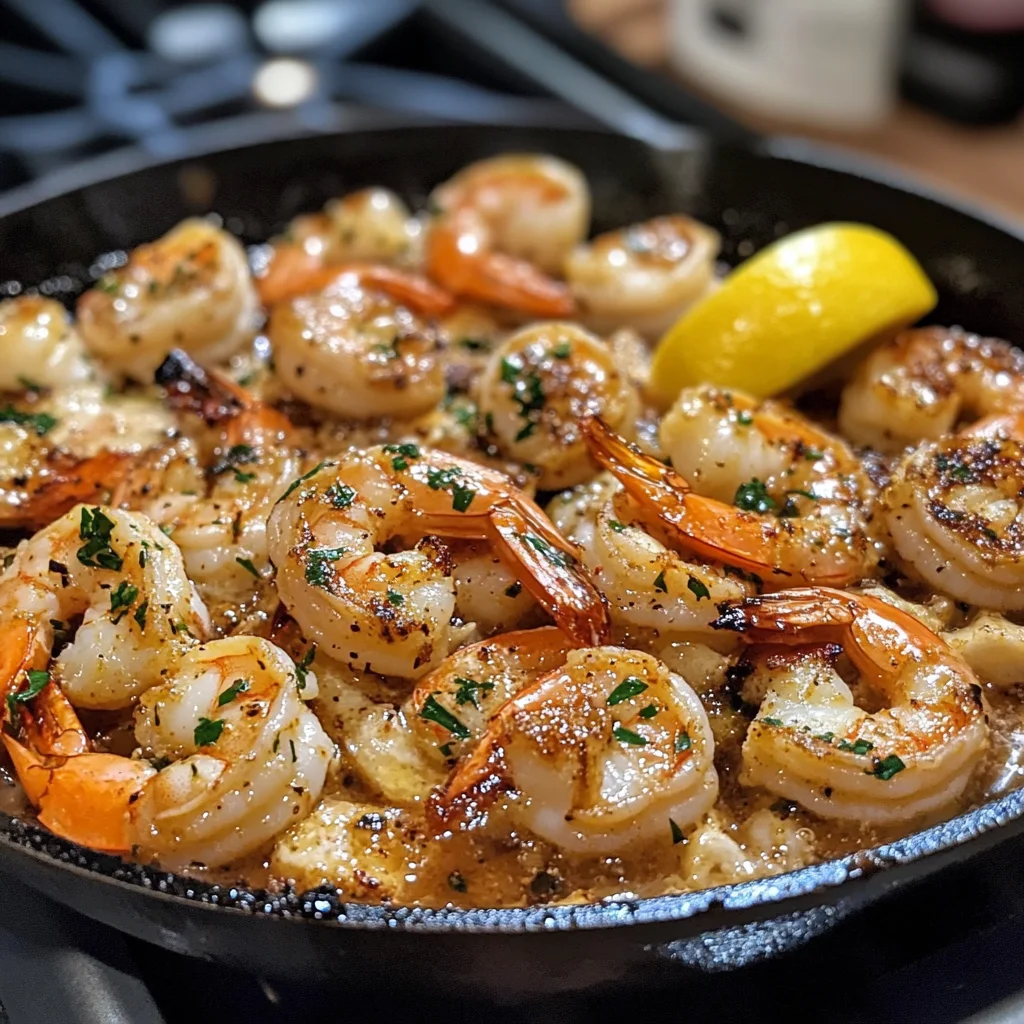
Garlic Butter Lemon Pepper Shrimp Skillet
Introduction
Are you searching for a quick, delicious, and nutritious dinner that’s ready in under 20 minutes? The Garlic Butter Lemon Pepper Shrimp Skillet is your answer. This one-pan wonder combines succulent shrimp with aromatic garlic, rich butter, and bright citrus notes for a meal that tastes like it came from a restaurant kitchen. Furthermore, this dish delivers impressive flavors without complicated techniques. Moreover, it’s packed with protein and healthy fats that support your wellness goals. Whether you’re cooking for busy weeknights or entertaining guests, this shrimp skillet delivers every single time.
What Is Garlic Butter Lemon Pepper Shrimp Skillet?
This dish features tender shrimp sautéed in a skillet with butter, minced garlic, fresh lemon juice, and cracked black pepper. The Garlic Butter Lemon Pepper Shrimp Skillet brings together simple ingredients that create complex, satisfying flavors. Additionally, the cooking method ensures each shrimp develops a beautiful sear while staying juicy inside. The lemon pepper seasoning adds brightness and subtle heat that complements the richness of butter. This preparation style originated from classic European cooking techniques but has become a beloved staple in American home kitchens.
The Perfect Balance
The combination works because each component plays a specific role. Garlic provides aromatic depth and immune-boosting properties. Butter creates a luxurious coating that carries flavors throughout the dish. Lemon juice and zest bring acidity that balances richness. Black pepper adds warmth and complexity without overwhelming other ingredients. Together, these elements create a harmonious dish that satisfies multiple taste preferences simultaneously.
Why This Recipe Works
Quick Cooking Time
Shrimp cooks incredibly fast, typically requiring only 3-5 minutes in a hot skillet. This makes the Garlic Butter Lemon Pepper Shrimp Skillet ideal for busy schedules. Additionally, minimal prep work means you can have dinner on the table in 15 minutes total. The one-pan method also reduces cleanup time significantly.
Foolproof Technique
The cooking process is straightforward and forgiving. Even novice cooks can achieve restaurant-quality results. The visual cues are clear—shrimp turns from gray to pink when properly cooked. Moreover, the method prevents overcooking by removing the pan from heat at the right moment.
Versatile and Adaptable
This recipe accommodates various dietary preferences and restrictions easily. It’s naturally low in carbohydrates and high in protein. Furthermore, you can adjust the seasoning intensity to match your taste preferences. The dish pairs well with countless side options, from rice to vegetables.
Key Ingredients
Shrimp
Choose medium to large shrimp for best results. Fresh or frozen works equally well. Peeled and deveined shrimp saves preparation time. Pat them completely dry before cooking to achieve proper searing. Quality shrimp should smell fresh and oceanic, never fishy or ammonia-like.
Butter
Use unsalted butter to control the salt level in your dish. Butter provides richness and helps create the signature sauce. It also serves as the cooking fat that prevents sticking. Room temperature butter mixes more easily with other ingredients.
Garlic
Fresh minced garlic is essential for authentic flavor. Typically, 4-5 cloves provide the right amount of pungency. Garlic contains compounds that boost immune function and provide anti-inflammatory benefits. Cook it briefly to release aromatics without burning.
Lemon
Both juice and zest contribute to this recipe. Fresh lemon provides the best flavor compared to bottled options. The zest contains essential oils that intensify citrus notes. One large lemon typically yields enough juice and zest for this dish.
Black Pepper and Lemon Pepper Seasoning
Freshly cracked black pepper delivers more flavor than pre-ground varieties. Lemon pepper seasoning combines dried lemon zest with cracked pepper for convenience. This seasoning blend is low in calories and contains beneficial antioxidants. It may support digestion and provide immune system benefits through its vitamin C content.
Supporting Ingredients
Red pepper flakes add optional heat. Fresh parsley contributes color and herbaceous notes. Olive oil can be combined with butter for a lighter option. Salt and additional pepper season to taste.
Health Benefits
High-Quality Protein Source
Shrimp provides approximately 20 grams of protein per 3-ounce serving. This lean protein supports muscle growth and repair. Additionally, shrimp contains all essential amino acids your body needs. The high protein content promotes satiety, helping control appetite throughout the day.
Rich in Omega-3 Fatty Acids
Each 100-gram serving of shrimp contains about 540 mg of omega-3 fatty acids. These healthy fats support heart health and reduce inflammation. Omega-3s also benefit brain function and may improve memory. Regular consumption might reduce cardiovascular disease risk.
Low in Calories and Fat
Shrimp contains only 84 calories per 3-ounce serving. It’s naturally low in fat, making it excellent for weight management. The Garlic Butter Lemon Pepper Shrimp Skillet remains relatively light despite the butter. This makes it suitable for calorie-conscious individuals.
Essential Vitamins and Minerals
Shrimp provides significant amounts of vitamin B12, which supports nerve health. It contains phosphorus for bone strength. Selenium acts as an antioxidant, protecting cells from damage. Iodine supports proper thyroid function.
Immune System Support
Garlic’s antimicrobial and antiviral properties help fight infections. Studies show regular garlic consumption can reduce illness frequency and severity. Garlic stimulates various immune cells including macrophages and natural killer cells. The antioxidants in garlic and lemon pepper may protect against chronic diseases.
Anti-Inflammatory Properties
Both garlic and omega-3 fatty acids provide anti-inflammatory effects. Black pepper contains piperine, which offers anti-inflammatory benefits. These properties may help reduce inflammation throughout the body. Vitamin C from lemon supports immune function and acts as an antioxidant.
Step-by-Step Cooking Instructions
Preparation Phase
Start by gathering all ingredients before you begin cooking. Remove shrimp from the refrigerator 10 minutes before cooking. Thoroughly pat shrimp dry with paper towels—this step is crucial for proper searing. Mince garlic cloves finely and set aside. Zest and juice your lemon, keeping them separate. Measure out butter and have it ready near the stove.
Seasoning the Shrimp
Place dried shrimp in a bowl. Season with salt, black pepper, and lemon pepper seasoning. Toss gently to coat each piece evenly. Some recipes suggest adding paprika for extra color and mild flavor. However, ensure shrimp isn’t overseasoned—you’ll add more flavor during cooking.
Heating the Pan
Select a large skillet, preferably 12 inches or larger. Cast iron or stainless steel works best for proper searing. Heat the pan over medium-high heat until quite hot. Add butter and a small amount of olive oil if desired. Wait until the butter melts and begins sizzling before proceeding.
Cooking the Garlic
Add minced garlic and optional red pepper flakes to the hot butter. Stir constantly to prevent burning—this takes only 30 seconds. The garlic should become fragrant but not brown. This quick cooking releases aromatic compounds without creating bitterness.
Searing the Shrimp
Add seasoned shrimp to the skillet in a single layer when possible. Avoid overcrowding, which causes steaming instead of searing. Let shrimp cook undisturbed for 2 minutes on the first side. This develops a beautiful golden sear. Flip each shrimp and cook the other side for 2-3 minutes.
Finishing Touches
Remove the pan from heat when shrimp turns completely pink and opaque. Add lemon juice and zest immediately. Toss everything together to coat shrimp in the flavorful sauce. Sprinkle with fresh chopped parsley. Taste and adjust seasoning if necessary.
Plating and Serving
Transfer the Garlic Butter Lemon Pepper Shrimp Skillet to a serving platter immediately. Alternatively, serve directly from the pan for a rustic presentation. Drizzle any remaining butter sauce over the shrimp. Garnish with extra lemon wedges and fresh herbs.
Tips for Perfect Shrimp Every Time
Don’t Overcook
Overcooked shrimp becomes rubbery and loses its tender texture. Watch for the color change from gray to pink. Shrimp cooks through when it forms a C-shape. Remove from heat immediately at this stage.
Use High Heat
A hot pan creates the proper sear and prevents sticking. Medium-high heat works best for most stovetops. The butter should sizzle when shrimp hits the pan. This high temperature quickly cooks the exterior while keeping the interior juicy.
Keep Shrimp Dry
Moisture prevents proper browning and creates excess liquid. Pat shrimp thoroughly with paper towels before seasoning. Even frozen shrimp should be completely thawed and dried. This simple step dramatically improves the final texture.
Don’t Crowd the Pan
Leave space between each shrimp for even cooking. Crowding causes steaming rather than searing. Cook in batches if your pan isn’t large enough. This ensures each piece develops the desired golden color.
Use Fresh Garlic
Pre-minced garlic lacks the pungency of fresh cloves. Mince garlic just before cooking for maximum flavor. Furthermore, fresh garlic provides more health benefits than processed versions.
Add Lemon at the End
Lemon juice can make shrimp tough if added too early. Wait until the last moment to incorporate citrus. This preserves the bright, fresh flavor. The residual heat warms the lemon juice without cooking it.
Variations and Customizations
Spicy Version
Increase red pepper flakes for more heat. Add cayenne pepper to the seasoning mix. Include diced jalapeños with the garlic. These modifications create a bold, fiery version of the classic recipe.
Creamy Garlic Butter Shrimp
Stir in heavy cream or half-and-half after removing from heat. Add a tablespoon of cream cheese for extra richness. This creates a luscious sauce perfect for serving over pasta. However, remember this increases the calorie content.
Herb-Enhanced
Incorporate fresh thyme, basil, or dill along with parsley. These herbs complement the lemon pepper beautifully. Add them at the end to preserve their delicate flavors. Fresh herbs contribute additional antioxidants and nutrients.
Mediterranean Style
Include sun-dried tomatoes and capers for briny flavor. Add artichoke hearts for substance. Finish with crumbled feta cheese. This variation pairs wonderfully with orzo or couscous.
Asian-Inspired
Replace butter with sesame oil for a different profile. Add fresh ginger alongside the garlic. Include a splash of soy sauce instead of salt. Garnish with sliced scallions and sesame seeds.
Low-Sodium Option
Use unsalted butter and skip added salt. Increase lemon juice and zest for flavor compensation. Lemon pepper seasoning can serve as a low-sodium flavor enhancer. This makes the dish more suitable for restricted diets.
Serving Suggestions
Over Grains
Serve the Garlic Butter Lemon Pepper Shrimp Skillet over fluffy white or brown rice. Rice pilaf provides a flavorful base that soaks up the butter sauce. Quinoa offers a protein-rich, gluten-free alternative. Couscous cooks quickly and pairs beautifully with Mediterranean flavors.
With Pasta
Toss shrimp with linguine, angel hair, or fettuccine. The butter sauce naturally coats pasta strands. Add pasta cooking water to thin the sauce if needed. Sprinkle with parmesan cheese before serving.
Alongside Vegetables
Roasted asparagus complements shrimp perfectly. Sautéed green beans add color and crunch. Roasted broccoli provides nutritional balance. Garlic butter mushrooms echo the main dish’s flavors.
With Fresh Salads
A crisp green salad offers refreshing contrast. Spinach salad with berries adds sweetness. Caesar salad (without chicken) creates a classic pairing. Coleslaw provides cool, creamy texture.
On Crusty Bread
Serve with garlic bread to soak up extra sauce. Toasted baguette slices work beautifully. This transforms the dish into an elegant appetizer. The bread adds satisfying substance.
As a Complete Meal
Combine shrimp with roasted vegetables for a sheet-pan dinner. Include potatoes or sweet potatoes for heartiness. This creates a balanced, one-dish meal. Moreover, everything cooks together for easy cleanup.
Storage and Meal Prep
Refrigeration
Store leftover Garlic Butter Lemon Pepper Shrimp Skillet in an airtight container. Properly stored, it keeps for 2-3 days in the refrigerator. Let shrimp cool to room temperature before sealing. However, note that texture is best when freshly prepared.
Reheating Methods
Reheat gently in a skillet over low heat. Add a small amount of butter or water to prevent drying. Microwave in 30-second intervals, stirring between each. Avoid high heat, which toughens reheated shrimp.
Freezing Considerations
Cooked shrimp doesn’t freeze well—texture becomes rubbery. However, you can freeze raw seasoned shrimp for quick cooking later. Prepare the garlic butter mixture separately and refrigerate. This allows for fresh cooking with minimal prep time.
Meal Prep Strategies
Purchase pre-peeled, deveined shrimp to save time. Pre-mince garlic and store in the refrigerator up to 3 days. Measure out dry seasonings in advance. Keep fresh lemon on hand for last-minute cooking.
Make-Ahead Components
Prepare side dishes earlier in the day. Cook rice or pasta and reheat when needed. Roast vegetables ahead and warm before serving. This reduces dinner preparation to just cooking the shrimp.
Frequently Asked Questions
How do I know when shrimp is fully cooked?
Properly cooked shrimp turns pink and opaque throughout. The shape changes from straight to a C-curve. Internal temperature should reach 145°F. Additionally, the texture becomes firm but not rubbery.
Can I use frozen shrimp for Garlic Butter Lemon Pepper Shrimp Skillet?
Absolutely—frozen shrimp works perfectly well. Thaw completely before cooking by placing in the refrigerator overnight. Alternatively, run under cold water for quick thawing. Pat thoroughly dry before seasoning and cooking.
What size shrimp works best?
Medium to large shrimp (31-40 count per pound) are ideal. They’re substantial enough to develop a good sear. Furthermore, they’re easier to handle than tiny shrimp. Jumbo shrimp work too but may require slightly longer cooking.
Should I remove shrimp tails?
This is purely personal preference. Tails add visual appeal for presentation. However, removing them makes eating easier. Choose based on whether you’re serving formally or casually.
Can I make this dish without butter?
Yes, though the flavor profile changes. Use olive oil or avocado oil as a substitute. The dish becomes lighter but loses some richness. Alternatively, use a combination of oil and butter.
How can I prevent garlic from burning?
Cook garlic very briefly—only 30 seconds. Keep the heat at medium rather than high. Stir constantly while garlic cooks. Add shrimp immediately after garlic becomes fragrant.
What can I substitute for lemon pepper seasoning?
Make your own by combining lemon zest with freshly cracked black pepper. Add a pinch of salt and dried herbs if desired. Store-bought versions offer convenience. However, homemade versions allow you to control sodium content.
Is shrimp healthy for regular consumption?
Shrimp provides excellent nutrition with high protein and omega-3 fatty acids. It’s low in calories and fat. Regular consumption may support heart and brain health. However, individuals with shellfish allergies should avoid it.
Conclusion
The Garlic Butter Lemon Pepper Shrimp Skillet represents everything a weeknight dinner should be—quick, delicious, nutritious, and satisfying. With minimal ingredients and simple techniques, you can create restaurant-quality results in your own kitchen. The combination of tender shrimp, aromatic garlic, rich butter, and bright lemon creates a dish that never disappoints. Moreover, the impressive nutritional profile makes it suitable for various dietary goals. Whether you serve it over rice, alongside vegetables, or with crusty bread, this versatile recipe adapts to your preferences. Try this Garlic Butter Lemon Pepper Shrimp Skillet tonight and discover why it’s become a beloved favorite.
Print
Garlic Butter Lemon Pepper Shrimp Skillet
Description
Garlic Butter Lemon Pepper Shrimp Skillet
Ingredients
-
1 lb large shrimp, peeled & deveined
-
2 tbsp olive oil
-
4 tbsp butter
-
4 cloves garlic, minced
-
1 lemon (zested and juiced)
-
1 tsp lemon pepper seasoning
-
½ tsp paprika
-
½ tsp garlic powder
-
½ tsp salt (adjust to taste)
-
¼ tsp black pepper
-
2 tbsp fresh parsley, chopped
-
Lemon slices (for garnish)
Instructions
1. Season the Shrimp
In a bowl, toss shrimp with:
-
lemon pepper
-
paprika
-
garlic powder
-
salt
-
black pepper
Set aside.
2. Sear the Shrimp
-
Heat olive oil in a large skillet over medium-high heat.
-
Add shrimp in a single layer.
-
Cook 1–2 minutes per side until pink and opaque.
-
Remove shrimp and set aside.
3. Make the Garlic Butter Sauce
-
Reduce heat to medium.
-
Add butter to the skillet and melt.
-
Stir in minced garlic and cook for 30 seconds until fragrant.
-
Add lemon juice and lemon zest.
-
Mix until smooth and bubbling.
4. Combine
Add shrimp back into the skillet and toss to coat in the garlic lemon butter sauce for 1–2 minutes.
5. Finish & Serve
Sprinkle with fresh parsley and garnish with lemon slices.
Serve over:
-
rice
-
pasta
-
mashed potatoes
-
or with crusty garlic bread