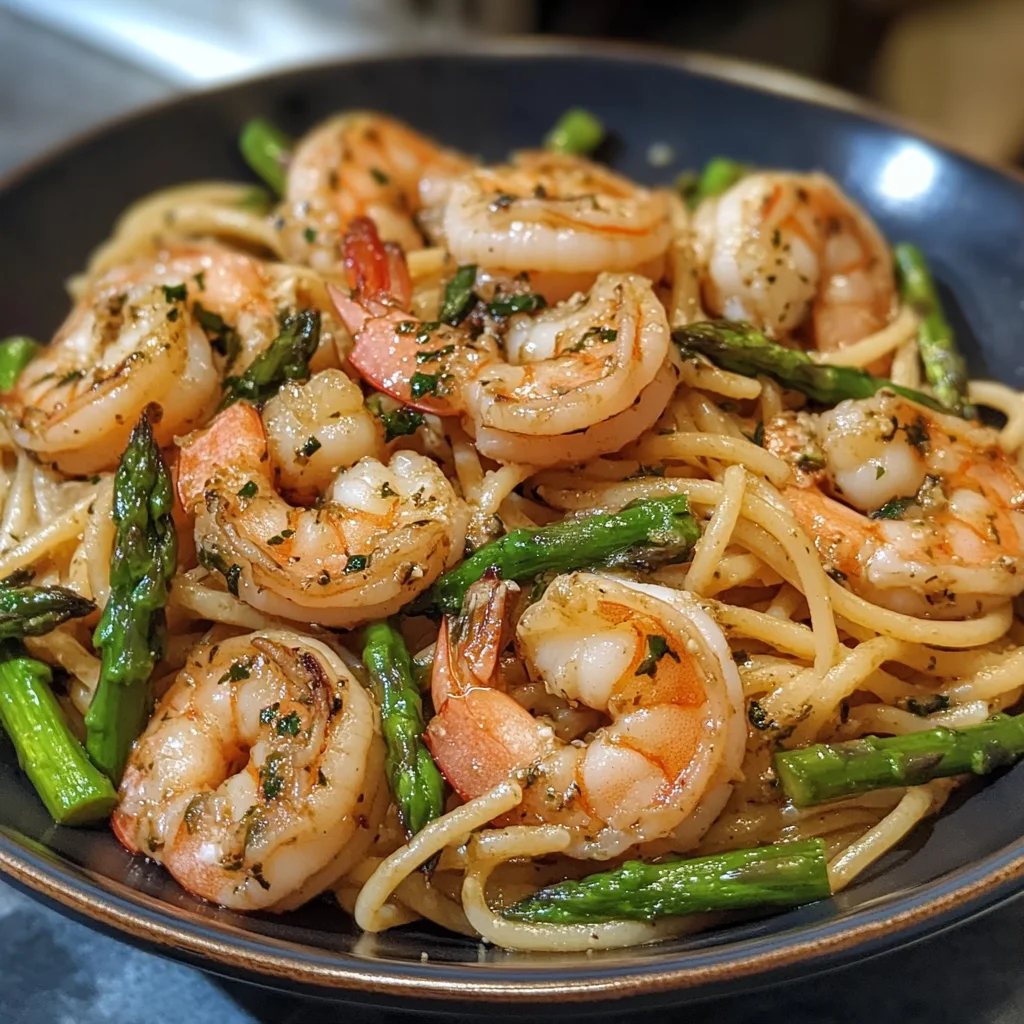
Garlic Butter Shrimp and Asparagus Pasta: A Quick & Delicious Dinner Recipe
Garlic Butter Shrimp and Asparagus Pasta is a restaurant-quality dish you can prepare at home in less than 30 minutes. This combination of succulent shrimp, crisp-tender asparagus, and perfectly cooked pasta tossed in rich garlic butter creates a meal that’s both elegant and comforting. Whether you’re looking for a weeknight dinner solution or an impressive dish for guests, this recipe delivers flavor, nutrition, and simplicity in every bite.
What Makes Garlic Butter Shrimp and Asparagus Pasta Special
This dish stands out because it combines three star ingredients that complement each other perfectly. The buttery, garlicky sauce coats the pasta while highlighting the natural sweetness of shrimp and the earthy flavor of asparagus. Additionally, the recipe comes together quickly, making it ideal for busy weeknights when you want something special without spending hours in the kitchen.
The beauty of Garlic Butter Shrimp and Asparagus Pasta lies in its simplicity. You don’t need complicated techniques or hard-to-find ingredients to create a memorable meal. Furthermore, this dish offers excellent nutritional value, providing lean protein, vitamins, and minerals in a balanced, satisfying portion.
The combination creates textural contrast that keeps every bite interesting. Tender shrimp pairs with crisp asparagus, while the pasta provides a comforting base. Moreover, the garlic butter sauce ties everything together with rich, aromatic flavor that’s impossible to resist.
Nutritional Benefits of This Dish
Shrimp: A Protein Powerhouse
Shrimp delivers impressive nutritional benefits in a low-calorie package. A 3-ounce serving contains approximately 84 calories and 20.4 grams of protein, making it an excellent choice for muscle growth and repair. Additionally, shrimp provides essential vitamins and minerals including vitamin B12, phosphorus, selenium, and zinc.
This seafood option contains beneficial omega-3 fatty acids that support heart and brain health. Furthermore, shrimp is rich in astaxanthin, a powerful antioxidant that reduces inflammation and oxidative stress. Despite containing cholesterol, research suggests shrimp doesn’t negatively impact heart health when consumed as part of a balanced diet.
Asparagus: A Nutrient-Dense Vegetable
Asparagus brings numerous health benefits to this pasta dish. A half-cup serving contains only 20 calories while providing 57% of the recommended daily intake of vitamin K, which supports blood clotting and bone health. Additionally, asparagus delivers 34% of your daily folate requirement, essential for cell growth and DNA formation.
This green vegetable contains fiber, potassium, and antioxidants that promote cardiovascular health. Moreover, asparagus provides minerals like phosphorus, iron, and calcium that contribute to strong bones. The combination of vitamins A, C, and E further enhances its antioxidant properties.
Balanced Nutrition in Every Serving
When combined, this Garlic Butter Shrimp and Asparagus Pasta creates a well-rounded meal. The dish typically contains around 300-400 calories per serving, depending on portion size and preparation methods. Additionally, you get a good balance of protein, healthy fats from butter and shrimp, complex carbohydrates from pasta, and fiber from asparagus.
Essential Ingredients You’ll Need
Main Components
The foundation of this dish requires just a few key ingredients. You’ll need 1/2 to 3/4 pound of large shrimp, preferably shell-on for maximum flavor. Additionally, gather 1/2 pound of fresh asparagus, trimmed and cut into bite-sized pieces.
For the pasta, plan on using 8 ounces to 1/2 pound of your preferred shape. Furthermore, you’ll need 3-4 tablespoons of unsalted butter, several cloves of minced garlic, and fresh lemon juice for brightness.
Seasonings and Finishing Touches
Salt and pepper form the basic seasoning foundation for this dish. Moreover, fresh herbs like parsley and chives add color and fresh flavor. Grated Parmesan cheese provides a salty, umami finish that enhances the overall taste.
Consider having red pepper flakes on hand if you enjoy a touch of heat. Additionally, extra virgin olive oil adds richness when drizzled over the finished dish. These simple ingredients create complex, layered flavors when combined properly.
Choosing the Right Pasta Shape
Best Pasta Types for Shrimp Dishes
Long pasta shapes work exceptionally well with shrimp and butter sauces. Linguine is the traditional choice for seafood pasta, providing the perfect surface for sauce to cling to. Similarly, fettuccine offers a slightly wider ribbon that pairs beautifully with chunky ingredients.
Spaghetti or angel hair pasta also complement shrimp dishes wonderfully. Additionally, these thinner options cook quickly and allow the delicate shrimp flavor to shine through. The smooth texture of long pasta creates an elegant presentation that’s perfect for special occasions.
Short Pasta Alternatives
If you prefer short pasta shapes, several options work well. Farfalle (bow-tie pasta) holds sauce in its center crevices and pairs nicely with shrimp. Moreover, fusilli or gemelli’s twisted shapes grab onto butter sauce and small pieces of asparagus.
However, some experts suggest avoiding penne for butter-based seafood dishes, as it’s better suited for tomato or meat sauces. Instead, choose shapes with curves or ridges that capture the garlic butter. Ultimately, personal preference plays a significant role in pasta selection.
Step-by-Step Cooking Instructions
Preparation Phase
Begin by bringing a large pot of salted water to a rolling boil for the pasta. Meanwhile, prepare your shrimp by peeling and deveining them, saving the shells if you want extra flavor. Additionally, trim the asparagus by snapping off the woody ends and cutting the spears into 1-2 inch pieces.
Mince your garlic cloves and gather all other ingredients before you start cooking. Furthermore, have a large skillet ready and measure out your butter. This mise en place approach ensures smooth, stress-free cooking.
Cooking the Pasta
Add your pasta to the boiling salted water and cook according to package directions until al dente. Importantly, reserve at least one cup of starchy pasta water before draining. This pasta water becomes crucial for creating a silky, cohesive sauce later.
Drain the pasta one minute before it reaches perfect doneness, as it will continue cooking in the sauce. Additionally, return the drained pasta to its pot to keep it warm while you prepare the other components. The retained heat prevents the pasta from becoming cold and sticky.
Cooking the Asparagus
Heat your skillet over medium-high heat and add 1 tablespoon each of olive oil and butter. Once the butter melts, add the asparagus pieces and season lightly with salt and pepper. Cook for 3-4 minutes, stirring occasionally, until the asparagus turns bright green and becomes crisp-tender.
Remove the asparagus from the pan and set it aside on a plate. Importantly, don’t overcook the asparagus at this stage, as it will be added back to the pan later. The asparagus should retain some bite and not become mushy.
Preparing the Shrimp
Season your shrimp lightly with salt and pepper on both sides. Increase the heat to high and add the shrimp to the skillet in a single layer. Cook for 1-2 minutes per side until the shrimp turn pink and slightly opaque.
When you flip the shrimp, add minced garlic and optional red pepper flakes to the pan. Additionally, cook just until the garlic becomes fragrant, about one minute. Remove the pan from heat immediately to prevent the garlic from burning.
Creating the Sauce
Add a splash of reserved pasta water to the pan to deglaze and create the base of your sauce. Next, return the asparagus and cooked pasta to the skillet with the shrimp. Toss everything together gently to combine the ingredients.
Add lemon zest, fresh lemon juice, and the remaining cold cubed butter. Furthermore, continue tossing while adding more pasta water as needed to create a creamy, glossy sauce. The cold butter emulsifies with the starchy pasta water to create a velvety coating.
Final Assembly
Reduce the heat to low and stir in grated Parmesan cheese. Additionally, add freshly chopped parsley and chives for color and fresh flavor. Taste and adjust the seasoning with additional salt, pepper, or lemon juice as needed.
Serve immediately while the dish is hot and the sauce is at its silkiest consistency. Moreover, garnish with extra Parmesan cheese, fresh herbs, or a drizzle of quality olive oil. The entire cooking process takes just 15-20 minutes from start to finish.
Expert Tips for Perfect Results
Shrimp Cooking Secrets
Never overcook your shrimp, as they become rubbery and lose their tender texture. Cook shrimp only until they turn pink and opaque, which typically takes 3-4 minutes total. Additionally, if you have time, cook the shrimp shells briefly in butter before discarding them to extract extra seafood flavor.
Purchasing shell-on shrimp provides better value and more flavor options. Furthermore, pat the shrimp dry before cooking to achieve better browning. Room temperature shrimp cook more evenly than cold ones straight from the refrigerator.
Pasta Water Magic
The starchy pasta water is essential for creating a proper sauce. This liquid helps the butter emulsify and coat the pasta evenly. Moreover, always reserve at least one cup before draining, as you can’t add more later.
Add pasta water gradually, a few tablespoons at a time, until you reach your desired consistency. Additionally, finishing the pasta directly in the sauce allows the noodles to absorb flavors. This technique creates restaurant-quality results at home.
Butter Technique
Adding cold cubed butter at the end of cooking creates a smooth, shiny sauce. This technique, known as mounting with butter, gives professional results. Furthermore, keep the heat low when adding butter to prevent it from separating.
Melt butter gently with garlic to infuse flavor without browning or burning. Additionally, cook garlic over medium-low heat just until fragrant, typically 2-3 minutes. Burnt garlic tastes bitter and ruins the dish.
Common Mistakes to Avoid
Overcooking Proteins and Vegetables
The most frequent mistake is overcooking the shrimp until they become tough and chewy. Remove shrimp from heat as soon as they turn pink and opaque. Similarly, overcooked asparagus becomes mushy and loses its appealing texture.
Cook asparagus just until bright green and crisp-tender, not soft. Additionally, remember that both shrimp and asparagus continue cooking from residual heat after removal from the pan. Slightly undercooking ensures perfect texture in the final dish.
Sauce Problems
Not reserving enough pasta water leads to dry, clumpy pasta. The starchy water is irreplaceable for creating silky sauce. Moreover, adding butter to heat that’s too high causes it to separate rather than emulsify.
Burning garlic creates bitter, acrid flavors that overpower the dish. Furthermore, skipping the lemon juice results in a sauce that tastes flat and overly rich. Acid balance is crucial for well-rounded flavor.
Timing Issues
Starting all components at once leads to overcooked ingredients while you finish others. Instead, follow the sequence outlined in the recipe for best results. Additionally, trying to keep the dish warm too long causes the sauce to break and the pasta to become gummy.
Serve this Garlic Butter Shrimp and Asparagus Pasta immediately after preparation for optimal texture and flavor. Moreover, have all your ingredients prepped before you start cooking so you can work efficiently. The entire cooking process moves quickly once you begin.
Popular Variations and Substitutions
Protein Alternatives
While shrimp is traditional, you can substitute other proteins successfully. Scallops work beautifully in this garlic butter sauce, cooking in about the same time as shrimp. Additionally, chunks of firm white fish like cod or halibut provide a mild flavor that complements the other ingredients.
For a surf-and-turf twist, add crispy bacon pieces as garnish or mix them into the pasta. Moreover, chicken breast cut into bite-sized pieces offers a more economical option while still absorbing the garlic butter flavors. Each protein brings its own character to the dish.
Vegetable Options
Asparagus pairs perfectly with shrimp, but other vegetables work well too. Cherry tomatoes add sweetness and acidity that brightens the rich butter sauce. Additionally, fresh spinach wilts quickly into the pasta, adding nutrients and color.
Bell peppers and celery create more vegetable variety and textural interest. Furthermore, broccoli florets substitute nicely for asparagus, offering similar nutritional benefits. Seasonal vegetable choices keep this dish interesting throughout the year.
Sauce Modifications
Transform the basic garlic butter into different flavor profiles with simple additions. A splash of chicken or vegetable broth creates a lighter sauce with more volume. Moreover, adding heavy cream produces a richer, more indulgent pasta.
Fresh herbs beyond parsley and chives add complexity to the flavor. Additionally, incorporating different cheese varieties like pecorino Romano or Asiago changes the taste profile. Lemon zest provides extra citrus brightness without adding liquid.
Serving Suggestions and Pairings
Complete Meal Ideas
Serve this Garlic Butter Shrimp and Asparagus Pasta as a complete main course. The dish already contains protein, vegetables, and carbohydrates for a balanced meal. Additionally, a simple green salad with light vinaigrette complements the rich pasta without overwhelming it.
Crusty bread for soaking up extra garlic butter sauce enhances the dining experience. Moreover, garlic bread or focaccia makes an excellent accompaniment that guests always appreciate. These additions turn the pasta into a restaurant-quality dinner at home.
Presentation Tips
Serve the pasta in shallow bowls or on rimmed plates to contain the sauce. Garnish each serving with freshly grated Parmesan, chopped herbs, and a lemon wedge. Additionally, a light drizzle of high-quality olive oil adds visual appeal and extra richness.
For special occasions, consider topping with toasted pine nuts for added crunch and sophistication. Furthermore, arrange a few whole shrimp on top as an attractive garnish. Beautiful presentation elevates even simple weeknight dinners.
Portion Guidelines
A typical serving of this pasta contains 2 ounces of dry pasta per person for a main course. However, if serving with substantial sides, reduce the pasta portion slightly. Additionally, plan on 3-4 ounces of shrimp per serving for adequate protein.
The recipe easily scales up or down depending on the number of diners. Moreover, leftovers keep well for lunch the next day, though the texture is best when freshly made. Consider doubling the recipe for meal prep purposes.
Storage and Reheating Guidelines
Proper Storage Methods
Store leftover Garlic Butter Shrimp and Asparagus Pasta in an airtight container in the refrigerator. The dish keeps for up to 3 days when properly stored. Additionally, separate any uneaten portions into individual containers for easy grab-and-go lunches.
Cool the pasta to room temperature before refrigerating to prevent excess condensation. Moreover, adding a small drizzle of olive oil before storing helps prevent the noodles from sticking together. Label containers with the date to track freshness.
Reheating Techniques
Reheat leftovers gently to prevent the shrimp from becoming rubbery. The stovetop method works best: add a splash of water or broth to a pan, add the pasta, and warm over medium-low heat. Additionally, stir frequently to ensure even heating and prevent sticking.
Microwave reheating works in a pinch but produces less ideal texture. Add a tablespoon of water, cover the dish, and heat in 30-second intervals, stirring between each. Furthermore, avoid overheating, which toughens the shrimp and dries out the pasta.
Freezing Considerations
Freezing this dish is not recommended due to texture changes. Shrimp can become mushy when frozen in sauce, and pasta texture degrades significantly. Additionally, butter sauces often separate upon thawing, resulting in an unappetizing appearance.
If you must freeze, cook the components separately and freeze only the cooked shrimp. Moreover, prepare fresh pasta and sauce when ready to eat, then add the thawed shrimp. This approach maintains better overall quality.
Frequently Asked Questions
Can I use frozen shrimp for this Garlic Butter Shrimp and Asparagus Pasta?
Yes, frozen shrimp works perfectly well for this recipe. Thaw them completely in the refrigerator overnight or under cold running water before cooking. Additionally, pat the shrimp very dry with paper towels to remove excess moisture. This ensures proper browning during cooking.
What’s the best way to tell when shrimp are cooked?
Shrimp are done when they turn pink, opaque, and form a loose C-shape. They should feel firm to the touch but not hard. Additionally, properly cooked shrimp take only 1-2 minutes per side over high heat. Overcooked shrimp curl into tight circles and develop a rubbery texture.
Can I make this dish ahead of time?
This pasta tastes best when served immediately after preparation. However, you can prep ingredients in advance by cleaning shrimp, trimming asparagus, and mincing garlic. Additionally, you can blanch the asparagus ahead and store it in the refrigerator. Cook the pasta and assemble the dish just before serving for optimal texture.
How do I prevent the garlic from burning?
Cook garlic over medium-low to medium heat rather than high heat. Add it to melted butter and cook just until fragrant, typically 2-3 minutes. Additionally, remove the pan from heat immediately if the garlic begins to brown. Burnt garlic creates bitter flavors that negatively affect the entire dish.
What can I substitute for butter?
While butter creates the signature flavor, olive oil works as a substitute. Use extra virgin olive oil for the best flavor. Additionally, a combination of olive oil and a smaller amount of butter provides good results with less saturated fat. However, the creamy, rich texture will differ slightly from the traditional preparation.
Is this recipe gluten-free?
Traditional pasta contains gluten, but you can easily adapt this recipe. Simply substitute gluten-free pasta made from rice, corn, or chickpeas. Additionally, ensure all other ingredients, including broth if used, are certified gluten-free. The cooking method remains exactly the same regardless of pasta type.
How can I make this dish spicier?
Add red pepper flakes to the garlic when cooking the shrimp. Start with 1/4 teaspoon and adjust to your heat preference. Additionally, fresh chili peppers or a dash of hot sauce stirred into the finished dish adds customizable heat. Moreover, spicy variations pair well with the rich butter sauce.
What if I don’t have fresh asparagus?
Frozen asparagus works in a pinch, though the texture won’t be quite as crisp. Thaw completely and pat very dry before cooking. Additionally, reduce the cooking time since frozen asparagus is partially cooked during processing. Fresh alternatives like green beans or broccolini provide similar color and texture.
Conclusion
Garlic Butter Shrimp and Asparagus Pasta delivers restaurant-quality flavor in a simple, quick-cooking format perfect for any night of the week. This dish combines lean protein, nutritious vegetables, and satisfying pasta in a luxurious garlic butter sauce that comes together in under 30 minutes. The recipe’s versatility allows for numerous variations while maintaining its essential character.
By following the techniques outlined in this guide, you’ll achieve perfectly cooked shrimp, crisp-tender asparagus, and silky sauce every time. Remember to reserve pasta water, avoid overcooking the shrimp, and serve immediately for best results. Whether preparing a weeknight family dinner or entertaining guests, this Garlic Butter Shrimp and Asparagus Pasta consistently impresses with its elegant simplicity and delicious flavors.
Print
Garlic Butter Shrimp and Asparagus Pasta
Description
Garlic Butter Shrimp and Asparagus Pasta
Servings: 4
Calories: ~520 per serving
Prep Time: 10 minutes
Cook Time: 15 minutes
Total Time: 25 minutes
Ingredients
-
10 oz (280 g) fettuccine or spaghetti
-
1 lb (450 g) large shrimp, peeled and deveined
-
1 bunch asparagus, trimmed and cut into 2-inch pieces
-
4 tbsp butter
-
3 cloves garlic, minced
-
1/2 cup grated Parmesan cheese
-
1/4 cup chicken broth
-
Juice of 1/2 lemon
-
1 tsp Italian seasoning
-
Salt and black pepper, to taste
-
2 tbsp olive oil
-
Fresh parsley, chopped (for garnish)
Instructions
-
Cook the pasta:
Bring a large pot of salted water to a boil. Cook pasta until al dente. Reserve 1/2 cup of pasta water, then drain and set aside. -
Cook the asparagus:
In a large skillet, heat 1 tbsp olive oil over medium heat. Add asparagus and sauté for 3–4 minutes until tender-crisp. Remove and set aside. -
Cook the shrimp:
In the same skillet, add another tbsp olive oil and the shrimp. Season with salt, pepper, and Italian seasoning. Cook 2–3 minutes per side until pink. Remove and set aside. -
Make the garlic butter sauce:
In the same skillet, melt butter. Add minced garlic and cook for 30 seconds until fragrant.
Stir in chicken broth and lemon juice, scraping up any browned bits. Simmer 1–2 minutes. -
Combine everything:
Add pasta, shrimp, and asparagus back to the pan. Toss to coat in the sauce. Stir in Parmesan cheese and a splash of reserved pasta water to loosen if needed. -
Serve:
Garnish with chopped parsley, extra Parmesan, and a squeeze of lemon. Serve warm!