
Article Introduction
Prepare to embark on a culinary journey that will transform your weeknight dinners and impress your most discerning guests. This isn’t just another pasta recipe; oh no, this is a deep dive into the art of creating the ultimate comfort food masterpiece: Garlic Sausage Alfredo Rigatoni. We’re talking about a symphony of flavors and textures where savory, garlic-infused Italian sausage meets a luxuriously creamy, homemade Alfredo sauce, all clinging perfectly to the robust tubes of rigatoni pasta. Throughout this guide, we’ll unravel the secrets to achieving restaurant-quality results right in your own kitchen, from selecting the finest ingredients to mastering the techniques that prevent common pitfalls. So, grab your favorite skillet and get ready to create something truly magical.
The Allure of the Dish
Garlic Sausage Alfredo Rigatoni: The Comfort Food King
Let’s be honest, shall we? Sometimes, only a big, hearty bowl of creamy pasta will do. You know the feeling—when you crave something deeply satisfying, incredibly flavorful, and utterly comforting. Well, look no further than this spectacular dish. Garlic Sausage Alfredo Rigatoni isn’t just food; it’s an experience, a hug in a bowl that combines three powerhouse elements into one unforgettable meal.
Frankly, the name itself is a promise of goodness. Firstly, you have the savory, spiced heartiness of the sausage. Then, there’s the rich, velvety embrace of the Alfredo. Finally, you get the wonderfully substantial rigatoni pasta, which is designed to scoop up every last bit of that glorious sauce. Consequently, each forkful is a perfect bite, a harmonious blend that is far greater than the sum of its parts.
Why This Dish Wins Every Time
Why does this particular recipe deserve a permanent spot in your repertoire? Well, for starters, it’s a crowd-pleaser of the highest order. Believe it or not, it manages to feel both decadently gourmet and reassuringly familiar at the same time.
The Perfect Balance of Flavors and Textures
This dish is a masterclass in balance. The creamy pasta recipe provides a lush, smooth base that is brilliantly cut through by the robust, garlicky notes of the Italian sausage. Moreover, the rigatoni itself offers a delightful chewy resistance (that’s the al dente bite we’re after!) that stands up beautifully to the chunky sauce. You see, it’s this incredible interplay between creamy and meaty, soft and substantial, that makes it so compulsively enjoyable.
Surprisingly Achievable Gourmet at Home
Now, you might be thinking that such a luxurious-sounding dish belongs on a restaurant menu. On the contrary, one of the best things about this Garlic Sausage Alfredo Rigatoni is how deceptively simple it is to create. With a few pro tips and a little confidence, you can easily recreate—and honestly, surpass—that restaurant magic right on your own stovetop. Therefore, you’re not just following a recipe; you’re unlocking a new level of home cooking prowess.
Deconstructing the Dish: A Symphony of Ingredients
The Anatomy of a Perfect Garlic Sausage Alfredo Rigatoni
Alright, let’s get down to the nuts and bolts! Every great building needs a strong foundation, and this dish is no exception. Furthermore, using high-quality ingredients isn’t just a suggestion; it’s the absolute key to transforming this from a simple weeknight dinner idea into a legendary comfort food pasta. Let’s break it down.
Choosing Your Champion: The Sausage
The sausage is the flavor engine of this entire operation. Its rich, spiced fat will render out, essentially becoming the base of your sauce and infusing every single element with its incredible taste.
Sweet vs. Hot Italian Sausage: The Great Debate
This choice truly comes down to personal preference. Sweet Italian sausage is beautifully seasoned with herbs like fennel and parsley, offering a mild, aromatic flavor that appeals to almost everyone. Conversely, hot Italian sausage brings a glorious kick of red pepper flakes that cuts through the richness of the Alfredo sauce. Honestly, why choose? Using half sweet and half hot is a fantastic way to get the best of both worlds—complex flavor with a gentle, warming heat.
Beyond the Links: Using Bulk Sausage or Alternatives
You can absolutely buy links and simply squeeze the meat out of the casings. However, many butchers now sell ground sausage specifically for recipes just like this, saving you a step. Looking for a lighter option? Chicken or turkey sausage works wonderfully well here, though you may need a touch of olive oil to compensate for their leaner nature.
The Heart of the Matter: Crafting the Alfredo Sauce
Forget the jarred stuff! A homemade Alfredo sauce is a revelation—silky, rich, and bursting with real cheese flavor. It’s surprisingly simple, built on a core principle.
The Holy Trinity: Butter, Cream, and Cheese
This trio is non-negotiable for authenticity. Use real unsalted butter to control the saltiness. Heavy cream is essential for that luxuriously thick and creamy texture that won’t separate easily. Finally, the cheese is the star. You simply must use freshly grated cheese. Pre-packaged, pre-shredded cheese contains anti-caking agents that prevent it from melting smoothly, leading to a grainy sauce. For the best flavor, use a high-quality Parmigiano-Reggiano or a mix with Pecorino Romano for a sharper bite.
Garlic, Garlic, and More Garlic
We’re not shy with the garlic here! While fresh minced garlic is perfect, gently cooking it in the sausage fat tames its bite and sweetens it beautifully. For a truly next-level, mellow flavor, try stirring in a spoonful of garlic confit at the end.
The Perfect Vehicle: Why Rigatoni is Non-Negotiable
You could use another pasta, but you’d be missing out on a textural miracle. Rigatoni pasta is the undisputed champion for hearty, chunky sauces.
Design Genius: Ridges and Tubes
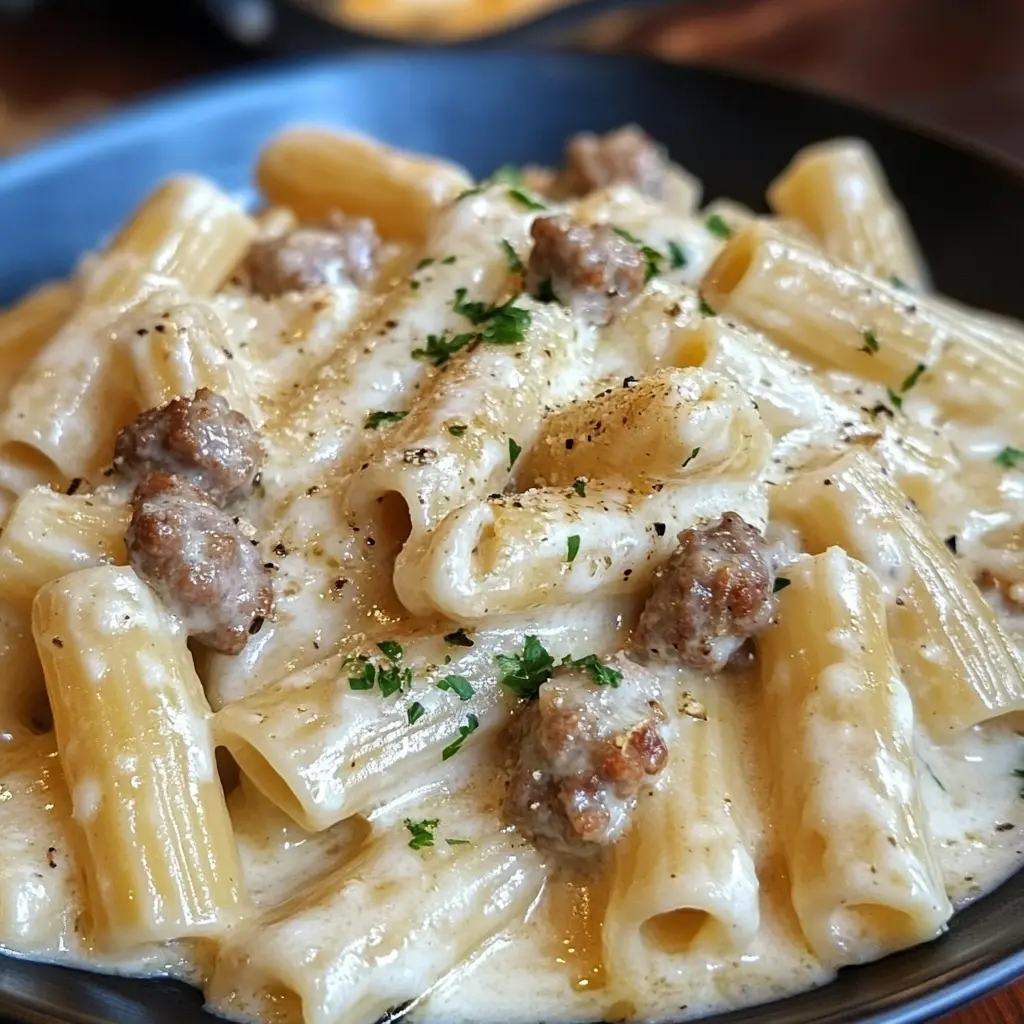
Just look at it! Those large tubes are perfect for capturing little chunks of sausage inside. Meanwhile, the exterior ridges provide a rough surface for the creamy sauce to cling to for dear life. Compared to smoother pastas like ziti or even penne, rigatoni offers a superior sauce-to-pasta ratio in every single bite.
The Ultimate Recipe & Step-by-Step Guide
Your Blueprint for Garlic Sausage Alfredo Rigatoni Perfection
Okay, enough talk—it’s time to cook! This is where the magic happens. Follow these steps closely, and you are guaranteed a flawless result. Remember, cooking is an adventure, so have fun with it!
Gathering Your Arsenal: The Ingredients List
*(Serves 4-6)*
-
1 pound (450g) rigatoni pasta
-
1 pound (450g) Italian sausage (sweet, hot, or a mix), removed from casings if necessary
-
3 tablespoons unsalted butter
-
3-4 cloves garlic, minced
-
2 cups heavy cream
-
1 cup (about 100g) freshly grated Parmigiano-Reggiano, plus more for serving
-
⁄4 teaspoon freshly ground black pepper, plus more to taste
-
⁄4 teaspoon salt (to taste, as the cheese and sausage are salty)
-
⁄4 cup fresh parsley, chopped
-
(Optional) Pinch of red pepper flakes
The Culinary Journey: Step-by-Step Instructions
Step 1: The Foundation – Cooking the Sausage
First, place a large pot of well-salted water on the stove to boil for the pasta. Meanwhile, in a large skillet or Dutch oven over medium-high heat, add the sausage meat. Cook it, breaking it up with a spoon, until it’s beautifully browned and cooked through. This process, called searing, creates fond—those delicious browned bits at the bottom of the pan that are packed with flavor. Once cooked, use a slotted spoon to remove the sausage, leaving the rendered fat behind.
Step 2: Infusing the Flavor – Sautéing the Aromatics
Reduce the heat to medium. Now, add the butter to the sausage drippings in the skillet. Once it melts, add the minced garlic. Cook it for just about 60-90 seconds until it becomes incredibly fragrant. You have to watch it closely so it doesn’t burn! This step, called sautéing the aromatics, is crucial for building a deep flavor base.
Step 3: The Grand Symphony – Building the Alfredo Sauce
Pour the heavy cream into the skillet with the garlic and butter. Bring it to a gentle simmer, then immediately reduce the heat to low. Let it cook gently for 2-3 minutes to thicken slightly. Now, this is the most important part: take the skillet completely off the heat source. Gradually whisk in the freshly grated cheese until it’s fully melted and the sauce is smooth. The residual heat is enough to melt the cheese without causing it to seize or become oily. Season with pepper and taste before adding salt.
Step 4: The Backbone – Cooking the Pasta to Al Dente
While making the sauce, your pasta water should be boiling. Add the rigatoni and cook it according to the package directions until it is al dente—firm to the bite. Crucially, before you drain it, reserve at least 1 cup of the starchy pasta water! This liquid gold is your secret weapon for perfecting the sauce’s consistency. Drain the pasta.
Step 5: The Grand Finale – Bringing It All Together
Return the cooked sausage to the creamy sauce in the skillet. Add the drained rigatoni and toss everything together to coat thoroughly. The sauce might seem a bit thick at first. This is where you work your magic: add the reserved pasta water, a few tablespoons at a time, tossing continuously until the sauce loosens up and coats every inch of pasta in a shiny, glorious cloak. You may not need all the water. Finish by stirring in most of the fresh parsley.
Chef’s Notes: Pro Tips for a Flawless Dish
Grate Your Own Cheese: A Non-Negotiable Tip
I know, I know—it’s an extra step. But trust me, it is the single most important factor in creating a smooth, restaurant-quality sauce. Pre-grated cheese simply will not melt properly. Taking two minutes to grate a block of authentic Parmigiano-Reggiano is the difference between good and mind-blowing.
The Power of Pasta Water: Your Sauce’s Secret Weapon
Never, ever pour that cloudy pasta water down the drain! It is filled with starch released from the pasta during cooking. When added to your sauce, it acts as a powerful emulsifier. Basically, it helps bind the water-based components with the fat-based components (cream, butter, cheese), creating a smooth, cohesive sauce that clings to the pasta instead of sliding off.
Temperature is Key: Avoiding a Broken Sauce
The biggest fear with any cream-based sauce is it “breaking” or becoming grainy and oily. The primary culprit is always excessive heat. Therefore, always remove your pan from the heat before adding the cheese. If your sauce does break, don’t panic! A vigorous whisking with a splash of that hot pasta water can almost always bring it right back together.
Customization, Pairing, and Beyond
Making It Your Own: Variations and Serving Suggestions
You’ve mastered the classic! Now, feel free to put your own spin on it. This recipe is a fantastic canvas for your culinary creativity.
Delicious Variations on a Classic Theme
Add a Pop of Color and Nutrition: Incorporating Veggies
Stirring in vegetables is a brilliant way to add nutrition and color. Try wilting in a few handfuls of fresh spinach at the very end. You could also sauté sliced mushrooms or bell peppers with the garlic. For a sweet pop, a half cup of frozen peas, thawed, added with the sausage is just delightful.
A Touch of Heat and Freshness: Herb and Spice Twists
A pinch of red pepper flakes added with the garlic will infuse the oil with a gentle heat. Stirring in fresh basil or a teaspoon of lemon zest at the end can add a wonderful brightness that cuts through the richness beautifully.
The Perfect Supporting Cast: What to Serve With
This pasta is certainly a meal unto itself. However, a few simple sides can turn it into a true feast.
The Ideal Non-Alcoholic Pairing
The richness of the dish calls for a beverage that can cleanse the palate. A sparkling water with a squeeze of lemon or lime is perfect. Alternatively, an iced herbal tea, like peppermint or lemon verbena, works wonderfully.
Side Dishes to Complete the Feast
A simple green salad with a sharp, tangy vinaigrette is the ideal contrast to the creamy pasta. No pasta dinner is complete without something to soak up the extra sauce; therefore, a side of crispy garlic bread is practically mandatory. For something green, roasted asparagus or broccoli would be a fantastic choice.
The Art of Leftovers: Storage and Reheating
How to Store for Maximum Freshness
Allow the pasta to cool completely before transferring it to an airtight container. It will keep in the refrigerator for up to 3-4 days.
How to Reheat Without a Soggy Mess
The microwave can work if you’re careful: place it in a bowl, add a tiny splash of cream or water, cover loosely, and heat in short bursts, stirring in between. However, the best method is on the stovetop. Gently reheat it in a skillet over low heat, adding a small amount of cream or milk and stirring frequently until it’s warm and smooth again.
FAQs
Garlic Sausage Alfredo Rigatoni: Your Questions Answered
Frequently Asked Questions
Q1: Can I use a different pasta for this recipe?
A: Absolutely. While rigatoni is ideal, other short, sturdy pasta like penne, ziti, or cavatappi will work well. Avoid long, thin pasta like spaghetti or linguine for this chunky sauce.
Q2: How can I make this recipe lighter?
A: You can make a few substitutions: use half-and-half or whole milk instead of heavy cream (though the sauce will be thinner), lean chicken or turkey sausage, and add more vegetables to bulk it up with fewer calories.
Q3: Why did my Alfredo sauce turn out grainy or oily?
A: This usually happens if the heat is too high when adding the cheese, causing the sauce to break. Always add grated cheese off the direct heat and stir constantly. Using pre-grated cheese can also cause graininess. If it breaks, a splash of hot pasta water and vigorous whisking can often bring it back together.
Q4: Can I freeze Garlic Sausage Alfredo Rigatoni?
A: We do not recommend freezing this dish. Cream-based sauces tend to separate and become watery and grainy when thawed and reheated. It is best enjoyed fresh or stored in the fridge for a few days.
Q5: What’s the difference between this and traditional Fettuccine Alfredo?
A: Traditional Fettuccine Alfredo (from Rome) is simpler, often just fettuccine tossed with butter and Parmigiano-Reggiano. Our American-style Alfredo sauce is cream-based. This recipe adds the significant elements of savory garlic and Italian sausage, making it a heartier, more robust dish.
Conclusion
A Dish Worth Mastering
And there you have it! From selecting the perfect sausage to mastering the silky-smooth sauce, you are now equipped with all the knowledge needed to create an unforgettable Garlic Sausage Alfredo Rigatoni. This dish is more than just a recipe; it’s a testament to the power of simple, quality ingredients treated with care. So, gather your ingredients, embrace the process, and get ready to receive rave reviews. This creamy, savory masterpiece is sure to become a legendary favorite in your home for years to come. Now, go forth and cook with confidence
Garlic Sausage Alfredo Rigatoni
Description
Garlic Sausage Alfredo Rigatoni
Ingredients:
-
12 oz rigatoni pasta
-
1 lb Italian sausage (mild or spicy, casings removed)
-
1 tbsp olive oil (if needed)
-
5 garlic cloves, minced
-
1 small onion, finely diced
-
1 cup heavy cream
-
1 cup whole milk (or more cream for extra richness)
-
1 cup freshly grated Parmesan cheese
-
½ cup shredded mozzarella (optional, for extra creaminess)
-
2 tbsp unsalted butter
-
½ tsp Italian seasoning
-
½ tsp crushed red pepper flakes (optional)
-
Salt & black pepper, to taste
-
Fresh parsley, chopped (for garnish)
Instructions:
-
Cook Pasta:
Bring a large pot of salted water to a boil. Cook rigatoni until al dente according to package directions. Reserve ½ cup pasta water, then drain. -
Cook the Sausage:
In a large skillet or Dutch oven, heat olive oil (if needed). Add sausage and cook until browned, breaking into crumbles (6–7 minutes). Remove and set aside. -
Sauté Aromatics:
In the same skillet, melt butter. Add onion and cook 3 minutes until softened. Stir in garlic and cook 1 minute until fragrant. -
Make Alfredo Sauce:
Pour in heavy cream and milk. Simmer gently (don’t boil) for 3–4 minutes. Stir in Parmesan, mozzarella (if using), Italian seasoning, red pepper flakes, salt, and black pepper. Stir until cheese melts and sauce thickens slightly. -
Combine:
Add cooked sausage and drained rigatoni to the sauce. Toss until pasta is coated, adding a splash of reserved pasta water if needed to loosen. -
Serve:
Garnish with fresh parsley and extra Parmesan. Serve immediately with garlic bread.