
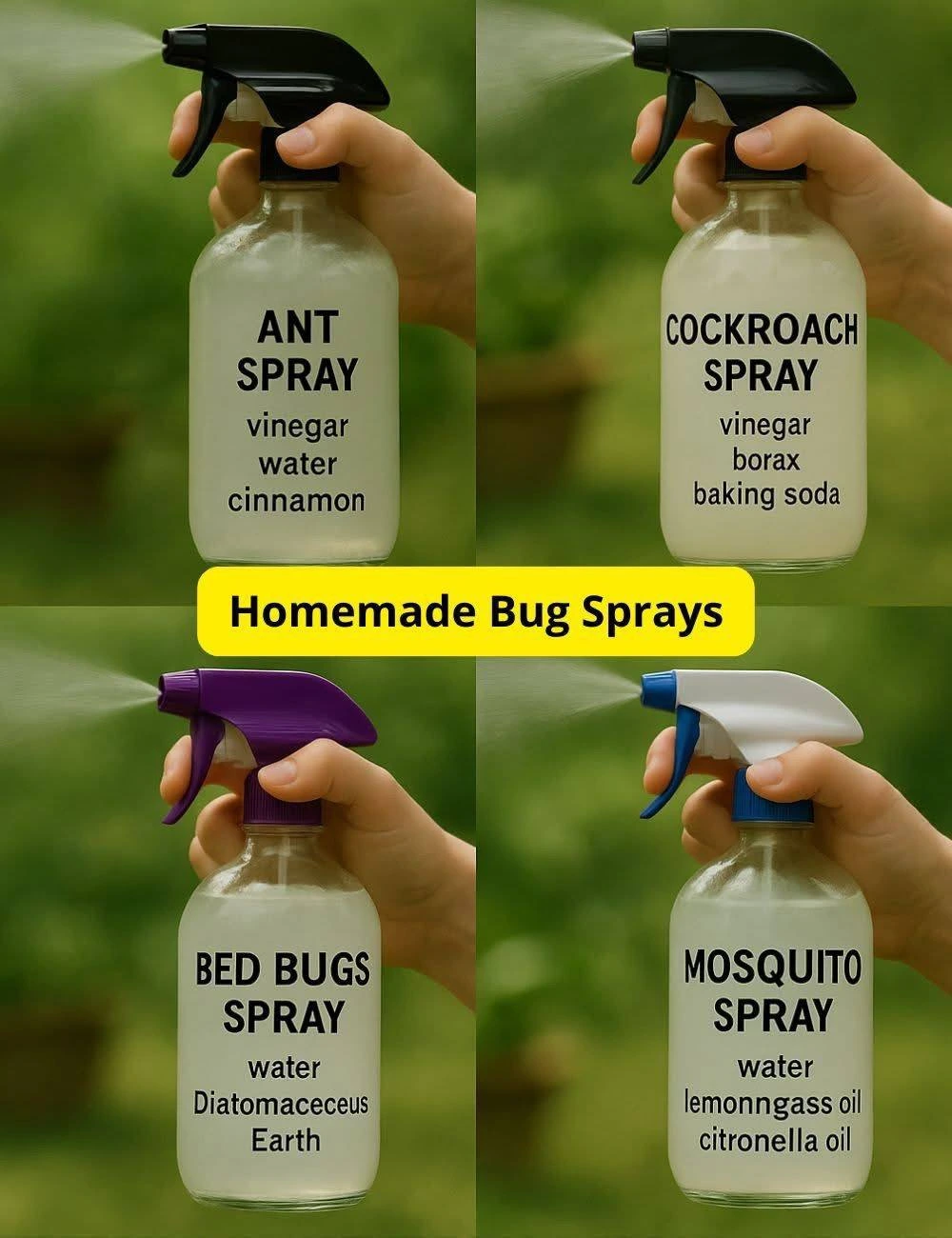
Bug infestations can turn your peaceful home into a nightmare. Whether it’s pesky ants marching through the kitchen, cockroaches lurking in dark corners, bed bugs hiding in your mattress, or mosquitoes buzzing around your living space, bugs are more than just an inconvenience—they can also carry harmful bacteria or diseases. Fortunately, there are natural ways to combat these unwanted visitors.
Homemade bug sprays are not only cost-effective but also safe for children, pets, and the environment. Using ingredients readily available in your kitchen or local store, these DIY remedies allow you to take control of your home without resorting to harsh chemicals. Below are four powerful and easy-to-make recipes for Ant Spray, Cockroach Spray, Bed Bugs Spray, and Mosquito Spray, along with thorough explanations and safety tips.
🐜 1. Ant Spray – Simple, Safe, and Smells Great
Ingredients:
-
1/2 cup white vinegar
-
1/2 cup water
-
1 teaspoon ground cinnamon (or 5 drops of cinnamon essential oil)
Instructions:
-
In a clean spray bottle, combine equal parts white vinegar and water.
-
Add the cinnamon, either as powder or essential oil.
-
Shake the bottle well before each use to ensure the ingredients are mixed.
How It Works:
Vinegar disrupts the pheromone trail that ants follow, making it difficult for them to communicate and find their way. Cinnamon acts as a natural repellent—its strong scent masks the ant trail and discourages ants from coming back. Cinnamon also has antimicrobial properties, making it doubly beneficial when used around food prep areas.
How to Use:
Spray the solution along door frames, windowsills, baseboards, and any other entry points or visible ant trails. Reapply daily or after cleaning the area.
🪳 2. Cockroach Spray – Kill and Repel Naturally
Ingredients:
-
1/2 cup white vinegar
-
1 tablespoon borax powder
-
1 tablespoon baking soda
Instructions:
-
Slowly combine all ingredients in a spray bottle. Be cautious—borax and baking soda will react slightly with vinegar, causing fizzing.
-
Shake the bottle gently before each use.
How It Works:
Borax and baking soda are natural desiccants that dry out the cockroaches’ exoskeletons and digestive systems, effectively killing them. Vinegar, while not lethal, helps to break down grease and grime, which attracts roaches. When mixed, this solution becomes a multipurpose cleaning and bug-fighting tool.
How to Use:
Spray the mixture behind appliances, in cabinet corners, under sinks, and anywhere cockroaches might hide. Be careful not to spray directly on food surfaces without wiping them afterward. Repeat the treatment every few days until no signs of cockroaches remain.
⚠️ Safety Note: Borax should be kept out of reach of pets and children. While natural, it is not safe for ingestion.
🛏️ 3. Bed Bugs Spray – Natural Armor for Your Bed
Ingredients:
-
1 cup water
-
1 tablespoon food-grade diatomaceous earth (DE)
Instructions:
-
Add the water to a spray bottle.
-
Using a funnel, carefully pour in the diatomaceous earth.
-
Shake vigorously and frequently to keep the mixture suspended before spraying.
How It Works:
Diatomaceous earth is a fine powder made from fossilized algae. It’s harmless to humans and animals when used externally, but deadly to bugs. The powder penetrates the bed bugs’ waxy coating, causing them to dehydrate and die within 24 to 48 hours. The water in the spray allows even application, but be aware that DE may settle quickly in the bottle.
How to Use:
Spray lightly on the seams of mattresses, box springs, bed frames, headboards, and cracks in the walls or furniture. Allow to dry completely before using the bed. Repeat weekly and vacuum regularly to remove dead bugs and excess powder.
⚠️ Note: DE can clog spray nozzles. If that happens, apply it as a dry powder using a fine duster or makeup brush instead of a spray bottle.
🦟 4. Mosquito Spray – A Safe Shield for Summer Evenings
Ingredients:
-
1/2 cup water
-
10 drops lemongrass essential oil
-
10 drops citronella essential oil
Instructions:
-
Pour water into a small spray bottle.
-
Add lemongrass and citronella essential oils.
-
Shake well to combine.
How It Works:
Both lemongrass and citronella oils are known for their strong insect-repelling properties. Mosquitoes find the scent overwhelming and unpleasant, deterring them from landing on your skin or entering your space. These oils are commonly used in commercial repellents, but without the added chemicals when used at home.
How to Use:
Spray on exposed skin, clothing, or around doors and windows to keep mosquitoes at bay. Reapply every 2–3 hours or after sweating or swimming.
🌿 Optional Add-Ons: For extra potency, you can add eucalyptus oil or peppermint oil. To make it skin-friendly, consider using a base of witch hazel or a tablespoon of carrier oil like almond oil.
🧽 Cleaning Tips Before Applying
No matter which bug you’re dealing with, cleanliness is key. Bugs are attracted to food crumbs, moisture, and warmth. Here’s how you can prep your home for better results with your DIY sprays:
-
Vacuum regularly, especially under furniture, along baseboards, and around bed frames.
-
Wipe down counters and floors with a vinegar solution to eliminate food residue and insect pheromones.
-
Seal entry points like cracks, holes, and gaps around doors or windows.
-
Keep trash sealed and dispose of it regularly.
🛑 Safety and Storage Guidelines
While these sprays are made with natural or food-grade ingredients, it’s important to store and use them properly:
-
Label your spray bottles to avoid accidental misuse.
-
Keep out of reach of children and pets.
-
Test on small areas first before spraying extensively, especially on fabrics.
-
Store in a cool, dark place to maintain effectiveness, especially with essential oils.
💡 Final Thoughts
Homemade bug sprays are an eco-friendly alternative to commercial pesticides. Not only do they help reduce your exposure to synthetic chemicals, but they also empower you to take control of your household in a sustainable way. With consistent use and a little patience, these natural remedies can significantly reduce or eliminate bug problems in your home.
Remember, prevention is just as important as treatment. A clean home, sealed food, and proper ventilation can go a long way in deterring pests. Use these sprays regularly and maintain good hygiene practices for the best results.