
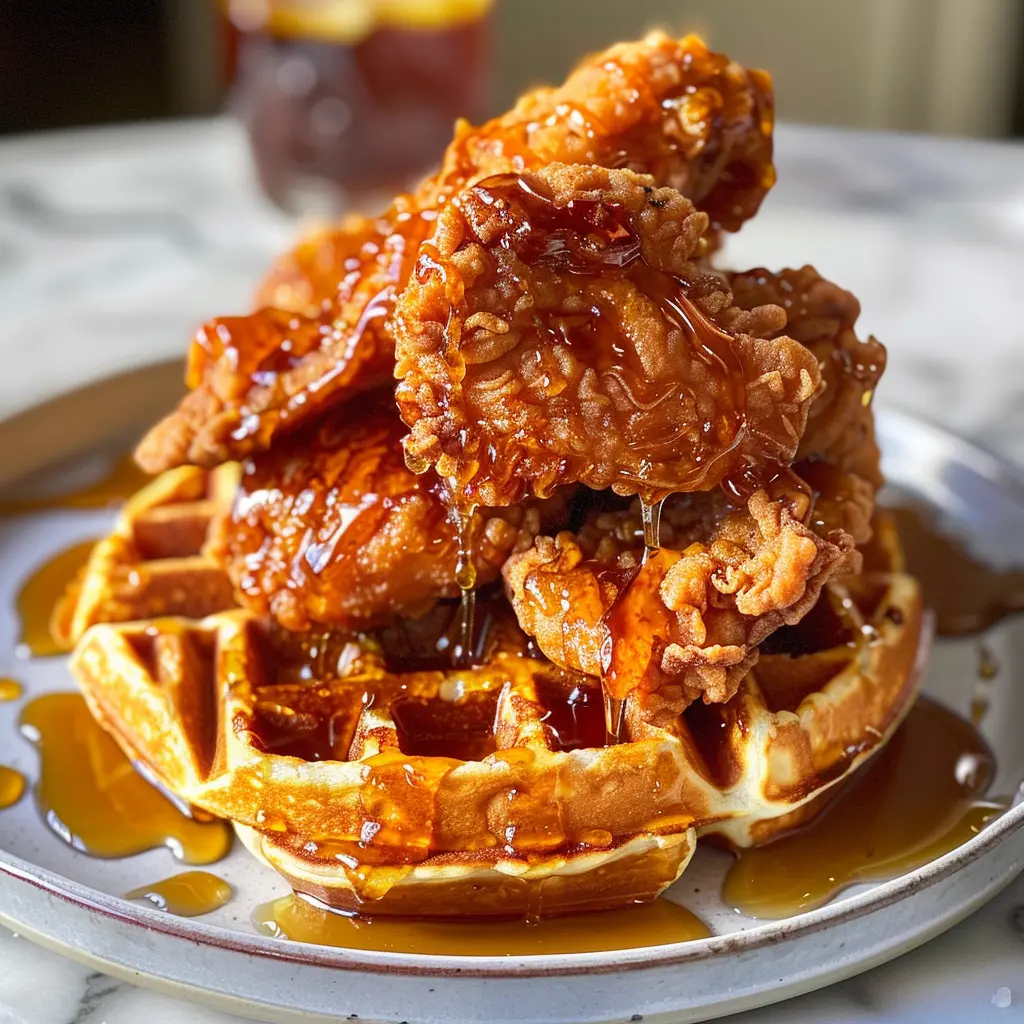
Honey Fried Chicken and Waffles: The Ultimate Guide to a Sweet & Savory Icon
Before we dive in, let’s set the stage. This article is your all-access pass to the world of honey fried chicken and waffles. We’re going to explore its surprising journey from late-night jazz clubs to brunch menus everywhere. You’ll get the inside scoop on crafting each component from scratch—juicy, crispy chicken, fluffy waffles, and that irresistible honey sauce. We’ll also tackle its history, answer your burning questions, and even explore modern twists. So, get ready; this is more than a recipe, it’s a culinary adventure.
Introduction and Historical Deep Dive
Introduction: More Than a Meal, It’s an Experience
Picture this: a plate arrives, steam rising in gentle curls. On one side, a golden-brown waffle, its grid-like pockets practically begging for a pool of syrup. On the other, a piece of fried chicken so impeccably crispy you can almost hear the satisfying crackle. And then, the grand finale—a slow, luxurious drizzle of amber honey, weaving everything together into a masterpiece. Good heavens, is your mouth watering yet? This isn’t just food; it’s a symphony of textures and tastes, a legendary clash of sweet and savory that somehow, against all odds, works in perfect harmony. Consequently, this guide is dedicated to unpacking the magic behind this iconic duo, giving you everything you need to know, and ultimately, to master it in your own kitchen.
A Surprising History: From Harlem to High Cuisine
Now, hold onto your hats, because the origin story of chicken and waffles might not be what you think. Contrary to popular belief, this dish didn’t emerge from the antebellum South. In fact, its roots are firmly planted in the vibrant soil of the Harlem Renaissance.
Debunking the Myths: It Wasn’t Always a Brunch Staple
First and foremost, let’s clear the air. Many folks assume this combination has always been a fancy brunch centerpiece. Alternatively, others mistakenly tie its origins to much earlier, less celebratory times. However, food historians largely agree that the dish as we know it today is a 20th-century innovation, a testament to creativity and culture.
The Harlem Renaissance and the Wells Supper Club
So, where did it start? Well, the story often begins with Joseph Wells at his Wells Supper Club in Harlem. In the 1930s, after-hours jazz clubs were the place to be. Musicians, finishing gigs late at night, faced a dilemma. Was it too late for dinner, or too early for breakfast? Astonishingly, chicken and wafflespresented the perfect solution. It was a hearty, soul-satisfying meal that bridged the gap, offering energy and comfort after a long night. Later on, this legacy was famously carried forward by Roscoe’s House of Chicken and Waffles in Los Angeles, cementing the dish’s status in American food culture.
Southern Roots and Pennsylvania Dutch Influence
Of course, the separate components have their own deep histories. Southern fried chicken has its own profound story within African American communities. Meanwhile, waffles made their way over with the Pennsylvania Dutch. Initially, these two culinary traditions lived separate lives. Eventually, though, through migration and cultural exchange, they found each other, creating a brand new, unforgettable classic. It’s a true fusion story, proving that the best dishes often come from beautiful, unexpected collaborations.
External Link used in Part 1: To truly appreciate the journey, explore the fascinating history of chicken and waffles as documented by the Smithsonian, which delves deeper into its cultural significance.
The Anatomy of Perfection: Deconstructing the Dish
The Star of the Show: Crafting the Perfect Honey Fried Chicken
Alright, let’s get down to the nitty-gritty: achieving that crispy, juicy, and flavor-packed fried chicken. Believe it or not, the secret isn’t just in the frying; it’s in the steps long before the chicken ever hits the oil.
The Brine is Divine: Why Soaking Your Chicken is Non-Negotiable
Honestly, skipping the brine is the biggest mistake you can make. Think of brining as an insurance policy for juicy chicken. Essentially, you’re soaking the meat in a salty, flavorful solution. As a result, the chicken absorbs all that goodness and retains its moisture during the high-heat frying process. A simple buttermilk brine with a dash of hot sauce and spices works wonders, tenderizing the meat and building a foundation of flavor from the inside out.
The Art of the Dredge: Double-Dipping for Maximum Crunch
Now, for that iconic crunch. The dredge is your best friend here. Firstly, a classic flour-based mixture is key. However, for an extra-crispy crust that stays crunchy longer, many pros add a tablespoon of cornstarch. Secondly, the technique is everything! After the brine, shake off excess buttermilk and coat the chicken thoroughly in your seasoned flour. Then, dip it back in the buttermilk and into the flour for a second time. This “double-dip” method creates those craggy, perfect layers that crisp up beautifully.
Spice is Nice: Building a Flavorful Seasoning Profile
Don’t be shy with the spices! Your flour dredge shouldn’t be pale and bland. On the contrary, it should be a robust blend. Paprika provides color and sweetness, garlic powder and onion powder offer a savory base, and a pinch of cayenne pepper gives just the right amount of heat to balance the sweet honey later. Ultimately, taste your flour mixture; it should be delicious all on its own.
Frying Fundamentals: Temperature is Everything
Finally, the main event: frying. Here’s the golden rule: your oil temperature is sacred. If it’s too cool, the chicken will absorb oil and become greasy. Conversely, if it’s too hot, the outside will burn before the inside cooks. You must use a thermometer and maintain a steady temperature between 325-350°F (163-177°C). Furthermore, don’t overcrowd the pot! Adding too many pieces at once will cause the temperature to plummet. Fry in batches for the best, most professional results.
The Pillowy Foundation and The Golden Elixir
The Pillowy Foundation: Mastering the Ideal Waffle
While the chicken is the showstopper, the waffle is the crucial supporting actor. It needs to be sturdy enough to hold up to the chicken and sauce, yet light and fluffy on the inside.
Belgian vs. Classic: Which Waffle Style is Best?
This is a matter of personal preference, frankly. Belgian waffles, with their deeper pockets, are fantastic for holding pools of honey and butter. Their airy, yeast-leavened texture provides a lovely contrast. On the other hand, a thinner, American-style waffle offers a crisper exterior and a more uniform bite. For this dish, a thicker waffle often works better, but you truly can’t go wrong.
Leavening Agents: The Key to a Light and Fluffy Interior
The quest for fluffiness is won with leavening. Most recipes use baking powder to give the batter its lift. For an even lighter texture, some cooks separate the eggs. They whip the whites into soft peaks and then gently fold them into the batter at the very end. This technique incorporates more air, resulting in a waffle that’s incredibly tender and cloud-like.
A Hint of Sweetness: Vanilla, Nutmeg, and Cinnamon
Since this is a sweet and savory dish, a subtly sweet waffle is absolutely appropriate. A dash of vanilla extract adds a beautiful aroma. Similarly, a pinch of nutmeg or cinnamon can introduce a warm, comforting note that complements the honey and spices on the chicken perfectly. It’s all about creating harmony on the plate.
The Golden Elixir: Elevating Your Honey Sauce
Let’s be real: the honey is what ties this whole wild ride together. But we’re not just talking about squeezing it straight from the bear.
Beyond the Bottle: Infusing and Spicing Your Honey
Why use plain honey when you can create something magical? Gently warming your honey allows you to infuse it with other flavors. For a spicy kick, add some sliced chili peppers (like Fresno or jalapeño) to create a hot honey glaze. Alternatively, a spring of fresh rosemary or thyme can add an earthy, sophisticated note. Let the flavors meld over low heat for about 10 minutes, then strain.
The Perfect Consistency: Syrup vs. Glaze
Consider your desired outcome. For a drizzleable syrup, gently warming the honey is sufficient. If you want a thicker, stickier glaze that clings to the chicken, continue to simmer the honey until it reduces slightly. You can also whisk a pat of butter into the warm honey to create a richer, more unctuous honey butter sauce. Oh, it’s a game-changer!
External Link used in Part 3: The type of honey you use matters immensely. For your sauce, explore different types of honey and their flavor profiles to find your perfect match, from mild clover to robust buckwheat.
Execution, Serving, and Variations
The Assembly Line: A Step-by-Step Cooking Strategy
Pulling this meal together requires a bit of strategy. You want everything to be hot and ready at the same time. Here’s a foolproof plan:
-
Brine the chicken first thing (or even the night before).
-
Prepare your waffle batter and let it rest while you work on the chicken.
-
Heat your oil to the correct temperature.
-
Dredge and fry your chicken in batches. As it finishes, transfer it to a wire rack set on a baking sheet and keep it warm in a 200°F (95°C) oven.
-
While the last batch of chicken is frying, start cooking your waffles. This way, they come out fresh and hot.
-
Gently warm your honey sauce in a small pan right at the end.
Plating for Impact: Presentation Matters
You’ve done the hard work; now make it look spectacular! Place a warm waffle slightly off-center on the plate. Carefully rest a piece of crispy chicken on top, perhaps leaning it against the waffle for height. Drizzle everything generously with your gorgeous honey sauce. Finally, a light dusting of powdered sugar over the waffle and a sprinkle of flaky sea salt over the chicken creates a stunning visual and flavor contrast. Maybe even add a few fresh microgreens or a single spring of thyme for a touch of color. Wow!
The Supporting Cast: Essential Side Dishes and Pairings
This dish is rich, so traditional Southern sides are perfect for cutting through that richness. A vinegary, sharp collard green provides a tangy counterpoint. Similarly, a creamy mac and cheese is the ultimate comfort companion. A crisp, refreshing coleslaw is another fantastic option. And never, ever forget the pickles! Their bright acidity is essential for cleansing the palate between those decadent bites.
For drinks, you can’t go wrong with classic sweet iced tea. Its sweetness mirrors the honey, and its cold freshness is a perfect contrast. Alternatively, a ginger beer or a sparkling lemonade provides the same effervescent, palate-cleansing effect.
Beyond the Classic: Modern Twists and Dietary Variations
The basic formula is a fantastic canvas for creativity. Feel free to play with global flavors!
-
Korean Fusion: Use a gochujang (Korean chili paste) and honey mix for your glaze, and maybe even add a sprinkle of sesame seeds.
-
Nashville Hot Honey: Amp up the heat by infusing your honey with a significant amount of cayenne pepper for a sweet and spicy kick.
Dietary Adaptations
Gluten-Free Version: Fortunately, this is easy! Use a 1:1 gluten-free flour blend for both your chicken dredge and your waffles. Ensure your baking powder is certified GF.
Vegan Version: Yes, it’s possible! For the “chicken,” use cauliflower florets, thick slices of tofu, or seitan. Soak them in a vegan buttermilk (plant milk + lemon juice) and use a GF flour or regular AP flour for dredge. For the waffles, use a flax egg and plant-based milk and butter.
*External Link used in Part 4: For those looking to perfect their technique, understanding the food science behind achieving perfectly crispy fried chicken is invaluable, especially for gluten-free or vegan alternatives.*
FAQs and Conclusion
Frequently Asked Questions (FAQs)
Q: Is chicken and waffles a breakfast or dinner food?
A: It’s incredibly versatile! Its origins are tied to supper clubs, making it a true any-time food. It’s a famous brunch dish but is also enjoyed for lunch, dinner, and especially as a late-night comfort meal.
Q: What type of honey is best for honey fried chicken?
A: A good-quality, raw wildflower honey offers a complex flavor. For a milder taste, clover honey is excellent. For a truly unique twist, try an orange blossom or buckwheat honey. The key is to use a honey you enjoy tasting.
Q: How do I keep the chicken crispy after frying?
A: The absolute best way is to let the fried chicken rest on a wire rack set over a baking sheet, not on paper towels. This allows air to circulate around the entire piece, preventing the bottom from getting steamy and soft. You can keep it crispy in a warm (200°F / 95°C) oven for up to 30 minutes.
Q: Can I bake the chicken instead of frying it?
A: Yes, for a healthier alternative. For a “fried” effect, coat the chicken as usual, place it on a wire rack over a baking sheet, and spray generously with cooking oil. Bake at 400°F (200°C) for 45-50 minutes, flipping halfway, until cooked through and crispy.
Conclusion: A Dish That Brings People Together
From its humble, ingenious beginnings in the jazz clubs of Harlem to its status as a beloved comfort food icon, honey fried chicken and waffles is more than just a meal. It’s a celebration of contrast—sweet and savory, soft and crunchy, elegant and messy. It’s a dish that demands to be shared, to be discussed, and to be savored. So gather your ingredients, embrace the process, and most importantly, share this incredible culinary experience with the people you love. You’ve now got all the secrets to create a truly unforgettable plate.
Print
Honey Fried Chicken and Waffles
Description
Honey Fried Chicken and Waffles
Ingredients
For the Fried Chicken:
-
6 bone-in chicken thighs (or a mix of thighs and drumsticks)
-
2 cups buttermilk
-
2 cups all-purpose flour
-
1 cup cornstarch
-
2 tsp paprika
-
1 tsp garlic powder
-
1 tsp onion powder
-
1 tsp cayenne pepper (optional for heat)
-
1 tsp black pepper
-
1 tsp salt
-
Vegetable oil, for frying
For the Waffles:
-
2 cups all-purpose flour
-
2 tbsp sugar
-
1 tbsp baking powder
-
½ tsp salt
-
2 large eggs
-
1 ¾ cups milk
-
½ cup unsalted butter, melted
-
1 tsp vanilla extract
For the Honey Butter Drizzle:
-
½ cup honey
-
¼ cup unsalted butter, melted
-
1 tsp cinnamon (optional)
Instructions
1. Prepare the Chicken
-
Place chicken pieces in a large bowl and cover with buttermilk. Refrigerate for at least 2 hours (overnight is best).
-
In another bowl, whisk together flour, cornstarch, paprika, garlic powder, onion powder, cayenne, salt, and black pepper.
-
Remove chicken from buttermilk, letting excess drip off. Dredge each piece in the seasoned flour mixture, pressing to coat well.
-
Heat oil in a deep skillet or Dutch oven to 350°F (175°C). Fry chicken in batches for 12–15 minutes, turning occasionally, until golden brown and crispy. Drain on a wire rack or paper towels.
2. Make the Waffles
-
Preheat your waffle iron.
-
In a large bowl, whisk together flour, sugar, baking powder, and salt.
-
In another bowl, whisk eggs, milk, melted butter, and vanilla.
-
Pour wet ingredients into dry and mix until just combined (do not overmix).
-
Cook batter in the waffle iron until golden brown and crisp.
3. Honey Butter Drizzle
-
Mix honey, melted butter, and cinnamon until smooth and glossy.
4. Assemble
-
Place a hot waffle on a plate, top with a piece (or two) of crispy fried chicken.
-
Drizzle generously with honey butter.
-
Optional: sprinkle with fresh parsley or a dash of hot sauce for extra flavor.